Arizona
Arizona women’s basketball uses inside superiority to dominate CSU Bakersfield


Whatever difficulties the Arizona Wildcats have had early in the season, coming into a game against 0-8 Cal State Bakersfield didn’t seem like much of a challenge. It wasn’t. The Wildcats used their size to dominate both early and late on the way to a 76-39 victory.
“Was disappointed after the GCU game, just in how we kind of led and at the end, let it slip away,” Barnes said. “I hope that you saw we got better today. Obviously, it’s hard to gauge against different opponents, against a zone, but we weren’t so stagnant against the zone. So we really took pride in working on some different situations and understanding where to get shots from, how to get shots against man or zone, and I thought we did a better job executing and sharing the ball. Hope it looked like that today. And moved the ball better. We didn’t hold it a lot. We still did it sometimes, but baby steps.”
Both Breya Cunningham and Isis Beh hit their first three shots. Cunningham had 13 points, five rebounds, two assists, one block, and one steal in 18 minutes of play. Beh contributed eight points on 4-for-4 shooting, two rebounds, one assist, and three steals in 11 minutes on the court.
“She brought really good energy,” Barnes said of Beh. “And what I love is that she looked to score. She’s such an unselfish player. But we are better when she gets the ball and she’s a threat. We aren’t good when she doesn’t look at the basket.”
Beh was returning after missing two games while in concussion protocol, although she came off the bench rather than her usual starting position. Sahnya Jah also returned after missing the GCU loss for undisclosed reasons.
Skylar Jones tied Cunningham for the game high with 13 points in 23 minutes. She went 4 for 4 in the first half, including hitting both of her 3-point shots. Jones ended the game shooting 5 for 6 from the floor. She dished out three assists but had four of the Wildcats’ turnovers. She also had one steal.
Most important for Jones was that she played more fundamentally sound. It’s something that she has been working on in practice.
“I think that’s why I shot five for six today, because I shot on balance and I shot the open shots and didn’t force anything,” Jones said. “I don’t think I had a charge today. I didn’t have charge today! That’s the first time in like, four games! Those charges have make me a little bit more hesitant with driving to the basket. So I think I need to just play basketball and stop overthinking it and go off two feet, because that’s making my percentage go up, and it’s more accurate when I shoot off two feet and not out of control. Coach, don’t nod your head.”
With the game well in hand, Barnes was able to get plenty of playing time for her young players. Katarina Knežević took full advantage. She had the best game of her young career with nine points, five rebounds, three assists, and three steals in 25 minutes.
As a team, the Wildcats took care of the ball better than they have all season. They had just 10 turnovers, three less than their previous season low against California. Four of the five starters did not turn the ball over at all. With 18 assists, it was the first time the team had a positive assist-to-turnover ratio this season.
“A lot of our turnovers come from the guards trying to get the ball inside or passing too fast off of one foot, not having balance, things like that,” Cunningham said. “Once we were focused in, conscious of how we were passing, we were slowed down. That was one of our goals before the game, was to have a positive assist (to turnover).”
They also had a season-low nine personal fouls. The most whistles came on Cunningham, but she only had two fouls.
“We need to learn that a lot of us need to be on the floor so we can’t pick up early fouls and stupid reaching fouls or fouling with our hands down, things like that,” Jones said. “So I think that was the main focus of us is moving our feet more and more communication, which was seen today, which was good. Which is probably why we had a few less turnovers. Not me, though, I have four, but as a team, we did have less turnovers. We only had like 10.”
Barnes was happy about the decrease in fouls, although she admitted that some of that was likely due to the opposition’s ability to put pressure on Arizona’s defenders.
“I think we’re getting a little bit more disciplined,” Barnes said. “I think some of it was not being really aggressive, us being a little bit passive, like not as much pressure on the ball, which I recognize that. And then just the talent offensively. I think it’s a lot harder to contain when you guard really freak athletes. So I think there’s a combination of both of those things. But the thing is, in the past, you would have seen us slapping down. So we’re working on that. But these are things that we’re working on daily. We are working on playing without fouling.”
Arizona held CSUB below 10 points in three of four quarters. The Roadrunners scored nine in the first quarter, six in the third, and eight in the fourth. The shot 29.2 percent from the floor and hit 6 of 21 shots from beyond the arc.
Things got ragged on the offensive end for the Wildcats at several points, especially when they had a lot of newcomers on the floor at the same time. After shooting 56.7 percent from the floor in the first half, they dropped to 34.3 percent in the second half. However, they also shut down the Roadrunners on the defensive end.



LOS ANGELES — After tests on his sore elbow revealed no structural damage, Pavin Smith took batting practice and was declared ready to return to the Diamondbacks’ lineup.
Smith, who was a late scratch on Opening Day, was a late addition on Day 2. He will bat fifth and serve as the designated hitter, sending Tim Tawa to the bench.
Smith is a relatively important member of the Diamondbacks lineup as a potential impact hitter against right-handed pitching. Last year, he hit .265/.361/.456 with eight homers against righties in 226 at-bats.
Diamondbacks at Dodgers, 7:10 p.m., Cox, Ch. 34
Diamondbacks RHP Ryne Nelson (7-3, 3.39)* vs. Dodgers RHP Emmet Sheehan (6-3, 2.82)*.
At Dodger Stadium: Nelson opened last season in the bullpen but moved into the rotation full time after RHP Corbin Burnes went down with elbow surgery. He was impressive from that point on, putting up a 3.38 ERA across 20 starts from June 1 onward. … Nelson faced the Dodgers three times (two starts) last season, giving up four runs in 13 innings with one walk and 12 strikeouts. … Nelson has solid career numbers against most Dodgers hitters, including 3B Max Muncy, who is 0 for 8 with three walks and five strikeouts. … Sheehan, 26, a sixth-round pick out of Boston College in 2021, returned from Tommy John surgery last year and performed well, logging a 2.82 ERA in 73 1/3 innings. He also logged important innings for the Dodgers out of the bullpen in the postseason. … Sheehan has never faced the Diamondbacks. … Last season, he averaged 95.6 mph with his four-seam fastball. He also threw a slider and change-up with the occasional curveball.
Coming up
Saturday, March 28: At Los Angeles, 6:10 p.m., Diamondbacks LHP Eduardo Rodriguez (9-9, 5.02)* vs. Dodgers RHP Tyler Glasnow (4-3, 3.19)*.
Sunday, March 29: Off.
Monday, March 30: At Chase Field, 7:10 p.m., Diamondbacks RHP Michael Soroka (3-8, 4.52)* vs. Tigers RHP Justin Verlander (4-11, 3.85)*.
Tuesday, March 31: At Chase Field, 6:40 p.m., Diamondbacks RHP Brandon Pfaadt (13-9, 5.25)* vs. Tigers RHP Casey Mize (14-6, 3.87)*.
* — stats from 2025.
(This story will be updated. Check back soon.)

Boats, beaches, and buckets of fun! Just the way you’d expect a boy to spend his Florida vacation!
But there was something else 11-year-old Miles Boyd got to do last year when he and his family traveled to Florida. It was a sea turtle adventure that truly became the trip of a lifetime.
“I had never been to the ocean before,” explained Miles. “So see that just wowed me. It was amazing!”
Miles and his family also got to see baby sea turtles on the beach at night.
“The ocean is so mysterious,” says Miles. “It’s such a big place, and the fact that these turtles can move but are so tiny and when they go in the ocean, they get to hundreds of pounds.”
In so many ways, the trip to Palm Beach County, Florida, was a dream vacation for Miles and his family, but it only came after what was a living nightmare.
“I couldn’t imagine losing him,” says Miles’ mom, Natasha.
It was the harsh reality that Natasha had to face after learning her son Miles had a cancerous brain tumor.
“The world just stopped,” Natasha says about the moment she found out the devastating news. “I just sat on the floor and cried.”
Even Miles admits he was scared.
“I’m just a kid, you know what I mean?” he says. “It’s a lot to handle all at once.”
After three brain surgeries, countless hours of therapy and rehab, and having to take a chemo medication twice daily, Miles proved to the world he is a true survivor!
And his trip to Florida, through Make-A-Wish Arizona, proved to be the medication he never knew he needed.
Miles explains that the trip motivated him to keep going.
“It showed me that I made it to this car, and I can keep going,” he says. “I started at the lowest of lows, and now, I’m on a beach – it just gave me confidence and motivated me that I could keep going.”
Last year alone, Make-A-Wish Arizona granted 476 wishes; they’ve also fulfilled more than 8,500 since being founded in 1980.
Across the Globe, Make-A-Wish has granted more than 650,000 wishes since 1980
Miles and Nick Ciletti will co-host Make-A-Wish Arizona’s Wish Ball on Saturday! To learn more about Make-A-Wish Arizona, click here.

Eleven illegal Indian national truck drivers were arrested at the Arizona border in the month of February.
The Yuma Sector Border Patrol arrested 11 total Indian national truck drivers in Yuma, Arizona in February 2026.
According to a Facebook post by the Yuma Sector Border Patrol, all 11 truck drivers held commercial drivers licenses from the states of Florida, New York, Pennsylvania, Indiana, and California. All were “found to be present in the United States illegally.”
“Border Patrol remains committed to upholding immigration laws and protecting our communities,” the post continued.

Don’t want to miss the bloom? This L.A. scientist created a poppy forecast

DHS attorney said agents in Los Angeles should have ‘started hitting’ protesters, emails show
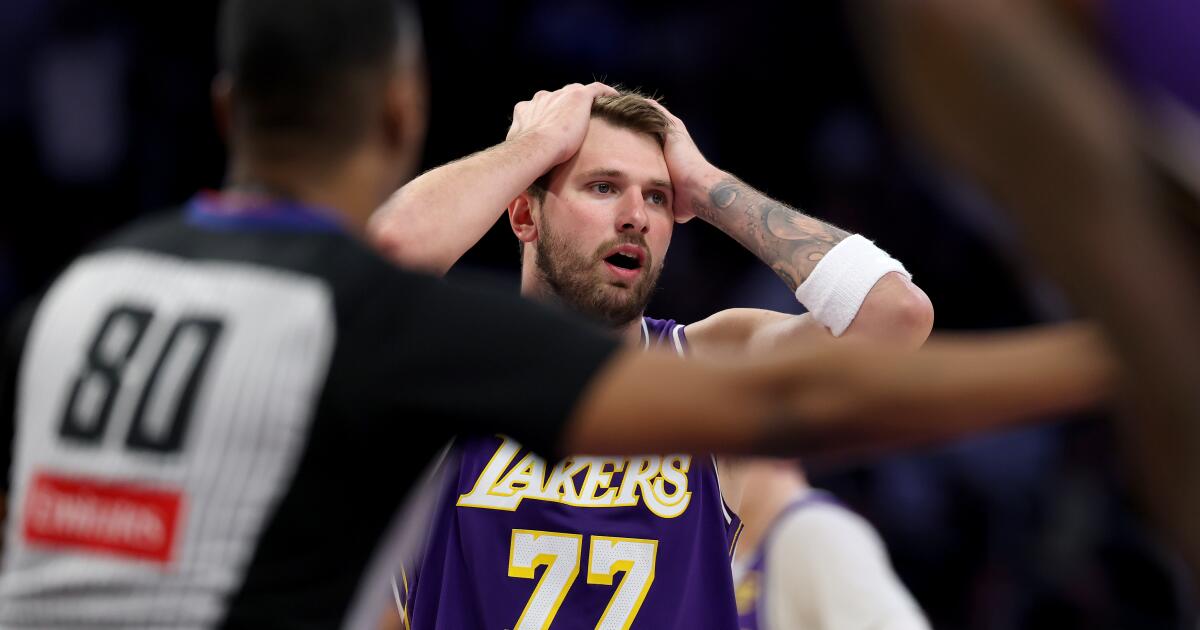
Lakers beat Nets, but Luka Doncic is facing suspension again after 16th technical

EU Parliament unblocks key political hurdle in digital euro talks

Man arrested in plot to firebomb Palestinian activist’s home after undercover op

Florida High School Football Rankings: Top 25 teams – Oct. 21

How old is Bo Nix? What to know about Oregon quarterback ahead of 2024 NFL Draft

Cleary's 21 help Le Moyne down Central Connecticut State 69-64 in OT

99th annual Pony Swim held in Virginia

Indiana Members Credit Union announced as new anchor tenant at Bottleworks District
EU Parliament unblocks key political hurdle in digital euro talks
Man arrested in plot to firebomb Palestinian activist’s home after undercover op

WATCH: Senate hearing goes silent after Angel Father confronts top Dem over daughter’s death

US diplomat Marco Rubio denounces settler violence, tolls in Hormuz strait

Iran-linked hackers have breached FBI Director Kash Patel’s personal emails | CNN Politics
-

 Detroit, MI1 week ago
Drummer Brian Pastoria, longtime Detroit music advocate, dies at 68
-

 Movie Reviews1 week ago
‘Youth’ Twitter review: Ken Karunaas impresses audiences; Suraj Venjaramoodu adds charm; music wins praise | – The Times of India
-

 Sports7 days ago
IOC addresses execution of 19-year-old Iranian wrestler Saleh Mohammadi
-

 New Mexico5 days ago
Clovis shooting leaves one dead, four injured
-
 Business1 week ago
Disney’s new CEO says his focus is on storytelling and creativity
-

 Technology6 days ago
YouTube job scam text: How to spot it fast
-

 Tennessee4 days ago
Tennessee Police Investigating Alleged Assault Involving ‘Reacher’ Star Alan Ritchson
-

 Texas1 week ago
How to buy Houston vs. Texas A&M 2026 March Madness tickets