Canning River, Arctic National Wildlife Refuge, Brooks Range, Alaska, where the Trump administration proposes oil drilling. Photo George Wuerthner.
One of the first Executive Orders from the Trump Whitehouse is to reverse environmental protections for federal lands in Alaska and hasten, expand, and encourage resource development.
Sec. 2. Policy. It is the policy of the United States to:
(a) fully avail itself of Alaska’s vast lands and resources for the benefit of the Nation and the American citizens who call Alaska home;
(b) efficiently and effectively maximize the development and production of the natural resources located on both Federal and State lands within Alaska;
Advertisement
(c) expedite the permitting and leasing of energy and natural resource projects in Alaska; and
(d) prioritize the development of Alaska’s liquified natural gas (LNG) potential, including the sale and transportation of Alaskan LNG to other regions of the United States and allied nations within the Pacific region.
Prudhoe Bay oil development Alaska. Photo George Wuerthner
Trump appears eager to specifically negate all of President Biden’s conservation efforts in the state. It almost seems like a vendetta against Biden, as if he personally wants to wipe out any conservation efforts the former President enacted.
Logging on the Tongass National Forest, Alaska.
Trump’s order says: rescind, revoke, revise, amend, defer, or grant exemptions from any and all regulations, orders, guidance documents, policies, and any other similar agency actions that are inconsistent with the policy set forth in section 2 of this order, including but not limited to agency actions promulgated, issued, or adopted between January 20, 2021, and January 20, 2025;
Alaska pipeline TAPS near Delta Junction Alaska George Wuerthner
OIL AND GAS DEVELOPMENT
Trump’s executive order rescinds any cancellation of oil and gas leases in the Arctic National Wildlife Refuge. Trump orders the federal agencies to issue all permits, right-of-way permits, and easements necessary for the exploration, development, and production of oil and gas from leases within the Arctic National Wildlife Refuge;
Advertisement
Musk ox on the coastal plain of the Arctic Wildlife Refuge in the area proposed for oil development. Photo George Wuerthner
However, Trump’s order goes well beyond the Arctic Refuge. He also wants to negate any protection for Coastal Plaine oil and gas leasing.
Cottongrass on the Coastal Plain near the Arctic Ocean where oil and gas leasing is proposed, Arctic National Wildlife Refuge, Alaska. Photo George Wuerthner
Trump also wants to expand oil development on the National Petroleum Reserve and to eliminate any special protected areas within the reserve.
Many Alaskan natives support the oil development proposals and other resource extraction in the state.
ROADS THROUGH WILDLANDS
Narvik Lake at the headwaters of the Kobuk River near the proposed route of the Ambler Road. Photo George Wuerthner
AMBLER ROAD ACROSS SOUTHERN BROOKS RANGE
Trump also ordered the BLM to approve the Ambler Road corridor, which the BLM under Biden had rejected. This road would travel from the pipeline haul road (Dalton Highway) across the southern edge of the Brooks Range to access large copper deposits owned by Native Corporations in the headwaters of the Kobuk River.
Arregetch Peaks, Gates of the Arctic National Park. The Ambler Road, if built, would cross a portion of the national park. Photo George Wuerthner
The proposed road would cross the Gates of the Arctic NP and a number of Wild and Scenic Rivers. If the road is constructed, many fear this new access will increase the economic viability of other lands for potential mining and potential oil development.
IZEMBEK NATIONAL WILDLIFE ROAD THROUGH WILDERNESS
King Cove, Alaskan Peninsula.
Trump orders that the proposed road across designated wilderness in the Izembek NWR be permitted to go forward. This road was opposed by the Obama and Clinton administrations, as well as Jimmy Carter who was President when the original Izembek Refuge was established.
The Izembek Refuge is located on the Alaskan Peninsula and is a critical migratory route for many waterfowl.
Native people in the village of King Cove desire land access to the Cold Bay airstrip, providing year-round air travel.
If permitted to stand, any Sec. of Interior could authorize a road through designated wilderness. A proposed gold mine by Cook Inlet Native Corporation in Lake Clark National Park would require road access that Trump’s Sec. of Interior could grant if the Izembek road is authorized.
This proposal negates the Wilderness Act and has much larger implications than this single road.
Black Brant, one of the many waterfowl species dependent on Izembek’s lagoons. Photo FWS
During the first Trump administration, the road proposal was approved, The Biden Administration under Sec of Interior Haaland also approved of the road, likely because Aleuts in King Cove also supported the road.
If the road is allowed to go forward across designated wilderness, then any Sec. of Interior could approve roads across any designated wilderness.
Advertisement
HUNTING AND TRAPPING
To its credit, the Biden administration tried to alter the worse hunting and trapping behavior permitted in National Park Preserves. While hunting and trapping are permitted in national preserves, the Biden ban outlawed baiting bears, killing wolf pups in dens, and shooting swimming caribou that were crossing rivers.
The Biden Administration proposed a ban on killing wolf pups and bear baiting, among other restrictions on hunting and trapping in Alaska National Park Preserves. The Trump administration seeks to reverse that decision. Photo George Wuerthner
These restrictions were opposed by many Alaskans, including the Alaska Federal of Natives, who claimed such a ban interfered with their traditional subsistence activities.
Shooting caribou swimming in rivers will again be legal due to Trump’s Executive Order. Photo George Wuerthner
Trump directs the National Park Service to rescind these rules.
Another provision of the Executive Order directs federal agencies to make all federal lands where hunting and trapping occur consistent with state land rules.
Trump’s new rules permit hunting and trapping of wolves along the border of Denali National Park. Photo George Wuerthner
For instance, there has been legal debate over wolf trapping along the border of Denali National Park, with the NPS arguing that wolves should be protected while the state argues that wolf trapping is legal.
NAVIGABLE WATERWAYS
Advertisement
Trump ordered that the control of waterways, even in nationally protected lands like national parks or on Wild and Scenic Rivers, be “restored” to state authority.
The mouth of the Nation River in the Yukon Charley National Preserve, where conflict over the use of a hovercraft for moose hunting, has led to a debate over whether the state or national park service controls waterways in national park units. Photo George Wuerthner
This issue stems from a lawsuit about who controls “submerged lands” across Alaska. It stems from a lawsuit filed in 2007 dealing with a hunter who used a hovercraft to hunt moose on the Nation River.
Placer mining pollutes North Fork Birch Creek Wild and Scenic River Steese Mountains National Conservation Area Alaska George Wuerthner
The NPS bans hovercraft in the National Preserve. The state argues that it should control uses on these lands, including mining, use of motorized access, and other related issues.
ROADLESS LANDS
The Trump Executive Order places a “temporary moratorium on all activities and privileges authorized by the final rule and record of decision entitled “Special Areas; Roadless Area Conservation; National Forest System Lands in Alaska.”The carbon-rich old-growth forests of the Tongass NF AK will be opened for more logging under the Trump administration. Photo George Wuerthner
This would reverse a restriction on logging and roadbuilding in Alaskan roadless lands implemented by the Biden administration in 2023 and reinstate the rule opening up these lands to development enacted during the first Trump administration.
It primarily affects the Tongass and Chugach National Forests in Alaska, which hold substantial amounts of carbon in old-growth forests and where there are substantial roadless lands that would qualify for wilderness designation.
The roadless lands of the Tongass National Forest are under renewed threat from development. Photo George Wuerthner
The rest of the order has language exhorting federal agencies to avoid impeding or hindering any development in Alaska.
No doubt, lawsuits will be filed to stop or slow the implementation of these rules, and we can hope future administrations will recognize the value of Alaska’s wildlands.
Advertisement
The Canning River in the Arctic National Wildlife Refuge where new oil development may occur. Photo George Wuerthner
In some cases, economic considerations may thwart Trump’s agenda. For example, several oil lease sales were authorized on the coastal plain of the Arctic Wildlife Refuge in 2024, but there were no bids.
Mansfield Peninsula, Admiralty Island, Tongass NF, AK Photo George Wuerthner
The same is true for logging operations on the Tongass National Forest. Without federal subsidies, the cost of road construction is exorbitant, and the value of the timber doesn’t cover these costs.
Alaska’s wildlands are under assault from the Trump administration. Legal strategies can protect these lands from Trump’s vengeance. Alaska Range along Denali Highway, Alaska. Photo George Wuerthner
Nevertheless, I suspect Trump would argue expanding resource exploitation in Alaska is in the national interest, and if subsidies are necessary to implement resource extraction, his administration will find a way to fund it.
The first Jesuit missionaries in Alaska sailed up the Yukon River in 1887. By the turn of the 20th century, the religious order of the Catholic Church had as many as 50 Jesuits in the state.
Now, only two remain. And by the end of June, there will be none.
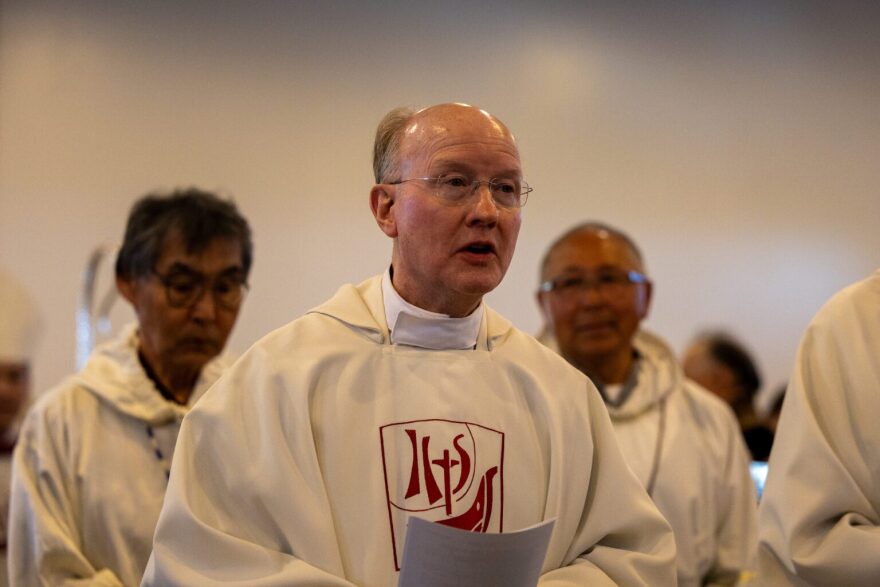
The Jesuits’ nearly 140 years in the state was honored at an event at Bethel’s Immaculate Conception Church on June 16. A procession of priests wearing long white gowns with red hems walked down the aisle to open the event. The Bishop of the Diocese of Fairbanks, Stephen Maekawa, thumped the ground with a shimmering silver staff known as a clozier as he approached the altar.
Bishop of the Diocese of Fairbanks, Steven Maekawa, walks toward the altar at the Immaculate Conception Church in Bethel.
“My brothers and sisters, we gather together to celebrate this wonderful and blessed occasion to acknowledge the love of God and the work of God through the 139 year mission of the Society of Jesus of the Jesuit fathers,” Maekawa said to open the event.
Advertisement
A traditional Catholic mass followed, with readings in both English and Yup’ik. During the sermon, Maekawa acknowledged the vastness of the Fairbanks diocese, and the tremendous amount of work done by the Jesuits to establish it.
“All of the 46 churches of the Diocese of Fairbanks that we currently have were established by either the Jesuit fathers or by direction of a Jesuit bishop,” Maekawa said. “We have a long history of the Society of Jesus’ presence and ministry here in all of Alaska.”
The Jesuits are an order within the Catholic Church, akin to the Dominicans or Franciscans. They have a reputation for taking on some of the Catholic Church’s most remote assignments.
That missionary spirit brought the Jesuits to the Yukon River in 1887, where they built churches, schools, and ministries. Without their work, Catholicism may not have taken root in huge swaths of Alaska, particularly among Alaska Native communities.
The Immaculate Conception Church in Bethel.
But the Jesuits leave a complicated legacy. Their methods of converting Native people to the religion, particularly in the first half of the 20th century, created generational traumas still felt to this day.
Advertisement
Fr. Sean Carroll is the provincial of the Jesuits West Province, which oversees Alaska and nine other states.
Fr. Sean Carroll, provincial of the Jesuits West Province, speaks at an event recognizing nearly 140 years of Jesuit service in Alaska.
“Thank you for all that you have taught us about who Jesus is and how to love and serve Him wholeheartedly,” Carroll said. “I also thank you for your patience with us. For there have been times when we have sinned and when we have hurt you.”
Missionaries, including the Jesuits, forcefully converted and assimilated Alaska Native people into Western culture and religion. Students at Jesuit-run boarding schools were forced to abandon their Native languages and physically punished when caught speaking languages other than English. Native dancing and drumming were also banned.
The Jesuits West Province maintains a list of 150 Jesuits with credible claims of sexual abuse against minors or vulnerable adults. A quarter of the accused Jesuits served in Alaska at some point in time.
“I ask for your forgiveness for all that we have done that was not rooted in Christ and love for Him, and for when we did not value your culture nor recognize the presence of God in you,” Carroll said.
Advertisement
Carroll gave the order to withdraw from the state last spring. A big issue was the recruitment of Jesuits willing to travel and serve in remote villages. He told the congregation that the Jesuits’ work would continue, just without a permanent presence.
Fr. Rich Magner, one of the two remaining Jesuit priests in Alaska, attends a ceremony in Bethel.
Fr. Rich Magner is one of the two remaining Jesuit priests in Alaska. His last day serving Chevak, Hooper Bay, and Scammon Bay is June 30.
“We all always knew coming in, or should have known, that we’re not going to be here forever. It’s going to be mission accomplished at some point,” Magner said. “And then we hand it off to the diocese that we’ve helped create, and so that’s a good feeling.”
Magner’s next stop is a Clinical Pastoral Education residency in Tacoma, Washington.
The other remaining priest, Fr. Tom Provinsal, first came to Alaska in 1968 to teach. A fond memory, he said, was meeting Elders that practiced traditional subsistence lifestyles.
Advertisement
“Some of the grandmothers, their fingers were just all bent with arthritis and stuff like that, you know, their whole lives they’ve been working out in the cold and the wet, doing food, sewing, all that kind of stuff,” Provinsal said. “I’d say I just feel very privileged to have come when I did come and to see that.”
Provinsal returned in 1975 as a priest and has served in the region ever since. After moving away, he plans to take a five month sabbatical. What happens next, he said, is in God’s hands.
Two lines formed in the aisle for communion at the end of the mass. After taking communion, Bethel’s Parish Administrator Susan Murphy gave a final thank you.
“It’s difficult to say goodbye to people who have been a part of our lives for so long,” Murphy said. “We know that you have done what was yours to do, and have taught us to do what is ours to do. We are grateful.”
Jesuit priests form a row along the altar of Bethel’s Immaculate Conception Church as members of the congregation lift their arms and pray.
Dominic Hunt, a Yup’ik deacon that flew in from Emmonak for the event, led the congregation through a final prayer.
Advertisement
“Bless them with your wisdom, that they may be a word of hope, a world in need. We ask this through Christ, our Lord. Amen,” Hunt said.
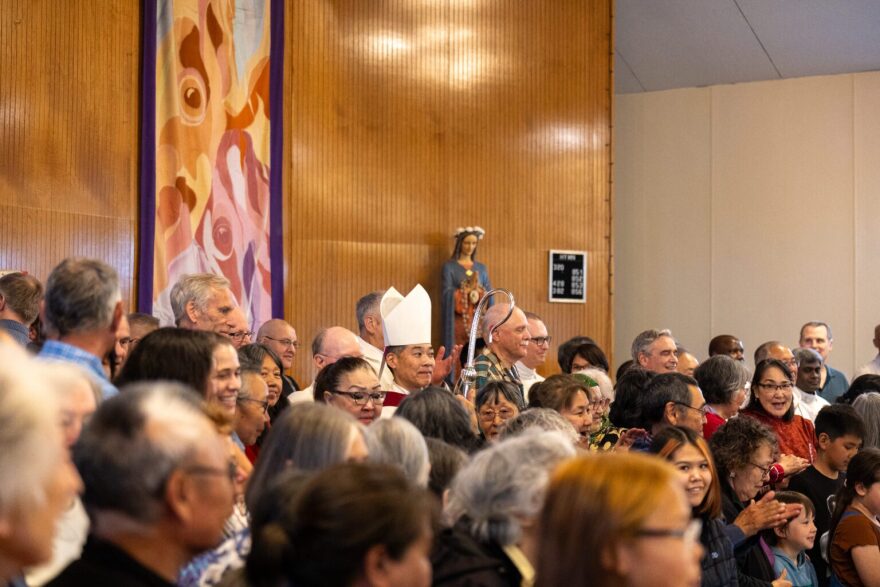
About 70 people posed for a photo on the altar – priests, deacons, parishioners, Elders and children — many of them smiling, some standing quietly.
The photo doesn’t tell the whole story. But it’s a moment when gratitude, grief, and memory all shared the same room.
Bishop of the Diocese of Fairbanks, Steven Maekawa, stands in the middle of a crowd waiting to take a photo at Bethel’s Immaculate Conception Church.
JUNEAU, Alaska (KTUU) – The Supreme Court of Alaska will be taking up the case of the State of Alaska, Division of Elections v. Daniel J. Sullivan, Jr.
The oral arguments will be held Monday at 10 a.m. via Zoom, according to an order and opening notice.
The document also specifies that a decision is expected to be made before noon on Tuesday.
According to documents from the Division of Elections, the state must start printing ballots at noon on the same day.
Advertisement
This comes after an Anchorage Superior Court Judge ordered Dan J. Sullivan on to the ballot Friday.
See a spelling or grammar error? Report it to web@ktuu.com