


Published July 9, 2026 03:00AM
Alaska
Several key steps toward drilling in Alaska’s Arctic refuge are due before year’s end • Alaska Beacon


It is the season of ANWR.
On Wednesday, the board of directors for the state-owned Alaska Industrial Development and Export authority approved spending $20 million to pursue legal claims and oil leases in the Arctic National Wildlife Refuge, a stretch of potentially oil-rich North Slope land that has been protected from development for decades.
As soon as Friday, a federal judge in Anchorage is expected to rule whether the Biden administration’s decision to cancel oil leases in the refuge is legal.
On Nov. 5, Americans will decide between Kamala Harris and Donald Trump for president. Trump has repeatedly vowed to pursue drilling in the refuge, while Harris is expected to continue the Biden administration’s opposition.
And in December, the federal government faces a congressionally imposed deadline to hold a second oil lease sale covering land within the refuge.
“I think the next two months are important for the short term, and what type of resource opportunities may be under consideration, as companies make long-term plans and future plans,” said Kara Moriarty, president and CEO of the Alaska Oil and Gas Association.
A long time coming
The Arctic National Wildlife Refuge sits between Prudhoe Bay’s oil fields and the Canadian border. Its coastal plain has long been eyed for oil potential, but the 1980 law that created the refuge states that no exploratory drilling or development can take place without congressional action.
The state of Alaska, through its congressional delegation, repeatedly tried to pass legislation opening the refuge to drilling, but it didn’t find success until 2017, when the delegation — led by Sen. Lisa Murkowski, R-Alaska, inserted critical language into a tax bill.
“I’m actually very proud of what we were able to do and how we were able to draft that,” Murkowski said in an interview this week.
That language requires the federal government to hold at least two lease sales covering land on the coastal plain. One sale has already taken place, and a second is legally required.
Oil development could generate billions of dollars in economic activity, creating jobs and revenue for the state treasury.
For that reason, drilling in ANWR continues to be a top priority of the state’s elected officials, with Democrats, Republicans and independents all voting to endorse the pursuit.
The North Slope’s local government also supports the effort, as do many people living in and near the refuge. Oil revenue and oil jobs make up a key part of the North Slope’s economy.
Voice of Arctic Iñupiat, a nonprofit formed in 2015 and representing local residents, has repeatedly supported leases in ANWR.
“It’s important from a sovereignty perspective,” Murkowski said, explaining that local residents should be able to make the decision on the issue. “It’s important to the state of Alaska from a resource perspective, and the state’s determination. It is part of the promise to us by our federal government that these lands that were set aside up there were to be reserved for oil and gas development.”
She said that even though the world is shifting away from fossil fuel energy, it still needs oil for other things.
“Why would we not wish to be able to access this resource that is needed, in a place that has the highest environmental standards and safety safeguards, with attention not only towards the environment, but to the worker and and create a base of strength, economic strength for our own country?”
But drilling poses environmental risks — to polar bears, caribou, birds and other wildlife — and environmental groups nationwide have made opposition to ANWR drilling one of their top issues.
The Gwich’in Steering Committee, which represents some people living outside the refuge, has long opposed drilling there. Subsistence hunting of caribou is a central part of Gwich’in culture.
“I think we’re all looking — from conservation organizations to the Gwich’in people and chiefs — everyone is looking for a way to find permanent, long-term protections for the refuge, so there will never be development in there,” said Peter Winsor, the committee’s interim director.
Alaska pushes the issue forward
In the last months of the Trump administration, shortly before the first ANWR lease sale, some state officials became worried that environmental opposition would deter oil companies from participating in the sale.
Former Gov. Frank Murkowski — Lisa Murkowski’s father — was among those who suggested that the state itself should bid on the sale as a backstop.
The Alaska Industrial Development and Export Authority, a state-owned corporation with directors appointed by the governor, stepped up, appropriating $20 million for bid preparation and bidding.
As it turned out, the AIDEA backstop was critical — only one oil company submitted any bids, and AIDEA was one of only three bidders overall.
After the Biden administration assumed control of the federal government, it first suspended, then canceled the leases won by AIDEA.
The other two bidders willingly surrendered their leases, but AIDEA fought on, suing the federal government to challenge the suspension and the cancellation. The state of Alaska supports AIDEA’s positions, as do the North Slope Borough, Arctic Slope Regional Corp. and Kaktovik Inupiat Corp.
Opposing them are Indigenous people who live south of the refuge, outside the borough, as well as local and national environmental groups, Canadians who rely on caribou that live for part of the year in the refuge, and Canadian environmental groups.
“This is a critical time for the Arctic and Alaska. AIDEA’s push to develop the Refuge doesn’t make financial sense, and it goes against decades of community opposition. Community health on both sides of the Alaska-Canada border is at stake,” said Sean McDermott of the Northern Alaska Environmental Center, a group that opposes ANWR drilling.
Some opponents who live outside the refuge have asked to have the coastal plain protected as important for religious and cultural reasons.
That’s been opposed by North Slope residents, including the borough mayor, Josiah Patkotak.
“We will not allow our lands to be co-opted for purposes that serve neither our people nor our future,” he wrote in an opinion column about the issue.
That argument is continuing, and AIDEA’s board voted this week to prepare bids for the second lease sale, but a final go/no-go decision is likely in December, at the board’s next scheduled meeting.
Its support for ANWR drilling and various other projects in Alaska has turned AIDEA into a target for environmental and social campaigns that question the agency’s effectiveness.
“We’re definitely planning a larger campaign against AIDEA,” Winsor said.
Through ads, talking to Alaskans, and lobbying legislators, the goal is “basically try to work towards dismantling this whole colossus of a mistake that AIDEA is,” he said.
Critical court decision could come by Friday
Even as AIDEA and others prepare for the second lease sale, U.S. District Court Judge Sharon Gleason is expected to release a key legal decision about the legality of the Biden administration’s suspension of the first sale’s results.
Attorneys representing AIDEA and the federal government have agreed that a decision by Friday is important because if the first lease sale is canceled, that land could be put up for lease again during the second sale.
If Gleason’s ruling doesn’t cancel the first sale, it could clear the way for AIDEA to begin seismic surveying and other preliminary work on its leases in the refuge.
To date, only a single exploratory well has been drilled in the refuge, and the results from that work weren’t promising, the New York Times said in 2019.
Seismic data could remove the veil of uncertainty, showing where — and how much — oil exists within the coastal plain. That could attract oil companies’ interest in the area.
But regardless of how Gleason rules and who wins the upcoming decision, an appeal to the 9th Circuit U.S. Court of Appeals — and possibly to the U.S. Supreme Court — is expected, and the legal issues likely will take years to resolve.
In the meantime, the march toward a second lease sale will continue.
Second sale, required by federal law
When the Biden administration suspended the first ANWR leases, it began a new environmental study, a first step toward the second lease sale required by the 2017 law.
Initially, the Interior Department said that supplemental study would be done at the start of 2024. It’s now been delayed twice, with officials now saying in legal documents that it won’t be done until the “fourth quarter” of the year.
As a result, the next two months are likely to be filled with a series of incremental steps: the final version of the environmental study, a 30-day waiting period, a final record of decision, then official notice of the sale and the sale itself.
The timelines for all of this put the federal government right up against the legal deadline for the second lease sale.
“My real fear is, they will, quote, follow the law, but they will have so fouled up this process toward the end, that they may technically be able to say they met the requirements of the law, but they’ve run out the clock,” Murkowski said.
“I’m not feeling optimistic about where we are despite the clear intent of the law. And that’s where I get so frustrated,” she said.
An Interior official told the Anchorage Daily News this week that it still intends to hold the second sale. Drilling proponents think the second sale will happen, but they expect rules that make development almost impossible.
“We’re not really putting a lot past them, but we think there will be a sale. The conditions of the sale, we’ll have to keep a real close eye on,” Ruaro told AIDEA’s board on Wednesday.
“We’re hoping that it’ll be as restrictive as possible,” said Winsor of the Gwich’in Steering Committee.
As in the first sale, there’s a key unanswered question: Amid the restrictions and uncertainty, who will bid?
AIDEA is almost certain to make offers, but it isn’t clear whether anyone else will agree to shoulder the economic, legal and political unknowns that accompany a successful bid.
One of the biggest uncertainties is likely to be resolved by the time of the sale — this year’s presidential election.
Presidential election’s consequences are big for ANWR
If Kamala Harris wins the presidential election next month, observers expect her to continue the Biden administration’s approach to ANWR.
“If Harris gets in there, I think we’ll be in position to do much more protection for the Arctic and work on things that we honestly need to work on, like tourism and the blue economy, and things that go away from not just oil and gas,” Winsor said. The “blue economy” is a term for the sustainable use of ocean resources.
Speaking to the AIDEA board on Wednesday, Ruaro said, “If it’s a continuation of the current administration, they oppose development in ANWR. They’ve made that very clear. … So that sets up a very, probably protracted litigation scenario.”
Donald Trump, conversely, has repeatedly said he wants to keep ANWR open for drilling. He’s made the issue one of the refrains of his campaign stump speech and reiterated his support this week in a phone call with Nick Begich, Alaska’s Republican candidate for U.S. House.
“We’re gonna tap the liquid gold that’s under there, and we’re gonna drill, baby, drill. We’re going to make Alaska rich and prosperous with jobs all over the place,” Trump said.
Even if Trump wins and presses ahead with ANWR leasing, a successful oil development would take years, if not decades, to begin production.
And that’s only after a lot of “ifs” are answered — if there’s oil to be drilled, if the cost of drilling is low enough to make it economically viable, if the legal issues can be resolved, if the state and federal governments stay supportive.
Given those uncertainties, will ANWR ever be developed?
“It is hard, but I can guarantee you that one way it will not ever be developed is if there are no leases that are made available,” Murkowski said.
“No,” said Windsor. “(Oil companies are) not interested, and there are no banks or insurance companies left that will finance or insure anything in the refuge. They think it’s too risky. They don’t want to have bad publicity.”
Moriarty said it’s too soon to tell. During the Obama administration, it seemed far-fetched that there would be oil development in the National Petroleum Reserve, but work continued and it eventually happened, she said.
“I don’t know that you want to take what we believe to be, at a minimum, 10 billion barrels of recoverable oil off the table for discussion indefinitely,” she said, citing a figure that’s close to the average estimate in federal studies.
“Do I think that ANWR is going to be developed overnight, when the companies are currently focused on state land and the Pikka project and the Willow project and things to the west? Probably not. But do we want to take the potential off the table indefinitely? I don’t think so.”
YOU MAKE OUR WORK POSSIBLE.

Alaska
Did I Find a Cure for Male Loneliness? No, But I Found a Way to Embrace Solitude in the Wild.

On the longest solo trip of my life, I stepped off a two-seat float plane onto the rocky shore of Upper Twin Lake in Alaska’s Lake Clark National Park.
I had taken four flights from New Jersey to Alaska to write about the iconic cabin handbuilt by Richard “Dick” Proenneke, the self-taught naturalist whose 30-year solo life in the wilderness was captured in the beloved PBS documentary Alone in the Wilderness. Proenneke never married, never had children, and spent nearly three decades completely alone, save for the birds he fed by hand and bears that occasionally clawed at his logs.
“He must have been lonely out here,” a fellow traveler said during the park ranger’s tour of the cabin.
On that chilly June morning last year, I found myself wondering the same thing. I was just coming to a different conclusion.
Park officials told me the cabin has seen a recent uptick in visitors, which they attribute to Proenneke’s newfound popularity on social media, and to a direct flight to the property by an outback flying service. I visited the cabin as a member of a tour group led by two guides. My group included a doctor, a retired attorney, a veterinarian, and a handful of National Parks superfans. Still, I stuck mostly to myself, spending the trip deep in my own thoughts. In Alaska, I wound up pondering a life like Proenneke’s, sans the means or skills to make it happen.
According to podcasters, writers, polls, therapists, influencers, and anyone else with a mouth or keyboard, there’s a male loneliness epidemic eroding the dated fabric of masculinity, like the snake of patriarchy eating its own tail.
Remedies for this epidemic are everywhere in the media, with new ones popping up weekly. The New York Times wondered if pickleball held the answers; others have suggested buying a personal watercraft, joining a mosh pit, or taking off your shirt at a college football game, or watching a horror-comedy starring Paul Rudd. In recent months, brunch, AI-powered companion dolls, and Jack Black have been mentioned as cures.
Outside wondered whether “outdoor friendships,” volunteering, or getting a pet could work.
These cures may seem unrelated and even, perhaps, a little silly. However, the common theme between them seems to be social interaction, choosing community over individualism, a bowling league or running club over your PlayStation.
Some entrepreneurs have even launched businesses to combat male loneliness. A deep-dive earlier this year in the New Yorker revealed how fathers are paying men to turn their sons into “alphas,” while others are joining men-only retreats to be screamed at. Men are taking reams of peptides, smashing their cheekbones with hammers, and getting chin implants in an effort to chase some warped standard of masculinity.
Most of these solutions seem alien to the introverts of society, myself included. I’m not sure I’ve ever been lonely, per se, or even bored, unless I’m stuck in small talk. I’ve never loved team sports or double dates either. In school, hearing a teacher say “let’s break into groups” made me groan.

During my trip to Alaska, I realized that Proenneke enjoyed solitude but not loneliness. The former feels intentional and rewarding, as opposed to the latter, which causes anxiety and depression. He wasn’t a misanthrope. He welcomed visitors and was thoughtful enough to whittle a variety of walking sticks to match their height.
Monroe Robinson, author of The Handcrafted Life of Dick Proenneke, spent nearly 20 years living at the cabin and maintaining it for the National Park Service. Robinson knew Proenneke, who died in 2003, at the age of 86. “He liked when people came to visit,” Robinson told me later in a call, “and he also liked when they left.”
I can relate.
My aversions to crowds and clubs have been a source of personal confusion over the years. I’m not a misanthrope, either. As a reporter, I crave deeply personal interactions with others and get invested in the people I write about to a fault. Part of me always thought loneliness was a good way to avoid heartbreak. I’ve loved deeply anyhow, and lost people in my life to suicide and divorce.
In June of 2024, I learned my then-wife was deeply unhappy in our marriage. I had a real breakdown. The ensuing algorithms of online divorce content can be toxic for men, a slippery slope greased by manosphere grifters. Well-intentioned friends and family will often just take your side during a breakup, too, and there’s not much growth in that. So I tried to avoid that noise, choosing to walk inside myself, to find a “vast inner solitude” as the poet Rainer Marie Rilke advised.

I wanted to confront my own bullshit.
I spent a few dozen nights sleeping in tents for the rest of that year, mostly in the Northeast. Sometimes I slept in single-digit temperatures. I’d reserved a tent site for my wedding anniversary, a campground where I’d wanted to renew my vows. But after my marriage began to crumble, I took my young daughter, instead of canceling. I put her in a hiking backpack to slog my way up a few summits. I kept on punishing myself too, on trail runs and difficult hikes, hoping exhaustion would tamp down the urge to beg my ex and anyone who knew her for answers. Bad cell service helped with that.
(I also found a great therapist, thankfully.)
On a long-planned family vacation to Southwest Colorado in August of 2024 that I couldn’t afford and couldn’t cancel, the San Juan Mountains loomed everywhere I went. I saw them from the window of my cabin, the dirt roads I drove along with my kids, and the hammock where I finished The Snow Leopard, in which author Peter Matthiessen joins an expedition to find the mythic beast in Nepal after the death of his wife.
The mountains felt timeless and unavoidable there, and they spoke to me, a perfect epilogue to the book’s zen message.
“Accept what’s happening” they said.
And so I accepted that my marriage was over.
In May of 2025, the divorce was finalized. A few weeks later, I was in Alaska as a freelancer, pinching myself as my plane touched down on the icy, blue lake.
Robinson, when I asked, said “feeling lonely was not a thing” for Proenneke. He was too active, too busy trying to survive. Proenneke left society, yes, but he didn’t withdraw from life. In the long winters, when no sun hit Proenneke’s sod roof, when no planes landed on the frozen lake, he would spend months penning thoughtful letters to close friends, family, and his growing legion of fans.

Proenneke cared about his cabin’s appearance too, about beauty, and that matters. He built a stone fireplace, an extra bunk for guests, and hand-carved a much-beloved Dutch door. Windows would be an inconvenient luxury in a trapper’s cabin in Alaska, but Prokenneke fashioned one that offered a grand view of the lake anyway.
While I was contemplating Proenneke’s contentment in Alaska, I was also watching contentment in action with the two young guides in charge of us there. For a moment or two, I envied both of them, the same way I envied Proenneke. Guide Dom Gawel, who is in his mid-20s, was the quieter of the two, and he led a few of us on some longer hikes while others stayed behind at camp. Later, I asked Dom about loneliness. He thought young men feel lost today “because they are comparing themselves to others in a negative way through social media” and “disconnected from nature.”
Luckily, there’s nothing close to a signal at Lake Clark National Park, no texts you feel compelled to answer, no influencers to interact with. That’s not easy to do in the United States.
I also found kinship with Dr. Adam Bolour, my kayak partner at Twin Lakes and roommate at Port Alsworth, a tiny Alaskan village on Lake Clark where we slept on our final night. We talked about fatherhood, relationships, and nature. He was traveling solo too, from California, and while he was upbeat and talkative with everyone, I watched him steal away to read some Ralph Waldo Emerson’s Self-Reliance by the lakeshore. I did the same with Proenekke’s book there.
I emailed to ask about male loneliness, when I got back to New Jersey.
“I cherish solo trips, whether I’m married, feeling alone, feeling super connected with someone or a big group,” he wrote. “It’s just great to get away and convene with silence and space.”

My revelations in Colorado and, later, at Proenneke’s cabin, helped me realize I must connect deeply with myself in the outdoors from time to time. Nature can’t just be an emergency room for me, either. It’s long-term maintenance for my physical and mental health, whether it’s trail running, floating in a swimming hole, or staring at mountains. It’s more than a hobby. The version of me who returns from those trips is a better father and, hopefully, a better partner someday.
Unlike Matthiessen, who spent months away from his young, grieving son in search of a snow leopard, or Proenneke, who spent 30 years away from almost everyone, I couldn’t and wouldn’t want to pull myself away from my children and responsibilities to that extreme. I have been guilty of that in the past. I’ll make do with a vow to see mountains like the San Juans as much as possible, even if it’s just a few days to convene with solitude, as Adam does. And if I can’t get to the Sawtooths or Switzerland, I’ll cut myself a break and keep exploring Pennsylvania or the Catskills.
A few months after I got back from Alaska, I tackled Pennsylvania’s Black Forest Trail. It’s the state’s most difficult hike, a 43-mile loop with a mind-boggling 8,500 feet of elevation gain. I was craving solitude, again, and found the trail emptier than the Alaskan backcountry. I saw as many rattlesnakes as people on that trip.
On my final night of the hike, after pushing hard for about 18 miles, I took off my boots and socks and stretched out on a shady vista as the sun began to sink. Two hikers came in, a father and son, after their own long day. They hoped to camp there too and asked if I minded. I said it was fine and then, a few minutes later, reached for my socks and boots.
I shouldered my heavy pack, wished them a deep sleep, and pushed on to find solitude, that little bit of loneliness all the world says is a problem.
Jason Nark is a reporter who covers the outdoors for the Philadelphia Inquirer and and a freelance writer whose work has appeared in The New York Times, Outside, The Alpinist, Adventure Journal, National Geographic, Dwell, and other outlets.
Alaska
Outmigration, inflation, choice schools: Alaska school closures likely to continue without changes

A dozen Alaska schools closed their doors in May, the most closures in a single year in the last two decades, according to the state education department.
Clusters of school closures in urban areas of the state had been uncommon until recently, but are part of a larger trend as public school enrollment declines nationwide. School district officials have framed closures as a means to bridge multimillion-dollar deficits, but some research suggests districts don’t realize meaningful savings. Closures can also have negative impacts on students and families.
According to data from the Alaska Department of Education and Early Development, 60 schools closed between 1999 and fall 2025. Another 12 schools closed this year, part of the 28 total that have closed in the last three years alone.
Four districts closed schools this year, and each of the state’s largest five districts have closed schools in the last three years. In interviews, school district superintendents said closures are caused by insufficient and unpredictable state funding, demographic changes and, to varying degrees, the proliferation of school choice.

Superintendents, lawmakers and Alaska Education Commissioner Deena Bishop agreed that closures are likely to continue unless something changes.
State legislators last year passed the first permanent increase to state formula funding for schools since 2017, but school officials said state funding remains inadequate. This year, lawmakers approved one-time energy relief payments for districts totaling at least $29 million — with up to $115 million in additional funding contingent on unexpected oil revenue — and an education package that directs spending for specific programs as opposed to the per-student formula.
Matanuska-Susitna Borough School District Superintendent Randy Trani said Alaska districts no longer have enough funding to provide all the choices families want while maintaining the expected access to neighborhood public schools.
“There is a general funding problem for K-12 education where we just have not kept up with inflation, and simultaneously districts are being asked to provide more choices, and choices cost money,” Trani said. “We’re all dealing with this more and more choice thing, and we’re all dealing with less and less funding.”

Alaska school districts offer 34 correspondence programs. In the last 25 years, 10,000 Alaska students have moved from neighborhood public schools to correspondence programs, typically taking their per-student funding with them.
Bishop, the state education commissioner, said that’s evidence that families want additional choices beyond neighborhood public schools.
“There will be continued school closures, and I believe there will be continued choice programs to pull people back or to give people what they want,” Bishop said.
Contributing to the enrollment decline, Alaska has had more than a decade of sustained outmigration as the birth rate continues to decline nationwide.
School finance officials have identified class size increases and school closures as the most direct ways to cut expenses for districts facing budget shortfalls, but families have pushed back against large class sizes that can be harmful for student learning.
Closures combine schools under one building to provide more opportunities for students. State law allows a three-year grace period where districts still receive some funding for the closed school under the “hold harmless” provision, incentivizing closures for some districts.
Neighborhood schools, and choice
The Mat-Su school board voted to close Glacier View School after enrollment dipped near the 10-student limit. Trani said several dozen other school-aged children live in the area who don’t attend Glacier View. He said the factors driving closures in the Mat-Su are the same ones that districts in Anchorage and on the Kenai Peninsula are facing.
“Funding, birth rate, and then movement, offering more choices, which we can’t afford to do anymore,” Trani said. “If those three trends don’t change, or if some combination of them doesn’t change, then school closures are going to be on the docket every year going forward.”
Students who attended Glacier View School can choose from a variety of homeschool or correspondence programs next year, or drive more than 50 miles to and from Sutton or Palmer for class each day.

Trani said his district didn’t have many other options to reduce the budget after they cut one-eighth of staff members last year. In a survey asking residents to rank district budget priorities, community members indicated they would not support a four-day school week or cuts to sports programs, but would want to preserve class sizes, Trani said.
Along with Glacier View, Larson and Meadow Lakes elementary schools also closed in the district.
In Anchorage, families have also pushed back against proposed cuts to sports, teachers and school nurses. The Anchorage School Board responded with a fast-tracked plan to close three schools, which spawned a lawsuit from Campbell STEM Elementary School parents.
After the April municipal election, several Anchorage voters said they didn’t approve the district’s school bond and special education tax levy because of their distrust in the district stemming from the closure decisions.

According to the most recent data available from Alaska’s education department, about 12% of neighborhood public school students statewide switched to correspondence schools in the 2020-21 school year, a time marked by upheaval from the COVID-19 pandemic. Of those nearly 9,600 students who left brick-and-mortar school buildings, only about 5,800 had returned in 2021-22.
While a smaller percentage of neighborhood public school students in the 2021-22 school year switched to correspondence schools — 3% — the number of students who returned the following year, 850, continued to lag far behind the number of students who had left, nearly 2,100.
The Anchorage School District is the state’s largest and has lost about 7,500 students since 2015, closing six schools in the last four years. The district saw an 84% increase in correspondence students between 2011 and 2025.
Despite that enrollment drop, Anchorage School Board President Carl Jacobs said the recent cluster of closures are a symptom of state fiscal issues plaguing several core government services.
“It’s a process that, with the right leadership at the state level, may have been completely avoidable,” Jacobs said. “The issue is so much bigger than just school choice.”
ASD Superintendent Jharrett Bryantt said the district will not close more schools next year, and instead will work to rebuild trust with the community. He said closures should be used as a way to improve academic offerings for students, not to close budget deficits as they were this year.
Bryantt said results from Anchorage residents on a budget-balancing simulation showed the community supports school closures. Bryantt said choice schools are not causing school closures, and called for an increase to state funding.
“Thousands of families in Anchorage and all over the state are choosing their neighborhood schools, and they are urging us to figure out ways to strengthen those neighborhood schools,” Bryantt said. “There is certainly a conversation to be had about consolidations, but I think it’s a red herring to pit neighborhood against choice.”
Benefits for students
While many districts sought out low-capacity schools to close, district leaders on the Kenai Peninsula felt they couldn’t combine students at its smallest schools in more remote communities — such as Cooper Landing, Hope, Moose Pass or Razdolna — with others without disproportionately increasing travel time for those students.
The KPBSD Board of Education has voted to close five schools in the last two years, but reversed planned class size increases with additional funding from the Kenai Peninsula Borough.
Superintendent Clayton Holland expects more school closures next year, but said he’s dreading those discussions. Districts budgets are due to local municipalities or boroughs before the Legislature has determined what level of funding to appropriate for schools.
“We’re so intent on a short-term financial stability or financial gain that, because we don’t know what we have, that we have to go through this early. It’s not as planned out as it could be,” Holland said.
Closed in 2025, the Nikolaevsk School has been approved to reopen as a charter school by the district and state Board of Education and Early Development. Housing charter schools has become a popular use for the vacated buildings.
Farther north, the Fairbanks North Star Borough School District has shuttered seven schools in the last four years, more than any other district in the state.
Unlike Anchorage, Fairbanks Superintendent Luke Meinert said his district had a much smaller savings account to draw from as state funding fell flat year after year, and hasn’t received the maximum allowable local contribution from the borough.
That led district officials to invest early in the idea of closing schools, and giving residents an idea of what to expect long term. Meinert said the emotional toll that closures have on the community is real.
“We were kind of on the tip of the spear in terms of having to make some of these painful decisions earlier than some other school districts,” Meinert said. “We went through three rounds of school closures, and I will say, while we felt like the process from administration got better each time we did it, it’s still incredibly difficult and painful.”
Bobby Burgess, the Fairbanks school board president, said military families were concerned about the plan to close Ben Eielson Jr./Sr. High School. But the small class sizes limited what educators could offer, and students had more options once they moved to North Pole High School.
“Because those kids were not getting that number of electives, there were a lot of folks who were, in the end, OK with the move because they had more choice and more opportunity,” Burgess said.
Burgess said the closures were approved as a way to avoid class size increases. Instead of more school closures this year, Fairbanks officials used the savings from prior closures to reintroduce elementary music offerings and programs for gifted students during their budget process.
Outmigration
In Southeast Alaska, former Juneau School District Superintendent Frank Hauser said consolidations and closures have had a positive impact on student performance.
“By combining the schools in Juneau, we’ve been able to maintain and expand opportunities for students,” Hauser said. “The board here has also not had to make the heartbreaking decisions other school boards in the state have made to cut art or music or other opportunities or supports for students.”
The Juneau School Board voted to close three schools in 2024 and reopen one as a middle school the following year. Hauser’s time as superintendent ended last month, but he said the consolidations saved the district money.

Juneau and other Southeast communities have experienced more rapid population decline than other parts of the state, and suffer less from school choice options.
“While we’ve seen a lot of improvements and positive impact from the consolidation and the closure, the district is still projecting a multimillion-dollar deficit for FY28,” Hauser said.
Ketchikan Gateway Borough School Board President Katherine Tatsuda said their district represents the other side of that equation. Board members in Ketchikan voted to close two elementary schools and increase class sizes after cutting about about one-quarter of their staff to reduce expenses.
“None of us knew how significant of a really negative financial position we were in until we got into it at the end of February,” Tatsuda said.
Research from Stanford’s Center for Education Policy Analysis released in May suggests closures don’t save districts as much as expected, and districts often come closer to breaking even after closing schools.
“With closures comes a whole host of other kinds of expenses that can show up,” Stanford assistant professor of education Francis Pearman has said. “It’s not free to close up a building and to move students and material elsewhere.”
Further research indicates that poorly handled school closures can exacerbate racial inequities and hamper student achievement.
Last year, the school board in Ketchikan avoided closures by restructuring elementary schools, which Tatsuda said drove many families to leave the district for choice schools.
“Basically, every single department across the board and every school was impacted by that reduction in force, and so the impact to students is (that) there will be larger class sizes for sure,” Tatsuda said.
Tatsuda said residents have been emotional and frustrated with the decision, and called on lawmakers to forward-fund education.
State Sen. Löki Tobin, an Anchorage Democrat who co-chairs the legislative Task Force on Education Funding, said Alaska’s shift to the per-pupil model that ties school funding to the location of students is part of the problem.

“We don’t have good statewide policies to support families,” Tobin said. “What we also should be thinking about is new school finance models, and I think that’s really where the work of the task force and education funding is critical.”
Tobin suggested paid family leave, a statewide option to access healthcare, improvements to the foster care system and raising wages. She said Alaskans uncertain if their school might close next should support state leaders who support schools.
“The hope is November,” Tobin said. “There have been multiple opportunities for us to stop this rash of school closures, and that has been at the ballot box.”

WILLOW, Alaska—Corey Ercolani pulled a northern pike from a gillnet and slit its belly with a knife. Inside its guts lay fresh evidence of a growing biological crime: a dead juvenile salmon. A coho, or silver salmon, to be exact. A technician with the Alaska Department of Fish and Game, Ercolani had set the net […]
-

 Utah3 minutes ago
Man suspected in 2006 Utah murder left suicide note in Las Vegas jail cell: police
-
 Vermont6 minutes ago
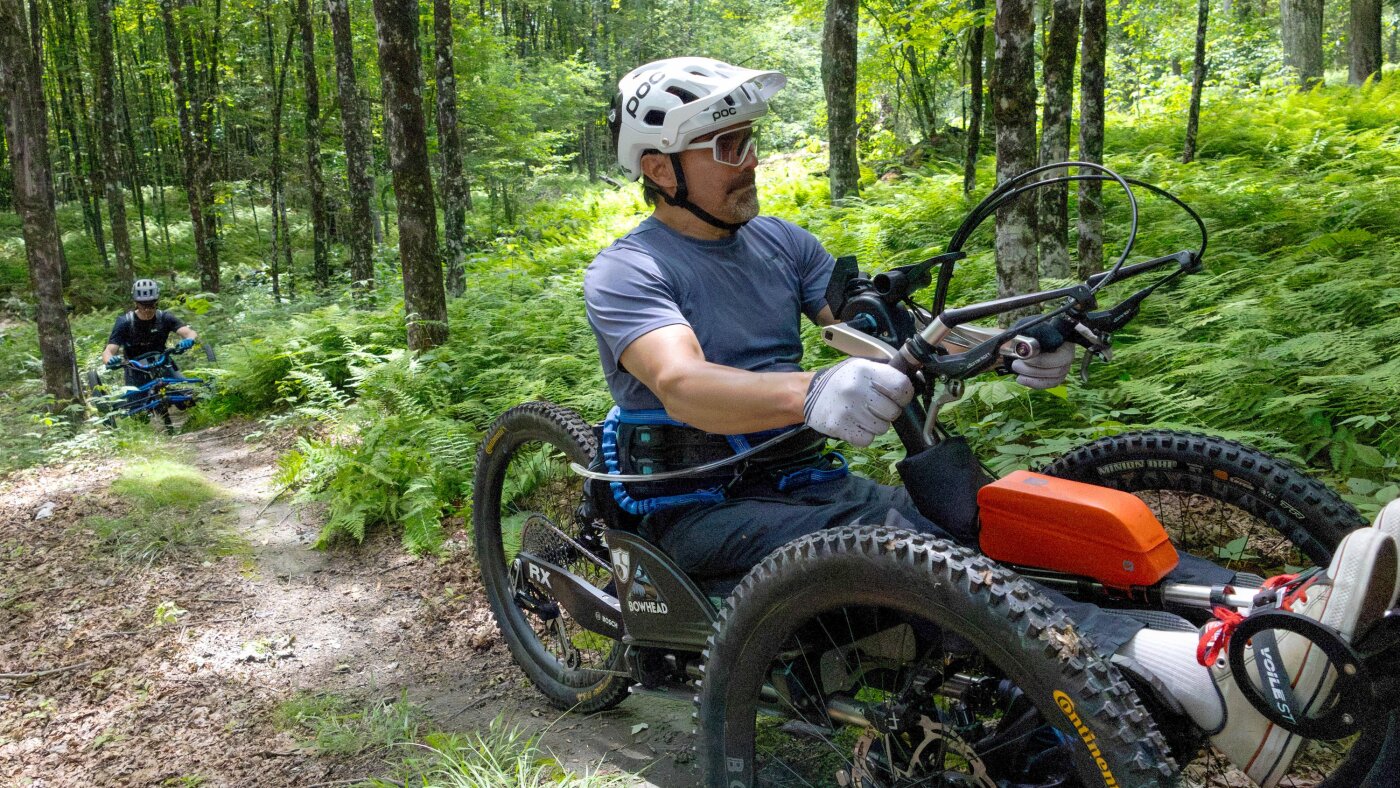
OUTDOOR ACCESS FOR DISABLED IN VERMONT
-
 Virginia11 minutes ago
4 indicted in Virginia double homicide; second victim ID’d as grandmother of 6
-

 Washington18 minutes ago
Washington Commanders are retiring Hall of Famer John Riggins’ No. 44
-

 Wisconsin21 minutes ago
Wisconsin State Patrol rides with truck and bus drivers to spot violations in five areas
-

 West Virginia26 minutes ago
West Virginia town fires entire police force after chief resigns, sergeant alleges evidence room break-in
-

 Wyoming33 minutes ago
WHP: July 5 single-vehicle rollover north of Riverton resulted in one death, one injury
-

 Crypto36 minutes ago
British Airline Jet2 Shares Jump 9% After $536M Fuel Hedge Gain Offsets Middle East Travel Fears

