Alaska
Senior Night sellout: Augustana hockey gets blanked by Alaska Fairbanks to close out regular season


SIOUX FALLS — The third-period push from the Augustana Vikings came with a fury on Saturday night, but it still wasn’t enough to knock Alaska Fairbanks goalie Lassi Lehti off his game.
Lehti made 30 saves, and the Nanooks took advantage of a five-minute major penalty late in the opening period and held on to blank the Vikings 2-0 in front of a sold-out crowd on Senior Night at Midco Arena.
Augustana (12-18-4) tallied 14 shots on goal in the opening 40 minutes of the game before putting together a 16-shot third period in which it gave Alaska (15-14-3) everything it could handle.
“Third period, that’s our guys. They want it,” AU coach Garrett Raboin said. “They wanted to find a way past that goalie and light the building on fire.
“It was a great crowd, but their kid was feeling good in there. He saw a lot of pucks. We probably needed a little better net-front presence, but it was a good hockey game, really close.”
Trent Singer / The Rink Live
With 5:29 remaining in the opening stanza, Lehti laid out to cover a puck as Augustana forward Luke Mobley skated across the top of the crease. It appeared to be a harmless play in real time, but after UAF coach Erik Largen challenged the play for contact to the head, officials determined there was enough evidence to warrant an infraction, sending Mobley to the penalty box for five minutes.
Raboin was rather brief in describing what he saw on the call.
“It was high in the zone,” he said. “Good challenge by their staff, I guess.”
It was the second night in a row the Vikings were whistled for a five-minute major. On Friday, they managed to kill one off without giving up a shot on goal.
But that wasn’t the case on Saturday, as T.J. Lloyd fired a shot from the right circle past Augustana goalie Zack Rose and into the far side of the net, giving the Nanooks a 1-0 advantage with 2:26 remaining in the first.
“One’s going to go in,” Raboin said. “That’s the tale of the night right there. The penalty call’s the tale of the night.”

Trent Singer / The Rink Live
It was Rose’s only blemish of the night after coming off back-to-back starts in which he didn’t allow a goal. The senior netminder finished the game with 25 saves, including 14 in the second period.
“He’s played well,” Raboin said about Rose. “Another Saturday, another strong performance by him. I feel like our team defended well in front of him for the most part. I think we probably had the better of the chances tonight. I’ll have to go back and watch.”
With 3:17 remaining in the game, the Nanooks were whistled for too many men on the ice, and Raboin used his timeout to add an extra attacker and set up something with the two-man advantage.
Augustana got some looks on the power but wasn’t able get any of its five shots on goal past Lehti, who got some help from the offense with a little more than 30 seconds to play on an empty-netter from Harrison Israels.

Trent Singer / The Rink Live
“Alaska Fairbanks is a well coached team,” Raboin said. “They play with a ton of energy, and they make it really difficult for you to find any time and space. And frustration can set in. We wanted the same game [as Friday] but just a little better. We were probably close to having the same game, but we know with our guys, if we get a goal, we take a whole new life.
“We weren’t able to get one past this kid. Credit to them and their team. They’re a really good team, and their goalie had a heck of a night.”
On Friday, the two teams played to a 2-2 tie before Alaska won the exhibition shootout. The Vikings finish the season series against the Nanooks with a 1-2-1 mark.
“All four games with these guys have been extremely close,” Raboin said. “Outside of the penalty in the first, it was a really good hockey game.”

Dave Eggen / Inertia
Prior to the start of the game, the Vikings recognized their six departing players as part of Senior Night festivities.
The group includes five fifth-year players in Anthony Stark, Arnaud Vachon, Chase Brand, Ryan Naumovski, Shay Donovan and Rose.
The six transfers are the first graduating class in the history of the program, and Raboin had no shortage of words in describing their impact.
“Regardless of the score tonight, there is a touch of sadness because you feel the end is near with this group, this family, for Year 1,” Raboin said. “For the guys that will be moving on from this program, their impact, they’re never going to leave us.
“These guys are the foundation of this whole program, and this program’s going to enjoy a lot of success. There’s going to be so many great nights, and they were the ones that set us up for success right from the start.”
The group makes up for 28% of the team’s total points this season, while Rose led the team’s goalie group in wins (six), minutes (863:31), goals-against average (2.71) and save percentage (.922).
Regardless of the score tonight, there is a touch of sadness because you feel the end is near with this group, this family, for Year 1.
Augustana coach Garrett Raboin
Raboin was complimentary of how they represented the inaugural program in the Sioux Falls community. He even pointed to Saturday night’s sold-out crowd as an indicator as to how that has been reciprocated.
“It’s easy to cheer for them because they do everything the right way,” Raboin said. “Blessed, fortunate, whatever word you want to use — everyone in it, from our staff to our players, has individual stories of how these guys have impacted them. They’re always going to be with us.”
The players are already working to begin the infancy of the program’s alumni base, as an annual golf event is in the works.
“I wish I could call myself an alumni of Augustana, but these guys are fortunate enough to do so,” Raboin said. “They’ve already got things going. They enjoy it here. This is their happy place, and these teammates are their brothers.”
Inaugural season capped by another sellout
Saturday marked the third sellout at Midco Arena and the first since its grand opening in January, with 3,097 fans on hand to take in the team’s final regular-season game of the season.
“There was a vision to bring hockey here because they felt like it could be something great. It’s proven true, and we’re just getting started,” Raboin said. “Our fan support, our students, new fans, new hockey people — the hockey community in Sioux Falls is pretty cool.
“We’re fortunate, and we’re really looking forward to the next one.”
The Vikings still have an exhibition series against the U.S. National Under-18 Team scheduled for next weekend at Midco Arena, but the regular season in their inaugural campaign is complete.
Augustana’s season ends with 12 wins and a number of signature moments. They are ranked 40th in the PairWise rankings and are ranked higher than all but three CCHA teams — Bemidji State (33), Minnesota State (36) and Michigan Tech (39).
“I didn’t have any expectations,” Raboin said. “I asked our guys not to have any expectations either because the ones that a lot of people were giving us were pretty low. That’s why we went with, ‘We hold the pen,’ because we wanted to write our own story, and we felt like if we gave our best every day for each other, we could have a chance.
“It’s been a pretty cool journey. There’s not many people who have been as fortunate as I am to go through something like this, but it’s been pretty cool.”
Alaska Fairbanks 2, Augustana 0
Alaska 1-0-1 — 2
Augustana 0-0-0 — 0
First Period
1, UAF, T.J. Lloyd (Kyle Gaffney), PP, 17:34.
Second Period
None
Third Period
2, UAF, Harrison Israels (Braden Birnie), EN, 19:26.
Shots on goal: Alaska: 5-14-8—27, Augustana: 7-7-16—30.
Power plays: Anchorage 1-3, Augustana 0-3.
Saves: Lassi Lehti, Anchorage, 7-7-16—30. Zack Rose, Augustana, 4-14-7—25.
Three Stars
1. Lassi Lehti
2. T.J. Lloyd
3. Harrison Israels


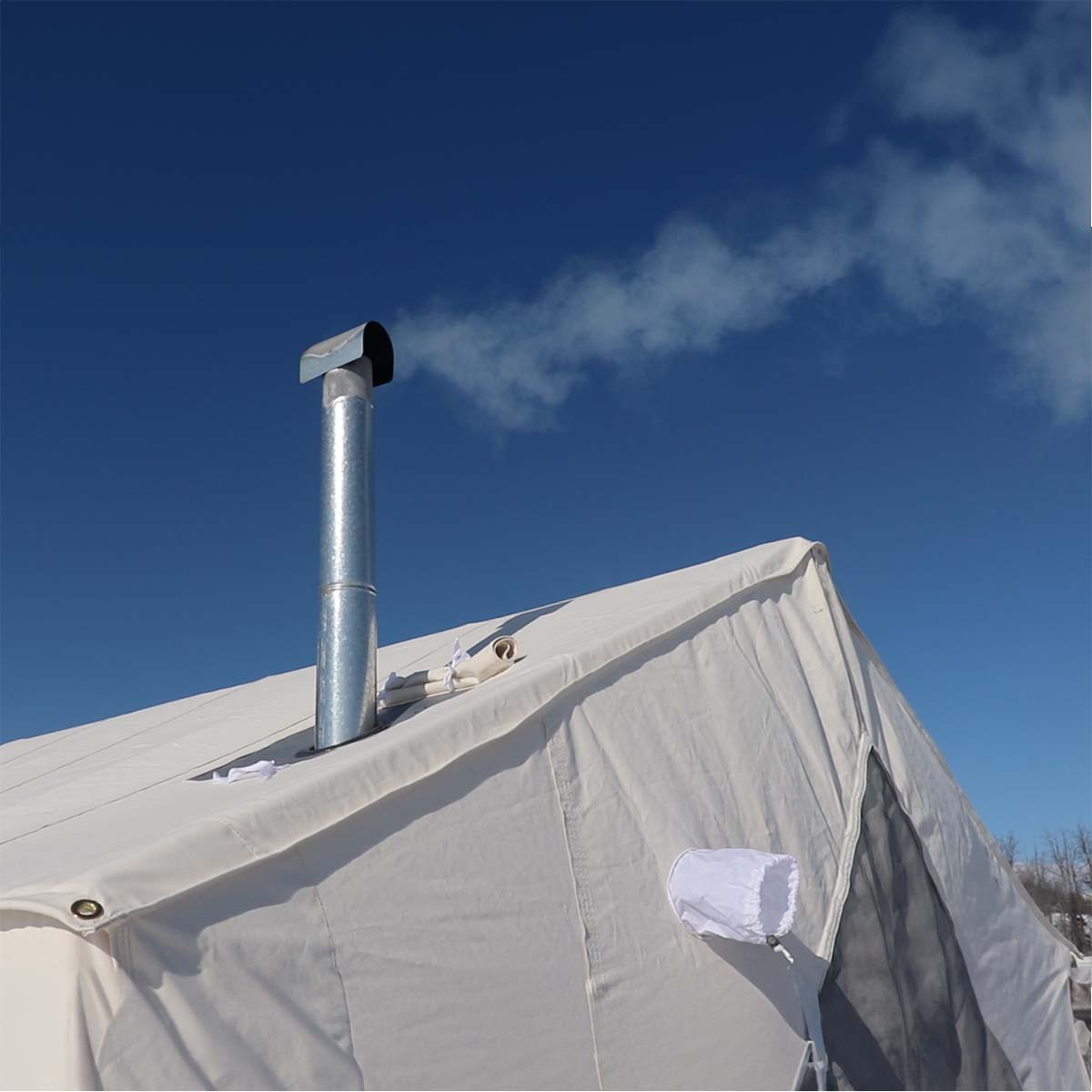
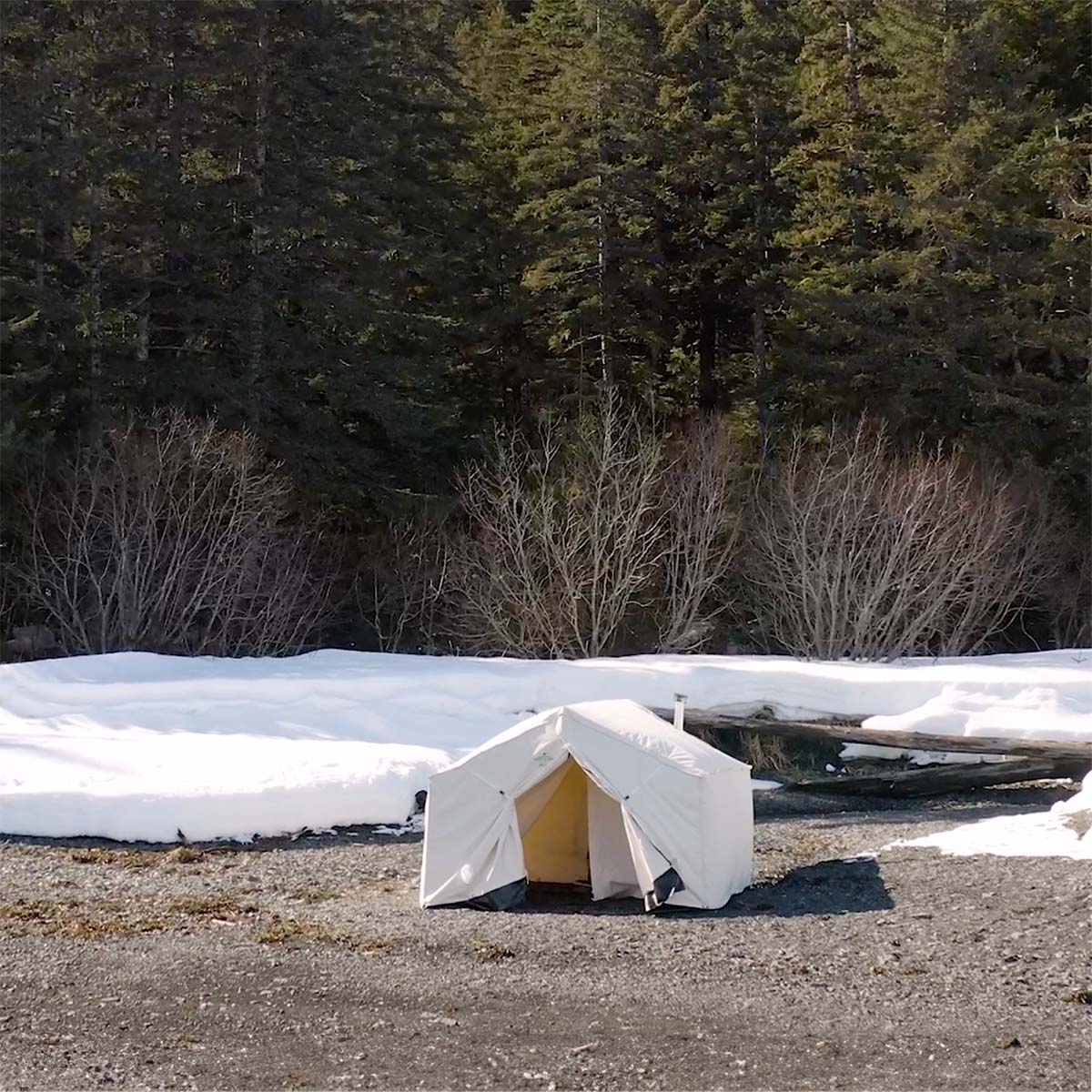
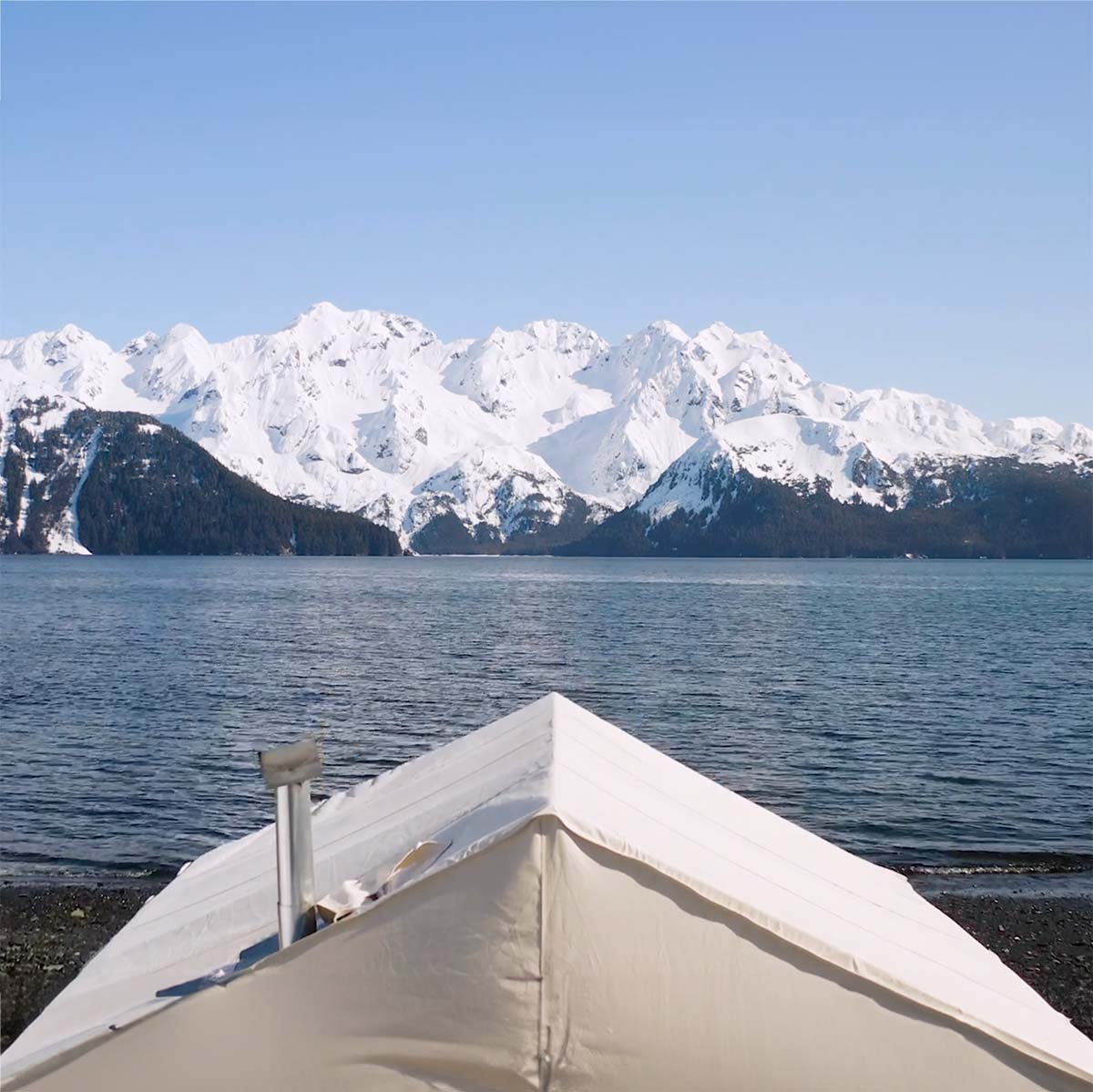
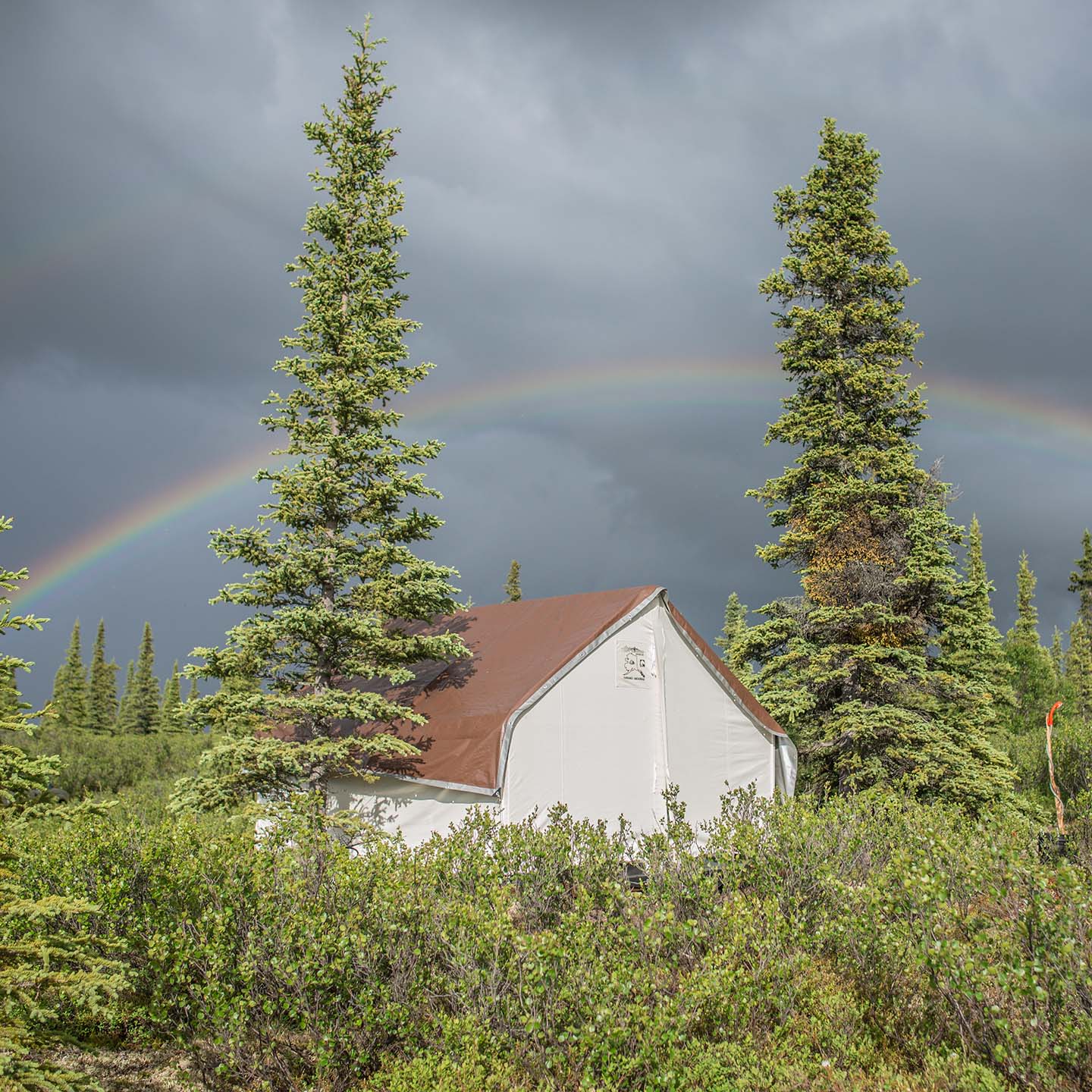
This is the Alaska Wall Tent by the Alaska Gear Company, each one is made in the United States from Sunforger 13oz DLX, a double-filled, pre-shrunk, marine-grade canvas ideal for longterm outdoor use.
The Alaska Wall Tent comes in an array of sizes and versions, allowing you to choose the one that best suits your individual use-case. They’re all individually made in Alaska, and perhaps even more importantly, they’re all tested extensively to be able to handle local conditions.
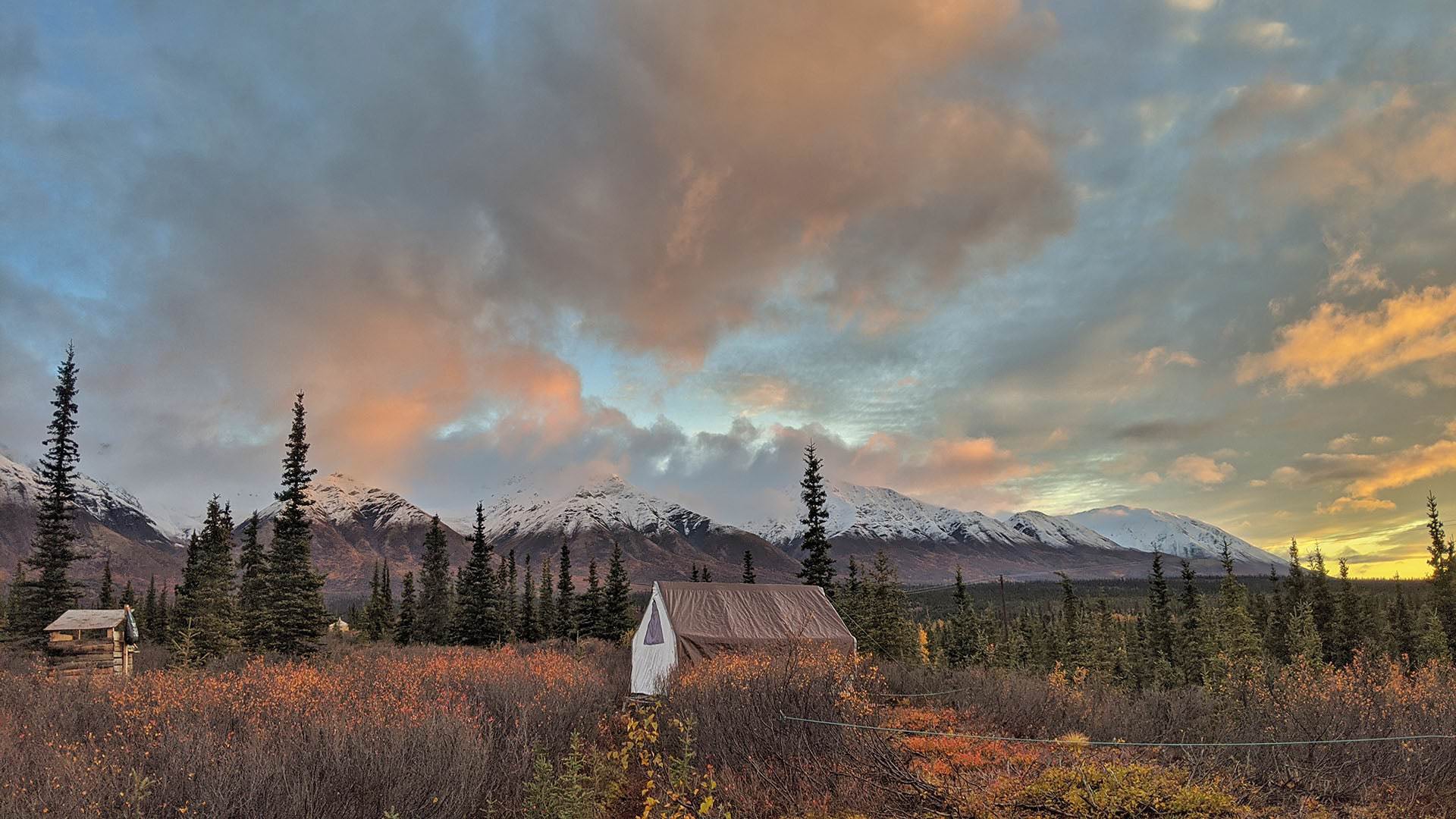
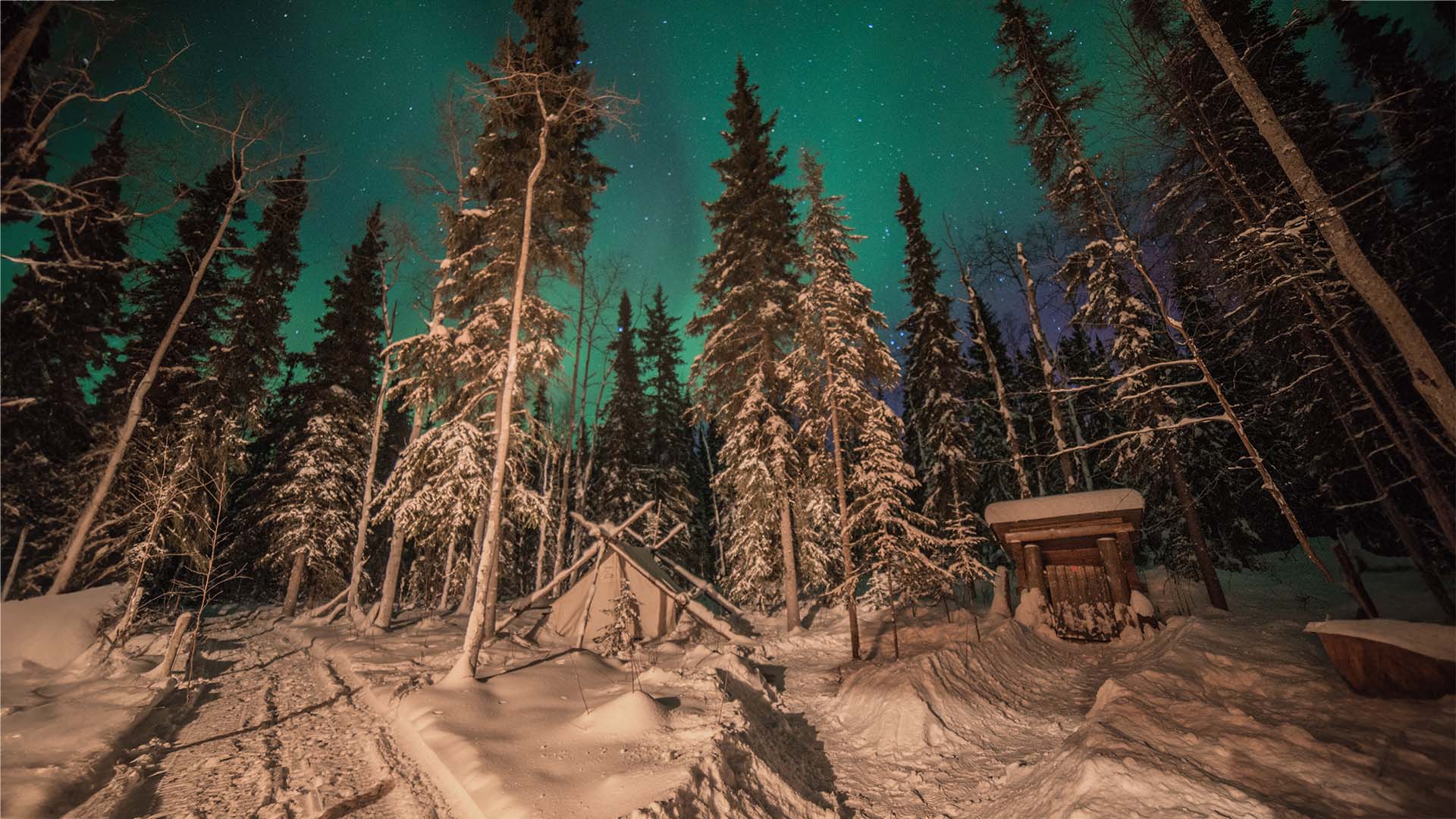
 This is the Alaska Wall Tent by the Alaska Gear Company, each one is made in the United States from Sunforger 13oz DLX, a double-filled, pre-shrunk, marine-grade canvas ideal for longterm outdoor use.
History Speedrun: The Alaska Gear Company
The Alaska Gear Company was formerly known as Airframes Alaska, it’s an aviation and outdoor equipment supplier and manufacturer headquartered in Palmer, Alaska. The company is led by majority owner Sean McLaughlin, who bought the original bush airplane parts business when it had just two employees and $100,000 in annual revenue. McLaughlin has since grown it to approximately 100 employees and $20 million in annual sales.
The company can trace its early roots to a licensed maker of Piper PA-18 Super Cub fuselages at Birchwood Airport. Through a series of acquisitions, including Reeve Air Motive (an aircraft parts retailer operating out of Anchorage’s Merrill Field since 1950, Alaska Tent & Tarp, and Northern Sled Works, the company grew well beyond aviation into outdoor recreation and cold-weather gear.
That diversification ultimately drove the rebrand from Airframes Alaska to Alaska Gear Company in late 2023, as the old name no longer conveyed the full scope of what the company produces and sells.
The Alaska Gear Company now operates out of three locations – a 100,000 square foot manufacturing facility in Palmer, a production facility in Fairbanks, and a retail store with an in-house sewing workshop at Merrill Field in Anchorage.
Its product lines span two major categories. On the aviation side, the company is best known for its hand-built Alaskan Bushwheel tundra tires, FAA-approved titanium landing gear, Super Cub fuselage modifications, and a wide range of bush plane parts. On the outdoor side, it manufactures Arctic Oven hot tents, canvas wall tents, custom freight and pulk sleds, and a modernized version of the iconic military bunny boot designed for extreme cold weather conditions.
More recently in 2024, the Alaska Gear Company was named “Made in Alaska Manufacturer of the Year” by the Alaska Department of Commerce.
The Alaska Wall Tent By The Alaska Gear Company
The Alaska Canvas Wall Tent is a handmade-in-Alaska canvas tent made from 13oz Sunforger DLX double-filled, preshrunk, marine-grade cotton canvas that’s treated to resist fire, water, and mildew while still remaining breathable.
It comes in four sizes, including 8×10, 10×12, 12×14, and 14×16 feet, all with 5-foot wall heights, and it’s available either unframed (starting at $1,295) or with a frame (starting at $2,300). The unframed version can be constructed in the field using lengths of wood sourced from the area, reducing the initial pack weight – this is crucial for trips into the wilderness by bush plane where every pound of weight is critical.
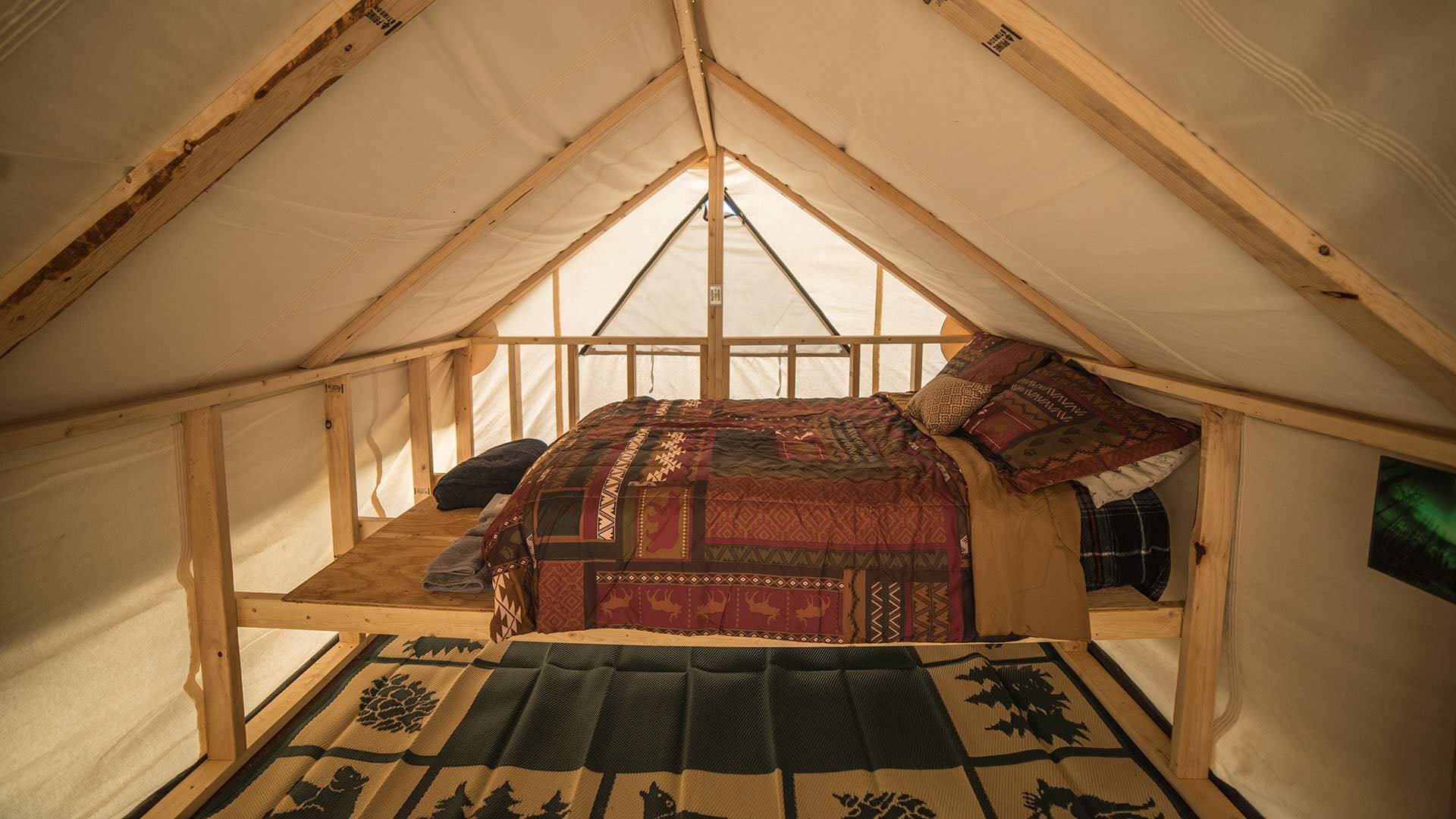
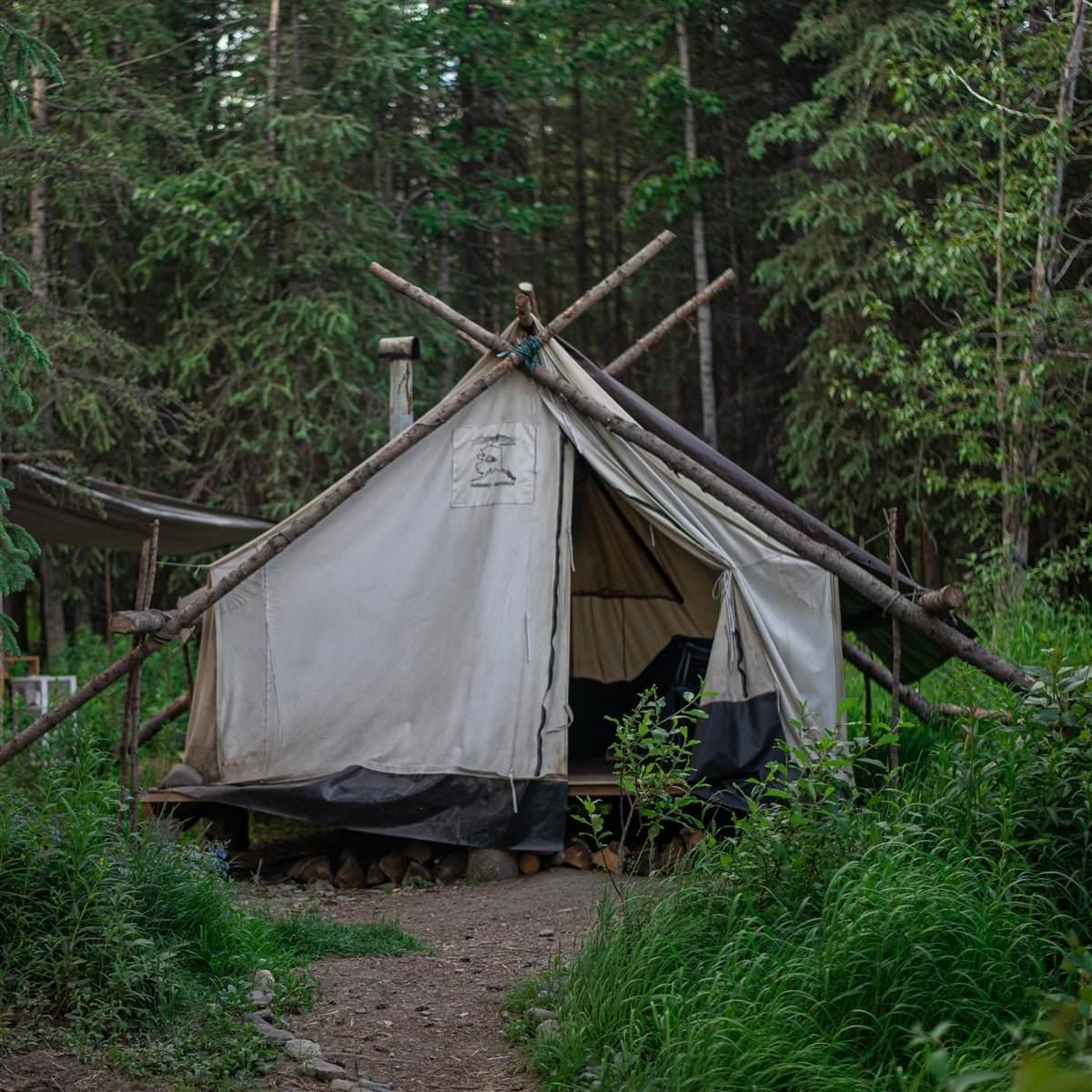
It comes in four sizes, including 8×10, 10×12, 12×14, and 14×16 feet, all with 5-foot wall heights, and it’s available either unframed (starting at $1,295) or with a frame (starting at $2,300). The unframed version can be constructed in the field using lengths of wood sourced from the area, reducing the initial pack weight – this is crucial for trips into the wilderness by bush plane where every pound of weight is critical.
All tents include a 4.5 inch oval stove jack for use with wood or propane stoves, as well as a 56 inch triangular rear window with insect screening, an 18oz vinyl sod cloth around the base to block drafts and moisture, ridgepole openings at both ends, rope-reinforced eaves, brass grommets, overlapping door flaps with ties, a heavy-duty zippered door, and 100 feet of sisal rope for tie-downs.
The tents are now available to buy direct from the Alaska Gear Company here, and at the time of writing they have stock ready to ship out immediately.
Images courtesy of the Alaska Gear Company
Articles that Ben Branch has written have been covered on CNN, Popular Mechanics, Smithsonian Magazine, Road & Track Magazine, the official Pinterest blog, the official eBay Motors blog, BuzzFeed, Autoweek Magazine, Wired Magazine, Autoblog, Gear Patrol, Jalopnik, The Verge, and many more.
Silodrome was founded by Ben back in 2010, in the years since the site has grown to become a world leader in the alternative and vintage motoring sector, with well over a million monthly readers from around the world and many hundreds of thousands of followers on social media.

The St. Elias Mountains in southeast Alaska are dotted with over 100 lakes where glaciers crumble into milky, turquoise water. Those lakes are expanding at an ever-quickening pace.
The lakes will quadruple in size over the next century or two, scientists report March 9 in the Proceedings of the National Academy of Sciences. This growth will transform landscapes, create new salmon habitat and may even change the course of a major river.
“We are seeing the great age of ice retreat” in Alaska, says Daniel McGrath, a glaciologist at Colorado State University in Fort Collins. “These glaciers are just peeling back from the landscape,” revealing deep grooves they carved in the Earth, where lakes are now forming.
Glacial hydrologist Eran Hood of the University of Alaska Southeast in Juneau, who was not part of the study, adds that “understanding where these lakes are going to emerge is important” because it “changes the whole nature of the downstream ecosystem.”
Hugging the coastline along the Alaska-Canada border, the tiny mountainous region that includes the St. Elias Mountains is losing 60 cubic kilometers of ice per year. Because lakes absorb solar heat, the glaciers that shed ice into lakes are shrinking faster than those that terminate on dry land. Across southeast Alaska, these lakes attached to glaciers have expanded by 60 percent since 1986, reaching a combined area of 1,300 square kilometers.
McGrath and his colleagues wondered how far this runaway expansion might go. So, they combined satellite images with estimates of ice thickness — mapping deeply eroded grooves that are still hidden under glaciers.
The results were “eye-opening,” McGrath says. The team identified 4,200 square kilometers of glacier-covered grooves adjacent to existing lakes.
He and his colleagues predict that the lakes will continue to expand — causing rapid ice retreat — until they fill those grooves, reaching a combined size of around 5,500 square kilometers, an area the size of Delaware.
“By the end of this century, all of these lakes will probably be more or less fully developed,” says study coauthor Louis Sass III, a glaciologist with the U.S. Geological Survey at the Alaska Science Center in Anchorage. But those growing lakes are already reshaping entire landscapes in a way that is often overlooked in public discourse around glacier retreat.
Many of Alaska’s glaciers terminate on dry land, and their meltwater often creates barren, rocky floodplains downstream, where the streams alternate between trickles and floods — constantly branching and shifting course as they lay down sediment released by the glacier.
“Those habitats are fairly inhospitable for a lot of fish,” including some salmon, says Jonathan Moore, an aquatic ecologist with Simon Fraser University in Burnaby, Canada. The water is too cold, and fish eggs “get swept out or buried by the floods every year.”
But as glaciers retreat into lakes and those lakes expand, their meltwater has time to drop its sediment and warm a few degrees in the lake before spilling into a river. Rivers that carry less sediment are less prone to shifting channels.
A 2025 study by Moore and remote sensing scientist Diane Whited of the University of Montana found that as glacial lakes expanded over 38 years in southeast Alaska, the downstream river channels stabilized, allowing willows and bushes to spread across floodplains.
“It creates salmon habitat,” Hood says. A 2021 study by Moore and Hood predicted that by 2100, glacial retreat in southeast Alaska will transform 6,000 kilometers of river channels into decent habitat for some local species of salmon. The lakes themselves will create spawning grounds for sockeye salmon — an important commercial species.
But these changes will come with upheaval.
For instance, one major river, the Alsek, will probably shift its course as retreating glaciers cause two lakes to merge, providing an easier path to the ocean.
People in Juneau are feeling another dramatic effect of expanding lakes. At least once per year, a lake dammed by the nearby Mendenhall Glacier spills out in a flash flood that gushes through town, forcing some residents to build protective levees around their homes.
These ecosystems “are going to be transformed,” Moore says. “But that transformation is going to be pretty violent and pretty dangerous.”
Source link

CORTINA D’AMPEZZO, Italy — Andrew Kurka spent his childhood roaming the outdoors of rural Alaska at his family’s homestead near Nikolaevsk, with 600 acres at his fingertips, sleeping inside only because he had to. But it was always fishing that was the lure.
Even as a 5-year-old, the now 34-year-old para Alpine gold medalist was resolute.
In those early years, his mom, Amy Bleakney, joined Kurka on the edge of a river for hours and hours as he searched for that one fish he was trying to catch. While temperatures might have dipped and time dragged on, there was no stopping Kurka and his child-sized fishing pole.
“‘We can come back,’” Bleakney would try to tell her son. “‘The fish is still going to be here tomorrow.’ He’s like, ‘No, I got to get it.’”
Bleakney would sit in the truck and watch her son.
“We didn’t leave until he caught his fish,” Bleakney said.
Thirty years later, Kurka still feels the pull of the water and Alaska. It’s been his home and the place that holds the next chapter of his life as he plans to step back from ski racing following the 2026 Milan Cortina Winter Paralympics. Shaped by the nature around him, he’ll be looking to help others find that sense of purpose with his next steps.
Just as he found his.
When Kurka was 13, he severely damaged three vertebrae in the middle of his spinal cord in an ATV accident. About three months after his accident, a family friend got him back in a boat and out on the water to go fishing. Kurka was in a back brace and still in excruciating pain, so the pair didn’t spend much time out. But that hour or so in the middle of nowhere was all Kurka needed.
“It was something that I wanted and something that I needed in my life, and he was able to help me get that, and then the moment that happens, he helped me set a new goal for myself: to be able to pursue being better,” Kurka said. “‘Hey, I want to do that, but on my own.’ You know?”
Two years later, he tried a different elevation of the outdoors — down the slopes on a mono-ski for the first time through a program called Challenge Alaska, thanks to the encouragement of his physical therapist. Kurka crashed at the bottom, going straight down.
Those who helped Kurka suggested he try turning on his next go-around. Instead, Kurka again went straight down.
“The moment that I slid down that mountain, the moment I felt that speed, I felt so alive,” Kurka said. “I remembered, ‘Hey, I can live. This is life. I can do things.’”
On a chairlift ride back up, his instructor predicted his future, telling him, “You’d be a pretty good racer. You don’t seem to be afraid.” Kurka learned about the Paralympics. For a lifelong athlete who wanted to go to the Olympics as a wrestler, the conversation renewed Kurka’s desire for “being the best.”
Kurka first qualified for the U.S. Paralympic team in 2014. But he didn’t compete after crashing in training. He made his Team USA debut in 2018, winning two medals (a gold in downhill and silver in super-G). He became the first-ever Alaskan Paralympic medalist. He is scheduled to compete this week in the super-G (Monday), combined (Tuesday) and giant slalom (Thursday).
Andrew Kurka celebrates with his silver medal from the super-G at the 2018 Paralympics. He also won gold in the downhill that year. (Lintao Zhang / Getty Images)
But with Kurka, there’s always something else brewing. And he knew his athletic career could set up his future. Not long after Kurka won his gold medal, Kurka started chatting to his now wife, Verónica, after the two met online. Kurka couldn’t stop talking about the property he had just found, telling her it was perfect.
“I was like, ‘OK, what’s your favorite color or something?’” Verónica Kurka says now with a laugh. “But he really, really wanted to talk about this project.”
Always a dream of his, he used his earnings to buy property and build cabins, looking to set up a retirement plan for himself. By the time Verónica visited Alaska some time later, Kurka was already living in one of the cabins. But in the process, after the 2018 Games, he realized he wanted it to be something more than just a build-and-sell investment.
Soon after, some of his friends came up to visit. So did someone whom Kurka barely knew, but he invited him up to Alaska on a challenge anyway.
When Derek Demun posted a photo of a personal-best-sized halibut he caught in his home area of Southern California, Kurka saw it on a mutually followed Instagram account connecting impaired outdoorsmen in the United States. Not long after, Demun received a direct message from Kurka that read along the lines of, “Oh, that’s your personal best. Why don’t you come up to Alaska and beat it?”
Kurka told him about his wheelchair-accessible bed and breakfast, the Golden Standard, and his backstory as a para athlete. The two chatted on the phone, and Demun checked him out to make sure he was a real person. A week later, Demun had tickets to Alaska for a trip that summer of 2020 with his dad and friend. Kurka picked them up in Anchorage, and the adventure was on as they drove to the property near Palmer, about 45 miles from Anchorage.
They spent the days exploring the scenery and taking in the moose that would frequently appear as roadblocks. Evenings were spent around a firepit. And there were two fishing excursions on Kurka’s boat, when they headed out to open water, a nearly 2 1/2-hour trek.
“I have no idea where we’re at,” Demun said. “It’s raining, it’s cloudy. We’re rocking with the waves. I’m like, ‘Dude, we’re in Alaska. I’m fishing for halibut. I’m going to die out here. No one is going to know. I feel like I’m on a TV show.’
“But he held by his word. I was able to go and catch the biggest halibut I’ve ever caught in my life.”
Since that trip, Demun has gone back to Alaska nearly every summer. The adventures have continued with airplane tours — Kurka has a sport pilot license and a plane is next on his to-do list — Jet Ski rides up to glaciers and plenty more fishing.
“When people think of Alaska, they think of igloos and polar bears and lots and lots of snow and just unaccessible terrain,” Demun said. “And me and Andrew, we have a little saying, like, complacency kills and comfort kills.”

Derek Demun (pictured) took Andrew Kurka up on his offer to visit Alaska. “He held by his word,” Demun said. “I was able to go and catch the biggest halibut I’ve ever caught in my life.” (Courtesy of Derek Demun)
As the years have passed between visits, the number of cabins on the property has grown, and Kurka has found his purpose.
“There was that sense of peace, that sense of freedom and that sense of fun that they got on the ocean has stayed with them forever,” Kurka said. “Nature was what helped me to recover from my injury. You know that peacefulness that helped me to recover from my injury, and I want other people to experience that also to help them recover from their injury. And it’s really easy for me to provide that.”
It’s the time with family and building out his next plans for the Golden Standard that has Kurka looking forward to stepping back from ski racing. But Kurka won’t be slowing down. He’ll just be spending more time in Alaska compared with the extensive travel that comes with being on the circuit. There’s a bike-trail trip in Japan with Verónica in the works, and he wants to spend time forging knives. He’s working with a nonprofit mentoring young athletes. For the Golden Standard, he plans on getting his commercial pilot license to become a flight instructor for others with impairments, along with providing fly-in fishing and hunting trips.
But beyond the occasional trips out, he doesn’t want to turn fishing into an extended job, as the water remains a sacred place for him.
“From my childhood, there’s been that outdoor sense of nature that has grabbed ahold of me,” Kurka said. “For me, nature and adventure is true freedom, because you stop worrying about everything else in life that doesn’t really matter. And that’s the piece of me that finds peace, and that’s what I search for. And I find bits and pieces of that inner peace while I’m competing. Because when I’m on the course and when I’m pushing out of the start gate, nothing else matters but that next one minute and 30 seconds worth of life-changing moments and dangerous speeds.
“But nothing about it compares to when I’m on the ocean in Alaska. … That’s the piece of me that I love and the piece of me that will always be in Alaska.”

NCAA Wrestling Championships at-large bids announced

Glendale, KY, residents mourn death of solider killed in Iran conflict

Officials confirm Pensacola Beach residue is algae, not oil from Louisiana spill

Maryland parents push to hold drug dealers accountable in overdose deaths

Does Kyle Whittingham face ‘win now’ pressure at Michigan?

Florida High School Football Rankings: Top 25 teams – Oct. 21

Cleary's 21 help Le Moyne down Central Connecticut State 69-64 in OT

How old is Bo Nix? What to know about Oregon quarterback ahead of 2024 NFL Draft

99th annual Pony Swim held in Virginia

Indiana Members Credit Union announced as new anchor tenant at Bottleworks District

Map: 2.3-Magnitude Earthquake Reported North of New York City

Trump stirs GOP primary drama with visit to Massie’s Kentucky home turf

Israeli air strike targets building in south Lebanon

Ed Martin, outspoken Justice Department lawyer, is formally accused of ethical violations | CNN Politics

Trump reveals top issues GOP should focus on to secure midterms victory: ‘I’ve never been more confident’
-

 Wisconsin1 week ago
Setting sail on iceboats across a frozen lake in Wisconsin
-

 Massachusetts1 week ago
Massachusetts man awaits word from family in Iran after attacks
-

 Maryland1 week ago
AM showers Sunday in Maryland
-

 Pennsylvania5 days ago
Pa. man found guilty of raping teen girl who he took to Mexico
-

 Florida1 week ago
Florida man rescued after being stuck in shoulder-deep mud for days
-

 Sports6 days ago
Keith Olbermann under fire for calling Lou Holtz a ‘scumbag’ after legendary coach’s death
-

 Detroit, MI4 days ago
U.S. Postal Service could run out of money within a year
-

 Miami, FL6 days ago
City of Miami celebrates reopening of Flagler Street as part of beautification project