Alaska
King Salmon Stocks Decline in Alaska | Sport Fishing Mag
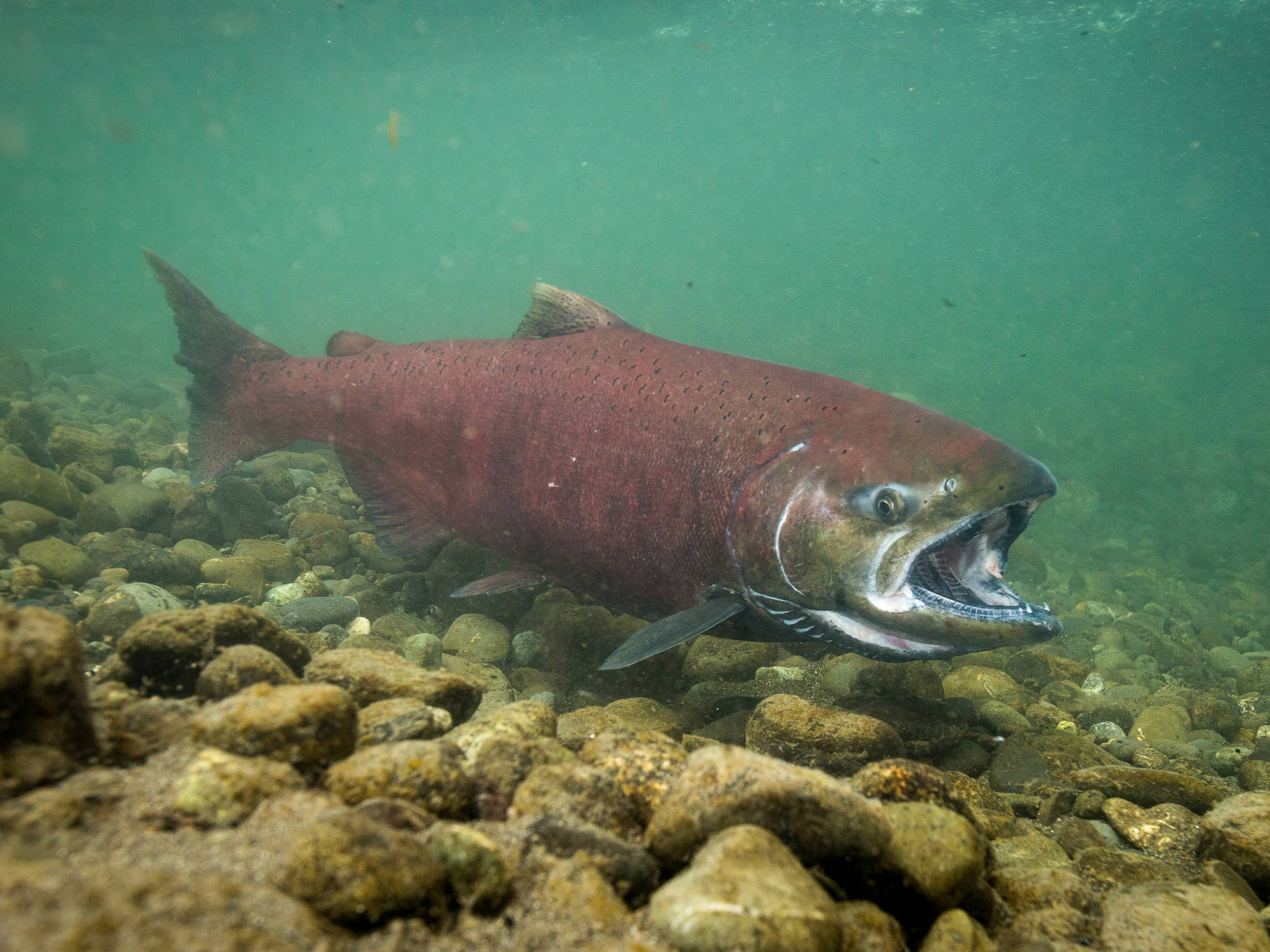
Courtesy Peter Westley
“Memorial Day weekend has long marked the traditional – and unofficial – opening of the Southcentral salmon fishing season as this is roughly when the first significant numbers of Chinook begin to return to the Kenai, Anchor and Susitna River systems, among others. Runs build in June, peaking in the Kenai River and upper Susitna drainages in early to mid-July.”
— This excerpt from the Alaska Department of Game & Fish website, published only a decade ago in July 2014, now serves as a bittersweet reminder of much better days for the Alaskan Chinook salmon fisheries.
This month marks the 39th anniversary of Les Anderson’s world record king salmon catch on Alaska’s famed Kenai River. On May 17, 1985, Anderson, an auto dealer from nearby Soldotna, hooked the salmon fishing from his boat, then took to shore to land the 97-pound, 4-ounce Kenai king. Though bigger king salmon have reportedly been caught and released by anglers since then, Anderson’s world record stands. It also stands for a magnificent fishery now gone. These days, the fight for kings is to save them.
“We’ve seen a severe decline in the king salmon stocks in the Kenai and in other Alaskan river systems,” says Shannon Martin, Executive Director of the Kenai River Sportfishing Association (KRSA). “We’ve had complete closures to sportfishing for kings on the Kenai and other rivers. On some rivers, only hatchery-raised king salmon may be harvested. These days, I won’t target kings anywhere,” she said.
Chinook (King) Salmon See Major Declines
Courtesy Berkely Bedell, USFWS
Called kings around the Kenai, the species is commonly called Chinook across its range in the North Pacific. In many locations in Alaska, Chinook’s decline has been so severe in the last 30 years that the wild fishery is in peril. The stocks are diminished by all measures, including the numbers of fish returning to rivers each year, the size of those individual fish, and the seasons to catch them.
“I remember the Kenai,” says Peter Westley, an associate professor in the College of Fisheries and Ocean Sciences at the University of Alaska, Fairbanks. “You could put your head into the mouth of one of those big fish. People are feeling pretty pessimistic, saddened, depressed, longing for the good old days.
“Across the entire North Pacific region, Chinook are not doing well,” he said. “The story is told river by river, but there are big patterns, and Chinook salmon in lots of places are circling the drain.”
Threats to Chinook
The threats to Chinook are multifold, complex, and many decades in the making — degraded habitat, dams, rising sea temperatures, and increasing predation by protected sea mammals. Add to all that fishing pressure and hatchery-raised salmon that compete with native fish. Westley says, “Unless something fundamentally changes with how we interact with them, the future for Chinook is really grim.
“On some level,” he adds, “there are Chinook, but they’re hatchery fish. The habitat is so messed up that there wouldn’t be Chinook without those hatchery fish. The evidence is saying that the hatchery fish diminish the wild fish though. In places like the Kasilof and Ninilchik, you can fish for hatchery Chinook, but the problem is that no one can distinguish what gets caught.”
Westley presents a comprehensive vision of the threats facing Chinook when he says, “The ocean has always been dangerous and risky, but in recent years, it has become even more dangerous for fish. The Chinook’s life-history strategy of growing slowly and being in the ocean most of its life isn’t benefitting the species lately.”
The Future of Alaska Fishing
Courtesy Ryan Hagerty, USFWS
Both Westley and Martin suggest that anglers shift their expectations of Alaskan fishing and realize that the kings need help and that there are plenty of other incredible fish to go for across the state and the region.
“We need to do our part to take the pressure off Chinook salmon,” says Westley. “If they want Chinook, people should go to places where the fishing has as little impact as possible on the wild stocks, places like Ship Creek, where it’s all hatchery fish,” he says. “There are also some healthy fisheries for wild sockeye. That’s a different ball game.”
Martin, from KRSA, said she is seeing a change in mentality in many anglers.
“Anglers are looking for other species, trying to protect that run of kings returning from the ocean. At the same time, our organization advocates for fishery managers to implement paired closings with commercial fisheries to include additional restrictions and protections. This would share the burden of conservation amongst all user groups. What matters is to get eggs in the gravel and that’s what we’re looking for.”
An Uncertain Future
Courtesy Shannon Martin
The fight will be long and hard to help protect Chinook, one of the Western World’s totemic sport fish, food fish, and a lynchpin of Alaska’s coastal ecosystem. Only recently, in March, the State of Alaska Board of Fisheries voted to lower the spawning escapement goal for the late-run Kenai River king salmon to support additional commercial fishing opportunities for other salmon, a decision that Martin and the KRSA lamented, painfully. Martin called it a “dark day for conservation in Alaska.” She said, “We’re essentially signing off on the managed decline of a species that has defined our region.”
Anyone who’s ever seen the broad, pink-green back of a Chinook salmon rising in a turquoise-colored, glacial river’s flow, while connected to that fish only by a thin line, knows the fear and the heartache that the fish might just break off and be gone, forever.
Alaska
Dutch Harbor Remembrance Day 2026 – Mike Dunleavy
WHEREAS, on June 3, 1942, six months after the attack on Pearl Harbor, World War II arrived in Alaska when Dutch Harbor on Amaknak Island was bombed by Japanese – the first aerial attack by an enemy on the continental United States; and
WHEREAS, the Japanese pilots expected little resistance; but because of an intercepted message three weeks earlier, the installation was on high alert, and Navy and Marine personnel were prepared with anti-aircraft defenses; and
WHEREAS, encountering unexpected resistance at Dutch Harbor, installation, Japanese forces shifted their focus to the Margaret Bay Naval Barracks, where the attack claimed the lives of 25 servicemen; and
WHEREAS, following the initial attack on Dutch Harbor, Japanese forces launched additional assaults on Dutch Harbor, Adak, Kiska, and Attu, resulting in the Aleut people being evacuated and held in internment camps in Southeast Alaska for three years, through which many did not survive; and
WHEREAS, the brave soldiers of the United States Armed Forces and allied Canadian Forces fought valiantly for more than a year to reclaim the remaining Aleutian Islands. The battle of Attu stands as one of the most costly American assaults in the Pacific, with hundreds of servicemen making the ultimate sacrifice to liberate Alaska; and
WHEREAS, on the 84th anniversary of the bombing of Dutch Harbor, we remember and honor all who were affected by the attack, paying tribute both to the military personnel who served and died to defend our Nation and to the Aleut people who died while imprisoned.
NOW THEREFORE, I, Mike Dunleavy, GOVERNOR OF THE STATE OF ALASKA, do hereby proclaim June 3, 2026, as:
Dutch Harbor Remembrance Day
in Alaska and encourage all Alaskans to join with the people of Dutch Harbor, Unalaska, and the Aleutian Islands to honor all who were lost in Alaska during World War II, and I order the Alaska State Flag to be flown at half-staff in remembrance of those who perished.
Dated: June 3, 2026
Alaska
Photos show Alaska National Guard plane damaged in Iran war theater
A plane belonging to the Alaska National Guard appears to have been damaged during operations connected to Operation Epic Fury as part of American military efforts against Iran, according to online reports. Defense officials have so far declined to confirm whether Alaska National Guard personnel or equipment are taking part in the campaign.
Last week, defense industry news outlet The War Zone published photos of a KC-135 Stratotanker transiting through a British airbase. In the pictures, made by photographer Andrew McKelvey, the rear bottom of the fuselage and wing stabilizers are “peppered with temporary shrapnel damage repairs‚“ according to The War Zone’s article. The plane also appears to be missing its refueling boom, the proboscis extending from under the tail to pump off fuel to other aircraft.
In the photographs, the Stratotanker’s tail number is visible, identifying the refueling plane as belonging to the Alaska Air National Guard’s 168th Wing, based at Eielson Air Force Base outside of Fairbanks. The wing’s mission includes aerial refueling. That’s the tactic of large planes unloading vast quantities of fuel to aircraft, ranging from fighter jets to rescue helicopters, in midair.
Pictures from a different photographer published last week by another blog, The Aviationist, show the same plane. The tail includes the letters “AK” painted above a white polar bear.
In addition to the photographs, the reporting from The War Zone is based on publicly available flight data and social media posts scraped from a variety of sources.
According to information from Flight Radar 24, the Stratotanker left Eielson on March 5, just days after the U.S. and Israeli militaries began bombing Iranian targets on Feb. 28. Through March, according to public flight records, the plane was based at Ben Gurion Airport southeast of Tel Aviv, where, according to The War Zone, dozens of American refueling aircraft were staged as part of Operation Epic Fury.
There are no public flight records connected to the Stratotanker through April and most of May, until it appeared to fly through England on the way to the United States at the end of last month.
It is not clear how many Alaska Air National Guard planes, personnel or units are currently deployed in connection to the war effort against Iran.
A spokesperson for the Alaska National Guard referred all questions about Operation Epic Fury to the U.S. Central Command.
A spokesperson for CENTCOM, headquartered at MacDill Air Force Base in Florida, declined to answer questions on the record or provide any specific information about Alaska National Guard units deployed as part of ongoing military operations, citing the need to protect service members and operational security.
The Alaska National Guard has posted no informational releases or pictures connected to an overseas deployment during the last few months.
Much of Operation Epic Fury has been waged by military aircraft, and aerial refueling is critical to keeping planes supplied during long flights. A May 12 report from the Congressional Research Service composed of public damage reports to U.S. military aircraft noted that among the 42 records of damage or losses were seven KC-135 Stratotankers, though the findings were published before photos emerged of the Alaska-based plane. The report noted that the Defense Department “has not published a comprehensive assessment of combat losses” from Operation Epic Fury.
The tail number is associated with a Stratotanker manufactured in 1964, the year before Boeing ceased making them. All of the nearly 400 KC-135s currently in operation within the American military date back to that era of the Cold War.
The aircraft has the word “Tetlin” painted on the top of its tail. The name is an homage to the Interior Alaska village, one of several selected to honor longstanding bonds between military aviators and Alaska Native communities, according to photographs of a dedication ceremony posted by the Alaska National Guard last summer.
The 168th Wing currently has 12 Stratotankers attached to the unit. That number bumped up in April after a long campaign by Alaska Republican U.S. Sen. Dan Sullivan to allocate more tankers to the state’s portfolio given its vast geography and high number of advanced fighter jets.
Alaska
Alaska Airlines debuts new Lounge in Portland, raising the bar for premium West Coast travel
- Alaska Airlines is opening its newest Lounge at Portland International Airport, featuring thoughtfully designed spaces with twice the square footage and seating of the current space
- The new Lounge reflects the airline’s appreciation for its loyal guests and comes as Alaska continues to expand its service in Portland, offering more flights and more options for guests
- The investment to modernize the Portland Lounge is part of Alaska’s growing portfolio to elevate its global guest experience and expand its Lounge footprint, including new spaces in Seattle, San Diego and Honolulu
PORTLAND, Ore., June 2, 2026 /PRNewswire/ — Alaska Airlines is set to welcome guests to its newest Lounge at Portland International Airport (PDX) when it officially opens on June 4, underscoring its continued investment in premium travel and one of the carrier’s key West Coast hubs.
After more than two years of construction, the approximately 14,000-square-foot Lounge will welcome guests with a warm, thoughtfully designed Pacific Northwest aesthetic, featuring an inviting fireplace and a striking wooden Mt. Hood mural by artist Ben Butler. At twice the size of the current Portland Lounge, it offers more than 230 seats, including Alaska’s Signature Loungers, along with high, open ceilings that bring in natural light and views of PDX’s new terminal. Guests can relax, enjoy fresh, regionally inspired food, sip barista-crafted beverages or cocktails from West Coast partners, or take advantage of ample power plugs and privacy booths for calls and meetings.
“Portland guests have chosen Alaska for years and played an important role in our growth in the Pacific Northwest,” said Shane Jones, senior vice president of fleet, products and guest experience. “This new Lounge is our way of thanking them and a reflection of our growing portfolio of premium guest experiences. We look forward to opening our doors this week and welcoming guests with the signature hospitality and thoughtful touches Alaska is known for.”
Alaska is the largest carrier serving Portland, operating more flights than any other airline, including more than 100 daily departures. Portland is a critical hub in Alaska and Hawaiian’s network with expanding service to over 60 destinations across North America and beyond. This summer, Alaska will launch year-round service to Everett/Paine Field and Pasco–Tri-Cities, along with seasonal service to Jackson Hole. Last month, new service began to Baltimore, Bellingham, Idaho Falls, Philadelphia and St. Louis. By this fall, Alaska will offer 50% more seats in Portland than just two years ago, reflecting strong demand for travel and the airline’s continued investment in the market.
“Our strong partnership with Alaska has helped to elevate the new PDX as a world-class destination that showcases the Pacific Northwest and makes everyone feel at home,” said Chris Czarnecki, PDX business and properties director. “We’re thrilled their new PDX Lounge is here for the long-haul, offering travelers a stunning spot to relax, recharge, and experience a taste of our region.”
The nearly $18 million investment in the Portland Lounge is part of Alaska’s growing Lounge footprint and broader commitment to enhancing the guest experience as it expands globally. Building on this investment, Alaska just announced its plans to open a landmark, more than 41,000-square-foot Lounge in 2027. The Lounge, which will be located in Seattle – home to the airline’s main hub – will be the largest in its network and among the largest airline lounges in the country. The airline is also designing its first Lounge in San Diego along with a new, expanded Lounge in Honolulu, both slated for early 2028.
Alaska Airlines Lounge members can access eight premium Lounges across the Alaska and Hawaiian Airlines network, including its largest Lounge in Seattle and additional locations at its hubs in Anchorage, Los Angeles and San Francisco. Alaska Lounge+ membership unlocks access to all Alaska Lounges, plus nearly 90 partner Lounges worldwide, including select oneworld and partner Lounges. To learn more or sign up to become an Alaska Lounge member, click here.
Frequently Asked Questions:
What is Alaska Airlines opening at Portland International Airport?
A: Alaska Airlines is opening a newly redesigned Lounge at Portland International Airport (PDX) on June 4, 2026, offering a larger, more modern space with premium amenities, regional food and beverage options, and enhanced comfort for guests.
How big is the new Alaska Lounge in Portland?
A: The new Lounge is approximately 14,000 square feet—about twice the size of the previous Portland Lounge—and features more than 230 seats.
What amenities are available in the new Alaska Lounge at PDX?
A: Guests can enjoy:
- Barista-crafted coffee and specialty beverages
- West Coast-inspired cocktails
- Fresh, locally inspired food
- Signature Lounge seating and private booths
- Ample power outlets and workspaces
- Relaxation areas with premium finishes
Who can access Alaska Airlines Lounges?
A: Access is available to:
- Alaska Lounge members
- Alaska Lounge+ members
- Eligible First Class guests
- Eligible oneworld and partner airline passengers
What is the difference between Alaska Lounge and Lounge+ membership?
A: Alaska Lounge+ membership includes access to all Alaska Lounges plus nearly 90 partner Lounges worldwide, while standard Alaska Lounge membership provides access to all eight Alaska-operated Lounges.
Why is Portland important to Alaska Airlines?
A: Portland is one of Alaska Airlines’ key West Coast hubs, with more than 100 daily departures and nonstop service to over 60 destinations across North America. By this fall, Alaska will offer 50% more seats in Portland than just two years ago, reflecting strong demand for travel and the airline’s continued investment in the market.
How is Alaska Airlines expanding its Lounge network?
A: Alaska Airlines is investing in multiple new and expanded Lounges, including:
- A 41,000+ square feet landmark Lounge in Seattle opening in 2027
- A new Lounge in San Diego
- An expanded Lounge in Honolulu
How much did Alaska Airlines invest in the new Portland Lounge?
A: Alaska Airlines invested nearly $18 million in the new Portland Lounge as part of its broader investment in premium travel as the airline continues to grow globally.
About Alaska, Hawaiian and Horizon
Alaska Airlines, Hawaiian Airlines and Horizon Air are subsidiaries of Alaska Air Group, and McGee Air Services is a subsidiary of Alaska Airlines. We are a global airline with hubs in Seattle, Honolulu, Portland, Anchorage, Los Angeles, San Diego and San Francisco. We deliver remarkable care as we fly our guests to more than 140 destinations throughout North America, Latin America, Asia, the Pacific and Europe. Guests can book travel at alaskaair.com and hawaiianairlines.com. Alaska and Hawaiian are members of the oneworld alliance. Members of our Atmos Rewards loyalty program can earn and redeem points with oneworld airlines and our additional global partners that serve over 1,000 worldwide destinations. Learn more about what’s happening at Alaska and Hawaiian at news.alaskaair.com. Alaska Air Group is traded on the New York Stock Exchange (NYSE) as “ALK.”

SOURCE Alaska Airlines
-
Indiana6 minutes agoIndiana extends gas tax suspension: ‘Cheapest gas in the country’
-
Iowa9 minutes agoTrump's primary endorsement winning streak just ended in Iowa
-
Kansas14 minutes agoWhere to watch Kansas City Royals vs Cincinnati Reds: TV channel, start time, streaming for June 3
-
Kentucky21 minutes agoFayette County school board chair, KEA sue to block Kentucky law that would oust current members
-
Louisiana24 minutes agoLouisiana insurance officials to announce retirement of Katrina, Rita bonds
-
Maine36 minutes agoMaine’s abrupt plan to cut $400M in construction projects roils the industry
-
Maryland39 minutes agoMan found dead in South Carolina after shooting ex-girlfriend in Maryland
-
Michigan44 minutes ago
Gotion wants Michigan township to pay the $23.7M it owes in incentives