Alaska
Earthquakes under a volcano near Alaska's largest city raise concerns


ANCHORAGE, Alaska (AP) — An increase in the number of earthquakes under a volcano near Alaska’s largest city this year has geologists paying attention.
Mount Spurr, about 80 miles (129 kilometers) northwest of Anchorage, last erupted in 1992, spewing an ash cloud nearly 12 miles (19 kilometers) into the air, prompting flights to be canceled and people to don masks. Another eruption at the 11,100-foot (3,383-meter) stratovolcano could be severely disruptive to the city, according to the Alaska Volcano Observatory.
The observatory raised its alert status for Mount Spurr in October — from green to yellow — when the increase in seismic activity became pronounced and a ground deformation was spotted in satellite data. Observatory scientist David Fee said Friday there have been about 1,500 small earthquake below the volcano this year, compared to about 100 in a normal year.
Trusted news and daily delights, right in your inbox
See for yourself — The Yodel is the go-to source for daily news, entertainment and feel-good stories.
While that might seem like a lot, it’s “not an enormous amount,” Fee said. It could be a precursor to an eruption — or not. Similar seismic unrest occurred from 2004 to 2006 before subsiding without an eruption.
“We don’t see any significant change in our data that would tell us that an eruption is imminent,” Fee said. “Things have been kind of this low-level unrest for a while now and we’re, of course, watching it very closely to detect any changes and what that might mean.”
Scientists are monitoring seismic stations, global satellite data and a webcam for additional changes that would signal an impending eruption. If magma is moving closer to the surface, there would be an increase in earthquakes, ground deformations, the creation of a summit lake or fumaroles, which are vents that open in the surface to vent gas and vapors.
The volcano last erupted in 1992 from the Crater Peak flank vent, located about 2 miles (3 kilometers) south of the summit. The eruption dropped about a quarter-inch of ash in Anchorage that year, prompting residents to stay inside or to go out donning masks, and the cloud drifted as far as Greenland.
A similar eruption from the same vent happened in 1953. The last known eruption from the summit was more than 5,000 years ago.
Volcanic ash is angular and sharp and has been used as an industrial abrasive. The powdered rock can cause a jet engine to shut down, which prompted Anchorage and other nearby airports to close during the 1992 eruption.
Closing airports is always an inconvenience in a state with few roads, but can be more than just inconvenient. Business would also be impacted since the Anchorage airport today is among the world’s busiest cargo hubs with Memphis, Hong Kong and Shanghai, mainly because of Alaska’s proximity to Asia.
Mount Spurr, located on the Volcanic Ring of Fire, is one of 53 volcanoes in Alaska that have been active within the last 250 years.



Southcentral Alaska’s largest natural gas utility said Tuesday it might not have the gas to make it through this winter. That’s after state regulators last Wednesday denied Enstar’s request that would’ve expanded natural gas storage in Kenai, as the region faces a looming natural gas shortage.
Enstar president John Sims said it’s “not looking good” for the utility’s more than 150,000 Southcentral customers heading into the cold, winter months.
“Just to be very blunt, we need additional production in order to make it through this winter,” Sims said. “We are kind of turning over every stone possible and trying to find more gas resources.”
In the order, the Regulatory Commission of Alaska wrote they were “unsure about the timing of the need for additional natural gas storage capacity, including insertion and withdrawal capacity.”
Enstar proposed developing and operating a depleted reservoir known as the Kenai Loop Pool that is currently leased and operated by AIX Energy, LLC., to store gas to use during the colder months.
The utility was seeking an “advanced determination” from RCA that it was prudent, which would allow the project to unlock financing for development, the order says. In its original filing, Enstar said that the project would help ensure there are enough supplies to meet the needs of its customers.
A search for other options
The commission denied the utility’s request in a 17-page order last Wednesday, saying the Department of Natural Resources hadn’t determined if the facility was capable of serving as a gas storage facility. Hilcorp has a competing application for the same storage facility, the order said.
The RCA didn’t respond to a request for comment Tuesday afternoon.
The facility would hold 25 billion cubic feet of gas, which Sims said is appropriately sized for the current supply needs and future natural gas imports.
“The other benefit of having this storage facility right now is we can go to Furie, AIX, to all the small producers and even Hilcorp and say, ‘Hey, whatever volume of gas you produce, I can buy it.’ And I can store that into this storage facility for later use,” he said.
Longer term, utilities are looking to import natural gas, which would impose an unavoidable price increase to thousands of households and businesses. Legislators are currently in negotiations over a multibillion-dollar property tax break for the developer of the Alaska LNG project, Glenfarne. But it’s unknown if, or when, that project will be built.
According to the order, Enstar’s Kenai storage project garnered support from DNR, multiple state legislators and other regional electric utilities. However, some Anchorage-based property management companies said it was “inappropriate” for ratepayers to bear the cost of the project. The project’s $240 million price tag would’ve increased bills for customers by $10 to $12 per month, according to the filing.
Sims said Enstar is filing a petition for the reconsideration of the ruling next week.
“Just in case the commission denies that request, yes, we are looking at other storage options,” he said. “Unfortunately, based on our analysis that we did before we filed with the commission, those options appear to be more expensive.”
Sims said he’s hoping production and storage ramps up, but if it doesn’t, he said the utility may need to ask customers this winter to conserve supplies by lowering their thermostats.
___
This story was originally published by Alaska Public Media and distributed through a partnership with The Associated Press.
Alaska
ICE: Alaska state attorney arrested by immigration officials, held in Tacoma detention center

ANCHORAGE, Alaska (KTUU) – U.S. Immigration and Customs Enforcement arrested Shucheng “Charlie” Yang, 32, a Chinese national and attorney with the Alaska Department of Law, on July 10 in Anchorage, according to an ICE spokesperson.
ICE said Yang violated the terms of his admission and is a “deportable alien.”
He is currently being held at the Northwest ICE Processing Center in Tacoma, Washington, pending immigration proceedings.
Yang pled no contest to a speeding ticket he was cited for on May 22. There are no other charges against him listed in the Alaska court system.
Yang is the most recent person in Alaska to be taken into ICE custody at the Tacoma processing center; a Mexican woman living in Soldotna was deported along with her three children in February.
His arrest also comes days after a Colombian man was shot and killed by a federal immigration officer earlier this week in Maine, fueling a new wave of protests against perceived ICE brutality.
State outlines hiring process
The Alaska Department of Administration responded to general questions about verifying employment eligibility for all full-time hires and said the state requires applicants to self-disclose their employment eligibility during the application process.
“The State of Alaska hires individuals who have the legal right to work in the United States,” Policy Advisor Kate Sheehan said. “This employment eligibility is confirmed through the federally mandated I-9 verification process.”
Yang is listed as Department of Law civil attorney on the State of Alaska employee directory.
Agencies decline to comment on Yang
Both the Alaska Department of Law and the Office of Gov. Mike Dunleavy declined to address Yang’s employment status or arrest.
“As a practice, the Department of Law does not provide comments on personnel issues,” Information Officer Sam Curtis said.
“We do not comment on personnel issues,” Deputy Press Secretary Grant Robinson said.
Alaska’s News Source is reaching out to Yang through multiple channels while he remains detained in Tacoma.
See a spelling or grammar error? Report it to web@ktuu.com
Copyright 2026 KTUU. All rights reserved.

ANCHORAGE, Alaska (KTUU) – The National Science Foundation has selected the University of Alaska Fairbanks to be the site of a new critical minerals research program, making it one of 12 new technology innovation centers across the nation that received federal funding, according to Yereth Rosen with the Alaska Beacon.
The new Critical Minerals Accelerator Engine in Alaska will receive $15 million in funding for two years and up to $160 million over 10 years, the university said on Tuesday.
The organization will be located at and led by UAF’s Geophysical Institute and will work with more than 40 partners, said Steve Masterman, the university faculty member who helped lead the application for the award. Partners include private companies, Native corporations, nonprofits, other universities and other entities, said Masterman, who formerly served as Alaska’s state geologist.
UAF already conducts scientific research into minerals considered critical to the nation’s economy through its Critical Minerals Collaborative. That program is more scientific and academic-focused, said Masterman, who is its deputy director.
In contrast, the Critical Minerals Accelerator Engine will be focused on putting research to use, determining ways to commercialize resources, addressing supply needs, workforce development and other issues important to the critical minerals industry.
Though the scientific research already conducted at UAF will be helpful, the accelerator idea is industry-focused, Masterman said.
“This is quite different because it’s an economic development project,” he said.
Alaska is rich in resources considered critical minerals. The state has 56 of the 60 minerals classified by the U.S. Geological Survey as critical to the nation’s economy, UAF said in its statement.
In addition to the Alaska award, the NSF on Tuesday announced its awards for other innovation engines in different parts of the nation. The sites have different primary purposes, such as disaster prevention and mitigation, robotics development and development of advanced information technologies.
The Alaska innovation engine will be led by Lee Ann Munk, a faculty member at the Geophysical Institute and a geosciences professor at UAF’s College of Natural Science and Mathematics. Munk is currently director of the Critical Minerals Collaborative at UAF.
“Our NSF Engine is built on the simple but ambitious idea that Alaska can lead the nation not only with the abundance of its critical mineral resources, but also in how we innovate, develop and deploy the technologies needed to produce them responsibly,” Munk said in a statement released by the university.
“By bringing together researchers, Alaska Native organizations, industry, workforce partners, state and federal agencies, national laboratories and communities, we are creating an engine that accelerates discovery into action,” she said.
Editor’s note: This story was republished with permission from the Alaska Beacon.
See a spelling or grammar error? Report it to web@ktuu.com
Copyright 2026 KTUU. All rights reserved.
-

 Arizona42 seconds ago
This Arizona city named among top 23 small US towns to visit
-

 Arkansas7 minutes ago
Fayetteville, Arkansas, draws Razorback fans, cyclists, history buffs
-
 California13 minutes ago
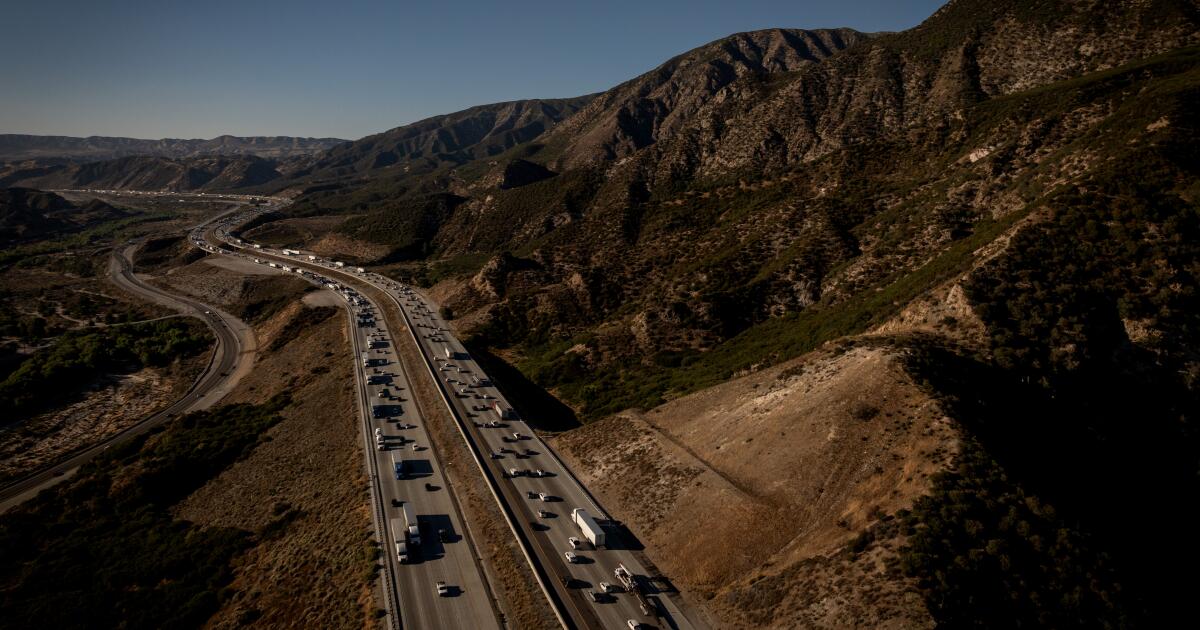
The San Andreas fault has gone ominously silent. Scientists fear when it finally snaps
-

 Colorado19 minutes ago
Three-quarters of Coloradans are worried they can’t afford to live here, poll finds
-

 Connecticut25 minutes ago
Love Food Names the Best Place for Ramen in Connecticut
-

 Delaware31 minutes ago
Family of Kadir Skinner to sue Wilmington over police killing
-

 Florida37 minutes ago
Florida TODAY: Homes get expensive, license to blush, fuzzy invader
-

 Georgia43 minutes ago
Georgia Youth Symphony Orchestra Announces Expanded Artistic Leadership Team for 2026–2027 Season

