Alaska
“Ask For A Warrant” Alaska Airlines Privacy Poster Angers Trump Supporters, Sparks Political Firestorm – Live and Let’s Fly


A new Alaska Airlines poster reminding employees to verify law-enforcement requests with a subpoena or warrant has touched off political outrage online, particularly among Trump-aligned commentators who view it as an act of resistance against police or federal officers.
A poster photographed inside an Alaska Airlines workspace has gone viral for its explicit instruction to employees: “If a law enforcement officer or government official asks you for guest information, don’t comply. Ask for a subpoena or warrant to verify.”
The poster, which features branding for Alaska, Hawaiian, and Horizon, emphasizes that front-line staff should not release customer data without proper legal authority, and should immediately notify a supervisor if approached. It also provides an email address for directing non-urgent government inquiries to Alaska’s legal department.
The policy itself is not new. Airlines routinely instruct employees to require legal process before turning over passenger records; in fact, this mirrors standard privacy practices across the aviation and hospitality industries. What is new is the political reaction.
The image was circulated widely by accounts supportive of President Trump, including retired Air Force Lieutenant Colonel Buzz Patterson, who suggested the poster represented an anti-law enforcement stance and was an example of woke corporate behavior. Commenters echoed that sentiment, accusing Alaska Airlines of “interfering with police,” “coddling criminals,” and “undermining authorities.” Some went further, suggesting the airline was preparing to obstruct possible immigration-related enforcement in a direct attack against the Trump administration.
That framing ignores the underlying reality: airlines do not have discretion to hand over passenger information when asked verbally by an officer. Without a subpoena or warrant, such disclosure is generally prohibited by the carrier’s own data privacy polices. Still, the optics of a cartoon police officer being told “ask why” before complying struck a nerve among social-media users predisposed to perceive corporate privacy protocols as political virtue signaling.
Sadly, even routine legal-compliance signage can become a partisan lightning rod in today’s environment.
Why This Policy Is Actually Aligned With Longstanding Conservative Principles
The criticism from some conservative commentators is ironic, because the principle behind Alaska’s poster…skepticism of government intrusion without due process…is traditionally a hallmark of the American political right.
Conservatives have historically championed:
- Limiting government power
- Requiring warrants for searches and data seizures
- Protecting private property and personal information
- Resisting unlawful or extrajudicial demands from bureaucrats or federal agencies
In that light, Alaska’s policy is not anti-police but pro-rule-of-law: if the government wants access to passenger records, it must obtain a warrant or subpoena, which is precisely how the legal system is designed to function. The alternative (handing over passenger data whenever asked) would be far more troubling to anyone concerned about surveillance, political targeting, or abuse of authority.
Put differently, the procedure that some have framed as “insubordination” is actually a safeguard that conservatives have defended for decades. It protects passengers from overreach, protects employees from liability, and protects law enforcement by ensuring evidence is gathered through proper channels.
In a polarized climate, even basic privacy compliance is easily misunderstood. But Alaska’s stance is neither radical nor new. It is simply the lawful, time-tested requirement that government power be exercised transparently and with judicial oversight.
CONCLUSION
In the end, Alaska Airlines’ poster is less a political statement than a reminder that customer data cannot be handed over on demand. Insisting on subpoenas and warrants aligns with long-standing conservative concerns about government overreach and due process. Whatever one’s politics, requiring proper legal authority before disclosing passenger information should be seen as a common-sense protection for both travelers and front-line employees.




Veteran musher Jessie Holmes (bib # 7 ), of Brushkana, Alaska was the first musher to reach the McGrath checkpoint at 8:03 p.m. today with 16 dogs in harness, winning the Alaska Air Transit Spirit of Iditarod Award.
First presented in 2019 and given to the first musher to reach the McGrath checkpoint, this award is presented by Lead Dog partner, Alaska Air Transit. First introduced in 2019, this award honors the first musher to arrive at the McGrath Checkpoint. The McGrath community shares deep ties to the Iditarod, and the award reflects that connection, featuring beaver fur mushers mitts with Athabaskan beadwork on moose hide, handcrafted by Loretta Maillelle of McGrath, along with a beaver fur hat made by Rosalie Egrass of McGrath. The award was presented to Holmes by Jessica Beans-Vaeao, Charter Coordinator for Alaska Air Transit
“Our team is excited to present this Spirit of Iditarod award in McGrath again this year. The Beaded Moose Hide and Beaver Mitts were made by Loretta Maillelle of McGrath, and the hand sewn Beaver Hat was made by Rosalie Egrass of McGrath. Rosalie Egrass was able to fly home on our plane that took our crew and the award to McGrath, which made for a pretty special trip! We are proud to be providing service to McGrath, and feel that all local Air Carriers represent the spirit of Iditarod throughout Alaska on a daily basis. It is great to be a part of the air carriers that service the state with essential supplies and transportation, and to be a part of the Iditarod in a meaningful way,” said Josie Owen, owner of Alaska Air Transit.
This is Alaska Air Transit’s eighth year sponsoring the Iditarod and seventh year presenting the Spirit of Iditarod Award. Alaska Air Transit offers crucial flight support statewide via air charter and provides scheduled service to the Upper Kuskokwim communities of Nikolai, McGrath, Takotna and Tatalina as well as the Prince William Sound communities of Tatitlek and Chenega.

The 2026 Alaska high school girls basketball state championships begin this week, and High School On SI has brackets for all four classifications.
The brackets will be updated with scores and matchups throughout the week.
All four classifications will play their state championship games at Alaska Airlines Center in Anchorage.
The 1A and 2A championships run March 11-14. Classes 3A and 4A play the following week, March 18-21.
Alaska High School Girls Basketball 2026 State Championship Brackets, Matchups, Schedule – March 10
3/11 – Shaktoolik (1) vs. Arlicaq (16)
3/11 – Kake (8) vs. Tri-Valley (9)
3/11 – Fort Yukon (4) vs. Andreafski (13)
3/11 – Sand Point (5) vs. Napaaqutgmiut (12)
3/11 – Scammon Bay (2) vs. Nunamiut (15)
3/11 – Akiuk Memorial (7) vs. Newhalen (10)
3/11 – Davis-Romoth (3) vs. Cook Inlet Academy (14)
3/11 – Hoonah (6) vs. Shishmaref (11)
3/12 – Seward (1) vs. Chevak (8)
3/12 – Metlakatla (4) vs. Cordova (5)
3/12 – Craig (2) vs. Susitna Valley (7)
3/12 – Glennallen (3) vs. Degnan (6)
3/18 – Barrow (1) vs. Kotzebue (8)
3/18 – Grace Christian (4) vs. Galena (5)
3/18 – Monroe Catholic (2) vs. Delta (7)
3/18 – Mt. Edgecumbe (3) vs. Kenai Central (6)
3/18 – Mountain City Christian Academy (1) vs. North Pole (8)
3/18 – Colony (4) vs. West (5)
3/18 – Bartlett (2) vs. Juneau-Douglas (7)
3/18 – Wasilla (3) vs. Service (6)
More Coverage from High School On SI

This is the Alaska Wall Tent by the Alaska Gear Company, each one is made in the United States from Sunforger 13oz DLX, a double-filled, pre-shrunk, marine-grade canvas ideal for longterm outdoor use.
The Alaska Wall Tent comes in an array of sizes and versions, allowing you to choose the one that best suits your individual use-case. They’re all individually made in Alaska, and perhaps even more importantly, they’re all tested extensively to be able to handle local conditions.
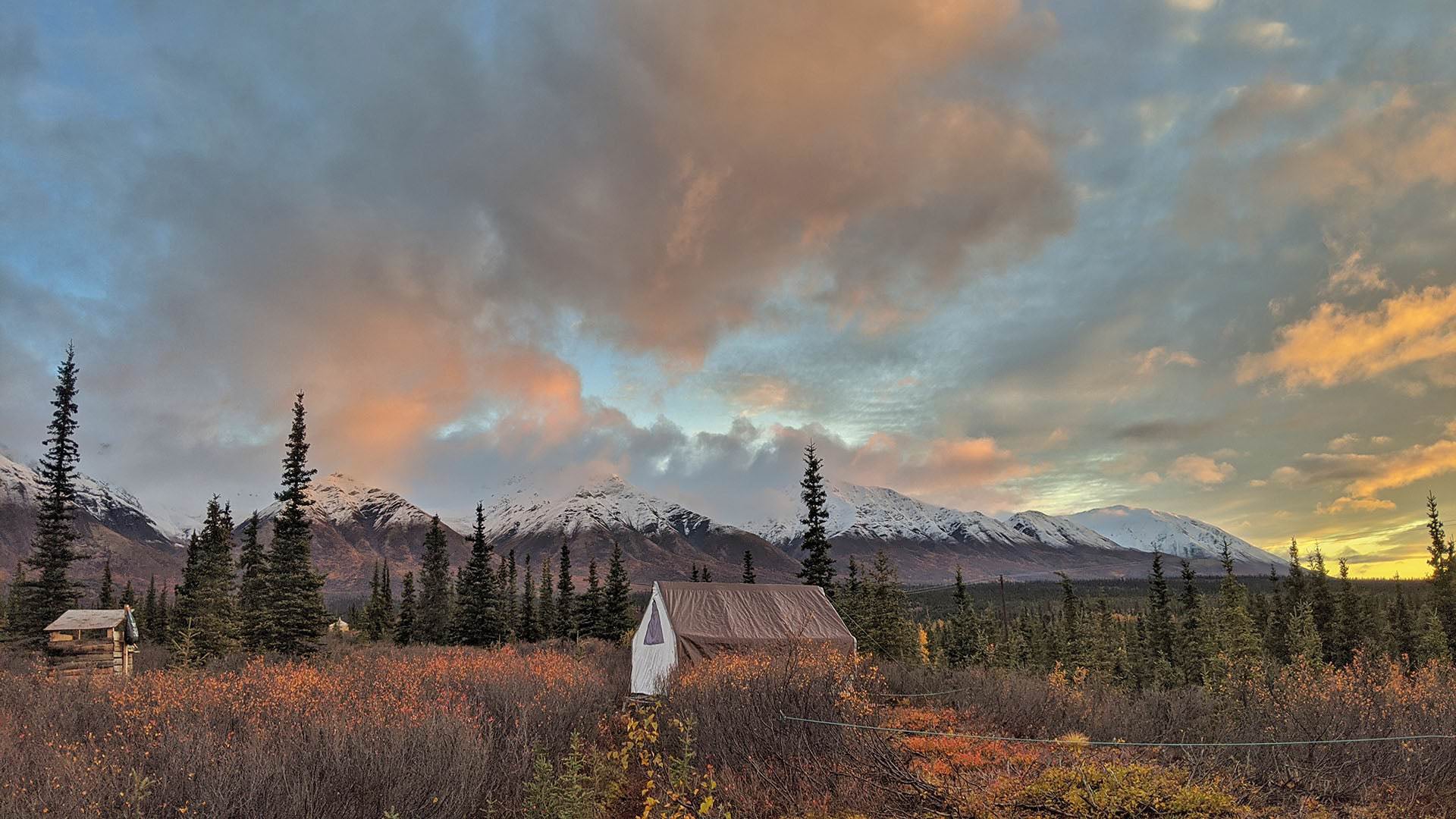
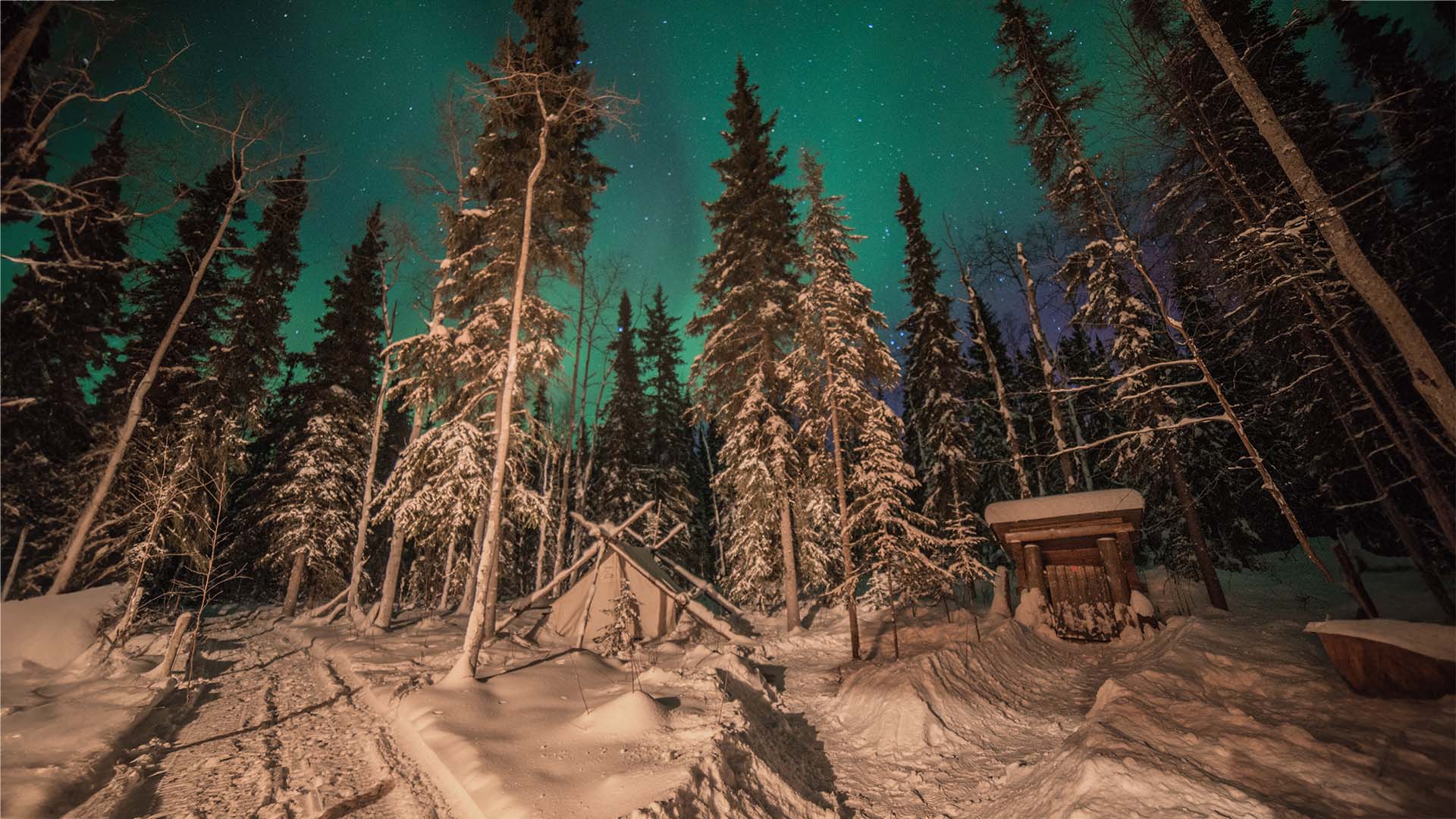
 This is the Alaska Wall Tent by the Alaska Gear Company, each one is made in the United States from Sunforger 13oz DLX, a double-filled, pre-shrunk, marine-grade canvas ideal for longterm outdoor use.
History Speedrun: The Alaska Gear Company
The Alaska Gear Company was formerly known as Airframes Alaska, it’s an aviation and outdoor equipment supplier and manufacturer headquartered in Palmer, Alaska. The company is led by majority owner Sean McLaughlin, who bought the original bush airplane parts business when it had just two employees and $100,000 in annual revenue. McLaughlin has since grown it to approximately 100 employees and $20 million in annual sales.
The company can trace its early roots to a licensed maker of Piper PA-18 Super Cub fuselages at Birchwood Airport. Through a series of acquisitions, including Reeve Air Motive (an aircraft parts retailer operating out of Anchorage’s Merrill Field since 1950, Alaska Tent & Tarp, and Northern Sled Works, the company grew well beyond aviation into outdoor recreation and cold-weather gear.
That diversification ultimately drove the rebrand from Airframes Alaska to Alaska Gear Company in late 2023, as the old name no longer conveyed the full scope of what the company produces and sells.
The Alaska Gear Company now operates out of three locations – a 100,000 square foot manufacturing facility in Palmer, a production facility in Fairbanks, and a retail store with an in-house sewing workshop at Merrill Field in Anchorage.
Its product lines span two major categories. On the aviation side, the company is best known for its hand-built Alaskan Bushwheel tundra tires, FAA-approved titanium landing gear, Super Cub fuselage modifications, and a wide range of bush plane parts. On the outdoor side, it manufactures Arctic Oven hot tents, canvas wall tents, custom freight and pulk sleds, and a modernized version of the iconic military bunny boot designed for extreme cold weather conditions.
More recently in 2024, the Alaska Gear Company was named “Made in Alaska Manufacturer of the Year” by the Alaska Department of Commerce.
The Alaska Wall Tent By The Alaska Gear Company
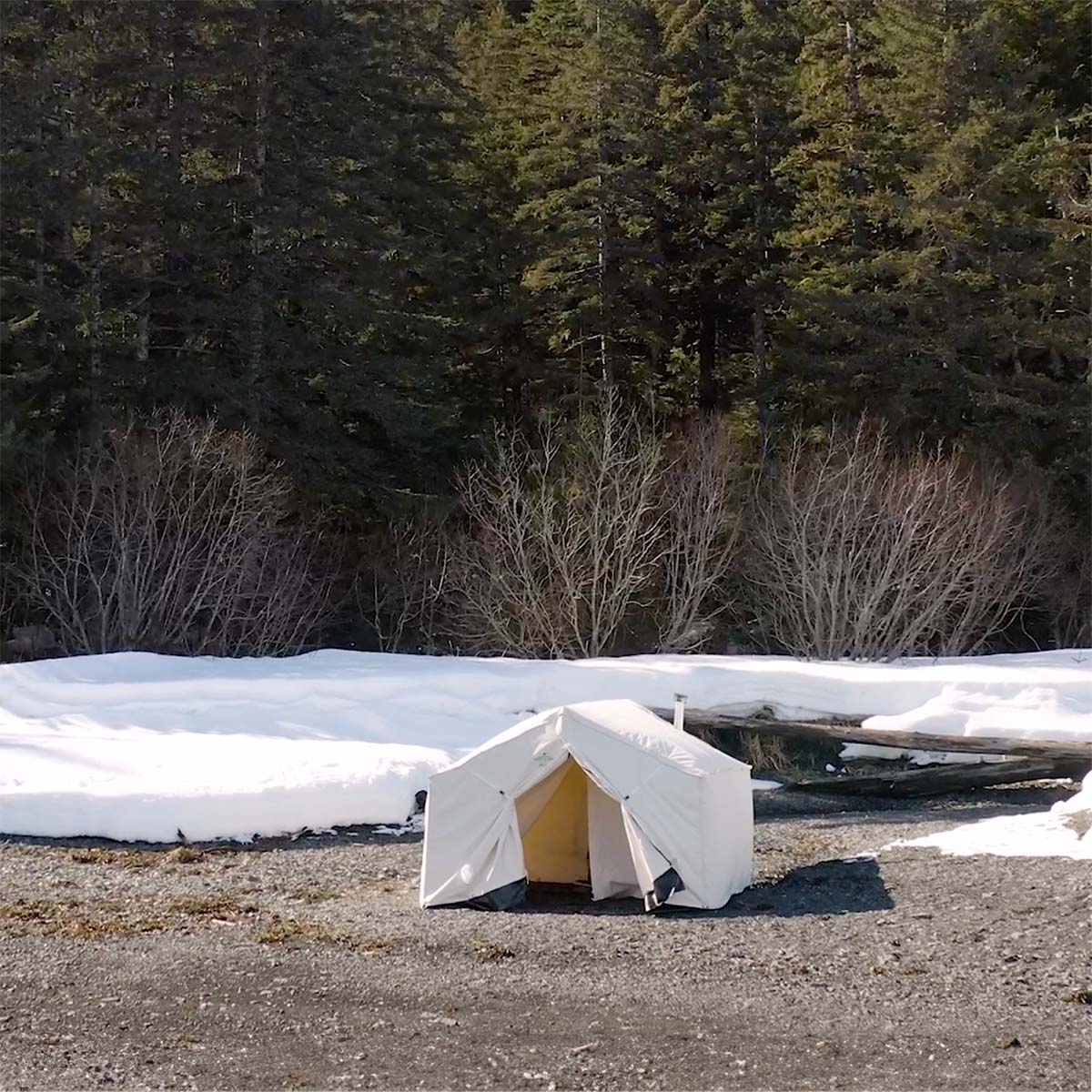
The Alaska Canvas Wall Tent is a handmade-in-Alaska canvas tent made from 13oz Sunforger DLX double-filled, preshrunk, marine-grade cotton canvas that’s treated to resist fire, water, and mildew while still remaining breathable.
It comes in four sizes, including 8×10, 10×12, 12×14, and 14×16 feet, all with 5-foot wall heights, and it’s available either unframed (starting at $1,295) or with a frame (starting at $2,300). The unframed version can be constructed in the field using lengths of wood sourced from the area, reducing the initial pack weight – this is crucial for trips into the wilderness by bush plane where every pound of weight is critical.


It comes in four sizes, including 8×10, 10×12, 12×14, and 14×16 feet, all with 5-foot wall heights, and it’s available either unframed (starting at $1,295) or with a frame (starting at $2,300). The unframed version can be constructed in the field using lengths of wood sourced from the area, reducing the initial pack weight – this is crucial for trips into the wilderness by bush plane where every pound of weight is critical.
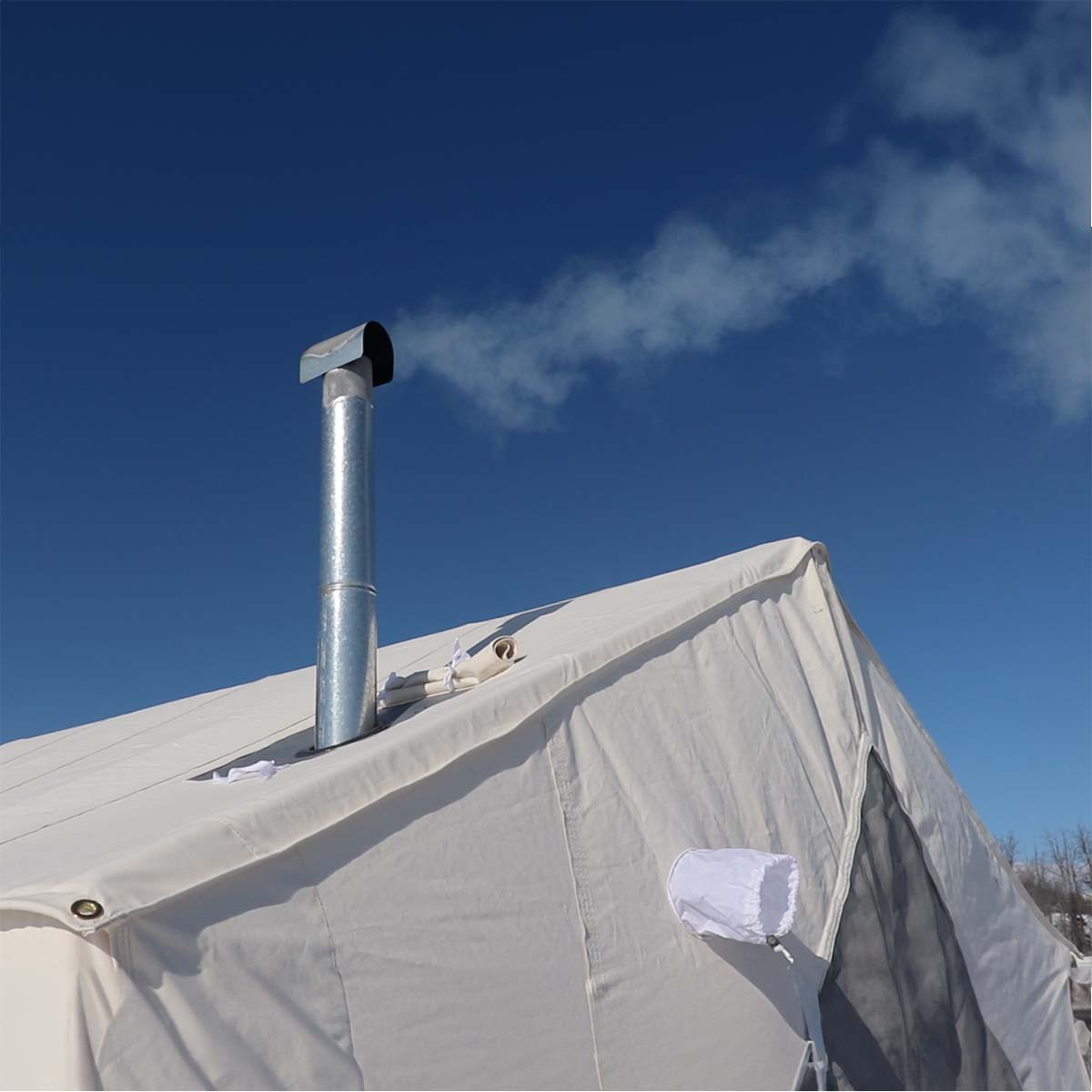
All tents include a 4.5 inch oval stove jack for use with wood or propane stoves, as well as a 56 inch triangular rear window with insect screening, an 18oz vinyl sod cloth around the base to block drafts and moisture, ridgepole openings at both ends, rope-reinforced eaves, brass grommets, overlapping door flaps with ties, a heavy-duty zippered door, and 100 feet of sisal rope for tie-downs.
The tents are now available to buy direct from the Alaska Gear Company here, and at the time of writing they have stock ready to ship out immediately.
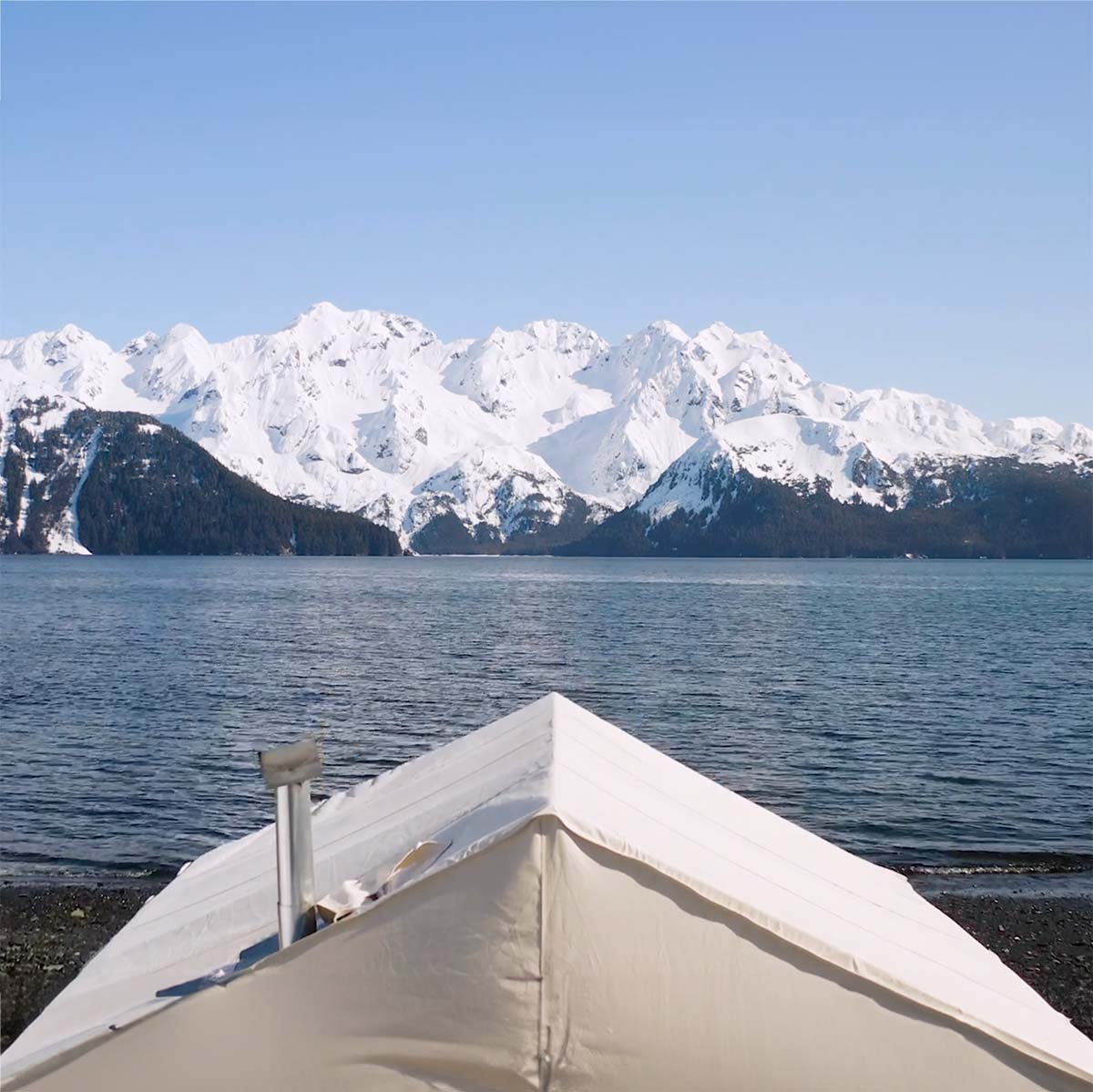
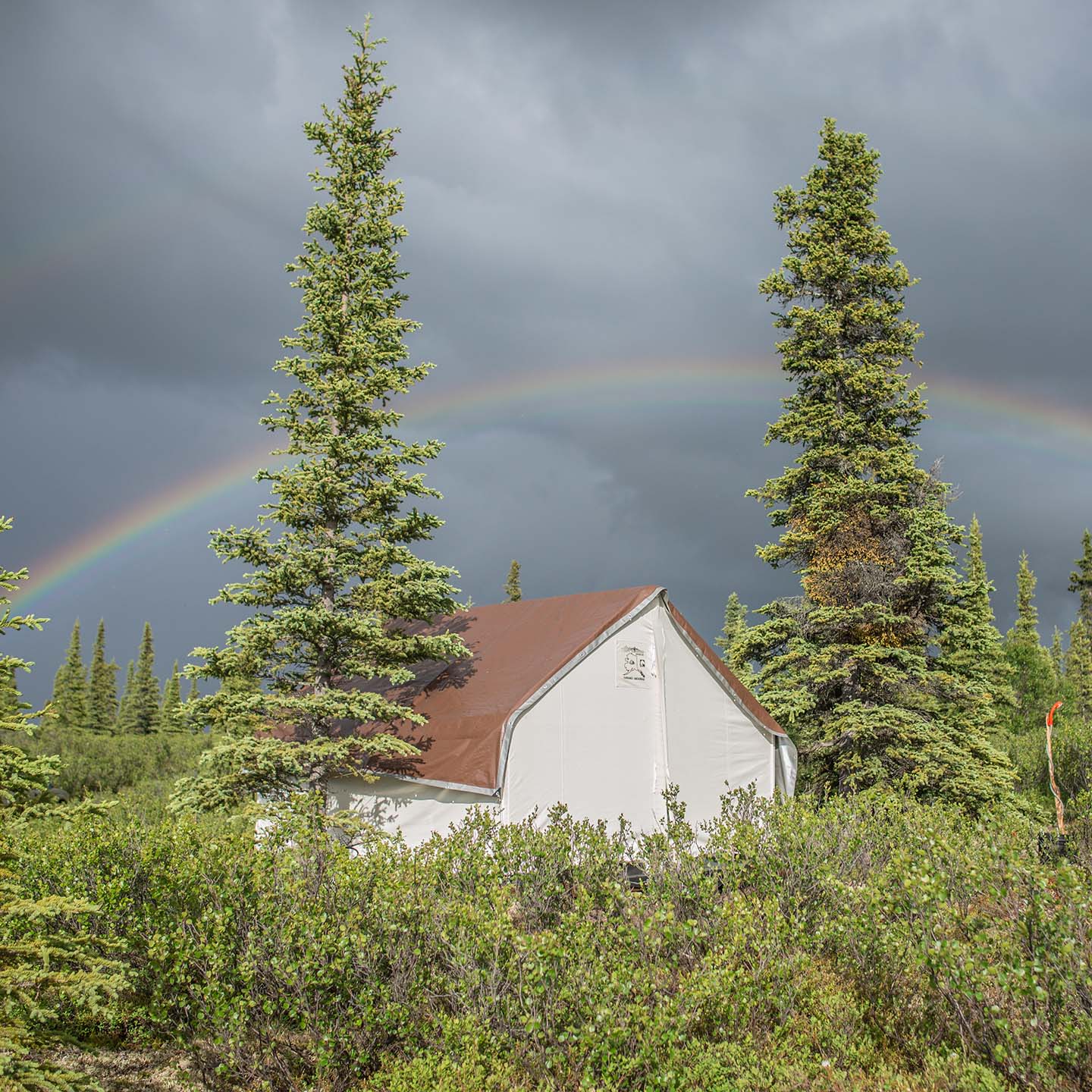
Images courtesy of the Alaska Gear Company
Articles that Ben Branch has written have been covered on CNN, Popular Mechanics, Smithsonian Magazine, Road & Track Magazine, the official Pinterest blog, the official eBay Motors blog, BuzzFeed, Autoweek Magazine, Wired Magazine, Autoblog, Gear Patrol, Jalopnik, The Verge, and many more.
Silodrome was founded by Ben back in 2010, in the years since the site has grown to become a world leader in the alternative and vintage motoring sector, with well over a million monthly readers from around the world and many hundreds of thousands of followers on social media.

Cowboys Team Doctor Played Role in Maxx Crosby-Ravens Trade Debacle

2-year-old boy bitten in face by two pit bulls in Miami Gardens backyard, police say

Shay Maloney’s overtime goal lifts Boston Fleet to road victory

Our dumpling challenge boils down to eight Denver metro restaurants

Seattle goal overturned for goalie interference as Predators complete 4-2 comeback win

Florida High School Football Rankings: Top 25 teams – Oct. 21

Cleary's 21 help Le Moyne down Central Connecticut State 69-64 in OT

How old is Bo Nix? What to know about Oregon quarterback ahead of 2024 NFL Draft

99th annual Pony Swim held in Virginia

Indiana Members Credit Union announced as new anchor tenant at Bottleworks District

EXCLUSIVE: ICE says El Paso detention facility will stay open under new contractor after $1.2B deal scrapped

Von der Leyen ‘acting outside of competence,’ Araud tells Euronews

Wheelchair curler Steve Emt’s path from drunk driver to three-time Paralympian

Map: 2.3-Magnitude Earthquake Reported North of New York City

Trump stirs GOP primary drama with visit to Massie’s Kentucky home turf
-

 Wisconsin1 week ago
Setting sail on iceboats across a frozen lake in Wisconsin
-

 Massachusetts1 week ago
Massachusetts man awaits word from family in Iran after attacks
-

 Pennsylvania6 days ago
Pa. man found guilty of raping teen girl who he took to Mexico
-

 Detroit, MI5 days ago
U.S. Postal Service could run out of money within a year
-

 Miami, FL7 days ago
City of Miami celebrates reopening of Flagler Street as part of beautification project
-

 Sports6 days ago
Keith Olbermann under fire for calling Lou Holtz a ‘scumbag’ after legendary coach’s death
-

 Virginia7 days ago
Giants will hold 2026 training camp in West Virginia
-

 Culture1 week ago
Try This Quiz on the Real Locations in These Magical and Mysterious Novels