Alaska
Alaska Airlines passengers refile Boeing door plug lawsuit


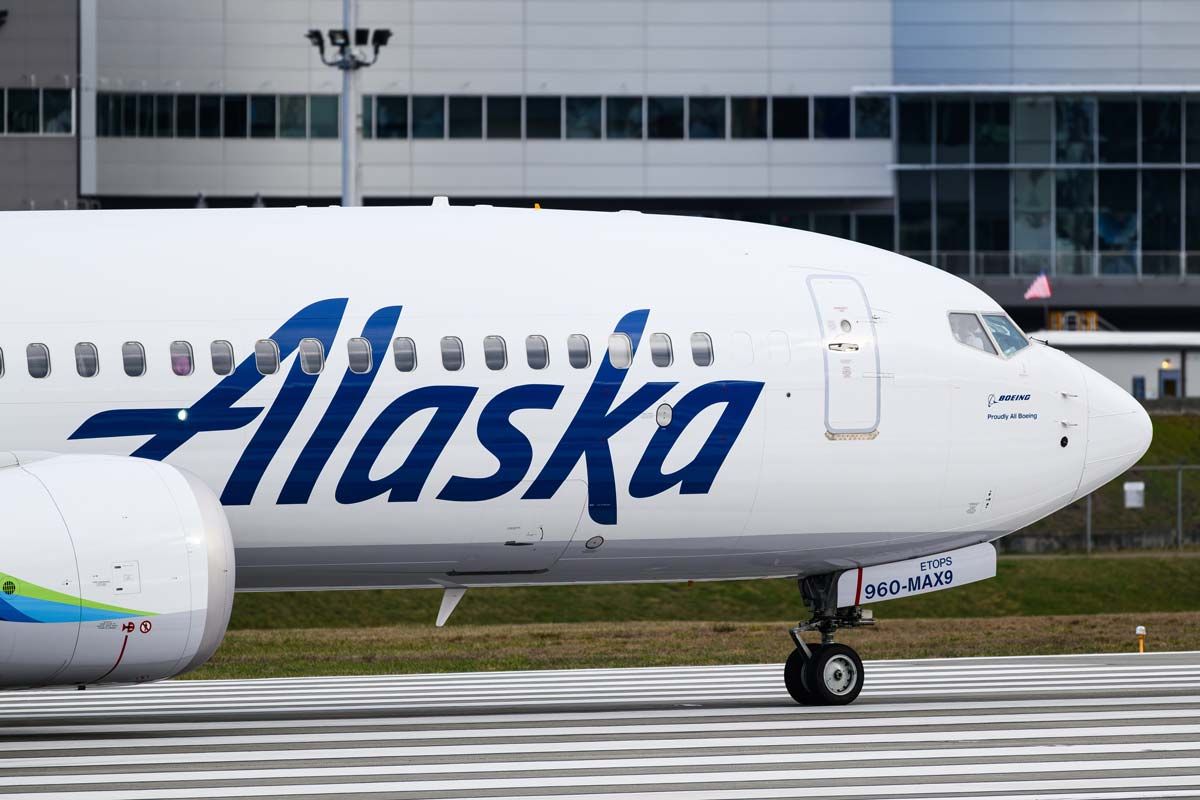
Boeing lawsuit overview:
- Who: A group of passengers on a Jan. 5 Alaska Airlines flight refiled a lawsuit against Alaska Airlines Inc. and The Boeing Company.
- Why: They claim Boeing has a culture of “cutting corners” and failed to detect the missing bolts that caused a door plug to detach during their flight.
- Where: The Boeing lawsuit was filed in Washington federal court.
Alaska Airlines passengers traveling on Jan. 5 when the door plug blew out during their flight have refiled their Boeing lawsuit claiming the company’s culture of “cutting corners” put their safety at risk.
Cuong Tran, Huy Tran, Ket Tran and Tram Vo filed the Boeing lawsuit against The Boeing Company, Spirit Aerosystems Inc., Alaska Airlines Inc. and 10 unnamed defendants a few days after voluntarily dismissing their earlier lawsuit filed in state court. Three minor children, listed only by their initials, are also included as plaintiffs.
During their flight from Portland, Oregon, to Ontario, California, the left mid-exit door plug separated from the 737 Max 9 aircraft, “leaving a gaping hole in the fuselage,” the Alaska Airlines lawsuit says.
Rapid decompression of the passenger compartment caused phones, seatbacks and passengers’ clothing to be sucked out of the plane, the plaintiffs allege.
“As a result of this violent and terrifying event the passengers and crew suffered harm including physical injuries and serious emotional distress, fear and anxiety,” according to the Boeing lawsuit.
Boeing lawsuit says company has culture of ‘cutting corners’
The plaintiffs allege the door plug separated from the plane because arrestor bolts meant to prevent the plug from sliding had never been installed and suggest the oversight was part of a pattern of lax safety protocols within the company.
Within the last decade, the Federal Aviation Administration (FAA) reportedly found Boeing failed to follow important safety protocols, such as marking assembly tasks as “complete” even though they were not completed. Boeing entered into a settlement over these issues in 2015 requiring the airplane manufacturer to implement mandatory safety improvements and regular auditing of its systems, the Boeing lawsuit explains.
The U.S. Department of Justice reportedly filed a criminal complaint against Boeing in 2021, and Boeing subsequently admitted to a count of conspiracy to defraud the United States. As part of a deferred prosecution agreement, Boeing again was supposed to strengthen its compliance programs and bolster its safety procedures.
However, the Alaska Airlines lawsuit asserts Boeing’s implementation of safety measures was inadequate and the plaintiffs blame the incident on Boeing’s “practice and culture … of cutting corners.”
They claim the disaster would have been prevented with reasonable quality control measures that would have detected the missing bolts and other potential problems with the door plug.
Another Alaska Airlines lawsuit was filed in January in King County Superior Court in Washington.
What do you think about the allegations in the Alaska Airlines lawsuit? Join the discussion in the comments.
The plaintiffs are represented by Brian D. Weinstein, Alexandra B. Caggiano and Dylan J. Johnson of Weinstein Caggiano PLLC and Ari Friedman and Timothy Loranger of Wisner Baum.
The Boeing lawsuit is Cuong Tran, et al. v. The Boeing Company, et al., Case No. 2:24-cv-00791-JNW, in the U.S. District Court for the Western District of Washington.
Read About More Class Action Lawsuits & Class Action Settlements:


Officials with the University of Alaska have tapped the commander of the U.S. Army 11th Airborne Division’s Arctic Aviation Command as the new permanent chancellor of the University of Alaska Fairbanks.
Col. Russell “Russ” Vander Lugt was selected from four finalists after an eight-month search process. He will be the top executive of Alaska’s leading research institution, which describes itself as “America’s Arctic university.” He will replace interim chancellor, and former U.S. Ambassador to the Arctic, Mike Sfraga, who succeeded former chancellor Dan White who announced his retirement in May of last year.
Vander Lugt is a senior U.S. Army officer, an Arctic scholar and UAF alumni, with over two decades of executive leadership experience, according to a university announcement on May 27. He has served as commander of the 11th Airborne Division’s Arctic Aviation Command at Fort Wainwright in Fairbanks since Aug. 2024.
“I’m humbled to be selected to lead the University of Alaska Fairbanks during this pivotal time,” Vander Lugt said in a statement with the announcement.
“I look forward to leading through trust, transparency, and teamwork as we see Alaska and the Arctic transformed through education, research, and public service. I’m committed to building on the strong foundation Chancellors Sfraga and White have established, and working closely with university leadership and governance to support and advance UAF’s mission,” he said.

Vander Lugt will step into the permanent chancellor role on Sept. 8. Sfraga’s last day was Friday, and university officials have selected Larry Hinzman, director of the UA Arctic Leadership Initiative, to serve as interim chancellor through the summer.
Vander Lugt has had a long career with the U.S. Army in various roles in Alaska, where he is stationed in Fairbanks, and across the U.S. His resume lists deployments to Europe and the Middle East.
He served in executive leadership roles that include the Alaskan Command, a division of the U.S. Northern Command, the 601st Aviation Support Battalion, and the 1st Stryker Brigade Combat team. He also taught history and military leadership as an assistant professor at the U.S. Military Academy at West Point and was a professor of military science and department chair at Embry-Riddle Aeronautical University in Prescott, Arizona.
He holds a master’s degree and doctoral degree in Arctic and Northern Studies, which he completed in 2022 at the University of Alaska Fairbanks.
Vander Lugt’s hire is the latest in major leadership changes in the University of Alaska system — former UA President Pat Pitney retired last month and former university attorney Matt Cooper was named as her successor. Cooper will begin as university president in early August, and Michelle Rizk, vice president of university relations and chief strategy, planning and budget officer, is serving as interim president. Cheryl Siemers was appointed permanent chancellor of the University of Alaska Anchorage in March, after serving as interim chancellor since the retirement of former chancellor Sean Parnell last year.
Vander Lugt’s base salary will be $309,000, according to the university’s announcement.
The University of Alaska Fairbanks serves roughly 7,500 students. It employs more than 800 faculty and nearly 2,000 staff across urban and rural campuses in Fairbanks, Kotzebue, Nome, Bethel and Dillingham.
Originally published by the Alaska Beacon, an independent, nonpartisan news organization that covers Alaska state government.
WHEREAS, on June 3, 1942, six months after the attack on Pearl Harbor, World War II arrived in Alaska when Dutch Harbor on Amaknak Island was bombed by Japanese – the first aerial attack by an enemy on the continental United States; and
WHEREAS, the Japanese pilots expected little resistance; but because of an intercepted message three weeks earlier, the installation was on high alert, and Navy and Marine personnel were prepared with anti-aircraft defenses; and
WHEREAS, encountering unexpected resistance at Dutch Harbor, installation, Japanese forces shifted their focus to the Margaret Bay Naval Barracks, where the attack claimed the lives of 25 servicemen; and
WHEREAS, following the initial attack on Dutch Harbor, Japanese forces launched additional assaults on Dutch Harbor, Adak, Kiska, and Attu, resulting in the Aleut people being evacuated and held in internment camps in Southeast Alaska for three years, through which many did not survive; and
WHEREAS, the brave soldiers of the United States Armed Forces and allied Canadian Forces fought valiantly for more than a year to reclaim the remaining Aleutian Islands. The battle of Attu stands as one of the most costly American assaults in the Pacific, with hundreds of servicemen making the ultimate sacrifice to liberate Alaska; and
WHEREAS, on the 84th anniversary of the bombing of Dutch Harbor, we remember and honor all who were affected by the attack, paying tribute both to the military personnel who served and died to defend our Nation and to the Aleut people who died while imprisoned.
NOW THEREFORE, I, Mike Dunleavy, GOVERNOR OF THE STATE OF ALASKA, do hereby proclaim June 3, 2026, as:
Dutch Harbor Remembrance Day
in Alaska and encourage all Alaskans to join with the people of Dutch Harbor, Unalaska, and the Aleutian Islands to honor all who were lost in Alaska during World War II, and I order the Alaska State Flag to be flown at half-staff in remembrance of those who perished.
Dated: June 3, 2026

A plane belonging to the Alaska National Guard appears to have been damaged during operations connected to Operation Epic Fury as part of American military efforts against Iran, according to online reports. Defense officials have so far declined to confirm whether Alaska National Guard personnel or equipment are taking part in the campaign.
Last week, defense industry news outlet The War Zone published photos of a KC-135 Stratotanker transiting through a British airbase. In the pictures, made by photographer Andrew McKelvey, the rear bottom of the fuselage and wing stabilizers are “peppered with temporary shrapnel damage repairs‚“ according to The War Zone’s article. The plane also appears to be missing its refueling boom, the proboscis extending from under the tail to pump off fuel to other aircraft.
In the photographs, the Stratotanker’s tail number is visible, identifying the refueling plane as belonging to the Alaska Air National Guard’s 168th Wing, based at Eielson Air Force Base outside of Fairbanks. The wing’s mission includes aerial refueling. That’s the tactic of large planes unloading vast quantities of fuel to aircraft, ranging from fighter jets to rescue helicopters, in midair.
Pictures from a different photographer published last week by another blog, The Aviationist, show the same plane. The tail includes the letters “AK” painted above a white polar bear.
In addition to the photographs, the reporting from The War Zone is based on publicly available flight data and social media posts scraped from a variety of sources.
According to information from Flight Radar 24, the Stratotanker left Eielson on March 5, just days after the U.S. and Israeli militaries began bombing Iranian targets on Feb. 28. Through March, according to public flight records, the plane was based at Ben Gurion Airport southeast of Tel Aviv, where, according to The War Zone, dozens of American refueling aircraft were staged as part of Operation Epic Fury.
There are no public flight records connected to the Stratotanker through April and most of May, until it appeared to fly through England on the way to the United States at the end of last month.
It is not clear how many Alaska Air National Guard planes, personnel or units are currently deployed in connection to the war effort against Iran.
A spokesperson for the Alaska National Guard referred all questions about Operation Epic Fury to the U.S. Central Command.
A spokesperson for CENTCOM, headquartered at MacDill Air Force Base in Florida, declined to answer questions on the record or provide any specific information about Alaska National Guard units deployed as part of ongoing military operations, citing the need to protect service members and operational security.
The Alaska National Guard has posted no informational releases or pictures connected to an overseas deployment during the last few months.
Much of Operation Epic Fury has been waged by military aircraft, and aerial refueling is critical to keeping planes supplied during long flights. A May 12 report from the Congressional Research Service composed of public damage reports to U.S. military aircraft noted that among the 42 records of damage or losses were seven KC-135 Stratotankers, though the findings were published before photos emerged of the Alaska-based plane. The report noted that the Defense Department “has not published a comprehensive assessment of combat losses” from Operation Epic Fury.
The tail number is associated with a Stratotanker manufactured in 1964, the year before Boeing ceased making them. All of the nearly 400 KC-135s currently in operation within the American military date back to that era of the Cold War.
The aircraft has the word “Tetlin” painted on the top of its tail. The name is an homage to the Interior Alaska village, one of several selected to honor longstanding bonds between military aviators and Alaska Native communities, according to photographs of a dedication ceremony posted by the Alaska National Guard last summer.
The 168th Wing currently has 12 Stratotankers attached to the unit. That number bumped up in April after a long campaign by Alaska Republican U.S. Sen. Dan Sullivan to allocate more tankers to the state’s portfolio given its vast geography and high number of advanced fighter jets.
-

 Los Angeles, Ca1 hour ago
Police investigate deadly stabbing in Tarzana; suspect in custody
-

 Detroit, MI1 hour ago
Detroit Tigers sweep Tampa Bay Rays in win as Dillon Dingler stays hot
-

 San Francisco, CA2 hours ago
Retired San Francisco firefighter dies from lung cancer after Blue Shield denies treatment claims
-

 Dallas, TX2 hours ago
Trackdown: Dallas 7-Eleven robbery suspect wanted
-

 Miami, FL2 hours ago
This new Italian restaurant in Brickell only has 10 items on the menu
-

 Boston, MA2 hours ago
Visiting Boston this summer? Here are 8 navigation tips you need to know.
-

 Denver, CO2 hours ago
Denver-ish Central Market? RiNo food hall vendors claim they’ve been pushed out
-

 Seattle, WA2 hours ago
New Ben & Jerry’s location opening at Seattle waterfront’s Pier 54

