Alaska
Alaska Airlines Adds 18 Sunny and Ski Destinations for Winter Travel – Business Traveler USA


Alaska Airlines is expanding its winter travel schedule with 18 new routes to sun-drenched vacation hotspots and snowy getaways, including a brand-new destination: Eagle, Colorado (EGE), for the fashionable ski resort Vail.
For winter travelers who like to chase warm temperatures, the carrier will offer seven new routes to Mexico.
Between December and February, Alaska will operate a daily flight between Fresno (FAT) and Guadalajara (GDL).
Starting in January and running into the spring, Alaska will introduce a four-times-weekly flight between New York City (JFK) and Puerto Vallarta (PVR), the first nonstop link between New York state and the resort town.
Alaska will also launch once-weekly flights from Sacramento (SMF), Kansas City (MCI), and St. Louis (STL) to Puerto Vallarta and another route from Kansas City to Cancún (CUN). A five-times weekly flight will shuttle Sacramentans to Los Cabos (SJD) and the top Mexican tourist destination, Cabo San Lucas.

Photo: Cabo San Lucas. Courtesy of John Cafazza / Unsplash.
These seasonal routes join the two new Mexican destinations Alaska Airlines unveiled last week: La Paz (LAP) in Baja California Sur and Monterrey (MTY), to be served year-round from Los Angeles (LAX) starting this fall.
Alaska will also increase its flights to Liberia, Costa Rica (LIR), a destination it first reached in 2015 and currently serves from LAX. Between December and May, Alaska will fly once weekly to Costa Rica from its hubs in Seattle (SEA) and San Francisco (SFO).
With the addition of the Costa Rica flight, Alaska will operate 104 nonstop flights from its home base of Seattle–Tacoma International Airport. The flights will also underline Alaska’s status as “the largest U.S. carrier between the West Coast and Latin America,” it says.
For those searching for winter snow, Alaska is also adding links to North America’s best ski resorts. That includes its first service to Eagle County Regional Airport, the gateway to Vail and its slopes, from Seattle and San Diego (SAN).


Photo: Vail, Colorado. Katie Musial on Unsplash
A new flight from LAX to Kelowna, Canada (YLW) will connect Angelinos to British Colombia’s best ski resorts. At the same time, San Diegans will have easier access to Reno (REN) and the ski resorts around Lake Tahoe.
Other new routes on the list target vacation favorites: a seasonal service between Boise, Idaho (BOI) and Bozeman, Montana (BZN), gateway to Yellowstone National Park, and winter flights from Sacramento and Boise to Orlando (MCO) for Central Florida’s warm weather and theme park smorgasbord.
The only year-round service on the list is a link between Boise and John Wayne Airport (SNA) in California, just miles from Disneyland.


Photo: Alaska Airlines Boeing 737 MAX 9. Courtesy of Alaska Airlines
“We’re thrilled to offer convenient connection for guests across our network with this expansion—whether checking destinations off their bucket lists or setting off to their favorite winter getaways, we’ve put together an exciting range of options from tropical destinations across Mexico to the most popular ski slopes in North America,” Kirsten Amrine, vice president of network planning and revenue management at Alaska Airlines, said.
By doubling down on leisure travel, Alaska Airlines may be hoping to offset the slow recovery of its corporate travel business following the pandemic. The airline has been particularly hit by slashed travel budgets among the tech giants near its Seattle and San Francisco hubs. While meetings can be Zoom calls, Alaska is betting that real-life vacations still have appeal.



The 2026 Alaska high school girls basketball state championships begin this week, and High School On SI has brackets for all four classifications.
The brackets will be updated with scores and matchups throughout the week.
All four classifications will play their state championship games at Alaska Airlines Center in Anchorage.
The 1A and 2A championships run March 11-14. Classes 3A and 4A play the following week, March 18-21.
Alaska High School Girls Basketball 2026 State Championship Brackets, Matchups, Schedule – March 10
3/11 – Shaktoolik (1) vs. Arlicaq (16)
3/11 – Kake (8) vs. Tri-Valley (9)
3/11 – Fort Yukon (4) vs. Andreafski (13)
3/11 – Sand Point (5) vs. Napaaqutgmiut (12)
3/11 – Scammon Bay (2) vs. Nunamiut (15)
3/11 – Akiuk Memorial (7) vs. Newhalen (10)
3/11 – Davis-Romoth (3) vs. Cook Inlet Academy (14)
3/11 – Hoonah (6) vs. Shishmaref (11)
3/12 – Seward (1) vs. Chevak (8)
3/12 – Metlakatla (4) vs. Cordova (5)
3/12 – Craig (2) vs. Susitna Valley (7)
3/12 – Glennallen (3) vs. Degnan (6)
3/18 – Barrow (1) vs. Kotzebue (8)
3/18 – Grace Christian (4) vs. Galena (5)
3/18 – Monroe Catholic (2) vs. Delta (7)
3/18 – Mt. Edgecumbe (3) vs. Kenai Central (6)
3/18 – Mountain City Christian Academy (1) vs. North Pole (8)
3/18 – Colony (4) vs. West (5)
3/18 – Bartlett (2) vs. Juneau-Douglas (7)
3/18 – Wasilla (3) vs. Service (6)
More Coverage from High School On SI

This is the Alaska Wall Tent by the Alaska Gear Company, each one is made in the United States from Sunforger 13oz DLX, a double-filled, pre-shrunk, marine-grade canvas ideal for longterm outdoor use.
The Alaska Wall Tent comes in an array of sizes and versions, allowing you to choose the one that best suits your individual use-case. They’re all individually made in Alaska, and perhaps even more importantly, they’re all tested extensively to be able to handle local conditions.
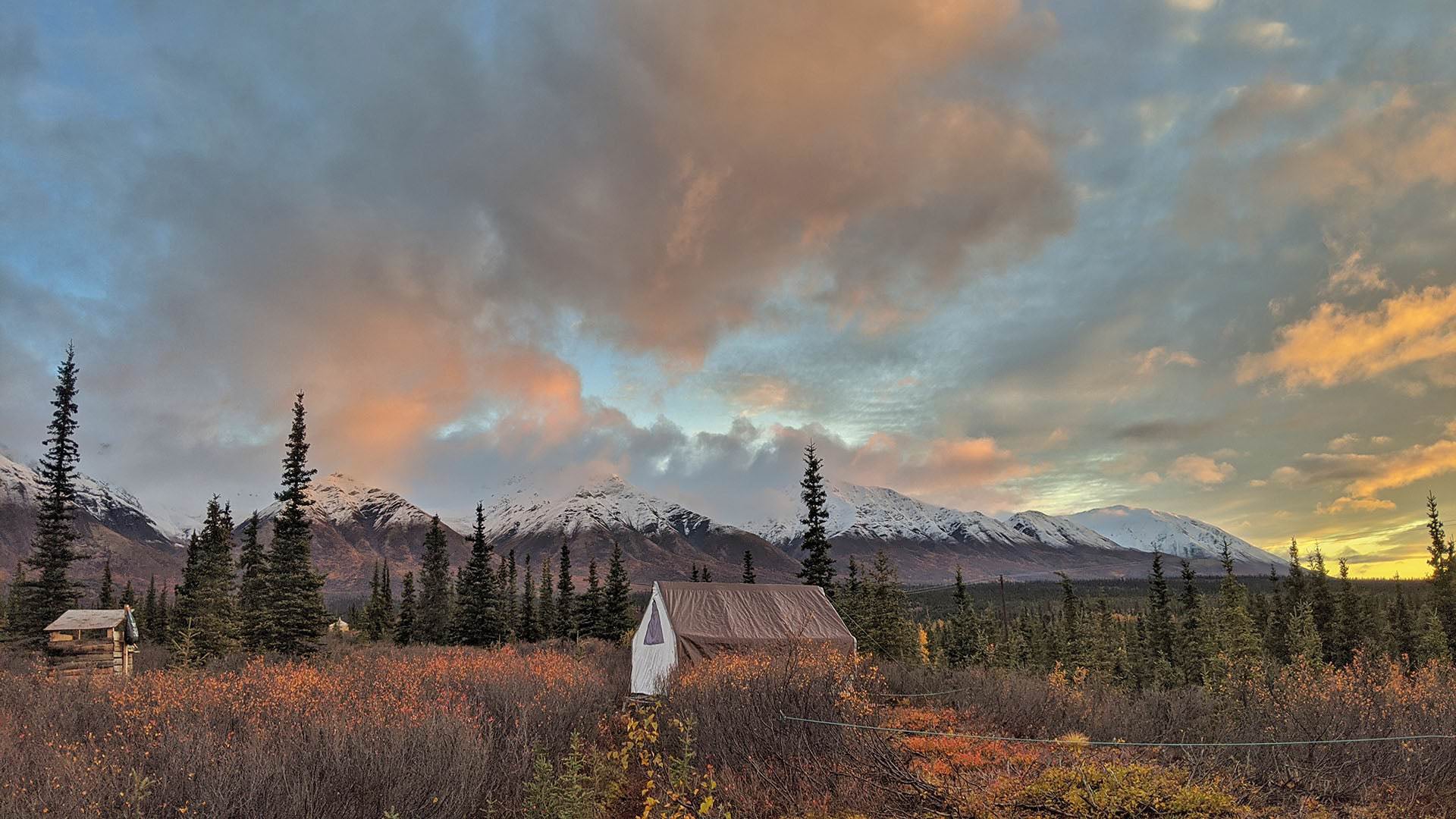
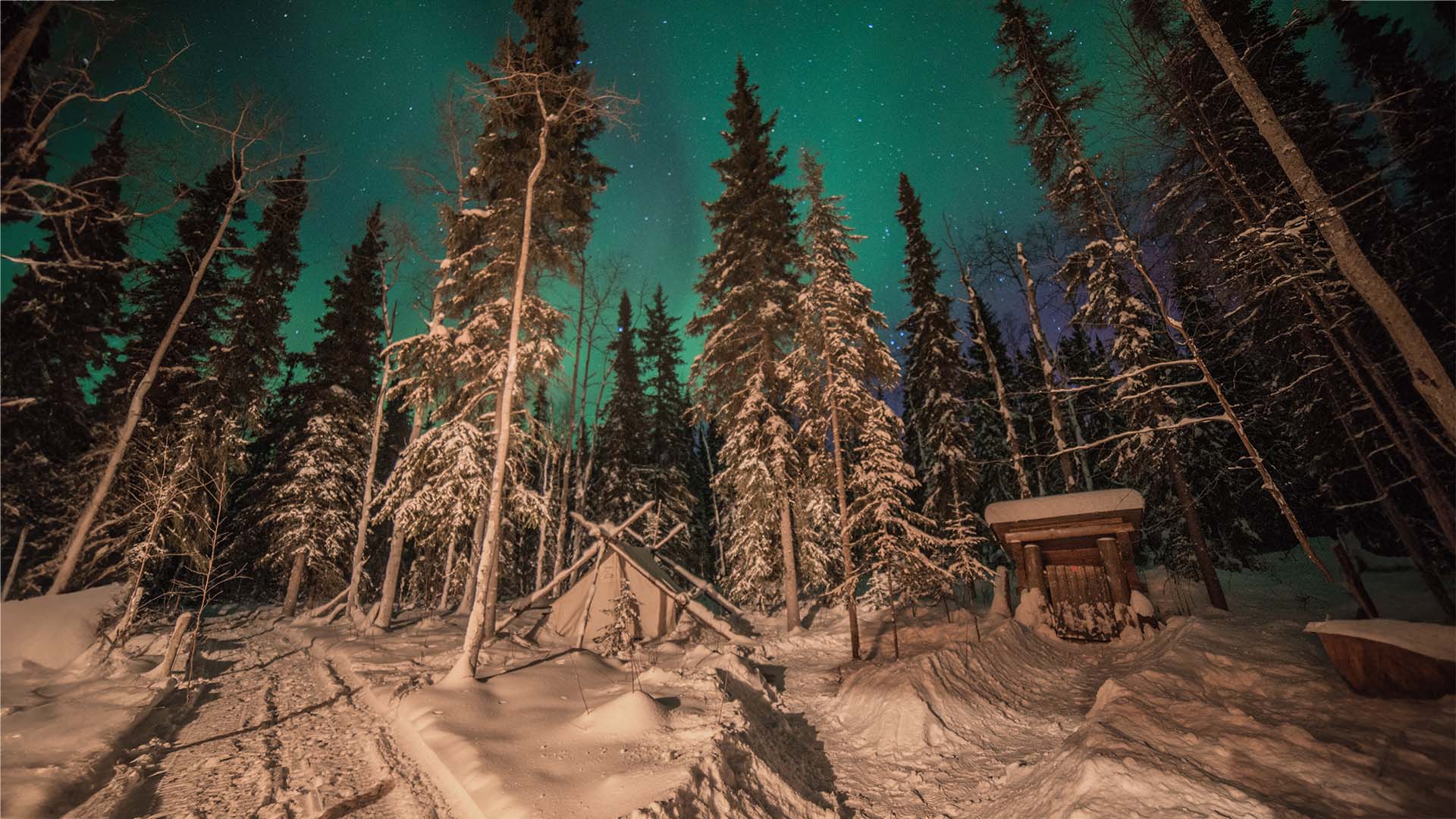
 This is the Alaska Wall Tent by the Alaska Gear Company, each one is made in the United States from Sunforger 13oz DLX, a double-filled, pre-shrunk, marine-grade canvas ideal for longterm outdoor use.
History Speedrun: The Alaska Gear Company
The Alaska Gear Company was formerly known as Airframes Alaska, it’s an aviation and outdoor equipment supplier and manufacturer headquartered in Palmer, Alaska. The company is led by majority owner Sean McLaughlin, who bought the original bush airplane parts business when it had just two employees and $100,000 in annual revenue. McLaughlin has since grown it to approximately 100 employees and $20 million in annual sales.
The company can trace its early roots to a licensed maker of Piper PA-18 Super Cub fuselages at Birchwood Airport. Through a series of acquisitions, including Reeve Air Motive (an aircraft parts retailer operating out of Anchorage’s Merrill Field since 1950, Alaska Tent & Tarp, and Northern Sled Works, the company grew well beyond aviation into outdoor recreation and cold-weather gear.
That diversification ultimately drove the rebrand from Airframes Alaska to Alaska Gear Company in late 2023, as the old name no longer conveyed the full scope of what the company produces and sells.
The Alaska Gear Company now operates out of three locations – a 100,000 square foot manufacturing facility in Palmer, a production facility in Fairbanks, and a retail store with an in-house sewing workshop at Merrill Field in Anchorage.
Its product lines span two major categories. On the aviation side, the company is best known for its hand-built Alaskan Bushwheel tundra tires, FAA-approved titanium landing gear, Super Cub fuselage modifications, and a wide range of bush plane parts. On the outdoor side, it manufactures Arctic Oven hot tents, canvas wall tents, custom freight and pulk sleds, and a modernized version of the iconic military bunny boot designed for extreme cold weather conditions.
More recently in 2024, the Alaska Gear Company was named “Made in Alaska Manufacturer of the Year” by the Alaska Department of Commerce.
The Alaska Wall Tent By The Alaska Gear Company
The Alaska Canvas Wall Tent is a handmade-in-Alaska canvas tent made from 13oz Sunforger DLX double-filled, preshrunk, marine-grade cotton canvas that’s treated to resist fire, water, and mildew while still remaining breathable.
It comes in four sizes, including 8×10, 10×12, 12×14, and 14×16 feet, all with 5-foot wall heights, and it’s available either unframed (starting at $1,295) or with a frame (starting at $2,300). The unframed version can be constructed in the field using lengths of wood sourced from the area, reducing the initial pack weight – this is crucial for trips into the wilderness by bush plane where every pound of weight is critical.
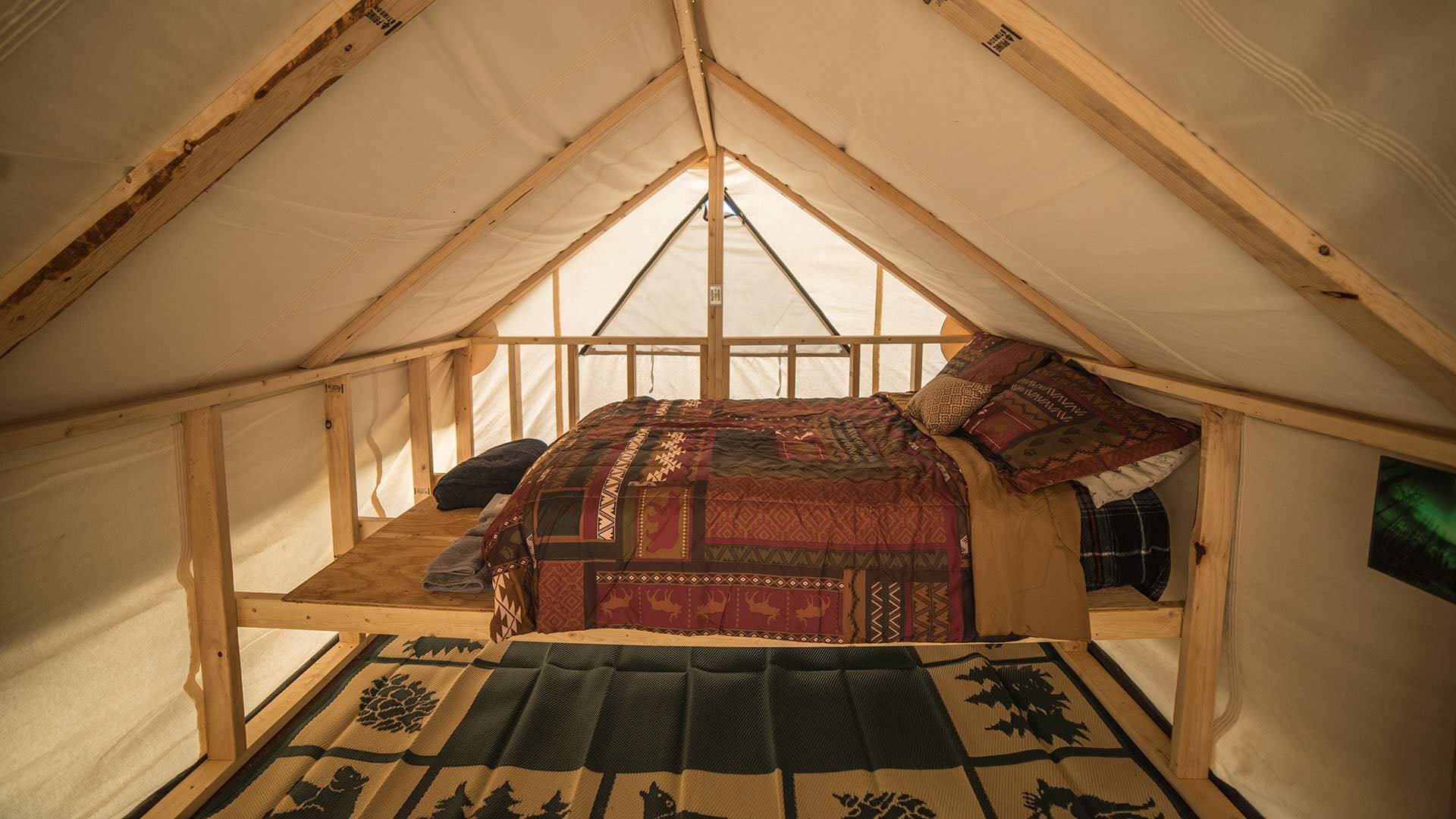
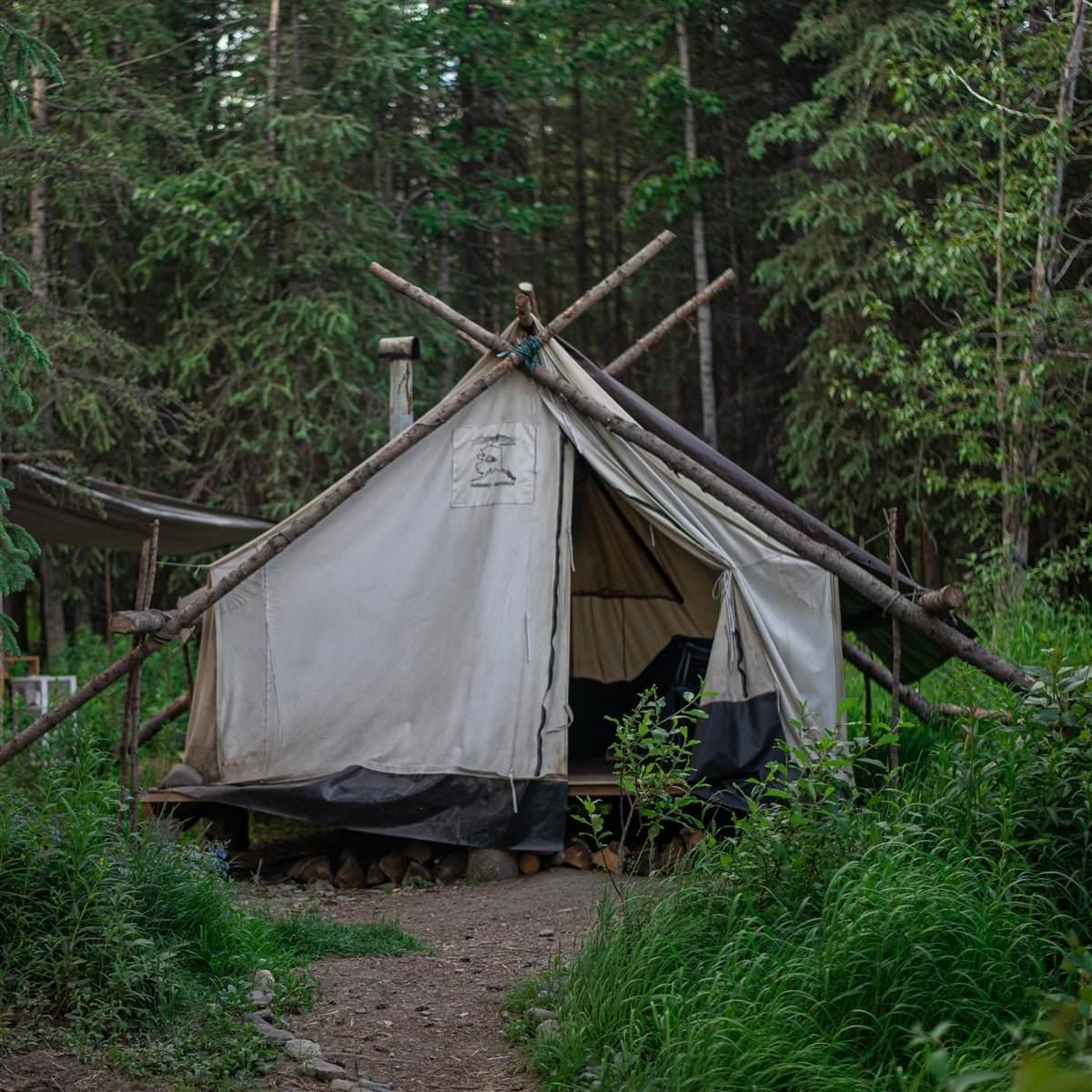
It comes in four sizes, including 8×10, 10×12, 12×14, and 14×16 feet, all with 5-foot wall heights, and it’s available either unframed (starting at $1,295) or with a frame (starting at $2,300). The unframed version can be constructed in the field using lengths of wood sourced from the area, reducing the initial pack weight – this is crucial for trips into the wilderness by bush plane where every pound of weight is critical.
All tents include a 4.5 inch oval stove jack for use with wood or propane stoves, as well as a 56 inch triangular rear window with insect screening, an 18oz vinyl sod cloth around the base to block drafts and moisture, ridgepole openings at both ends, rope-reinforced eaves, brass grommets, overlapping door flaps with ties, a heavy-duty zippered door, and 100 feet of sisal rope for tie-downs.
The tents are now available to buy direct from the Alaska Gear Company here, and at the time of writing they have stock ready to ship out immediately.
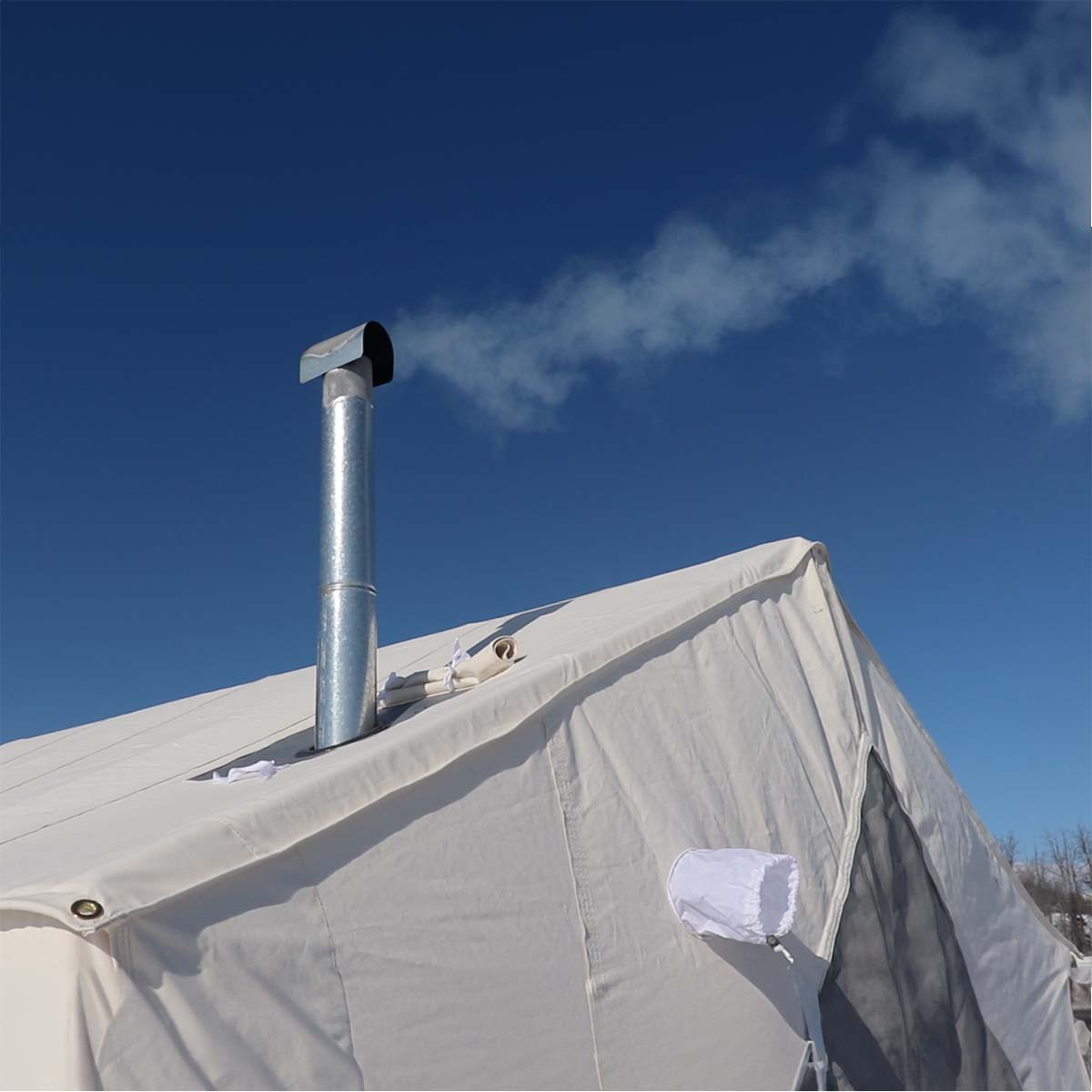
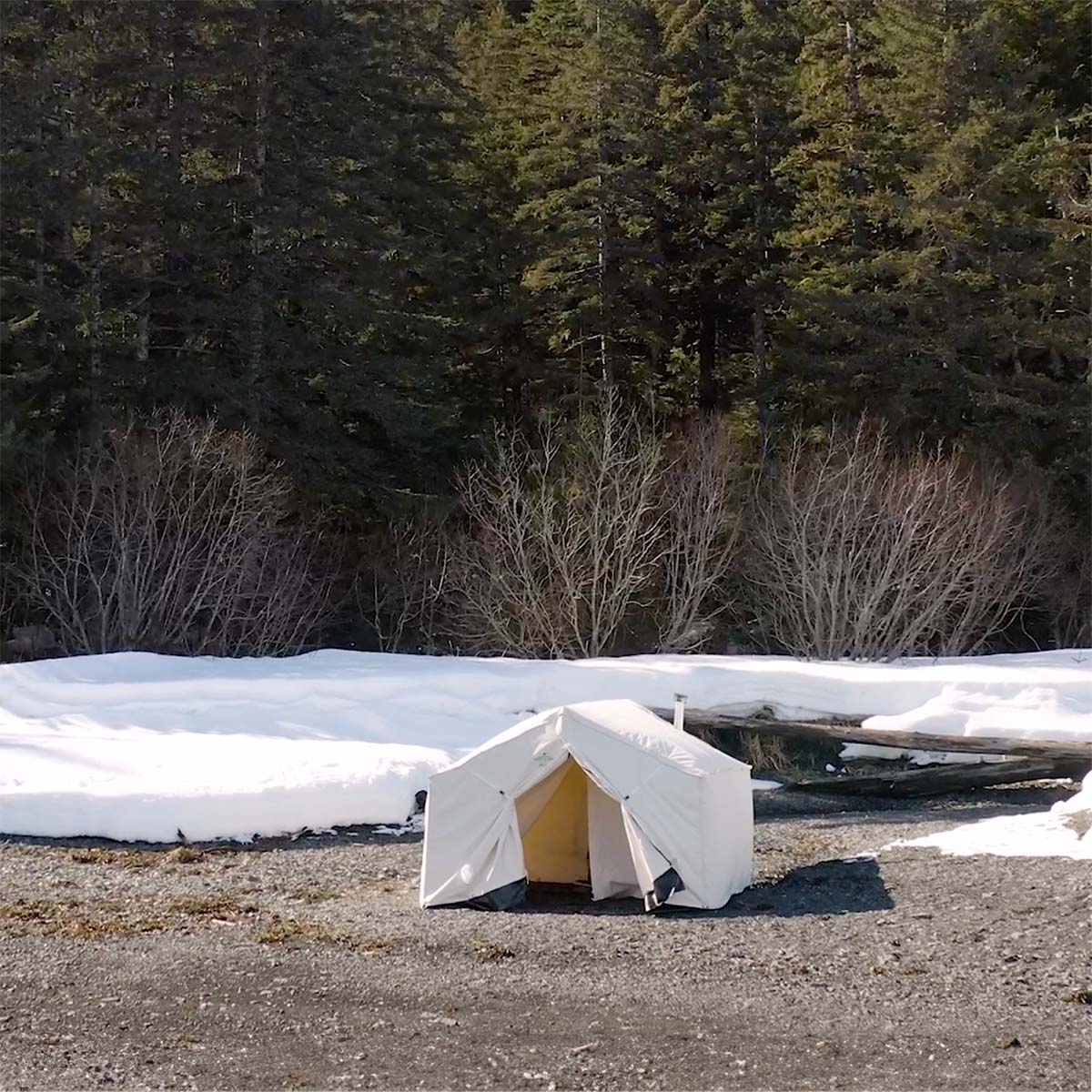
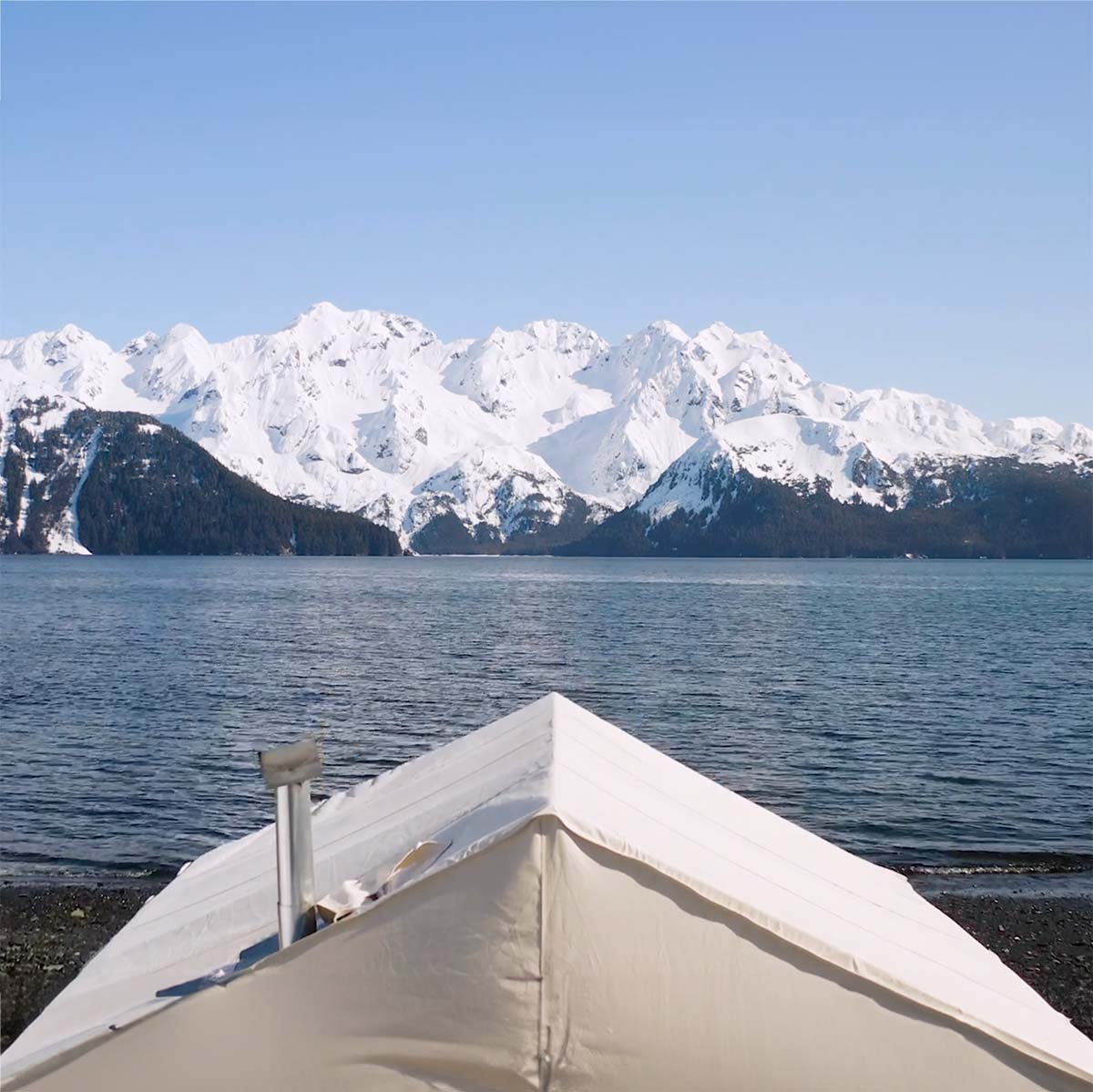
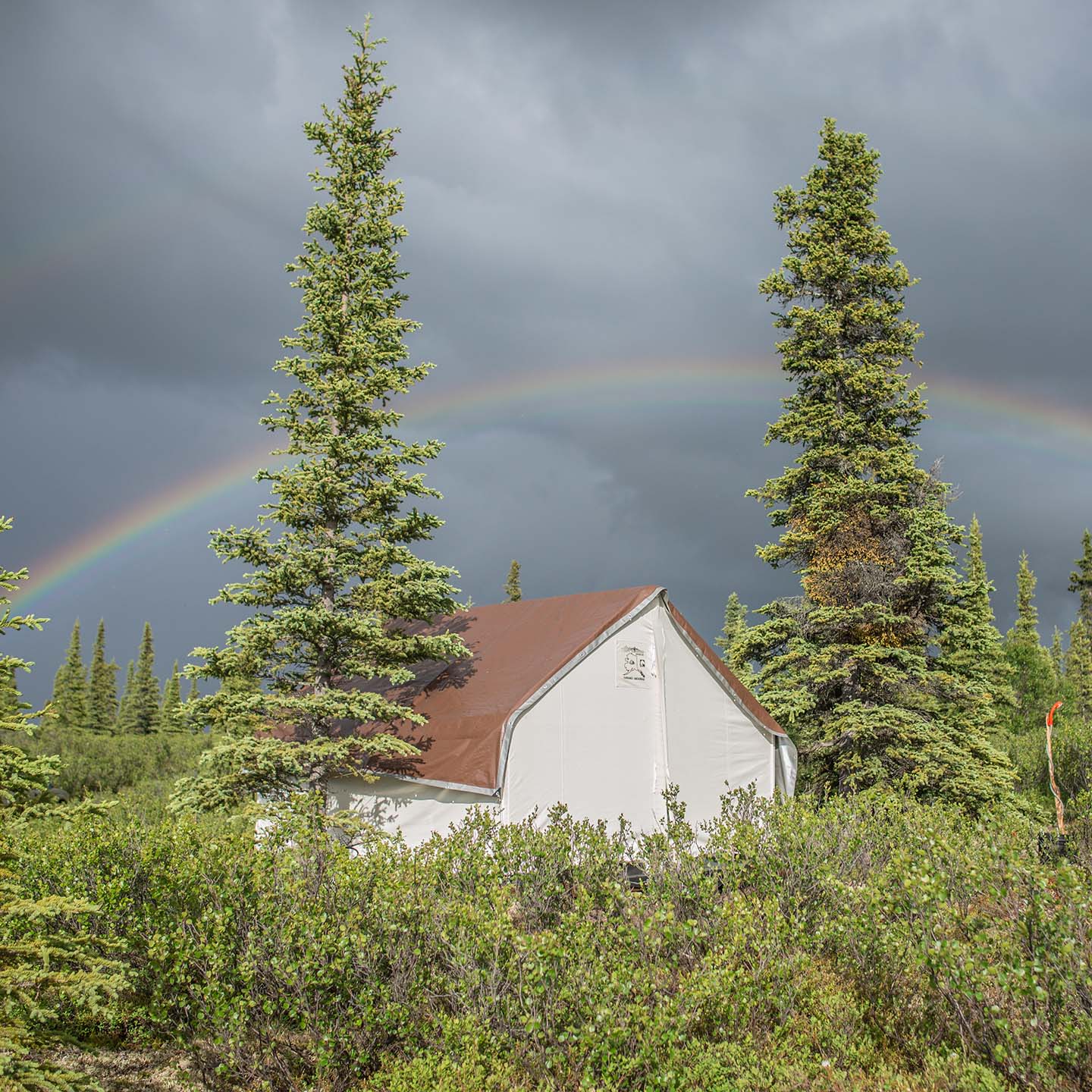
Images courtesy of the Alaska Gear Company
Articles that Ben Branch has written have been covered on CNN, Popular Mechanics, Smithsonian Magazine, Road & Track Magazine, the official Pinterest blog, the official eBay Motors blog, BuzzFeed, Autoweek Magazine, Wired Magazine, Autoblog, Gear Patrol, Jalopnik, The Verge, and many more.
Silodrome was founded by Ben back in 2010, in the years since the site has grown to become a world leader in the alternative and vintage motoring sector, with well over a million monthly readers from around the world and many hundreds of thousands of followers on social media.

The St. Elias Mountains in southeast Alaska are dotted with over 100 lakes where glaciers crumble into milky, turquoise water. Those lakes are expanding at an ever-quickening pace.
The lakes will quadruple in size over the next century or two, scientists report March 9 in the Proceedings of the National Academy of Sciences. This growth will transform landscapes, create new salmon habitat and may even change the course of a major river.
“We are seeing the great age of ice retreat” in Alaska, says Daniel McGrath, a glaciologist at Colorado State University in Fort Collins. “These glaciers are just peeling back from the landscape,” revealing deep grooves they carved in the Earth, where lakes are now forming.
Glacial hydrologist Eran Hood of the University of Alaska Southeast in Juneau, who was not part of the study, adds that “understanding where these lakes are going to emerge is important” because it “changes the whole nature of the downstream ecosystem.”
Hugging the coastline along the Alaska-Canada border, the tiny mountainous region that includes the St. Elias Mountains is losing 60 cubic kilometers of ice per year. Because lakes absorb solar heat, the glaciers that shed ice into lakes are shrinking faster than those that terminate on dry land. Across southeast Alaska, these lakes attached to glaciers have expanded by 60 percent since 1986, reaching a combined area of 1,300 square kilometers.
McGrath and his colleagues wondered how far this runaway expansion might go. So, they combined satellite images with estimates of ice thickness — mapping deeply eroded grooves that are still hidden under glaciers.
The results were “eye-opening,” McGrath says. The team identified 4,200 square kilometers of glacier-covered grooves adjacent to existing lakes.
He and his colleagues predict that the lakes will continue to expand — causing rapid ice retreat — until they fill those grooves, reaching a combined size of around 5,500 square kilometers, an area the size of Delaware.
“By the end of this century, all of these lakes will probably be more or less fully developed,” says study coauthor Louis Sass III, a glaciologist with the U.S. Geological Survey at the Alaska Science Center in Anchorage. But those growing lakes are already reshaping entire landscapes in a way that is often overlooked in public discourse around glacier retreat.
Many of Alaska’s glaciers terminate on dry land, and their meltwater often creates barren, rocky floodplains downstream, where the streams alternate between trickles and floods — constantly branching and shifting course as they lay down sediment released by the glacier.
“Those habitats are fairly inhospitable for a lot of fish,” including some salmon, says Jonathan Moore, an aquatic ecologist with Simon Fraser University in Burnaby, Canada. The water is too cold, and fish eggs “get swept out or buried by the floods every year.”
But as glaciers retreat into lakes and those lakes expand, their meltwater has time to drop its sediment and warm a few degrees in the lake before spilling into a river. Rivers that carry less sediment are less prone to shifting channels.
A 2025 study by Moore and remote sensing scientist Diane Whited of the University of Montana found that as glacial lakes expanded over 38 years in southeast Alaska, the downstream river channels stabilized, allowing willows and bushes to spread across floodplains.
“It creates salmon habitat,” Hood says. A 2021 study by Moore and Hood predicted that by 2100, glacial retreat in southeast Alaska will transform 6,000 kilometers of river channels into decent habitat for some local species of salmon. The lakes themselves will create spawning grounds for sockeye salmon — an important commercial species.
But these changes will come with upheaval.
For instance, one major river, the Alsek, will probably shift its course as retreating glaciers cause two lakes to merge, providing an easier path to the ocean.
People in Juneau are feeling another dramatic effect of expanding lakes. At least once per year, a lake dammed by the nearby Mendenhall Glacier spills out in a flash flood that gushes through town, forcing some residents to build protective levees around their homes.
These ecosystems “are going to be transformed,” Moore says. “But that transformation is going to be pretty violent and pretty dangerous.”
Source link

Maryland rides big first half to 70-60 win over Oregon to open Big Ten Tournament

Funeral arrangements set for Pa. state trooper shot and killed in Chester County
RI Lottery Mega Millions, Numbers Midday winning numbers for March 10, 2026

South Carolina Lottery Mega Millions, Pick 3 results for March 10, 2026
SD Lottery Mega Millions, Millionaire for Life winning numbers for March 10, 2026

Florida High School Football Rankings: Top 25 teams – Oct. 21

Cleary's 21 help Le Moyne down Central Connecticut State 69-64 in OT

How old is Bo Nix? What to know about Oregon quarterback ahead of 2024 NFL Draft

99th annual Pony Swim held in Virginia

Indiana Members Credit Union announced as new anchor tenant at Bottleworks District

EXCLUSIVE: ICE says El Paso detention facility will stay open under new contractor after $1.2B deal scrapped

Von der Leyen ‘acting outside of competence,’ Araud tells Euronews

Wheelchair curler Steve Emt’s path from drunk driver to three-time Paralympian

Map: 2.3-Magnitude Earthquake Reported North of New York City

Trump stirs GOP primary drama with visit to Massie’s Kentucky home turf
-

 Wisconsin1 week ago
Setting sail on iceboats across a frozen lake in Wisconsin
-

 Massachusetts1 week ago
Massachusetts man awaits word from family in Iran after attacks
-

 Pennsylvania6 days ago
Pa. man found guilty of raping teen girl who he took to Mexico
-

 Detroit, MI5 days ago
U.S. Postal Service could run out of money within a year
-

 Miami, FL6 days ago
City of Miami celebrates reopening of Flagler Street as part of beautification project
-

 Sports6 days ago
Keith Olbermann under fire for calling Lou Holtz a ‘scumbag’ after legendary coach’s death
-

 Virginia7 days ago
Giants will hold 2026 training camp in West Virginia
-

 Culture1 week ago
Try This Quiz on the Real Locations in These Magical and Mysterious Novels