Technology
Wild new way to search for anything, anywhere with Google's Circle to Search AI feature


iPhone owners, eat your heart out.
Android is the clear winner with a new tool that Google has introduced called Circle to Search.
This innovative tool allows you to search for anything on your screen without switching apps, making information discovery more seamless and intuitive than ever before.
The Circle to Search AI feature (Google)
How Circle to Search works
Circle to Search is activated by long-pressing the home button or navigation bar on your Android device. Once activated, you can select any part of your screen using various gestures:
GET SECURITY ALERTS, EXPERT TIPS – SIGN UP FOR KURT’S NEWSLETTER – THE CYBERGUY REPORT HERE
- Circling an object
- Highlighting text
- Scribbling over an area
- Tapping on an item
The artificial intelligence-powered search then provides relevant information about your selection right on your screen without interrupting your current activity.
The Circle to Search AI feature (Google)
BEST ANTIVIRUS FOR ANDROIDS – CYBERGUY PICKS 2024
Versatile search capabilities
This feature is incredibly versatile, allowing you to search for a wide range of content:
- Visual searches: Identify objects, clothing or products in images or videos
- Text-based searches: Look up unfamiliar terms or concepts
- Multisearch: Combine image and text queries for more specific results
The Circle to Search AI feature (Google)
TOP ANDROID PHONES OF 2024
Real-world applications
The possibilities for Circle to Search are vast:
- Shopping: Identify and find similar products while browsing social media
- Learning: Look up unfamiliar terms or concepts while reading articles
- Entertainment: Get more information about actors, locations or objects in videos
- Problem-solving: Find solutions to visual puzzles or math problems
The Circle to Search AI feature (Google)
HOW TO REMOVE YOUR PRIVATE DATA FROM THE INTERNET
AI-powered insights
Circle to Search leverages Google’s advanced AI to provide comprehensive information. When you ask a question about your selection, the feature can pull together relevant details from across the web, offering a more in-depth understanding of the topic.
The Circle to Search AI feature (Google)
Supported devices
Circle to Search is available on select premium Android smartphones, including:
- Google Pixel 6 series and later
- Samsung Galaxy S21 series and later
- Samsung Galaxy Z Fold 3 and later
- Samsung Galaxy Z Flip 3 and later
- Samsung Galaxy Tab S9 series
WHAT IS ARTIFICIAL INTELLIGENCE (AI)?
The Circle to Search AI feature (Google)
BEST AMAZON PRIME DAY 2024 EARLY DEALS
How to use Circle to Search
To search for text, images or videos on your screen:
- On Gesture navigation mode, long press the navigation handle.
- Start Circle to Search:
- On 3-button navigation mode, long press the Home button.
The Circle to Search AI feature (Google)
- Circle, highlight or tap anywhere on the screen to select the text, image or video you want to search.
- If desired, you can refine your search by adding text in the search bar.
The Circle to Search AI feature (Google)
- Your search results appear at the bottom of the screen. To see more results, swipe up on the results.
BEST ACCESSORIES FOR YOUR ANDROID
Kurt’s key takeaways
Circle to Search represents a significant step forward in making information access more intuitive and seamless on mobile devices. By eliminating the need to switch between apps, it allows you to stay focused on your current tasks while satisfying your curiosity. As this feature continues to evolve and expand to more devices, it has the potential to revolutionize how we interact with and learn from the digital world around us.
What other features or improvements would you like to see in mobile search tools to enhance your user experience? Let us know by writing us at Cyberguy.com/Contact
For more of my tech tips an security alerts, subscribe to my free CyberGuy Report Newsletter by heading to Cyberguy.com/Newsletter
Ask Kurt a question or let us know what stories you’d like us to cover
Follow Kurt on his social channels
Answers to the most asked CyberGuy questions:
Copyright 2024 CyberGuy.com. All rights reserved.


We’ve seen Axiom Space and Prada’s collaboration on the Axiom Extravehicular Mobility Unit (AxEMU) spacesuit. Now the company has revealed the Liquid Cooling and Ventilation Garment (LCVG) that astronauts will wear underneath it when Artemis IV returns humans to the Moon in 2028.
The LCVG is the all-important base layer that will keep the crew cool and comfortable while inside the AxEMU and on spacewalks. Cold water is circulated through tubes embedded in the suit to whisk heat away from astronauts’ bodies. And, should the primary system fail, there is a backup, unlike older cooling suits. The LCVG also houses the ventilation system that supplies fresh oxygen to the AxEMU helmet and directs exhaled CO2 to a scrubber for recirculation.
The collaboration between Axiom Space and Prada isn’t the first time NASA has gotten involved with a project that blended high-tech materials and manufacturing with high-fashion design. It also funded the BioSuit concept created by MIT professor Dava Newman with help from renowned architect Guillermo Trotti.
Technology
Antares reaches reactor criticality under Trump pilot program, marking major nuclear milestone

NEWYou can now listen to Fox News articles!
Antares Nuclear, Inc. announced Thursday that its Mark-0 microreactor achieved criticality at Idaho National Laboratory, becoming the first advanced reactor to reach the milestone under a U.S. Department of Energy pilot program established after President Donald Trump’s 2025 executive order aimed at accelerating nuclear development.
The Torrance, California-based company said the reactor reached initial criticality under DOE authorization, making Antares the first private company to bring an advanced reactor to criticality through the Department of Energy’s Reactor Pilot Program.
“Hitting our commitments is everything to us. Nuclear in America has been defined for too long by delays, by companies that said they would and then didn’t,” Antares CEO Jordan Bramble said. “We said criticality in 2026, electricity production in 2027, and power to the warfighter in 2028. Today is the first of those commitments delivered on the schedule we set.”
Criticality occurs when a reactor achieves a self-sustaining nuclear chain reaction, a major milestone in reactor development. Antares said the demonstration validated key reactor physics parameters and produced testing data and control system performance information that will support future reactor development.
NEWT GINGRICH, JASON HAYES: THERE’S A NUCLEAR SOLUTION TO RECHARGING AMERICAN INDUSTRY
Energy Secretary Chris Wright said Antares Nuclear’s Mark-0 microreactor became the first privately developed non-light-water reactor to achieve criticality in the U.S. in more than four decades under the Department of Energy’s Reactor Pilot Program. (F. Carter Smith/Bloomberg)
The Department of Energy confirmed the achievement Thursday, describing it as the first privately developed non-light-water reactor to reach criticality in the U.S. in more than four decades.
“Today’s achievement is a historic moment for American nuclear energy,” Energy Secretary Chris Wright said in a statement. “By bringing the first American non-light water privately developed reactor to criticality in more than four decades, Antares has shown what is possible when American innovation is unleashed.”
The milestone comes just over a year after Trump signed four executive orders directing the federal government to accelerate reactor testing, expand domestic nuclear fuel production and streamline pathways for advanced nuclear technologies.
FLORIDA REPUBLICAN’S BILL WOULD MAKE TRUMP ORDERS PERMANENT IN BID FOR US ‘DOMINANCE’ IN KEY INDUSTRY
President Donald Trump holds a signed executive order in the Oval Office. Antares Nuclear said its Mark-0 microreactor achieved criticality under a Department of Energy pilot program created after Trump’s 2025 executive orders aimed at accelerating advanced nuclear reactor development. File photo. (Anna Moneymaker/Getty Images)
One of those orders, Executive Order 14301, directed the Department of Energy to establish a pilot program designed to speed testing and demonstration of advanced reactor designs. The administration set a goal of achieving criticality for advanced reactor concepts by July 4, 2026.
“The President and DOE set an ambitious timeline for reactor testing, and we met that challenge,” Bramble said. “I want to thank our partners at the Department of Energy, Idaho National Lab, BWXT, and the U.S. Army. This is what happens when industry and government work together to accomplish big things.”
Antares said the criticality demonstration was conducted in partnership with the Department of Energy, Idaho National Laboratory and BWX Technologies, while the U.S. Army participated as a future end user of the technology.
DEPARTMENT OF WAR TRANSPORTS NEXT-GENERATION REACTOR IN NUCLEAR ENERGY MILESTONE
The company said the Mark-0 used TRISO fuel fabricated by BWXT and benefited from fuel technology developed through Project Pele, a Defense Department effort to build transportable microreactors for military applications.
DOE officials said the achievement demonstrates the potential of the Reactor Pilot Program.
“The skeptics didn’t believe President Trump’s Reactor Pilot Program could achieve criticality in less than a year,” Assistant Secretary of Nuclear Energy Ted Garrish said. “Today, we celebrate the first of the pilot projects to reach criticality and the people who rolled up their sleeves to shape the future of nuclear energy in the United States.”
The company said engineers gained critical insight into reactor physics, control systems and supply chain performance during the demonstration. The data will be used to support future reactor development and eventual commercial licensing.
CLICK HERE TO DOWNLOAD THE FOX NEWS APP
“We went from concept to a critical reactor, safely, in less than 12 months. That doesn’t happen by accident. The team treated the schedule as non-negotiable,” Bramble said. “For the American nuclear renaissance to succeed, we need efficient, iterative reactor testing, not a decade per design.”
Antares said it expects to begin producing electricity from the same facility in 2027 and remains on track to deploy electricity-generating microreactors to U.S. military installations by 2028.

Both Sony and Microsoft used their showcases as a way to confirm they’re refocusing on tried-and-true strategies like exclusive games and single-player blockbusters. Meanwhile, every publisher in existence seemed to be avoiding going up against Grand Theft Auto VI on the release calendar, and there were some very welcome game announcements, particularly if you’re a fan of Final Fantasy or Persona.
If you couldn’t keep up with everything live, here are the most important storylines to catch up on.
After an ill-fated — and very expensive — foray into live-service games, it appears that Sony’s gaming division has a renewed focus on the single-player epics it’s known for. The company’s showcase was dominated by Insomniac’s Wolverine and the surprise announcement of God of War Laufey.
The next Grand Theft Auto wasn’t featured in any of the SGF showcases, but its presence was still felt. While lots of games got release dates, virtually none of them were during November, which just so happens to be when GTA VI launches. Instead, we have a very busy September and plenty of titles pushed into 2027.
Alan Wake studio Remedy hit a snag with the disastrous launch of the multiplayer shooter FBC: Firebreak. But based on our time with the upcoming sequel Control Resonant, it appears the developer is getting back to what it’s best at: mind-bending single-player action games.
Indie duo Metanet is back with yet another return to its N series of platformers, but this time the focus is on multiplayer. And for fans of the hidden object game Hidden Folks, it’s also getting a sequel, which will launch a full decade after the original.
We knew it was coming, and now it’s official: The third and final installment of the FFVII remake trilogy is coming. It’s called Revelation, and it launches next spring across basically all platforms simultaneously. And yes, Queen’s Blood is coming back.
It’s been a long wait since Persona 5, and it’ll likely still be a while longer. Atlus confirmed Persona 6 exists, but the developer didn’t provide much in the way of detail, suggesting that the RPG is still fairly early in development.
After years of pushing on a multiplatform strategy, Microsoft is reversing course — at least a little bit. Its next big Xbox Game Studios title, Gears of War: E-Day, will be an Xbox console exclusive, whereas many expected it to come to the PS5, much like last year’s Gears remake. However, outside of Gears, many first-party titles from Xbox — like Fable and Halo — are still coming to PlayStation, so it’s unclear just how significant this change is.
-
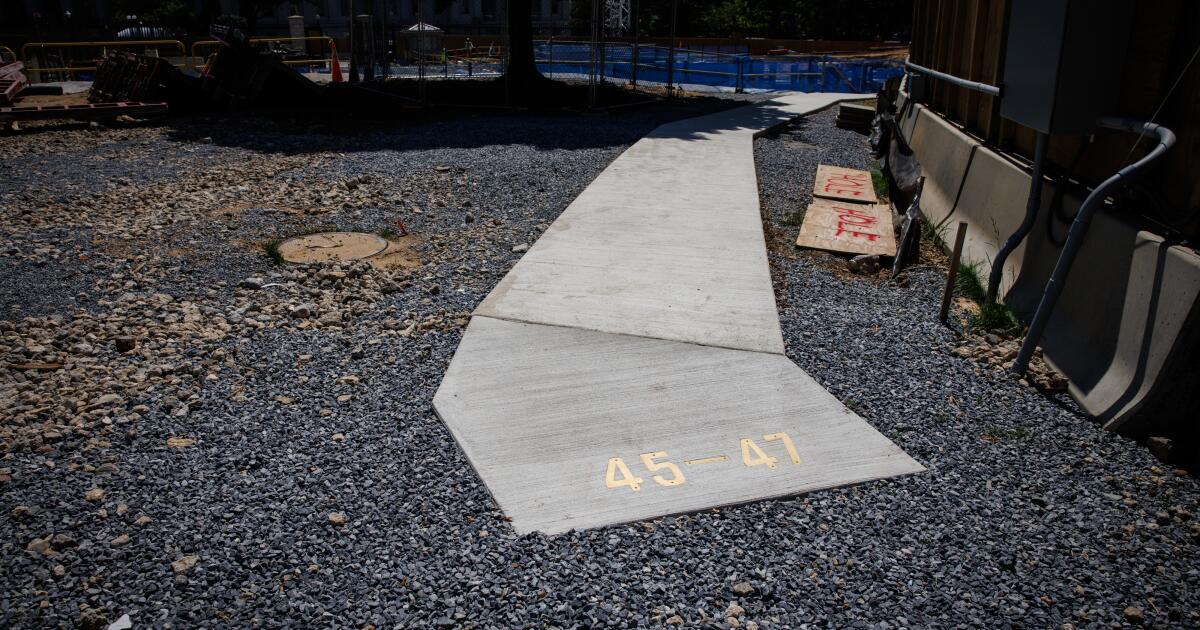 Washington, D.C6 minutes ago
Trump forges ahead with D.C. cityscape transformation against growing resistance
-

 Cleveland, OH9 minutes ago
Union Pacific Big Boy locomotive No. 4014 to stop in Northeast Ohio apart of cross-country tour
-

 Austin, TX14 minutes ago
Texas sweeps Oregon, advances to Men’s College World Series for record 39th time
-

 Alabama21 minutes ago
Flooding Concerns Continue Across North Alabama as More Rain Moves In
-

 Alaska24 minutes ago
Interior raises $3.7M in Arctic National Wildlife Refuge lease sale
-

 Arizona29 minutes ago
Arizona lake closes indefinitely to visitors after all of its fish die
-

 Arkansas36 minutes ago
Arkansas Storm Team Forecast: A few more storms today
-

 California39 minutes ago
Live updates: Trump talks ‘anti-weaponization’ fund, California elections

