Technology
Twitch banned Dr Disrespect after viewing messages sent to a minor, say former employees

/cdn.vox-cdn.com/uploads/chorus_asset/file/25502063/1965814485.jpg?ssl=1 "Twitch banned Dr Disrespect after viewing messages sent to a minor, say former employees")
Twitch abruptly banned one of its biggest stars — Herschel “Guy” Beahm, better known by his persona Dr Disrespect — in 2020 without a word of explanation. Now, four years after Beahm’s permanent ban, two former Twitch employees have come forward to describe events they say contributed to his removal from the platform.
One former Twitch employee, who asked to remain anonymous citing the potential risk to their career, told The Verge that Beahm had used Whispers, Twitch’s now-defunct messaging system, to exchange messages with a minor and initiate a conversation about meeting up at TwitchCon. The employee worked on Twitch’s trust and safety team at the time of the ban in 2020.
Their comments corroborate a post from Cody Conners, a former Twitch employee who worked on the company’s strategic partnerships team. Late Friday, Conners posted on X, “He got banned because got caught sexting a minor in the then existing Twitch whispers product. He was trying to meet up with her at TwitchCon. The powers that be could read in plain text.”
Though Conners did not explicitly name Beahm, it was understood the streamer was the subject of the post. Beahm’s ban came shortly after Twitch updated its sexual harassment policy to punish offenders with permanent suspensions.
Beahm denied Connors’ allegations. “This has been settled, no wrongdoing was acknowledged, and they paid out the whole contract,” he posted on X. Beahm published an additional post reiterating that no wrongdoing was found. “I didn’t do anything wrong, all this has been probed and settled, nothing illegal, no wrongdoing was found, and I was paid,” he wrote.
The news of Beahm’s ban, which came down four years ago this week, was shocking. Beahm was one of Twitch’s most popular stars at the time, with around 4 million followers, and he had just signed a seven-figure, two-year exclusivity contract with the platform. Neither Twitch nor Beahm would say why the streamer had been banned. In an interview with The Washington Post shortly after the ban, Beahm said that Twitch wouldn’t even tell him the reason why his account had been removed.
The former employee who spoke with The Verge also shared more insight into the order of events that led to the ban. They said there was a significant amount of time between when the messages between Beahm and the alleged victim were sent and when the moderation report about those messages was filed, but they weren’t able to recall how much time. When Twitch received the report in 2020, they said that Twitch investigated the claims and ultimately banned Beahm’s channel.
A year after being banned, Beahm said he was suing Twitch for monetary damages and disclosed that he finally knew why the platform issued the ban. However, Beahm declined to say what that was. A year later, the dispute was resolved with Beahm saying, “I have resolved my legal dispute with Twitch. No party admits to any wrongdoing.”
Beahm and Twitch did not respond to The Verge’s requests for comment.


Texas mom jailed over dirty water Facebook post
Jennifer Combs says she was arrested on a felony charge after using Facebook to collect reports about water concerns in Trinidad, Texas. A grand jury later declined to indict her. (Kurt “CyberGuy” Knutsson)
NEWYou can now listen to Fox News articles!
Jennifer Combs says she never set out to become the face of a fight over free speech, dirty water and small-town power. She says she was simply trying to help people in Trinidad, Texas, report problems with their water. Some residents had complained about discoloration, sediment, odors and health concerns. So Combs used her Southern Belle Watch Facebook page to collect reports and send them to the state.
Then, according to Combs, the situation took a turn that still sounds hard to believe. She says police came to her home and arrested her on a felony warrant over a Facebook post.
“I’ve never even had a speeding ticket,” Combs said. “I’m a mom of four kids. I have one grandbaby right now. I have two more grandbabies on the way.”
Now, Combs says her arrest has become about something much bigger than one Facebook post.
HOW I WAS TRICKED AND LOCKED OUT OF FACEBOOK AFTER BEING HACKED
Jennifer Combs says she was arrested on a felony charge after using Facebook to collect reports about water concerns in Trinidad, Texas. A grand jury later declined to indict her. (Kurt “CyberGuy” Knutsson)
Join CyberGuy Live: Lock Down Your Phone in 30 Minutes (Saturday, June 13, 10 am ET)
Your phone holds your email, passwords, photos, banking apps and personal data. In this free, live online class, Kurt the CyberGuy will walk you step by step through simple phone security fixes you can do in real time. You’ll learn how to improve your privacy settings, spot the latest phone scams, use trusted security tools and walk away with a simple checklist to stay protected. Register here: CyberGuyLive.com.
Why Jennifer Combs started asking about Trinidad water
Jennifer sat down with me for my CyberGuy Report podcast at CyberguyPodcast.com to explain what happened, why she started asking questions and what she wants other communities to learn from her ordeal.
Combs says she got involved after seeing a post from an older woman who needed help buying bottled water. According to Combs, the woman was on a fixed income and had already spent part of her monthly money on bottled water. Combs said the woman claimed her doctor had told her not to cook with or drink the tap water. That moment stuck with her.
11 EASY WAYS TO PROTECT YOUR ONLINE PRIVACY IN 2025
“I’m a firm, firm person on transparency,” Combs said. “I stand on it. I think if you’re going to be in government, there should be zero reasons for you not to be transparent with your people that elected you to be there.”
So she started collecting complaints. Her plan was simple. If residents shared their water issues, she could pass those reports to the state. That way, inspectors would know where to look.
Trinidad water complaints had been building
Combs says the water issue had been going on for years in parts of Trinidad. “That’s real. That’s not AI. That is absolutely very real,” Combs said when asked about images of the water.
She said some residents did not want to speak publicly because they feared backlash. “A lot of them wanted to be able to message me anonymously, because the retaliation in Trinidad is very, very real,” Combs said.
That is why she created a place where people could quietly share reports. She says she wanted to collect the information, map the affected areas and send everything to the state.
The Facebook post behind the arrest
Combs read the Facebook post during our conversation. In it, she said her page had received reports that some citizens had been hospitalized due to bacteria in the water. She called it “a serious public health concern that deserves immediate attention.”
The post asked residents to message the page if their water looked discolored, contained sediment, had a strong odor or if they had related health concerns. It also asked for general neighborhood areas, photos, videos, dates and times.
Combs says the post was later removed by Facebook after it was reported by a select group of people from the community and flagged, though she says Facebook did not tell her why. But before it came down, she says, then-Trinidad Police Chief Charles Gregory had taken a screenshot of it and posted it on the Trinidad Police Department Facebook page, accusing her of making a false report.
“I never filed a report with the police department,” Combs said. “I only filed a report with the state of Texas with the water.” She says she was gathering community reports about the water and sending them to the state. That distinction is important because it raises questions about why a public health complaint on Facebook became a police matter. We reached out to Meta, Facebook’s parent company, for comment, but did not hear back before our deadline.
Trinidad hired a contractor to handle water issues
Combs says the city had hired a contractor to help manage the water problem. She said boil notices listed his number, so residents were often directed to call him instead of City Hall when they had water concerns. According to Combs, that created even more frustration. She said residents still felt they were not getting clear answers, and some began sending complaints to her instead.
Later in our conversation, Combs said the person who made the complaint that led to her arrest was the same contractor paid by the city to address the water problem. “Do you want to know who that someone is?” Combs said. “That someone that made the call report is the contractor that’s paid by the city to fix the water.”
That detail adds another layer to the story. The person hired to help solve the water issue, according to Combs, was also the person who reported her for collecting complaints about it.
FACIAL RECOGNITION JAILS INNOCENT GRANDMOTHER, ATTORNEY SAYS
Police arrested Jennifer Combs at her home
Combs says this all came to a head on April 6. Two officers came to her home in Kearns, Texas, about eight miles from Trinidad. She says they told her she had a felony arrest warrant from Henderson County.
“I said, ‘Oh, what? What do you mean?’” Combs said. “And they said, ‘Yeah, you have a felony arrest warrant. We have to take you to Navarro County Jail.’”
Then she was handcuffed in her front yard. “To be handcuffed in my front yard and taken to jail and spend 23 hours in jail before I could get out was very traumatic,” Combs said. “It was insane.”
Combs says she was charged with a felony false report tied to public panic over the water system. “I was just in disbelief, in absolute disbelief,” she said.
Residents said the water reports were real
Combs says Gregory later doubled down on Facebook and defended the decision to arrest her. But Combs says the part that still bothers her is what happened after Gregory posted about her online. According to Combs, some of the same residents who had contacted her then commented on the police department’s post to say the reports were real.
“The people that had made the reports to me commented on there, and they never even interviewed them,” Combs said. “They never even talked to them. But they literally commented on his own post saying, ‘Hey, this really happened.’”
That raises a basic question. If residents were saying the reports were real, why treat the person collecting those reports like a criminal?
Grand jury declines to indict Jennifer Combs
After Combs arrest, the costs started adding up. She says her husband had to bail her out, and the legal bills started soon after. “It’s $2,500,” Combs said about the bail amount. “So he had to pay 300 and something to get me out of jail. And then we’ve had to pay attorney fees.”
Combs says the felony charge eventually went before a grand jury. The grand jury no-billed the case, meaning it did not indict her. “The grand jury said no bill. Absolutely no part of this,” Combs said. “No bill, not enough evidence.”
That meant the charge was no longer hanging over her head. Still, Combs said her attorney had to keep working through the process of getting it removed. By then, the damage had already been done. Combs had spent nearly a day in jail. Her husband had to bail her out. She had to hire a lawyer. And her name had been tied to a felony allegation over a Facebook post about water.
Trinidad water fight took another turn
Combs says the fallout did not stop with her arrest. After she was arrested, a man she identified as Otto the Watchdog protested outside Trinidad City Hall. Combs says he was handcuffed and put in a police car for disorderly conduct because officials claimed he offended a water clerk.
Then, according to Combs, the water clerk said she was not offended. “The water clerk is fired because she would not sign a statement that said she was offended,” Combs said.
Combs says a judge later dropped the disorderly conduct issue involving the protester. Then, she says, the city fired that judge. “The judge dropped it. They fired the judge,” Combs said.
She also said the city attorney was fired the same night. Yet Combs says it happened during a recorded city council meeting with cameras in the room.
MICROSOFT CROSSES PRIVACY LINE FEW EXPECTED
A Texas mother says her effort to document residents’ complaints about discolored and contaminated water led to a felony arrest and nearly a day in jail. (Kurt “CyberGuy” Knutsson)
City of Trinidad responds to request for comment
CyberGuy requested comment from the City of Trinidad. Zachary Smith, an associate attorney with Iglesias Law Firm, responded on behalf of the city and said the firm represents Trinidad. “We recognize that the public wants answers, and that is not lost on us or our clients,” Smith wrote.
Smith said the city is leaving the details to the legal process. “Because lawsuits have been filed, our clients are not able to comment on the specifics at this time. As you know, this is standard practice in active litigation,” Smith wrote.
He also defended the city’s position. “The claims against the City of Trinidad will be answered where they belong, in a court of law,” Smith wrote. “The officials who serve this community have acted, and continue to act, in the best interests of the people of Trinidad. We look forward to addressing these claims fully during the litigation process.”
Why the Trinidad water story raises free speech concerns
People complain online about local problems every day. They post about roads, trash pickup, schools, taxes, crime and public utilities. Some posts are emotional. Some include claims that still need to be checked. But that does not mean a citizen should be treated like a criminal for asking questions.
Combs said it best. “You have the right to question what anybody is doing,” she said. “You have the right to figure out what is in your water, what you’re drinking.”
Then she added one line that says a lot about her. “I’m never going to tell people, ‘Oh, just keep your mouth shut. Don’t say anything and just be quiet.’ That’s not me. I don’t hush very well.
Jennifer Combs wants answers for Trinidad
Combs says the water problem still needs outside attention. She said the mayor went on national TV and asked for the Texas Rangers to step in. Combs also said she had reached out for support.
“I need someone to help,” Combs said. “It’s insane. It’s not going to get fixed the way it is.” She said people in Trinidad have waited long enough.
“They’ve had all of these years to do it,” Combs said. “And now you’re putting people in jail for talking about it.” That is the part that should make all of us pay attention. If people are afraid to speak up about water, what else will they stay quiet about?
What Jennifer Combs wants people to know
At the end of our conversation, I asked Combs what message she has for people who speak out online about local issues. Her answer was direct.
“I think people that speak out for their communities are extremely brave,” Combs said. “So I’m never going to not tell people to speak out.”
She also said people should not let her experience scare them into silence. “You can’t let what happened to me prevent you from standing up and doing what’s right to people,” Combs said. “You can’t because then there’s no good people left.”
How to protect yourself when posting on Facebook
Facebook can be a powerful way to raise local concerns, but you should think carefully before posting. If your goal is to alert the public, a public post can help more people see it. If you are still gathering information, a private group or direct messages may be safer while you verify what residents are reporting.
Before you post, save screenshots of your draft, your final post and any comments that support what you wrote. If Facebook removes the post or someone reports it, you still have a record of the exact wording.
Also, protect people who contact you. Ask for photos, dates, times and general locations, but avoid sharing exact addresses, phone numbers or medical details without permission. You can show a pattern without exposing someone’s private information.
Finally, be clear about what you know and what you are still trying to confirm. Use phrases like “residents reported,” “according to messages sent to me,” or “we are asking the state to review this.” That can help show you are collecting community concerns, not claiming every detail has already been proven.
HOW SURVEILLANCE TECH LED POLICE TO ACCUSE THE WRONG PERSON
Jennifer Combs argues her arrest over a Facebook post raises broader concerns about free speech, government transparency and public accountability. (Kurt “CyberGuy” Knutsson)
Kurt’s key takeaways
Jennifer Combs says she wanted clean water, transparency and answers. Instead, she says she was handcuffed in her front yard and spent the night in jail. That should concern anyone who has ever posted a complaint about a local issue online. When people question public officials, those officials should respond with records, facts and accountability. They should not turn criticism into a police matter. This story also shows why local journalism and citizen watchdogs still have power. Small towns can have big problems. Sometimes the person asking the uncomfortable question is the one doing the public a favor. The bigger question is simple: If a Facebook post about dirty water can lead to a felony arrest, what would stop another local government from trying the same thing? To hear Jennifer tell her story in her own words, check out The CyberGuy Report podcast at CyberguyPodcast.com.
Have you ever spoken up about a local problem and felt ignored, intimidated or brushed aside? Let us know by writing to us at CyberGuy.com.
Sign up for my FREE CyberGuy Report
CLICK HERE TO DOWNLOAD THE FOX NEWS APP
- Get my best tech tips, urgent security alerts and exclusive deals delivered straight to your inbox.
- For simple, real-world ways to spot scams early and stay protected, visit CyberGuy.com – trusted by millions who watch CyberGuy on TV daily.
- Plus, you’ll get instant access to my Ultimate Scam Survival Guide free when you join.
Copyright 2026 CyberGuy.com. All rights reserved.

Microsoft’s Office 2019 apps for Mac will stop working next month, because the company isn’t renewing a certificate that validates Office licenses. Owners of Office 2019 for Mac are being warned they’ll have to purchase Office 2024 or a Microsoft 365 subscription if they want to continue editing documents.
Microsoft previously promised that “all your Office 2019 apps will continue to function,” when it announced end of support in 2023. The company then quietly updated that support note last month to remove the mention of apps continuing to function, replacing it with “Rest assured that all your Office 2019 apps won’t lose any data.”
Starting on July 13th, Office 2019 for Mac and Office 2021 for Mac will both run in “reduced functionality mode,” allowing people to open files but not edit, save, or create new documents. The reduced functionality will impact Word, Excel, PowerPoint, Outlook, and OneNote.
While Microsoft is providing a certificate update for Office 2021 as it’s still supported until October 13th, 2026, the company is leaving Office 2019 for Mac users out in the cold as support for these apps ended a few years ago. “Office 2019 for Mac reached end of support on October 10, 2023, and no longer receives updates,” says Microsoft. “Because Office 2019 cannot be updated to the required version, this issue cannot be resolved by updating or reinstalling Office 2019 for Mac.”
JimmyTech points out that old versions of Microsoft 365 apps on Mac and iOS will also be affected by this certificate issue, but a simple update will fix it for those users.
Microsoft regularly ends support of software and there’s always the risk you could run into issues running older apps or versions of Windows. It’s still surprising to not see Microsoft make an exception here though, particularly because this certificate issue breaks the main functionality of an app you’ve paid a one-time license fee for.

NEWYou can now listen to Fox News articles!
You know that little moment when your phone rings and the name on the screen makes you drop everything?
Maybe it says your spouse, your daughter, your boss or your best friend. You answer because you trust the name. Then the voice sounds familiar too.
That is exactly what makes the latest phone scams so dangerous.
Android’s fake call detection can warn you when a caller may be pretending to be someone saved in your contacts. (Silas Stein/Picture Alliance)
Scammers no longer have to call from a strange number. They can spoof a trusted contact’s phone number. Then they can use AI voice tools to sound like someone you know. Android is now rolling out a new feature called fake call detection to help warn you when that familiar call may be a fake.
FAKE AGENT PHONE SCAMS ARE SPREADING FAST ACROSS THE US
Join CyberGuy Live: Lock Down Your Phone in 30 Minutes (Saturday, June 13, 10 am ET)
- Your phone holds your email, passwords, photos, banking apps and personal data. In this free, live online class, Kurt the CyberGuy will walk you step by step through simple phone security fixes you can do in real time. You’ll learn how to improve your privacy settings, spot the latest phone scams, use trusted security tools and walk away with a simple checklist to stay protected. Register here: CyberGuyLive.com
What is Android fake call detection?
Android fake call detection is a new protection built into Phone by Google. It is designed to spot suspected spoofed calls when both people on the call use Phone by Google.
Think of it as your phone quietly asking, “Is this call really coming from that person’s device?” If the answer looks suspicious, your phone can show a warning and advise you to hang up. That small alert could stop a scam before fear, panic or confusion takes over.
ANDROID SECURITY UPGRADES OUTSMART SCAMS AND PROTECT YOUR PRIVACY
How Android fake call detection works
The feature works automatically in the background. You do not need to answer a quiz, scan a code or press a button during the call. When a trusted contact calls you, their phone sends a silent confirmation signal to your phone. That signal helps prove the call really came from their device.
If a scammer spoofs your contact’s number, that confirmation signal may be missing. Your phone then checks with your contact’s actual device. If the real device says it is not placing a call, your screen can warn you that the call may be fake.
The system uses end-to-end encrypted RCS technology, so the check happens privately. You can also turn the feature off in Phone by Google settings.
AI DEEPFAKE ROMANCE SCAM STEALS WOMAN’S HOME AND LIFE SAVINGS
Why fake calls are getting harder to spot
For years, caller ID gave people a sense of control. If the name looked familiar, most of us felt safer picking up. That old habit now works in the scammer’s favor.
Scammers can use internet-based calling tools to spoof numbers. That means your phone may display the name of someone you trust, even though the call comes from somewhere else.
Then comes the AI voice trick. With today’s audio tools, scammers can make a fake voice sound shockingly real. They may pretend to be a family member in trouble, a bank employee warning about fraud or a manager asking for urgent help.
SCAMMERS EXPLOITED MOM’S FEARS TO STEAL HER ENTIRE LIFE’S SAVINGS
That combination makes the call feel personal and immediate. It also makes you more likely to act before you think.
Why Android is adding this protection now
Impersonation scams have become a major global problem. INTERPOL’s March 2026 Global Financial Fraud Threat Assessment cited impersonation fraud as one of the leading contributors to more than $400 billion in global losses.
In the U.S., impersonation scams remain one of the top fraud categories reported to the FTC. Losses reached $2.95 billion in 2024.
GLOBAL SCAM CRACKDOWN LEADS TO 276 ARRESTS
Those numbers tell you why this feature deserves attention. Scammers go where the money is. Right now, they know trusted voices and trusted names can open the door.
Which Android phones get fake call detection?
Google says fake call detection is rolling out globally in Phone by Google this month, starting with Pixel devices.
The feature is available on Android 12 and newer devices with Phone by Google, Contacts and Google Messages installed. It also requires RCS capability in Google Messages.
SAMSUNG MESSAGES ENDING? WHAT ANDROID OWNERS MUST KNOW
There is one key limitation. Both you and the person calling you must use Phone by Google for fake call detection to work.
Phone by Google already comes as the default phone app on many Android devices. If your phone uses a different calling app, you can install Phone by Google from the Play Store and set it as your default phone app.
How Android fake call detection protects you
This feature gives you an extra warning at the exact moment you need it most. That timing is important. Scam calls often rely on emotion. The caller may say someone got arrested, a loved one had an accident or a bank account faces an urgent threat.
SSA IMPERSONATION SCAMS ARE GETTING MORE PERSONAL
When the voice sounds familiar, your guard drops. A warning on your screen can interrupt that emotional rush. It gives you a reason to stop, hang up and verify the story another way.
What Android fake call detection cannot do
This new tool helps, but it cannot protect you from every scam. It may not work if the other person does not use Phone by Google. It also may not cover calls from businesses, unknown numbers or contacts using unsupported devices. So you still need basic scam rules.
If someone asks for money, gift cards, crypto, account codes or remote access to your device, hang up. Then call the person or company back using a number you already trust.
Also, never stay on the line just because the caller tells you to. That is one of the oldest pressure tactics in the scammer playbook.
A spoofed call can look familiar on your screen, even when it is really coming from a scammer. (Kurt CyberGuy Knutsson)
How to protect yourself from AI voice scams
AI voice scams work because they sound personal, urgent and believable, so your best defense is to slow the conversation down before you act.
1) Create a family safe word
Pick a simple word or phrase that only your close family knows. It should be easy to remember but hard for a scammer to guess. Then, if someone calls with an emergency and asks for money, ask for the safe word. If they cannot give it, hang up and verify the story another way.
9 WAYS SCAMMERS CAN USE YOUR PHONE NUMBER TO TRY TO TRICK YOU
2) Pause when the call feels urgent
Scammers want you scared because fear makes people act fast. That is why fake emergency calls often sound intense, emotional and rushed. Take a breath before you do anything. A real loved one, bank or employer will let you verify what is happening.
3) Call back using a trusted number
If a call feels suspicious, hang up. Then call the person back using a number saved in your contacts or one you know is real. Do not use a number, link or instruction the caller gives you. That could send you right back to the scammer.
4) Never send money or codes during the call
Do not send gift cards, crypto, wire transfers or payment app transfers because a caller sounds convincing. Also, never share a one-time passcode, PIN or account login code over the phone. Once scammers get that information, they can move fast.
5) Turn on scam protections on your phone
Use the built-in protections already available on your device. Pixel and Samsung users can enable Scam Detection in the Phone by Google app to help flag suspicious calls. Also, consider using strong antivirus software that includes AI-powered scam protection to help detect scams in texts, online content and deepfake videos. Keep an eye on call warnings too. If your phone tells you something looks risky, treat that alert seriously. Get my picks for the best 2026 antivirus protection winners for your Windows, Mac, Android & iOS devices at Cyberguy.com
6) Keep your phone apps updated
Update Phone by Google, Google Contacts and Google Messages when updates are available. These tools work best when your apps and phone software stay current. Updates often include security improvements, bug fixes and new scam protections.
Here’s how to check for updates on Android:
- Open the Google Play Store app.
- Tap your profile icon in the top right corner.
- Tap Manage apps & device.
- Under Updates available, tap See details.
- Look for Phone by Google, Google Contacts and Google Messages.
- Tap Update next to each app, or tap Update all.
You can also turn on automatic app updates by opening the Google Play Store app, tapping your profile icon, then going to Settings > Network preferences > Auto-update apps. From there, choose whether to update apps over Wi-Fi, over Wi-Fi or mobile data, with limited mobile data or not at all.
Kurt’s key takeaways
If a call feels urgent or suspicious, pause before you respond and verify it another way. (Tristan Spinski/The Washington Post via Getty Images)
Android’s fake call detection is a smart step in the fight against AI-powered phone scams. It recognizes something many people already know: the name on your caller ID no longer proves the person calling you is real. This feature gives Android users another layer of protection when scammers try to hijack trust. Still, the safest move remains simple. Slow down, verify the call and never let panic make the decision for you.
Should the government do more to stop scammers from using AI voices to impersonate the people you trust? Let us know by writing to us at CyberGuy.com
Sign up for my FREE CyberGuy Report
CLICK HERE TO DOWNLOAD THE FOX NEWS APP
- Get my best tech tips, urgent security alerts and exclusive deals delivered straight to your inbox.
- For simple, real-world ways to spot scams early and stay protected, visit CyberGuy.com – trusted by millions who watch CyberGuy on TV daily.
- Plus, you’ll get instant access to my Ultimate Scam Survival Guide free when you join.
Copyright 2026 CyberGuy.com. All rights reserved.
-

 Technology2 minutes ago
Texas mom jailed over dirty water Facebook post
-
 Business5 minutes ago
Rivian begins deliveries of cheaper electric vehicles
-
 Entertainment10 minutes ago
Glen Walker is returning to broadcast news, months after being cut from KTLA
-
 Lifestyle17 minutes ago
A new L.A. Times feature: Now you can save our expert recs for your next adventure
-
 Politics20 minutes ago
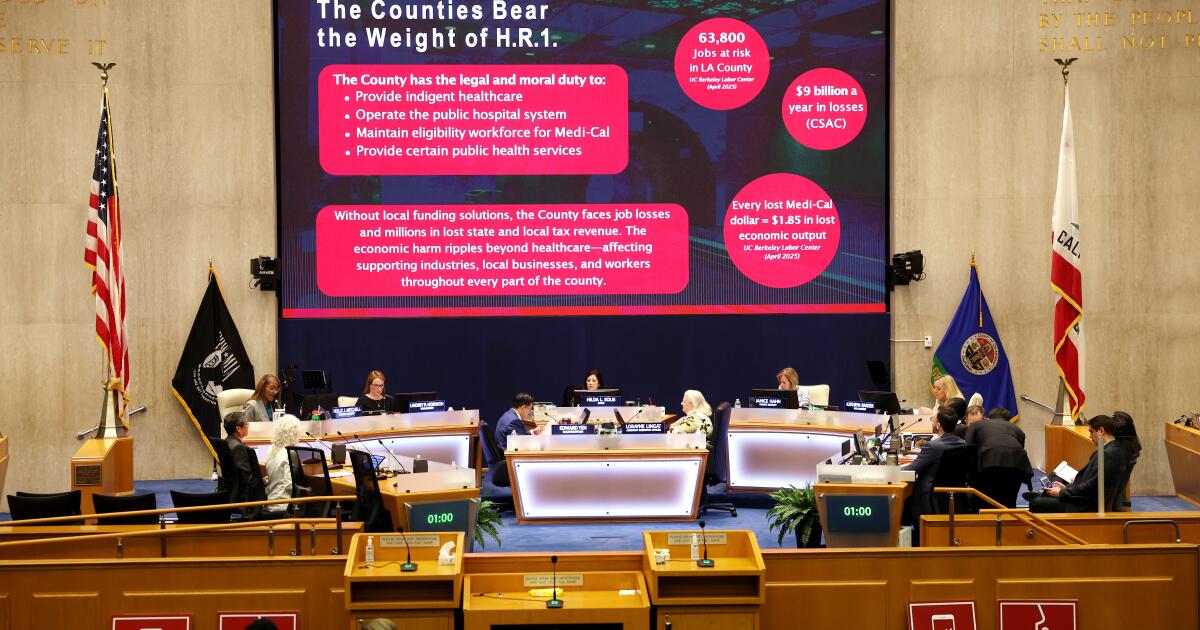
Supporters cheer new L.A. County healthcare sales tax: ‘It’s a lifesaver’
-
 Science25 minutes ago
Why new dads shouldn’t panic about low testosterone
-
 Sports32 minutes ago
World Cup referee, denied entry to U.S. because of suspected ties to terrorists, hailed in return to Somalia
-

 World40 minutes ago
US military chief Hegseth warns Cuba against acquiring military arms

