
Today, we’re talking about the future of Xbox. Phil Spencer, a two-time Decoder guest who’s led Xbox for more than a decade, retired last week.
Technology
Relentless hackers abandon Windows to target your Apple ID


If there’s one thing that has become clear over the past year, it’s that Apple devices are not as secure as the company wants you to believe.
We’re four months into 2025 and there have already been over 10 instances in which attackers specifically targeted Apple users, and these are just the incidents we know of.
I’ll admit no device is foolproof, but there seems to be a growing trend where bad actors prefer targeting Apple users over other platforms. In fact, security researchers have recently identified a new phishing campaign in which hackers, who previously focused on Windows, are now setting their sights on Apple IDs.
STAY PROTECTED & INFORMED! GET SECURITY ALERTS & EXPERT TECH TIPS – SIGN UP FOR KURT’S ‘THE CYBERGUY REPORT’ NOW
A person working on an Apple laptop (Kurt “CyberGuy” Knutsson)
What you need to know
Security researchers at LayerX Labs have uncovered a new phishing campaign that specifically targets Mac users, marking a shift from its previous focus on Windows. The attackers initially lured Windows users with fake Microsoft security alerts designed to steal login credentials. However, after Microsoft, Chrome and Firefox implemented new security features to block these attacks, the hackers started redirecting their efforts toward Mac users instead.
The new attack closely mirrors its predecessor but with key modifications. The phishing pages have been redesigned to resemble Apple’s security warnings, making them appear legitimate to macOS users. The attack code has also been adjusted to specifically detect macOS and Safari users, ensuring that only Apple users see the fraudulent pages.
Plus, despite shifting their focus, the attackers continue to host these phishing pages on Microsoft’s Windows[.]net domain. Since this is a trusted Microsoft platform, it allows the phishing pages to evade detection by security tools that assess risk based on domain reputation.
Compromised websites displaying fake security warning (LayerX)
FBI WARNS OF DANGEROUS NEW ‘SMISHING’ SCAM TARGETING YOUR PHONE
How victims are lured in
The phishing campaign exploits common yet highly effective methods called typosquatting and malicious redirects. Victims often end up on these phishing pages after making a simple mistake, such as mistyping a URL while trying to visit a legitimate website.
Instead of reaching the intended site, they land on a compromised domain parking page. From there, they are redirected through multiple websites before ultimately arriving at the phishing page, which presents a fake Apple security warning. Believing their Apple ID is at risk, victims are tricked into entering their credentials, unknowingly handing them over to the attackers.
One notable case involved a person using Safari who was working at a business secured by a Secure Web Gateway. Despite the organization’s security measures, the phishing attempt managed to bypass the gateway’s protections.
WHAT IS ARTIFICIAL INTELLIGENCE (AI)?
Compromised websites displaying fake security warning (LayerX)
APPLE’S IOS VULNERABILITY EXPOSES IPHONES TO STEALTHY HACKER ATTACKS
7 ways to stay safe from attackers targeting Apple users
Phishing campaigns are increasingly targeting macOS users, but you’re not defenseless. Here are four essential steps to protect yourself.
1. Use strong antivirus software: A reliable antivirus program is your first line of defense against phishing attempts and malicious websites. While Apple’s built-in security features provide some protection, they aren’t foolproof, especially against sophisticated phishing attacks that mimic legitimate Apple warnings. A robust antivirus solution can detect and block malicious sites before you even reach them, preventing you from accidentally entering your credentials on a fraudulent page. Additionally, advanced security software can identify suspicious redirects and alert you before you fall victim to typosquatting traps. Get my picks for the best 2025 antivirus protection winners for your Windows, Mac, Android and iOS devices.
2. Keep your software up to date: Regular updates to macOS and your applications aren’t just about new features. They’re critical patches that fix security vulnerabilities. Attackers are quick to exploit any weakness, so ensuring your operating system and all installed software are current minimizes the risk of a breach. Enable automatic updates where possible so you’re always protected by the latest security enhancements.
3. Regularly monitor your Apple ID activity: Even with strong security measures in place, it’s important to keep an eye on your Apple ID account for any signs of unauthorized access. Apple allows users to review their account activity, including devices logged into the account and recent changes. Regularly check your Apple ID settings to ensure that only trusted devices are connected and that no suspicious activity has occurred. If you notice anything unusual, such as login attempts from unfamiliar locations, immediately change your password and remove unauthorized devices. This proactive approach can help you catch potential breaches early and minimize damage.
4. Enable two-factor authentication (2FA): Strong, unique passwords for every account are essential, but they’re even more effective when combined with two-factor authentication. Even if attackers manage to steal your credentials through a phishing attack, 2FA adds an extra barrier that makes unauthorized access significantly harder. Consider using a password manager to generate and store complex passwords. Get more details about my best expert-reviewed password managers of 2025 here.
5. Use a recovery key for enhanced security: Apple offers an optional feature called a recovery key, which is a 28-character code that provides an extra layer of security for your Apple ID. When you enable a recovery key, Apple disables its standard account recovery process, meaning you’ll need this key, along with access to a trusted device or phone number, to reset your password or regain access to your account. This makes it significantly harder for attackers to take control of your account.
To set up a recovery key, go to Settings > [Your Name] > Sign-in & Security > Recovery Key on your iPhone, iPad or Mac. Follow the prompts to generate and confirm your recovery key. Be sure to write it down and store it in a secure location, such as a safe or with a trusted family member. Keep in mind that losing both your recovery key and access to trusted devices can permanently lock you out of your account. However, if used responsibly, this feature gives you greater control over your account’s security.
6. Enable biometric authentication: Apple devices offer advanced biometric authentication options like Face ID and Touch ID, which provide an extra layer of security. These features make it significantly harder for attackers to gain access to your device or sensitive accounts, even if they manage to steal your credentials. Enable biometric authentication wherever possible, especially for apps and services that store personal or financial information. Since biometric data is unique to you, it adds a level of protection that passwords alone cannot provide.
7. Practice safe browsing: Many attacks rely on simple user mistakes, such as mistyping a URL or clicking on suspicious links. Always verify that you’re visiting legitimate websites before entering any personal information. Be skeptical of unexpected security alerts, even if they mimic Apple’s design. Learning to identify the subtle signs of phishing, like unusual URL structures or generic greetings, can help you avoid falling for these scams.
HOW TO PROTECT YOUR IPHONE & IPAD FROM MALWARE
Kurt’s key takeaways
Apple has long sold the idea that its ecosystem is inherently safer than the alternatives, but that claim is starting to wear thin. The reality is that attackers are no longer ignoring Mac users, they’re actively targeting them, and Apple’s response has been anything but proactive. While Microsoft, Google and others roll out new security measures to counter evolving threats, Apple remains slow to adapt, relying on outdated assumptions about its platform’s safety.
Do you believe Apple should be more transparent about security vulnerabilities affecting its users? Let us know by writing us at Cyberguy.com/Contact.
For more of my tech tips and security alerts, subscribe to my free CyberGuy Report Newsletter by heading to Cyberguy.com/Newsletter.
Ask Kurt a question or let us know what stories you’d like us to cover.
Follow Kurt on his social channels:
Answers to the most-asked CyberGuy questions:
New from Kurt:
Copyright 2025 CyberGuy.com. All rights reserved.

Technology
Anthropic refuses Pentagon’s new terms, standing firm on lethal autonomous weapons and mass surveillance

Less than 24 hours before the deadline in an ultimatum issued by the Pentagon, Anthropic has refused the Department of Defense’s demands for unrestricted access to its AI.
It’s the culmination of a dramatic exchange of public statements, social media posts, and behind-the-scenes negotiations, coming down to Defense Secretary Pete Hegseth’s desire to renegotiate all AI labs’ current contracts with the military. But Anthropic, so far, has refused to back down from its two current red lines: no mass surveillance of Americans, and no lethal autonomous weapons (or weapons with license to kill targets with no human oversight whatsoever). OpenAI and xAI had reportedly already agreed to the new terms, while Anthropic’s refusal had led to CEO Dario Amodei being summoned to the White House this week for a meeting with Hegseth himself, in which the Secretary reportedly issued an ultimatum to the CEO to back down by the end of business day on Friday or else.
In a statement late Thursday, Amodei wrote, “I believe deeply in the existential importance of using AI to defend the United States and other democracies, and to defeat our autocratic adversaries. Anthropic has therefore worked proactively to deploy our models to the Department of War and the intelligence community.”
He added that the company has “never raised objections to particular military operations nor attempted to limit use of our technology in an ad hoc manner” but that in a “narrow set of cases, we believe AI can undermine, rather than defend, democratic values” — going on to specifically mention mass domestic surveillance and fully autonomous weapons. (Amodei mentioned that “partial autonomous weapons … are vital to the defense of democracy” and that fully autonomous weapons may eventually “prove critical for our national defense,” but that “today, frontier AI systems are simply not reliable enough to power fully autonomous weapons.” He did not rule out Anthropic acquiescing to the military’s use of fully autonomous weapons in the future but mentioned that they were not ready now.)
The Pentagon had already reportedly asked major defense contractors to assess their dependence on Anthropic’s Claude, which could be seen as the first step to designating the company a “supply chain risk” – a public threat that the Pentagon had made recently (and a classification usually reserved for threats to national security). The Pentagon was also reportedly considering invoking the Defense Production Act to make Anthropic comply.
Amodei wrote in his statement that the Pentagon’s “threats do not change our position: we cannot in good conscience accede to their request.” He also wrote that “should the Department choose to offboard Anthropic, we will work to enable a smooth transition to another provider, avoiding any disruption to ongoing military planning, operations, or other critical missions. Our models will be available on the expansive terms we have proposed for as long as required.”

NEWYou can now listen to Fox News articles!
Amazon made a lot of noise in October when it unveiled Blue Jay, a multi-armed warehouse robot built to speed up same-day deliveries. Just months later, the company quietly ended the program.
The robot’s core technology will live on in other projects. Still, Blue Jay itself is done.
That sudden shift raises an important question. If one of the world’s most advanced logistics companies cannot make a high-profile robot work at scale, what does that say about the future of artificial intelligence (AI) in the real world?
Sign up for my FREE CyberGuy Report
Get my best tech tips, urgent security alerts and exclusive deals delivered straight to your inbox. Plus, you’ll get instant access to my Ultimate Scam Survival Guide – free when you join my CYBERGUY.COM newsletter.
Blue Jay was designed as a ceiling-mounted robot that could sort and handle multiple packages at once to speed up same-day delivery. (Amazon)
What Blue Jay was supposed to do
Blue Jay was not a simple conveyor belt upgrade. It was a ceiling-mounted system designed to recognize and sort multiple packages at once. Using AI-powered perception models, the robot could:
- Identify packages in motion
- Coordinate several arms at the same time
- Manipulate items with speed and precision
Amazon said it developed the system in under a year. That pace alone was impressive. The goal was clear: move more packages faster while reducing strain on workers in same-day fulfillment centers. On paper, that sounds like a win for everyone.
Why Blue Jay ran into trouble
Despite the hype, Blue Jay faced steep engineering and cost challenges. First, the robot was mounted to the ceiling. That design required complex installation and tight integration into Amazon’s Local Vending Machine warehouses. Those facilities operate as massive, single structures with automation baked into the building itself.
There was little room to reconfigure hardware once installed. That rigidity likely became a liability. In software, AI can pivot overnight with a code update. In the physical world, changing course means retooling steel beams, motors and entire layouts. That takes time and serious money. Several employees who worked on Blue Jay have already moved to other robotics projects.
The company reportedly continues to experiment and improve its warehouse systems. The technology behind Blue Jay will, in fact, inform future designs. In other words, the robot failed. The ideas did not.
WAYMO’S CHEAPER ROBOTAXI TECH COULD HELP EXPAND RIDES FAST
Engineering complexity and high installation costs limited how easily Blue Jay could scale inside Amazon’s tightly integrated warehouse system. (Amazon)
From LVM to Orbital: A strategic shift
Amazon’s next move centers on a new warehouse architecture called Orbital. Unlike the older Local Vending Machine model, Orbital is modular. It can be built from smaller units and deployed faster in different layouts.
That flexibility matters. Retail is fragmenting. Customers expect same-day delivery from urban hubs, local stores and even grocery locations. Orbital could allow Amazon to place micro-fulfillment centers behind retail stores, including Whole Foods locations. That would help it compete more directly with Walmart, which already has a strong grocery footprint.
Alongside Orbital, Amazon is developing a new robotics system called Flex Cell. Unlike Blue Jay’s ceiling mount, Flex Cell is expected to sit on the floor.
That small design change signals something bigger. Amazon appears to be moving from massive centralized automation to smaller, adaptable systems built for the unpredictable realities of local retail.
What this means for your deliveries
If you order from Amazon regularly, you might wonder whether this affects you. In the short term, probably not. Your packages will still show up. Same-day and next-day delivery remain core priorities. However, the long-term story is more interesting. Amazon’s robotics strategy shapes how fast your order arrives, how much you pay and how local warehouses operate in your community.
If Orbital works, you could see:
- Faster delivery from smaller neighborhood hubs
- Better handling of chilled and perishable items
- More automation in retail backrooms
If it struggles, same-day expansion could slow or become more expensive. That tension reflects a broader truth about AI. Writing code is one thing. Teaching a robot to lift boxes in a real warehouse without breaking down is another.
AI TRUCK SYSTEM MATCHES TOP HUMAN DRIVERS IN MASSIVE SAFETY SHOWDOWN WITH PERFECT SCORES
After only a few months, Amazon discontinued the Blue Jay program while continuing to reuse parts of its underlying robotics technology. (Amazon)
The gap between AI hype and hardware reality
Blue Jay highlights a growing divide in the tech world. AI in software is moving at lightning speed. Chatbots, image tools and predictive systems evolve weekly.
Hardware is different. Robots must deal with gravity, friction, heat and unpredictable human environments. Every mistake has a physical cost.
Amazon’s course correction shows that even tech giants hit limits when translating AI breakthroughs into moving metal. That does not mean automation is slowing down. It means the path is bumpier than the headlines suggest.
Take my quiz: How safe is your online security?
Think your devices and data are truly protected? Take this quick quiz to see where your digital habits stand. From passwords to Wi-Fi settings, you’ll get a personalized breakdown of what you’re doing right and what needs improvement. Take my Quiz here: Cyberguy.com.
Kurt’s key takeaways
Amazon shelving Blue Jay is not a retreat from robotics. It is a recalibration. The company is betting that modular, flexible systems will win over massive, tightly integrated machines. That shift could define the next era of e-commerce logistics. For you, the promise remains the same: faster delivery, better availability and more local convenience. But behind that promise is a complicated dance between AI ambition and real-world constraints.
If even Amazon struggles to make advanced robots work at scale, how much of the AI revolution is still more vision than reality? Let us know by writing to us at Cyberguy.com
CLICK HERE TO DOWNLOAD THE FOX NEWS APP
Sign up for my FREE CyberGuy Report
Get my best tech tips, urgent security alerts and exclusive deals delivered straight to your inbox. Plus, you’ll get instant access to my Ultimate Scam Survival Guide – free when you join my CYBERGUY.COM newsletter.
Copyright 2026 CyberGuy.com. All rights reserved.
Related Article


But in a shocking twist, his deputy and long-assumed successor, Sarah Bond, is also out too, and the Xbox division is now in the hands of Asha Sharma, one of Microsoft’s AI executives with no prior game industry experience. It’s a major leadership transition that suggests Microsoft wants to make serious changes to its gaming division, which owns franchises like Halo, Call of Duty, and Minecraft.
There is no better person to talk to about all of this than Tom Warren, a senior editor here at The Verge and author of the excellent Notepad newsletter. Tom is actually on parental leave right now, but Microsoft has a longstanding habit of disrupting his well-earned time off with major news. So, Tom was gracious enough to come on the show after he published a major scoop about what exactly went down at Xbox this past week.
There is a lot to say about Xbox: The story of the console and Microsoft Gaming is a complicated one, with a lot of twists and turns since it made its big splash in the video game industry 25 years ago. Yet for a majority of that time, it’s been stuck in third place, behind Nintendo and PlayStation. That’s a surprising thing to say for a division of a company worth trillions of dollars that also owns some of the most celebrated gaming properties in all of entertainment.
Verge subscribers, don’t forget you get exclusive access to ad-free Decoder wherever you get your podcasts. Head here. Not a subscriber? You can sign up here.
So Phil Spencer, who started at Microsoft in the late 1980s and took charge of Xbox in 2014, was given the job of trying to turn the division around. Since then, Spencer has tried numerous moves: the Netflix-style Game Pass subscription service; a major push into cloud gaming; buying Activision Blizzard King, the maker of Warcraft and Candy Crush; and many, many different iterations of Xbox hardware. As of last year, there are even plans to bring Halo to PlayStation — something game industry insiders thought was basically impossible just five years ago.
But as you’ll hear Tom explain, the game industry has been changing faster than Xbox has been able to transform itself, and almost none of Spencer’s strategies have really clicked. Xbox is still far behind Nintendo and PlayStation, and on PC, it still stands in the shadow of Valve, which runs the dominant Steam store and now makes the Steam Deck handheld. Microsoft has spent tens of billions of dollars trying to acquire its way to a stronger position against the rise of Fortnite and Roblox, mobile giants like Tencent, and a zero-sum war for attention dominated by apps like YouTube, Instagram, and TikTok. And yet the company has very little to show for all of that.
Today, Spencer’s grand vision of 100 million Game Pass subscribers streaming Xbox games to whatever screen they want using the cloud still feels out of reach. But, as Tom says, it’s not lost forever — Xbox is far from dead, and there is still hope yet that new leadership can take some big swings and make something happen again.
Okay: Verge senior reporter Tom Warren on the future of Xbox. Here we go.
This interview has been lightly edited for length and clarity.
Tom Warren, you’re a senior reporter at The Verge. You’re currently out on paternity leave, but Microsoft just brought you back.
Yep. This happens every time I take a vacation or leave. Microsoft decides, “We’re going to do something massive and ruin Tom’s life.”
Just punishment for all of the scoops you’ve dropped on this company over the years. So this week, as you were playing with your beautiful new baby, Microsoft initiated a major shakeup at Xbox, something we’ve seen coming for a little bit, but maybe not on this scale or this magnitude. Describe what happened at Xbox this week.
Phil Spencer, the longtime CEO of Microsoft Gaming, technically, but Xbox chief is what he’s known as, is retiring, so he is leaving Microsoft. Sarah Bond, the Xbox president, is also leaving Microsoft, and then they’re actually promoting Asha Sharma, from the CoreAI side of Microsoft, to the CEO of Microsoft Gaming.
So she’s replacing Phil Spencer, essentially. So it’s big news, a big shakeup, should we say, of Xbox. I think with Phil Spencer, it’s been a long time coming, right? I think Xbox fans have expected that retirement, but perhaps not so much Sarah Bond’s leaving.
And this is, I think, the shakeup, right? We knew Phil was going to retire. He’d been messaging that for some time. He’s been there for a long time. He’s a Microsoft lifer, really. Phil’s been on this show before, and we’re going to run some clips from his past interviews on Decoder, because I want to get your take on what happened between those interviews and now.
At a very high level, we knew Phil was going. Is it that everyone expected Sarah to be his successor, and that didn’t happen, and that’s the surprise here?
I think there are two surprises, right? One is obviously that Sarah wasn’t named Xbox chief and that Asha is the successor, because that was a quiet surprise and a surprise higher, really. But yeah, Sarah has always been the number two. She’s always traveled with Phil and always been the face of Xbox over the past couple of years as Phil has… I’d say he’s stepped back a little bit publicly since the Activision Blizzard acquisition.
So Sarah’s become the face of Xbox during that time, and she took over the platform work, the hardware work. So whenever there was any mention of the next-gen Xbox, it was Sarah who would come out and talk about it and not Phil. So that’s a change in itself, right, because it’s usually Phil. So I think everyone just thought, “Okay, well she’s being prepped to be Phil’s replacement eventually, whether it be a couple of years, five years, whatever,” and it didn’t happen.
Behind the scenes, I know that Xbox fans had heard, and expected, that this was going to happen, that Sarah Bond would be the heir apparent. But for a good year or so, I’ve been hearing different things about Sarah Bond, different from what perhaps the public perception is of her. So to me, it wasn’t a surprise. I was not surprised to see her not named, but I think it was more of a surprise to see Asha named. That was a surprise to me.
I know Asha a little bit. I’ve spoken to her a few times, but she’s like a non-gamer. She’s very straight about that and honest about it, but not that that really matters, I don’t think, to be a CEO, really, to be honest. But to Xbox fans and that gaming segment, if they see a non-gamer, it’s like… Particularly with Xbox, I think, because Phil has instilled that over the years, so they’ve come to that expectation. So that was the surprise of it, but I don’t think Sarah Bond was a surprise to me.
I want to come to Asha, the new leadership, and particularly the Microsoft AI of it all, because that seems like an important piece of the puzzle. I just want to stick with Phil and Sarah for one more second. There’s the reporting you have done about Sarah personally, and her skills as manager and potentially CEO, and then there’s Phil and the strategy he pursued for Xbox and Microsoft Gaming.
A huge part of that strategy is making Microsoft Gaming as big as it is, bigger than Xbox, acquiring Activision Blizzard King, and doing all the other acquisitions of the studios they’ve done. I look at this, and I say, “Well, it doesn’t matter if Sarah was the best manager or the worst manager. The strategy that she was a part of failed.”
I see this, and I say, “Okay, if I’m Satya Nadella,” or more importantly, “Amy Hood, the CFO of Microsoft, and we’ve done some of the biggest acquisitions in history, and certainly the biggest acquisitions in Microsoft history. None of this came to anything. We gotta reboot this whole thing.” Does that feel as important inside Microsoft as maybe Sarah wasn’t the right person?
It’s a couple of things. Obviously, Microsoft Gaming has ballooned now, right, because it’s got Bethesda, and Activision Blizzard has made it bigger than ever before. And then you’ve got this tension of Microsoft: the corporate Microsoft of Satya Nadella and Amy Hood, putting the pressure on that new division to return the money that they’ve invested into this project, essentially, through profit margins.
So they’ve cranked that pressure up over the past couple of years, and it forced Phil, Sarah, and everyone under them to then respond. They’ve done these studio closures, they’ve done cuts, they’ve done price increases. They’ve tried to accelerate getting more people using export services, essentially.
That became the strategy, like, “Okay, we need to get to TVs, we need to get to mobile,” and all this stuff. And there was a lot of, I guess, trying to rush that, it felt like, and forgetting that the console was their base of building up Game Pass and their base of taking those people and perhaps moving them elsewhere, and user acquisition, growth. And it just feels like they tried to rush that, and they did the “This is an Xbox” campaign, which was just super strange. It was trying to say that the phone was an Xbox, and it was borne out of the idea that they needed to speed up profitability. They needed to get more revenue, get more growth, and improve those margins, essentially.
So when you’re trying to pin blame on whoever it is, it comes from the top. Satya and Amy are pushing these margins, and I think they’re slightly unrealistic in the context of gaming. They’re not the margins that Sony has, for example. They’ve put the pressure on. Phil, I think, has stepped away a little bit over the last couple of years, so not so laser-focused on Xbox, and then that’s allowed Sarah to have a lot of power over Xbox and accumulate marketing power and do the “This is an Xbox” campaign, in her own org.
It just hasn’t gone well. It hasn’t gone well for consoles, even if you argue that Microsoft perhaps doesn’t care about selling consoles, which maybe they don’t. I think they probably thought that they could replace them with cloud and mobile a little bit quicker.
Well, so actually this is my big question. And this is, again, the reporting you have about Sarah as a manager and a leader, but then well, it’s Microsoft. All Satya and Amy care about is mobile and cloud. That’s not even the AI part of it. This is a business that runs huge cloud services in Azure and needs a new foothold in mobile. And they basically bought Candy Crush to get a bunch of mobile revenue, and of course, that’s what they wanted to do.
It feels like the decision is not so much about Phil Spencer and Sarah Bond. It’s “this whole strategy failed, and now we’re going to try a new one,” and I’m just curious if you have insight into the balance. How much is it “The strategy failed, we just need a new regime,” versus, “We need a new strategy, and Sarah specifically cannot execute a new strategy”?
I don’t think they’re going to change the strategy all that much, because the strategy makes sense in a way. You want to get to mobile, you want to get to cloud, and that’s how you’re going to get more users ultimately into your system without selling enough consoles, essentially. So I don’t think the strategy is terrible, but I think the execution has been. Over the past couple of years, I think that’s been the problem predominantly, which is the execution of the strategy. The messaging publicly has been pretty bad. I think it’s more of a regime change that’s needed to bring some element of people who understand user acquisition. And I think that’s where Asha is coming in.
Let’s talk about Xbox strategy as a whole, because if you’re saying it’s not changing, it’s worth taking a beat to just understand what the goal has been. And I would say that since 2017, Phil Spencer has been very clear that where he wants to get to is everyone is subscribed to Game Pass, you can play Game Pass games anywhere because they’re streaming from the cloud, and we’re going to get out of this race of console generations and exclusives. Because they essentially lost to Sony, permanently lost to Sony. There was no coming back with a new generation.
Did that work? I mean, I think we know now there’s executive turnover; it didn’t work. But did it ever work? Was there ever a glimmer of it working?
So, going back to where it all started, this mess with Xbox essentially is the Xbox One, when they failed that sort of era. And what happened at that time is the PlayStation-
This is 2013; this is over a decade ago.
This is 2013, yeah. And that led up to kind of 2017 and the launch of xCloud and all that sort of stuff. But going back to that sort of era, they lost that generation, and it was a huge cost to them, because that was the generation that people started their digital libraries that weren’t on a PC. People on PlayStation have built up those libraries. They’re not willing to move away from those libraries now. They knew they’d lost that real key generation.
So the response was, “Let’s do Game Pass because that will allow people to bring their games to different devices, this whole cloud vision, mobile, et cetera.” I think that was the only kind of response they could give, and it was designed to be consumer-friendly, right? You got day one games that they published immediately, so they took a bit of a risk. It was quite a bold move, really, to do that. And still, Sony doesn’t do day one games, for example. So they took a risk.
The problem with Game Pass is that they’ve had to fuel it with content, right? They’ve done all these acquisitions, Bethesda, Activision, and there are nameless others as well. But the problem then with Game Pass is that you’re giving your games away with a subscription, but you need to scale that up, right? It needs to hit a certain number of million people that you’ve got that concurrent revenue every quarter, and you can rely on where it isn’t cannibalizing or eating into the traditional sales of those games that fuel the costs for developing those games. And frankly, it’s just getting more complicated to develop games these days, and a lot more expensive.
So they’ve had those issues with Game Pass, and ultimately, I think the strategy was to respond to try and get that growth, to try and scale up this idea of Xbox on all devices. And the way they put it was “3 billion gamers,” right? That was the launch of xCloud. And remember, xCloud, now it’s called Xbox Cloud Gaming, was originally a mobile play. So it was literally to try and get people into the idea of playing via streaming on mobile with these attachments to your phone essentially.
It’s worth noting that they ran into Apple’s App Store rules. They were not able to do this in a way that actually worked.
Exactly. So they hit a bunch of regulatory hurdles. They had to launch it as a xbox.com/play in your browser, so you couldn’t get an app or anything like that. That completely knocked them back, right? Even when they were trying to playtest it, Apple was on the test flight, saying, “No, you have to change this.” They were very restricted in what they could do. So that kind of put their strategy back. Now, who do you blame for that?
[Laughs] I think you can blame Apple in a very significant way. There are pretty major antitrust ramifications of that that Apple’s still feeling.
Right. And then fast-forward from that point, from launching xCloud and having all those issues, to a couple of years ago, and they’re still trying to get all of that resolved, right? They still want this cloud gaming app. But they’re also now trying to get a store in there, essentially, is the idea. They’re going to have an Xbox mobile store.
So we’ve moved on from having an Xbox Cloud Gaming app to something more ambitious now: “We want to do a store, we want to sell content in there directly to people.” And there was the promise that the app is going to arrive from both Phil and Sarah, to be fair. But then Sarah promised it was going to launch in a month in an interview, and that was two years ago, I’d say, and it hasn’t happened.
A lot of that idea of going for mobile recently and trying to do this cloud store thing has just been over-promising and under-delivering, and relying on regulatory change that just hasn’t come. Or it’s come, and whether it be Google or Apple, they’ve appealed it, right? They’ve just pushed it down for so many more months.
So yeah, so they’ve had all these hurdles with this strategy, but I think ultimately, Game Pass has a problem where it fundamentally will eat into those margins of studios. And if they can’t scale it up, then they have to increase the cost of it. So again, we saw that last year, prices are now up 50 percent for Game Pass Ultimate.
They’ve been doing all these things where they respond to this strategy with a goal of either increasing the revenues or scaling it up, and it just hasn’t been going smoothly, especially — let’s be honest — over the past couple of years.
When Phil Spencer was on the show in 2022, I asked him about this vision that the future of Xbox is Netflix. Here’s what he had to say:
NILAY PATEL: Then there’s the other side, which is, “Man, it would be really cool if everyone just paid us $15 a month all of the time,” and the games come out and everyone’s happy. That base of revenue is recurring and is a little more stable than hits and console generations. Is that the move? That seems like where you have been building for a long time, but it’s harder to get there than maybe anyone anticipated.
PHIL SPENCER: We don’t have this vision of everybody paying us $15 a month. We think the subscription is an interesting business model for certain kinds of games and for certain customers. I really see it as diversifying how people build their library of games or how creators reach the customers they want to reach with the content that they build. It will always be part of the business, in my view. I think people buying and owning their games will be an important part of the business for years and years to come.
Free-to-play games with post-sale monetization, add-ons, and battle passes that those teams have figured out will be a significant, probably majority of the business for a decade plus. Subscription will augment that. Really, that’s the extent of it. We are not building towards a world where subscription is in any way dominant or predominant on our platform. We think for certain customers in certain markets with certain economic livelihoods, where they are managing their cash flows, subscriptions can be very valuable.
Even as Phil was saying that to me, I was thinking, “I don’t believe you, but you’ve gone all in on all of these moves to get recurring revenue.” And we were having that conversation in the context of them buying Activision, and Candy Crush is the most stable recurring revenue you can get. It’s endless downloadable content, it’s endless power-ups, it’s people paying money to literally play the game every day. Did you have the same reaction to them saying their goal was not to get to $15 a month from every single Xbox gamer?
The interesting thing is, when was that? Was it in 2022 that you spoke to him?
Yeah, it was 2022, after the Activision acquisition announcement.
Yeah. So I think that year was quite pivotal internally. That was when they realized that Game Pass wasn’t going to do those numbers. They’d hit a ceiling on console, and they didn’t have the mobile growth that they were expecting. And internally at that time — I think it was 2021 or 2022 — they did a slide deck with the hardware gaming team, which leaked in the FTC trial, and it said the ambition was 100 million people on Game Pass by 2030.
A lot of that growth was through Series S and X. That was the desire, right? But some of it was also cloud and mobile, like a chunk of it. And obviously that’s not going to happen unless something crazy happens in the next four years, right? That growth is just not there for them at the moment. I think the last time Microsoft reported the number, it was 34 million.
So I think that’s the ceiling that they’re at at the moment. The messaging changed in 2022, basically from “Game Pass is our thing,” to “Well, it’s going to be 20 percent of Xbox content and services revenue. We don’t see it being much bigger than that.”
And that’s when they bought Activision, right?
That interview was after they’d announced the deal. It was before it closed, before regulatory approval and all that. But their thesis for buying Activision was, “We need to be a bigger player in mobile because that’s where the new gamers are, and Activision has all these mobile games. And actually, Call of Duty, which is what everyone is focused on, is the least of our concerns here. What we’re after is King, we’re after Candy Crush and all of the mobile IP that Activision has to offer us.”
I’m looking at it from an outsider perspective. I don’t think this has worked out. I don’t think this has played out well for them. What do you think?
It’s still early days, and they’ve consumed it in a way that it’s hard to tell, right? This is the classic thing with Microsoft’s financials. Every quarter, they hide something else that’s not quite working. They’ve done Surface devices; they used to do Surface revenue. Now it’s Windows, OEM, and devices. So they bundle that stuff when it’s not quite working.
I think we’ll know if it’s not quite working when they start doing tricks like that. But at the moment it’s still too early to say. The mobile side, as I said, with the Xbox mobile store earlier, I think the King stuff would’ve definitely played heavily into that. They could have sold exclusive content in that store and not had to pay that 30 percent cut to Apple and Google and Valve, et cetera. So I think there was a vision for that to be additive to the business and the growth and everything. But yeah, I mean, the mobile stuff is still… I don’t really know their mobile strategy.
Actually, Phil was clearest about this when he was on in 2022. Let’s play that clip because I’m curious to see your reaction to this in the context of the news today:
PHIL SPENCER: In terms of the Activision opportunity — I keep saying this over and over, and it is true — it definitely starts with a view that people want to play games on every device that they have. In a funny way, the smallest screen that we play on is actually the biggest screen when you think about the install base in a phone.
Mobile is a place where if we don’t gain relevancy as a gaming brand, over time the business will become untenable.
That’s just a place where if we don’t gain relevancy as a gaming brand, over time the business will become untenable. We’re not alone in seeing this; this is true for any of us. If you’re not able to find customers on phones, or on any screen that somebody wants to play on, then you really are going to get segmented to a niche part of gaming where running a global business will become very challenging.
So I listen to that, and I think, “Well, Nintendo exists. They seem to be doing just fine without being on phones.” Sony is running what seems like a fine business in the PlayStation without running on phones. And then right next to all of this, arguably the most interesting category of gaming devices in the past five years is Steam Decks and Steam Deck-alikes, which are all running Windows games better on Linux than on Windows.
I’m actually kind of at a loss here. There’s this desire to put mobile games on Apple’s platforms, on Apple’s terms, and this very clear statement that if they don’t do that, over time the business will become untenable. And then the rest of the industry is not doing that at all, and they seem to be fine. How do you reconcile those ideas?
Obviously, with Nintendo, they have a strong collection of IP that they can leverage, they can be exclusive, and they’re always putting out great content that people buy the hardware for. They don’t have a problem there. Microsoft’s gaming output over the last decade hasn’t been the strongest. Recently, it’s gotten a lot better, but they didn’t have the respect of the industry for their content either. They just don’t do the sort of storytelling that Sony does with PlayStation games. They don’t do that sort of content.
So they’ve had a content problem, which is why they’ve had all the acquisitions. But I think with the mobile stuff, it’s like… What Phil is essentially saying here is that we need all this content to pull eyes away from TikTok, because no one of a certain age is buying our console. And they’re worried that people my age, 30s, 40s, they’re the people that are keeping the consoles, but no one in their 20s right now is buying a console. That’s their worry. And then the next generation is not going to buy consoles.
And that’s starting to impact Sony as well. It’s not a unique thing for Microsoft. I don’t know so much about Nintendo because they are very unique, definitely with the Switch, but I think that’s Microsoft’s worry, and that’s driven this whole thing for content. We need content. We need a way to get people on mobile. We need to meet people where they are.
This whole thing of playing across different devices, on TV or Xbox Cloud Gaming. But the reality of it is that where they’re at now with Xbox Cloud Gaming — it’s their vehicle for cross-platform, no doubt — mobile is a small percentage of people who actually play on it. And originally, it launched as a mobile service. It was only mobile. That was their play.
Most people who play on Xbox Cloud Gaming are playing on an Xbox One or an Xbox Series S or X. Xbox Ones can’t play the games because they’re exclusive to Series S and X now. So I think their problem is they’re stuck with that amount of loyal customers. It’s not a problem. It’s good to have loyal customers, but they want that growth. They’ve acquired all these companies. They’re expecting to be better at mobile, better at cloud. But Apple and Google have not allowed them to do that.
We all know why they won’t open up their stores. If they did, Microsoft and Sony would completely dominate, and they wouldn’t have a store for one of the most lucrative revenue streams on the app store. So I think that the key thing is that they can’t get to mobile easily. And they’ve tried to work around it, and they’ve done Cloud Gaming and that sort of stuff, but ultimately, they do need an app in the app store like everyone else that allows you just to easily buy a game and stream it. That’s their goal. That’s what they want. They’re nearly there on Android.
It is worth pointing out, we say it a lot, but it’s always worth pointing out again, the Apple Services revenue is not severance. It’s not Ted Lasso. It’s 30 percent of in-app purchases in games.
It’s pretty much games.
The biggest chunk of Apple’s fast-growing services revenue is in-app purchases in games. And they are never going to give that up unless literally governments of the world demand that.
It’s going to be a really messy fight for them to give that up. But for some reason, Microsoft keeps thinking that they’re going to do it.
[Laughs] Well, look, I mean, I get it. If you can buy King and you get Candy Crush, and then you can lawyer your way into immediate 30 percent margin growth, that’s a good play. It just seems like they couldn’t pull it off.
They’ve seen that there was some regulatory pressure recently, but it’s not enough for what they want to do.
We’ve talked about Phil as the CEO of Microsoft Gaming, and it’s easy and tempting to collapse that to just the Xbox. We’ve talked about how it’s important now, especially since the Activision deal is closed, that they run a bunch of mobile games too. They’re making some money on mobile, but it’s hard to know how much.
Right next to that is Windows gaming. And maybe now the RAMpocalypse means there won’t be gaming PCs anymore. And the idea that NVIDIA is going to sell every GP in the world to Sam Altman could mean there won’t be gaming PCs anymore.
But that was more than a flicker during all of this. People are buying gaming PCs, playing Windows games, and eventually buying Steam Decks. Just our own audience. Every time we covered a Steam Deck or something that looked like a Steam Deck, we could tell people really liked these things. Why did they ignore that opportunity? Because it seems like it was right there for them the entire time.
God, this could be another podcast episode. They have a history of Windows failures, which is why Steam is the most popular now. I think they never really got Windows gaming and PC gaming right. I don’t think they’ve had the right expertise there. They’ve done console, their console platform’s great. But yeah, there is a big opportunity on PC, and I think that’s kind of what they’re seeing right now.
Now it’s like reality is hitting that mobile and cloud isn’t ready for them to get that growth. So now they’re like, “Okay, PC.” The next-gen Xbox is a PC. It’s going to be a PC. It virtually is now. It’s running a custom version of Windows, very stripped down. No start menu in sight.
But the next one, their bet is that they can essentially convince PC OEMs to build Xboxes, which then boot up into their own interface. Then they can say, “Subscribe to Game Pass, buy our games in the store.” But is the reality that those people are just going to buy them and just use Steam? That’s their problem. And this is the very big question of the next-gen exports, whatever Asha does with the work that’s going on at the moment, and what this next strategy is going to be. Because yeah, that’s kind of a big question.
Let’s talk about that. So the new head of Xbox is Asha Sharma, CEO of Microsoft Gaming. She does not appear to have any gaming background. I mean, she’s out there posting on social media like, “What game should I play?”
She’s making overtures to this audience. But before this, she led core AI at Microsoft. She was a VP of Product at Meta. She was COO of Instacart. She’s got a corporate operator background. She’s been at the big companies. She’s run big projects. She’s faced the pressure, she’s handled it, but she’s not a gamer. And Phil, very famously, is a gamer.
I would point out that Nintendo is not run by gamers. Sony is not run by gamers. They’re arguably more successful. Maybe this is actually the thing. You need distance from this audience. What do you think she’s going to do with this strategy now?
I still think that they will pursue Xbox Anywhere, but not in the sort of over-promising and under-delivering scenario I hope, because that was just a mess. And I do think she’s kind of signaled in her memo a return to Xbox. We don’t really know exactly what that means because, let’s be honest, what does Xbox mean at the moment?
[Laughs] Also, Phil’s been there the entire time. How do you return to the thing the guy who is leaving made?
Yeah, but I think she’s kind of signaling that the console’s going to be a little bit more of a priority than perhaps it has been over the last couple of years. But who knows? We have to see when she talks more broadly about that.
I know the reaction to her, in particular, has been questions around AI, right? Because she’s been at CoreAI at Microsoft for a couple of years. I don’t necessarily get the impression that she’s coming into AI everything at Microsoft Gaming. They’re just naturally going to do that anyway because it’s Microsoft, and Microsoft is heavily invested in AI. So I think there’s no question that’s going to happen there anyway.
But in her background, if you actually look at CoreAI, she was more about platform scaling there with the Foundry business at CoreAI. And that’s kind of what she did at Instacart as well, platform scaling and then user acquisition at Meta. So I think if you look into what she’s actually done and what she has expertise in, it’s exactly what Xbox kind of needs.
They need someone who can get teams executing and get that user acquisition, the platform scaling, the stuff that they need to build and get ready to actually see this vision through. The Xbox everywhere vision, I don’t think it’s terrible, but it’s just trying to execute on certain parts of it. They’ve been really sloppy with it and just a little bit too early.
So I don’t think the strategy is going to change dramatically, but the next-gen console, the PC stuff, and where they try and push that way is going to be the cover for the strategy they originally wanted to do. But yeah, I don’t think she’s like some AI plant. I just don’t get that impression.
Let me ask you this big question. You’ve done a lot of reporting over the last year and a half about this new console, it being a PC, this strategy, and whether or not it’s organized or disorganized. I think what I’m hearing you say is she’s going to execute it, right? There are execution problems here. Maybe the company did not trust Sarah Bond to execute the strategy after Phil left. Maybe we need to reset it all.
And so, Asha is just going to execute that well. That’s one approach. We can see if that’s what she actually wants to do. Then there’s what I hear a lot of people saying, especially gamers who are prone to hyperbole, that her job is to just shut it down.
Just bring this to an end because Activision didn’t work. Bethesda didn’t work. All Satya Nadella cares about is replacing all of us with AI agents that are using Excel or whatever he cares about. Microsoft just wants to wash its hands of this business, and she’s just going to trim it down to sell it to, I don’t know, whoever wants to buy it. Do you think that’s true? Is there a risk there?
A few years ago, Nadella thought about spinning off the Xbox division, right? But instead, Phil convinced him to do all these acquisitions and do the Activision deal. So he invested, obviously, heavily. That’s Microsoft’s biggest acquisition.
I don’t think shareholders are going to like them just writing off Activision Blizzard. I can’t see them running it into the ground. And I think some of the people that have been coming up with this theory, and one of them is obviously an Xbox co-founder, which is interesting. I think the theory is rooted in the idea that Nadella doesn’t want hardware, which, notoriously, Windows Phone-
You talk about writing off an acquisition.
[Laughs] Don’t get me started.
Nadella came in as the new CEO, and his first job was to write down the Nokia deal and get rid of it. And so you’re like, maybe he can just do it again.
[Laughs] Yeah, maybe. But this time, he was there when the Activision deal went down. But yeah, I can’t see them running the console into the ground. I think there is a realization over the past couple of years, the reaction to them putting games on PlayStation and Switch, and them really devaluing the console and their core, that this is their only remaining consumer brand that’s successful. And all right, we can’t really call it successful right now, perhaps. I don’t know. It’s in a weird spot, but it’s still a respected brand, a known brand across the world.
Whereas Windows is in a weird spot. Surface is pretty much spanned towards commercial, really. And yeah, this is the last one. If they mess this up, then they don’t have those inroads to consumer, which also punishes them in AI as well. So I think there’s a realization of that. I just can’t see that they would completely exit out of the base of what’s known as Xbox. And I think if they were going to do that, Asha’s not the person for that. I think the person to do that would be Matt Booty. You’d promote him and then just focus on shipping games and selling-
He’s the content officer.
Yeah, so I think you’d do that if you’re Nadella, and that’s what you truly wanted. You just wanted to do content and just be a third-party publisher, which is what everyone kind of thinks Xbox is going to do.
You just keep collecting your 30 percent of Candy Crush revenue, and you just don’t talk about it at earnings reports. And it’ll be fine.
Yeah. Candy Crush and Minecraft just make money.
Right. You can just print that money, keep those things going, not talk about it, and hope no one notices, and then spend your time trying to increase Copilot options with consumer, or whatever you think you’re gonna do. But it sounds to me like you’re saying we should watch out for actual moves to make Xbox more relevant.
That seems to be what Asha’s trying to signal in her memo. That whole return to Xbox is very vague, but it’s very interesting at the same time as well. I mean, if they want to keep this game pass revenue going, they can’t ignore that base, right? And it’s a nice bit of revenue.
All right, Tom, I’m going to let you go back to that baby of yours. Thank you so much for jumping on and explaining all of your reporting to us. I hope Microsoft can keep things chill until you’re officially back from leave.
Yeah. That would be nice.
But I make no promises on behalf of Satya Nadella.
No, I thought February is a good time, you know? It’s quiet.
Very good. Thanks so much, Tom.
Questions or comments about this episode? Hit us up at decoder@theverge.com. We really do read every email!
Decoder with Nilay Patel
A podcast from The Verge about big ideas and other problems.
SUBSCRIBE NOW!
Follow topics and authors from this story to see more like this in your personalized homepage feed and to receive email updates.
Business6 minutes ago
Commentary: How Trump helped foreign markets outperform U.S. stocks during his first year in office

Entertainment12 minutes ago
Philip Glass canceled a Kennedy Center show, but this conductor brings his work center stage at L.A. Opera

Lifestyle18 minutes ago
L.A. Affairs: Sick of swiping, I tried speed dating. The results surprised me

Politics24 minutes ago
Contributor: The last shreds of our shared American culture are being politicized
Sports36 minutes ago
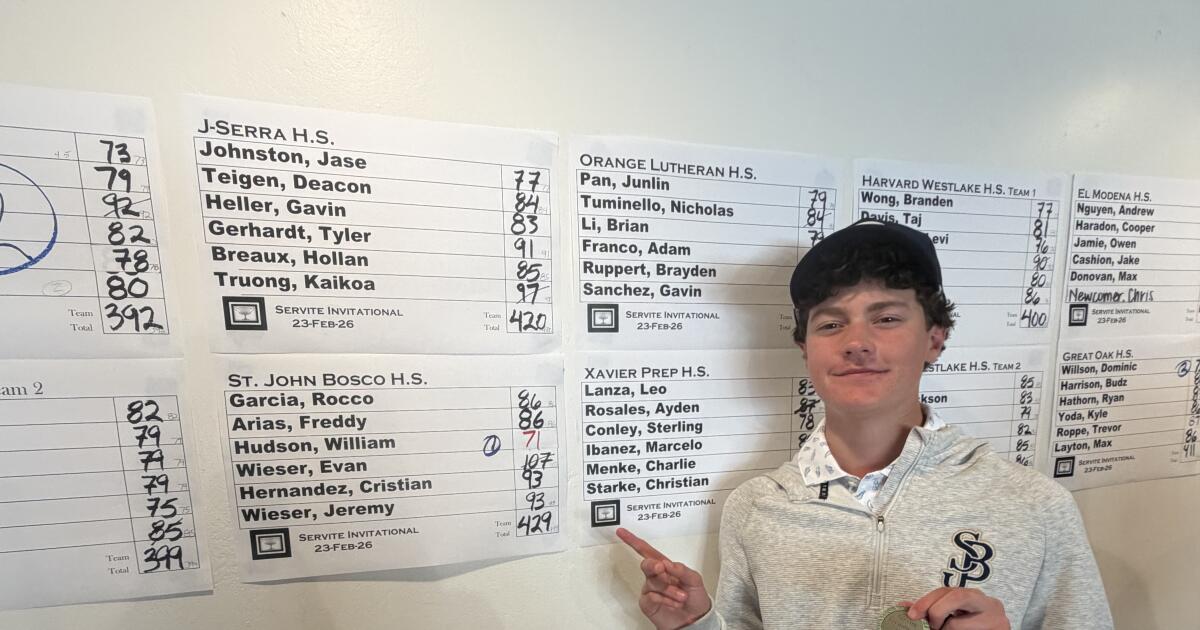
Prep talk: Freshman golfer William Hudson of St. John Bosco wins Servite Invitational

Florida1 year ago
Florida High School Football Rankings: Top 25 teams – Oct. 21

Connecticut2 years ago
Cleary's 21 help Le Moyne down Central Connecticut State 69-64 in OT

Oregon2 years ago
How old is Bo Nix? What to know about Oregon quarterback ahead of 2024 NFL Draft

Virginia2 years ago
99th annual Pony Swim held in Virginia

Indiana1 year ago
Indiana Members Credit Union announced as new anchor tenant at Bottleworks District

World48 minutes ago
Has India’s influence in Afghanistan grown under the Taliban?

News1 hour ago
Bill Clinton to testify before House committee investigating Epstein links

News11 hours ago
Read Judge Schiltz’s Order

Politics12 hours ago
Vulnerable House Dem lashes out at Trump’s ‘racist’ SOTU challenge: ‘That was uncomfortable’

World13 hours ago
Italy calls for suspension of EU carbon market
-

 World1 day ago
Exclusive: DeepSeek withholds latest AI model from US chipmakers including Nvidia, sources say
-

 Massachusetts2 days ago
Mother and daughter injured in Taunton house explosion
-

 Montana1 week ago
2026 MHSA Montana Wrestling State Championship Brackets And Results – FloWrestling
-

 Oklahoma1 week ago
Wildfires rage in Oklahoma as thousands urged to evacuate a small city
-

 Louisiana4 days ago
Wildfire near Gum Swamp Road in Livingston Parish now under control; more than 200 acres burned
-

 Technology6 days ago
YouTube TV billing scam emails are hitting inboxes
-

 Denver, CO2 days ago
10 acres charred, 5 injured in Thornton grass fire, evacuation orders lifted
-

 Technology6 days ago
Stellantis is in a crisis of its own making