Coros’ Nomad is marketed as a “go-anywhere, do-anything” adventure watch. It’s got GPS and offline maps and will track a lot of activities, from yoga to bouldering. There’s an “Adventure Journal,” which the marketing copy promises will help you record “every step, catch, and summit.” While it doesn’t have some of the bells and whistles of a more expensive competitor like Garmin, it’s a product seemingly aimed at campers, backpackers, and other outdoorsy types who aren’t satisfied with something all-purpose like an Apple Watch. So when my colleague Victoria Song flagged the Nomad to me, I took Coros at its word — and, as The Verge’s resident dirtbag, took the Nomad on the Tahoe Rim Trail.
Technology
Is the Coros Nomad really an adventure watch?


Outdoor recreation is a growing market. Notably, the market can afford smartwatches — the number of participants who make more than $100,000 a year is increasing, according to the Outdoor Industry Association. Hiking is the most popular activity.
Why aren’t hikers and trail runners demanding more from these products?
And backpackers, especially weight-obsessed thru-hikers, are absolutely deranged gearheads. Gear was the most common subject of discussion among hikers when I was on the Appalachian Trail earlier this year. Go to any backpacker forum and you’ll see the same thing. A really well-designed device isn’t going to need much marketing — word of mouth was enough to get me to try out the Haribo Mini Power Bank, the lightest 20,000mAh battery on the market and possibly also the cutest. There’s also lots of room to beat the price of Garmin smartwatches — the high-end models cost more than a grand. The Instinct 3, a comparable Garmin watch, is $399 at the absolute cheapest, even though you can’t download maps for navigation on that watch like you can with the Nomad. I haven’t owned a Garmin watch in about 10 years, largely because I just didn’t find the watches to be worth the price tag.
Photo by Liz Lopatto / The Verge
I used the Coros Nomad, which costs $349, on my hike and for a month of training beforehand. I am about to identify a bunch of limitations for my specific very outdoors sports, but before I do that, I want to be clear: this is a good watch at a great price. But I got the sense it was designed by and for weekend warriors (or maybe just suburban distance runners?).
There’s a world where someone delivers everything the Nomad promises — but the Nomad itself doesn’t. This is a failure of marketing, obviously, but it got me thinking. Why aren’t hikers and trail runners demanding more from these products? Even the most “outdoorsy” ones are still primarily meant for road runners.
Let’s just get it out of the way: the battery life kicks ass, especially in comparison to my Apple Watch Series 6. (Unlike some of our reviews team, I am a technology normal and use things until they break, pretty much.) The Tahoe Rim Trail is officially 165 miles, though the FarOut map I used for navigation put it at 174. I created — and mostly stuck to — an 11-day itinerary. I charged the Coros Nomad before I left, then wore it nonstop for the entirety of the hike. It ran out of battery once, near the end of day 6, at mile 19 of 25, after more than 40 hours of actively tracking my hikes. After a recharge, I didn’t need to charge it again for the rest of the hike. Not bad.
But my first clue that the Nomad hadn’t really been designed for me happened as soon as I opened the Coros app. The defaults on that app give you a sense of who it’s for, and the third section down, after the “Today” data and the training calendar, is a prompt for creating a personalized marathon plan. Coros’ displays are admirably customizable, so removing the marathon plan section was easy, but I had nothing comparable to replace it with. In fact, while the watch has a lot of features for road and track runners, they don’t tend to generalize to people who hike, backpack, or even do trail running — a major missed opportunity.
The outdoorsiest runners aren’t getting the same kinds of training insights as their road runner brethren.
The app had a prompt for a running fitness test, but it only works in “run” or “track run” mode, suggesting it’s not really geared toward trail runners. Road and track running are primarily about pace. Trail running generally involves dodging obstacles, dealing with uneven or loose ground, and longer, steeper climbs. That makes pace less of a priority, partly because of the increases in agility, balance, and strength demands. My guess, based on the fact that trail running, as a specific activity, is excluded from running fitness tests, is that Coros knows the “fitness test” won’t be accurate for trail runners. That’s frustrating in an “outdoors” watch — it means the outdoorsiest runners aren’t getting the same kinds of training insights as their road runner brethren.
Likewise, while there is an “auto pause” feature available for runners, it doesn’t work for hiking and walking — which is weird. My Apple Watch doesn’t have a problem noticing when I’m not moving. (There is a “resume later” mode if you want to track multiday activities in one track; I didn’t use it because breaking my hike into segments by day made more sense to me.)
I also found myself frustrated by the training calendar. While I could enter my strength routine and my trail runs, I couldn’t add hikes. The upside of the training calendar was that I could summon a specific workout on the Nomad as I did it — so if I was doing an interval run, the watch would notify me when each interval was over. For road and track runners, there are even preloaded workouts you can add, rather than painstakingly programming your own. Sadly, there wasn’t anything comparable for trail runners.

Photo by Liz Lopatto / The Verge
The watch did well at tracking walks and runs, of course. Both the distance and the altimeter seemed accurate when I tested them against my Apple Watch — I got roughly the same readings. But the default watch display on hiking was five screens of data. On the first page, it gave distance and speed, with the amount of time spent doing the hike in a bar near the bottom. The second page contained my heart rate and the time of day. The third page was Coros metrics — training load, as well as how efficient it felt my aerobic and anaerobic training was. The fourth page was lap (which in this case just meant mile) time, how far I’d gone until the next mile, and my speed. The final screen was the grade, my elevation gain and loss.
This is nonsense. I am simply not going to scroll though that many screens on a hike. That Coros’ made-up metrics take precedence over elevation and speed seems like a crucial error of judgment.
If the watch can’t contact a satellite on its own, it’s no good in the wilderness as an SOS device
On any given day I’m on trail, I need to know roughly what my overall per-mile pace is, what my current pace is, how many miles I’ve traveled, and when the sun is going to go down. (It’s nice but not necessary to know my overall elevation gain — when combined with information from mapping apps, it can tell me how close I am to being done with climbing for the day without me pulling out my phone.) So I consolidated the screens of data to two useful ones. But the tradeoff for easily changeable widgets is that the watch isn’t designed to be readable at a glance. Maybe it’s just my middle-aged eyes, but the combination of the display and the relatively small fonts meant I was squinting at the watch more often than I should have been — especially given that it was taking up so much real estate on my wrist. A less modular display might have created room for more readable design.
But perhaps the most damning thing about the Nomad and the Coros app is how much they rely on being connected to the internet. The biggest failure is that the Nomad marketing copy advertises safety alerts that allow the watch owner to send an SOS — but without cellular data, they don’t work. If the watch can’t contact a satellite on its own, it’s no good in the wilderness as an SOS device. (Most watches can’t connect directly to satellites, though some new models will.) My problem here is the marketing: if you are promising that the watch is for going anywhere, the safety alert feature you’re advertising had better go anywhere, too.
In the Sierras, there are often afternoon thunderstorms, and while I was on the Tahoe Rim Trail, I had five straight days of them. (On the first one, I even got hailed on.) I had a 25-mile day not because I meant to walk 25 miles, but because I’d gotten most of the way up to the highest point on the trail, Relay Peak, when a thunderstorm began. I looked around at trees near me that had obviously been struck by lightning at some point in the past, decided that discretion was the better part of valor, and began heading back down.

I’d gotten most of the way down when the thunderstorm passed, and then I had a decision to make: was I going to try to get over the mountain again? This wasn’t really a decision the Nomad could help me with. My Garmin InReach Mini 2 had helpfully informed me that there was, indeed, another thunderstorm on the way — it will work as long as it has a view of the sky, though a weather report will cost you one of your expensive text messages. The Nomad, on the other hand, pulls most of its data from Apple’s Weatherkit API, which means it only works if your mobile phone has service, so if you’ve put your phone in airplane mode to conserve battery or you don’t have service at all, you’re out of luck. So if you’re trying to stay safe by planning for the weather, the Nomad doesn’t really cut it in the backcountry.
I did make it up and over Relay Peak before the next storm began, a deluge that soaked me to the skin despite my rain gear. But I had plenty of time on the down slope to wonder, soggily, if it would have been helpful to have gotten a storm alert before the first thunderstorm started. I found out after I got back to civilization that it was, in fact, possible to get a storm alert — the Nomad has a built-in barometer. Unfortunately, it was buried in a menu I hadn’t explored, and the storm alert defaulted to off.
I know that a lot of people enjoy fooling around with every menu and setting on their gadgets, but personally, I’d rather hike
I don’t expect Coros to entirely retool its app to prioritize backpackers. But it might have been helpful to get some of these details in a one-sheet with the Nomad quick-start guide: how to turn on weather alerts, how to test for altitude acclimation, that the SOS service and weather require cellular data. I know that a lot of people enjoy fooling around with every menu and setting on their gadgets, but personally, I’d rather hike. Pointing me at what might be useful would help me with that goal.
If the company wanted to invest more in training plans for trail runners, hikers, and backpackers — or, at minimum, allow people to add planned hikes to their workout calendar — that would be great. But there are other ways the Nomad fails the outdoors athlete.
As I was getting ready for the trail, I brought the watch to all my workouts, which is unusual. Generally I reserve activity tracking for cardio activity, because watches are pretty good at tracking that, and pretty bad at most everything else. But with its training load metrics, its recovery timer, and its sleep focus, the Coros app suggests the company’s devices can be used to foresee a person’s needs doing fairly complicated activities.
Unfortunately, these activities are pretty idiosyncratic.

The Coros app is somewhat successful at estimating training load for cardio, but the limitations around how it handles other activities make the “insights” suspect. The training load is based on duration and heart rate — which means for non-cardio activities, it’ll skew low. This data is then used to set a recovery timer, which is supposed to tell you how long it’ll take before you’re back at 100 percent. Because the training load isn’t based on reliable data for non-cardio activities, the recovery timer isn’t trustworthy either.
These problems aren’t unique to the Nomad; the Apple Watch (and pretty much every wearable fitness tracker) sucks at tracking this stuff, too. But it doesn’t try to give me recovery metrics or in-depth training insights.
Like most sports watches, the Nomad wasn’t very good at handling my strength training or yoga. The bouldering settings struck me as more useful. The watch will cue you to handle your first problem; when you’re finished, you click one of its buttons, and can then enter how you tackled the climb, using the sport’s specialized jargon. Afterward, you can see your total ascent, how long you rested between problems, and the grade you climbed at — as well as some less useful data, like heart rate. But with all three sports, the watch had trouble telling how much I’d exerted myself.
On trail, the Coros recovery timer wasn’t much better. After the first day, according to the watch, I was fatigued and needed to rest. The recovery timer stayed there throughout the duration of the trip. There were days I woke up feeling fresh and ready to go, and then glanced at the Coros app, which told me I was at 0 percent of my capacity. That felt silly, especially when I’d then knock out 15 miles.
And despite all the workout modes the Nomad offered, there was an important one missing: rucking, or walking with weight. That’s the key feature of backpacking. The Apple Watch doesn’t offer rucking, either. Whoop also has a rucking mode, but doesn’t track weight. Coros’ direct competitor Garmin introduced a rucking mode earlier this year, allowing users to track their pack weight, and while its features leave some things to be desired, it’s a start.
The promised personalized training programs Coros’ app offers simply don’t fit anything I’m doing
It’s weird that rucking is so thoroughly ignored. Bro influencers, from Andrew Huberman to Peter Attia, have been singing its praises; GQ named it “the workout of 2024.” Axios notes it’s on the rise among women, too; Women’s Health highlighted its beneficial effects on bone density. Even Tom’s Guide has called it a “game changer.” Look, I consider myself a backpacker rather than a rucker, but whatever you call it, this is an underserved market.
The promised personalized training programs Coros’ app offers simply don’t fit anything I’m doing. To train for a thru-hike, I typically do trail runs and rucks using my actual backpack. On most workdays, I’m not going to be able to get in even a 10-mile hike, so running is important for my cardio capacity. As for rucking, that’s partly to get my feet used to the demands of the extra weight. The goal is to ruck with either my maximum pack weight or more for the month before my hike.
I will spare you the details of hiker math, but here’s the bare outline: I knew my gear alone would be 16.2 pounds; that I’d need to carry about 5 liters, or about 10 pounds, of water at maximum; and that water carry would be when I was also carrying four days’ worth of food, or about 8 pounds. My pack, at its absolute heaviest, would weigh about 32 pounds.
That meant when I did training hikes, I loaded up my backpack until it weighed 35 pounds. Those hikes were largely vibe-based — I usually climbed a minimum of 2,000 feet over 10 miles as quickly as I could. But while I was training, I had plenty of time to fantasize about how a backpacker-oriented fitness watch could make my life easier. Here’s what I came up with:
- Separate VO2 max to let me track my improvements
- Field to let me enter how much I’m carrying
- Suggestions for when I might be able to go up in weight safely
- Suggestions for when I might be able to add mileage safely
- The ability to generate a training plan for an end goal — for instance, automating the backpacker math I just did, and then generating a plan for getting from a user’s current level of fitness to, say, hiking 20 miles with 35 pounds of weight, with 3,000 feet of elevation gain. Ideally this would involve a mix of rucks and runs.
Sure, there are a limited number of thru-hikers who are going to be doing this particular style of training — but it will also benefit the much larger number of people who ruck for fitness. And who knows? If a smartwatch came up with a good couch-to-thru-hike app, it might catch on just like couch-to-5K.
On both the Nomad and the Apple Watch, I tracked my hikes as “walks” and my hikes with weight as “hikes.” That helped me separate the activities at a glance. But there were still some annoyances. On the Apple Watch, both my hikes and walks counted toward my estimated VO2 max, which is an indicator of aerobic fitness that is particularly important to endurance athletes — and while the actual value is kind of a bullshit metric that will vary pretty wildly between watches, the trend line is what I’m watching. When I’m hiking with weight in preparation for a backpacking trip or on the trip itself, my VO2 max takes a hit. When I stop hiking with weight after the trip, my VO2 max shoots up. Garmin gets around this problem by disabling the VO2 max when its watches are in rucking mode.
The Nomad’s VO2 max is buried in the “Running Fitness” menu, a feature I didn’t click on for a very long time because, well, it turns out there’s no data available for me since I’m not a road or track runner. Neither walks nor hikes count toward that score — and neither do trail runs.

I understand the Nomad added offline street names to its GPS navigating capabilities, which was basically meaningless to me — there aren’t a lot of streets where I go. The watch’s screen wasn’t big enough to be my main source of navigation; FarOut is pretty tough to beat, not least because it can do things like tell you if a water source is still running even if you don’t have service. It’s also difficult to get lost on the Tahoe Rim Trail, which is well groomed and clearly signed. Perhaps if I had made camp and gone for a day hike, it would have been more useful in retracing my steps back to camp. Still, I didn’t see any obvious flaws using it, and I was impressed by the lack of lag.
The map the Nomad generates can be used as the backbone of its Adventure Journal function. This is the distinguishing feature of the Nomad, which lets you add photos and voice notes made on the Nomad watch — it’s got a built-in microphone — to your recorded activity.
Sadly, it, too, does not work unless you are connected to the internet. This limits its on-trail usefulness.
Like many other Coros features, it’s not exactly easy to find the voice note function from the activity screen

For ultralight types, keeping notes in your phone is good enough. I carry a notebook and pen — luxury items, but fairly flexible ones. I keep a trail journal on the days I don’t immediately fall asleep as soon as I lie down in my tent. (It’s a nice way to wind down.) I also use it to sketch out my intended route, make shopping lists for my resupply runs, and, in a pinch, leave a note on the dashboard of my car saying when I expect to be back from my trip. For the kind of hiker who doesn’t want to bring a pen (0.3oz) and notebook (5.4oz), it might serve as an upgrade over trying to type on a phone.
Writing in my journal is a habit; making voice notes is not. So while I was hiking the TRT, I did not use the microphone, because it simply did not occur to me. To be honest, I’m not sure what notes I’d make on a thru-hike that need to be coordinated to a specific point on trail. The voice notes feature is probably most useful for people who hunt and fish, or birdwatchers. Like many other Coros features, it’s not exactly easy to find the voice note function from the activity screen — but once I located it, it worked well enough.
The photo feature was more intuitive. You can take photos in the Coros app, though I didn’t; I find it easier to take photos without unlocking my phone. Because I went so long without an internet connection, I was dreading dealing with the backlog, but uploading the images to my activities was fairly effortless — and when I sent some of my travelogue to my friend Rusty, he didn’t have any trouble seeing both my route and my photos.
The real question around the Adventure Journal was how much it locks your notes into the Coros system, and the answer is: at least a little. I was able to export the data from my last day, and then upload a GPX of the hike to CalTopo, one of my favorite mapping programs. Though the data included my pins — the spots where I’d taken pictures — the pictures themselves were not included.

I agree with a lot of straightforward hardware reviews about the Coros Nomad — the battery life is fantastic, the watch itself is relatively light and can take a beating, the offline navigation works very well (for a watch — screen limitations are always going to matter), and it’s appealingly cheap. It’s a tremendous upgrade over my current watch in those respects. While a flashlight or solar charging would be nice, they’re not necessities. No, it’s the software I have beef with.
As far as I know, there hasn’t yet been a truly great backpacker watch, and the Nomad definitely isn’t it. The Adventure Journal is a neat toy, but not much more. The software fixes that could get the Nomad over the line might include training programs for trail runners and backpackers, a rucking mode (ideally with better support for rucking than the relatively paltry offerings by its competitors), and a more considered recovery program. Even simpler fixes — highlighting the capabilities that the Nomad does have but are buried in a non-intuitive menu, an easier-to-read design in activity modes, an app that does more when it’s offline — would be improvements.

But let’s dream for a minute, because the Nomad really got me thinking about what an ideal outdoor watch could do. Obviously, the battery life and GPS navigation are nonnegotiable. But the one hardware modification that could really change the game is satellite connectivity. I know it’s possible to connect to a satellite via a watch because the Apple Watch Ultra 3 offers it — but that watch only has an estimated 72 hours of battery life in low-power mode, and it’s $800. The new Garmin Fenix 8 Pro also offers it along with roughly 27 days of battery life, but it requires a subscription on top of its absurd starting price of $1,200.
A watch that lets me drop the Garmin InReach Mini (3.5oz) has benefits beyond the weight savings and letting me cancel an expensive subscription: I am less likely to lose my watch in a fall than I am to lose the Garmin device, even if it’s clipped to my belt loop. A watch that lets users send a real SOS — as well as check-in notifications — is going to be much more of a game changer than solar charging, flashlights, music, or wallets. Add alerts for severe weather, and you’ve got a winner. That’s safety gear, and no one in their right mind skimps on that in the backcountry. People are going to buy Garmin’s Fenix 8 Pro, despite the eye-watering price and subscription, for exactly this reason. Shit, I might be one of them when I need to replace my InReach — even though the Fenix 8 Pro is stuffed with features I don’t want or need, like speakers, a voice assistant, preloaded golf course maps, and dive functionality. I’d love a better, cheaper alternative.
A watch that lets me drop the Garmin InReach Mini (3.5oz) has benefits beyond the weight savings and letting me cancel an expensive subscription
When I am on a solo hike, people are consistently surprised that I — I’m openly female — feel safe enough to hike alone. Thru-hiking is pretty male-dominated, and a lot of effort goes into assuring women that we are fairly safe outdoors. I wonder how many other women might try their first solo hike if they knew they could easily summon help by pressing a button on their watch. Probably a lot! And I bet there are a lot of women road runners out there, especially in rural areas, who would benefit from knowing they can summon help without cell service too.
This is maybe a prime example of how designing gear for the most intense users also expands the market. That’s the norm for this sport. Ray Jardine pretty much revolutionized backpacking by cutting weight and kicked off the ultralight movement. Ultralight gear made the sport more accessible to women, older people, and people with injuries, increasing backpacking’s popularity. Thinking about thru-hikers and trail runners — especially ones who are training for the more maniacal races, such as 100Ks — is like making basketball shoes for LeBron James. Ideal gear will matter more to LeBron, but the average high school player stands to benefit too.
So: is the Nomad a good watch? Yes, in some ways, if you’re comparing it to current offerings from Apple or Garmin — especially in its price range. But it doesn’t live up to its marketing campaign of letting you go anywhere and do anything. The reasonably affordable watch that will do that for the world’s most deranged gearheads doesn’t exist. At least, not yet.
Follow topics and authors from this story to see more like this in your personalized homepage feed and to receive email updates.



Humanoid robot surgeons perform first-ever remote surgery, raising AI privacy concerns
A medical breakthrough was achieved as UC San Diego doctors successfully utilized $20,000 humanoid robots to perform remote gallbladder surgery on a pig. This development highlights the potential for artificial intelligence to address surgeon shortages and improve access to care globally. The discussion also delves into privacy concerns surrounding advanced AI robots, including a new $8K home robot for chores.
NEWYou can now listen to Fox News articles!
Humanoid robots have officially stepped up to the operating table, helping complete two surgeries for the first time. During the preclinical trial, surgeons remotely guided the machines through two gallbladder removal procedures. The robots copied the surgeons’ movements rather than making medical decisions, and no human patients were involved.
Unlike bulky robotic systems fixed in place, these five-foot machines used standard surgical tools and worked inside an operating room built for people. The experiment offers an early look at how a specialist could someday operate through a mobile robot in a rural clinic or another place where surgical care is hard to reach. Here is what the team accomplished and what still needs to happen before this technology reaches human patients.
AI MAY SPOT DEADLY HEART RISK IN A ROUTINE ECG
Free live CyberGuy class: Sick of Spam? Join us July 22
Join us Wednesday, July 22, at 1 p.m. ET for a free CyberGuy Live class that will help you cut down on robocalls, spam texts, junk email and other unwanted messages. Kurt “CyberGuy” Knutsson will walk you step by step through simple ways to filter spam, clean up your inbox and recognize the messages that could put your personal information at risk. No technical experience is needed. You’ll also receive our spam-stopping checklist, and every registrant will get a link to the class recording afterward.
Reserve your free spot today at CyberGuyLive.com.
Researchers say mobile humanoid robots could someday help bring specialist surgical care to rural clinics, field hospitals or remote locations. (UC San Diego Jacobs School of Engineering)
Two humanoid robots completed live surgeries
Researchers from the University of California San Diego reported the results in the journal Nature earlier this month. The team tested its system during two laparoscopic gallbladder removal procedures on pigs.
During one operation, a humanoid robot handled surgical instruments while a human surgeon assisted beside it. During the second procedure, two humanoid robots stood next to each other and worked as a team. Surgeons remotely controlled both robots throughout the operation. The experiment involved delicate tasks used during minimally invasive gallbladder surgery. The robots moved tissue and dissected around the gallbladder. They also helped place clips before removing it.
Researchers designed the trial as a proof of concept. They wanted to learn whether a general-purpose humanoid robot could handle standard surgical tools with enough control to complete an operation. It could. However, the trial also exposed problems that researchers must solve before testing the system on humans.
The trial marked the first time teleoperated humanoid robots successfully completed live gallbladder surgeries. Robotic gallbladder procedures have been performed before, but this experiment was the first to use general-purpose humanoid machines. The work builds on UC San Diego’s earlier research with the same type of robot. CyberGuy previously covered how a remotely controlled humanoid performed seven medical procedures, including physical exams and ultrasound-guided injections.
How these humanoid robots fit into a standard operating room
The researchers created Surgie by modifying commercially available Unitree G1 humanoid robots. Each machine stands about 5 feet tall and weighs around 60 pounds. That makes Surgie dramatically smaller than many existing robotic surgery systems, which can weigh approximately 1,800 pounds.
Large surgical robots may require extensive setup and take up considerable space. Hospitals sometimes need to retrofit an operating room before installing one. Surgie can stand in a room designed for human medical workers. Researchers added adapters to its hands so the robot could grip standard laparoscopic instruments.
A surgeon then controlled the robot from a remote console. When the surgeon moved the controls, Surgie copied those movements at the operating table. That human-like design is important. A hospital may be able to bring the robot into an existing room instead of rebuilding the space around it. A medical team could also move it between rooms or transport it to a smaller facility. “We were surprised at how well Surgie meshed with our workspace and workflow,” said Nikita Thareja, MD, a general surgery resident at UC San Diego School of Medicine and a co-author of the study.
Unitree currently lists the base G1 at $13,500 before taxes and shipping. However, that price does not include the surgical adapters, instruments or remote-control equipment used in the study. The price still points to a potentially significant difference between a general-purpose humanoid and today’s specialized surgical systems. Da Vinci surgical robots can cost from about $700,000 to more than $3 million, depending on the model and configuration. Researchers have not disclosed the total cost of the complete Surgie setup.
CHINA’S ROBOT-RUN HOTEL OPENS TO PUBLIC IN 2027
UC San Diego researchers remotely guided humanoid robots through two gallbladder surgeries on pigs in a preclinical trial.d (UC San Diego Jacobs School of Engineering)
Why use a humanoid instead of a surgical robot?
Modern robotic surgery systems already help doctors perform highly precise procedures. However, those machines usually stay in one location and depend on specialized equipment. A humanoid robot offers more flexibility because it can operate in spaces built for medical workers. It can also hold tools designed for human hands.
Researchers believe future versions could retrieve an instrument during surgery. The robot might also help prepare or clean the room after a procedure. Most importantly, a mobile system could potentially bring a specialist’s skills to an area where surgeons are difficult to find.
Michael Yip, a professor in UC San Diego’s Department of Electrical and Computer Engineering, said remotely operated humanoids could expand access to critical procedures. Researchers envision sending the robots to communities with limited medical staffing or temporary field hospitals.
The goal isn’t to hand medical decisions to a machine. A trained surgeon would remain in control while the robot carried out those movements at the patient’s location. That could give a trauma team on a battlefield access to a specialist located far away. The same approach could help a patient in a remote town avoid a long trip to a major medical center. Researchers have even discussed using the technology during future space missions.
That idea is already moving beyond the laboratory with traditional surgical robots. In March, we reported on a London surgeon who remotely removed a patient’s prostate cancer from 1,500 miles away. The difference is that the London procedure used a specialized surgical platform. Surgie could eventually offer a smaller system that works inside a standard operating room.
The robots still needed plenty of help
The successful procedures do not mean hospitals are ready to start using humanoid robots on patients. Researchers had to recalibrate the robots several times during surgery. The operations also took much longer than procedures performed with established surgical systems.
Latency presents another concern. Latency is the delay between a surgeon moving a controller and the robot responding. A slight lag may feel annoying during a video call. During surgery, even a small delay could affect precision. That challenge becomes more serious when the surgeon and robot are separated by a long distance.
Researchers will need to improve the robot’s reliability and response time. They must also prove that the system can repeat its performance safely across many procedures. Hospitals would need a backup plan as well. A qualified surgical team would have to remain ready to step in if the robot stopped responding or the remote connection failed.
Could a humanoid robot eventually operate on its own?
For now, human surgeons control Surgie’s movements. The UC San Diego researchers eventually want to develop what they call an autonomous surgical assistant. That type of robot could recognize which tool a surgeon needs or complete a limited task under supervision.
Researchers elsewhere are already testing a different approach to autonomous surgery. CyberGuy previously covered an AI-powered robot that independently completed a key phase of gallbladder removal on a lifelike surgical model. However, operating on a living patient presents a much greater challenge. Bleeding can begin without warning. A patient’s condition can also change in seconds.
A robot would need to recognize the problem and respond safely. Medical workers must also be able to take control immediately. Autonomous surgery raises difficult questions about responsibility. Hospitals would need clear rules covering who makes each decision and who is accountable when something goes wrong. Remote operation introduces another concern. Hospitals would have to protect the robot’s software and communications from unauthorized access. At the same time, the system would need to continue operating safely during a connection problem.
WOULD YOU PAY $8,000 FOR A ROBOT TO FOLD LAUNDRY?
Surgeons controlled the humanoid robots from a remote console while the machines copied their movements during live procedures. (UC San Diego Jacobs School of Engineering)
What this means to you
You will not see a humanoid robot independently performing your next surgery. This research remains at the preclinical stage, and the team tested the system on pigs rather than humans. Still, the experiment offers an early look at where robot-assisted medicine may be headed.
A mobile surgical robot could eventually give you access to a specialist without requiring a long trip. It may also help a smaller hospital offer procedures that currently require transferring patients elsewhere. However, access should never come at the expense of safety. Before agreeing to a robot-assisted procedure, you should know who controls the machine. You should also ask what happens if the connection fails and whether a qualified surgical team will remain in the room. The robot may hold the instrument, but human judgment remains the most important part of the operation.
Kurt’s key takeaways
Watching two humanoid robots work over an operating table may make you uncomfortable. Still, the technology could address a serious healthcare problem if researchers can make it reliable and safe. Many communities struggle to attract enough surgeons. A compact robot that works with standard instruments could let a distant specialist enter the operating room without physically traveling there. The comparatively low starting price of the base robot could also make this approach easier to deploy than some specialized surgical systems. This experiment remains an early milestone. The robots needed recalibration, and the operations took longer than usual. Communication delays also remain a concern. The researchers now need to prove that Surgie can perform consistently before anyone considers human trials. Hospitals will also need strict safety protections and trained medical workers ready to take over.
Would you let a surgeon operate through a humanoid robot if it cut months off your wait for care? Let us know by writing to us at CyberGuy.com.
CLICK HERE TO DOWNLOAD THE FOX NEWS APP
Sign up for my FREE CyberGuy Report
- Get my best tech tips, urgent security alerts and exclusive deals delivered straight to your inbox.
- For simple, real-world ways to spot scams early and stay protected, visit CyberGuy.com – trusted by millions who watch CyberGuy on TV daily.
- Plus, you’ll get instant access to my Ultimate Scam Survival Guide free when you join.
Copyright 2026 CyberGuy.com. All rights reserved.

Microsoft is testing a cleaner version of the Windows 11 search menu that strips it of recommended content and ads. In a blog post on Monday, Microsoft announced that it’s rolling out the decluttered Search Box to Windows Insiders in the Experimental channel as the company looks to regain trust with users and fix Windows.
One of the biggest changes is a revamped search homescreen that displays only your recent searches. Currently, when you open the search menu, it shows your recent searches alongside several distracting tiles on the right pane, containing things like the image of the day, daily quizzes, trending searches, and game recommendations.
Microsoft is cleaning up web results, too, as the search menu will surface the “most relevant answer” first, rather than showing “related products and promotions.”
Aside from doing some decluttering, Microsoft is testing other notable improvements to its search menu. It will more clearly show metadata, along with a preview of the file in the pane on the right side of the search menu, making it easier to figure out where the result came from. The Windows 11 search system will also prioritize results from your local files, apps, and settings, which will “more reliably appear” ahead of web and Microsoft Store recommendations. Testers can now turn off web and Store recommendations entirely from the Settings menu.
There are a few quality-of-life updates, too, as Microsoft says the search system it’s piloting can better handle typos, extra letters, and partial words, while offering some performance improvements.

NEWYou can now listen to Fox News articles!
Your data broker profile can expose more than most of us realize. It may include your current address, old addresses, relatives, phone numbers and public records that were never tied to a phishing link or hacked password. That is what makes this so frustrating. Strong passwords, two-factor authentication and smart online habits all help protect your accounts. However, they do not stop data brokers from collecting public records and commercial sign-up data.
Those details can then show up on people-search sites. Even worse, scammers can use them to make a fake call, text or email sound personal and believable. Here is where data broker profiles get their information, why careful online behavior alone falls short and what steps can help reduce what strangers can find about you.
Free live CyberGuy class: Sick of Spam? Join us July 22
Join us Wednesday, July 22, at 1 PM ET for a free CyberGuy Live class that will help you cut down on robocalls, spam texts, junk email and other unwanted messages. Kurt “CyberGuy” Knutsson will walk you step by step through simple ways to filter spam, clean up your inbox and recognize the messages that could put your personal information at risk. No technical experience is needed. You’ll also receive our spam-stopping checklist, and every registrant will get a link to the class recording afterward.
Reserve your free spot today at CyberGuyLive.com.
FAKE VA SHOE OFFER TARGETS VETERANS
Strong passwords protect your accounts, but they do not stop data brokers from collecting public records and selling personal information to people-search sites. (Chris Ratcliffe/Bloomberg via Getty Images)
Where data broker profiles get your information
Most people assume data brokers get information the same way hackers do, through breaches, weak passwords or phishing links. That can happen. However, a lot of personal information comes from public records and commercial lists.
Data brokers can build profiles from records that may exist even when someone barely uses the internet, including:
- Property deeds and real estate filings
- Voter registration rolls
- Civil and criminal court filings
- Marriage and divorce records
- Bankruptcy filings
- Business registration filings
- Professional license databases
In many U.S. states, these records are public under state or local rules. Data brokers do not need to hack anything to collect them. They can buy, scrape or license the information on an ongoing basis. A home purchase, marriage, divorce or voter registration can create a public record. That record may include a name and address. Once filed, it can become raw material for a data broker profile.
How everyday sign-ups feed data broker profiles
Government records are only one part of the problem. Everyday consumer activity can also feed data broker databases, including:
- Loyalty program sign-ups
- Warranty registrations
- Magazine subscriptions
- Contest and sweepstakes entries
- Real estate transaction data
Commercial aggregators can combine those details with public records to build an enriched consumer profile. Registering the warranty on a dishwasher does not make anyone reckless. Entering a magazine sweepstakes does not make anyone careless. However, both can put personal information into a pipeline built to package and resell it.
How data broker lists can fuel real-world scams
This can sound abstract until a list gets used against real people.
Data broker InfoUSA reportedly sold a list of 19,000 verified elderly sweepstakes players to experienced scam artists. The scammers stole more than $100 million by calling people on the list and pretending to be government or insurance workers. Then they claimed they needed bank account information.
Another case shows the same risk on a larger scale. The Justice Department said Epsilon Data Management sold consumer data to fraud schemes and agreed to pay $150 million to resolve a criminal charge tied to elder fraud. DOJ later said two former Epsilon employees were sentenced after evidence showed they sold targeted lists to a fraudster client who used the data to defraud more than 218,000 victims out of more than $23.7 million.
That should stop you cold. The victims did ordinary things. Their names ended up in marketing databases and lead lists they may never have known existed. Then scammers used those lists to make fraud more targeted, more personal and much harder to spot.
Curious how exposed you already are?
Run a free scan to see where your information is showing up online-results usually land within an hour. Run your free exposure scan. Get a free scan to find out if your personal information is already out on the web: Cyberguy.com
SELLING YOUR HOME THIS SUMMER? YOUR DATA IS ALREADY MOVING
Your address, phone number and relatives may already appear in data broker profiles built from public records and everyday consumer sign-ups. (Ute Grabowsky/Photothek via Getty Images)
Why good online habits do not erase public records
This is the part that can catch a lot of you off guard, especially if you are already careful online. You may skip loyalty cards, avoid sweepstakes and toss warranty cards straight into the trash.
Even so, your information can still show up online because some details come from public records. Property records, vehicle registrations, voter rolls, professional licenses and court filings can all leave a trail with your name attached. In some cases, your profile may also connect you to relatives through someone else’s record.
That means online safety only solves part of the problem. Strong passwords, a password manager and two-factor authentication (2FA) help protect your accounts. However, they do not remove public records that data brokers collect, package and resell.
5 ways to protect your data broker profile now
A few smart moves can help reduce what is already exposed and limit how much new information flows into data broker databases.
1) Search your name on people-search sites
Start by checking what is already public. Search your name on sites like Spokeo, Whitepages and BeenVerified. Look for your address, phone number, relatives and previous locations. This gives you a clearer sense of what scammers, strangers or aggressive marketers may already be able to find.
2) Replace easy-to-guess security answers
If a bank, email account or financial app asks for your mother’s maiden name, birth city, first school or old street name, assume that answer may already appear in a data broker profile. Replace it with a made-up answer and store it in a password manager. The answer does not have to be true. It just has to be consistent and hard for someone else to guess.
3) Limit what you give away going forward
Be more selective with loyalty programs, warranty cards, sweepstakes and online forms. Use only the required fields when possible. Consider using a separate or alias email address for sign-ups, and avoid handing over your phone number unless it is truly needed. Small choices like this can reduce the amount of new data flowing into broker databases.
4) Talk to older relatives before a scammer does
Older relatives are often the final target, reached through a profile built from public records, family connections or past sign-ups. Set a family code word for emergency calls or texts. If someone claims there is an accident, arrest, hospital bill or urgent money problem, the code word gives your family a fast way to know whether the call is real.
5) Use a data removal service for ongoing cleanup
A data removal service can help remove your personal information from data broker and people-search sites without forcing you to chase every listing yourself. These services contact data brokers on your behalf, request removal of your information and keep checking when your data reappears.
That ongoing follow-up is important because data broker profiles can come back when databases refresh or when your information gets pulled from another source. Look for a service that covers hundreds of data broker and people-search sites, offers recurring removals and lets you request cleanup from specific sites where your personal information appears.
I also recommend considering coverage for your whole household. Family members can be linked together in data broker profiles, so removing only one person’s information may leave other exposed details behind. A family plan can help protect addresses, relatives, phone numbers and other personal information across everyone in your home.
Check out my top picks for data removal services and get a free scan to find out if your personal information is already out on the web by visiting Cyberguy.com
FTC CHIEF ACCUSES DEMOCRATS OF ‘TRYING TO PROTECT THE FRAUDSTERS’ BY WITHHOLDING DATA FROM TRUMP ADMIN
Data brokers compile personal information from public records, loyalty programs and commercial databases, making scams more convincing and harder to detect. (Nikolas Kokovlis/NurPhoto via Getty Images)
Kurt’s key takeaways
What concerns me most about data broker profiles is how little of this comes from a mistake you made online. You can use strong passwords, avoid phishing emails and turn on two-factor authentication, yet your address, old addresses and family connections may still appear on people-search sites. That gives scammers a head start. A fake call or text sounds more believable when it includes real details about you or someone you love. The best move is to treat data broker cleanup as part of your regular privacy routine. Search your own name, change easy-to-guess security answers, limit what you share on forms and consider using a data removal service that keeps checking when your information comes back.
What personal detail would worry you most if it showed up on a people-search site: your address, phone number, relatives or something else? Let us know by writing to us at CyberGuy.com
CLICK HERE TO DOWNLOAD THE FOX NEWS APP
Sign up for my FREE CyberGuy Report
- Get my best tech tips, urgent security alerts and exclusive deals delivered straight to your inbox.
- For simple, real-world ways to spot scams early and stay protected, visit CyberGuy.com – trusted by millions who watch CyberGuy on TV daily.
- Plus, you’ll get instant access to my Ultimate Scam Survival Guide free when you join.
Copyright 2026 CyberGuy.com. All rights reserved.
-

 Health4 minutes ago
Notable figures who died from the same heart condition linked to Lindsey Graham’s death
-

 Sports10 minutes ago
Folarin Balogun admits that red-card reversal affected USA World Cup teammates: ‘A lot of outside noise’
-

 Technology16 minutes ago
Humanoid robots perform live surgery in world first
-
 Business22 minutes ago
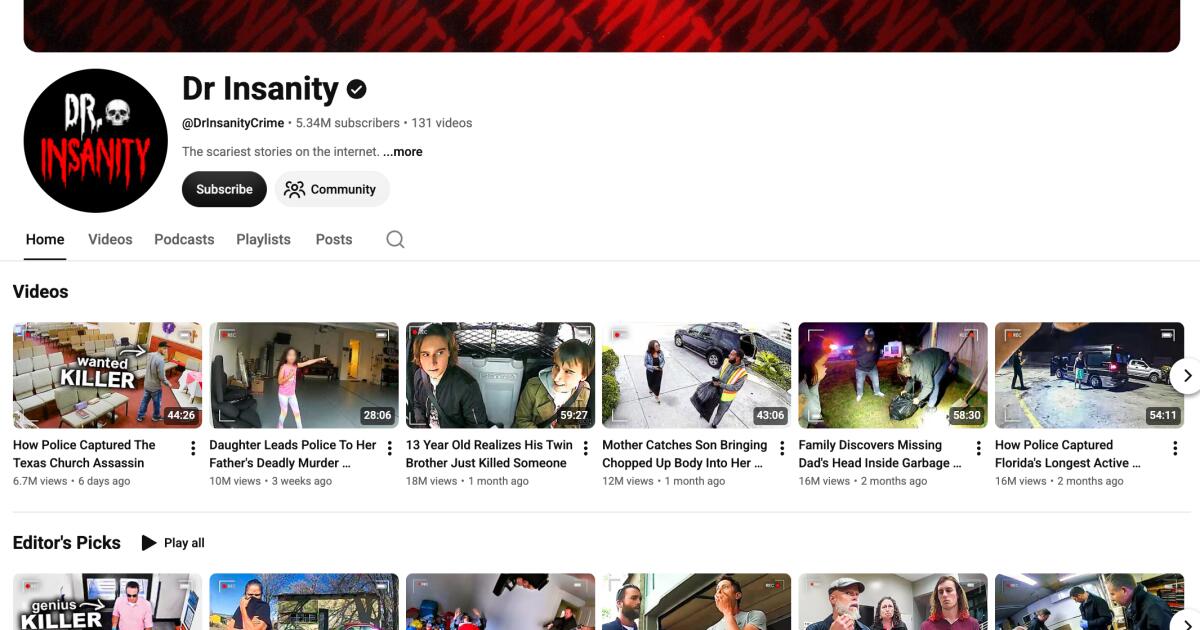
A ‘next generation studio’ for YouTube creators
-
 Entertainment28 minutes ago
Finn Wolfhard is taking ‘control of the narrative’
-
 Lifestyle34 minutes ago
What are your most cherished memories of the 2026 World Cup in L.A.?
-
 Politics40 minutes ago
Commentary: Two Lorenzos from Mexico. One fulfilled his American dream. ICE killed the other
-
 Sports52 minutes ago
What will the Sparks do next? The franchise is at a crossroads after firing its GM

