Update January 10th, 9:02PM ET: Shortly after we published this post, SAG-AFTRA shared the full text of its agreement with Replica Studios as well as an FAQ document and a summary. Our original story follows.
Technology
Here’s what we know about the SAG-AFTRA AI voice acting licensing deal

/cdn.vox-cdn.com/uploads/chorus_asset/file/25217748/1465102966.jpg?ssl=1 "Here’s what we know about the SAG-AFTRA AI voice acting licensing deal")
During CES 2024, SAG-AFTRA announced an agreement with AI voice technology company Replica Studios. The agreement would permit SAG-AFTRA members, specifically voice performers, to work with Replica to create digital replications of their voices. Those voices can then be licensed out for use in video games and other interactive media projects with SAG-AFTRA authored protections.
In the announcement, SAG-AFTRA characterized the deal as a “way for professional voice over artists to safely explore new employment opportunities for their digital voice replicas with industry-leading protections tailored to AI technology.” However, as news of the deal reached the voice performer community at large, the reaction was less positive with performers either outright condemning the deal or voicing concerns about what this deal means for the future health and viability of their profession.
“Love how we’re paying dues to a union that will throw our jobs to AI and then claim we all agreed to it,” wrote Emi Lo, a voice performer with roles in Genshin Impact and Honkai: Star Rail, on X.
“I think the first thing that I would just say is I think there are quite a large number of members who are very pleased with this announcement,” Duncan Crabtree-Ireland, SAG-AFTRA national executive director and chief negotiator told The Verge in an interview. “And I think sometimes it’s a mistake to hear a certain number of voices, even if they’re raised in a very concerned or agitated tone as being representative of the entirety of the membership that work this contract or work in this area.”
Crabtree-Ireland added that SAG-AFTRA “will be putting out more information today with greater detail” so that its membership can better assess the deal. “We want all of our members to be both well informed about what the contract contains and also to be confident that our contracts protect them in their work lives,” he said.
The SAG-AFTRA Interactive Media Agreement, a union contract that covers roughly 140,000 members and has several of the video game industry’s largest publishers as signatories including Activision Blizzard, Take-Two, and Electronic Arts, is currently under negotiation. Last year, union members voted in favor of a strike authorization for performers covered under that agreement — in other words, your favorite video game voice actors can go on strike if those negotiations aren’t successful.
The Interactive Media Agreement, however, does not cover Replica Studios, and this new deal was made separately from that ongoing negotiation.
“This company is not part of that bargaining group,” Crabtree-Ireland said. “The work that [Replica Studios] is going to be doing — creating digital replicas of voices — will now be done solely in compliance with our collective bargaining agreement.”
Basically, Replica will act as a SAG-AFTRA-approved third-party provider of AI voices to video game companies. If a SAG-AFTRA member choses to license out their voice, Replica’s agreement ensures that performer will be fairly compensated, their voice data will be protected from unauthorized use, and that a replicated voice cannot be used in a project without the performer’s informed consent.
“There’s nothing in this agreement that is a lesser term than what was just approved by our membership at large a month ago with an 80 percent ‘yes’ vote in our ratification for the studio and streamer contracts,” Crabtree-Ireland said.
“The work that [Replica Studios] is going to be doing — creating digital replicas of voices — will now be done solely in compliance with our collective bargaining agreement.”
Crabtree-Ireland also said that the union’s Interactive Media Agreement committee — which is the committee that oversees everything video game related — had struck the deal, having worked on it for over a year. On X, Aftermath reporter Nathan Grayson shared screenshots of a conversation he had with Sarah Elmaleh, the chair of SAG-AFTRA’s interactive media bargaining unit, which provided additional context for the deal.
“The performer would sign with [Replica] and [be] covered by them and the license to devs would require the protections and compensation be carried through,” Elmaleh wrote. “Obviously many developers will want to use the same technology directly themselves. Having clear and binding requirements around the transparency, consent, and compensation that Replica is in compliance of, must be included in the fundamental agreement covering this work. That’s why we’re adamant and waiting on a fair deal for the [Interactive Media Agreement.]”
Crabtree-Ireland said that this agreement should act as a signal to the video game companies currently bargaining with SAG-AFTRA to hopefully get them to rethink their position on AI, which has been a sticking point in the negotiating process.
“This [agreement] is a real sign to the video game companies that companies that know what they’re doing in the AI space are comfortable with making the kinds of commitments contained in this agreement,” he said.
Though this deal was created under the auspices of the interactive media bargaining unit, some voice actors are still worried that the acceptance of AI in the creative process will lead to loss of work for all but the most popular performers and the dilution of their art.
“I want to ACT,” wrote Chris Hackney, who voiced Rauru in The Legend of Zelda: Tears of the Kingdom and Rusty in Armored Core VI: Fires of Rubicon, on X. “I do not want to sell someone my likeness to use and then pay me. It defeats the purpose of art and performance when neither art is created nor do I perform.”

Continue Reading

I love black-and-white photography. I also adore compact cameras you can always have by your side. So I’m a total mark for the Ricoh GR IV Monochrome, a fixed-lens camera that can’t zoom and can’t record color — at all. It’s a formula that makes the average person ask, “Why?”
I’ve tested the GR IV Monochrome for over a month, taking it with me everywhere and photographing everything. Let me explain how this pricey little point-and-shoot is likely to go down as one of my all-time-favorite cameras.

$2197
The Good
- Excellent black-and-white image quality
- Everything great about the standard GR IV: sharp lens, small size, solid focusing
- Fantastic high-ISO noise performance
- Limiting yourself to black and white has creative benefits
The Bad
- Expensive for a Ricoh GR
- Face / eye tracking autofocus pales in comparison to the bigger camera brands
- Short battery life (about 200-ish shots)
Ricoh GRs are some of the most unassuming, no-frills cameras around, and they have been since their conception in the film days. In the digital era, they’re pocket-size point-and-shoots with a large APS-C sensor permanently attached to a fixed focal length lens. If you’re familiar with Fujifilm’s popular X100 line, it’s like trimming one of those down to the bare minimum — that means no viewfinder and no fancy aperture ring. The X100 and other coveted street cameras like Leicas offer vintage-style shooting and double as lifestyle accessories or shoulder-carried jewelry (with prices to match). But a Ricoh GR is purely a shooter’s camera, with unabashedly modern methods of being used. Atop the camera is a typical mode dial, with customizable user presets, not an old-timey shutter speed dial.
The GR IV Monochrome takes last year’s Ricoh GR IV, strips out the color filter from the sensor, and replaces its built-in ND filter with a red filter (for one-click contrast adjustment purely using optics). Functionally, the alteration to the sensor gives the GR Monochrome an elevated ISO range of 160 to 409,600 and makes it better in low-light shooting (because color noise looks worse at high ISO than pure luminance grain). It maintains the upgrades established with the GR IV: improved autofocusing for its 28mm-equivalent f/2.8 lens, a 26-megapixel APS-C sensor, and 53GB of internal storage (supported by a microSD card slot).
1/15The $120 Ricoh GF-2 add-on flash is a great addition for the camera. It’s best for close-up subjects, but it creates a nice high-key look in black and white.
Using the GR IV Monochrome feels just like the standard GR IV, with key functions that help it thrive in impromptu street-style shooting. It powers on and is ready to shoot in less than one second, and at any moment you can quickly full-press the shutter to forgo autofocusing and take a shot at a preset focus distance. Ricoh calls this Snap Focus, and it allows you to easily shoot from the hip with zone focusing — a staple of street photographers. The GR is all about spontaneity. Its autofocus system has face and eye detection, but it’s just a serviceable helper. The main way to use the GR is with single-point focusing and quickly moving it around the touchscreen. Many hardcore photographers will loathe its lack of an electronic viewfinder, but I’ve come to terms with its forgoing one for the sake of size.
But being forced into a black-and-white view of the world through this camera’s LCD is where the real magic happens. Any digital camera can be set to black-and-white mode, but not having the choice pushes you to look more intently at light and tonality. I pay extra attention to my compositions and seek out textures and tones I might ignore when shooting color. I know the camera can’t see color, so I mentally adjust my eye and my creativity to match — knowing there’s no bailout or reverting back to color in post. A more disciplined shooter may not feel they need all that, but I’ve shot enough on the GR IV Monochrome, other black-and-white-only cameras, and film cameras to know that I’m feasting when working with some limitations.
1/23
That’s the same ethos that drives people to go back to analog photography and digicams, or use toy-like cameras, but the GR IV Monochrome also unlocks the ability to shoot at extravagantly high ISOs in just about any light. The f/2.8 maximum aperture of the GR’s lens isn’t as fast as the f/1.7 and f/2 lenses of the Leica Q and Fujifilm X100 cameras of the world, but it’s fast enough when you barely notice much noise until ISO 25,600 and even a six-digit ISO is perfectly usable (even before denoising in post-processing software).
The other big way the GR IV sets itself apart from its Leica and Fujifilm competitors is that this camera is actually pocketable. I have ventured out of the house many times with my personal Leica Q2 slung over my shoulder, sans camera bag, ready to go on a little photo adventure or capture memories with family or friends. But it’s even easier to drop a Ricoh GR into a purse, diaper bag, or even a jacket / rear pants pocket. It turns any outing or errand into an opportunity to dabble in your creativity. These are snapshot-y moments that would usually be reserved for the camera you always have with you: your phone. But with the GR IV Monochrome, I feel more empowered and motivated to create something special and purposeful.
1/31
Am I creating art at the grocery store that’s worthy of the white walls of a Chelsea gallery? No. But seeing my own personal world through a black-and-white lens of such quality is enchanting. And there’s nothing wrong with feeling a little “artsy” sometimes, even if you’re just auditioning for the art critic in your own head.
The mundanity of our humdrum lives feels elevated when given the timeless quality of black and white. Lately, it’s felt even more authentic to me and worthy of appreciation, since generative AI is making so much of our world feel fake. It’s now commonplace to doubt everything we see as a possible deepfake or a dubious con — even from our own government. Black-and-white imagery still feels precious and real, at least as long as the AI-obsessed tech platforms don’t focus their Eye of Sauron of Enshittification on this niche of the medium.


To be fair, cameras that can’t shoot color aren’t new. Leica has been making its Monochrom variants of Q and M cameras for nearly 14 years. But priced at nearly $8,000 to $11,000 and up, they’re mostly unattainable to an average enthusiast. At $2,199.95, the GR IV Monochrome isn’t cheap but it’s much more grounded and feasible to own one without it being your only possession. And frankly, it’s less hoity-toity and snobbish when your second, third, or fourth camera — the “artsy” one — doesn’t cost more than a used car.
1/34
I’d be lying if I said that’s not part of why I dig the GR IV Monochrome so much. I’d love to one day personally own a Leica Monochrom of some sort, but it’s hard not to opt for the catch-all color camera when you’re spending that kind of money (hence why I own a Leica Q2 and not a Q2 Monochrom). But since my brain was broken by Leica and pro-level mirrorless system prices years ago, I can simultaneously look at the GR IV Monochrome and think, “$2,200? That’s not bad,” and also “GR cameras used to be like 900 bucks — what gives?”
It’s the everyday companion status of the GR IV Monochrome that makes it extra-extra special. With this little guy in your pocket, with that kind of image quality and light gathering potential, it feels like a permission slip to capture a sense of authentic wonder wherever you go. The standard GR IV is the logical version to get, allowing you to capture the vibrancy of your world. But the more hardcore GR IV Monochrome brings the romance, gritty realism, and magic.
Photography by Antonio G. Di Benedetto / The Verge
Follow topics and authors from this story to see more like this in your personalized homepage feed and to receive email updates.

NEWYou can now listen to Fox News articles!
You may be hearing that Samsung Messages is going away, and for many Android users, that’s true. Samsung is quietly phasing out its Samsung Messages app and moving people to Google Messages as the default texting platform with a planned cutoff around July 2026 in the U.S.
Newer Galaxy phones already come with Google Messages preinstalled, and Samsung Messages is no longer available to download on many newer devices.
That shift is real. But the way people are finding out about it is causing confusion. For many people, it starts with a text that doesn’t feel quite right. They’re checking their phone, and suddenly a text pops up warning that their messaging app is going away.
That’s exactly what happened to Gilberto of Running Springs, California. He wrote to us saying, “I just received a text on my Android phone advising me that Samsung Messages was going to end on July 6th, 2026, and that I needed to change to Google Messages. Is that true or a scam? I am a fan and enjoy your newsletter.”
MICROSOFT ‘IMPORTANT MAIL’ EMAIL IS A SCAM: HOW TO SPOT IT
Gilberto is not alone. A growing number of Android owners are seeing similar alerts, and they’re leaving people unsure what’s real and what’s a scam. Here’s what’s real, based on Samsung and Google’s latest moves.
Sign up for my FREE CyberGuy Report
- Get my best tech tips, urgent security alerts and exclusive deals delivered straight to your inbox.
- For simple, real-world ways to spot scams early and stay protected, visit CyberGuy.com, trusted by millions who watch CyberGuy on TV daily.
- Plus, you’ll get instant access to my Ultimate Scam Survival Guide free when you join.
Scam texts like this use urgency and official-looking language to trick you into clicking dangerous links. (Kurt “CyberGuy” Knutsson)
What’s actually happening with Samsung Messages
Samsung says Samsung Messages will be discontinued and is pushing people to switch to Google Messages. Google Messages is already the default texting app on many Galaxy phones.
Here’s what we know right now:
- Newer Samsung Galaxy devices already ship with Google Messages as the default
- Samsung Messages is still available on many older phones, but it is no longer the focus
- Samsung says the app is expected to be discontinued in July 2026 for customers in the United States and advises checking the Samsung Messages app for the exact shutdown date
- Some Galaxy phones may show an in-app notification guiding you to switch to Google Messages
- Owners of newer Galaxy devices already cannot download Samsung Messages, and all devices will lose access to download it after the July 2026 cutoff
Samsung has not made a dramatic shutdown announcement inside settings or via official alerts. Instead, this is more of a phased shift tied to Google’s push for RCS messaging.
Why Samsung is moving to Google Messages
This change is not random. It’s about standardizing how texting works across Android.
Google has been pushing RCS, which stands for rich communication services. Think of it as the Android version of iMessage.
With Google Messages, you get:
- Read receipts and typing indicators
- High-quality photo and video sharing
- Better group chats
- Spam protection powered by Google
- Access to newer Google features, including AI tools powered by Gemini, like suggested replies and experimental features such as image generation inside chats
- Built-in security improvements, including AI-powered scam detection and stronger spam filtering to help block suspicious messages
Samsung has decided it makes more sense to partner with Google rather than maintain a separate messaging platform.
TAX SEASON SCAMS 2026: FAKE IRS MESSAGES STEALING IDENTITIES
As Samsung shifts to Google Messages, many people are receiving confusing alerts that can be easy to misinterpret. (Kurt “CyberGuy” Knutsson)
So is that text message real or a scam?
Here’s where things get tricky.
- The change itself is real
- The text message Gilberto received may not be
Samsung does not typically send standalone text messages with links asking you to switch apps. That creates a perfect opening for scammers.
How to tell if the message is legit
Here’s what to look for:
Signs the message could be legitimate
- You see a notification inside your phone’s system settings
- The alert appears within your existing messaging app
- Links go directly to official sources like Google Play
Red flags that point to a scam
- A random text with a link
- Messages that pressure you to act quickly
- Requests for login details or payment
- Strange sender numbers or email-style addresses
Scammers know people are already hearing about this change, and they’re using that confusion to make their messages look real.
Taking a moment to verify a message before tapping can protect your data, your money and your identity. (Kurt “CyberGuy” Knutsson)
What you should do right now
You don’t need to panic. You just need to take control of the process.
1) Ignore the link
Even if the message looks convincing, do not tap anything inside it. It could take you to a fake site designed to steal your information. It’s also smart to have strong antivirus software on your phone, which can help block malicious links and warn you about suspicious activity before any damage is done. Get my picks for the best 2026 antivirus protection winners for your Windows, Mac, Android and iOS devices at Cyberguy.com.
2) Check your phone manually
Open the Google Play Store and search for Google Messages. If it is already installed, you are ahead of the game. If you’re using a newer Galaxy phone, you may already have Google Messages as your default and may not see Samsung Messages at all.
3) Switch in a safe way
Open Google Messages. If it is not already installed, download it from the Google Play Store. When you open it, tap “Set default SMS app,” select Google Messages, then confirm “Set as default.”
If you do not see that prompt, go to Settings > Apps > Choose default apps > SMS app (this may appear as “Default apps” on some devices), then select Google Messages.
4) Your existing texts should appear in Google Messages
When you switch your default messaging app, your SMS and MMS message history should automatically appear inside Google Messages. Google and Samsung both indicate that existing conversations transfer during the switch. In most cases, that means you will keep your existing text messages and won’t lose your conversation history when you switch apps. It is still a good idea to open Google Messages after switching and confirm your threads are there before removing or disabling Samsung Messages.
5) Reduce your exposure online
Scammers don’t just guess your number. They often get it from data broker sites and other places where your personal information is already floating around online. That’s why it’s smart to use a data removal service, which can help remove your phone number and personal details from these sites. The less information that’s out there, the harder it is for scammers to target you with texts like this in the first place. Check out my top picks for data removal services and get a free scan to find out if your personal information is already out on the web by visiting Cyberguy.com.
What Samsung and Google are not telling you clearly
Here’s the part that frustrates many people. This transition is not being communicated in a consistent or highly visible way. Some Galaxy phones may show notices inside Samsung Messages or system prompts, but there is no single, universal alert reaching everyone at once. Instead, it’s a gradual shift tied to device updates, software versions and Google’s messaging strategy. That uneven rollout is exactly what creates confusion and gives scam texts an opening.
Who may not be affected?
Some older Samsung phones may continue to use Samsung Messages for now, especially if they are no longer receiving major software updates.
However, Samsung has not given a clear cutoff for the Android version, so the timeline can vary depending on your specific device, carrier and region.
You can check your Android version by going to Settings > About phone > Software information > Android version.
Why this matters for you
This is bigger than just switching apps.
It highlights a growing pattern:
- Real tech changes create confusion
- Scammers jump in immediately
- People get caught in the middle
Right now, this change applies to U.S. customers, and timing may vary elsewhere. That kind of uncertainty is exactly what scammers look for, which is why it’s critical to verify any message before you act. Don’t want to use Google Messages? Here are your options
We’re hearing from readers who don’t trust Google and aren’t sure what to do, especially if family members use iPhones.
Here’s the reality:
- Use Google Messages (default option): Works with everyone, including iPhones. No one else has to change anything
- Use Signal for privacy: More secure, but only works if your contacts also use it
- Apps like WhatsApp or Telegram: Both sides need the app
Best practical setup: Use Google Messages for everyday texting and Signal for private conversations.
Take my quiz: How safe is your online security?
Think your devices and data are truly protected? Take this quick quiz to see where your digital habits stand. From passwords to Wi-Fi settings, you’ll get a personalized breakdown of what you’re doing right and what needs improvement. Take my Quiz here: CyberGuy.com.
CLICK HERE TO DOWNLOAD THE FOX NEWS APP
Kurt’s key takeaways
Gilberto’s instinct to question that message was the right move. The switch to Google Messages is real, but the text he received might not be. When tech companies make quiet changes, scammers step in fast. The safest move is simple. Ignore unexpected links, verify everything yourself and make the switch on your terms, not theirs.
Should Big Tech companies be doing more to clearly warn you about major changes like this before scammers step in and fill the gap? Let us know by writing to us at Cyberguy.com.
Sign up for my FREE CyberGuy Report
- Get my best tech tips, urgent security alerts and exclusive deals delivered straight to your inbox.
- For simple, real-world ways to spot scams early and stay protected, visit CyberGuy.com trusted by millions who watch CyberGuy on TV daily.
- Plus, you’ll get instant access to my Ultimate Scam Survival Guide free when you join.
Copyright 2026 CyberGuy.com. All rights reserved.
Technology
The Netherlands is the first European country to approve Tesla’s supervised Full Self-Driving

Dutch regulators, the RDW, announced that after over a year and a half of testing, it has officially approved Tesla’s Full-Self Driving (FSD) Supervised. This makes the Netherlands the first European country to authorize the use of FSD on its roads. This could open the door to wider adoption throughout the EU. Tesla’s European headquarters is located in Amsterdam, so it’s only fitting that the country is the first to embrace the company’s FSD.
In a statement announcing the approval, the RDW said that, “Using driver assistance systems correctly makes a positive contribution to road safety because the driver is supported in their driving tasks; it is a supplement to the driver. Through continuous strict monitoring of the driver in the vehicle, the system is safer than other driver assistance systems.”
The update implementing FSD Supervised (version 2026.3.6) has started rolling out to a limited number of users. Drivers will need to watch a tutorial and take a quiz before self-driving can be enabled, which reminds people that FSD Supervised “does not make your vehicle autonomous. Do not become complacent.”

Detroit, MI1 hour ago
Kevin McGonigle crushes 1st MLB home run for Detroit Tigers

San Francisco, CA1 hour ago
President Trump terminates Presidio Trust

Dallas, TX2 hours ago
Running Back Remains a Sneaky Need For Dallas Cowboys in 2026 NFL Draft

Miami, FL2 hours ago
Hawks sitting all usual starters against Miami

Boston, MA2 hours ago
Brewers Rally Late to Defeat Red Sox 8-6 – Boston Today

Florida1 year ago
Florida High School Football Rankings: Top 25 teams – Oct. 21

Oregon2 years ago
How old is Bo Nix? What to know about Oregon quarterback ahead of 2024 NFL Draft

Connecticut2 years ago
Cleary's 21 help Le Moyne down Central Connecticut State 69-64 in OT

Virginia2 years ago
99th annual Pony Swim held in Virginia

Indiana2 years ago
Indiana Members Credit Union announced as new anchor tenant at Bottleworks District

Politics10 hours ago
Carney casts himself as NATO defender amid Trump beef, despite Canada missing key benchmark for decades

World11 hours ago
‘Enough of war!’ says Pope Leo XIV who grows increasingly frustrated
News11 hours ago
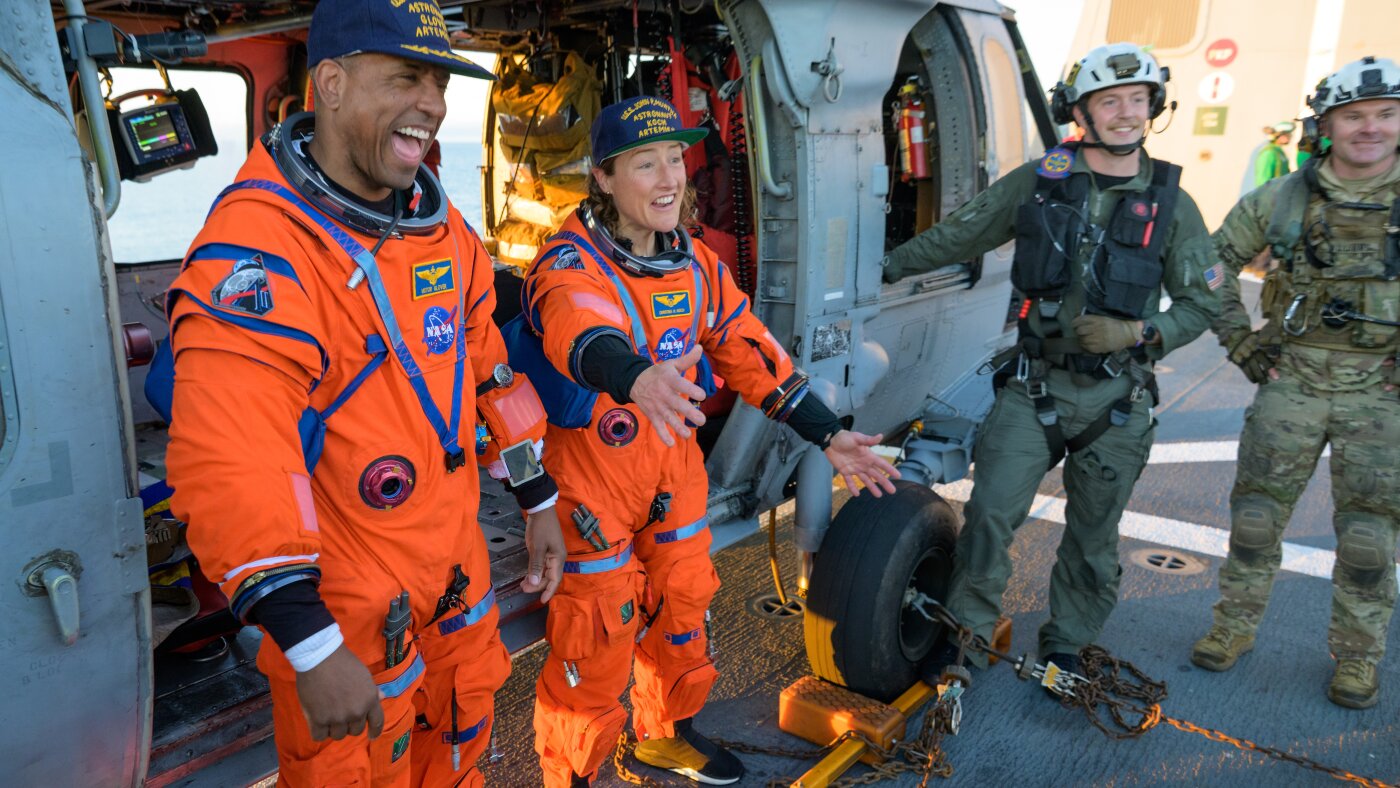
Artemis II splashdown captures nationwide attention

News21 hours ago
Video: Police Fatally Shoot Man After Stabbings at Grand Central Subway Station

Politics22 hours ago
Trump blasts Spanberger ahead of Virginia meetings, says state faces tax base exodus like New York, California
-

 Atlanta, GA1 week ago
1 teenage girl killed, another injured in shooting at Piedmont Park, police say
-

 Georgia5 days ago
Georgia House Special Runoff Election 2026 Live Results
-

 Pennsylvania6 days ago
Parents charged after toddler injured by wolf at Pennsylvania zoo
-

 Arkansas2 days ago
Arkansas TV meteorologist Melinda Mayo retires after nearly four decades on air
-
 Milwaukee, WI6 days ago
Potawatomi Casino Hotel evacuated after fire breaks out in rooftop HVAC system
-

 Indianapolis, IN1 week ago
Fighting Illini begin Final Four preparations in Indianapolis
-

 Technology1 week ago
Anthropic essentially bans OpenClaw from Claude by making subscribers pay extra
-

 Austin, TX5 days ago
ABC Kite Fest Returns to Austin for Annual Celebration – Austin Today