


For more than a decade, one question has loomed over the race to build autonomous vehicles: Are cameras alone enough to safely replace human drivers, or do truly driverless cars need additional, overlapping sensors like lidar and radar to navigate the world reliably? Tesla has bet billions of dollars that artificial intelligence and cameras are sufficient. Nearly every other major autonomous vehicle developer has gone the opposite direction.
Technology
‘Are You Dead?’ app taps into global loneliness crisis


NEWYou can now listen to Fox News articles!
A new mobile app from China is going viral for a reason that feels both unsettling and familiar. It exists to answer one basic question for people who live alone: Are you still alive? The app is called “Are You Dead?” and it has surged to the top of China’s paid app charts. It also climbed into the top ten paid apps in the United States. Its popularity reflects more than curiosity. It highlights how many people now live by themselves and worry about what happens if something goes wrong.
Sign up for my FREE CyberGuy Report
Get my best tech tips, urgent security alerts and exclusive deals delivered straight to your inbox. Plus, you’ll get instant access to my Ultimate Scam Survival Guide – free when you join my CYBERGUY.COM newsletter.
10 WAYS TO PROTECT SENIORS FROM EMAIL SCAMS
A Chinese-made mobile app called “Are You Dead?” is climbing paid app charts by offering a simple check-in system for people who live alone. (Photo by Hendrik Schmidt/picture alliance via Getty Images)
How the ‘Are You Dead?’ app works
The app’s design is intentionally simple. After paying about $1.15, users add an emergency contact and agree to check in every two days.
Here is how it works in practice:
- Users tap a large green button with a cartoon ghost to confirm they are OK
- If they miss two check-ins, the app sends an email alert on the third day
- The alert tells the emergency contact that something may be wrong
That is it. No tracking. No health data. No constant monitoring. The goal is reassurance, not surveillance. On its English-language page, the app goes by the name Demumu. The developers describe it as a “lightweight safety tool” meant to make solitary life feel less risky. For now, the app is available only on Apple’s App Store for iPhone and iPad.
Why the ‘Are You Dead?’ app went viral in China
The app debuted quietly in May. Then it took off. It is now the top-paid app on China’s Apple App Store and ranks sixth among paid apps in the U.S. The surge reflects a major social shift. More people in China live alone than ever before. One-child policies, rapid urbanization and work that pulls people far from their families all play a role. By 2030, China is projected to have around 200 million one-person households. At that scale, a simple safety check turns from a niche idea into a mass-market tool.
Why users say the app provides peace of mind
For many users, the app is not a joke. It is a safety net. One 38-year-old user told reporters he lives far from his family and worries about dying alone in a rented apartment. He set his mother as his emergency contact so someone would know if something happened to him. Others echoed a similar sentiment online. People living alone, introverts, unemployed workers and those dealing with depression said the app offers peace of mind without requiring constant interaction. Some users even reportedly framed it as a practical courtesy to loved ones rather than a morbid tool.
HOW TO HELP OLDER RELATIVES WITH TECH OVER THE HOLIDAYS
The viral “Are You Dead?” app alerts an emergency contact if a user fails to check in every two days. (Photo by Stefan Sauer/picture alliance via Getty Images)
The name of the app sparks debate
Not everyone is comfortable with the app’s blunt branding. Some users say the name is too dark and turns people away. Several suggested a simple fix: rename it “Are You Alive?” One commenter argued that death in this context is not only literal but social. A softer name might signal care rather than fear. Some users said they would gladly pay for the app if it sounded less grim. The developers appear to be listening.
What the developers of the app plan next
The app is built by a small Gen Z team at Moonscape Technologies. In public statements, the company said it plans to refine the product based on feedback.
Planned updates include:
- Adding direct messaging to emergency contacts
- Making the app more friendly for older users
- Reconsidering the app’s name
Those changes matter in a country where about one in five people is now over age 60.
Loneliness is not just a problem in China
The app’s success abroad suggests the issue is global. In the U.S., living alone is becoming the norm rather than the exception. According to recent census data, 27.6% of U.S. households had just one person in 2020. That figure was under 8% in 1940. Loneliness trends among younger men are especially striking. A Gallup poll found that about one in four Gen Z and millennial men in the U.S. report feeling lonely. That rate is higher than in peer countries like France, Canada, Ireland and Spain. Against that backdrop, an app that asks people to check in feels less extreme and more revealing.
Take my quiz: How safe is your online security?
Think your devices and data are truly protected? Take this quick quiz to see where your digital habits stand. From passwords to Wi-Fi settings, you’ll get a personalized breakdown of what you’re doing right and what needs improvement. Take my Quiz here: Cyberguy.com.
5 BEST APPS TO USE ON CHATGPT RIGHT NOW
The “Are You Dead?” app reflects growing anxiety among people who live alone and fear medical emergencies going unnoticed. (Getty)
Kurt’s key takeaways
“Are You Dead?” succeeds because it addresses a fear many people rarely say out loud. As more people live alone, the worry is not only about loneliness but also about invisibility. A simple tap every two days becomes a quiet signal that someone still knows you are here. The app may evolve, change its name or add features. The problem it highlights is not going away.
If an app has to ask whether you are alive, what does that say about how disconnected modern life has become? Let us know by writing to us at Cyberguy.com
CLICK HERE TO DOWNLOAD THE FOX NEWS APP
Sign up for my FREE CyberGuy Report
Get my best tech tips, urgent security alerts and exclusive deals delivered straight to your inbox. Plus, you’ll get instant access to my Ultimate Scam Survival Guide – free when you join my CYBERGUY.COM newsletter.
Copyright 2026 CyberGuy.com. All rights reserved.


Even though they haven’t been officially announced yet, Samsung is giving you a chance to save some cash when you preorder what we’re expecting to be the brand’s updated Galaxy Z Fold phones. The next Galaxy Unpacked event will take place on July 22nd, 2026, and features the tagline “A new shape unfolds.” In addition to seeing updated versions of the existing Flip and Fold form factors, we anticipate the debut of a new, wider foldable phone. If you register your interest ahead of time and end up preordering one of the new phones shortly after they’re announced, Samsung will give you a $30 store credit at checkout.
There are some caveats to this offer. You have to use the credit when you preorder the phone. No saving it for later. Also, the credit can’t be applied to the cost of the phone either, so you’ll have to put it towards the cost of accessories or extra services. Samsung specifically calls out that select Galaxy rings, earbuds, watches, and tablets are eligible, or you can use it to help pay for Samsung Care Plus.
There are no downsides to registering your interest, so if you think you might be interested in buying one of the upcoming phones, it’s worth filling out the form. As long as you use the same email during checkout, the credit will be automatically applied.

Anthropic’s new AI model raises alarms over safety, cybersecurity concerns
Matt Shumer, co-founder and CEO of OthersideAI, details Anthropic’s new AI model, Mythos, on ‘The Sunday Briefing’. The model’s “emergent capabilities” to find software vulnerabilities autonomously raised alarms, prompting Anthropic to restrict public access. Shumer explains the proactive move of granting major companies and the US government early access to Mythos for cyber defense, anticipating future threats to critical infrastructure and national security.
NEWYou can now listen to Fox News articles!
A security update rarely feels dramatic. You see the alert, promise yourself you will install it later and then go right back to whatever you were doing. This time, Apple is giving you a stronger reason to pay attention.
Apple released iOS 26.5.2, iPadOS 26.5.2 and macOS Tahoe 26.5.2 on June 29, 2026. The updates include security fixes for vulnerabilities tied to the kernel, WebKit and WebRTC. Apple says these fixes were first made available through the iOS 26.6, iPadOS 26.6 and macOS Tahoe 26.6 betas before being pushed out early to everyone.
That is the part that should make you pause. Apple usually rolls many security fixes into larger software updates. This time, the company moved faster.
AI IS NOW POWERING CYBERATTACKS, MICROSOFT WARNS
Apple pushed out security fixes early because AI can help hackers study software flaws faster. (Nikolas Kokovlis/NurPhoto via Getty Images)
Sign up for my FREE CyberGuy Report
- Get my best tech tips, urgent security alerts and exclusive deals delivered straight to your inbox.
- For simple, real-world ways to spot scams early and stay protected, visit CyberGuy.com – trusted by millions who watch CyberGuy on TV daily.
- Plus, you’ll get instant access to my Ultimate Scam Survival Guide free when you join.
Why Apple released this AI security update early
Apple reportedly accelerated the updates because artificial intelligence can help speed the creation of malicious hacking tools. Once a fix appears in a beta, attackers may be able to study it, reverse-engineer the weakness and move faster than before.
Apple said there was no evidence that the newly patched vulnerabilities had been exploited. Still, the company wanted to shrink the time between when fixes were first visible and when they reached your devices.
That is a major shift. It suggests Apple sees AI as a force that changes the timing of security. A flaw that once gave defenders more breathing room may now become a race.
What Apple fixed in iOS 26.5.2
Apple’s iOS 26.5.2 and iPadOS 26.5.2 notes list fixes for iPhone 11 and later, along with several supported iPad models. The security content includes kernel vulnerabilities that could let an app crash the system, corrupt kernel memory or leak sensitive kernel state.
The update also fixes multiple WebKit issues. WebKit powers Safari and web content inside many apps. Some of these flaws involved malicious web content that could lead to crashes, memory corruption, data leaks or sandbox escapes.
Apple also fixed WebRTC issues that could be triggered by malicious web content and lead to Safari or process crashes.
For Mac, Apple lists macOS Tahoe 26.5.2 as the current release. If your Mac runs macOS Sonoma or macOS Sequoia, Apple also lists Safari 26.5.2 as a June 29, 2026, security release.
A woman uses a smartphone outside an Apple Store on June 20, 2026, in Shenzhen, Guangdong Province, China. (Cheng Xin/Getty Images)
Why AI hacking tools change the security race
AI can help legitimate researchers find bugs faster. That is good when the work leads to stronger software and responsible disclosure. However, the same general capability can also help bad actors move faster. A criminal does not need to understand every line of code if an AI tool can help summarize a patch, compare software changes or suggest where a weakness may be hiding.
That is why Apple’s move is important. It shows that big tech companies may need to release security fixes sooner and more often, even when those updates do not include flashy new features. The wider AI world adds pressure here. Frontier AI companies have released or tested systems with stronger coding and cybersecurity capabilities. Some models are available only through limited previews, approved access or extra safeguards because of their potential cyber use.
Similar efforts are also emerging outside the United States. Several international AI labs and security companies now promote models designed to find vulnerabilities, analyze code and assist cyber defense. The takeaway for you isn’t that AI is automatically bad. The real point is speed. Security teams, attackers and AI tools are now moving on a shorter clock.
How to update your iPhone or iPad
Before you update, plug in your device and connect to Wi-Fi. You may also want to back up your iPhone or iPad first.
Then do this: Open Settings > General > Software Update > Download and Install.
After the update finishes, go back to Settings > General > Software Update > Automatic Updates. Make sure automatic updates are turned on. Apple also lets your device automatically install system file updates that improve security without changing the full software version. If you do not see the update right away, check again later. Apple releases updates in stages, and your device also needs enough battery and storage.
How to update your Mac
On a Mac, start with a backup. Then click the Apple menu > System Settings > General > Software Update . Choose Update Now if macOS Tahoe 26.5.2 appears.
Next, check your background update settings. On macOS Tahoe 26 or later, go to Apple menu > System Settings > General > Software Update . Click the More Info button next to Automatic Updates and make sure Install system data files and security updates is turned on.
If your Mac runs Sonoma or Sequoia, look for Safari 26.5.2 in Software Update as well. That Safari update may be the protection your Mac needs if you are not on Tahoe.
BEWARE OF HACKERS SHOWING UP PRETENDING TO BE IT
What this Apple security update means to you
You may see more security updates that feel sudden or small. That can be annoying, especially when you are busy or your device needs to restart.
Still, these updates are becoming more important. Apple is reacting to a world where AI can help shorten the time between a public fix and a possible attack.
So, when your iPhone, iPad or Mac asks you to update, do not treat it like background noise. The update may be closing a door someone else is already trying to find.
Updating your iPhone, iPad and Mac helps close security holes before attackers get more time to exploit them. (Katharina Kausche/picture alliance via Getty Images)
How to stay safe after the Apple security update
Installing the Apple AI security update is the best first move. After that, tighten a few habits that make attacks harder.
1) Keep your apps updated
Your operating system is only part of the security picture. Outdated apps can still create risk, especially if they handle messages, web links, photos, files or account logins. Open the App Store and install available updates regularly.
2) Watch out for suspicious links
Be careful with links in texts, emails and social media messages. WebKit and browser flaws are a reminder that malicious web content can be part of an attack. When in doubt, open the official app or website yourself instead of tapping a link.
3) Use strong passwords and two-factor authentication
Use strong, unique passwords for every account and store them in a password manager. Then turn on two-factor authentication (2FA) wherever possible. If one password gets exposed, you do not want it opening the door to your email, bank or Apple account.
4) Use strong antivirus protection
Use strong antivirus protection on your Mac and other connected devices. It can help catch malicious files, phishing attempts and suspicious activity before they do damage. Get my picks for the best 2026 antivirus protection winners for your Windows, Mac, Android and iOS devices at CyberGuy.com.
5) Back up your data regularly
Back up your iPhone, iPad and Mac before problems hit. A recent backup can help you recover faster if an update fails, your device gets stolen or malware locks you out of important files. CyberGuy’s guide to backing up your devices walks you through ways to protect your files using cloud storage, an external drive or both.
6) Use a personal data removal service
Use a personal data removal service to reduce how much of your personal information is floating around online. Data brokers and people-search sites can expose your name, address, phone number and relatives. Scammers can use those details to make phishing messages feel more believable. Check out my top picks for data removal services and get a free scan to find out if your personal information is already out on the web by visiting CyberGuy.com.
Kurt’s key takeaways
Apple’s early security release shows how fast the cyber threat landscape is changing. The company says there is no evidence these newly patched flaws were exploited, but it still moved the fixes out before the wider 26.6 release. That tells me the old habit of waiting weeks to update is getting riskier. AI can help defenders, but it can also help criminals study weaknesses faster. My advice is direct: update your Apple devices now, turn on automatic security updates and stop putting off patches that protect the phone and computer you use every day.
Do you think AI will make your devices safer because companies can find flaws faster, or more vulnerable because hackers can move faster too? Let us know by writing to us at CyberGuy.com.
Automatic updates, strong passwords and a personal data removal service can make you a harder target after the update. (Silas Stein/picture alliance via Getty Images)
CLICK HERE TO DOWNLOAD THE FOX NEWS APP
Sign up for my FREE CyberGuy Report
- Get my best tech tips, urgent security alerts and exclusive deals delivered straight to your inbox.
- For simple, real-world ways to spot scams early and stay protected, visit CyberGuy.com – trusted by millions who watch CyberGuy on TV daily.
- Plus, you’ll get instant access to my Ultimate Scam Survival Guide free when you join.
Copyright 2026 CyberGuy.com. All rights reserved.

Until now, that argument has largely been left to executives and engineers. New Jersey lawmakers are trying to settle it in state law.
A bill expected to come up for a vote later this year would require companies seeking to operate fully autonomous vehicles in New Jersey to use cameras plus two other sensing technologies, most commonly lidar and radar. If enacted, New Jersey would be the first state to codify such a hardware mandate into law, moving ahead of a nearly identical proposal currently pending action in neighboring New York. The measure would also effectively prevent Tesla’s camera-only Robotaxi system from operating in New Jersey unless the company changed its hardware.
”This is not anti-Tesla,” Democratic state Sen. Andrew Zwicker, the bill’s primary sponsor, told The Verge. “I’m pro-New Jersey safety.”
Zwicker, a physicist who works at the Princeton Plasma Physics Laboratory (New Jersey doesn’t restrict legislators from outside jobs), said after riding in a Waymo robotaxi in Phoenix he became convinced autonomous vehicles could transform transportation.
”I was amazed how quickly you get used to it,” he said.

The technology, he argues, could dramatically expand mobility, reduce traffic deaths, and make transportation more accessible. But he believes the technology should roll out cautiously in the nation’s most densely populated state.
”At this point, I don’t think the evidence is sufficient that a single sensor with software can handle situations that humans can,” Zwicker said. “Can we get there? Maybe. But we’re not there yet.”
The proposal would establish a three-year pilot program governing the testing and deployment of fully autonomous vehicles in New Jersey. Companies would have to use multiple sensing technologies, report certain crashes, and receive state authorization before operating fully driverless commercial services. They would also have to complete at least 50,000 miles of supervised testing in New Jersey without a major incident before removing the human safety driver.
While state battles over autonomous vehicles have largely centered on safety performance, oversight, and potential job losses, New Jersey is attempting something different: legislating how the vehicles themselves should be built.
“At this point, I don’t think the evidence is sufficient that a single sensor with software can handle situations that humans can.”
— New Jersey state Sen. Andrew Zwicker
The sensor requirement is by far the bill’s most consequential provision and it would have repercussions beyond Tesla. Elon Musk has long argued that cameras paired with increasingly capable artificial intelligence are the best and most cost effective way to operate autonomous vehicles. Humans navigate the world using vision alone, Musk has said, so sufficiently advanced AI should eventually be able to do the same. Eliminating lidar and radar also dramatically lowers hardware costs, making it easier to build robotaxis cheaply enough to deploy at massive scale.
Musk has even argued that adding more sensors can reduce safety by forcing software to reconcile conflicting information.
”Lidar and radar reduce safety due to sensor contention. If lidars/radars disagree with cameras, which one wins?” he wrote on X last year. “We turned off the radars in Teslas to increase safety. Cameras ftw.”
Most of the rest of the autonomous vehicle industry disagrees. Companies including Waymo and Zoox combine cameras with lidar and radar, arguing that each sensing technology has different strengths and weaknesses. Cameras capture rich visual detail, allowing vehicles to recognize colors, traffic signs, lane markings, and pedestrians, but they can struggle in poor weather, darkness, or glare. Radar performs better in rain and fog and excels at measuring the distance and relative speed of nearby objects. Lidar uses lasers to create detailed three-dimensional maps of a vehicle’s surroundings, making it particularly effective at determining the shape and distance of nearby objects.
Rather than relying on a single sensor, those companies combine the strengths of all three, arguing that redundancy makes autonomous driving safer. Philip Koopman, a Carnegie Mellon electrical and computer engineering professor and autonomous vehicle safety expert, said camera-only systems may eventually become capable enough for fully autonomous driving. But he doesn’t believe they are today.
As Koopman put it, “eyeballs are better than cameras for many reasons” and “human brains are fundamentally more powerful than AI because we understand.” While there are situations where Koopman said camera-only works just fine — clear weather, favorable lighting, and less complex roads — he believes it’s not ready for broad consumer use.
“To run 24/7 across the majority of public roads in New Jersey today, it needs lidar,” he said. “It’s pretty clear that today camera-only technology is not up to the challenge.”
Koopman supports the New Jersey proposal but said he would prefer even stronger safeguards, such as requiring conventional driving controls like steering wheels and pedals so first responders could move disabled vehicles (so no Cybercabs, which don’t have either), and limits on how many AVs can be on the road during the pilot (a potential provision Zwicker said he’s considering).
“It’s pretty clear that today camera-only technology is not up to the challenge.”
— AV expert Philip Koopman
“The difference between 100 cars and 10,000 cars is night and day,” Koopman said. When the scale is small, “There’s just not enough cars for that much weird stuff to happen to them.” He pointed to Waymo, which now operates more than 3,500 commercial robotaxis across 11 US metro areas.
”They never used to have problems with floodwaters and school buses — not because they could do floodwaters and school buses,” Koopman said. “But with 100 cars it just doesn’t happen that often.”
Despite a lot of fanfare, Tesla currently only has a handful of unsupervised Robotaxis on the road, mostly in Texas, according to data from Robotaxi Tracker, suggesting it hasn’t been as easy to scale the camera-only approach as Musk had previously promised. Last year he predicted that Tesla would have hundreds of thousands of fully self-driving Teslas operating by the end of 2026. (Tesla did not respond to requests for comment for this article.)
Many of the bill’s provisions mirror recommendations from SAVE-US, a nonprofit that advocates for stricter autonomous vehicle regulation. Physicist and SAVE-US national campaign director Shua Sanchez said the group formed because Congress has failed to establish national rules while autonomous vehicle companies have expanded into states with dramatically different levels of oversight.
“California has the best safety regulations in the country,” he said. “Texas, Arizona, and Georgia have almost no state oversight.”
Among the organization’s priorities is requiring redundant sensing systems.
“We don’t have a problem with Tesla as a company,” Sanchez said. “We have a problem with camera-only autonomous vehicles.”
Nearly every major stakeholder has sought changes to the bill. Waymo successfully pushed to remove a requirement that safety drivers remain in vehicles throughout the pilot, and Uber argued the state should continue requiring human drivers for most rides, according to Zwicker.
Tesla has been lobbying against the legislation in New Jersey, according to Zwicker, who said company representatives met with lawmakers to argue that advances in artificial intelligence make additional sensor types unnecessary. Zwicker said that while the tech has gotten better, “I’m not convinced yet that they’re ready to go.”
The debate has spilled beyond the state House.
“As written, the legislation imposes restrictions so severely that Tesla’s autonomous vehicle technology couldn’t legally operate in New Jersey,” read a Tesla missive to New Jersey Tesla owners encouraging them to contact lawmakers. “Rather than prioritizing real safety outcomes and performance, the bill specifically bans Tesla from the New Jersey market.”
Zwicker said his office received roughly 4,000 emails within a day. “The messaging wasn’t about the details of the bill,” he said. “It was that Zwicker is trying to take away your Autopilot.”
“Rather than prioritizing real safety outcomes and performance, the bill specifically bans Tesla from the New Jersey market.”
— A Tesla message to NJ owners
Zwicker rejects that characterization. The legislation applies only to fully autonomous vehicles operating under the proposed state pilot program — not driver-assistance systems that require a licensed human driver to remain behind the wheel.
The fight in New Jersey reflects a broader vacuum in autonomous vehicle regulation. Congress has debated national autonomous vehicle legislation for years without passing a comprehensive framework, leaving states to develop their own rules as commercial robotaxi services expand. Robotaxi services already operate in states including California, Texas, Arizona, and Georgia under dramatically different regulatory systems. While California requires extensive testing permits and public reporting, it doesn’t specify which tech the AVs need to get there. Texas has adopted a far lighter-touch approach, which lets automakers self-certify that their autonomous vehicles are ready for the road.
New Jersey’s bill raises the possibility that AV tech there could differ from that of other states. Zwicker says that isn’t his concern.
“The technology doesn’t exist in the Northeast at all,” he said. “The goal is to start now, do it safely, and build public trust.”
Sanchez sees the sensor requirement as a common-sense safeguard rather than a restriction on innovation.
“There are absolutely brilliant people working at Tesla trying to make camera-only autonomy work,” he said. “But they’re trying to do it with one arm tied behind their back.”
Follow topics and authors from this story to see more like this in your personalized homepage feed and to receive email updates.
-

 Washington, D.C2 minutes ago
Police search for suspect caught on camera slashing tires in Georgetown
-

 Cleveland, OH9 minutes ago
Ohio ICAC Task Force’s “Operation Guardians’ Watch” Results in 25 Individuals Arrested and Charged for Attempting to Meet with an Underage Child to Engage in Sexual Activity
-

 Austin, TX12 minutes ago
Texas’ Goosby hosts camp to benefit heart research
-

 Alabama17 minutes ago
Alabama teen charged with stabbing mom to death issued vile threat to dad — as new pic shows bloodbath left behind
-

 Alaska24 minutes ago
Outmigration, inflation, choice schools: Alaska school closures likely to continue without changes
-
 Arizona27 minutes ago
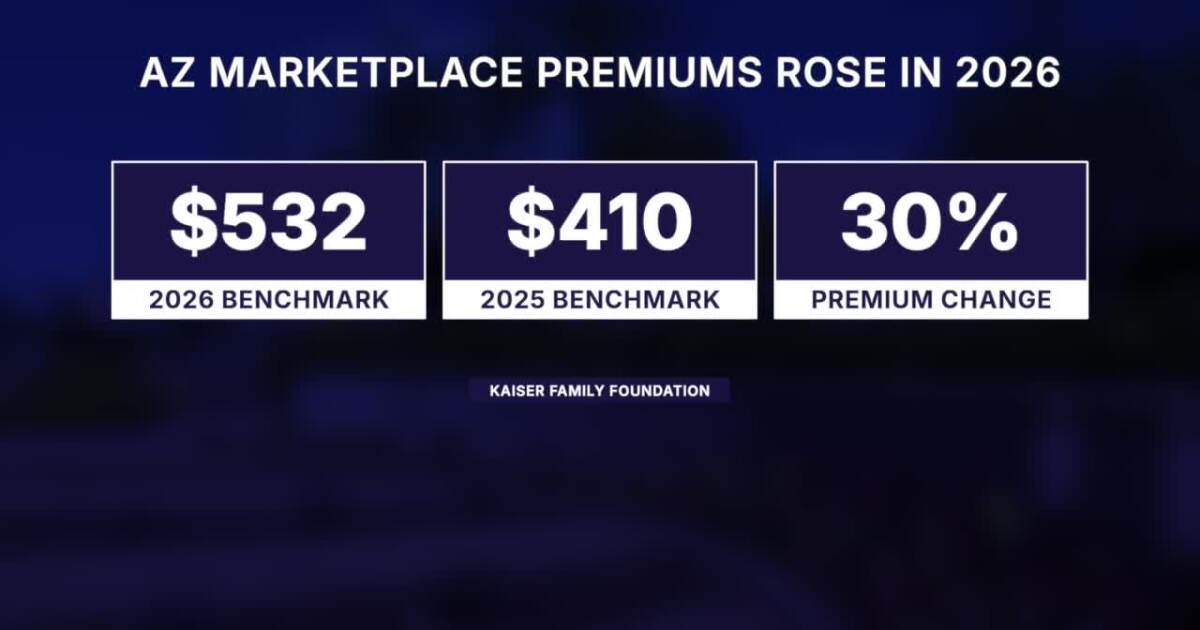
WATCH: Arizona’s health insurance marketplace is seeing dropping enrollment
-

 Arkansas32 minutes ago
ARKANSAS SIGHTSEEING: Randolph County can claim many firsts in Arkansas | Northwest Arkansas Democrat-Gazette
-

 California39 minutes ago
Toddler sustains brain injury in fall after California childcare worker threw him into the air, lawsuit says

