Sports
Why some of California's most outdoorsy people are moving to…Las Vegas?

For many, the lure of Las Vegas is the near complete immersion in a man-made world.
Visitors bury themselves deep inside temperature-controlled casinos, surrounded by artificial lights and sounds, with no windows or even clocks to remind them that the outside world still exists.
It’s one of the indoors-iest places on the planet.
But just outside the city, about 20 minutes from the bachelor parties and slot machines, a growing number of elite outdoor athletes are buying homes, starting families and declaring Las Vegas the adventure sports capital of the United States.
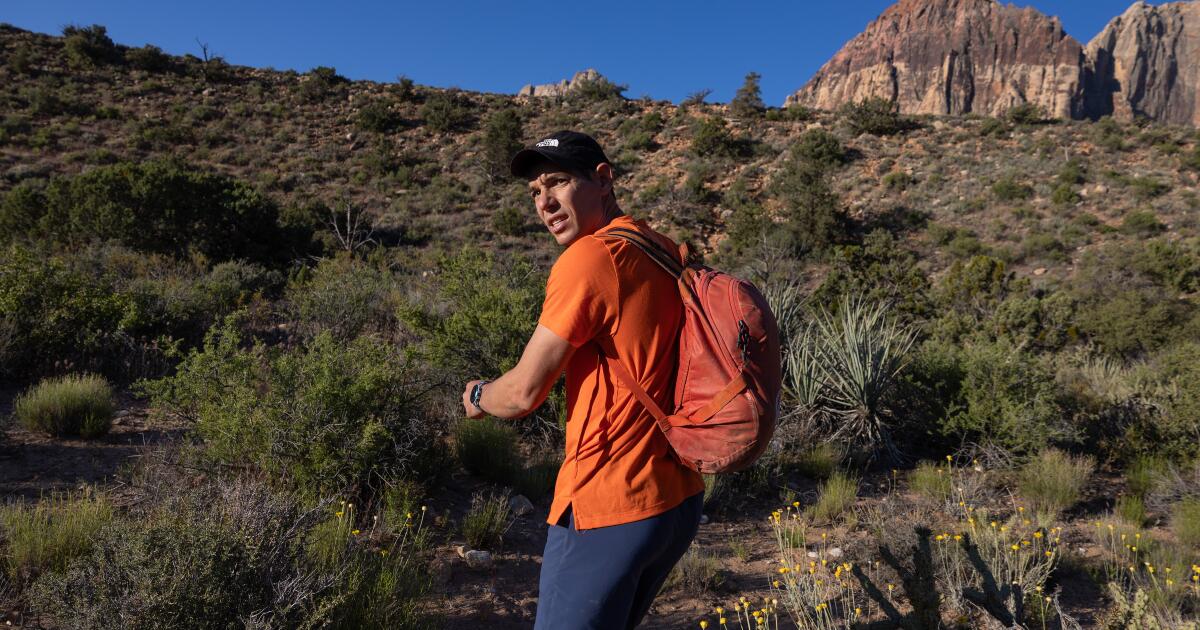
Alex Honnold, right, and climbing partner Joey Latina pause on the approach to the Rainbow Wall in Red Rock Canyon just outside Las Vegas.
“It just has unparalleled access to the outdoors,” gushed Alex Honnold, the world’s most famous rock climber and subject of the Academy Award-winning documentary, “Free Solo,” about his breathtaking 2017 ascent of Yosemite’s El Capitan, a nearly vertical granite wall that rises 3,000 feet above the valley floor.
It was first climbed in 1958 by a team who took 18 months searching for tiny protrusions and cracks to use as holds and driving heavy metal spikes into the rock where no natural holds existed. Honnold shocked the climbing world by using only his hands and feet — no safety equipment of any kind — and completing the ascent in just under four hours, a new speed record for the route.
In early May, as light from the rising desert sun seemed to set fire to the towering cliffs of Red Rock Canyon National Conservation Area just west of Las Vegas, Honnold pulled up in his electric truck ready to sprint up another sheer rock face. This one, known as the Rainbow Wall, rose about 1,000 feet above the desert floor.
Honnold, 38, who is of medium height and build and graying slightly at the temples, was dressed in a T-shirt, shorts and running shoes. At first glance, there was little to set him apart from a dozen or so other hikers and climbers lined up to enter the park at 6 a.m.
But then he tossed a small pack over his shoulder and started moving, eager to cover several miles of brush and boulder-strewn landscape between him and the base of the climb before the day got too hot. His small entourage, which included a climbing partner and two Times journalists, struggled to keep up.
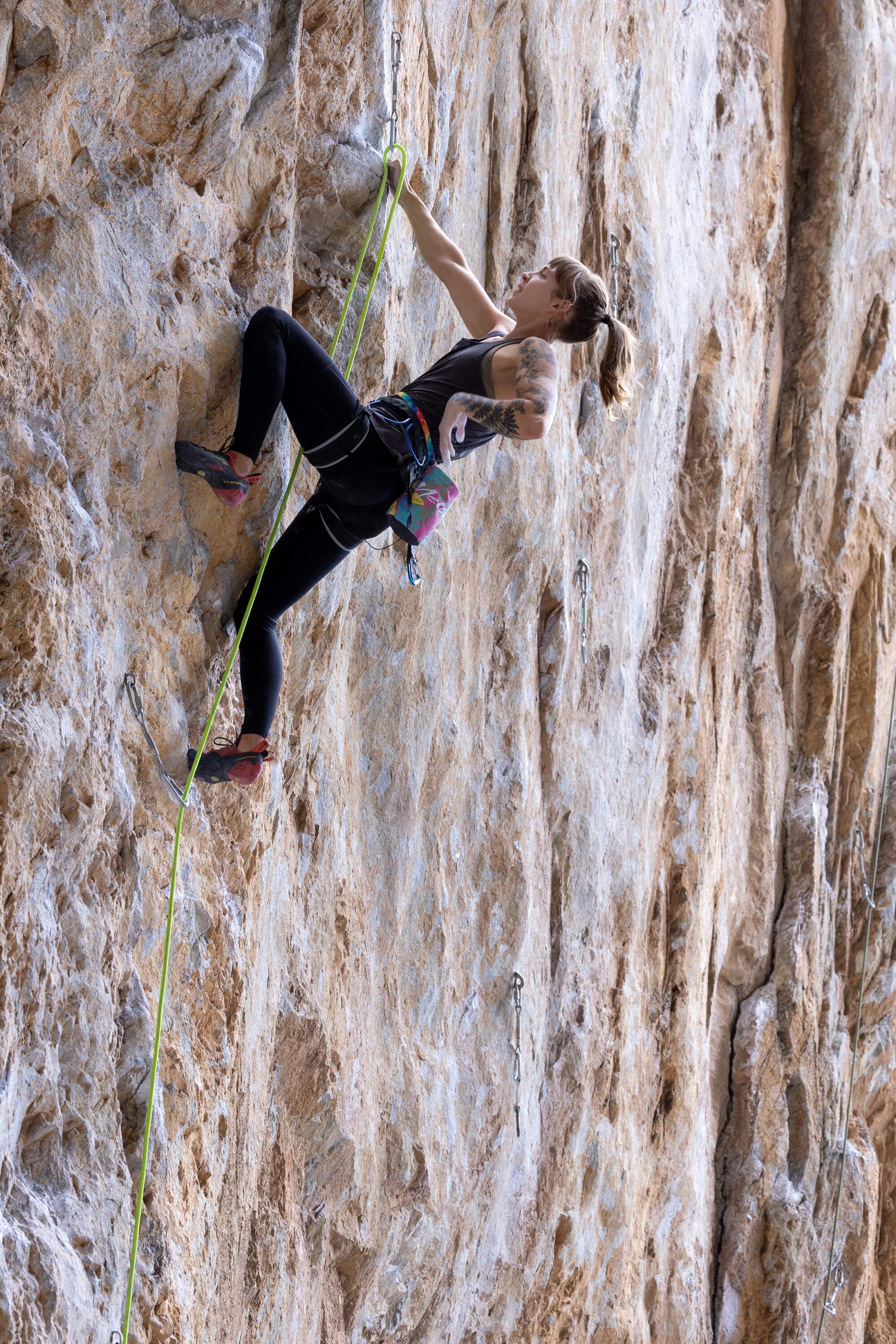
Climber Shaina Savoy ascends a limestone wall at Robbers Roost in the Spring Mountains National Recreation Area near Las Vegas.
“Honestly, I would say Las Vegas is better than any of the other cities in the country that have a reputation for being outdoorsy,” Honnold said. “People go to Denver because they say they want to be near the outdoors. But it’s at least an hour’s drive away from the real mountains.”
“In Vegas, you can live in the middle of suburbia and be 15 minutes from trailheads where you can be completely alone and feel like you’re gonna die,” he said as two of his companions hunched over and gasped for breath.
What sets Vegas apart is the unexpected geographic diversity, making world-class climbing easily accessible year-round. In the winter, there are the endless routes in Red Rock, the canyon that begins just beyond the suburbs. Its sandstone walls start at about 3,000-feet elevation, which means they’re low enough to remain warm and pleasant even in December and January.
When spring and summer roll around, and the valley becomes a furnace, 12,000-foot Mt. Charleston is less than an hour’s drive away and the upper reaches can be 30 degrees cooler. There, towering limestone walls offer some of the toughest technical climbs in the world, and there are enough routes to keep a professional climber busy for a lifetime, Honnold said.
Even Yosemite, long regarded as Mecca for rock climbers from all corners of the globe, where Honnold and so many other professionals made their reputations, can’t match that.
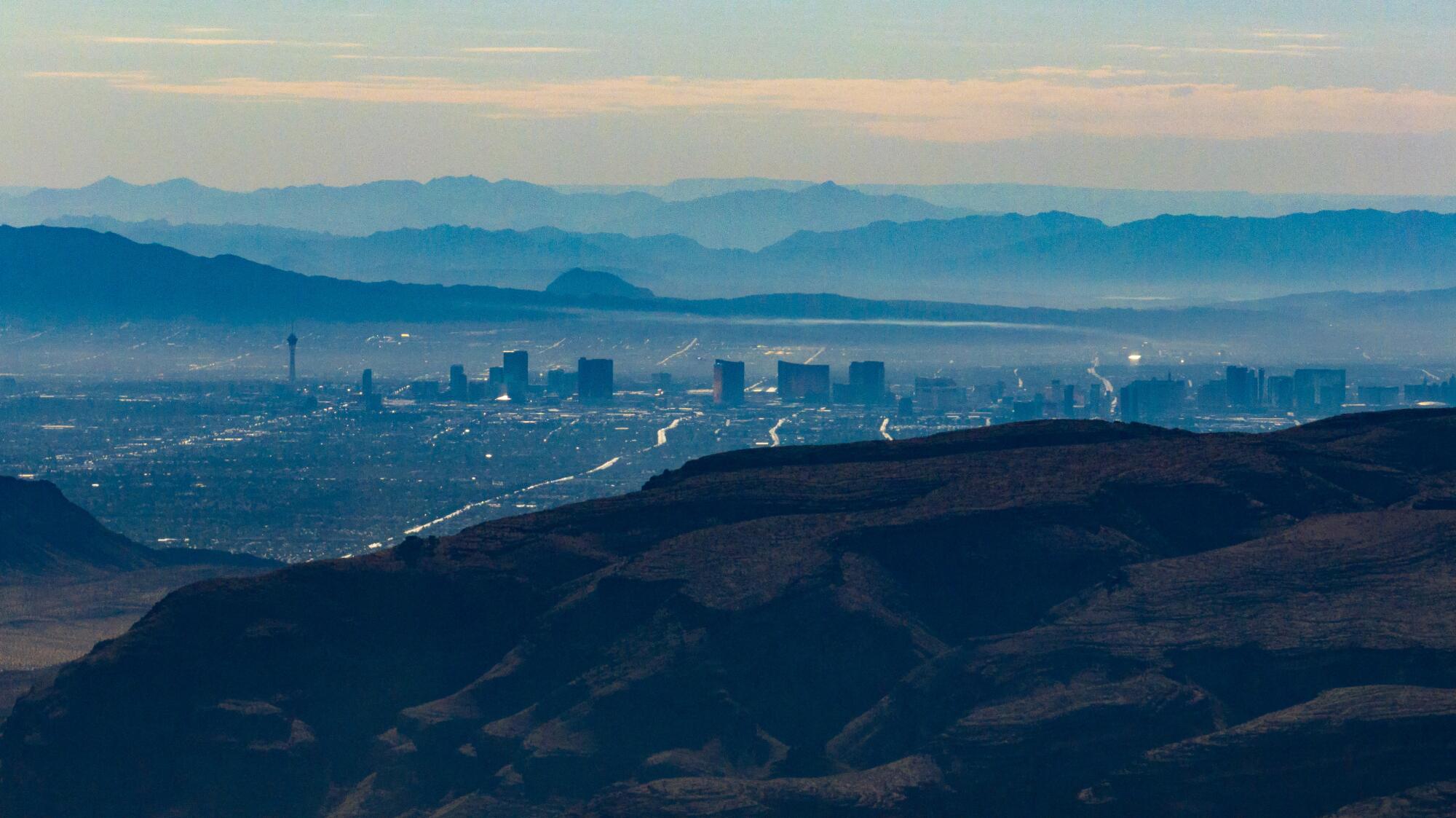
The Las Vegas Strip viewed from Red Rock Canyon National Conservation Area about 20 miles west of the city.
“Yosemite is a world destination in the spring and fall,” Honnold said. “But in the summer, it’s way too hot and way too crowded.” And in the winter, at 4,000 feet and directly exposed to Pacific storms, “it’s too wintry.”
And even when the weather is good, day-to-day life for climbers in Yosemite looks more romantic in old documentary films, and on Instagram, than it is in real life. Routes on its biggest and most famous walls, El Capitan and Half Dome, were pioneered by mostly unemployed self-proclaimed “dirtbag” climbers in the late 1950s and early 1960s, who built a fierce and defiant counterculture in the nearby campgrounds.
Among them was Yvon Chouinard, a tinkerer whose small climbing gear business grew into the billion-dollar retailer Patagonia, but who spent years living hand to mouth with fellow climbers in tents and out of their cars. He has told more than one interviewer that, at times during his early climbing days, he was so broke he subsisted on canned cat food because, “it was better than dog food.”
That underlying ethos had mellowed a bit, but still existed when Honnold first drove the family minivan down from Sacramento in the early 2000s. He was still living in a van in 2017 when he made the career-defining climb of El Capitan.
But ask anyone who has done it for long and they’ll tell you, van life gets old, even in a place as beautiful as Yosemite.

Emily Harrington says climbers of her generation are looking to buy homes and settle down. She and her husband recently had a son, Aaro, adding urgency to their quest.
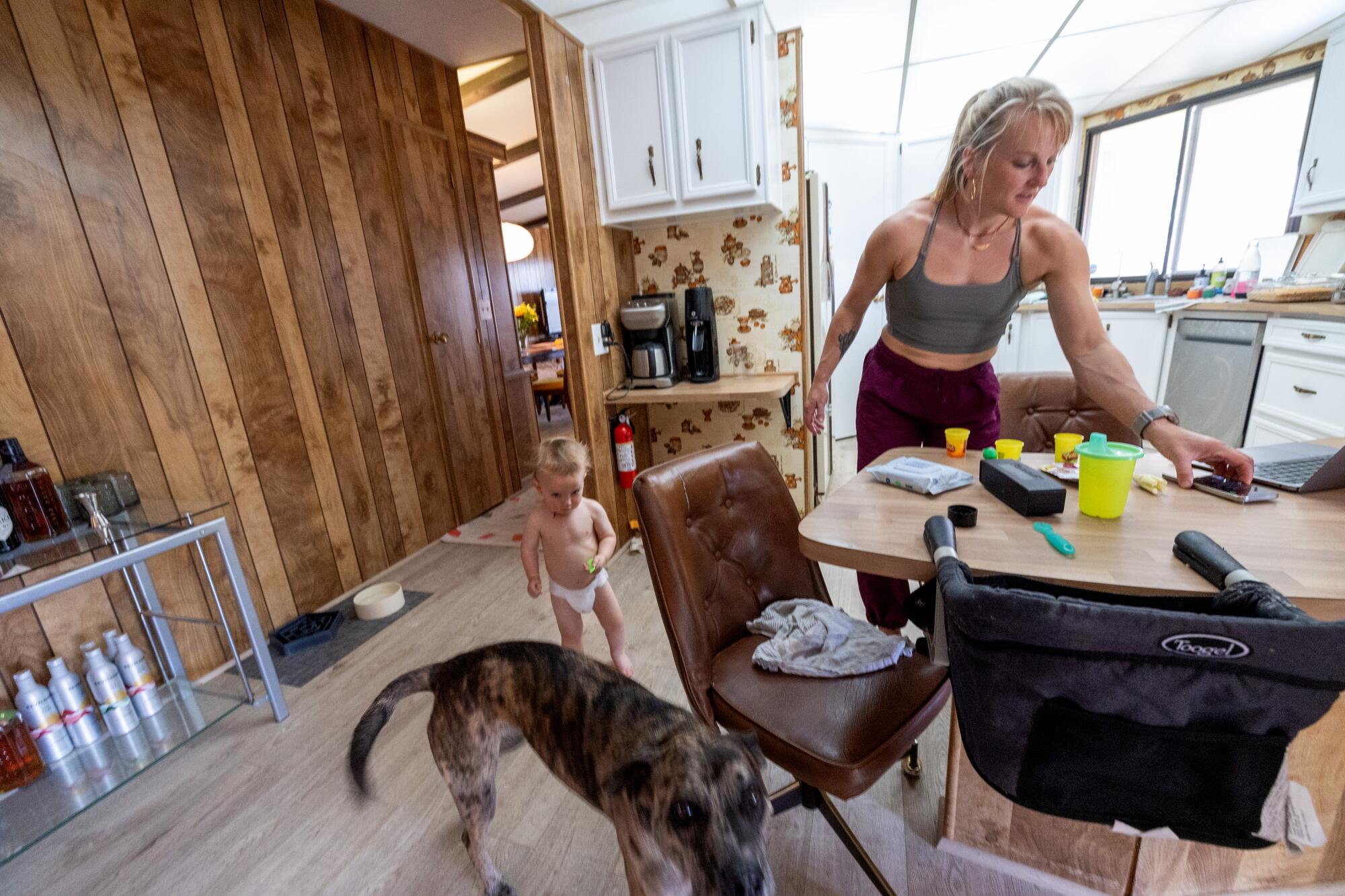
Hot showers. Good climbing. Great food. Climber Emily Harrington’s joy and relief are palpable as she lists the upsides of moving to the Las Vegas suburbs with her husband and son.
Emily Harrington, a five-time U.S. national champion in sport climbing and one of Honnold’s good friends, knows it all too well.
“Yosemite is just a hard place to exist,” she said. You spend all day pushing yourself to mental and physical exhaustion on the climbing walls, but there’s no rest when you come down. You have to find a place to camp, or park the van, or drive the van on long, crowded, windy roads to find a place outside the park. And even when you find a place, you’re still stuck in a van.
“It’s quite stressful,” Harrington said.
At 37, Harrington says climbers of her generation are looking to settle down. She and her husband, fellow climber Adrian Ballinger, recently had a son, which added real urgency to their quest.
That’s why they bought a place in Vegas not far from Honnold, his wife and their two young kids.
Harrington’s joy and relief are palpable as she lists the upsides of the new arrangement. “I can go out, drive five minutes to the trailhead, climb big routes all day, and then come back to my house and my kid and put him to bed, and I don’t have to live in a van!”
Hot showers. Soft beds. Great food. She rattled off about half a dozen of her favorite restaurants that are only a few minutes away. “It’s just so nice,” she said.
Jonathan Siegrist, 38, who is regarded as one of the world’s greatest technical climbers, couldn’t agree more.
While Honnold was battling the Rainbow Wall and nearly 90 degree heat in Red Rock last week, Siegrist and his wife, Shaina Savoy, huddled in puffy jackets between pitches on the cool limestone of nearby Mt. Charleston.
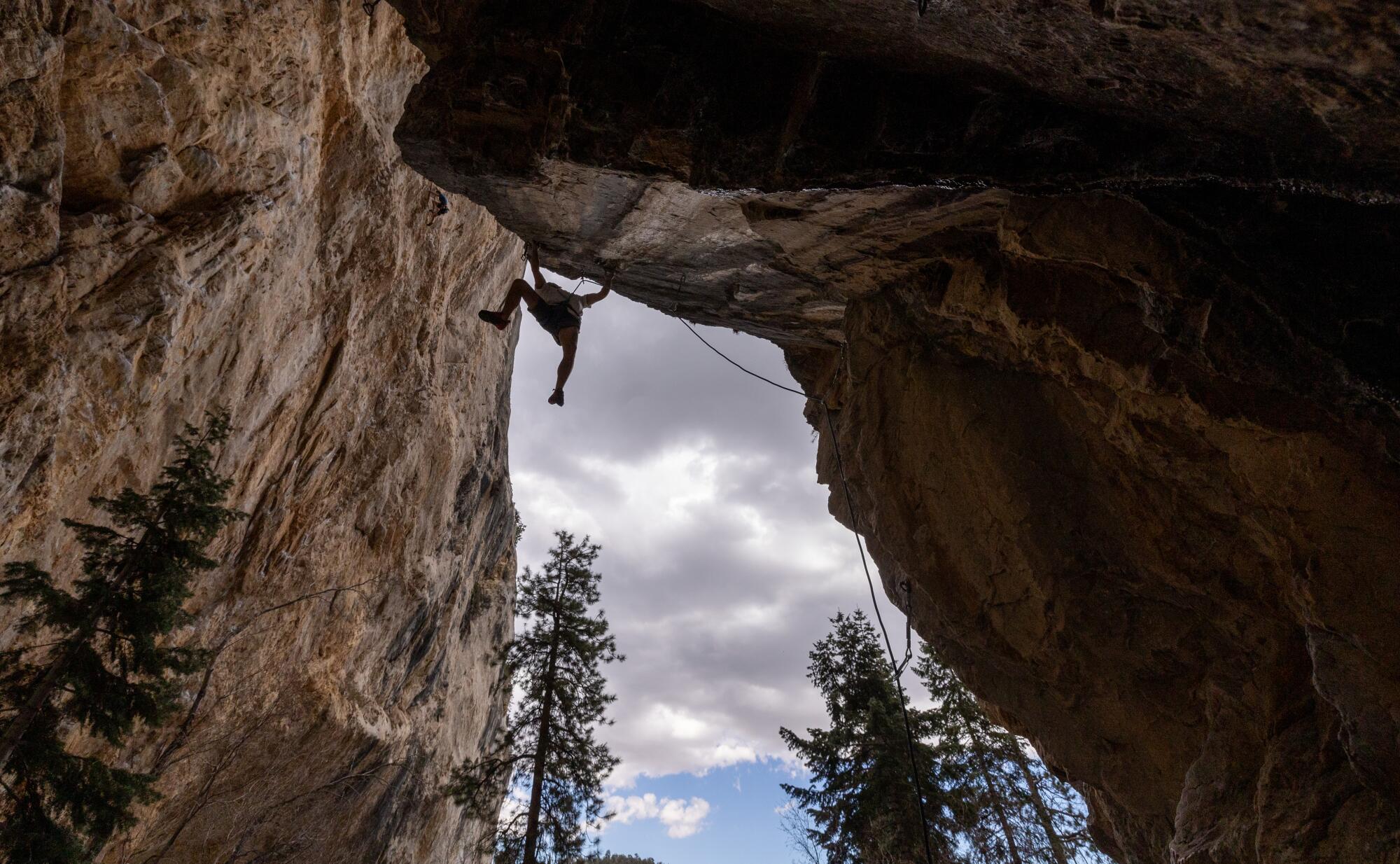
Jonathan Siegrist tackles Robbers Roost, a world-class rock-climbing destination in the Spring Mountains National Recreation Area.
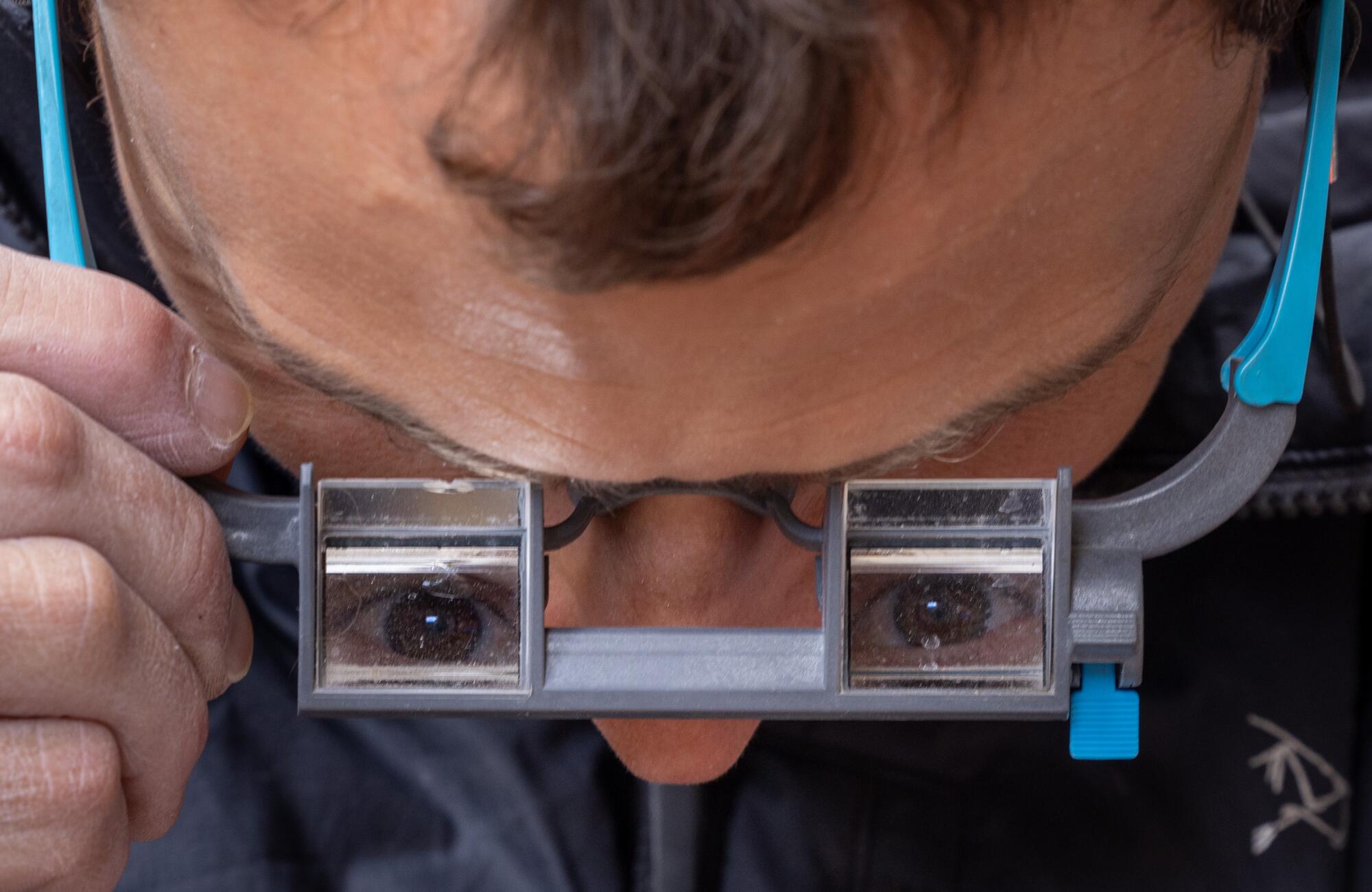
Jonathan Siegrist wears belay glasses, which give climbers a 90-degree view without craning their neck, during a climb at Robbers Roost.
Siegrist is unassuming when you first meet him: 5-foot-6, a firm handshake, a friendly smile. But then he pulls off his warm outer layer and starts climbing. Supporting his entire body with just his fingertips and the points of his toes on microscopic holds, he ascends the wall in precise choreographed movements, his progress as fluid and inevitable as flowing lava.
Despite the intense effort, which would leave most people gasping and single-minded, Siegrist had the aerobic and mental capacity to carry on a normal conversation.
He lived in his truck, off and on, for seven years. He settled down in Vegas because the climbing is better than anywhere else in the country and because the cost of living is much more reasonable than trendier climbing spots like his hometown of Boulder, Colo.
Even so, he struggles to convince young climbers, who are still trying to make names for themselves, that Vegas is the place to be.
“This city still has a really bad reputation in the outdoor community,” he said. “A lot of outdoor people would never stoop so low as to walk into a casino and enjoy themselves, or shop at a strip mall,” he said. “That’s a huge contributing factor as to why Vegas has stayed under the radar.”
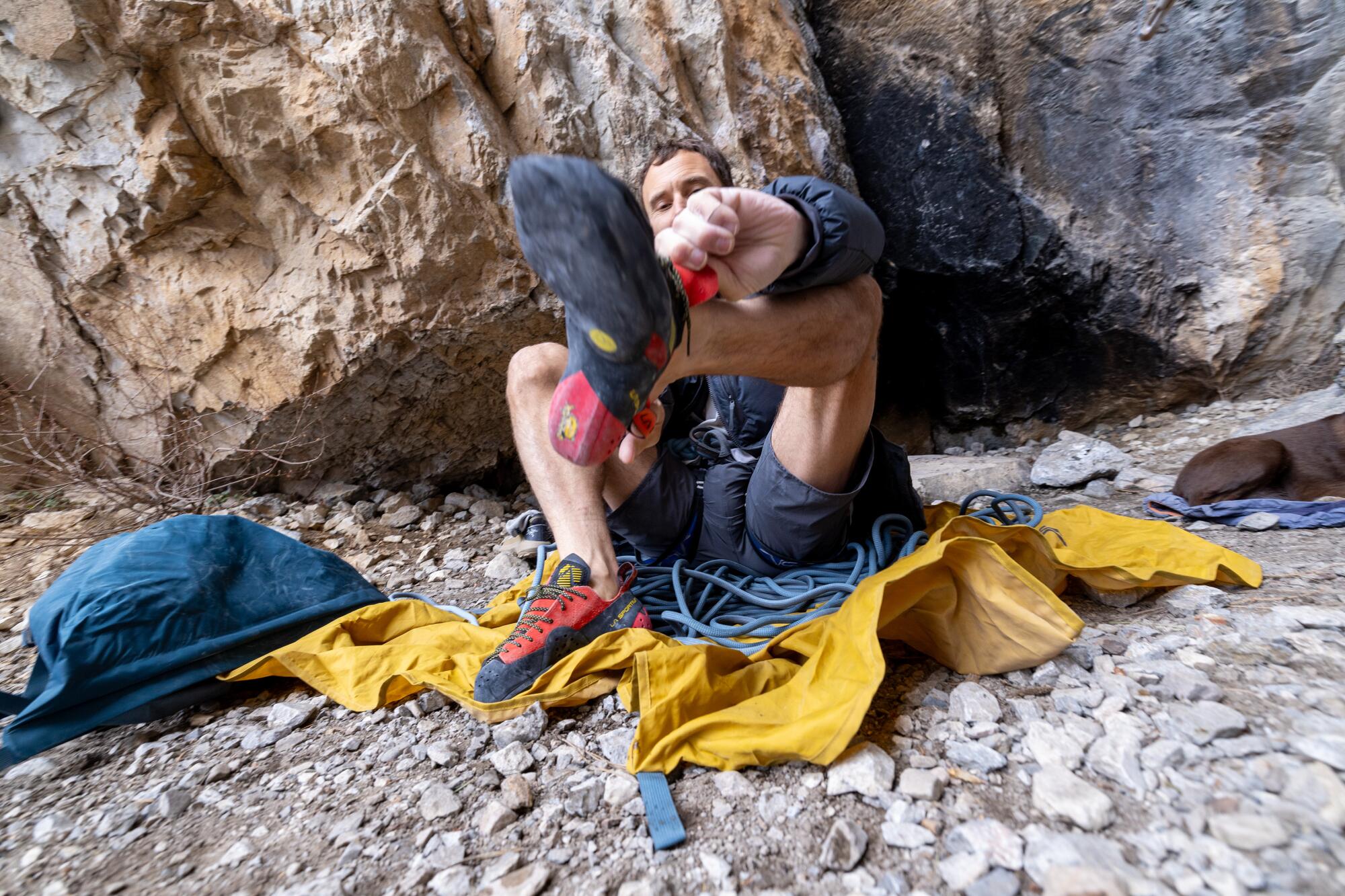
After living in his truck for years, Jonathan Siegrist said he settled in Las Vegas because the climbing is great and the cost of living more reasonable than in many trendy mountain towns.
But it’s actually one of the perks, he said.
Fashionable mountain towns are full of people trying to fit in, Siegrist said, to conform to a pretty strict outdoorsy aesthetic. They tend to look, dress and think the same way.
Freedom from that is one of the things he loves about Vegas.
“I’m not just talking about racial diversity. I’m talking about economic diversity, diversity of ideas and diversity of interests,” he said. On rest days, when he’s not climbing, “I can be a totally different version of myself.”
The difference can show in something as simple as walking his dogs off leash. If he tries that in Boulder, where his parents still live, “I’ll get yelled at by, like, six people in the first 30 seconds, even though the dogs are really obedient,” he said.
In Vegas, “nobody gives a s— what your dogs are doing as long as they’re not hurting anyone.”
Honnold, whose parents were teachers and who supports strong public services, confessed he, too, was pleasantly surprised by the lower cost of living in Nevada.
“I mean, there’s no income tax! And the house was so cheap, it nearly paid for itself in tax savings,” he said. All those years on the road, living in vans, he had listed his mom’s house in Sacramento as his address.
“That was crazy,” he said, “I was like, why didn’t I move to Vegas sooner?”
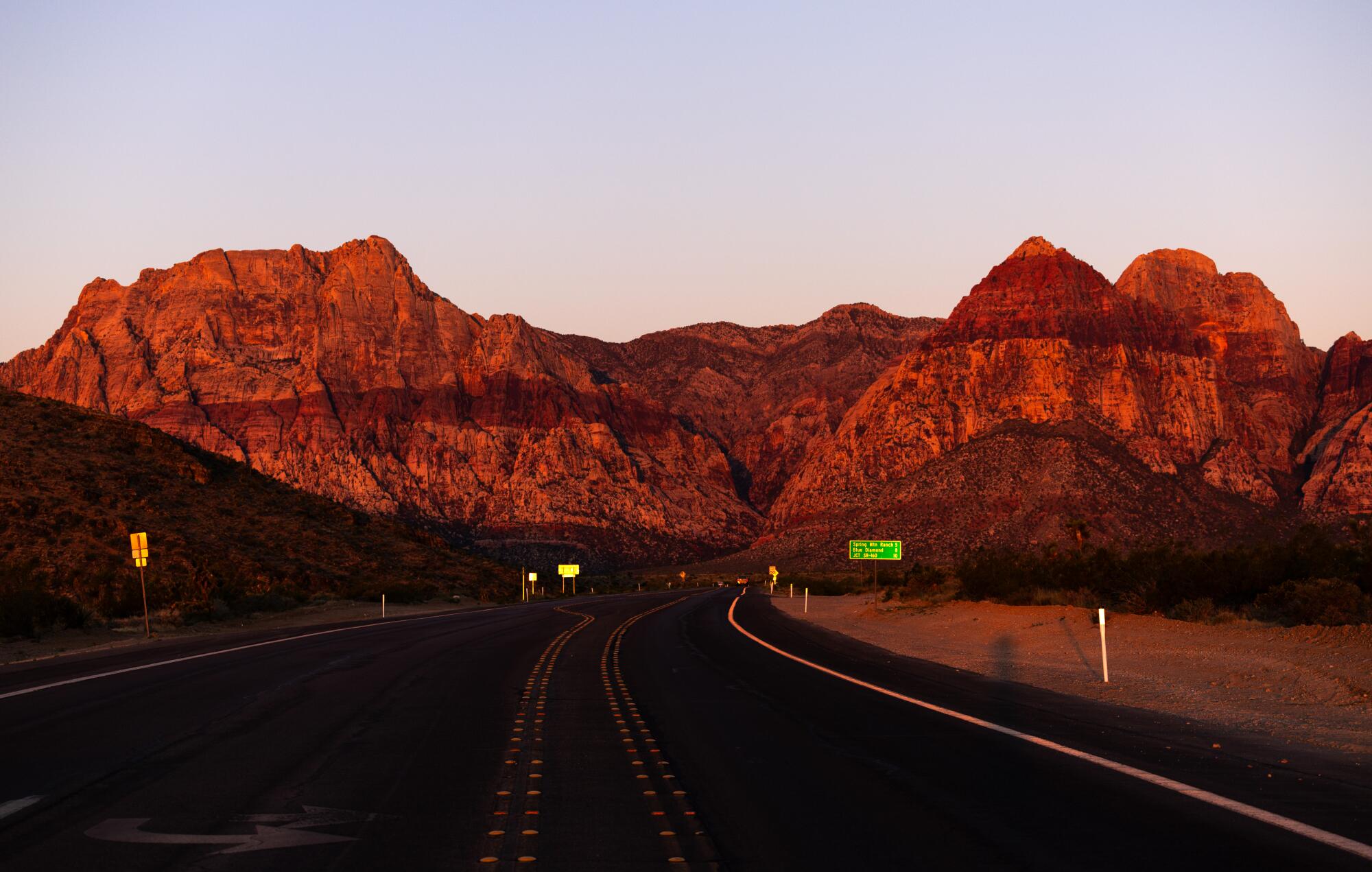
Sunrise at Red Rock Canyon National Conservation Area.
The Vegas airport is another huge draw for people whose profession demands they travel the world in search of adventure. It’s 20 minutes from Honnold’s house, the security lines are usually a breeze and, because of all the tourists, it has direct flights almost anywhere you’d want to go.
One day, when he was splitting time between training and promoting “Free Solo,” he climbed a 2,000-foot wall in the morning, showered at home, then caught a noon flight to London.
“Where else in the world can you do that?” he asked.
But what about that other side of Vegas, the strip? Honnold said he and his wife go there once or twice a year to catch a show and otherwise avoid it as much as possible.
Does he ever sit down at a slot machine and start pulling the lever?
“If a game is designed for you to lose, why play?” he asked. “I’ve actually never tried it. I like to joke that I only gamble with my life.”


NEWYou can now listen to Fox News articles!
The best Indianapolis 500 finish could be subjective, depending on which driver a fan was rooting for to win.
It certainly is in the eye of the beholder.
So take this list for what it’s worth. One view of the 10 best finishes in Indianapolis 500 history. Of course, it skews to more recent decades when the runs have come a little faster and the finishes have had a tendency to be a little closer.
We’ll add one each day to this list of fantastic finishes ahead of the 110th running of the Indy 500 on May 24 (12:30 p.m. ET on FOX).
10. Ericsson outduels O’Ward (2022)
After a red flag, Marcus Ericsson held off Pato O’Ward in a two-lap shootout. The shootout didn’t last two laps, though, as there was a crash on the final lap behind them. Ericsson had a comfortable lead when the red flag came out for a crash with four laps to go, a situation where in past Indianapolis 500 races, they likely would have ended the race under caution with Ericsson as the winner.
9. Foyt survives chaos (1967)
How does a driver who wins by two laps end up on this list? It’s because the win nearly didn’t happen on the last lap. A big crash with cars and debris littering the frontstretch just ahead of Foyt as he came to the checkered flag forced him to navigate through the wreckage for the win.
8. Sato can’t catch Franchitti (2012)
This was one of those finishes where the leader holds on for the win, but boy did the leader have to hold on. Takuma Sato tried to pass Dario Franchitti early on the final lap but to no avail and Franchitti sped off for the victory. This was one of those Indy 500s that made you hold your breath all the way to the checkered flag.

No. 8 UCLA stuck with right-hander Taylor Tinsley throughout the Los Angeles Regional and that faith in the senior paid off.
During the Bruins’ NCAA tournament opener at Easton Stadium, Tinsley gave up 10 runs before her teammates rallied for a walk-off win. She returned less than 24 hours to pitch against South Carolina, giving up two earned runs in a victory. Tinsley was back in the circle Sunday afternoon, yielding one run in UCLA’s 15-1 victory over the Gamecocks to advance to the super regionals.
“I am proud of Taylor’s resiliency, the ability to do whatever she can to help this team,” UCLA coach Kelly Inouye-Perez said. “She got stronger through the weekend. I am proud of that.”
Tinsley and her teammates will host Central Florida in a super regional that begins Friday.
“I feel good,” Tinsley said after pitching three key games in three days. “I could have gone more innings if needed.”
South Carolina right-hander Jori Heard gave up only one hit through two innings, keeping UCLA’s potent bats relatively quiet. The Gamecocks had runners on first and second with two outs in the second, but Tinsley escaped the inning with a pop-up to left field.
The Bruins got on the board first with a two-run home run from left fielder Rylee Slimp in the third inning. The Bruins followed it up by loading the bases with no outs in the fifth for right fielder Megan Grant.
Grant cooked up a grand slam to make it 6-0. She has 40 home runs, extending her hold on the NCAA single-season home run record. Oklahoma freshman Kendall Wells trails Grant with 37 homers.
“Its just incredible because I am blessed to be able to say the number 40,” Grant said.
South Carolina broke through on an RBI single from left fielder Quincee Lilio to cut UCLA’s lead to 6-1 in the fifth inning after being held to just one hit since the first inning. The Gamecocks couldn’t cash in the rest of the way.
The Bruins resumed scoring in the sixth inning, with the bases loaded and Grant at bat again. Fans at Easton Stadium anticipated another grand slam, holding up their cellphones hoping to catch some magic. Grant served up a two-run RBI single to expand the lead 8-1.
Jordan Woolery added to the scoring with a two-run RBI double down the left-field line, and Kaniya Bragg hit a home run to left-center field. Soo-jin Berry put a bow on the win with one more home run.
Sports
Pro wrestling star learns what ‘land of opportunity’ means in US as he details journey from Italy to America

NEWYou can now listen to Fox News articles!
Cristiano Argento has been tearing up opponents in the ring for the National Wrestling Alliance (NWA) as he worked his way up the ladder to get a few shots at some gold.
But the path to get to one of the most prestigious pro wrestling companies in the U.S. was long and a path that not many wrestlers have taken.
Argento was born and raised in Osimo, Italy – a town of about 35,000 people located on the east side of the country closer to the Adriatic Sea. He told Fox News Digital he started training in a ring at a boxing gym before he got started on the independent scene in Italy. He wrestled in Germany, Sweden, France and Denmark before he came to the realization that, to become a professional wrestler, he needed to make his way to the United States.
ZERO BS. JUST DAKICH. TAKE THE DON’T @ ME PODCAST ON THE ROAD. DOWNLOAD NOW!
Cristiano Argento performs in the National Wrestling Alliance (Instagram)
He first worked his way to Canada to get trained by pro wrestling legend Lance Storm. He moved to Canada, leaving most of his friends and family behind and without a firm grasp on the English language.
“At the time, my English was horrible. I didn’t speak any English at all,” he said. “But I was with my friend, Stefano, he came with me and he translated everything for me. I probably missed 50% of the knowledge that Lance Storm was giving to us because I was unable to understand. I was only given a recap and everything I was able to see. I’m sure if I was doing it now with a proper knowledge of English, it would have been a different scenario.
“Eventually, I moved back to Italy after the training and I said, OK, now, I want to go to the U.S. So, I studied English more properly, and eventually I got my first work visa that was in Texas. I was in Houston for a short period of time. I trained with Booker T at Reality of Wrestling. I got on his show, which was my debut in the U.S. That was awesome. I eventually got a new work visa in Pittsburgh, Pennsylvania, where I currently live since 2017. Since then, my wrestling career, thankfully, kept growing, growing, growing and growing until now wrestling for the NWA. One of the bigger promotions in the U.S.”
Argento said that his family thought he was “nuts” for chasing his pro wrestling dream.
He said they were more concerned about his well-being given that he was half-way around the world without anyone he knew by his side in case something went sideways.
“My family, friends, everybody was like why do you want to move to the opposite side of the world not knowing the language, not knowing anybody, by yourself, to try to become a professional wrestler? And I was like, well, we have one life, I love, and that’s what I’m gonna do,” he told Fox News Digital. “Eventually, my family was really supportive. But when I first said, ‘Hey, mom and dad, I want to do that.’ They looked at me like, ‘Are you nuts? Are you drunk or something? What are you talking about?’ And I said, no that’s what I want to do. And they knew I loved this sport because in Italy I was traveling around Europe, spending time in Canada training, so they started to understand slowly that’s what I want to do with my life. They were proud of me.
Cristiano Argento works out in the gym. (Instagram)
“They’re still proud of me. I think more like the fact that you’re gonna try that, that it’s hard than more like you’re gonna leave us. The fact like, oh, my son is gonna go on the opposite side of the world for a six-hour time difference and we’re gonna see him maybe, when, like, I don’t know. Not often. I think it was more that. And for me too, it was really hard. It was heartbreaking not being able to see my family every day or every month. Like once a year if I’m lucky. I think that was the biggest part for them because of concern or that I was here by myself and if I have any issue or any problem, I didn’t have nobody. So they were scared. Like, you get sick, if you have a problem, anything, and they’re not being able to be here next to me. But they were really supportive since day one.”
Argento is living out his dream in the U.S. He suggested that the moniker of the U.S. being the “land of opportunity” wasn’t far from what is preached in movies and literature – it was the real thing.
“I was inspired by people who came to the U.S. and made it big,” Argento told Fox News Digital. “The U.S. was always like the land of opportunity. That’s how they sell it to us and this is what it is. I feel like, in myself, that was true because anything I tried to do so far I was able to reach a lot more than if I wasn’t here. I’m not yet where I’d like to be but I see like there’s so many opportunities in this country. Not just in wrestling but like in any business to reach the goal. I’m really happy of the choices I did here.
National Wrestling Alliance star Cristiano Argento poses in Times Square in New York. (Instagram)
CLICK HERE TO DOWNLOAD THE FOX NEWS APP
“But my big inspirations were big-time actors who moved to the country, who didn’t know English, with no money, no support system. I had one dream, I have to go right there to make it happen and I’m gonna go and do it and I’m gonna make it happen. So those people were always the biggest inspiration even if it wasn’t in wrestling, just how they handled their passion, how they pursued their dream without being scared of anything, how far you are, how alone by yourself … You don’t know the language, you’re like, let’s go, let’s do it.”
Outside of the NWA, Argento has performed for the International Wrestling Cartel, Enjoy Wrestling and Exodus Pro Wrestling this year.
-
 News25 minutes ago
The Supreme Court avoids taking up a fight over Voting Rights Act enforcement for now
-

 New York2 hours ago
How a Web Developer Lives on $45,000 in Far Rockaway
-

 Los Angeles, Ca2 hours ago
Santa Monica kidnapping suspect in custody after early-morning pursuit, officer-involved shooting
-

 Detroit, MI2 hours ago
5 players who could help Detroit Lions in NFL free agency
-

 San Francisco, CA3 hours ago
San Francisco forward David Fuchs commits to Clemson out of NCAA transfer portal
-

 Dallas, TX3 hours ago
Whataburger revives iconic A-frame design at new Texas restaurants
-

 Miami, FL3 hours ago
Ai’King Hall’s Recruiting Flip to Miami Signals Concerning Oregon Trend
-

 Boston, MA3 hours ago
Sexual assault trial of Alvin Campbell, Massachusetts attorney general’s brother, begins today

