Sports
The art of college football recruiting flips: ‘It’s almost like a breakup. It’s so disheartening’


Sterling Sanders could feel the tears coming on.
It was late October and Sanders was elated. He’d just committed to Boston College inside coach Bill O’Brien’s office. A handshake sealed the deal.
The three-star defensive lineman from Blytheville, S.C., had always dreamed of playing at the Power 4 level but wasn’t sure whether the opportunity would ever come. That changed when Boston College became his first — and only — P4 offer in early October. And the offer was too good to pass up.
There were tears of joy.
“I couldn’t believe I was going to make it this far,” Sanders said.
There was one problem: He had been committed to Georgia Southern since June. He developed a close relationship with coach Clay Helton and the entire Eagles staff, particularly “Miss Lex,” as Sanders called director of on-campus recruiting Lex Villarreal. She, as much as anyone, had comforted him through the death of a high school teammate.
Now he had to tell her and the rest of the coaching staff that he’d just committed to another school.
“I really loved Georgia Southern. Georgia Southern did everything for me,” Sanders said. “It was very hard to flip.
“I was like, ‘OK, let me make this big decision. I have to put my big boy pants on.’”
Sanders called his position coach to break the news but got voicemail, so he texted rather than leave a message. He texted Villarreal, as well, and was relieved when Georgia Southern staffers wished him well and told him they understood his decision.
GO DEEPER
Just say no! The stress of turning down scholarship offers: ‘It makes a man out of you’
But flipping was still hard on him, as it is for many prospects who have a change of heart and end up going back on their word — often after being committed to their former school for several months.
And it only gets more difficult — for both prospects and programs — the closer a flip occurs to the early signing period, which begins Wednesday.
“It’s so interesting because when you flip a kid, it’s super exciting. But when you lose a kid, it’s devastating,” said a Big Ten recruiting staffer who was granted anonymity in exchange for candor. “You build that relationship and you know their birthdays and you know what’s going on in their life — (if) they have prom coming up or homecoming or whatever it may be, and ‘Oh, he took his girlfriend out on a date’ or ‘It’s his girlfriend’s birthday.’
“You invest so much time that when they flip, it’s almost like a breakup. It’s so disheartening.”
According to the 247Sports database, there have been 504 decommitments and counting in the 2025 cycle.
In the past seven days, there have been 35 flips. Three of the nation’s top six quarterbacks switched their commitment during a five-day span last month — Bryce Underwood (LSU to Michigan), Husan Longstreet (Texas A&M to USC) and Julian Lewis (USC to Colorado).
Oftentimes a school knows when a flip is inevitable.
Four-star linebacker Dawson Merritt said Alabama coaches had an idea of what might be coming after online recruiting services started forecasting him to Nebraska. He proved them right when he flipped to the Cornhuskers on Nov. 14.
“I wouldn’t say they were anticipating it,” Merritt said of the Alabama staff. “But they weren’t shocked or anything.”
The first hint a prospect might be wavering, the Big Ten staffer said, is when he starts to visit other programs despite already being committed elsewhere. Sometimes prospects will downplay the seriousness of those visits, but part of the job in any recruiting department is to become an expert at reading the signs.

Sterling Sanders jumped at a Power 4 offer from Boston College despite being committed to Georgia Southern. (Courtesy of Sterling Sanders)
“(A prospect will) tell his position coach at the school that he’s committed to, ‘Hey, I just want to take an OV here just to check it out,’” the staffer said. “‘A trip for my mom, Coach. A trip for my mom.’ And then it comes down the line, and that’s where they end up going.
“Very rare is it a flip that you don’t know about. Flips you don’t know about tend to happen literally within the 24 hours of signing day and someone’s offered more (name, image and likeness money).”
Indeed, with the introduction of NIL into college sports, plenty of flips can be financially motivated. At last year’s Under Armour All-America Game media day, one prospect said a school told him if he committed early and helped bring other recruits into the class, he could earn $40,000 a month until he signed. Another recruit said a school offered him a signing bonus equivalent to the price of “a really nice car.”
“I think with NIL … some people love the opportunity, the brand, where they sit on the depth chart and they love the coaches,” the recruiting staffer said. “And some of them will go to a school and flip for $50,000 more.
“That’s one of those, ‘How do you react?’ If it’s about the money, did that kid give us a chance to put more money on the table and we didn’t have it, we couldn’t do it, we didn’t feel like he was valued at that number? Or it’s like, ‘OK, you know what? This is going to be a numbers game and we’re going to keep battling.’”
Merritt, ranked No. 120 overall in the Class of 2025, said another top prospect who flipped in a previous cycle told him the head coach asked to give him three days to see whether the school could come up with more money to keep him. The prospect still flipped, but with that in mind, Merritt gave Alabama and its collective a two-day window to retain him before he called Nebraska coaches and flipped to the Cornhuskers.
“I’ve heard a lot of stories,” Merritt said. “So I wanted to tell Alabama first just in case they were going to try to do something crazy to try to keep me. I wanted to make sure I told them first.”
The Crimson Tide ultimately didn’t make any NIL changes, said Merritt, who lives in Kansas and first started seriously thinking about nearby Nebraska when he watched the Cornhuskers beat Colorado 28-10 in September.
His process began as many flips do.
“It basically just starts with almost, like, flirting with the other school a little bit,” he said. “They’ll text you every now and then and then maybe give you a call and you’ll entertain it.”
Midway through the fall, Merritt made a pros and cons list with his parents for Nebraska and Alabama. Nebraska came out on top.
He first broke the news to the Alabama staff and then had a video call with Nebraska coach Matt Rhule to tell him the good news.
“Then I called the defensive coordinator and they were actually in a defensive position meeting, which was amazing,” Merritt said. “I called him and told him and they all started jumping up in the meeting room. It was super funny.”
Merritt, of course, didn’t know it at the time, but Nebraska’s defensive coordinator, Tony White, would execute his own flip a few weeks later when he left to become the new defensive coordinator at Florida State.
The Big Ten staffer said that though it’s very frustrating to lose a prospect, there’s something to be said for being the flipper as opposed to the flippee.
“That,” the staffer said, “is so satisfying.”
Don’t be surprised when there are a host of flips this week during the early signing period.
Last-minute NIL offers can change everything. And the transfer portal has made it such that high school recruits feel as though they need to issue a commitment as early as possible to lock down a spot in a class — even if they’re not truly ready to make a decision.
“You really go into the season just confused and lost, just trying to figure out where your team’s going to stand,” said three-star defensive lineman Wilnerson Telemaque, who flipped from Wisconsin to West Virginia in early November and still intends to sign with the Mountaineers despite coach Neal Brown’s firing Sunday evening.
“Because of the transfer portal, there’s not a lot of schools taking as many high school kids as they used to. So now, they tell us to do our OVs in the summer, make sure we lock in a spot and then see how it goes during the season. Now, with colleges giving more uncommittable offers during the season, sadly, those offers that you think are real, they’re actually real for transfer portal guys.”

Wilnerson Telemaque flipped from Wisconsin to West Virginia. (Courtesy of Wilnerson Telemaque)
The hardest part of flipping, Merritt said, is breaking the news to the coaching staff from the previous school.
Merritt marked off an entire day to call Alabama head coach Kalen DeBoer, outside linebackers coach Christian Robinson and general manager Courtney Morgan to explain his decision.
“That was probably the hardest thing I’ve done in my recruiting process,” he said. “I wanted to do it the right way. I didn’t want to just kind of flip or text people. I wanted to call a lot of the guys.”
Three-star running back Justin Thurman, who flipped from Notre Dame to Kansas in mid-November, did the same.
“I obviously had a respectful conversation with the coaches at Notre Dame,” Thurman said. “I just told them that basically, ‘I feel like I’ve decided to flip my commitment and thank you for the opportunity’ because not everybody gets those opportunities to play high-caliber football. But at the end of the day, I really felt like it was the best decision for me to flip schools.”
He made it clear he didn’t want to burn any bridges with Notre Dame.
“You never know what can happen in this college world, especially with just all the dynamics … just really since the transfer portal came into effect.”
In the meantime, Merritt, Thurman, Telemaque and Sanders said they feel at peace now that their decision is made, the flip complete. All that’s left is to make it official Wednesday with the paperwork.
“My advice to an athlete flipping, I just feel like once you flip, just know that you’re making the right move, the right decision,” said three-star safety Charleston Floyd, who flipped from Georgia Southern to Old Dominion in October.
“(You’re) just putting yourself before anything, following your heart. If you feel like it’s the best move for you, make the move.”
(Illustration: Dan Goldfarb / The Athletic; photo courtesy of Sterling Sanders)



ATLANTA — The jury is still out on whether Lionel Messi is the greatest soccer player ever. But there should be no doubt he’s the greatest to ever play in a World Cup.
And you don’t need the records, the wins or the goals to prove that — although he certainly has enough of those. You just need to see Messi at his most magical, as he was Wednesday, setting up a pair of game-changing goals in a seven-minute span to lift Argentina to a 2-1 win over England and into Sunday’s World Cup final with Spain.
“It’s really hard to speak right now, but I’m going to try not to cry,” Lautaro Martínez, who scored the winning goal two minutes into stoppage time, said in Spanish. “I’m already overwhelmed inside. It’s incredible. Everything we’ve achieved is just incredible.”
Like their 13-game World Cup unbeaten streak, dating to the opening game of the 2022 tournament in Qatar. Or back-to-back trips to the final, which gives them a chance to become the first repeat champion in the men’s tournament since Brazil in 1962.
Argentina’s Lautaro Martinez scores his team’s second goal in front of England goalkeeper Jordan Pickford (1) and fellow England players Ezri Konsa (2) and John Stones (5) during a World Cup semifinal in Atlanta on Wednesday.
(Erik S. Lesser / Associated Press)
But it hasn’t been easy. Eleven of Argentina’s 19 goals — including both scores in Wednesday’s semifinal — have come after the 75th minute. They trailed in the 80th minute or later in two of their last three knockout games, only to rally both times.
And Messi has either scored or assisted on three of the four goals that rescued Argentina.
“This group, in the face of adversity, keeps going, keeps going, and never gets tired,” Martínez said. “And we have the best in the world as our example.”
On Wednesday that meant heartache for England, which was as close to a World Cup final as it has been in six decades, leading 1-0 on Anthony Gordon’s second-half goal with just five minutes left in normal time.
But after taking the lead, England turned strangely conservative, dropping all 11 players behind the ball at times, daring Argentina to score. Eventually it did, with Enzo Fernández curling a right-footed shot from about 20 yards past England keeper Jordan Pickford and in at the left post to tie the game.
It was a pass from Messi that found Fernández in space at the top of the box, earning the Argentine captain his record 11th World Cup assist.
“The opponent doubted themselves,” Argentine coach Lionel Scaloni said. “We smelt blood and went for it. We all felt it. “
The tie didn’t last for long though, with Messi threading a perfect cross from the right wing to Martínez, who found space between English defenders John Stones and Ezri Konsa at the far post. Messi’s pass just cleared the leaping Stones, then dipped to Martínez, who nodded it home.

England’s Harry Kane and England’s Jude Bellingham are dejected after losing to Argentina during a World Cup semifinal on Wednesday in Atlanta.
(Jeff Roberson / Associated Press)
When the ball hit the net, the sellout crowd at Atlanta’s massive Mercedes-Benz Stadium erupted.
“Once again, despite falling behind, we managed to turn the game around in stoppage time. That speaks volumes about this group, about this team that never settles, always wants more, always strives for more,” Martínez said.
It also gives Messi a chance to strive for more in Sunday’s final. He has already played in more World Cup games, scored more World Cup goals and had more World Cup assists than any man in history. With a win over Spain, he can join another elite group of men: those who have won back-to-back World Cup titles.
History will eventually decide if it was Messi’s brillance or the tactical surrender of England coach Thomas Tuchel that truly turned the game around. Tuchel, however, said he had no regrets.
“We played the matches how they were,” he said. “We overcame every obstacle. We were very, very close today. It’s not a moment now to analyze the full tournament because we lost a crucial match.”
His captain, Harry Kane, who lost in the semifinal of a World Cup for the second time in three tournament, was also not interested in second-guessing.

Argentina’s Lionel Messi sits on the shoulders of a teammate and celebrates after beating England in a World Cup semifinal on Wednesday in Atlanta.
(Rebecca Blackwell / Associated Press)
“We had a lot of good moments in this tournament, a lot of good games,” he said. “We talked about knocking on the door. We’re close, we just have to find that missing piece in the final stage of the tournament.”
They may be closer than they think: England is the only team this century to score the first goal in a World Cup semifinal but not reach the final, according to the OptaJoe statistical service.
Argentina’s team, meanwhile, is missing nothing — except maybe a second title,
“The people of Argentina should celebrate being in a final,” Scaloni said. “This group of players is difficult to describe in words. They are so special. I’m getting emotional. They fight for everything.
“We’re going to try to win the final. But what else does this team need to do? There isn’t much else to say. I’m eternally grateful to this group of players.”
Sports editor Iliana Limón Romero contributed to this report.

NEWYou can now listen to Fox News articles!
After five years out of the Octagon, Conor McGregor’s return barely lasted one minute.
McGregor opened his Saturday fight against Max Holloway aggressively, attempting a running kick before throwing a head kick moments later. However, he slipped both times because it was apparent he had suffered a knee injury.
He tried to power through it, but nearly two minutes into the fight, he grabbed at his right leg again, and referee Mike Beltran called the fight after just 69 seconds.
Conor McGregor reacts after losing to Max Holloway in a welterweight fight at UFC 329 on Saturday, July 11, 2026, in Las Vegas. (John Locher/AP)
In his first post on Instagram since the bout, McGregor vowed to return from the injury.
“We’ll be back,” McGregor said after showing off his new energy drink.
Prior to that, McGregor showed off the “Mac” drink, enjoying it alongside his wife. McGregor then shared his faith.
Conor McGregor of Ireland reacts after an injury stoppage in a welterweight fight during UFC 329 at T-Mobile Arena in Las Vegas, Nev., on July 11, 2026. (Chris Unger/Zuffa LLC)
WWE’S PAUL HEYMAN TAKES SWIPE AT CONOR MCGREGOR INJURY ON ‘MONDAY NIGHT RAW’
“In the name of the Father, the Son, and the Holy Spirit. Amen. We’ll be back. Let’s go.”
McGregor made an emotional post the day after the fight, saying his “head gasket is gone.”
“Destroyed. I had no injury / injuries going into the fight. I was throwing kicks, planted and jumping, all throughout camp as well as backstage before the fight. This came out of nowhere. I am beyond dark here. I can only describe it as hell,” he said on X.
UFC president Dana White said he assumed McGregor suffered a “blown ACL.”
Conor McGregor kicks Max Holloway in a welterweight fight at UFC 329 on Saturday in Las Vegas. (John Locher/AP)
CLICK HERE TO DOWNLOAD THE FOX NEWS APP
McGregor was participating in his first bout since July 2021 when he lost to Dustin Poirier due to a devastating leg injury. He’s only won one fight since 2020.
Fox News’ Ryan Gaydos, Chantz Martin, and The Associated Press contributed to this report.
Follow Fox News Digital’s sports coverage on X, and subscribe to the Fox News Sports Huddle newsletter.

While every World Cup introduces viewers to new young stars, this tournament featured eight players who were older than 40 — one more than the number of over-40 players in the previous 22 World Cups combined.
Among them were Portugal’s Cristiano Ronaldo, 41, and Mexico’s Memo Ochoa, 40, who were playing in their sixth World Cups alongside Argentina’s Lionel Messi, a relative youngster at 39. No one has played in more men’s World Cups.
But while Ronaldo and Ochoa have gone home, Messi will be playing in his third semifinal in four tournaments Wednesday when Argentina, the reigning champion, faces England at Mercedes-Benz Stadium in Atlanta.
The newfound longevity of elite soccer players has been made possible by advances in sports medicine, diet and analytics that measure everything from biomechanics and heart rate to muscular output and sleep cycles, all in real time. And injuries that once ended careers can now be repaired through outpatient procedures.
Argentina star Lionel Messi holds his jersey up and celebrates with teammates after a World Cup quarterfinal win over Switzerland on Saturday in Kansas City, Mo.
(David Ramos / Getty Images)
“Over the past 10, 20 years, the sports science within the game has changed a lot,” said Liam Anderson, an exercise physiologist at the University of Birmingham in England, who has worked as an applied practitioner in top-flight professional soccer for more than a decade.
“Players are now definitely more aware of their bodies and I think the professionalism has changed quite a lot as well. But they’re also in tune with the things which are helping them recover, manage their training load and ultimately stay fitter and healthier for longer.”
Gone are the days when chain-smoking Dutch legend Johan Cruyff would light up a cigarette on the bench, French world champion Zinedine Zidane would smoke in the locker room and George Best would party and drink so hard he would disappear for days at a time.
“There’s a couple of reasons,” Dr. Michael Joyner, a specialist in the physiology of elite athletes at the Mayo Clinic, said of the growing lifespan of soccer players. “The first is that people just make a lot more money and as a result, there’s tremendous incentive to keep playing. The second is people are taking much better care of themselves.”
“You just don’t hear about people like George Best anymore,” said Joyner, speaking for himself and not the clinic where he works.
“Diet is huge,” Anderson added. “High-protein diets and fueling with carbohydrates for matches. Nutritional strategies have changed considerably in the last 10-15 years.”
And those diets are tailored by position since a midfielder, who may run more than seven miles in a match, burns more calories than a goalkeeper.
As the eldest player in Major League Soccer, Diego Chara has had to make some concessions to age.
“It’s a little detailed,” said Chara, a midfielder with the Portland Timbers. “Talking about recovery time, it maybe takes a little bit longer than before. Nutrition. Working in the gym, it’ll be longer than other players.”
But if Chara, 40, is an old man in a league where the average age is younger than 26, he would have been something of whippersnapper in this summer’s World Cup.

The Portland Timbers’ Diego Chará passes the ball under pressure from the Columbus Crew’s Wessam Abou Ali on Feb. 21in Portland, Ore.
(Amanda Loman / Associated Press)
Soccer isn’t the only sport in which 40 is the new 30.
Serena Williams returned to Wimbledon this summer at age 44 and at least half a dozen athletes 40 and older showed up at the Milan-Cortina Olympics last February hoping to medal. Four of them succeeded, including American Elana Meyers Taylor, 41, who became the oldest athlete to win an individual gold in Winter Olympics history in the women’s monobob.
It isn’t unheard of for athletes to be golden in their golden years. Ted Williams hit .316 at 41 and Gordie Howe played 80 games and had 41 points in his final NHL season at 52. Nolan Ryan threw a no-hitter and pitched 173 innings at 44 while Tom Brady quarterbacked the Tampa Bay Bucs to a Super Bowl title at 43.
But if those age-defying performances were outliers, playing into your mid-40s and even early 50s may soon become, if not common, at least less unusual.
“People are just staying in better shape, taking care of themselves,” Joyner said. “Career-changing or career-ending injuries are no longer career-ending injuries. It just goes on and on, all of this stuff combined.”

American Serena Williams, 44, serves against Australian Maya Joint during a match at Wimbledon on June 30.
(Cameron Spencer / Getty Images)
State-of-the-art training centers and access to top-line sports medicine have also become more accessible, even in poor countries.
“The elite level has spread and really become global, as opposed to where there used to be pockets,” Joyner said. “The opportunities to compete are so great.”
Few team sports are as physically demanding as soccer, though, which makes both the growing number of seasoned citizens and their performances noteworthy. Messi has averaged nearly a game a week for club and country during the past 23 years, yet he entered the semifinals of this tournament tied for the scoring lead with France’s Kylian Mbappé, who is 12 years younger.
Ronaldo has played even more games yet he became the oldest player to score in a World Cup knockout game when his penalty kick helped eliminate Croatia and midfielder Luka Modric, who will be 41 in less than two months.
“They’ve probably lost a little bit off the top, but their experience and their mind make up for that,” said Scott Trappe, a professor of human bioenergetics at Ball State. “So the overall package of them as a sports person is really they’re contributing at a high level. I think we’re going to continue to see this movement.

Portugal’s Cristiano Ronaldo celebrates scoring a World Cup group stage goal against Uzbekistan on June 23 in Houston.
(Charlotte Wilson / Getty Images)
“They like playing the sport and as long as they can and contribute and they make these teams, they’re going to do it. I don’t see the trend going away.”
And that will not only change the way we think of sports and athletes, it will completely rewrite the record book. Messi, for instance, entered the semifinals of this World Cup as the tournament’s all-time leading scorer with 21 goals. But that was just one ahead of Mbappé, who could appear in another three or four World Cups.
“No question,” Trappe said. “You look what’s going on in pro cycling. We’ve got some guys in their upper 30s competing in the Tour de France, but we also have a teenager competing. So this lifespan, what used to be a five- to eight-year period for cycling at the at the highest levels is turning out to be, you know, double or triple that.”
Both Messi and Ronaldo have benefited from how they play as well, walking rather running for long stretches of the game to conserve energy for the burst they need to lose a defender. It’s a strategy Mbappé, Norway’s Erling Haaland and other young players have adopted and if they do that over enough games, the wear and tear it saves could add years to the end of their careers.
“We are expanding. The age will start moving up a little bit further up and players’ careers will definitely be longer,” Anderson said. “The sort of normal distribution of playing age will begin to move forward and that experience within the squad will be key.’

Argentina’s Lionel Messi dribbles the ball during the World Cup quarterfinal match against Switzerland on Saturday in Kansas City, Mo.
(Charlie Riedel / Ap Photo/charlie Riedel)
Consider Wednesday’s semifinalists. In its quarterfinal win, Argentina used six players older than 32 and two — Messi and defender Nicolas Otamendi — who are over 38. The spine of England’s team runs from goalkeeper Jordan Pickford through defender John Stones to striker Harry Kane, who are all 32.
“We’re coming up with new ways on how to improve and maximizing potential,” Anderson said. “God gave us what we are and it’s maximizing that, not necessarily changing that.”
That knowledge won’t stay in the stadiums and locker rooms for long, expanding to others who choose to adopt the same wellness discipline as professional athletes.
“It cycles down,” Trappe said. “We’re studying that in the lab at a pretty high level. This sort of healthy lifestyle in terms of functionality and extending into our later years and having a higher quality life, there’s data starting to emerge there.
“These types of things are going to trickle into that for sure.”
-
 Business5 minutes ago
Paramount shareholder lawsuit accuses Ellisons of corruption
-
 Entertainment11 minutes ago
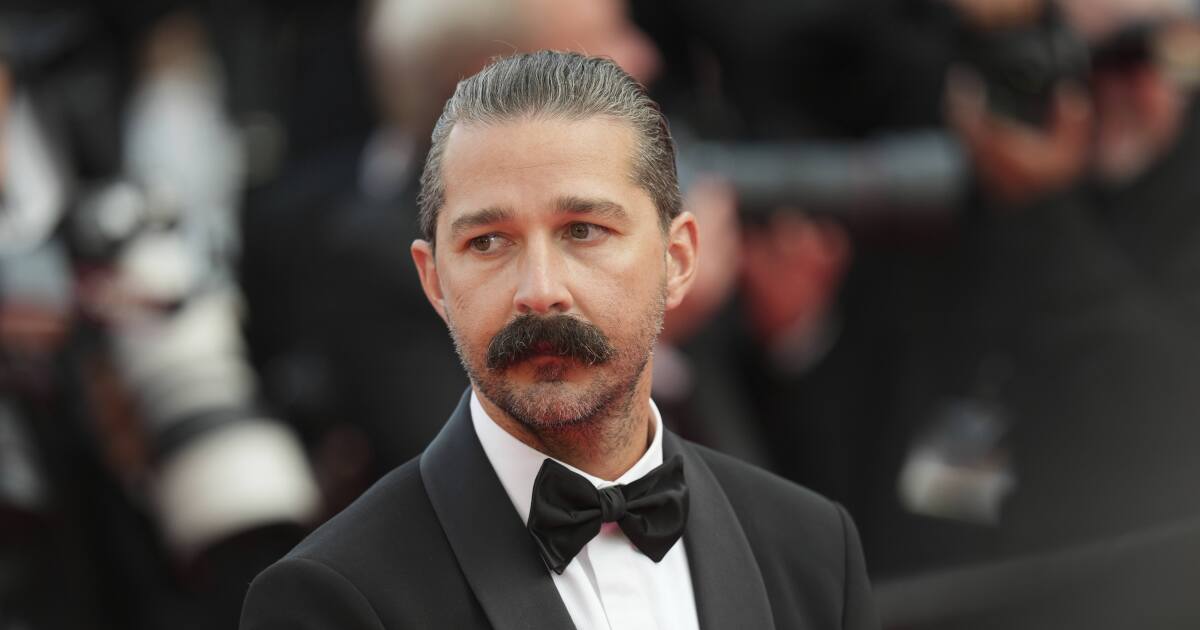
‘You’re scaring my people.’ Shia LaBeouf’s alleged stalker arrested after posting viral video
-
 Politics23 minutes ago
Californians back Becerra and reject AI data centers by big margins, poll finds
-
 Science29 minutes ago
How to eat safely amid outbreak of diarrhea-causing cyclosporiasis
-
Sports35 minutes ago
Magical Lionel Messi leads Argentina past England for trip back to World Cup final
-

 World47 minutes ago
Toronto engulfed by wildfire smoke as US cities threatened
-
 News1 hour ago
Argentina is back in the World Cup final after a thrilling semifinal win over England
-

 Los Angeles, Ca3 hours ago
Remains of murder victim identified as missing Southern California millionaire

