Sports
'Pick is a giant': How Cypress coach Scott Pickler became a Cape Cod League staple

A breeze strong enough to rustle the lush green canopy of oak trees towering over the outfield fence at Red Wilson Field, home of the Cape Cod League’s Yarmouth-Dennis Red Sox, takes the edge off a humid 83-degree game-day afternoon.
Fans in lawn chairs — some who staked out prime backstop locations hours before first pitch and one woman who has been clanging the same cow bell here for decades — ring the field, while others sit on blankets on a berm down the left-field line.
The smell of grilled burgers and hot dogs fills the air. The grassy areas behind the dugouts are abuzz, with young couples pushing strollers, fans walking dogs, and Little Leaguers interrupting games of catch to chase after foul balls.
The previous night’s starting pitcher, in full uniform, roams the grounds selling 50-50 raffle tickets. Youngsters are pulled from the crowd to sing “Take Me Out to the Ballgame” during the seventh-inning stretch.
1
2
3
4
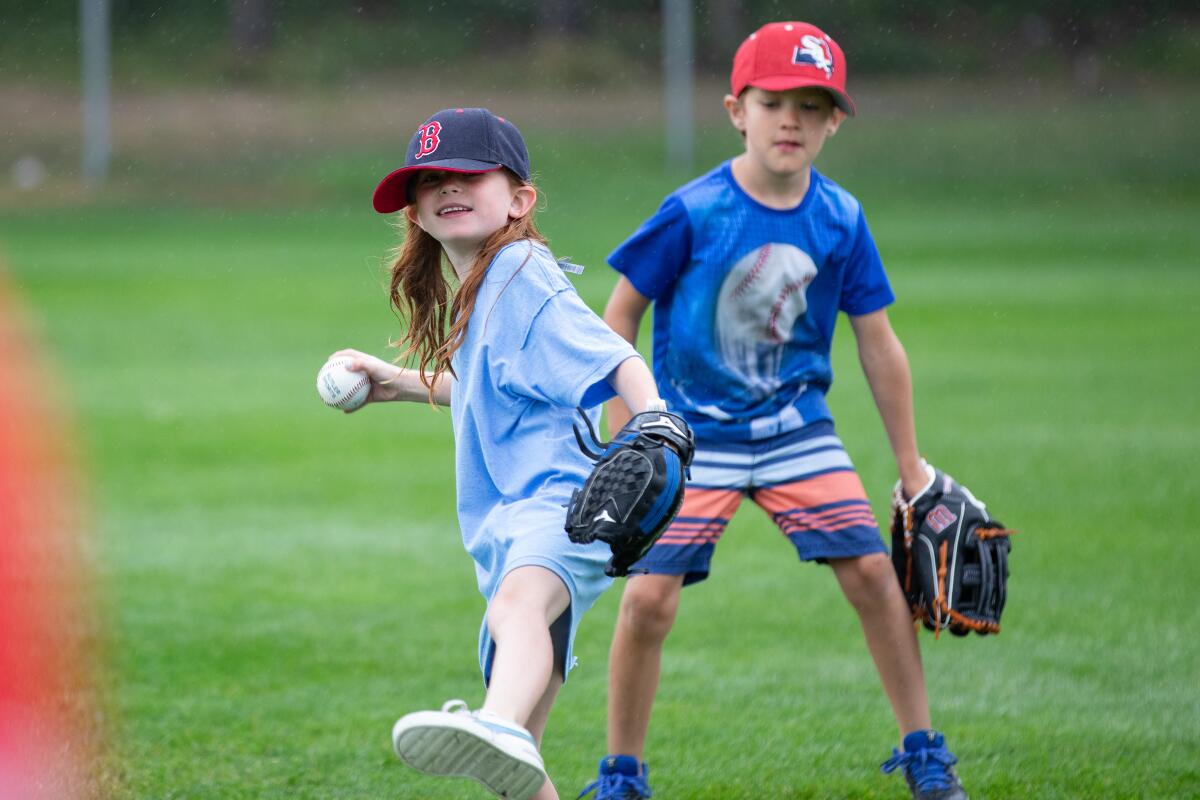
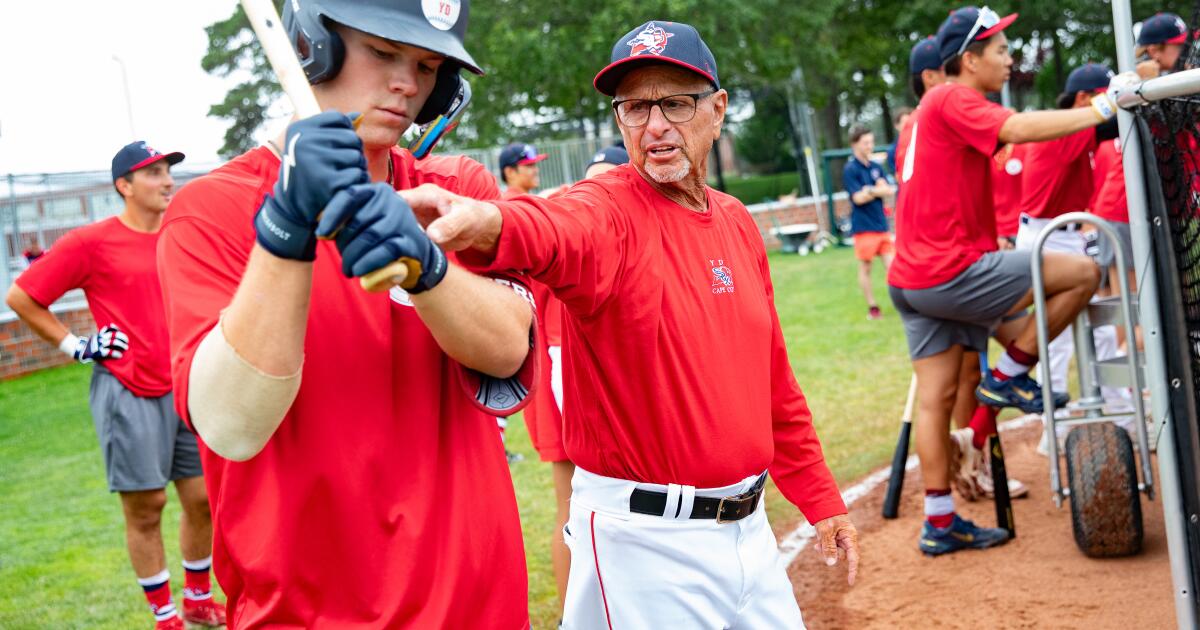
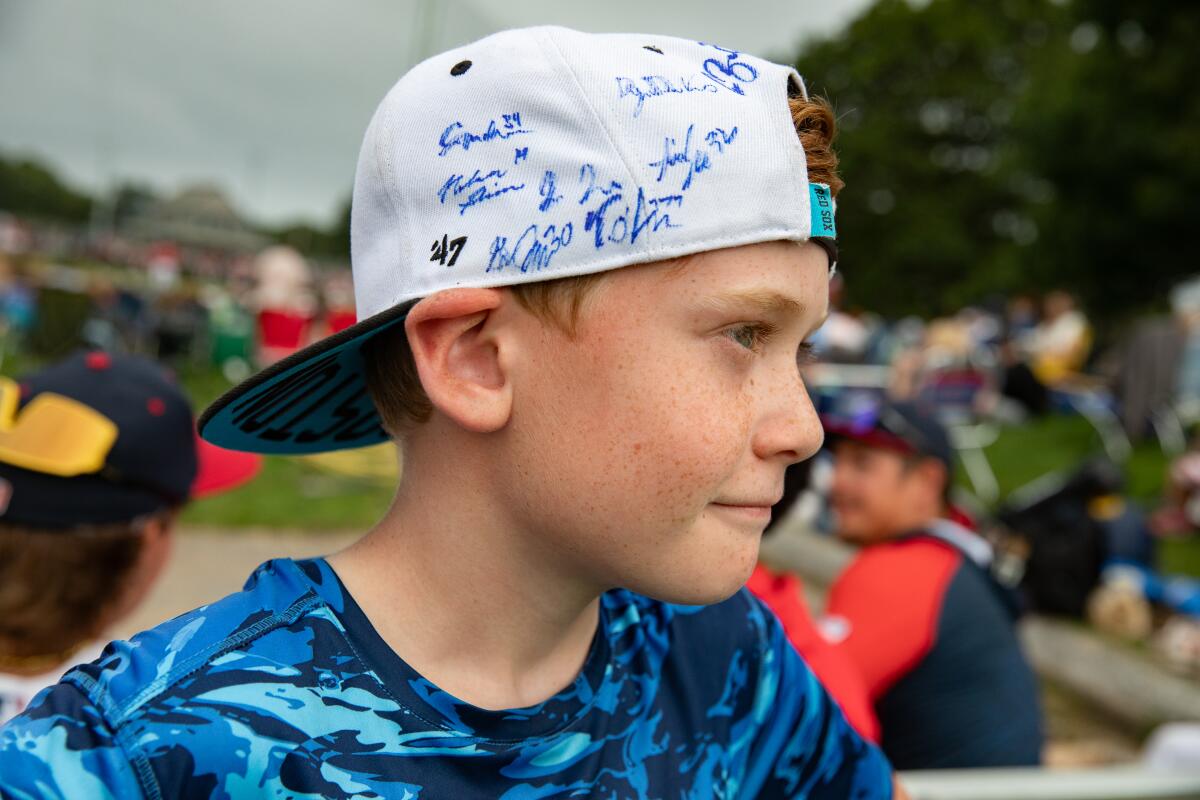
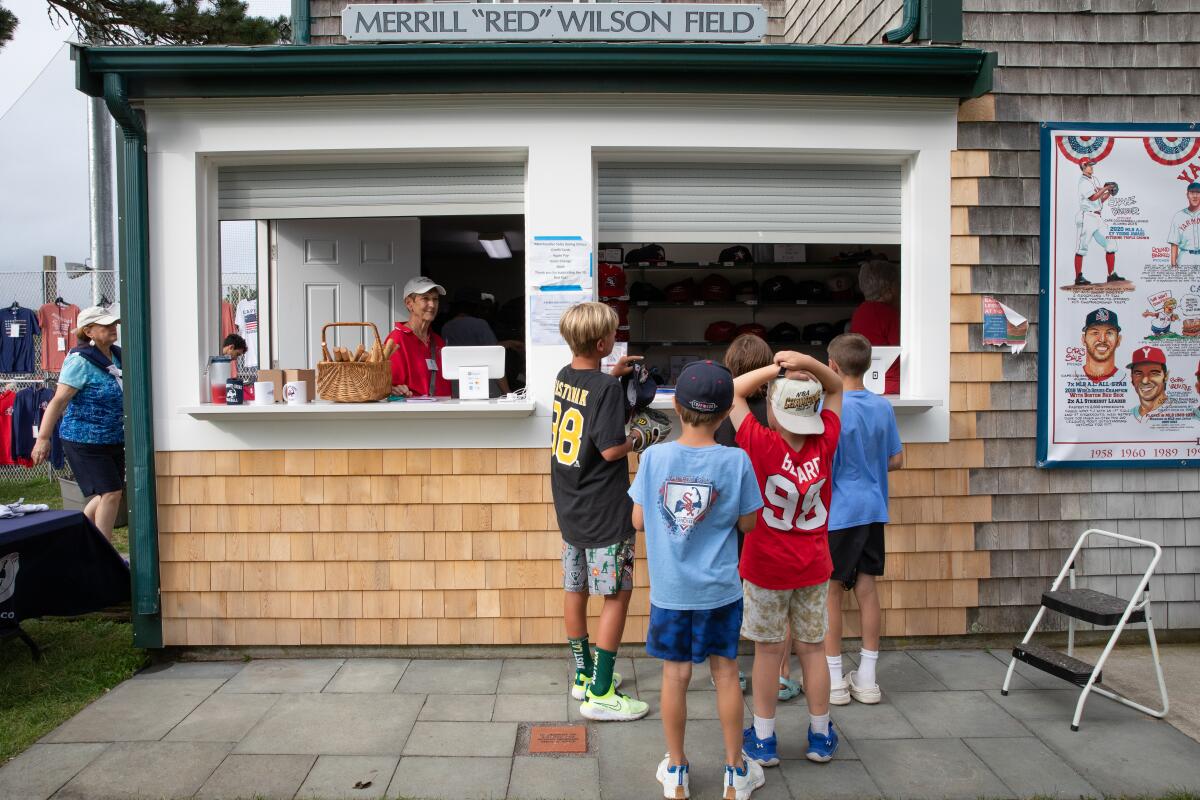
1. Fans line the outfield while they watch the Yarmouth-Dennis Red Sox take on Orleans earlier this month. 2. A young fan shows off his autographed hat during a Y-D Red Sox game. 3. Kids line up at the concession stand at Red Wilson Field during a game earlier this month. 4. Two kids taking part in a youth clinic run by the Y-D Red Sox. (Jacqueline Mia Foster / For The Times)
It’s a baseball game with the feel of a summer cookout, the look of a Norman Rockwell painting and an allure that continues to charm the stirrups off a grizzled veteran of a skipper who arrived on this syrupy scene more than a quarter of a century ago.
“It’s like heaven,” said Scott Pickler, 74, the longtime Cypress College coach who is in his 26th season managing the Yarmouth-Dennis club, one of 10 teams in the nation’s premier collegiate wood-bat summer league.
“Retirement is overrated. Maybe it would be different if I was a great golfer or had a lot of hobbies, but I’m a bad golfer, and this is my passion. I get to go to the yard and make kids better, and it’s so much fun.”
Pickler was 14 years into a 40-year community college career in which he’s won nearly 1,000 games and five state titles when he got a call — seemingly out of the blue — in 1998 from then-Yarmouth-Dennis team president Gary Ellis and then-general manager Jack Martin, who interviewed Pickler over the phone and eventually offered him the job.
“I told them it’s gonna kill my recruiting at Cypress, give me a day to think about it,” Pickler said. “I called them the next day and said, ‘I’m gonna try this … for a year.’ ”
Pickler, who began drawing his full pension from the California state teachers’ retirement system eight years ago, enjoyed it so much he kept coming back, returning to the Cape every summer since 1998 — with the exception of the pandemic-canceled 2020 season — like the swallows returning to San Juan Capistrano every spring.
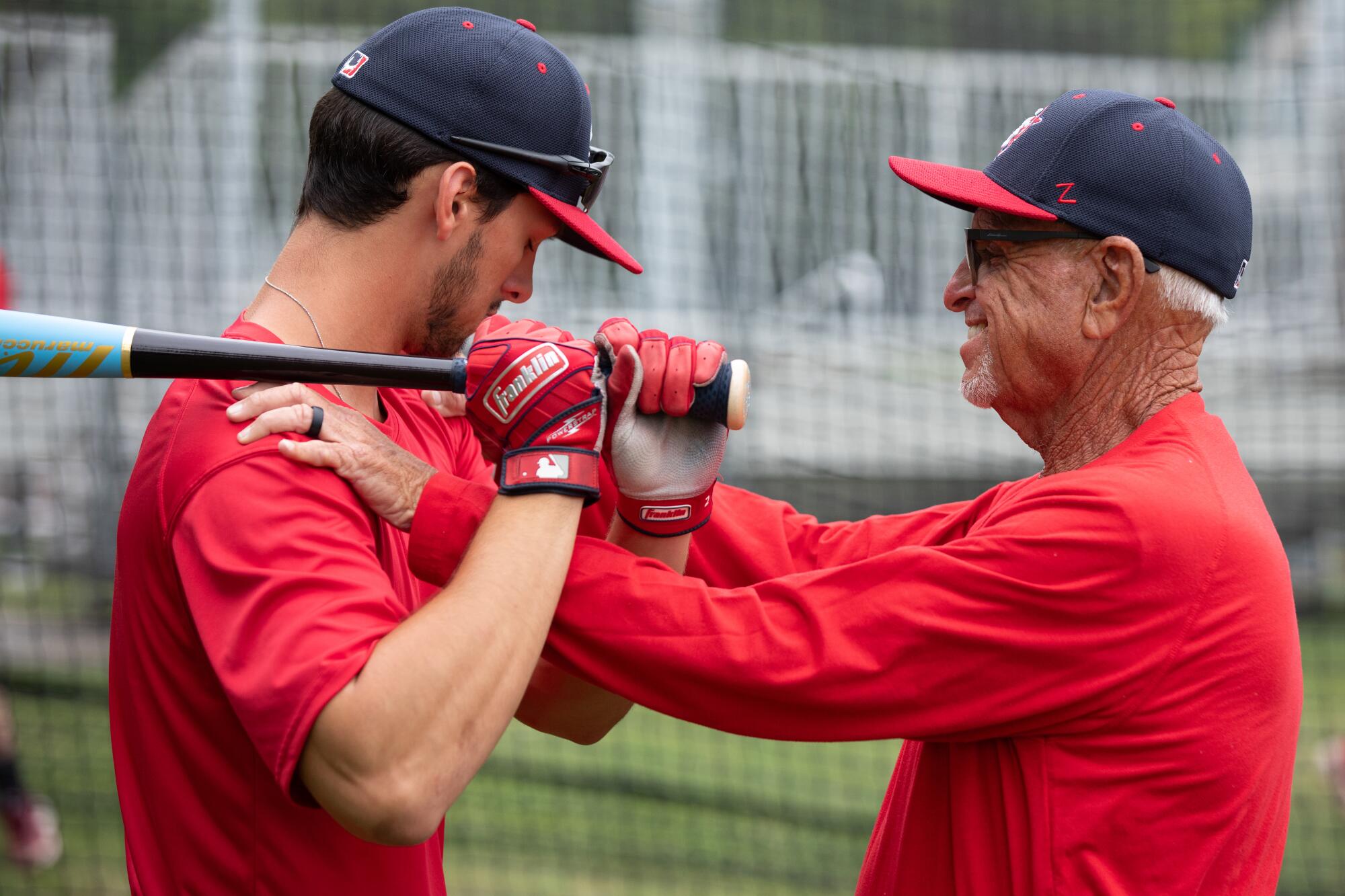
Scott Pickler, right, works with Y-D Red Sox player Will Tippett earlier this month. Pickler has managed some 125 future big-leaguers on the Cape, including Buster Posey, Chris Sale, Justin Turner, David Robertson and current Dodgers Walker Buehler, Chris Taylor and Joe Kelly.
(Jacqueline Mia Foster / For The Times)
Pickler is as much a fixture in the Cape Cod League as he is in the Orange Empire Conference. He’s been here long enough to have become the winningest manager in the league’s 101-year history when he notched his 540th career victory in 2022. He’s won six league titles, including three in a row from 2014-2016.
Pickler has managed some 125 future big-leaguers on the Cape, including Buster Posey, Shane Bieber, Chris Sale, Justin Turner, David Robertson and current Dodgers Walker Buehler, Chris Taylor and Joe Kelly.
He was inducted into the Cape Cod League Hall of Fame in 2019, one of five halls he’s enshrined in, including the American Baseball Coaches Assn. and the California Community Colleges Baseball Coaches Assn. His smallish 5-foot-9, 170-pound frame clearly belies his stature.
“Pick is a giant on the Cape,” said Peter Gammons, 79, the former Hall-of-Fame baseball writer and ESPN analyst who lives in Cataumet, on the west side of the Cape. “He works so hard at it, he’s so competitive, and he always has a lot of good players.
“He’s a great hitting coach and a really good teacher.
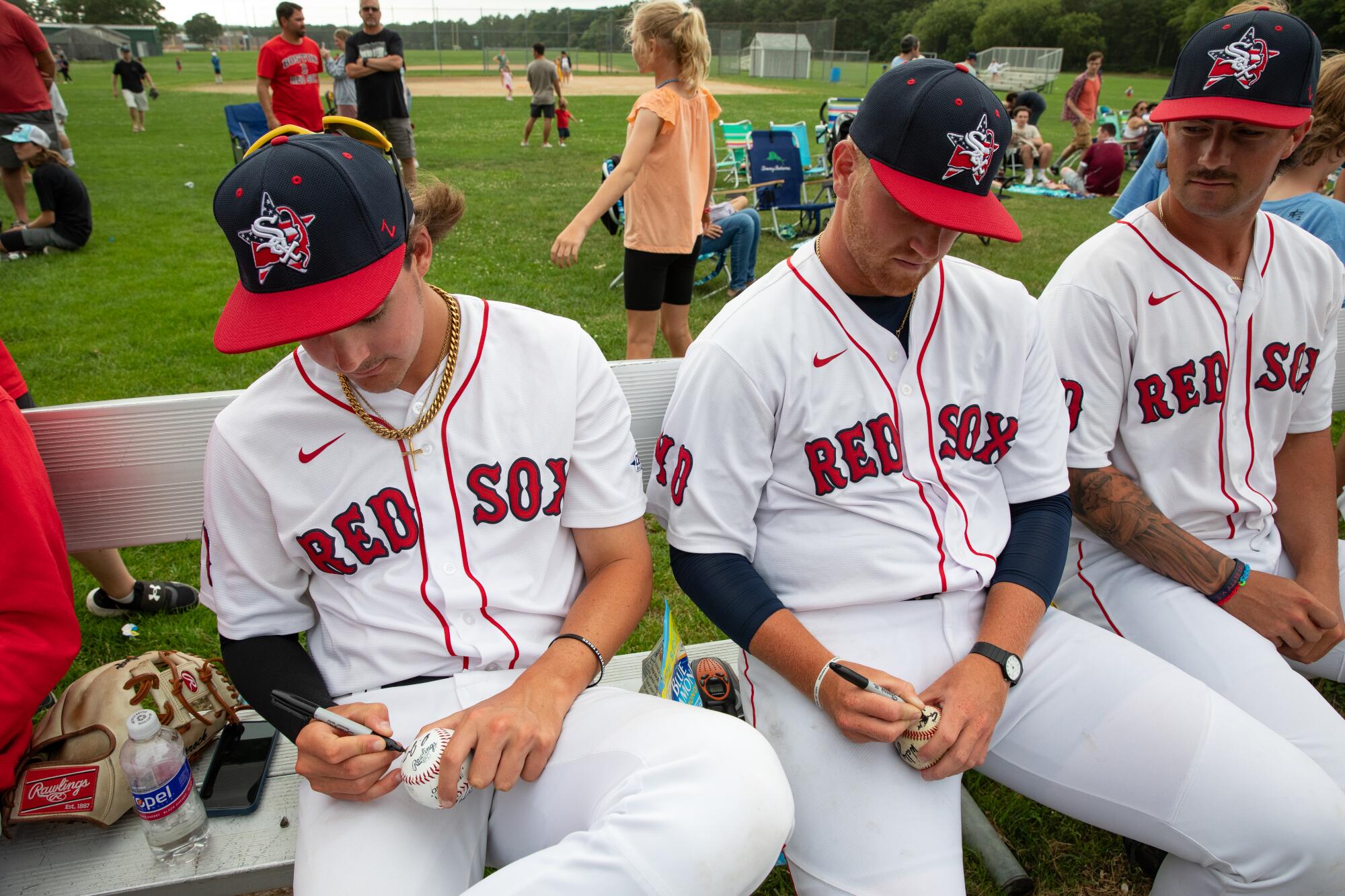
Red Sox players sign autographs after a game earlier this month. “He’s really good at having his players interact with fans and be a part of the town, both in Yarmouth and Dennis,” said Peter Gammons, the former Hall-of-Fame baseball writer who lives on the Cape.
(Jacqueline Mia Foster / For The Times)
“He’s really good at having his players interact with fans and be a part of the town, both in Yarmouth and Dennis. There’s just an energy about him. And guys really like him.”
Along the way, Pickler has become so ingrained in this beach community that he was named Yarmouth resident of the year in 2017, even though he spends only 2 ½ months a year here. Pickler and his wife, Sharon, who have been married 49 years, probably have more friends here than they do in Orange County.
And they feel as much at home in New England as they do in California, Scott able to shuck oysters as easily as he flashes a hit-and-run sign, Sharon needing only two summers to properly incorporate the word “wicked,” as in, “It’s gonna be wicked hawt today,” into her vocabulary.
“It’s like having two different lives,” Pickler said. “Two different but perfect lives.”
It took some serendipity involving his son, Jeff, a former Cypress College player and another Hall-of-Fame baseball writer for Pickler to land this splendid summer gig.
Jeff Pickler, now a Cincinnati Reds game planning and infield coach, finished his junior season at Tennessee in 1997 but wasn’t drafted, freeing him to accept an invitation to play the final three weeks of the Cape League season for the Wareham Gatemen.
“My dad was like, ‘I’ve heard about this Cape thing my whole life, I’ve never been, it’s the end of the summer, Cypress hasn’t started up, I’m going to go there, hang out and see what it’s all about,’ ” Jeff Pickler, 48, said. “So he flew himself out with no place to stay, no plans, no nothing.”
It did not take long for the elder Pickler to feel the tug of the Cape.
“The first night I see a game,” he said, “it’s Mark Mulder vs. Barry Zito at Wareham.”
“It’s like having two different lives. Two different but perfect lives.”
— Scott Pickler, on coaching for Cypress College and spending summers managing in the Cape Cod League
Pickler asked an older man at the gate — Cape League games are free, but donations are suggested — for a hotel recommendation, telling him his son was the new Wareham second baseman.
“He found me during the game and said, ‘I have a place for you — you’re staying at my house,’ ” Pickler said. “So I go there, and I’m telling you, it was a trailer. The bed was a pullout couch. The foam was like this,” Pickler says, wrapping his knuckles on an aluminum bench. “But I was so tired it didn’t matter.”
Pickler stayed for two more nights, getting a feel for the league’s talent — rosters are mostly filled with freshmen and sophomores from Division I universities — its venues, which look more like American Legion parks than SEC and ACC stadiums, and its fans, who seemed knowledgeable, passionate and welcoming to strangers.
He was hooked.
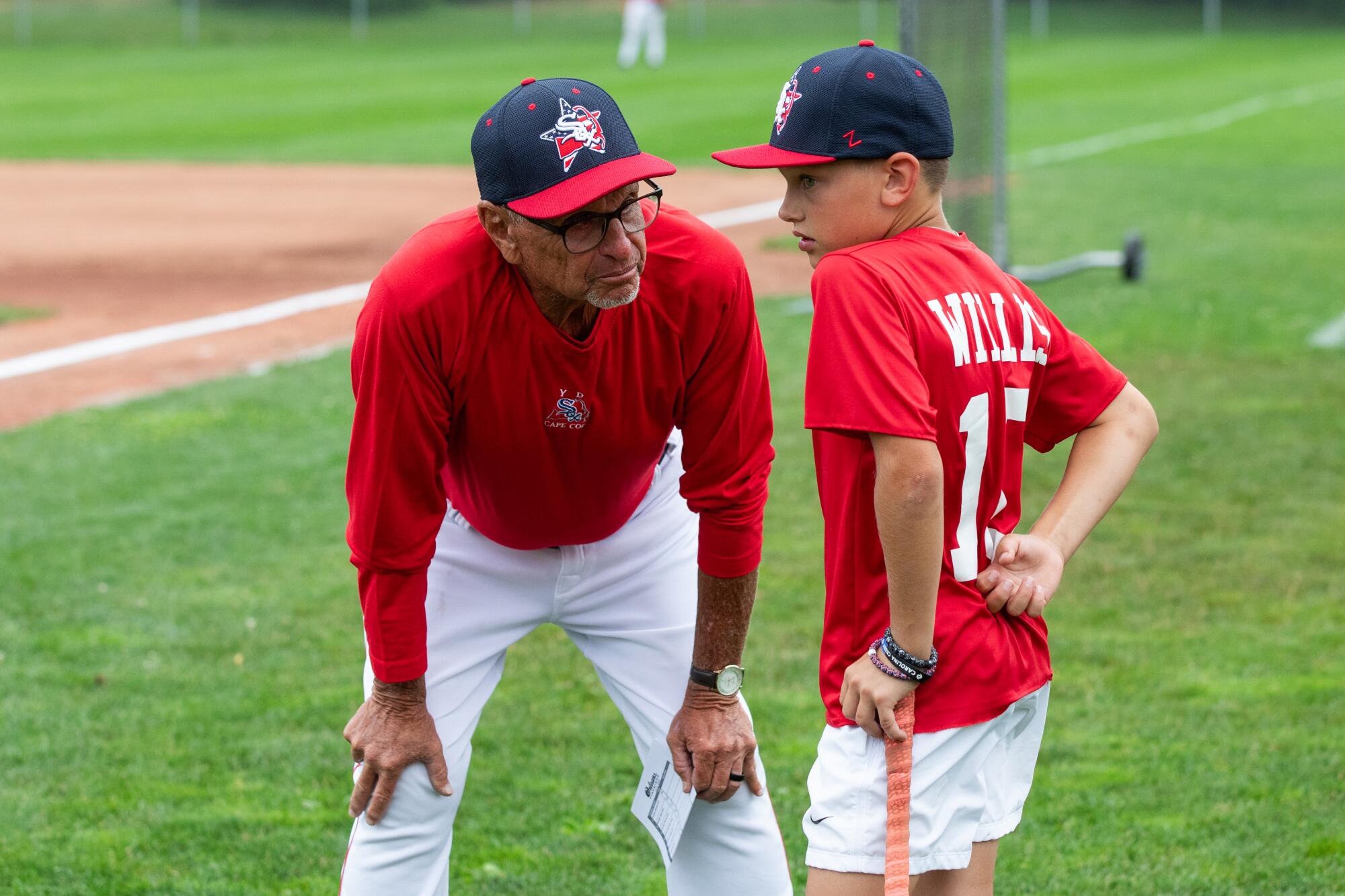
When Scott Pickler interviewed to be the manager of the Y-D Red Sox, he promised to boost the organization’s youth camps, one of the club’s primary sources of revenue. Working with kids at these camps is part of a typical day for Pickler.
(Jacqueline Mia Foster / For The Times)
“He was like, ‘This is baseball heaven, this is amazing,’ ” said Jeff Pickler, who helped Wareham win a league title that season. “So we get out of that summer, and he was like, ‘Man, that would be really fun to do.’ And I don’t know, he must have a horseshoe up his [rear end], but the next summer, he was the coach at Y-D.”
Pickler did not fit the original profile of what the Red Sox were looking for.
“The whole [search] committee was like, ‘We don’t want a junior college coach, and we don’t want anybody from California,’ ” Ellis, 69, said. “They don’t like bringing people from California here when we have guys in the East Coast who would love the job.”
Pickler was recommended by former Los Angeles Times national baseball writer Ross Newhan, whose son, David, played for Pickler at Cypress in 1992. David also played for Yarmouth-Dennis in 1993 and 1994, leaving the impression of a well-coached, well-prepared player before his eight-year career as a big-league utility man.
“We can’t recall if it was the lady whose house we stayed in on the Cape or the GM, but they asked us if we knew of anyone, and we told them about Scott,” said Newhan, 86, who was enshrined in Cooperstown in 2000. “We gave them his phone number, and they took it from there.”
Pickler, one of six candidates who was interviewed, promised to build a competitive team and boost the organization’s youth camps, one of the club’s primary sources of revenue.
“We weren’t doing well,” Ellis said. “I remember talking to Jack [Martin] and saying, ‘We’ve got to run this like a business. And if we’re doing this as a business, who would you hire?’ And we’re both going, ‘Pickler.’ ”
Pickler felt some trepidation about the job when he first arrived in South Yarmouth, a central Cape town of about 12,000 that is less touristy than so many of the area’s quaint seaside villages.
Sure, it came with a furnished house and car, but the Red Sox’s home field on the campus of Dennis-Yarmouth Regional High School had no dugouts, no press box, no concession stand, no bleachers, an uneven infield and a picket fence in the outfield.
Ellis and Martin were dipping into their own savings to purchase bats and balls. Attendance at Pickler’s first youth clinic: Six.
“We were like the Montreal Expos,” Pickler said. “There was a bowl in the infield, and when it rained, I was out there with sump pumps and running extension cords. I wore boots, because I would get shocked if I didn’t.”
Fast forward two decades: Red Wilson Field now has concrete dugouts, a full-service concession stand, a two-story building behind home plate that houses a press box and merchandise stand and several sets of bleachers. Water no longer pools heavily on a laser-leveled infield, and a chain-link fence rings the outfield.
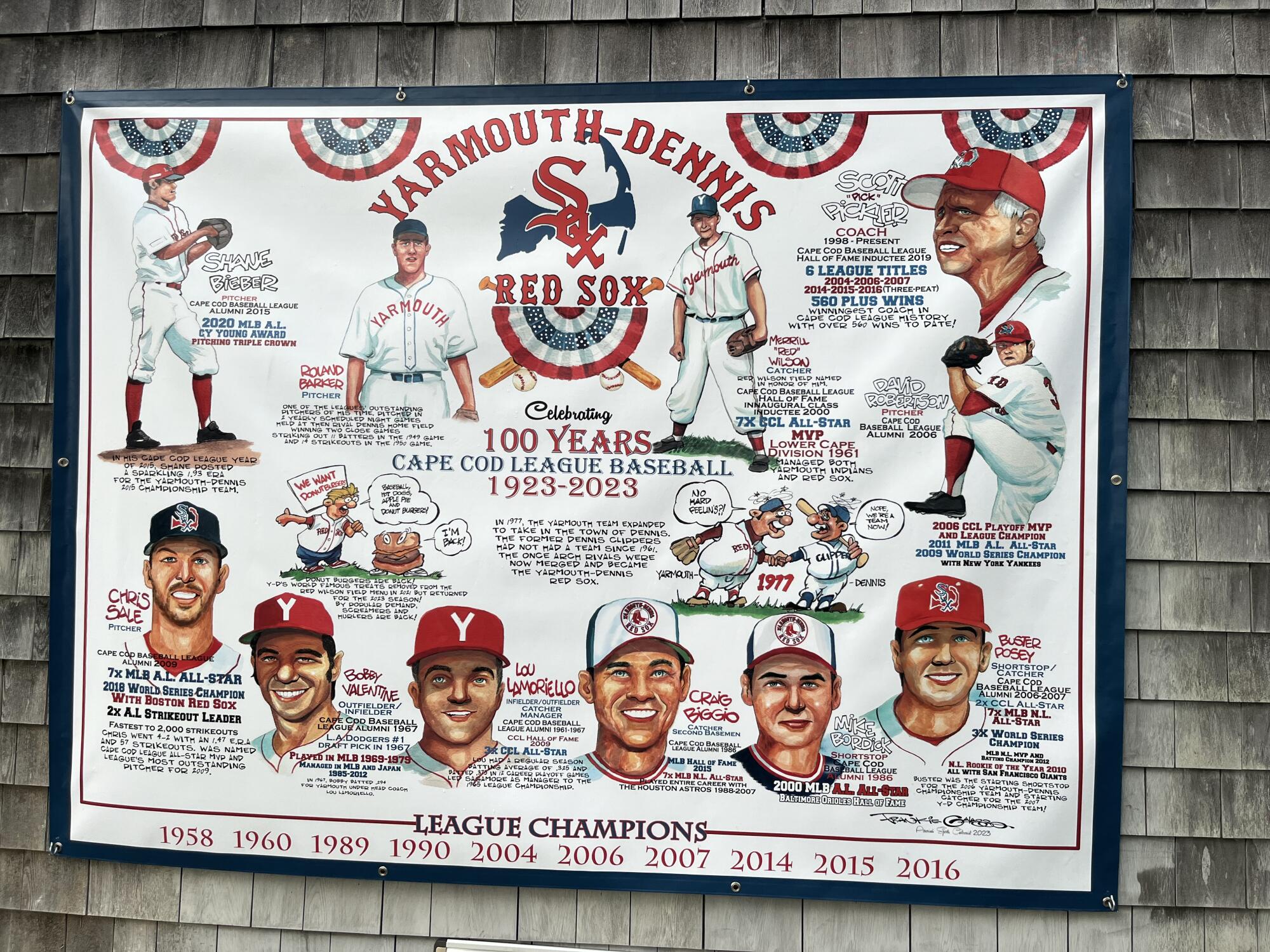
A mural on the back of the press box at Red Wilson Field displays notable figures who have been a part of the Yarmouth-Dennis Red Sox, including manager Scott Pickler, upper right.
(Mike DiGiovanna / Los Angeles Times)
“He started with very little money, no fans and a bad field,” Jeff Pickler said, “and it has since become kind of the crown jewel of the Cape.”
The Yawkey Foundation, which honors the legacy of former Boston Red Sox owners Tom and Jean Yawkey, helped fund the upgrades, but so did increased revenues from youth clinics, which average 60-70 campers a week, and attendance, which increased as the team improved.
“We used to struggle to make $40 a game, and now, on a good night, we clear a few thousand, $5,000-$7,000 for a playoff game,” said Ellis, a lifelong Cape resident who was a batboy for the league’s 1969 All-Star Game. “Pick has been great for the economy here.”
Pickler used the relationships he built with college coaches while funneling players from Cypress to Division I schools and his contacts in the scouting community to recruit better players, many of them from California.
Yarmouth-Dennis won its first league championship under Pickler in 2004. The Red Sox won titles again in 2006, 2007, 2014, 2015 and 2016 and were in first place in the East Division with a 17-8 record entering this weekend.
“He’s at the very top, he’s what we all aspire to be,” said Kelly Nicholson, 64, a Los Angeles Loyola High School math teacher and former baseball coach who is in his 20th summer managing the Orleans Firebirds.
“Six league titles, he manages a game as well as anybody on the Cape, he’s humble, he’s a fantastic teacher … I’m always trying to look, listen and learn when we play them, because he’s such an unbelievable baseball mind.”
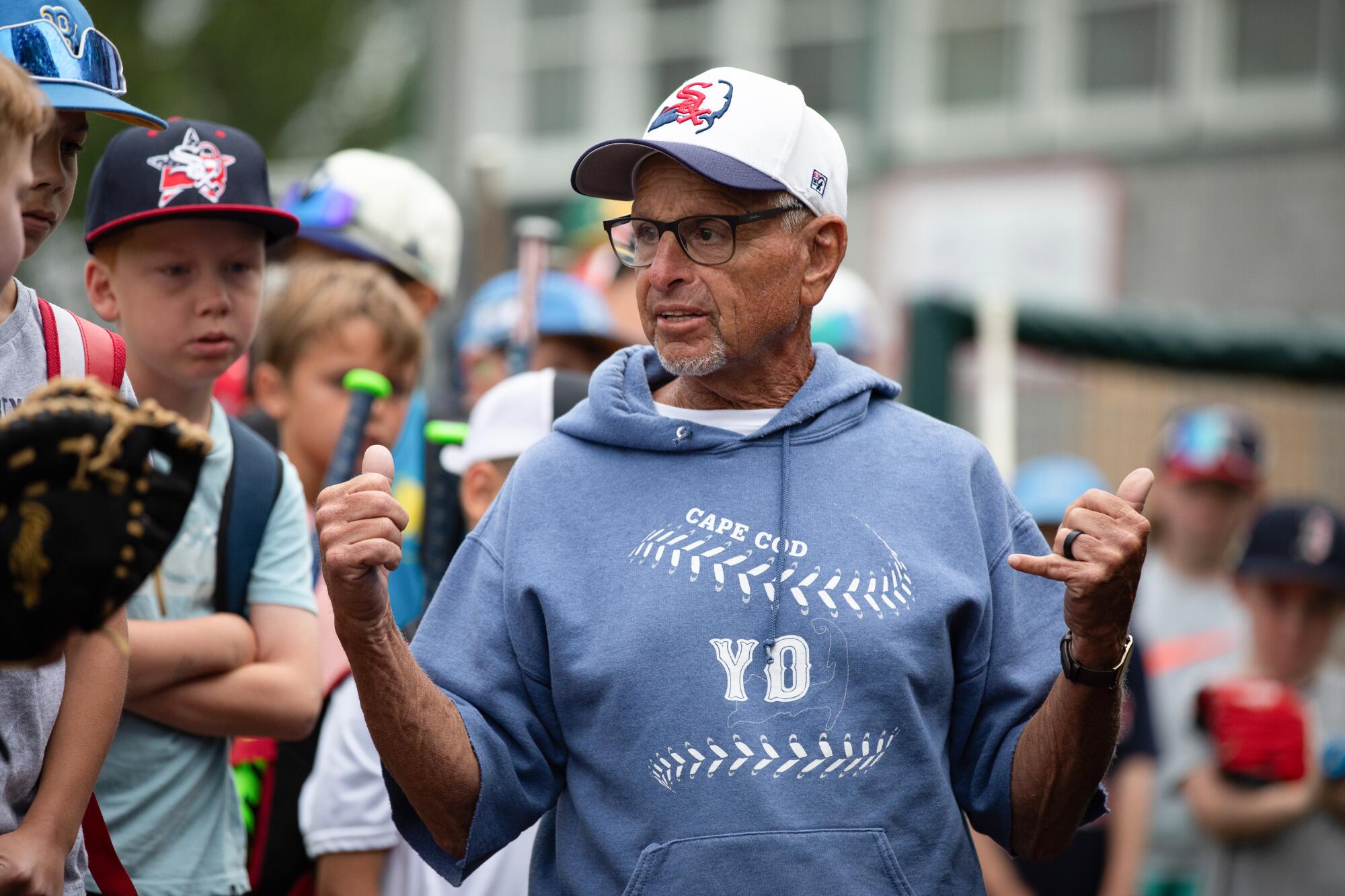
Scott Pickler talks to participants at the youth clinics run by the Y-D Red Sox. “I think what keeps him going is he just loves doing it, so he doesn’t think about getting tired or resting,” Sharon Pickler, Scott’s wife, said of his involvement with the Cape Cod League.
(Jacqueline Mia Foster / For The Times)
A typical summer day for Pickler: arrive at the field at 9:30 a.m. to greet kids at the clinics, which run for six weeks. Early hitting from 9:45 to 11 a.m. Go home for lunch — he lives a mile from the field — and maybe make the five-minute drive to the beach for a dip in the ocean. Return to the field at 1:15 p.m. for pregame work.
There are no lights, so home games begin at 5 p.m. Road games — the longest trip for the Red Sox, who travel by yellow school bus, is to Falmouth, 45 minutes to the west — start between 5 and 7 p.m. Pickler is usually asleep within minutes after returning home from a work day of 10 to 13 hours.
“I think what keeps him going is he just loves doing it, so he doesn’t think about getting tired or resting,” Sharon Pickler said. “When he goes down, he’s out. But the next day, he’s fine. He has the energy.”
New York Yankees scouting director Damon Oppenheimer, who has known Pickler for 30 years, was surprised when he was told Pickler is 74 years old.
“Really?” Oppenheimer said. “I just never think of him as an old guy, because he always seems like he’s mentally so young.”
As Pickler racked up wins and titles at Cypress, his first three state championships coming in 1991, 1994 and 1997, he flirted with the idea of jumping to a bigger school. He turned down overtures from Wake Forest in the late 1990s and interviewed for the UC Irvine job that went to John Savage in 2002.
“Jeff used to tell me all the time, ‘Dad, why aren’t you coaching at a Division I school?’ ” said Pickler, who coached at Anaheim’s Savanna and Loara high schools from 1979 to 1984 before moving to Cypress in 1985. “Because the grass isn’t always greener, buddy.”
But the grass is a little greener on the Cape, where Pickler is managing higher-caliber athletes in a professional setting, players using wood bats and playing five or six games a week during a 44-game regular season and weeklong postseason that runs from mid-June to mid-August.
One in six current major leaguers played on the Cape, where fans relish the chance to see players before they become household names. Six Hall of Famers — Pie Traynor, Carlton Fisk, Frank Thomas, Craig Biggio, Jeff Bagwell and Sunday inductee Todd Helton — played on the Cape.
“I think there was a bit of an itch to scratch in terms of coaching really talented collegiate players,” said Jeff Pickler, who spent the summer of 1999 with his father as an assistant coach, “and he thought maybe this was a way to do it without leaving Cypress.”
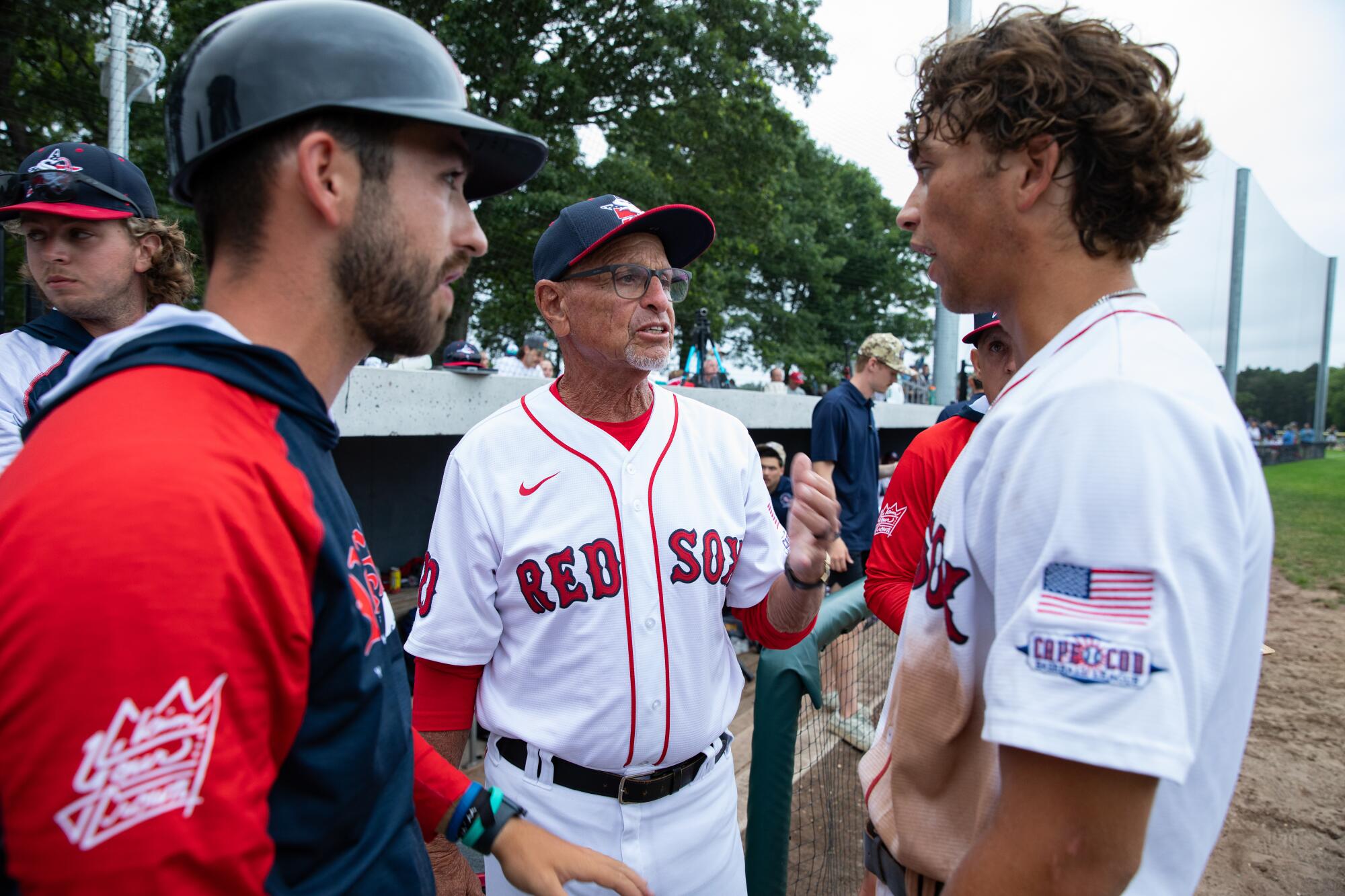
Scott Pickler talks with Y-D middle infielder Phoenix Call, a rising sophomore at UCLA. “I think the biggest thing with Coach Pick is he teaches the fundamentals, how to play the game right,” Call said. “And he doesn’t … how do I put this? He doesn’t let you get away with things. He’s on top of you, but he doesn’t hold grudges, either.”
(Jacqueline Mia Foster / For The Times)
The challenge for Pickler is threading the needle between developing players and molding players from all over the country into a cohesive and competitive unit.
“A lot of players go to the Cape to either showcase their skills or work on a few things,” Jeff Pickler said. “But he knows the only way they’re going to play their best and develop is to play competitively. They’re going to play the game right and try to win.”
That means bunting when the situation calls for it. If a player doesn’t sprint down the first-base line, he will likely be pulled. And if a speedy outfielder asks for a green light on the bases, like Vanderbilt star RJ Austin did before a recent game, the answer is no.
“I think the biggest thing with Coach Pick is he teaches the fundamentals, how to play the game right,” said middle infielder Phoenix Call, a rising sophomore at UCLA. “And he doesn’t … how do I put this? He doesn’t let you get away with things. He’s on top of you, but he doesn’t hold grudges, either.”
The Cape league has lost a little bit of its sheen over the last decade, with players becoming more transient, more transactional.
Some college coaches won’t allow pitchers to participate, preferring they throw their innings for their school, and some will send pitchers to the Cape with strict innings limits. Some coaches who exert even more control require players to remain on campus during the summer.
With the transfer portal and name, image and likeness money spawning bidding wars for college athletes, some coaches are leery of sending players to the Cape for fear they will be poached by other schools.
And when Major League Baseball moved its draft from early June to the All-Star break in 2021, it created a subset of players who spend two or three weeks on the Cape in hopes of improving their draft stock before leaving in early July.
Arkansas shortstop Wehiwa Aloy was leading the league with eight home runs and 24 RBIs in 21 games when he left Yarmouth-Dennis this month. Pickler is constantly on the phone with college coaches and advisors looking to plug holes on his roster.
“It used to be that you’d have 25 to 30 players for the whole summer,” Gammons said. “Now, most teams have 60 players.”
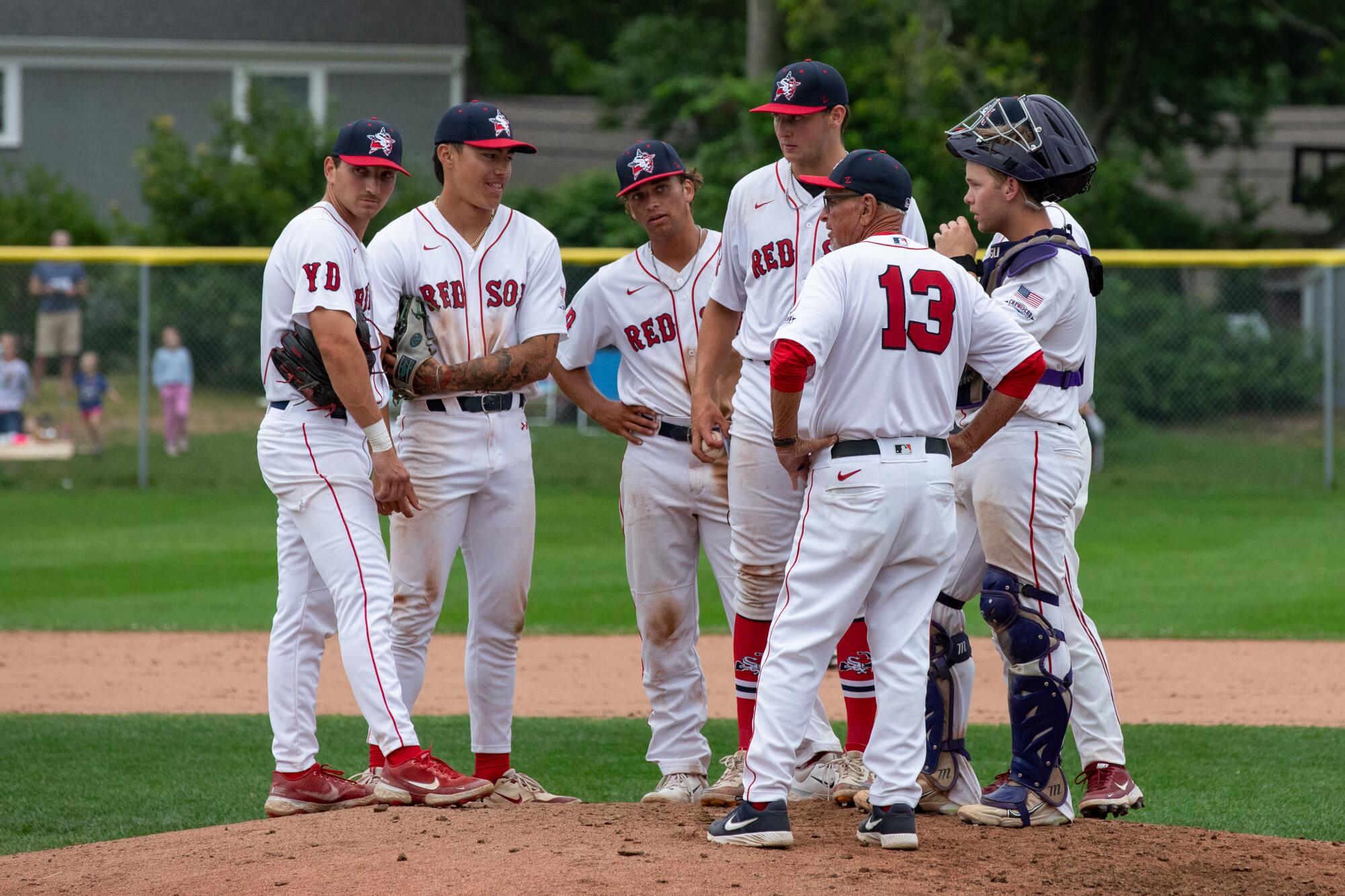
Scott Pickler, visiting the mound during a pitching change earlier this month, entered the weekend with a 594-480 career record at Yarmouth-Dennis.
(Jacqueline Mia Foster / For The Times)
Players still live with host families, and many work as camp instructors to earn extra money, but they aren’t placed in summer jobs like the days of yore, when Buck Showalter, who hit .434 for Hyannis in 1976, worked as a short-order breakfast cook and cleaned fences at the Kennedy Compound in Hyannis Port, and Albert Belle — known as Joey then — worked as a gas station attendant while playing for Chatham in 1986.
Two summers before the Angels made Darin Erstad the first overall pick in the 1995 draft, the Falmouth outfielder worked as a cashier at a Bradlee’s department store and was named employee of the month for June after setting a record for efficiency. The next summer, he mowed the grass and did the laundry at Falmouth.
Erstad went on to help the Angels win their only World Series in 2002, but around these parts, he’s remembered as the star player who was so nice “he probably walked every old lady across the street in Falmouth at one point or another,” Gammons said.
“Damn,” Erstad said in a text message, “I miss those days.”
But Pickler doesn’t find himself pining for the past or trying to change his approach, which has been consistent since he arrived on the Cape.
“I got out here that first year and my assistant said, ‘Hey, are we coaching these guys up or are we just playing the game? These are somebody else’s kids,’ ” Pickler said. “I said, ‘No, I brought you up here to make these guys better. We’re gonna get after it.’”
Pickler reduced his workload at Cypress in 2017 when he was named head coach emeritus and Anthony Hutting took over as coach, but Pickler still arrives on campus in the morning to work with hitters and attends every afternoon practice and game.
The days are just as long on the Cape, but Pickler, who entered the weekend with a 594-480 career record at Yarmouth-Dennis, shows no signs of slowing.
He still loves working with young players and grooming assistants such as Matt Blake, the New York Yankees pitching coach whom Pickler hired out of Cressey Sports Performance in 2015, and Roberto Mercado, the Baltimore Orioles double-A manager whom Pickler hired out of New Britain (Conn.) High School in 2014.
He still loves interacting with scouts who value and trust his assessment of prospects.
“You’re gonna get an honest opinion, not only about the physical tools, but about what kind of kid you’re dealing with,” said Colorado Rockies GM Bill Schmidt, who coached with Pickler at Loara and was a regular on the Cape during his 20-year run as the Rockies’ scouting director. “It’s important, the makeup and where they come from.”
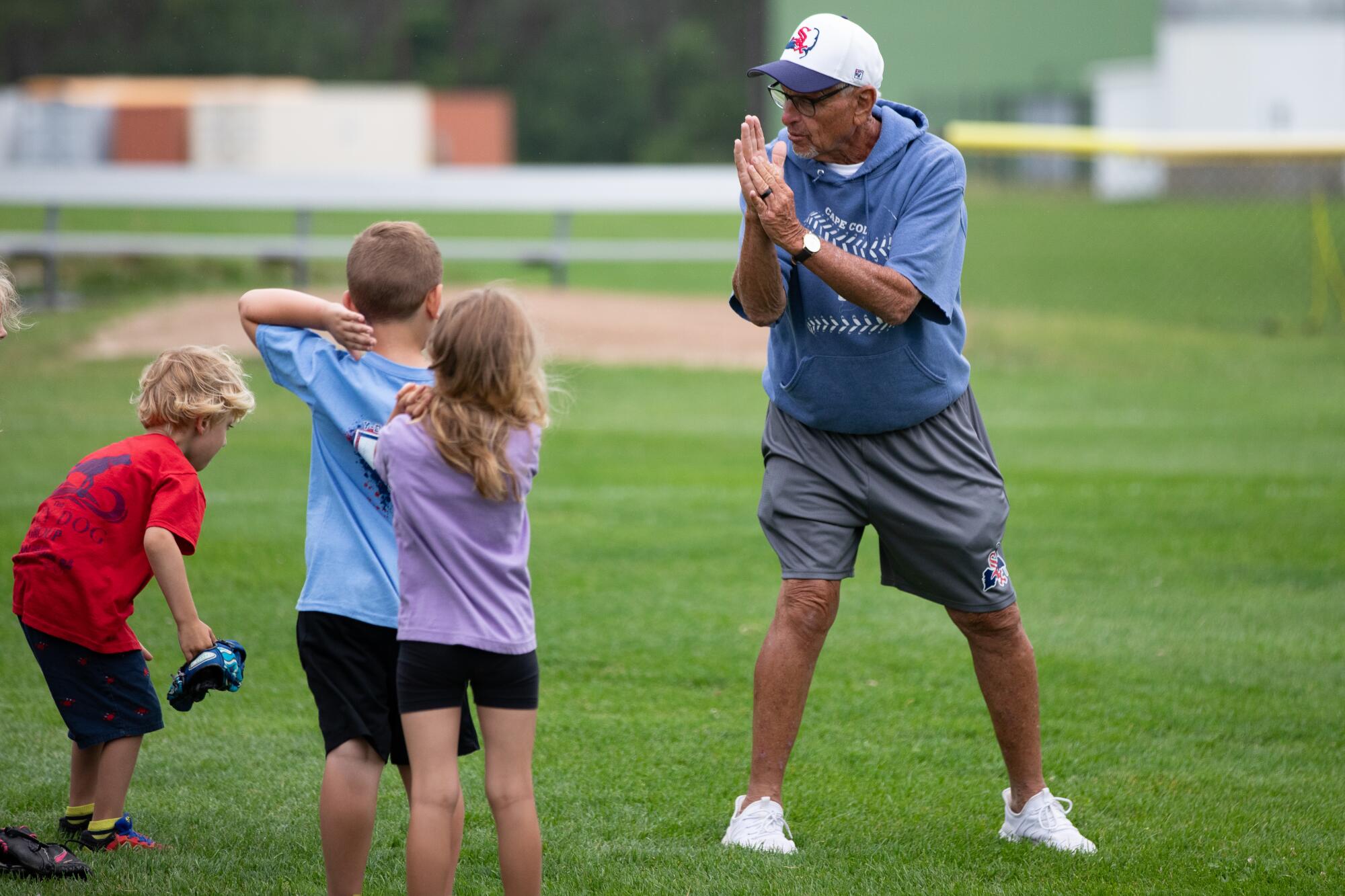
Scott Pickler talks to participants at a youth clinic the Y-D Red Sox host during the season. “Retirement is overrated,” Pickler said. “Maybe it would be different if I was a great golfer or had a lot of hobbies, but I’m a bad golfer, and this is my passion. I get to go to the yard and make kids better, and it’s so much fun.”
(Jacqueline Mia Foster / For The Times)
Pickler, who also has a daughter, Kari, 44, and two grandchildren, is in good health — his father, former Anaheim councilman Irv Pickler, was 98 when he died in 2019. Pickler stays up on new coaching techniques and the use of analytics.
“I told him, ‘If you feel like you’re still learning, you’re still resonating with players, then you can still teach it,’ ” Jeff Pickler said. “We all know at some point there’s the right exit off the highway to take, but when I talk baseball with him, he’s still as sharp as a tack.”
Pickler might be nearing the off ramp, but his nearly three-decade, two-coast joyride isn’t over. There is still some life left in this baseball lifer, who said he plans to return to the Cape — land of lobster rolls, ice cream parlors, miniature golf and some of the country’s most idyllic baseball settings — next season.
“Everybody asks me how much longer I want to keep doing this,” Pickler said. “I hope I know before I go too long.”



Sports
Anthony Richardson free to seek trade after injury setbacks amid Colts’ shift to Daniel Jones

NEWYou can now listen to Fox News articles!
Anthony Richardson Sr.’s future in Indianapolis faces more uncertainty than ever.
The Indianapolis Colts granted Anthony Richardson, the team that used the fourth overall pick in the 2023 NFL Draft on the quarterback, permission to explore a trade. His agent, Deiric Jackson, confirmed the latest development in the 23-year-old’s tumultuous career to ESPN on Thursday.
Veteran quarterback Daniel Jones beat out Richardson in a preseason competition for the starting job. Jones made the most of another opportunity as an NFL starter, helping the Colts win eight of their first 10 games of the 2025 regular season.
Indianapolis Colts quarterback Anthony Richardson heads off the field after an NFL football game against the Denver Broncos on Sunday, Dec. 15, 2024 in Denver, Colorado. (AP Photo/David Zalubowski)
However, his season was ultimately derailed by an Achilles injury. The setback came two years after he tore an ACL with the New York Giants. The Colts appear ready to move forward with Jones, clouding Richardson’s future in Indianapolis.
Jones is set to become a free agent in March, meaning the Colts must either use the franchise tag or sign him to a new deal. Richardson has started just 15 games in three seasons with the Colts, his tenure largely shaped by injuries.
A shoulder surgery limited Richardson to four games during his rookie campaign, while a series of setbacks cost him four games in 2024.
Indianapolis Colts quarterback Anthony Richardson (5) looks for an open receiver during the game against the Houston Texans at NRG Stadium. (Troy Taormina/Imagn Images)
Richardson suffered what was described as a “freak pregame incident” during warmups last season, landing him on injured reserve after attempting just two passes in two games in 2025. He has thrown 11 touchdowns against 13 interceptions in his NFL career.
Colts general manager Chris Ballard said Tuesday that the vision problems stemming from Richardson’s orbital fracture last October are “trending in the right direction.” He added that Richardson has been “cleared to play.”
Indianapolis Colts quarterback Anthony Richardson (5) celebrates his touchdown against the New York Jets during the fourth quarter at MetLife Stadium in East Rutherford, New Jersey. (Brad Penner/Imagn Images)
Riley Leonard, a sixth-round pick in the 2025 NFL Draft, is expected to return to the Colts next season.
When asked about Richardson’s standing with the Colts moving ahead, Ballard replied, “I still believe in Anthony.”
Follow Fox News Digital’s sports coverage on X, and subscribe to the Fox News Sports Huddle newsletter.
Related Article

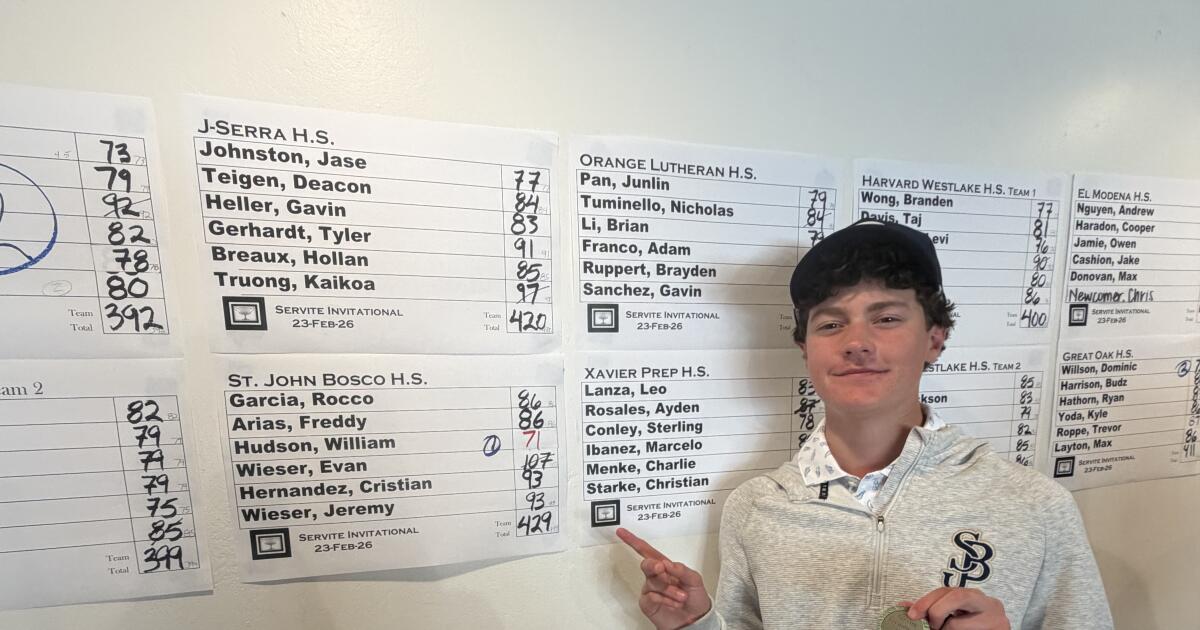
William Hudson, a 14-year-old freshman golfer, shot 71 on Monday at Western Hills Country Club in Chino Hills to win the Servite Invitational.
“It was very important to me and my school,” Hudson said.
Some think it’s the first time a St. John Bosco student won an invitational title.
Hudson is a straight-A student who picked up his first golf club when he was 3. He has a daily routine involving practicing at 6 a.m. before heading to school. He’s also enrolled in a school entrepreneur program that involves taking classes at a junior college that will qualify for college credits.
“They are long days, but I get through it,” Hudson said.
He comes from a family that enjoys golf. His great-grandfather played until his death at 98 last year.
“I love how it can take me to interesting places and meet interesting people,” Hudson said. “I can play for the rest of my life. It’s a lifelong sport.”
It’s looking like another strong year for golfers in Southern California, with several individual champions returning, including Jaden Soong of St. Francis and Grant Leary of Crespi.
Now Hudson has thrust himself into the conversation.
This is a daily look at the positive happenings in high school sports. To submit any news, please email eric.sondheimer@latimes.com.
Sports
Dashcam video shows former WWE executive Vince McMahon rear-ending vehicle on Connecticut highway

NEWYou can now listen to Fox News articles!
Police have released new video showing former WWE Chairman Vince McMahon speeding before crashing his 2024 Bentley Continental GT into another luxury car on a Connecticut highway last summer.
McMahon appeared to be followed by a state trooper in Westport moments ahead of the eventual collision. McMahon’s vehicle reached speeds of more than 100 mph, state police said.
A trooper’s dashcam video showed McMahon accelerating and then braking too late to avoid rear-ending a BMW. The car McMahon was driving then swerved into a guardrail and careened back across the highway. A cloud of dirt, apparently mixed with vehicle debris, was visible in the immediate area of the crash.
WWE owner Vince McMahon enters the arena during WrestleMania at AT&T Stadium on Apr 3, 2022 in Arlington, Texas. (Joe Camporeale/USA Today Sports)
“Why were you driving all over 100 mph?” a state trooper asked McMahon after catching up to the wrecked Bentley.
“I got my granddaughter’s birthday,” McMahon replied, explaining he was on his way to see her. The encounter was recorded on police bodycam video.
No serious injuries were reported in the July 24 crash, which happened the same day former professional wrestler Hulk Hogan died of a heart attack in Florida.
In an image taken from Connecticut State Police police bodycam video, Vince McMahon is questioned in his car after an accident on July 24, 2025, in Westport, Connecticut. (Connecticut State Police via The Associated Press)
Aside from the damage to the rear of the BMW, another vehicle driving on the opposite side of the parkway was struck by flying debris. The driver of that third car happened to be wearing a WWE shirt, police video suggested.
McMahon was cited for reckless driving and following too closely. In October, a state judge allowed him to enter a pretrial probation program that could erase the charges if he completes it successfully.
He was also ordered to make a $1,000 charitable contribution. His attorney, Mark Sherman, called the crash simply an “accident.”
“Not every car accident is a crime,” Sherman said. “Vince’s primary concern during this case was for the other drivers and is appreciative that the court saw this more of an accident than a crime that needed to be prosecuted.”
Vince McMahon attends a press conference to announce that WWE Wrestlemania 29 will be held at MetLife Stadium in 2013 at MetLife Stadium on Feb. 16, 2012 in East Rutherford, New Jersey. (Michael N. Todaro/Getty Images)
State police said a trooper was trying to catch up to McMahon on the parkway and clock his speed before pulling him over. They said the incident was not a pursuit, which happens when police chase someone trying to flee officers. They also said it did not appear McMahon was trying to escape.
“I’m trying to catch up to you, and you keep taking off,” State Police Det. Maxwell Robins said in the video.
“No, no no. I’m not trying to outrun you,” McMahon clarified.
An accident information summary provided to the media shortly after the crash did not mention that a trooper was following McMahon.
The trooper’s bodycam video also shows him asking McMahon whether he was looking at his phone when the crash happened. McMahon said he was not and added he hadn’t driven his car in a long time.
After Robins tells McMahon that his car is fast, McMahon replies, “Yeah, too (expletive) fast.”
Fox News Digital submitted a public records request to obtain the police video, which was first acquired by The Sun.
McMahon stepped down as WWE’s CEO in 2022 amid a company investigation into sexual misconduct allegations. He also resigned as executive chairman of the board of directors of TKO Group Holdings, the parent company of WWE, in 2024, a day after a former WWE employee filed a sexual abuse lawsuit against him. McMahon has denied the allegations. The lawsuit remains pending.
The Associated Press contributed to this report.
Follow Fox News Digital’s sports coverage on X, and subscribe to the Fox News Sports Huddle newsletter.
Related Article

Utah man dies of injuries sustained in avalanche in Big Cottonwood Canyon

Here are five places to ice skate in Vermont this winter

Patchwork 250: Share your community’s unique history for Virginia’s 250th anniversary

Wisconsin DNR opens 2026 elk season applications March 1, with more Central Zone tags
West Virginia Lottery results: See winning numbers for Daily 3, Daily 4 on Feb. 26, 2026

Florida High School Football Rankings: Top 25 teams – Oct. 21

Cleary's 21 help Le Moyne down Central Connecticut State 69-64 in OT

How old is Bo Nix? What to know about Oregon quarterback ahead of 2024 NFL Draft

99th annual Pony Swim held in Virginia

Indiana Members Credit Union announced as new anchor tenant at Bottleworks District

Where Iran’s ballistic missiles can reach — and how close they are to the US

Has India’s influence in Afghanistan grown under the Taliban?

Bill Clinton to testify before House committee investigating Epstein links

Read Judge Schiltz’s Order

Vulnerable House Dem lashes out at Trump’s ‘racist’ SOTU challenge: ‘That was uncomfortable’
-

 World2 days ago
Exclusive: DeepSeek withholds latest AI model from US chipmakers including Nvidia, sources say
-

 Massachusetts2 days ago
Mother and daughter injured in Taunton house explosion
-

 Montana1 week ago
2026 MHSA Montana Wrestling State Championship Brackets And Results – FloWrestling
-

 Oklahoma1 week ago
Wildfires rage in Oklahoma as thousands urged to evacuate a small city
-

 Louisiana4 days ago
Wildfire near Gum Swamp Road in Livingston Parish now under control; more than 200 acres burned
-

 Technology6 days ago
YouTube TV billing scam emails are hitting inboxes
-

 Denver, CO2 days ago
10 acres charred, 5 injured in Thornton grass fire, evacuation orders lifted
-

 Technology6 days ago
Stellantis is in a crisis of its own making