Sports
Pablo Cuevas’ best shots, from tweeners to no-look forehands — in his words


Two weeks ago, Uruguayan tennis player Pablo Cuevas announced his retirement.
When it came, tennis fans the world over dipped into their memory banks in admiration of the modern master of the trick shot. With excellent hands and a huge amount of talent, Cuevas could pull off shots from between his legs, no-look winners, drop-shot returns and so much more at will.
But like Mansour Bahrami, the trick-shot king to whom he was heir, Cuevas was far more than just a flashy shotmaker. On his day, he could compete with the very best players in tennis. In 2016, he defeated Rafael Nadal on clay in Rio de Janeiro en route to winning one of his six ATP titles (all of which came on the surface), achieving a singles career-high ranking of world No. 19 later that year. He also won the 2008 French Open doubles title with Peru’s Luis Horna, beating the legendary Bob and Mike Bryan along the way.
Speaking from his home on the outskirts of Montevideo, Cuevas looks back on some of his most spectacular shots and insists that, with one exception, they weren’t something he practised.
“It was all spontaneous,” he says.
On the day we speak, Cuevas looks refreshed from a morning spent surfing in the South Atlantic Ocean. He is enjoying being able to do water sports regularly, when he isn’t hanging out with his wife and two daughters or coaching promising under-18 Uruguayan tennis players. Occasionally he plays tennis or padel with his compatriot Diego Forlan, the former Manchester United striker who, this summer, told The Athletic about his switch from football to the ITF veterans’ tour.
Before we get into the clips, I want to know how he developed his ability to hit extraordinary shots:
As a young player, did you always hit fun trick shots? How did that develop?
I didn’t practise that at all. Just as there was one every 50 games in a match, also in training, every 20 games there was one. It wasn’t like a training session for those kind of shots. They just came out like that. And in matches, more spontaneous plays would come out in different situations.
So when you were practising you would just hit them as they came?
The fake smash and hitting it under the legs, I did practise it once. The first and only person I saw do it was (former French Open champion Gaston) Gaudio in a training session we shared. Other than that, that tweener point with Nadal and so on, I never practised it.
Yep, we’ll get to that one. These shots are probably what you’re most remembered for — is that a nice feeling for you, to know that your memory will live on in that way? Does it bother you that that’s what you’re best known for?
It’s something I definitely realised people like a lot, something that’s very present in their minds. But you feel more pride at something you achieve with hard work, that you practise and little by little you incorporate into your game until you achieve it. And that’s not the case here. So it’s not something that I worked at and I’m super proud of, but it doesn’t annoy me that I’m remembered for that or that people enjoyed it.
The first point we watch features both a tweener (tennis speak for a shot between the legs), and then a lob over Gael Monfils, himself a spectacular shotmaker. It comes from a tight match at the Madrid Open eight years ago, which Cuevas won 6-7(5), 6-3, 7-6(4).
This first shot is one from between between your legs. Was that a favourite shot of yours?
It’s definitely one of the nicest shots to see. It’s a nice play.

Some types of players, the ones that are very monotonous in their game, kind of bore me.
You have a few choices. You go for the lob. Why did you hit that there? Did you see how close Gael was to the net?
I don’t think I was a great lobber or a shot I used a lot. Gael is a very agile guy and saw that he was very close to the net and thought the best place to put the ball was there.
Was it fun playing against someone like Monfils, who also hit trick shots?
Yes, he was a very flashy player, the kind I like to watch. One of those that I also liked to play against. He could surprise you at any moment with his serve, with his shots or with his great reach that he uses to defend or hit spectacular shots.
As the best player hitting spectacular shots, is your successor Alexander Bublik? Or Nick Kyrgios? Who do you think is the man now?
What Kyrgios does is more spectacular, but with his ball speed, with his wrist acceleration or even sometimes more with his attitude than shots like that. Bublik tries to do more of this kind of thing and you also have Monfils, who is the most similar in that sense, because it’s not that he’s constantly looking for it, but every now and then he comes up with something similar.
If there’s one player out there who’s looking for more of that it could be Bublik. He’s looking for that magic all the time, that kind of shot.
Are these the kinds of players you most like to watch?
I like to see players like Kyrgios. Not necessarily when he’s a little bit out of his mind, but when he has those moments of magic. He’s a player I like to watch. I like to watch Monfils, but I also enjoy some more classic players. (Stan) Wawrinka doesn’t do that kind of thing, but I really like to watch him.
With possibly the most outrageous shot of the bunch, Cuevas hits a forehand winner against Nadal at the Paris Masters seven years ago, in a manner barely seen before or since.
You mentioned this shot earlier, and you were saying this was just pure improvisation.
Yeah, totally. In 10 years of practice, I maybe produced that shot once.
How did it feel when it came off?
Well, you can see a little bit on my face, and there’s a guy in the crowd with an expression like, ‘Wow!’. It’s also having that unconsciousness. Not thinking about the shot makes it flow that way, because when you miss those shots, it’s horrible. When it works somewhere like that, like a centre court in Paris-Bercy or Madrid, it’s spectacular.
Did Rafa say anything about it?
No. He looked at me with a surprised look on his face, as if to say, ‘What a great shot, but I’m not too amused by you doing this to me!’.
But we have a great relationship and he was far from offended by that. He was one of the players I was closest to on the tour.
How was it playing Rafa compared to Roger Federer or Novak Djokovic?
All three were super different. Roger was the most aggressive, the one who served the best but at the same time gave you the most free points. It was almost difficult to suddenly lose 6-2, 6-2, 6-2. With Roger, maybe I would lose 6-4, 6-4 or, in fact, the two times I played him it was even closer than that (7-6, 6-4 and 6-3, 7-6). Even with those results, you were far from beating him because it was so dependent on him. The game was very aggressive and you always felt very uncomfortable.
With Rafa, when he wasn’t aggressive, he let you play. You felt like you could get into the match all the time, he even made you feel that the match depended a little bit on you.
And with Djokovic, it was a mix between those things. He didn’t have the aggressiveness, especially with his serve, of Roger. And he didn’t slow down the game as much as Rafa. He was somewhere in between.
This year, Ons Jabeur, another gifted shotmaker, told The Athletic: “I love messing around with some players. It’s a lot of fun.”
Cuevas possessed a similar ability to drive his opponents to distraction. In the first example, against John Isner in Madrid in 2018, the American collapses in disbelief at Cuevas’ brilliance. In the second example, Alejandro Davidovich Fokina is so wound up by his opponent’s retrieval skills that he smashes a ball out of the stadium on the way to losing the semifinal in Estoril five years ago.
With this Isner shot, what’s really funny about this is the reaction that John gives when you squeeze the ball past him…
There’s a mixture of feelings. He’s saying, ‘I can’t believe where you’re hitting this ball from and where you’re putting it’. And in a way, he’s thinking, ‘That’s the only one I have to cover. I have to cover the down-the-line. If there’s one place he can’t get past me, it’s there’.
Did you find it funny when players would react like that after your shots?
There’s not so much time to see all that on the court, compared to when you see it thousands of times in a replay. But you sense it, and at the same time it’s a confidence boost — both the reaction of the opponent and your own good shot.
Somehow the ball lands in — to Isner’s disbelief (Tennis TV)
This is another reaction that’s a bit similar, against Davidovich Fokina. He can’t believe the shot you hit.
Yeah, that was much more of a fluke than the Isner one. And yes, he looks frustrated. I don’t remember what the score was, but I think if I was ahead it was to finish him off and if things were even it was to start to take advantage in that match.
It was a big turning point — Cuevas broke his opponent’s serve and then won nine of the final 12 games.
Undoubtedly, there were emotional things that had an influence. It took the opponent down and lifted me up.
Is this one pure instinct again?
Absolutely, to practise that I would need a person to throw me that ball because that ball was coming very fast. That was a last-resort thing. My body is going one way and the ball is staying behind me. There was nothing to come up with. I don’t know how that came out.
The next shot is something associated with Federer — a drop-shot return. It comes against the diminutive Argentinian, Diego Schwartzman, from a match in Hamburg in 2015 that Cuevas won in straight sets. This one was more premeditated.
Given this was a return rather than a shot in the middle of a rally, was it a bit more tactical? Or a shot you had talked about with your coach?
Yeah, this is less improvised. I didn’t suddenly discuss a drop shot with my coach, but Schwartzman was a solid guy from the baseline. You had to change his speed, his rhythm, and also take him out of his comfort zone.
There’s so much sidespin on the ball that by the time it bounces for a second time it’s almost outside the tramlines (Tennis TV)
Did your coaches ever say to you, ‘You need to hit fewer crazy shots’, or was it something you discussed? Or did they know that was just how you played and so they embraced it?
No, that didn’t happen. Because in my 15, 20 years of tennis, there are 15, 20 shots like that. If you take that average, it was one per year. Luckily a lot of those shots came off, so there was no reproach.
This one is the showboating shot against Stefanos Tsitsipas in Estoril that Cuevas said earlier was a shot he had practised. It’s an outrageous no-look, behind-the-legs volley.
This is showboating, isn’t it? This is having some fun?
Maybe it’s the most controversial shot, in the sense that, for the others, there were no better options. In this case, there were many. This was the worst option, to do that. And even when this goes well, the person on the other side may not like it. A lot more people liked it than didn’t like it, but there are also some who didn’t like it and I can understand that.
It’s one where you miss a shot like this, you look bad and are left asking yourself, ‘What did I do?’.
But I made it and it raised my level.
Did Stef mind, do you think?
He didn’t like it on the court. There wasn’t even eye contact to say, ‘Hey, that was a good one’ or, ‘I can’t believe what you did’. It was like, ‘I’m not looking at you because I didn’t like it’. But those are things that happen in matches. I have a really good relationship with Stefanos.
Arguably the best shot of Cuevas’ career, against Zverev from a quarter-final he won in 2017, is so memorable that the Madrid Open tasked Bublik with trying to recreate it this year. He eventually just about got there.
But it’s still not a patch on the original:
“Are you kidding me?! This guy is absolutely mainline,” as commentator Rob Koenig put it. There’s also a drop shot and the chasing down of an Alexander Zverev drop shot leading up to the flicked no-look winner that Cuevas hits.
Possibly your most famous shot — talk us through it.
Well this one, I really had no other option. I was really far back and I had to run fast to get to that ball. I ran the whole court from that drop shot back there. That might be the best one. Maybe the toughest one to pull off is the one we just saw with Tsitsipas. But this one I’ve taken the best option in the best way.
You must have been pretty quick. How much was it natural, and how much did you work on your athleticism?
I worked a lot, in the physical part and in the hours spent playing tennis. I dedicated a lot of time to training in general and without a doubt to the physical part.
The last couple of shots we see show some more of the variety in Cuevas’s game.
First, he puts a ridiculous amount of spin under the ball to take it away from Matteo Berrettini in the quarter-final of the 2019 Hungarian Open.
Cuevas says: “I don’t think I made up anything. Undoubtedly, after so many years of tennis, you see a lot of things, you practise, you put your stamp on it. It’s a mixture, a bit of everything.”
The next one is a diving backhand against home favourite Fernando Gonzalez in the 2008 Chile Open semifinal, which won Cuevas a spectacular point but at the cost of an injured back.
Was that something you were comfortable doing, diving around the court?
I basically never did it. In 20 years, I did it twice: that time and in a Davis Cup tie. That point was good. It was at the end of the second set, almost to get me to match point. But that fall gave me back pain for something like six months.
So did you regret doing it?
A little bit, yeah. I remember thinking many times, ‘How important is it to win a point or not?’, and being careful before doing something like that. But those things happen so fast that there’s not much time to think before doing it.
As we finish up, I wonder if there are any other shots that Cuevas remembers particularly fondly.
He chooses an underarm serve, that he hit having missed his first serve when up championship point in the 2017 Brazil Open final in Sao Paolo, against Albert Ramos-Vinolas. He ended up winning the point and cites it as an example of a shot that might look like the choice of a maverick but is, in reality, simply the most expedient way to win at that moment.
“A lot of people said, ‘Wow, what talent’, or, ‘Wow, how did he dare do something like that?!’,” Cuevas says of this point.
“The reality was a lot less talented or glamorous than what people see.
“I’d committed 12 double faults in that match, I wasn’t controlling my serve. When I missed the first serve, in those five seconds between one serve and the other you start to think: ‘Oh, I can’t commit another double fault… if I don’t win it here, I’ll never win it again… don’t miss the serve… serve underarm… but if you serve underarm, what are they going to say after the match?’.
“All that in five seconds,” he says.
“So I said to myself, ‘Serve, get it in and finish this. Then we’ll see’.
“But if you look at it, there’s nothing talented about it. It’s stiff, tense. The only thing I didn’t want to do was miss the serve.”
Looking back on his career, Cuevas mentions the “spectacular achievement” of winning the Roland Garros doubles in 2008, and cites his 6-7(6), 7-6(3), 6-4 win over Nadal in Rio de Janeiro eight years later — because, unlike the trick shots, it was the consequence of years of hard graft.
“In singles, you put in a lot of hard work. In that long match with Nadal on clay, where you have to spend three hours playing, it’s very tough,” he says.
“To win, you have to finish playing better than the other player. It’s not like football, where you do things well for a while and if the other team doesn’t score goals, the match is over.
“Here you have to keep up that level and that’s what I managed to do in that match.” Cuevas backed up that win by beating Guido Pella in the final, to win his only ATP 500 title.
In retirement, he is enjoying spending time with his family, hitting the beach and coaching junior players; he wants to get involved in real estate development and develop an investment portfolio.
And the tennis world might yet see him in Bahrami-style exhibition matches.
“I like that idea,” he says, smiling at the possibility of getting to experiment with some new shots.
— Tomas Hill Lopez-Menchero contributed translation.
(Top photos: Adam Pretty, Elsa / Getty Images; Design: Eamonn Dalton for The Athletic)



Sports
Golf star records lowest round in LPGA major history with astounding performance at Evian Championship

NEWYou can now listen to Fox News articles!
There are good days on the golf course, and then there is what Haeran Ryu just did on Saturday.
Ryu, 25, recorded the lowest round in LPGA major history on Saturday with an 11-under 60 at the Evian Championship. With the South Korean golfer’s historic round, she holds a three-stroke lead.
Ryu’s round comes just two weeks after winning her first major at the Women’s PGA Championship. On the 18th hole, Ryu left a 30-foot eagle putt a few inches short, and instead settled for a birdie.
CLICK HERE FOR MORE SPORTS COVERAGE ON FOXNEWS.COM
Haeran Ryu of South Korea reacts on the 18th green after the third round of The Amundi Evian Championship at Evian Resort Golf Club in Evian-les-Bains, France, on July 11, 2026. (Stuart Franklin/Getty Images)
She said after the round that she had no idea what she had done until she counted up her scorecard.
“But after the putt and I counted my score with my caddie,” she said. “Oh my God, it’s 11-under par today. It was so amazing. My caddie says, ‘Yep.’ I’m so happy right now.”
If Ryu had made the eagle putt on the 18th hole, she would have been just the second player to shoot a 59 in LPGA history.
ZERO BS. JUST DAKICH. TAKE THE DON’T @ ME PODCAST ON THE ROAD. DOWNLOAD NOW!
Haeran Ryu of South Korea celebrates a birdie on the 15th green during the third round of The Amundi Evian Championship at Evian Resort Golf Club on July 11, 2026, in Evian-les-Bains, France. (Stuart Franklin/Getty Images)
Her 60 broke the record for the lowest round in an LPGA major by one shot. Leona Maguire and Jeungeun Lee6 in 2021, and Hyo Joo Kim in 2014, each shot 61 at the Evian Championship, which was designated as an LPGA major in 2013.
The lowest round in a men’s major is 62, which is shared by four players — Branden Grace at Royal Birkdale in the 2017 British Open, Xander Schauffele and Rickie Fowler in the 2023 U.S. Open at Los Angeles Country Club, and Schauffele and Shane Lowry in the 2024 PGA Championship at Valhalla.
CLICK HERE TO DOWNLOAD THE FOX NEWS APP
Haeran Ryu of South Korea and Lottie Woad of England interact after their round on the 18th green during the third round of the Amundi Evian Championship at Evian Resort Golf Club in Evian-les-Bains, France, on July 11, 2026. (Stuart Franklin/Getty Images)
Ryu hopes her historic third round can help propel her to a second major win in three weeks.
“That is amazing, amazing dream,” Ryu said. “So I just want that one to come true, but we have one more day.”
The Associated Press contributed to this report.
Follow Fox News Digital’s sports coverage on X, and subscribe to the Fox News Sports Huddle newsletter.
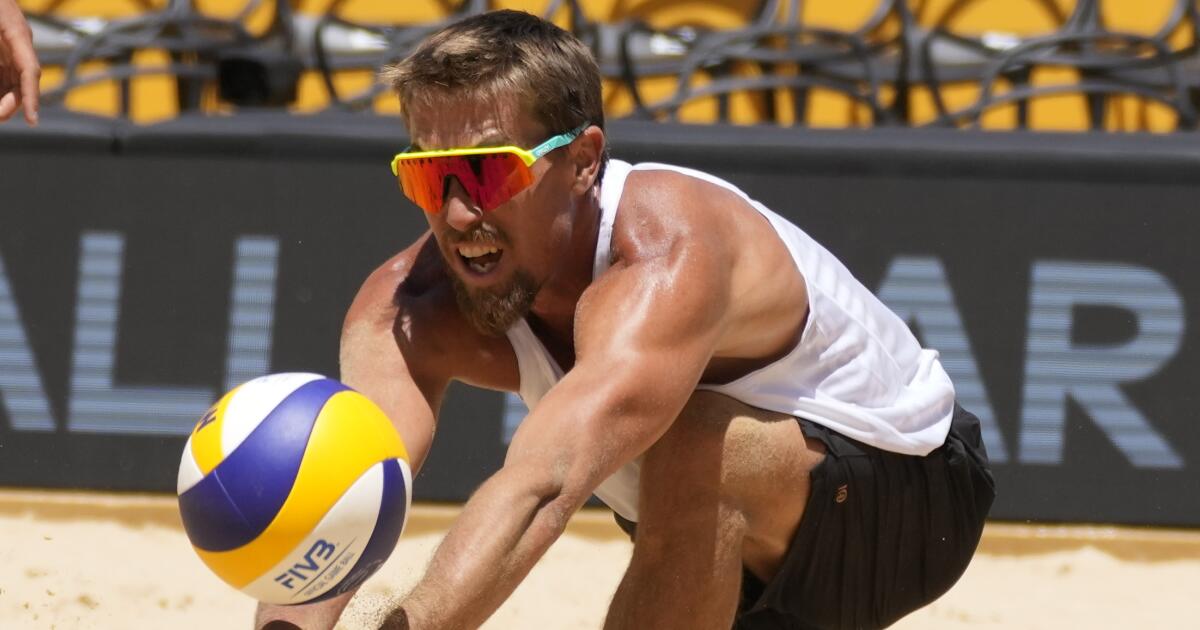
Taylor Crabb is no stranger to South California beaches. The Long Beach State alum returns home this weekend to compete in AVP League matches.
It marks the first time AVP will compete in Long Beach since 2020 and allows players to compete at the 2028 Olympics beach volleyball venue.
Crabb, 34, made his AVP debut in 2013 with his brother, Trevor, and advanced from the qualifier in Manhattan Beach before finishing 25th in his first tournament.
After years of competing with various different partners, Taylor Crabb and Andy Benesh have delivered the top performances this AVP season.
The following interview with Crabb has been edited for clarity and length.
Are you excited to compete in this weekend’s event at Long Beach?
Crabb: Very excited. A lot of my college teammates and part of the school have reached out, saying that they’re gonna come. So I’m excited to get a chance to play in front of them again.
When was the last time you were in Long Beach?
Crabb: I always try to go down there for alumni events or any big games they have. I went to UCLA against Long Beach last year, when it was No. 1 versus No. 2, so I always try to get down there and support them.
You missed out on the chance to compete in the 2020 Olympics because of COVID-19 restrictions and chose not to pursue a spot at the 2024 Olympics. Are you fired up to try to compete in the 2028 Olympics, knowing that Long Beach will host the competition?
Crabb: Yeah, it’s definitely an exciting time having the Olympics in Long Beach, and we kind of get to break it in this weekend. As you said, Tokyo didn’t go the way I wanted, but I’m going full force now. I have a great partner in Andy Benesh, who obviously went to the Paris Olympics, and if it weren’t for the Olympics being in Long Beach, and me getting a partner like Andy, I’m not even sure I’d be going for it, but because of those two things, I want to make the most of it.
You mentioned that if it wasn’t for a partner like Andy, you wouldn’t be going for it. What do you mean by that?
Crabb: I didn’t feel motivated by playing in all the international events, but now, I think, sitting out kind of lit the fire under me, and I’m really motivated now.
You’ve had different partners throughout your time. What other motivation does Andy give you?
Crabb: He’s been, in my mind, the top blocker for the U.S. the last four or five years. Seeing the professionalism he brings every day to practice, on and off the court, while traveling and when showing up to tournaments, it rubs off on you and that’s really motivating to see. And I just want to make him proud.
Why do you love volleyball?
Crabb: A lot of reasons, but it’s just a feeling I have when I’m out there on the court. It feels natural. It feels like home. I was born into a volleyball family. I had a volleyball in my hands my entire life, so I’ve always just enjoyed it.

NEWYou can now listen to Fox News articles!
CM Punk appeared on “Friday Night SmackDown” ready to take on any challenger that was ready to step to him after winning the Undisputed WWE Championship against Sami Zayn.
Punk entered the ring in Oklahoma City and called back to the “Monday Night Raw” after WrestleMania 42 when he told Cody Rhodes he’d be ready to deliver if a championship opportunity fell “out of the sky.”
COMPLETE PRO WRESTLING COVERAGE ON FOX NEWS DIGITAL
Cody Rhodes and CM Punk face off during SmackDown at Paycom Center in Oklahoma City, Okla. (Craig Ambrosio/WWE via Getty Images)
“When championship opportunities fall out of the sky, CM Punk catches them,” he said.
Punk named potential SmackDown superstars he’d think might come for the title, including Gunther, Finn Balor, Royce Keys, Damian Priest and Trick Williams. He even said that Zayn could come back around and get his rematch if he wanted. He didn’t mention Rhodes’ name, but the “American Nightmare” came out uncalled and marched his way down to the ring.
“I don’t think you and I can run away from each other anymore,” Punk told Rhodes.
Cody Rhodes looks on during SmackDown at Paycom Center in Oklahoma City, Okla., on July 10, 2026. (Craig Ambrosio/WWE via Getty Images)
Rhodes agreed and mentioned that Punk would want a match with him, just “say when.” It was a quick retort from Punk, who said, “when.” SmackDown general manager Nick Aldis, who was in the ring for the segment, booked the match for SummerSlam.
Punk will defend the Undisputed WWE Championship at SummerSlam, which takes place Aug. 1 and 2 at U.S. Bank Stadium in Minneapolis.
First, however, Punk and Rhodes will be involved in a tag team match at Saturday Night’s Main Event in New York City next week. Aldis made the match after Gunther demanded that Aldis put him in a match against Punk. Gunther was hoping it would be for the championship. Instead, Gunther will tag with Zayn.
Gunther didn’t take too kindly to that and attacked Aldis. Rhodes came back out to break up the calamity. He wanted to take on Gunther after the show went off air but Gunther walked away.
Gunther makes his entrance during SmackDown at Paycom Center in Oklahoma City, Okla., on July 10, 2026. (Rich Wade/WWE via Getty Images)
CLICK HERE TO DOWNLOAD THE FOX NEWS APP
Punk definitely has his hands full as he moves to SmackDown to become a fighting champion.
-

 Illinois1 minute ago
Woman in custody after breaking into home in Aurora, Illinois, police say
-

 Indiana4 minutes ago
Maximum Offer Relishes Stakes in Indiana Oaks
-

 Iowa9 minutes ago
Iowa State Football Predicted for Tough First Season Under Jimmy Rogers
-
 Kansas16 minutes ago
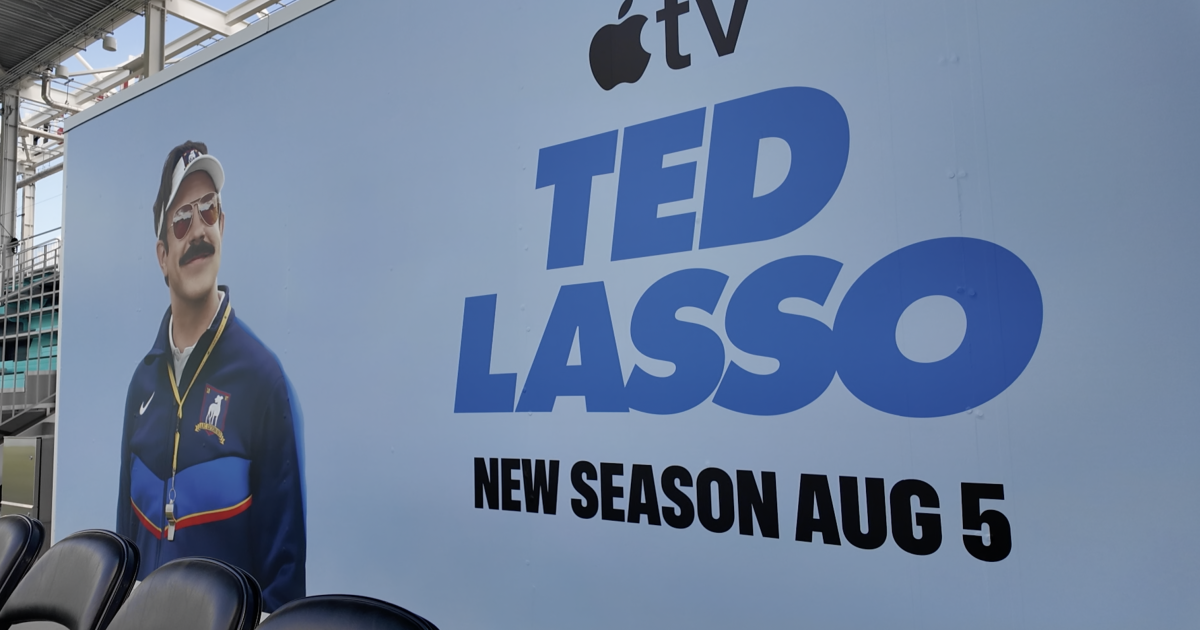
New season of ‘Ted Lasso’ brings Kansas City back into global spotlight
-
Kentucky19 minutes ago
Lucas Glover hangs onto lead in ISCO Championship in Kentucky
-

 Louisiana24 minutes ago
LSP: Ascension Parish resident dies in two-vehicle crash
-

 Maine31 minutes ago
Collins confident as Maine Democrats move to replace Platner
-

 Maryland34 minutes ago
The Final Stretch for Maryland’s 2027 Class: Identifying the Remaining Must‑Gets


