Sports
Matt Sauer saves the Dodgers' bullpen in rout of Marlins


The Dodgers’ early season bullpen usage had become so much of a concern, even minor-league pitcher Matt Sauer was keeping tabs on it from the team’s triple-A Oklahoma City affiliate.
Which is why when he took the mound following a call-up to the majors Tuesday night, he was determined to give the Dodgers some badly needed innings.
“Even when we’re down in OKC, you still follow the big league club,” Sauer said. “And I knew the bullpen has been used a lot.”
Indeed, entering Tuesday, no other team had relied upon its relievers more heavily than the Dodgers. Thanks to injuries and ineffectiveness from the starting rotation, their bullpen’s 126 innings were far and away the most in the majors.
Despite that the Dodgers had no choice but to deploy their second bullpen game of the opening month. Only this time they were able to stay away from their most important arms.
Instead, in a 15-2 win over the Miami Marlins, Sauer came to the rescue with five innings of relief, providing the type of length that too often has eluded Dodgers starters.
“I had a goal of at least five innings,” said Sauer, a 26-year-old right-hander who earned his first major league victory. “[To] help the boys down in the ‘pen a little bit.”
Shohei Ohtani reacts toward the bullpen after homering in the first inning.
(Gina Ferazzi / Los Angeles Times)
As pitching injuries have piled up, the bullpen has been strained in order to compensate.
Entering Tuesday only 10 teams had topped 110 innings from relievers The Dodgers had six relievers with more than 13 innings pitched. No other club had more than four.
“The thing that’s probably most disconcerting is the bullpen leading Major League Baseball in bullpen innings,” manager Dave Roberts said Monday, after Tyler Glasnow became the latest member of the starting staff to land on the injured list.
“That’s where my head is at,” Roberts added, “as far as making sure we don’t red-line these guys.”
That will be no easy task over the next couple of weeks. Starting Friday the Dodgers will play 19 games in 20 days. And with Glasnow and Blake Snell on the IL, they will begin it with just four healthy starters on their active roster.
“We thought our starters would be a position of strength for us from a workload standpoint, and unfortunately we lead all of baseball in innings for relievers,” pitching coach Mark Prior said Tuesday. “Sometimes that’s a good thing. But this early in the year, it’s probably not.”
Especially not after what the relievers did last October, combining for 82 innings in a grueling World Series run.
“Guys did some really heavy lifting,” Prior said.
And a short offseason only gave them so much time to recover. Evan Phillips and Michael Kopech both started the season on the IL, nursing injuries they sustained in the playoffs. While Phillips has returned, another key reliever, Blake Treinen, has gone down because of a forearm strain.
It made Tuesday a seemingly daunting task, with the Dodgers opting for the type of bullpen-game strategy they used so often last October.
But then in an unexpected twist, Sauer was able to provide a well-timed reprieve.
After rookie left-hander Jack Dreyer took down the first two innings, giving up a lone run after Teoscar Hernández misplayed a ball in right field, Sauer found a groove in his 78-pitch outing. He gave up just one run on five hits. He recorded four strikeouts. And most importantly, he achieved his goal of five innings.
“I can’t say enough about his performance,” Roberts said. “We needed every bit of it, considering where our ‘pen is at.”
It also allowed the Dodgers (20-10) to go to work at the plate, where they set season highs in runs, hits (18) and walks (eight) en route to their most lopsided victory.
Shohei Ohtani led off with a home run, his seventh of the season and first since returning from the paternity list last week.
Hernández atoned for his defensive miscue with two run-scoring doubles, tying the New York Yankees’ Aaron Judge for the most RBIs in the majors with 29.
Mookie Betts had a two-run single as part of a two-hit performance, raising his batting average to .240 as he continues to try to snap out of his opening-month slump.
And Cy Young-winning Marlins starter Sandy Alcantara never found his footing, exiting in the third inning with the Dodgers ahead 7-1.
“Recently it just seems like team-wise we’re beating a starter, creating stressful innings, taking walks, [and] situationally we’ve been good,” Roberts said. “This is what we potentially can do. You just give yourself a fighting chance when you can kind of take those at-bats.”
The game got so out of hand, the Dodgers didn’t even need to use a real pitcher in the ninth inning. Instead, after low-leverage right-hander Luis García pitched the eighth, utility man Kiké Hernández took the mound for the final three outs, a plastic “pitching helmet” covering his cap.
“To stay away from some other leverage guys was big,” Roberts said, “and puts us in a good spot.”
Not only for Wednesday’s series finale but also the taxing stretch of schedule to follow.







NEWYou can now listen to Fox News articles!
Basketball Hall of Famer Charles Barkley sounded off on the frenzied reactions to the U.S. men’s hockey team getting invited to the White House by President Donald Trump.
Trump talked to the Olympic gold medal-winning team immediately after they defeated Canada in overtime last weekend. He said they would be invited to his State of the Union address and added that he needed to invite the women’s team as well or he would be “impeached.”
Charles Barkley sits courtside against the Minnesota Timberwolves during an NBA Cup game at Mortgage Matchup Center on Nov. 21, 2025. (Mark J. Rebilas/Imagn Images)
Trump critics took the joke as a shot at the women’s team, which sparked questions from NHL and Professional Women’s Hockey League reporters as the players returned to their respective club teams.
“I’m proud of the United States men. I’m proud of the United States women. You should have invited both of them to the White House, but it shouldn’t have been disrespect, misogyny,” Barkley said on the “Steam Room” podcast. “Like, yo, man, why do y’all have to mess everything up? Everything isn’t Democrat, Republican, conservative, liberal. That’s why we got this divided, screwed up country. Stop it man. Because, you know, the public, they’re idiots. They’re fools. They can’t think for themselves. I know y’all say stuff to trigger them. Y’all say stuff and y’all know they’re going to be fools.”
Barkley lamented that the average person would get riled up over the supposed controversy.
The U.S. team poses for a group photo after defeating Canada in the men’s ice hockey gold medal game at the 2026 Winter Olympics. Milan, Italy, on Feb. 22, 2026. (Luca Bruno/AP Photo)
“We don’t have to fall for stupidity. But we do – that’s my point. These people out here are stupid. They need something to trigger them. Just because they want us to be stupid. We don’t have to be stupid. He should have invited both teams to the White House. Simple as that. Guys who didn’t want to go shouldn’t have to explain why they didn’t go.”
The former Philadelphia 76ers, Houston Rockets and Phoenix Suns star made clear he would go to the White House regardless of whether Trump was in office.
“I’ve said this before, I’m not a Trump guy. But if I got invited to the White House, I would go. I’m not a Trump guy – I want to make that clear. But I respect the office,” Barkley said. “He’s the president of the United States. But if guys don’t want to go, I understand that too. It doesn’t have to be a talking point. It doesn’t have to be un-American.
Megan Keller (5) celebrates with a flag alongside Cayla Barnes (3) of Team United States after scoring the game-winning goal in overtime during the women’s gold medal match against Canada on Day 13 of the Milan Cortina 2026 Winter Olympic Games at Milan Santagiulia Ice Hockey Arena in Milan, Italy, on Feb. 19, 2026. (Sarah Stier/Getty Images)
CLICK HERE TO DOWNLOAD THE FOX NEWS APP
“I just wish y’all would stop falling for the stupidity.”
Follow Fox News Digital’s sports coverage on X and subscribe to the Fox News Sports Huddle newsletter.
Related Article


Three years ago, as a 14-year-old freshman, Slava Shahbazyan made it to Bakersfield for the state wrestling championships.
“It was good to get experience that young,” he said.
Then came Saturday night when he had a breakthrough moment, winning the state 165-pound championship as a 17-year-old senior for Birmingham High.
“It means everything to me,” he said. “It took four years.”
Shahbazyan, who transferred from Chaminade after his sophomore year, is set to attend Stanford and still in the hunt to be valedictorian at Birmingham. Coach Jimmy Medeiros said he was close to winning last season before finishing fourth.
“He got a lot better,” Medeiros said.
Shahbazyan has been wrestling since he was 8. “My father loves wrestling,” he said.
Two St. John Bosco wrestlers, Jesse Grajeda at 144 pounds and Michael Romero at 150 pounds, also won state titles.
Here’s the link to complete results.
This is a daily look at the positive happenings in high school sports. To submit any news, please email eric.sondheimer@latimes.com.

NEWYou can now listen to Fox News articles!
Colorado Buffaloes quarterback Dominiq Ponder died this weekend, the team’s head coach Deion Sanders confirmed on Sunday with a social media post.
“God please comfort the Ponder family, friends and loved ones,” Sanders wrote on social media. “Dom was one of my favorites! He was Loved, Respected & a Born Leader. Let’s pray for all that knew him & had the opportunity to be in his presence. Lord you’re receiving a good 1. Comfort us Lord Comfort us.”
Ponder was 23 years old.
Details of Ponder’s death are not yet known.
Colorado head coach Deion Sanders watches his team warm up before an NCAA college football game against TCU Saturday, Oct. 4, 2025, in Fort Worth, Texas. (Tony Gutierrez/AP Photo)
Ponder, a 6-foot-5, 200-pound signal caller, joined the Buffaloes and “Coach Prime’s” program in 2024 after spending time at Bethune-Cookman before making his way to Boulder.
Last season, Ponder played just two games for the Buffaloes while serving in his backup role. He recorded two rush attempts and one pass attempt.
The Opa Locka, Fla., native also received tribute from a fellow quarterback with the Buffaloes, Colton Allen.
Bethune-Cookman QB Dominiq Ponder takes a snap during the Wildcats’ spring game Saturday, April 22, 2023, at Daytona Stadium. (IMAGN)
“Dom, you were a blessing to so many people,” Allen wrote on Instagram. “You had a presence about you that just made everything better. You brought so much joy to me and everyone around you. I’m grateful for every lift, every practice, every rep, every conversation we got to share. I’ll carry those with me for the rest of my life.”
Ponder was going to be a part of Colorado’s spring practices, which are set to begin on Monday. It’s unknown if Sanders will postpone the start due to Ponder’s passing.
Ponder also received a tribute from the University of Central Florida.
Colorado head coach Deion Sanders watches his players warm up before an NCAA college football game against Utah, Saturday, Oct. 25, 2025, in Salt Lake City. (Tyler Tate/AP Photo)
CLICK HERE TO DOWNLOAD THE FOX NEWS APP
“Our prayers are with Dominiq and the Ponder family along with all in the Colorado football program,” the university’s football account on X wrote.
Follow Fox News Digital’s sports coverage on X and subscribe to the Fox News Sports Huddle newsletter.
Related Article

Supreme Court blocks redrawing of New York congressional map, dealing a win for GOP

Oregon Dems block effort to alert ICE before illegal immigrant murderers are released

Terrifying moment caught on camera as road collapse suddenly swallows vehicles at busy intersection

Jasmine Crockett campaign reportedly kicked Atlantic writer out of rally for being a ‘top-notch hater’

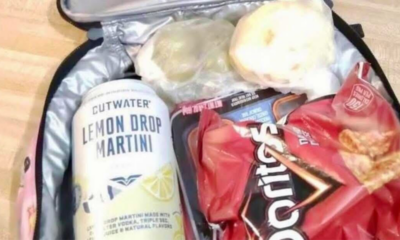
Atlanta-area police blast parents over vodka martini packed in school lunch: ‘That is NOT apple juice’

Florida High School Football Rankings: Top 25 teams – Oct. 21

Cleary's 21 help Le Moyne down Central Connecticut State 69-64 in OT

How old is Bo Nix? What to know about Oregon quarterback ahead of 2024 NFL Draft

99th annual Pony Swim held in Virginia

Indiana Members Credit Union announced as new anchor tenant at Bottleworks District
Supreme Court blocks redrawing of New York congressional map, dealing a win for GOP

Map: Earthquake Shakes Central California

Gas prices could jump as Middle East tensions threaten global oil supply

Pakistan calls troops, orders 3-day curfew as 24 killed in pro-Iran rallies

US says Kuwait accidentally shot down 3 American jets
-

 World5 days ago
Exclusive: DeepSeek withholds latest AI model from US chipmakers including Nvidia, sources say
-

 Massachusetts5 days ago
Mother and daughter injured in Taunton house explosion
-

 Denver, CO5 days ago
10 acres charred, 5 injured in Thornton grass fire, evacuation orders lifted
-

 Louisiana1 week ago
Wildfire near Gum Swamp Road in Livingston Parish now under control; more than 200 acres burned
-

 Technology1 week ago
YouTube TV billing scam emails are hitting inboxes
-

 Politics1 week ago
OpenAI didn’t contact police despite employees flagging mass shooter’s concerning chatbot interactions: REPORT
-

 Technology1 week ago
Stellantis is in a crisis of its own making
-

 News1 week ago
World reacts as US top court limits Trump’s tariff powers