Sports
Barcelona, mass tourism and the protests targeting foreign visitors


If you have visited Barcelona recently, you might have noticed something unusual going on.
Since the early summer, central hotspots such as La Rambla and neighbourhoods such as Gracia and Parc Guell have featured graffiti with the words “Tourists go home”. It’s all part of the same picture. Barcelona locals have been protesting against mass tourism.
On July 6, a demonstration was held in which (according to organisers) between 10,000 and 15,000 people took to the streets (police estimates put the figure at around 3,000). Some even targeted individual tourists, spraying them with water pistols as they drank coffee or ate lunch and cordoning off hotels and restaurants with red tape as they ‘reclaimed’ territory for themselves.
It drew international attention to a problem that has been on the minds of many residents for years. Now, with a consolidated movement raising awareness and taking action, Barcelona’s politics and daily life are beginning to reflect this new perspective — and the city’s most famous football club is watching with interest.
Barcelona start every season with a home friendly when they contest the Joan Gamper Trophy. The tradition dates back to the mid-1960s and pays homage to Gamper, one of the club’s founders back in 1899.
The match is always played in early August, so there are plenty of foreigners among the attendees. This year, Monaco were the visitors (and they beat Barca 3-0 — though any sore feeling over that result has been forgotten in Barca’s strong start to the new league season).
On the route up to Barca’s temporary home on Montjuic (they have been playing at the Estadi Olimpic Lluis Companys since the start of last season while extensive renovations are made to the Camp Nou), leaving from Plaza Espana and taking advantage of the escalators that help you reach the stadium, several tourists spoke with The Athletic about their experience in the city.
Stuart, a 34-year-old from England, said he thought tourists were being treated “unfairly”. He said he “understood the anger and frustration of residents” but thought it was “being misdirected” because “the problem lies with the government and they need to find a solution”.
Another was Giulia, a 34-year-old Italian who has lived in Barcelona for a few years.
“When I first saw the graffiti it made me feel like I wasn’t welcome,” she said. “But I understand that people are p**sed off because I am, too.
“There are always drunk people, normally from England or Germany, screaming without their shirts on. Would you go out in the street in your home town like that? This is not Disneyland. People live here.”

Street graffiti in Barcelona – Guiri is a colloquial term for a badly behaved or obnoxious tourist (Paco Freire/SOPA Images/LightRocket via Getty Images)
Marti Cuso has been involved in organising the demonstrations through his role with a residents’ association representing Barcelona’s Gothic Quarter, a central area of the city extremely popular with visitors.
“The responsible party is not the tourist who comes to Barcelona and who wants to go to see a Barca game,” he says. “The responsible party is the whole economic system.
“What we have been denouncing for years is the ‘touristification’ of the economy. Tourism has a very strong negative impact on the lives of residents. It leads to housing shortages with flats turned over to holiday lets, rising prices, degradation of heritage, pollution and the erosion of labour rights. A change must be proposed to reduce the weight of tourism in the city’s economy.
“Flight prices are increasing and the low-cost airlines will disappear. When oil becomes scarce in 20 or 30 years, what will happen to international mobility? We have a city that depends on 30million visitors. We have to generate economic alternatives and do it in a planned way.
“The graffiti alone does not help to make people understand this, although it’s true that it has contributed to the mediatisation of the problem. But some take it very personally, as if we were attacking them. The least you ask of the tourist is that they know that there is a conflict with this, but you should never point directly to them as being responsible.”

Tourists find themselves caught up in the July 6 protest in Barcelona (Josep Lago/AFP via Getty Images)
Tourism is extremely important to Barca. There are many other reasons to visit Barcelona — for the food, the climate, the architecture, art and beaches — but among the many who do come here, its world-famous football club also ranks highly on the to-do list.
Barca’s museum is the most visited in Catalonia and the third most visited in Spain. Club sources — who, like all those cited here, preferred to speak anonymously to protect relationships — told The Athletic that on average 52 per cent of match tickets are sold to people from outside Spain. Over their most recent season at the Camp Nou (2022-23), their ticketing revenue was €71.6million (£60.3m; $79.3m at current rates), of which €37.3m came from tickets sold to tourists. All of this made the effects of the Covid-19 pandemic especially destructive.

GO DEEPER
Crisis clubs: Barcelona – from bust to back in just two years
The importance of tourism to Barca has already caused some tensions among the club’s fans. Last season, they introduced a new policy that penalised season ticket holders who did not release their seats for resale if they were unable to make it to a game. It did not go down well with a section of Barca’s ‘socios’ (club members). For the 2023-24 campaign, just 17,552 of the 80,274 who had season tickets at the Camp Nou decided to take up seats at the Lluis Companys.

Protesters in Barcelona – demonstrations have also taken place in other parts of Spain (Paco Freire/SOPA Images/LightRocket via Getty Images)
Barcelona’s City Council has already outlined steps in response to growing pressure on mass tourism.
“Our will and commitment to limit tourist massification and its consequences for the city is firm,” said mayor Jaume Collboni (of Spain’s Socialist Party) after the demonstration in July.
A month earlier, Collboni spoke of plans to eliminate more than 10,000 short-term holiday lets, such as those available on Airbnb, by November 2028, returning them to residential use. Limiting tour groups to 20 people, increasing the tourist tax surcharge to €4 a night and setting up a specific plan for the management of heavily visited sites, such as the area around the Sagrada Familia, are other measures in the works.
Barca sources say the club is keeping a close eye on the situation around recent protests. They said they consider themselves affected by any negative news that might make a tourist decide against travelling to the city.
Cuso and the residents’ association he represents are sceptical on two counts. First, they don’t think the measures outlined by local politicians are far-reaching enough (and they also suggest some may not be achievable given the next municipal elections are scheduled for 2027). Second, they do not think the recent protests and graffiti will have any lasting effects on how many people choose to come to Barcelona.
“Nobody will stop coming because of four water pistols,” says Cuso. “The Spanish and foreign media is generating a discourse of fear and it is something that responds to the desire to discredit the protests and their underlying arguments.”
But he does worry more about the impact of mass tourism for Barca fans.

Eintracht Frankfurt celebrate victory over Barca in April 2022 (David S. Bustamante/Soccrates/Getty Images)
On Apri 14, 2022, Eintracht Frankfurt visited Barca in the second leg of their Europa League quarter-final. Visiting fans were officially granted 5,000 tickets. In the end, about 30,000 supporters from Germany made it into the ground — the attendance was 79,468.
It caused great embarrassment to Barca. Since then, measures have been taken to stop a repeat from happening — such as blocking online ticket sales from foreign IP addresses on European matchdays, or not allowing rival colours to be worn in sections reserved for home fans.
More recently, speaking before last weekend’s La Liga match between Barcelona and Athletic Bilbao at Montjuic, visiting manager Ernesto Valverde was asked what kind of atmosphere he expected. He replied: “It’s summer, there will be a lot of tourists, so I don’t expect anything special.”
It is a point Cuso associates with the wider trends of too much tourism.
“Now when you watch a Barca game, every day you have someone different next to you, someone who doesn’t know the chants and who is more interested in taking photos and recording reels for Instagram than in the match itself. This completely depersonalises the experience and betrays the whole identity of what it was like to go to the Camp Nou in the 1990s or 2000s.
“The club has clearly positioned itself as a global brand and is playing this game. But Barca is not a company, even if it behaves like one. They are an exception in the world of football (in that it is one of several which are member-owned). Now in the reform of Camp Nou, they are including more VIP boxes and lounges, which will surely cost thousands of euros. This is the model towards which everything is moving.”
The new Camp Nou will hold 105,000 people. The stadium is not scheduled to be fully completed until the summer of 2026, but Barca are expected to return there before the end of this year at a reduced capacity of 64,00 — although they say they cannot guarantee an exact timeframe.
An increased capacity should mean good news for the many thousands of people on the waiting list for a season ticket, although Barca sources say it has not been fully decided how many extra will be made available.
But one idea is to reserve a proportion for general ticket sales — with the city’s tourists again firmly in mind.
(Top photo: Getty Images. Visual design by Eamonn Dalton)



NEWYou can now listen to Fox News articles!
The fiancée of Buffalo Sabres star Rasmus Dahlin received a roaring welcome home in her first appearance of the season Wednesday night, months after undergoing a lifesaving transplant after she suffered heart failure during a vacation in France.
Carolina Matovac, 25, was shown on the jumbotron during Wednesday’s game against the Boston Bruins. Fans cheered as she waved, and Dahlin, who was also shown on the screen in a split, cracked a smile at the crowd’s reaction.
Carolina Matovac and Rasmus Dahlin of the Buffalo Sabres pose on the red carpet at the Metro Toronto Convention Centre in Toronto, Ontario, Canada, Feb. 1, 2024. (Nicole Osborne/NHLI via Getty Images)
“Welcome home to Carolina Matovac, the fiancée of our captain Rasmus Dahlin,” the arena announcer said. “She is back with us, attending her first game of the season. The Sabrehood loves you, Carolina.”
In an open letter to fans in September, Dahlin shared that Matovac had been feeling ill for several days during their trip, which led to her experiencing “major heart failure.”
“Fortunately, she received CPR on multiple occasions, and up to a couple of hours at a time to keep her alive, which ultimately saved her life. Without her receiving lifesaving CPR, the result would have been unimaginable. It is hard to even think about the worst-case scenario,” he wrote at the time.
Rasmus Dahlin (of the Buffalo Sabres prepares for a faceoff during a game against the New York Rangers at KeyBank Center in Buffalo, N.Y., Oct. 9, 2025. (Bill Wippert/NHLI via Getty Images)
Matovac remained on life support for weeks before receiving the transplant in France.
JACOB WINTERTON, FORMER OHL PLAYER AND BROTHER OF NHL’S RYAN WINTERTON, DEAD AT 25 AFTER CANCER BATTLE
In January, Matovac revealed she was pregnant when her heart failed, adding that her unborn child was the reason she went to the hospital initially.
“You will always hold a special place in our hearts as our first baby, even though we never had the chance to meet. Our love for you is endless,” she wrote in a post on Instagram on what was supposed to be her due date.
“Though you didn’t get to experience this world, you played a vital role in ensuring that I could continue to be a part of it.”
Buffalo Sabres defenseman Rasmus Dahlin follows the puck in the first period against the Ottawa Senators at the Canadian Tire Centre in Ottawa, Ontario, Canada, on April 1, 2025. (Marc DesRosiers/Imagn Images)
CLICK HERE TO DOWNLOAD THE FOX NEWS APP
Despite taking some time to be with Matovac as she recovered in their native Sweden, Dahlin is second on the team with 65 points, and the Sabres are on the cusp of ending an NHL-record 14-season playoff drought.
The Associated Press contributed to this report.
Follow Fox News Digital’s sports coverage on X, and subscribe to the Fox News Sports Huddle newsletter.

Transgender women athletes will be excluded from the Olympics beginning with the 2028 Los Angeles Games after the International Olympic Committee implemented a new eligibility policy on Thursday.
Eligibility for women’s competition will be determined by a one-time, mandatory genetics test, according to the IOC. The test requires screening through saliva, a cheek swab or a blood sample.
No woman who transitioned from being born male competed at the 2024 Paris Summer Games, and it is unclear if any transgender women currently compete at an Olympic level. The new policy, however, aligns with President Trump’s executive order banning transgender athletes from participating in women’s or girls’ sporting events in the United States.
The eligibility policy approved by the IOC is not retroactive and does not apply to recreational sports programs.
The IOC said in a statement that it “protects fairness, safety and integrity in the female category.
“Eligibility for any female category event at the Olympic Games or any other IOC event, including individual and team sports, is now limited to biological females.”
Until now, individual sports federations determined whether transgender women were allowed to compete in women’s categories, with the IOC providing only recommendations. Sports that placed restrictions on transgender athletes included track and field, boxing, swimming and rugby.
The IOC Executive Board approved the new policy after 18 months of study. It mirrors the guidelines approved by the World Athletics Council in June, determining eligibility for the female category through screening for the absence or presence of the SRY gene.
The IOC policy leans on scientific research that considers the presence of the SRY gene fixed for life and represents evidence that an athlete has experienced male sex development. Athletes who screen negative for the SRY gene will be eligible to compete in women’s sports.
SRY (which stands for sex-determining region Y gene) is found on the Y chromosome. In the cell, it binds to other DNA, leading to testis formation, according to the National Library of Medicine. Even men who lack Y chromosomes still have a copy of the SRY region on one of their X chromosomes, which accounts for their maleness.
Jane Thornton, the IOC medical and scientific director, last year presented to the executive board findings that transgender athletes born with male sexual markers retained physical advantages, even those that had received treatment to reduce testosterone.
Kirsty Coventry, a former gold-medal Olympics swimmer from Zimbabwe, was elected a year ago as the first woman president of the IOC. She campaigned on the importance of protecting the women’s category.
“At the Olympic Games, even the smallest margins can be the difference between victory and defeat,” Coventry said Thursday in a statement. “So, it is absolutely clear that it would not be fair for biological males to compete in the female category.”

NEWYou can now listen to Fox News articles!
Los Angeles Rams star Puka Nacua has been sued for alleged assault and battery by a woman who alleges he bit her on the shoulder on New Year’s Eve and made an antisemitic remark.
The lawsuit was filed this week in Los Angeles, according to TMZ. The suit also cites gender violence and negligence.
Plaintiff Madison Atiabi and her attorney, Joseph Kar, claim Nacua made an antisemitic exclamation that emotionally distressed her when they were together in Century City.
She says Nacua bit her and left teeth marks on her shoulder when they were in a van together later in the night, and she claims Nacua also bit her friend’s thumb.
Puka Nacua of the Los Angeles Rams celebrates after a touchdown during the fourth quarter against the Indianapolis Colts at SoFi Stadium on Sept. 28, 2025 in Inglewood, California. (Sean M. Haffey/Getty Images)
Nacua’s attorney, Levi McCathern, has already strongly denied Nacua made any antisemitic statements. He described the bites as “horseplay.”
McCathern, said “the whole claim is nothing more than a shakedown attempt” and that the bite “left nothing more than a temporary mark,” according to TMZ.
Nacua previously apologized for performing an “antisemitic” act on a YouTube stream in December. Nacua discussed touchdown celebrations on YouTuber Adin Ross’ stream.
RAMS STAR PUKA NACUA ACCUSED OF BITING WOMAN, MAKING ANTISEMITIC REMARKS: REPORT
NFL Network reporter Jamie Erdahl interviews Los Angeles Rams wide receiver Puka Nacua after a game against the Arizona Cardinals at SoFi Stadium Dec. 28, 2024, in Inglewood, Calif. (Kirby Lee/Imagn Images)
Many, however, believed the celebration perpetuated a harmful anti-Jewish stereotype.
In the video, Ross instructed Nacua to spike the ball, flex and then rub his hands together. Ross, who is Jewish, has referred to the movement as his own “dance” or “emote.”
Nacua received pushback and issued an apology.
CLICK HERE TO DOWNLOAD THE FOX NEWS APP
Puka Nacua of the Los Angeles Rams runs downfield during the second half against the San Francisco 49ers at SoFi Stadium Oct. 2, 2025, in Inglewood, Calif. (Brooke Sutton/Getty Images)
“When I appeared the other day on a social media livestream, it was suggested to me to perform a specific movement as part of my next touchdown celebration. At the time, I had no idea this act was antisemitic in nature and perpetuated harmful stereotypes against Jewish people,” Nacua said in a “Stand Up to Jewish Hate” graphic.
“I deeply apologize to anyone who was offended by my actions as I do not stand for any form of racism, bigotry or hate of another group of people.”
The Associated Press contributed to this report.
Follow Fox News Digital’s sports coverage on X, and subscribe to the Fox News Sports Huddle newsletter.

Massachusetts AG Campbell accused of breaking professional conduct amid audit lawsuit

Politics Friday: Mike Lindell ‘all in’ for Minnesota’s governor’s race with Trump backing or not

Diamond Dawgs Set For Top 20 Showdown In Oxford – Mississippi State
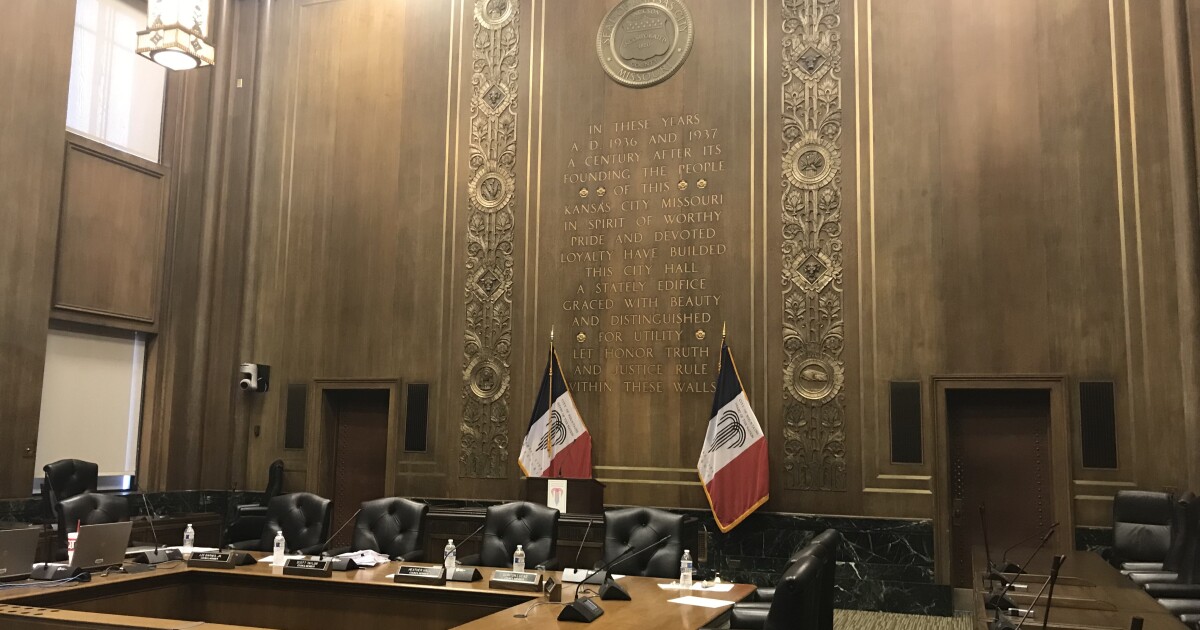
Kansas City, Missouri, City Council voted Thursday to approve the city’s $2.6 billion budget for 2026-27

‘Hannah Montana’ Vinyl Returns to Charts Following 20th Anniversary Special

Florida High School Football Rankings: Top 25 teams – Oct. 21

How old is Bo Nix? What to know about Oregon quarterback ahead of 2024 NFL Draft

Cleary's 21 help Le Moyne down Central Connecticut State 69-64 in OT

99th annual Pony Swim held in Virginia

Indiana Members Credit Union announced as new anchor tenant at Bottleworks District

Video: Savannah Guthrie Says She Believes Her Mother Was Taken for Ransom

Stefanik grills University of Michigan leader on lack of audit after string of Chinese national arrests

Photos: More than one million displaced by Israel’s evacuations in Lebanon

DHS shutdown live updates as Senate holds test vote on funding bill

Video: Jury Rules Against Meta and YouTube for Addictive Features
-

 Detroit, MI1 week ago
Drummer Brian Pastoria, longtime Detroit music advocate, dies at 68
-

 Science1 week ago
How a Melting Glacier in Antarctica Could Affect Tens of Millions Around the Globe
-

 Movie Reviews1 week ago
‘Youth’ Twitter review: Ken Karunaas impresses audiences; Suraj Venjaramoodu adds charm; music wins praise | – The Times of India
-

 Sports5 days ago
IOC addresses execution of 19-year-old Iranian wrestler Saleh Mohammadi
-
 Science1 week ago
I had to man up and get a mammogram
-

 New Mexico4 days ago
Clovis shooting leaves one dead, four injured
-

 Texas7 days ago
How to buy Houston vs. Texas A&M 2026 March Madness tickets
-

 Tennessee3 days ago
Tennessee Police Investigating Alleged Assault Involving ‘Reacher’ Star Alan Ritchson