Southwest
Sheriff in Nancy Guthrie case says no glove found at home, defends ongoing work with FBI

NEWYou can now listen to Fox News articles!
TUSCON, Ariz. — Pima County Sheriff Chris Nanos said that his department did not recover a glove from Nancy Guthrie’s home and rejected reports of friction between his office and the FBI.
“We have no glove. We never found a glove on that property,” Nanos told Fox News Correspondent Matt Finn in an interview Friday.
Nanos also forcefully denied claims that his department has not been cooperating with federal authorities.
“That’s absolutely crazy,” he said when asked about reports that he was reluctant to involve the FBI. “Why would we be reluctant to get all the partners who have great resources and offer them to us?”
He added: “We don’t hold information from anybody that’s going to help us. Why would we do that? There are no egos here. This is all about finding Nancy.”
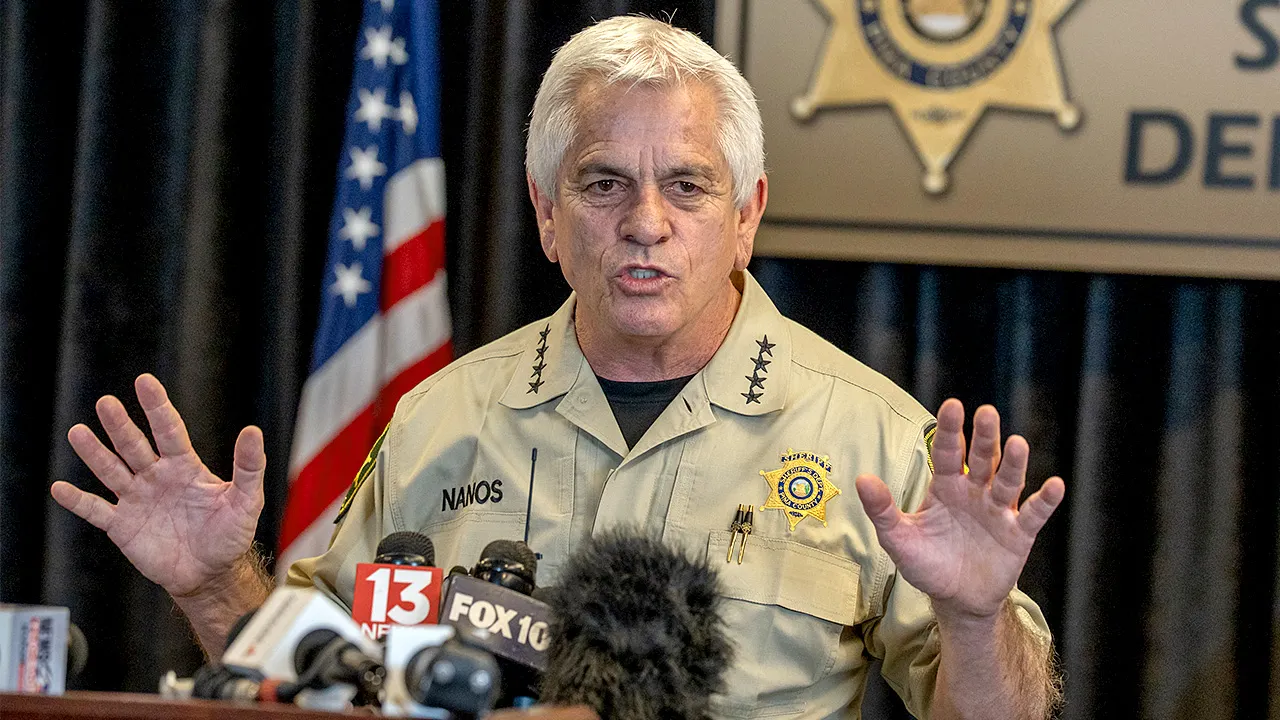
Pima County Sheriff Chris Nanos speaks to the media in Catalina, Arizona, on Feb. 3, while answering questions about the search for Nancy Guthrie. ( Jan Sonnenmair/Getty Images)
FORMER FBI AGENT CALLS HOLSTER SETUP IN NANCY GUTHRIE CASE ‘INCREDIBLY AMATEUR AND UNSAFE’
Nanos said he contacted the FBI the next working day after Guthrie went missing and said that federal agents are embedded with his team.
“They sit right next to the FBI. Come to my office, and I’ll show you — they’re sitting right there with my team,” he said. “They are there every minute of the day, and they want to find her.”
FBI investigators search Catalina Foothills in Tucson, Arizona, Wednesday, February 11, 2026. The investigation into the disappearance of Nancy Guthrie continues. (DWS for Fox News Digital)
On the handling of evidence, Nanos defended his department’s decision to use a long-standing private lab rather than splitting evidence between facilities, including the FBI’s crime lab in Quantico, Virginia.
He said the Guthrie family DNA markers and other swabs were already sent to that lab early in the investigation, making it more efficient to continue using the same facility.
“Why split your evidence to two different labs that could create a conflict, but more importantly, it adds that additional step?” he said. “This lab has this piece; this lab has that piece. Now they’ve got to converge those two pieces to make an elimination or identification. No, just send it to one lab, let’s go.”
“They’re both great labs. They both have great equipment and smart people. We trust the FBI’s crime lab. We’ve used them before. But in this case, we just started with this lab,” he said. “It’s just that simple.”
Pima County Sheriff Chris Nanos updates media on the disappearance of Nancy Guthrie, the 84-year-old mother of “Today” host Savannah Guthrie, in Tucson, Ariz., on Thursday, Feb. 5, 2026. (Sejal Govindarao/AP Photo)
Regarding ransom notes, Nanos said the FBI is taking the lead.
“All the ransom stuff we’ve given to the FBI — they’re the experts on that,” he said. “It would be very inappropriate for me to comment on something that I told them to do.”
Authorities “believe it’s a kidnapping,” Nanos said, while saying that investigators are considering all possibilities.
FOLLOW THE FOX TRUE CRIME TEAM ON X
“You always consider all possibilities,” he said. “But yeah, the obvious is what? It is an obvious kidnapping.”
When asked whether anyone has been ruled out, Nanos said investigators may deprioritize individuals but remain open to revisiting leads.
SIGN UP TO GET TRUE CRIME NEWSLETTER
“Nobody’s really ever eliminated,” he said.
A tent was placed over the front entrance to Nancy Guthrie’s home in Tucson, Arizona, Thursday, Feb. 12, 2026. The tent is covering where Guthrie’s blood was found. (Fox Flight Team)
The sheriff also rejected criticism that investigators released the crime scene too soon.
“We remove the evidence, we swab evidence, we take evidence, and we go,” he told Finn. “We got all the evidence that was there to gather.”
LIKE WHAT YOU’RE READING? FIND MORE ON THE TRUE CRIME HUB
Cleaning blood from a scene, he added, “is not what we do.”
Nanos said deputy vehicles currently stationed outside the home are there at the family’s request for security.
Those cars “are there because the family said they can’t — they don’t want to be at the house and they’ve asked, can we provide security, so nobody breaks into the home,” he said.
The FBI released a description of a suspect in Nancy Guthrie’s disappearance, who was seen in doorbell camera footage before she vanished. (Fox News)
SEND US A TIP HERE
Nancy Guthrie disappearance timeline:
Jan. 31, 2026
- Between 9:30–9:45 p.m. — Family drops Nancy off at home
- 9:50 p.m. — Garage door closes (per authorities)
CLICK HERE TO DOWNLOAD THE FOX NEWS APP
Feb. 1, 2026
- 1:47 a.m. — Doorbell camera disconnects
- 2:12 a.m. — Security camera detects motion
- 2:28 a.m. — Pacemaker disconnects from phone application
- 11:56 a.m. — Family checks on Nancy after she misses weekly church livestream gathering
- 12:03 p.m. — 911 called
- 12:15 p.m. — Sheriff’s deputies arrive at home
Read the full article from Here



A stand-up comedian is set to face criminal charges in the first case filed by the Los Angeles County District Attorney’s newly created Business Tax Fraud Unit, officials announced Thursday.
According to the Los Angeles County District Attorney’s Office, the defendant is comedian and actor Carlos Mencia. District Attorney Nathan Hochman is scheduled to announce the charges during a 2 p.m. news conference at the Hall of Justice in downtown Los Angeles.
Officials have not yet disclosed the nature of the charges.
The prosecution marks the first case brought by the Business Tax Fraud Unit, a specialized division created under Hochman’s administration to investigate and prosecute tax-related crimes involving businesses.
Mencia, whose real name is Ned Arnel Mencia, rose to fame through his stand-up comedy career and as the host of the Comedy Central series Mind of Mencia.
The comedian has previously faced tax-related issues. In 2021, reports indicated that the Internal Revenue Service filed liens against three properties he owned in Georgia over more than $1 million in unpaid federal income taxes.
The District Attorney’s Office said Thursday’s announcement will be streamed live on its social media platforms.
No additional information about the case was immediately available Thursday morning.
KTLA will update this story following the district attorney’s announcement.

Multiple people were arrested after local and federal law enforcement agents descended upon L.A.’s MacArthur Park to carry out a nighttime narcotics enforcement operation.
Officers from the Los Angeles Police Department and the Drug Enforcement Administration (DEA) descended on the park at around 9 p.m.
Among the personnel who arrived at the scene was First Assistant U.S. Attorney Bill Essayli, who joined authorities in overseeing the operation.
In a statement, LAPD said officers were “assisting our federal partners in a joint narcotics enforcement operation in the MacArthur Park area. This operation is focused solely on drug-related criminal activity. There is no connection to immigration enforcement.”
More than 100 law enforcement members were involved, including around 60 DEA agents and 55 LAPD officers. As officers converged on the park, many people were seen running away.
Six people were eventually taken into custody for felony drug charges.
Officials told KTLA’s Jillian Smukler that they intentionally waited until nightfall after frustrated business owners said that most of the visible drug activity occurred at night, following previous raids that took place much earlier in the day.
“We’ve been hearing that a lot of stuff has been moving to later in the day, so that’s why we’re coming out later in full force to show them that this is not a joke,” said Anthony Chrysanthis, a DEA spokesperson. “We are taking the park back for the people. This will happen. It’s going to take time, but it will happen.”
DEA agents are supporting LAPD efforts as part of a long-term strategy to eradicate a troubling increase in drug activity at MacArthur Park.
Authorities had targeted the park multiple times in the past for narcotics-related operations.
The latest incident occurred on June 4 as officers carried out a mission named “Operation Free MacArthur Park,” which involved serving arrest and search warrants in the area surrounding the park. Thirteen people were arrested for various offenses and officers recovered drug paraphernalia during the operation.
L.A. County District Attorney Nathan Hochman said at the time that authorities were targeting the demand side of the drug trade, going after small-time drug dealers and the drug addicts who are using every day.
“I refuse to allow MacArthur Park to be a cemetery, and that’s what it’s been,” Hochman said. “Because we’ve had individual after individual after individual die of drug overdoses, so much so that the local fire department spends much more time trying to revive people with Narcan who are on death’s door than they do putting out fires in this area.”
Authorities told KTLA they will maintain a presence at the park and work to eliminate all drug activity, allowing the park to be a safe place for residents and visitors.
“We remain committed to keeping our communities safe and informed as this operation continues,” LAPD said.

A California raisin company has publicly denounced alleged antisemitic and racist conduct attributed to one of its heirs following his recent arrest in Pacific Palisades.
In a statement released Wednesday, Fresno County-based Lion Raisins said recent reports involving Bruce Lion, who was arrested last week on suspicion of making criminal threats, “do not reflect the values of Lion Raisins.”
“Recent reports about the conduct of Bruce Lion are deeply troubling and do not reflect the values of Lion Raisins,” a company spokesperson said in the statement. “We unequivocally condemn antisemitism, racism, and all forms of hate, discrimination, and intolerance.”
The statement comes days after Bruce Lion, 64, was arrested following allegations that he repeatedly directed antisemitic and racist remarks toward a rabbi neighbor in Pacific Palisades.
As previously reported, Rabbi Zushe Cunin accused Lion of harassing him and members of his congregation for months after Lion purchased a neighboring home earlier this year. Published reports cited videos that allegedly showed Lion shouting antisemitic slurs from his property and disrupting religious gatherings.
Lion Raisins emphasized Wednesday that Bruce Lion “does not actively participate in the company’s day-to-day operations.”
The company, which has operated for more than a century, said it remains committed to serving a diverse community of employees, growers, customers and business partners “with respect, dignity, and inclusiveness.”
“These principles are core to our culture and to the way we do business,” the statement said.
The company also said it recognizes concerns generated by the allegations and expressed support for those who may have been affected.
“We remain committed to fostering understanding and respect among all communities and to ethical conduct, mutual respect, and responsible corporate citizenship,” the statement continued.
Bruce Lion was arrested early Saturday and booked on suspicion of making criminal threats, according to law enforcement records.
The investigation remains ongoing.
-

 Connecticut13 seconds ago
Sierra Club Connecticut, State Representatives Host Black Lungs Matter: Juneteenth Press Event – CleanTechnica
-

 Delaware5 minutes ago
From blueprint to breakthrough: Tackling affordable housing in Wilmington
-

 Florida12 minutes ago
Weather Aware Day declared for Friday as heat and strong storms threaten Central Florida
-

 Georgia15 minutes ago
DHS appears to axe plan to construct immigration detention megacenter in small Georgia town
-

 Hawaii20 minutes ago
Ambassadors of aloha: Food events aim to boost tourism with unique Hawaii-made products
-

 Idaho27 minutes ago
Idaho State Police arrest Dillon Thorpe on rape, child enticement charges in Elmore County
-

 Illinois30 minutes ago
Beecher City farm suffers heavy damage following ‘wicked storm’
-

 Indiana35 minutes ago
Braun asks regulators to reconsider $71 million AES rate increase

