Southwest
Cruise ship passengers from across US sue after worker sentenced for placing hidden cameras in guest rooms

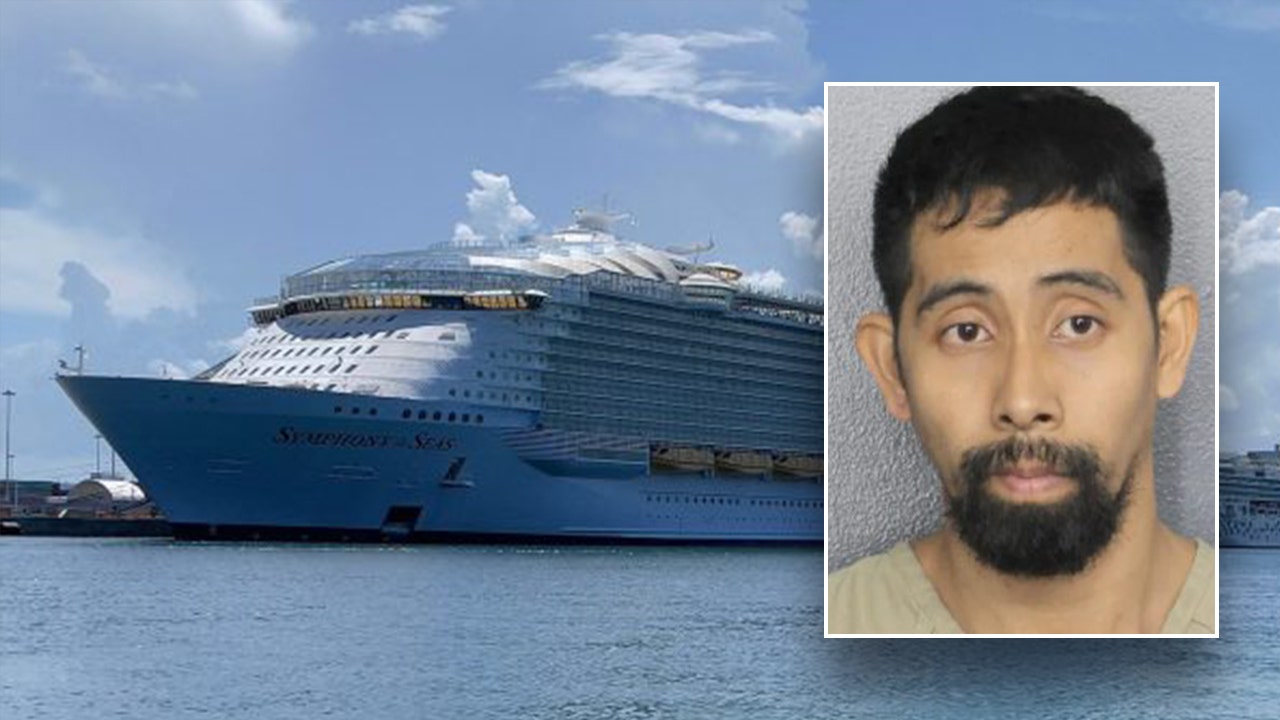
Nineteen passengers, including four minors, who cruised on board Royal Caribbean’s Symphony of the Sea are suing the cruise line and a former company employee, who placed hidden cameras in their guest rooms.
Arvin Joseph Mirasol, a citizen of the Philippines and former Royal Caribbean crew member named in the lawsuit filed on Tuesday, was sentenced in August in Florida to 30 years in federal prison after pleading guilty to producing child pornography.
The passengers, who were not named in the lawsuit and rather referred to by abbreviations, are mostly American citizens from all across the country, including New York, Georgia, Missouri, Arkansas and Texas, while several passengers are from Canada.
The latest suit, obtained by Fox News Digital, comes months after a separate class-action lawsuit was filed against Mirasol and the Miami-based cruise line in October, alleging that as many as 960 people may have been victims of a hidden camera in a bathroom on board.
“This is an extraordinarily unusual case in that the pool of victims can be nearly 1,000 or more men, women and children,” Spencer Aronfeld with Aronfeld Trial Lawyers, who represent the 19 cruise ship passengers, told Fox News Digital.
ROYAL CARIBBEAN CRUISE LINE SUED OVER HIDDEN CAMERA THAT MAY HAVE FILMED HUNDREDS OF PASSENGERS: LAWSUIT
The lawsuit, filed on Tuesday in the Southern District of Florida, names Royal Caribbean Cruises Ltd. and crew member Arvin Joseph Mirasol as defendants. Pictured is the Symphony of the Seas, the ship on which Marisol recorded passengers without their knowledge. (Photo by Daniel SLIM / AFP)
The new lawsuit alleges that during his time working as a stateroom attendant on the cruise line from December 2023 through February 2024, Mirasol “taped a video camera containing a memory card in the Plaintiffs’ passenger cabin bathrooms and captured images of the Plaintiffs while undressed and engaging in private activities,” without their knowledge or consent, adding that he then uploaded these images “to third parties and/or to the world wide web, including, but not limited to, the dark web.”
“For those who had their images recorded, uploaded on the internet and potentially sold on the dark web – this has created deep emotional pain, sleepless nights and tearful days,” Aronfeld told Fox News Digital.
Lawyers for the alleged victims also argue in the suit that Royal Caribbean “should have known sexual assaults were reasonably foreseeable considering the prevalence of sexual assaults aboard [Royal Caribbean’s] cruise ships.”
There were a total of 26 sexual assaults and rapes reported during Royal Caribbean cruises in 2023, and 22 sexual assaults reported during Royal Caribbean cruises in 2022, according to the Secretary of Transportation, the documents continue.
Overall data shows that sexual assault allegations on cruise ships rose in 2023, with 131 sex crimes reported to the FBI on ships embarking and disembarking in the United States in 2023, up from 87 in 2022, lawyers wrote.
MAN ON VACATION WITH FAMILY GOES OVERBOARD ON NORWEGIAN CRUISE SHIP IN BAHAMAS
Arvin Joseph Mirasol was sentenced to 30 years in federal prison on Aug. 28, according to the U.S. Attorney’s Office of the Southern District of Florida. (Broward County Jail)
In addition to the crimes committed on Royal Caribbean’s Symphony of the Seas, a hidden camera was installed in a public bathroom on the top deck of another Royal Caribbean cruise ship – Harmony of the Seas – during a cruise which left Miami on April 29, 2023, according to the lawsuit.
The camera allegedly recorded more than 150 people, including at least 40 children, using the Royal Caribbean bathroom “in various stages of undress” until the hidden camera was discovered by a passenger on May 1, 2023, lawyers wrote.
Royal Caribbean “failed to take adequate steps and/or provide adequate security and/or training and/or supervision to prevent such sexual assaults, including video voyeurism, to occur aboard its cruise ships,” the lawsuit states, adding that the cruise line also “failed to warn its passengers of sexual assaults, including video voyeurism, occurring aboard its cruise ships.”
Lawyers argue that the motive behind this was “financial in nature,” explaining that Royal Caribbean “willfully chooses not to warn its passengers about sexual assaults, including video voyeurism, aboard its cruise ships so as not to scare any prospective passengers away.”
ROYAL CARIBBEAN PASSENGER DIES SOON AFTER BEING DETAINED FOR CHAOTIC INCIDENT CAUGHT ON VIDEO
A partial view of the U.S. company Royal Caribbean Cruise Limited tourism cruise liner Symphony of the Seas. (LOIC VENANCE/AFP via Getty Images)
As a result of Mirasol’s crimes, his alleged victims “suffer from severe emotional distress, which manifests physically, causing [them] physical sickness, sweating, nausea, insomnia, dizziness, crying, and physical pain,” their attorneys wrote, adding that the former cruise travelers “live in constant fear, reasonably under the circumstances, that images of the Plaintiffs undressed while engaging in private activities are regularly viewed by others and used for illicit purposes.”
Aronfeld Trial Lawyers, on behalf of the alleged victims, are demanding trial by jury.
“Our mission is to fully investigate this case on behalf of our clients and hold RCL accountable for failing to properly vet, hire, supervise and retain Mr. Mirasol,” Aronfeld told Fox News Digital. “We have confidence that the jury will have no problem returning a substantial verdict in favor of the victims.”
Royal Caribbean International did not immediately respond to Fox News Digital’s request for comment.
Fox News Digital’s Christina Coulter contributed to this report.
Read the full article from Here

Southwest
Arizona governor vetoes Charlie Kirk memorial license plate, sparking GOP outrage: ‘This bill falls short’

NEWYou can now listen to Fox News articles!
Democratic Arizona Gov. Katie Hobbs is facing fierce backlash after vetoing a bill that would have created a specialty license plate honoring slain Turning Point USA founder Charlie Kirk, a move Republicans are blasting as a stunning act of partisanship after his assassination.
Kirk, who was assassinated while speaking at a Sept. 10 Turning Point USA event at Utah Valley University, lived in Arizona with his wife, Erika, and two children.
The proposed specialty plate, referred to as the “Charlie Kirk memorial” plate or the “Conservative grassroots network special plate,” featured a photo of the late Kirk and the TPUSA logo in front of an American flag background.
Below the license plate number were the words “FOR CHARLIE.”
A custom Arizona license plate, featuring a Turning Point USA and Charlie Kirk design, shared by state Sen. Jake Hoffman. (Senator Jake Hoffman via X)
STATE DEPARTMENT REVOKES SIX VISAS OVER OFFENSIVE CHARLIE KIRK ASSASSINATION COMMENTS
Of the $25 fee required for the plate, $17 would be an annual donation deposited into the Conservative Grassroots Network Special Plate Fund, according to the legislation.
While the recipient of the Grassroots Network Special Plate Fund was not explicitly designated as TPUSA in the bill, it noted the director of the fund would allocate revenue annually to a nonprofit organization, founded in 2012, that focuses on restoring traditional values, maintaining a grassroots activist network on high school and college campuses in Arizona, and assisting college students with voter registration and absentee ballots.
People gather at a memorial to mourn Turning Point USA Founder Charlie Kirk outside Turning Point USA headquarters Sept. 12, 2025, in Phoenix. (Charly Triballeau/AFP via Getty Images)
TPUSA, founded by Kirk in 2012, is well known for its grassroots activist networks on high school and college campuses. It is headquartered in Phoenix, Arizona.
The $25 fee and annual $17 donation are consistent with the fees for the other 109 nonprofit license plates offered by the Arizona Department of Transportation (ADOT).
‘WE ARE NOT AFRAID’: ERIKA KIRK VOWS TPUSA WILL CONTINUE CAMPUS DEBATES NATIONWIDE
The state Senate passed the bill, 16-2, with the House of Representatives voting 31-23 in favor prior to Hobbs’ veto.
Specialty plates in Arizona are authorized by the legislature and sent to the governor to be signed into law. They have been offered since 1989.
In a letter explaining the veto, Hobbs cited concerns with the bill “bring[ing] people together,” claiming it would “insert politics into a function of government that should remain nonpartisan.”
Democratic Arizona Gov. Katie Hobbs is facing fierce backlash after vetoing a bill that would have created a specialty license plate honoring slain Turning Point USA founder Charlie Kirk. (Rebecca Noble/Getty Images)
ERIKA KIRK BATTLES FOR CAMERAS IN COURTROOM WHILE EXPANDING TPUSA CHAPTERS IN NEW STATE PARTNERSHIP
“Charlie Kirk’s assassination is tragic and a horrifying act of violence,” Hobbs wrote. “In America, we resolve our political differences at the ballot box. No matter who it targets, political violence puts us all in harm’s way and damages our sacred democratic institutions.
“I will continue working toward solutions that bring people together, but this bill falls short of that standard.”
Specialty license plates with political interests already approved by the state include the “Choose Life” Plate, which benefits the Arizona Life Coalition and its mission to promote anti-abortion advocacy and education; the “In God We Trust” Plate, which benefits conservative Christian legal advocacy group Alliance Defending Freedom; and the Arizona Realtors’ “Homes for All” Plate, which funds affordable housing projects.
Charlie Kirk, founder of Turning Point USA, speaks during the Turning Point Action conference in 2023 in West Palm Beach, Fla. (Lynne Sladky/AP Photo)
DEMOCRAT JOHN FETTERMAN DECRIES ‘DEHUMANIZING’ ATTACK AGAINST CHARLIE KIRK’S WIDOW ERIKA
Another approved plate, “Alice Cooper’s Solid Rock Plate,” which benefits Solid Rock Teen Centers, features a portrait of the legendary musician, who has made political comments about social issues including gender identity.
Republican state Sen. Jake Hoffman, who sponsored the bill, posted a fiery statement on social media after the governor’s action, claiming her “grotesque partisanship knows no bounds.”
“Even in the wake of a global civil rights leader — an Arizona resident and her own constituent — being assassinated in broad daylight for his defense of the First Amendment, Hobbs couldn’t find the human decency to put her far-Left extremism aside simply to allow those how wish to honor him to do so,” Hoffman wrote. “Katie Hobbs will forever be known as a stain on the pages of Arizona’s story.”
CLICK HERE TO DOWNLOAD THE FOX NEWS APP
On Saturday, TPUSA COO Tyler Bowyer shared an X post that said, “Deport Katie Hobbs.”
TPUSA, Bowyer and Hobbs’ office did not immediately respond to Fox News Digital’s requests for comment.
Read the full article from Here
Southwest
Air Force veteran warns ‘cartels don’t collapse — they fracture’ after notorious drug lord killed

NEWYou can now listen to Fox News articles!
Nearly two weeks after Mexican forces killed notorious cartel boss Ruben “El Mencho” Oseguera Cervantes, questions remain about how the powerful Jalisco New Generation Cartel (CJNG) will respond and whether the blow will meaningfully disrupt the flow of fentanyl into the United States.
Carlos De La Cruz, a 20-year U.S. Air Force veteran who deployed after 9/11 and later served along the southern border, told Fox News the cartel leader’s death marked a major victory, but warned Americans should not mistake it for the end of the fight.
“When I say that this is a significant win, I mean it,” De La Cruz said. “El Mencho ran one of the most violent cartels on the planet.”
Oseguera, who rose to prominence in the post–El Chapo era, oversaw CJNG’s aggressive expansion across Mexico and into key trafficking corridors feeding U.S. drug markets. Under his leadership, the cartel became a central architect of fentanyl and methamphetamine trafficking and drew a $15 million U.S. reward for information leading to his capture.
NARCOTICS EXPERT REVEALS SLAIN DRUG KINGPIN EL MENCHO’S DEADLY IMPACT ON AMERICANS
Smoke rises from burning vehicles after a military operation that a government source said killed Mexican drug lord Nemesio Oseguera, known as “El Mencho,” in Puerto Vallarta, Mexico, on Feb. 22, 2026. (Screen grab obtained from a social media video. @morelifediares via Instagram/YouTube via Reuters)
But De La Cruz cautioned that removing a cartel kingpin does not dismantle the organization.
“Cartels don’t collapse when you just cut the head off — they fracture,” he said. “And part of that fracture is going to see a lot of short-term violence while all these factions fight over territory.”
Following Oseguera’s killing on Feb. 22, the U.S. State Department issued travel alerts in multiple Mexican states, citing road blockages and criminal activity tied to security operations, underscoring concerns about instability in the aftermath.
Drawing on his military background studying enemy command structures, De La Cruz described the cartel fight as a long-term campaign requiring sustained pressure.
A mughsot of Ruben “Nemesio” Oseguera Cervantes, known as “El Mencho,” beside graffiti depicting the letters of the Jalisco New Generation Cartel, covering the facade of an abandoned home in El Limoncito, in the Michoacan state of Mexico. (Eduardo Verdugo/AP Images; Drug Enforcement Administration)
“You don’t win a war with just one airstrike,” he said. “The goal is dismantling the networks and going after their financing.”
De La Cruz, who is running for Congress and is the brother of Texas Republican Rep. Monica De La Cruz, argued that CJNG’s Foreign Terrorist Organization designation gives U.S. law enforcement and intelligence agencies expanded tools to target cartel infrastructure and financial pipelines.
KAROLINE LEAVITT WARNS CARTELS TO ‘NOT LAY A FINGER’ ON AMERICANS OR PAY ‘SEVERE CONSEQUENCES’
A soldier stands guard by a charred vehicle after it was set on fire in Cointzio, Mexico, Sunday, Feb. 22, 2026, after the cartel leader’s death. (Armando Solis/AP Photo)
But he stressed that the fentanyl crisis should be viewed as a domestic security emergency, not a distant foreign problem.
“For decades, they were using their territories as launching pads to pump chemical weapons into America — because that’s exactly what fentanyl is,” he said.
De La Cruz, who said he worked side by side with Customs agents while deployed to the border, warned that cartel networks are highly adaptive and that any gains could be temporary without sustained follow-through.
SEN MULLIN URGES SPRING BREAKERS TO CANCEL TRIPS TO MEXICO AMID COUNTRY’S VIOLENCE: ‘NO ONE SHOULD BE GOING’
Smoke rises after violence hit Puerto Vallarta, Mexico. (Courtesy of Scott Posilkin)
“These networks, they’re going to adjust. They’re going to adapt and they’re going to adapt quickly,” he said. “We have to continue to go after the money launderers, especially on our side of the border, because that’s the full fight.”
While Oseguera’s death removes one of the most dominant figures in Mexico’s criminal underworld, De La Cruz said the mission is personal.
CLICK HERE TO DOWNLOAD THE FOX NEWS APP
“I took an oath to defend this country,” he said. “And I intend to stand by that oath.”
Fox News Digital’s Greg Wehner contributed to this report.
Stepheny Price covers crime, including missing persons, homicides and migrant crime. Send story tips to stepheny.price@fox.com.
Read the full article from Here
NEWYou can now listen to Fox News articles!
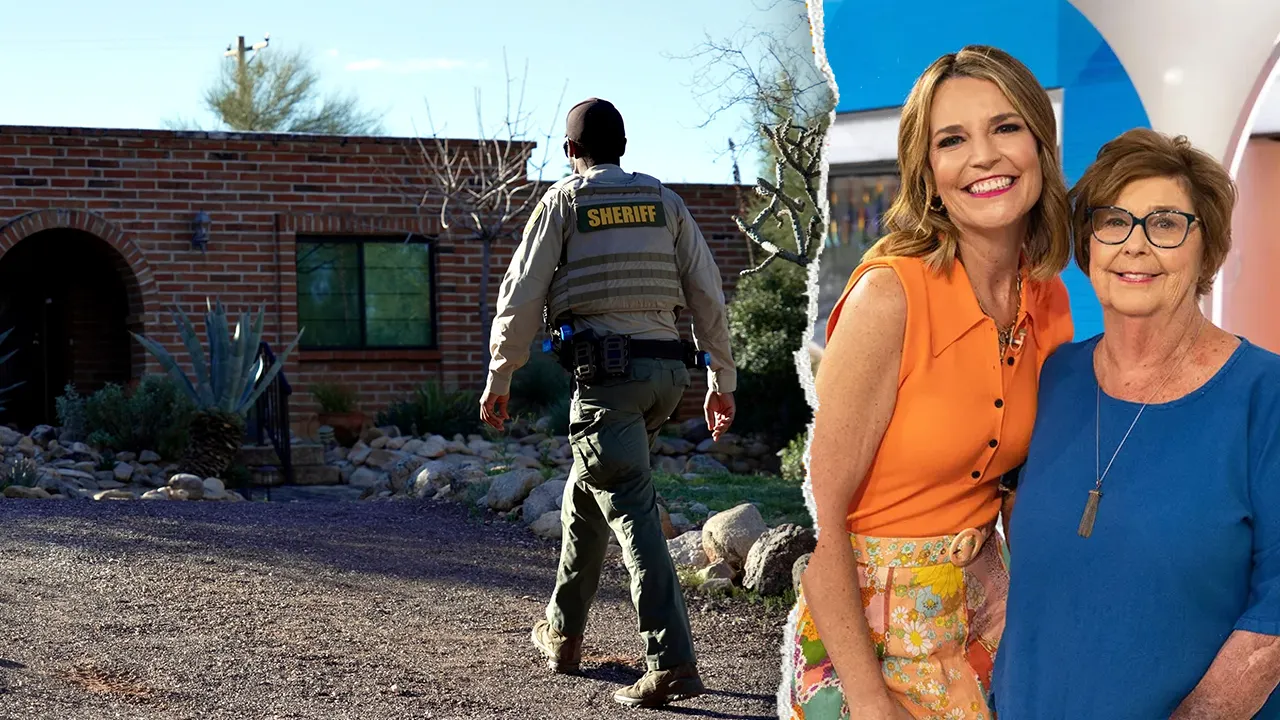
TUCSON, Ariz. — More than five weeks after the suspected abduction of Nancy Guthrie — the 84-year-old mother of “Today” co-host Savannah Guthrie — Arizona authorities say cadaver dogs used earlier in the investigation are not currently being deployed as the search continues.
The elder Guthrie is believed to have been kidnapped from her home in the Catalina Foothills in northern Tucson around 2:30 a.m. on Feb. 1.
While no suspects have been publicly identified, and she has not been found, cadaver dogs had been deployed earlier in the case, according to Pima County Sheriff Chris Nanos. They have not been visible in weeks.
SEND US A TIP HERE
A member of the Pima County Sheriff’s Office remains outside of Nancy Guthrie’s home, Monday, Feb. 9, 2026 in Tucson, Ariz. (AP Photo/Ty ONeil; Nathan Congleton/NBC via Getty Images)
“They are available if needed in the future,” he told Fox News Digital.
There are a number of reasons not to be using cadaver dogs at this stage in the investigation, according to Betsy Brantner Smith, a retired police sergeant and spokeswoman for the National Police Association.
NANCY GUTHRIE’S NEIGHBORS FLAG CAMERA GLITCHING, EXPERTS EXPLAIN WI-FI JAMMING
Savannah Guthrie visits the Today show at Rockefeller Plaza in New York on Thursday, March 5, 2026. (Charles Sykes/Invision/AP)
One would be if there’s credible information that Guthrie is still alive.
“Anything is possible,” Nanos told Fox News Digital last week, adding that he would not discuss specific leads or evidence in the case.
DNA IS STILL PENDING AS VOLUNTEERS FIND ANOTHER GLOVE IN THE SEARCH FOR NANCY GUTHRIE
Brantner Smith, who is not involved in the case, said departments may hold back K-9 resources for several reasons. Those could be that authorities don’t have a good idea of where to search, they think she might be concealed in a place where dogs would have a hard time detecting her, or they believe she’s been taken to Mexico, according to Brantner Smith.
Law enforcement agents walk around the neighborhood where Annie Guthrie, whose mother Nancy Guthrie has been missing for more than a week, lives just outside Tucson, Ariz. (Ty ONeil/AP Photo)
“I do believe that the sheriff’s department has much more information that they are not releasing to the public,” she told Fox News Digital. “And I’m not sure at this point why that would be, unless they have a solid suspect and don’t want to tip them off.”
FOLLOW THE FOX TRUE CRIME TEAM ON X
Most departments, including the Pima County Sheriff’s, don’t have their own cadaver dogs and borrow them from state and federal authorities or neighboring jurisdictions.
An investigator looks inside a culvert in the neighborhood where Annie Guthrie, whose mother Nancy Guthrie has been missing for more than a week, lives just outside Tucson, Ariz., on Tuesday, Feb. 10, 2026. (Ty ONeil/AP Photo)
In Guthrie’s case, the sheriff’s department sought K-9 assistance from the local Border Patrol office earlier in the investigation.
SIGN UP TO GET TRUE CRIME NEWSLETTER
PCSD deferred further comment on the K-9s to Customs and Border Protection, which did not immediately respond to a request for comment.
A member of the Pima County Sheriff’s Office walks around Nancy Guthrie’s home on Tuesday, Feb. 10, 2026 in Tucson, Ariz. (Ty ONeil/AP Photo)
The biggest lead so far has been Nest camera video showing a masked intruder on Guthrie’s doorstep the morning of her abduction.
LISTEN TO THE NEW ‘CRIME & JUSTICE WITH DONNA ROTUNNO’ PODCAST
He is described as about 5 feet, 9 inches to 5 feet, 10 inches tall and of medium build.
Nancy Guthrie, 84, has been missing from her Arizona home since Jan. 31, 2026. (Don Arnold/WireImage/Getty Images)
He was wearing a black Ozark Trail backpack.
Authorities have said they won’t consider the case cold until they run out of viable leads to follow up on — and tens of thousands have come in so far.
LIKE WHAT YOU’RE READING? FIND MORE ON THE TRUE CRIME HUB
Savannah Guthrie has asked anyone with information to dial 1-800-CALL-FBI.
CLICK HERE TO DOWNLOAD THE FOX NEWS APP
There’s a combined reward of more than $1.2 million for information that leads to her mother’s recovery.
Read the full article from Here

Idaho Senate introduces new bill to give local municipalities authority to control rat populations

Illinois vs Iowa prediction, analysis, Elite Eight expert picks for men’s March Madness

Police arrest suspect in Westfield homicide

Tennessee basketball vs Iowa State Sweet 16 tipoff time changed for later start

Kansas State Baseball 2026 at Utah

Florida High School Football Rankings: Top 25 teams – Oct. 21

How old is Bo Nix? What to know about Oregon quarterback ahead of 2024 NFL Draft

Cleary's 21 help Le Moyne down Central Connecticut State 69-64 in OT

99th annual Pony Swim held in Virginia

Indiana Members Credit Union announced as new anchor tenant at Bottleworks District

WATCH: Senate hearing goes silent after Angel Father confronts top Dem over daughter’s death

US diplomat Marco Rubio denounces settler violence, tolls in Hormuz strait

Iran-linked hackers have breached FBI Director Kash Patel’s personal emails | CNN Politics

Live: CPAC 2026 Day 2

Video: Will ICE Change Under Its New Leader?
-

 Detroit, MI1 week ago
Drummer Brian Pastoria, longtime Detroit music advocate, dies at 68
-

 Movie Reviews1 week ago
‘Youth’ Twitter review: Ken Karunaas impresses audiences; Suraj Venjaramoodu adds charm; music wins praise | – The Times of India
-

 Sports6 days ago
IOC addresses execution of 19-year-old Iranian wrestler Saleh Mohammadi
-

 New Mexico5 days ago
Clovis shooting leaves one dead, four injured
-
 Business1 week ago
Disney’s new CEO says his focus is on storytelling and creativity
-

 Technology5 days ago
YouTube job scam text: How to spot it fast
-

 Tennessee4 days ago
Tennessee Police Investigating Alleged Assault Involving ‘Reacher’ Star Alan Ritchson
-

 Texas1 week ago
How to buy Houston vs. Texas A&M 2026 March Madness tickets