Southwest
Bipartisan lawmakers introduce bill to bolster water system protections against hackers

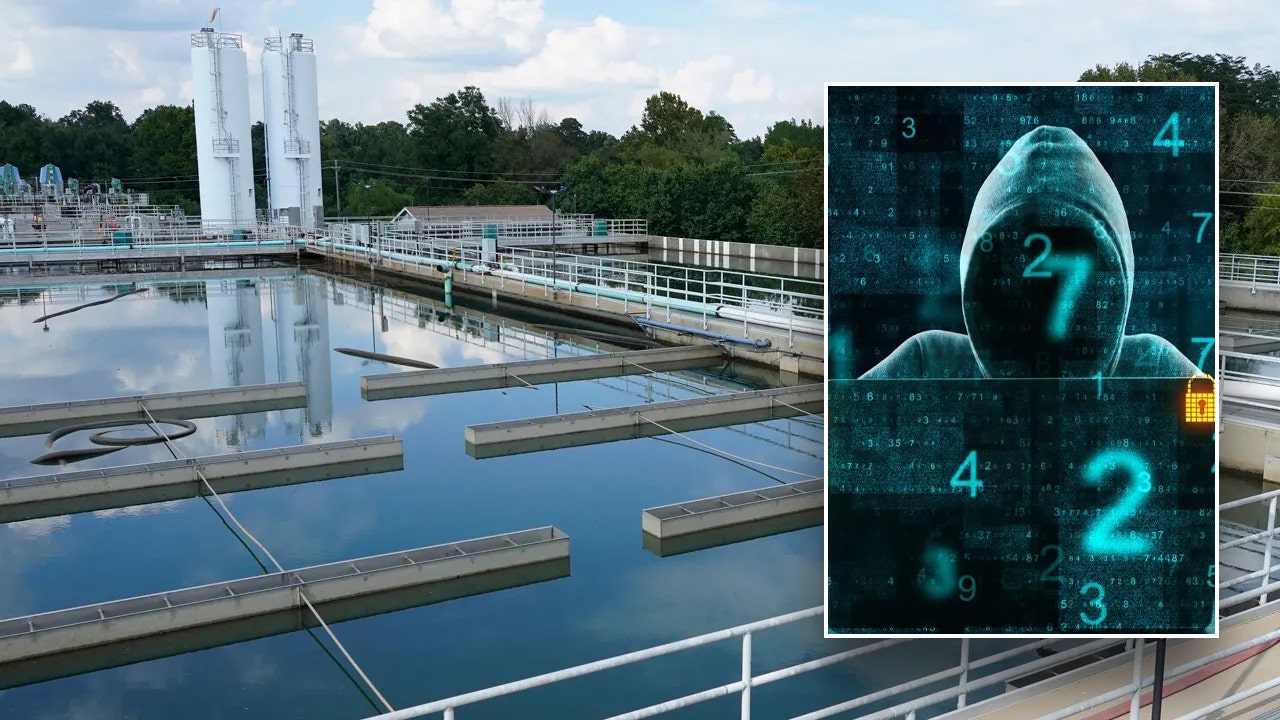
EXCLUSIVE – Bipartisan lawmakers are introducing a bill on Capitol Hill Thursday focused on protecting the country’s water systems from foreign hackers, just months after China admitted behind closed doors that it was responsible for a series of attacks on U.S. infrastructure.
Senators Ruben Gallego, D-Ariz., and Tom Cotton, R-Ark., authored the Water Cybersecurity Enhancement Act to help protect public water systems and respond to cyberattacks, which have become more frequent in recent years.
“In Arizona, we know better than most the importance of safe and secure access to water. But adversaries also understand the importance and are increasingly trying to undermine our water security,” Gallego said. “It is critical that we ensure our public water systems have the resources they need to prevent and respond to cyberattacks. That’s exactly what this bipartisan, commonsense bill does.”
The bill would extend and expand a portion of the Safe Drinking Water Act, called the Drinking Water Infrastructure Risk and Resilience Program, to provide technical assistance and grants to community water systems that can be used for training and guidance on cyberattack protections and responses.
CHINESE OFFICIALS CLAIMED BEHIND CLOSED DOORS PRC PLAYED ROLE IN US CYBERATTACKS: REPORT
Arizona Democratic Sen. Ruben Gallego introduced a bipartisan bill on Thursday to help protect public water systems from cyberattacks. ( Mario Tama/Getty Images)
Cotton said cyberattacks on public infrastructure are a growing threat.
“This bipartisan bill will strengthen our ability to protect essential services and support local water utilities in building stronger cyber defenses,” he added.
The bill comes less than a month after the Wall Street Journal reported that Chinese officials acknowledged behind closed doors in December that their government was responsible for a series of attacks on U.S. infrastructure.
CHINA ATTACKED US WITH HACKERS. WE NEED TO HIT BACK HARD
Sen. Tom Cotton, R-Ark., introduced a bill with Arizona Democratic Senator Ruben Gallego to expand protections of public water systems from cyberattacks. (Getty Images)
In the exclusive report, those who spoke on condition of anonymity claimed Chinese officials connected the cyberattacks on U.S. ports, airports, utilities and other important targets to America’s support for Taiwan.
The report noted that Biden administration officials learned of the attacks first hand during a summit in Geneva, as their Chinese counterparts blamed the campaign, referred to as Volt Typhoon, on a criminal organization.
Chinese officials also accused the U.S. of blaming China based on their imagination.
BIDEN ADMIN DOUBLING TARIFFS ON CHINESE SOLAR PANEL PARTS AFTER REPORTED ‘INDUSTRIAL ESPIONAGE’
Chinese officials connected the cyberattacks on U.S. ports, airports, utilities and other important targets to America’s support for Taiwan, according to the Wall Street Journal. (Kurt “CyberGuy” Knutsson)
A State Department spokesperson told Fox News Digital earlier this month it had made clear to Beijing that the U.S. will continue to take actions in response to Chinese malicious cyber activity targeting the U.S.
“Chinese cyber threats are some of the gravest and most persistent threats to U.S. national security,” the spokesperson said. “The United States will continue to use all the tools at its disposal to safeguard U.S. critical infrastructure from irresponsible and reckless cyberattacks from Beijing. President Trump is committed to protecting the American people and U.S. critical infrastructure from these threats.”
The Chinese Embassy told FOX Business that China “firmly opposes” the smear attacks against it without any factual basis.
BIDEN ADMINISTRATION WARNS STATES OF POSSIBLE ATTACKS ON WATER SYSTEMS FROM FOREIGN HACKERS
The water system in Muleshoe, Texas, was attacked by Russian hackers in January 2024, sending tens of thousands of gallons flowing out of a water tower. (Google Maps)
The Biden administration warned state leaders in March 2024 that cyberattacks by hackers linked to Iran and China could take down water systems across the U.S. if cybersecurity measures were not taken as a precaution.
Then Environmental Protection Agency administrator Michael S. Regan and Jake Sullivan, the assistant to Biden for national security affairs, said in an email to state governors that cyberattacks were targeting water and wastewater systems throughout the U.S.
In the letter, the two Biden administration officials said the attacks could disrupt clean and safe drinking water and impose significant costs on affected communities.
In January 2024, Russian hackers launched an attack on the water system in Muleshoe, Texas.
The hack caused the small Texas town’s water sytem to overflow and within two hours sent tens of thousands of gallons of water flowing out of the town’s water tower. Muleshoe was one of three small towns in the rural Texas Panhandle targeted by a Russian hacktivist group.
Former Department of Homeland Security Secretary Alejandro Mayorkas told legislators in a letter that the cybersecurity firm Mandiant attributed the attack on Muleshoe to Sandworm, which is believed to be connected to Russia’s spy agency, the GRU.
Read the full article from Here


A broken water main sent water gushing from an apartment building and turned nearby streets into rivers in West Hollywood early Thursday morning. The break was reported around 3 a.m. near Holloway Drive and Sunset Boulevard. “It’s a rupture of one of the significant mains that goes through here. West Hollywood, as it turns out, […]

After more than four decades, the remains of a woman who was found buried in the mountains of Riverside County were identified as a multi-millionaire who went missing in 1981.
The body of Thelma Gaston was discovered by a person gathering firewood in a mountainous area near Sugar Loaf Mountain and the Pinyon Crest community on Nov. 28, 1981.
After experiencing a series of heartbreaking life events, including the death of her husband and her 32-year-old son in the same year in 1957, Gaston continued forging ahead, focusing on her business of buying repossessed properties and selling them.
By 1980, she had amassed a fortune estimated to be over $20 million, SFGATE reported.
On June 28, 1981, a note was left on the front door of her home near Century City, saying she was out searching for her cat. However, she never returned home and her loved ones did not hear from her.
By then, Gaston was 80 years old. As Los Angeles Police Department detectives investigated her disappearance, they discovered a younger man, Lawrence Remsen, then 39, had recently entered her life and was the woman’s romantic companion, SFGATE reported.
At one point, the woman’s friends said Gaston had wondered about Remsen’s motives in being with her.
Police eventually found letters and documents reportedly signed by Gaston that gave Remsen power of attorney. Another letter allegedly written by the woman claimed she had run away “to have some fun in life.” However, her friends said the move was completely out of character.
Detectives later confirmed the letters were certified with a stolen notary stamp and her signatures were believed to be forged.
Remsen had tried selling some of Gaston’s properties and attempted to withdraw more than $100,000 from her bank accounts. Remsen eventually fled the Southern California area.
A few months later, he was arrested by border agents when he tried to enter the U.S. from Mexico. He was charged with Gaston’s murder even though the woman’s body had not been found.
During a trial hearing, Remsen later claimed he found the woman dead of natural causes in her home and, attempting to take her fortune, had disposed of her body in the ocean.
The judge disagreed and later ruled that Remsen had killed the woman “intentionally and with malice.” He was convicted of murder and sentenced to life in prison.
Gaston’s body was later discovered buried in a shallow grave in the mountains. However, due to the poor condition of the remains, investigators were unable to narrow down an identity.
A breakthrough occurred in 2022 when the Riverside County Sheriff’s Coroner’s Bureau received new funding to reexamine long-standing unidentified cases.
“Combined with significant advances in forensic science, this funding opened new avenues for identification,” the sheriff’s office said.
In May 2026, utilizing investigative genetic genealogy and dental records, the remains were positively identified as Gaston’s.
“The Riverside Sheriff’s Coroner’s Bureau extends its sincere appreciation to everyone whose dedication, expertise, and perseverance made this identification possible,” officials said in a statement. “Together, these efforts have ensured that Ms. Gaston has her name—and her story—returned to her.”
Remsen, who is now 83 years old, continues serving his life sentence at the California Institution for Men in Chino.

Southern California remains under an extreme heat warning as residents brace for the hottest day of the week on Wednesday.
“It will be roasty toasty in the valleys, lower mountain elevations and far interior, with highs ranging from 100 to 110 degrees,” the National Weather Service said. The warmest conditions are expected in the western San Fernando Valley.
An extreme heat warning remains in effect for much of Southern California until 8 p.m. Thursday. Forecasters say there is a high risk of heat-related illness for anyone outdoors for extended periods. Heat advisories are also in place for areas along the coast.
“Highs for today: 98 in Ojai, 100 in Ontario. Temecula, good morning to you, 100 degrees expected there. 112 in Palm Springs. Unbelievably hot,” KTLA’s Kirk Hawkins said Wednesday morning.
Residents are urged to adjust their afternoon plans to limit strenuous outdoor activities during the heat of the day, stay hydrated and check in on elderly neighbors and loved ones.
The Weather Service said record highs are slightly warmer than those forecast for Wednesday. As a result, despite the extremely hot conditions, few, if any, temperature records are expected to be broken.
A few degrees of cooling are expected Thursday, but a more significant cooldown will arrive Friday as onshore winds increase.
Afternoon highs are expected to cool even more over the weekend, with below-average temperatures possible in some areas.
-

 Cleveland, OH5 minutes ago
Dangerous air quality, wildfire smoke descends on Cleveland – The Land
-

 Austin, TX11 minutes ago
More dangerous Texas floods expected after at least 2 killed and hundreds of people rescued in high water, governor says – WTOP News
-

 Alabama17 minutes ago
Soccer officials needed in Alabama
-
Alaska23 minutes ago
Natural gas supplies ‘not looking good’ for Southcentral Alaska this winter, Enstar says
-

 Arizona29 minutes ago
Judge weighs whether Arizona anti-DEI measure can be on November ballot | Arizona Capitol Times
-

 Arkansas35 minutes ago
Brother of North Little Rock mayor winner of record $1.8 billion Powerball Jackpot
-

 Colorado47 minutes ago
Winter Park to host free rooftop celebration honoring Colorado 150
-

 Connecticut53 minutes ago
Connecticut insurance now required to cover these athletic prosthetics


