Southwest
America’s smallest cattle herd in 70 years means rebuilding will take years and beef prices could stay high

NEWYou can now listen to Fox News articles!
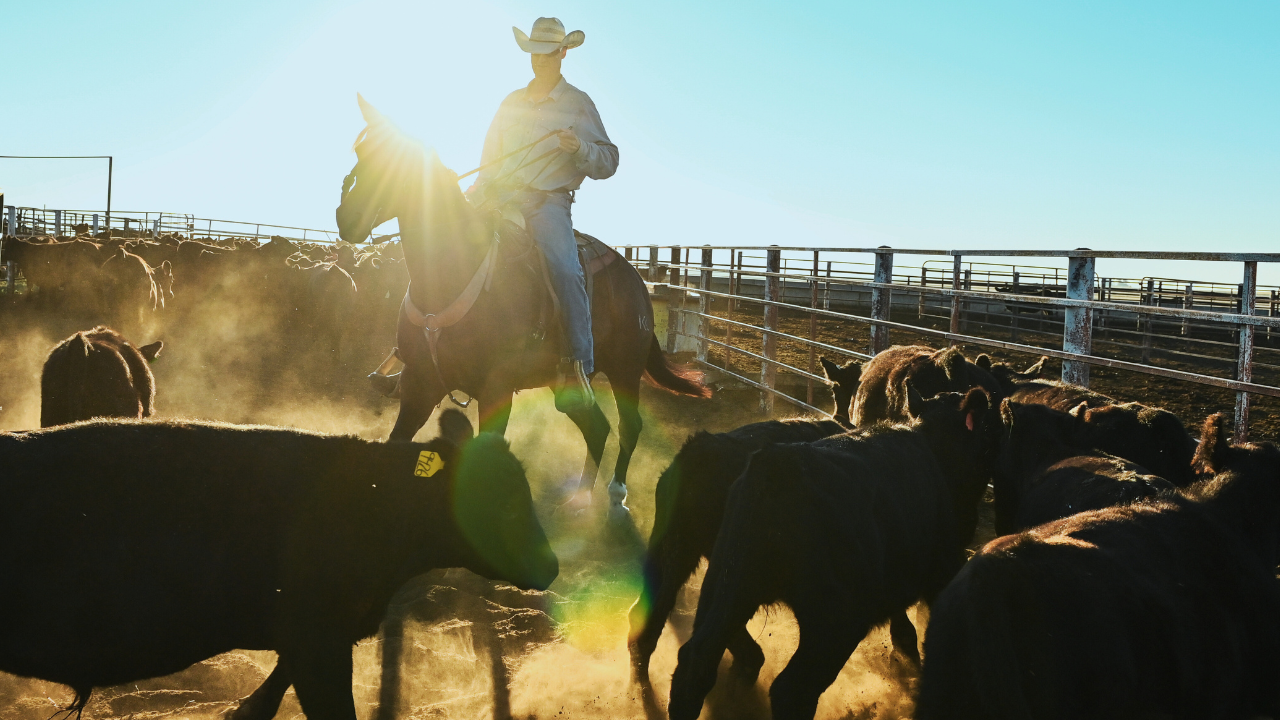
America’s ranchers are facing their smallest cattle herd in 70 years.
Years of punishing drought, rising costs and an aging ranching workforce have thinned herds across the country. Ranchers and agricultural economists alike say rebuilding will take years and beef prices aren’t likely to ease anytime soon.
“The biggest thing has been drought,” said Eric Belasco, head of the agricultural economics department at Montana State University.
BEEF PRICES ARE CLOSE TO RECORD HIGHS — BUT AMERICANS AREN’T CUTTING BACK
He said years of dry weather have wiped out grasslands across the West and Plains, leaving ranchers without enough feed or water to sustain their herds. Many have been forced to sell cattle early, even the cows needed to produce the next generation of calves, making it hard to rebuild.
“It’s not going to be a quick fix, you’re not going to solve it overnight,” Belasco told Fox News Digital.
Ranchers have sold off many of their cattle in order to cope with rising prices. (Melissa Phillip/Houston Chronicle/Getty Images)
Belasco said the aftereffects of years of drought are still being felt and until ranchers can rebuild their herds, consumers will keep paying the price.
“The primary reason you see prices so high is because we haven’t seen any kind of inventory rebuilding,” he said. “Until you see that rebuild, you probably won’t see prices coming back down again.”
That slow rebuilding is a challenge for the cattle industry, according to Derrell Peel, a professor of agricultural economics at Oklahoma State University.
“The fact of the matter is there’s really nothing anybody can do to change this very quickly,” Peel said. “We’re in a tight supply situation that took several years to develop, and it’ll take several years to get out of it.”
Peel, who specializes in livestock marketing, said there’s no quick way to ease pressure on beef prices, since it takes roughly two years to bring animals to market and several years to rebuild herds.
TRUMP’S BEEF IMPORT PLAN IGNORES KEY ISSUE SQUEEZING AMERICAN CATTLE RANCHERS
Even as ranchers wait for herds to recover, parched conditions are working against them, turning pastures to dust and feed into a luxury.
Research from the Kansas City Federal Reserve found that with each step up in drought severity, cattle-producing regions see about a 12% drop in hay production, a 5% rise in hay prices, a 1% reduction in herd size and a 4% decrease in farm income.
To cope, many ranchers are shrinking their herds. A 2022 Farm Bureau survey found that about two in three ranchers have sold animals off, leaving them with roughly one-third fewer cattle than before.
Ranchers and agricultural economists alike say rebuilding the cattle inventory will take years. (Ricky Carioti/The Washington Post/Getty Images)
Few people see the challenges of ranching more clearly than Cole Bolton, owner of K&C Cattle Company, whose pastures stretch along the soft edge of the Texas Hill Country.
“I think it’s going to take a while to fix this crisis that we’re in with the cattle shortage. My message to consumers is simple, folks, be patient. We’ve got to build back our herds,” Bolton told Fox News Digital.
Bolton said the region, known for its red dirt and family-run ranches, has gone nearly three months without rain. While showers were finally arriving, he noted that the cattle industry has weathered one setback after another, from market turmoil to extreme conditions, over the past five years.
The growing strain highlights how persistent drought is reshaping the ranching industry and tightening the nation’s livestock supply.
That pressure is being felt not just on ranches but also at the grocery store.
According to USDA data, the average retail price of beef rose from about $8.51 a pound in August 2024 to $9.85 a pound a year later, a gain of roughly 16%.
The “5-market steer price” represents what ranchers earn for live cattle before they’re processed into meat. The “farm-to-retail” spread reflects everything that happens after that – the costs and profits tied to slaughtering, processing, packaging, shipping and selling beef in stores.
Much of that work — and the profits it generates — are concentrated among the industry’s “big four” meatpackers: Tyson Foods, JBS, Cargill and National Beef.
Together, these data points show that while ranchers are earning slightly more for their cattle than they were a few years ago, the biggest price increases are happening well after the animals leave the pasture.
Despite the markups between the ranch and the grocery store, demand hasn’t wavered. Americans are still buying beef more than ever.
Americans are still buying beef even as prices climb to nearly $10 a pound. (Jim Watson/AFP/Getty Images)
Beef remains the dominant player in the fresh-meat aisle, with $44.3 billion in sales over the past year, a 12% increase that outpaced chicken, pork and turkey, according to Beef Research, a contractor to the National Cattlemen’s Beef Association.
Glynn Tonsor, a professor of agricultural economics at Kansas State University, told Fox News Digital that strong consumer demand will continue to drive beef prices higher.
“There’s nothing that forces me or you or anybody else when we go into the grocery store to pay more for beef. People are choosing to,” he said. “The consumer desire for beef is strong and, regardless of the supply-side situation, that has the effect of pulling prices up.”
Read the full article from Here



Southern California is bracing for a hot and muggy week ahead, with heat watches in place and a chance of thunderstorms across the mountains and desert regions.
Temperatures are expected to increase each day into midweek, prompting officials to extend a heat advisory until 10 a.m. Tuesday, when it will transition to an extreme heat watch for even warmer conditions through Thursday evening.
Temperatures are expected to peak on Wednesday, with many locations topping 100 degrees and some reaching 110, according to the National Weather Service.
“Monsoonal moisture moving over the area will add to the discomfort, also bringing the potential for showers and thunderstorms each day,” the Weather Service said.
Those thunderstorms are most likely to occur over the mountain and desert areas as subtropical moisture is drawn into the region by a strong ridge of high pressure.
Temperatures along the coast may even reach the 90s by midweek, with very warm temperatures continuing through the night.

“Given the extreme heat and humidity, it’s highly recommended to complete outdoor activities as early as possible,” the Weather Service said.
The high pressure is expected to slowly weaken Thursday, bringing afternoon highs to within a few degrees of normal in most areas by Friday.

Two rare corpse flowers have begun to bloom simultaneously at the Huntington Library in San Marino, the nonprofit organization announced Sunday evening.
Odorysseus, the taller of the two flowers, bloomed first. A second, smaller corpse flower named Odora appears to be following close behind.
The Huntington Library is inviting visitors to take in the flowers’ unique aroma, which is often compared to rotting flesh.
“And so it begins,” the Huntington Library wrote on social media.
Odora is shaped a bit differently than Odorysseus because its spadix is inverted due to a developmental irregularity. This is not expected to affect the blooming of the flower.
“Plot twist!” the Huntington Library wrote on Instagram. “Odora wants to steal the spotlight. Odora’s spathe has started opening, too. Tiny but mighty, we’re in for quite the show with a double bloom.”
-

File: The Corpse Flower, as seen in 2024 at The Huntington in San Marino, California. (Photo by Linnea Stephan)

The Huntington is open from 10 a.m. to 5 p.m. Wednesday through Monday, and is closed on Tuesdays. Reservations are required Friday through Sunday, on holidays, and during peak seasons. “Twilight stroll” hours are available on the Huntington’s website.
The public can also watch a live stream of the bloom on the organization’s YouTube channel.

Family members have identified 15-year-old Rosemead High School student Aziel Zacapala as the boy killed in a stabbing outside an elementary school in El Monte on July 10.
A candlelight vigil was held for Zacapala at the Rosemead skate park at 6 p.m. Saturday. The original location of the vigil was moved from 9700 Fern Street in El Monte, where the stabbing happened, as homicide detectives continue to investigate the scene.
Zacapala was one of three people stabbed during a fight that broke out on Fern Street around 1 p.m., according to information released by the Los Angeles Sheriff’s Department and the El Monte Police Department. Authorities were called to a local emergency room that afternoon, where two adults and Zacapala were being treated for stab wounds.
Zacapala was pronounced dead at the hospital. The adult victims are in stable condition and expected to survive, authorities said.
A GoFundMe page created to help Zacapala’s family pay for funeral expenses described the slain teen as a “beloved nephew, friend, son and high school football player” … “whose life was tragically cut short.”
“Aziel was a good kid, full of promise and kindness, and he had big dreams of making it to the big leagues as a football player,” the GoFundMe page reads. “His absence leaves a deep void in our family and community.”
-
15-year-old Aziel Zacapala was stabbed to death in El Monte on July 10, 2026. (GoFundMe) -
A vigil was held for 15-year-old Aziel Zacapala Satruday. “AZ” was stabbed to death in El Monte on July 10, 2026. (KTLA)


Zacapala, known as “AZ” by fellow Rosemead High School students, was playing football with friends at Rosemead Park’s Fourth of July event days before the suspected attack, his family said. Now his loved ones are asking for community support as they mourn his death.
“His mother, who is currently unemployed and raising two other young children — including a newborn — has been doing Instacart orders just to stay afloat,” the GoFundMe reads. “Now, she faces the overwhelming daily hardships of supporting her family during this devastating time.”
As of Saturday night, the GoFundMe has raised $16,000 of its $24,000 goal.
No suspects were found at the scene of the stabbing and no arrests have been made in the case, authorities said.
“Investigators are still working to determine whether more than one suspect was involved,” LASD deputies said Saturday morning. “Currently, there is no suspect description available.”
Anyone with information about the stabbings is asked to call the Los Angeles County Sheriff’s Department’s Homicide Bureau at 323-890-5500.
-

 Ohio4 minutes ago
Come Hang Out With Your Fellow Autopians In Detroit And Ohio Next Week – The Autopian
-

 Oklahoma10 minutes ago
OKFB pleased with newly proposed settlement in long-running State of Oklahoma poultry case | Oklahoma Farm Bureau
-

 Oregon16 minutes ago
Oregon joins multistate lawsuit seeking to block Warner Bros.-Paramount merger
-

 Pennsylvania21 minutes ago
Governor Josh Shapiro signs overdue Pennsylvania state budget with bipartisan support
-

 Rhode Island28 minutes ago
Rhode Island Foundation is offering three composers $30,000 grants — applications due Aug. 10 – What’s Up Newp
-

 South-Carolina34 minutes ago
LIVE: South Carolina governor to announce new appointment after Sen. Graham’s sudden death
-

 South Dakota40 minutes ago
South Dakota ends 2026 fiscal year with $69 million surplus
-

 Tennessee46 minutes ago
Everything Tennessee Basketball Assistant Coach Gregg Polinsky Said During Summer Practice | Rocky Top Insider

