Southwest
7 states vote to protect abortion rights, 3 keep restrictions in place

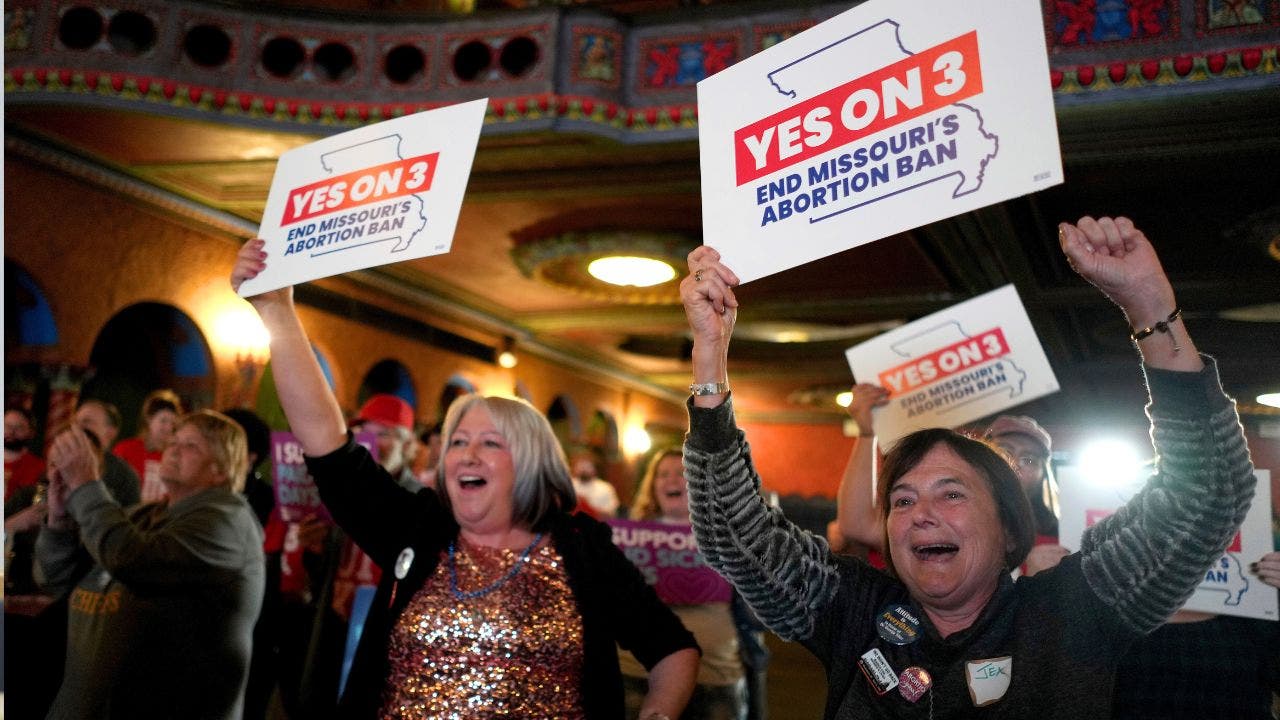
Ten states voted directly on abortion-related measures Tuesday, with abortion advocates claiming seven victories.
Arizona, Colorado, Florida, Maryland, Missouri, Montana, Nebraska, New York, Nevada and South Dakota all went to the polls on the issue, with the majority of the ballot measures seeking to amend efforts passed in Republican-led states whose leaders moved to restrict abortion in the wake of the Supreme Court’s June 2022 decision to overturn Roe v. Wade.
Voters in Missouri cleared the way to undo the state’s near-total ban, one of the nation’s tightest restrictions, with an amendment that would allow lawmakers to restrict abortions past the point of a fetus’ viability – usually considered after 21 weeks, although there is no exact defined time frame.
Abortion rights amendments also passed in Arizona, Colorado and Maryland and Montana, per The Associated Press. Montana voted to amend the state constitution to “expressly provide a right to make and carry out decisions about one’s own pregnancy, including the right to abortion.”
ABORTION ‘ON THE BALLOT’ IN 10 STATES THIS ELECTION, BUT IT MIGHT NOT MATTER
People at ann election night watch party react after an abortion rights amendment to the state constitution passed on Nov. 5, 2024, in Kansas City, Missouri. (AP Photo/Charlie Riedel)
Nevada voters also approved an amendment, but they’ll need to pass it again in 2026 for it to take effect.
Another measure, which bans discrimination on the basis of “pregnancy outcomes,” prevailed in New York. It does not contain the word “abortion,” but rather bans discrimination on the basis of “pregnancy outcomes, and reproductive healthcare and autonomy.”
In Arizona, voters were asked to amend the state constitution to allow abortions through the 24-week mark. The measure enshrines a “fundamental right” to abortion before fetal viability, when a fetus has a “significant likelihood” of surviving outside the uterus.
The amendment replaces the current law that bans abortion after the first 15 weeks of pregnancy.
A long-dormant 1864 law, which predated Arizona’s statehood, had gone into effect in the Grand Canyon State after the repeal of Roe vs. Wade in 2022, thrusting the issue into the spotlight and leading to Tuesday’s vote. The law had no exceptions for rape and incest, only for the life of the mother, and was repealed in September.
DESANTIS CLAIMS VICTORY OVER FLORIDA ABORTION, MARIJUANA AMENDMENTS AS SUPPORTERS CELEBRATE: ‘PRAISE GOD’
Gov. Ron DeSantis speaking about Amendment 4 at the Grove Bible Chapel in Winter Garden, Florida, on Oct. 22, 2024. (WOFL)
Florida, Nebraska and South Dakota defeated similar constitutional amendments, leaving existing restrictions in place.
Florida, home to more than 13 million registered voters, was the most populous state deciding on abortion measures. Republican Gov. Ron DeSantis last year signed into law the Heartbeat Protection Act, which restricts most abortions after six weeks of gestation.
This year, Florida residents voted on Amendment 4, the Right to Abortion Initiative, which aimed to overturn that law by prohibiting measures that restrict abortion before viability. In Florida, constitutional amendments must get 60% of the vote, not a simple majority, to pass. Amendment 4 received majority support among voters but failed to meet the 60% threshold.
South Dakota voters’ defeat of its abortion measure prevents some regulations related to the health of the woman after 12 weeks. The Mount Rushmore State currently has a ban on abortion throughout pregnancy with some exceptions.
Ten states voted directly on abortion-related measures Tuesday with abortion advocates claiming seven victories. (AP)
Nebraska passed a ballot amendment prohibiting abortion beyond the first three months of pregnancy.
Tuesday’s results ended a win streak for abortion-rights advocates who had prevailed on all seven measures that have appeared on statewide ballots since the fall of Roe.
A Fox News poll conducted this year found that a record-high number of voters now say they support legalizing abortion in some form, including two-thirds who said they supported a nationwide law that would guarantee abortion access for women.
Fifty-nine percent said they believe abortion should be legal in “all or most cases,” up from the previous high of 57% in September 2022.
Fox News’ Danielle Wallace, Breanne Deppisch, Emma Colton and the Associated Press contributed to this report.
Read the full article from Here

Los Angeles, Ca
Pasadena motorist knocked unconscious in unprovoked assault after other driver flashes high beams at him

A motorist was rendered unconscious after what authorities are calling an unprovoked attack that occurred after another driver flashed their high beams at him, authorities say.
According to the Pasadena Police Department, the victim, a 63-year-old man, was driving northbound on Raymond Avenue near Washington Boulevard when a vehicle traveling in the opposite direction flashed him around 1 a.m. Saturday.
“The victim reported that he was driving northbound on Raymond Avenue from Washington Boulevard when he observed a vehicle traveling southbound flashing its high beams at him,” a Pasadena Police Department spokesperson confirmed to KTLA. “The victim stated he stopped his vehicle and exited. He was then assaulted by an unknown suspect. The assault was unprovoked.”
The attack left the man unconscious and with a three-inch deep laceration to his head, police added. Upon regaining consciousness, the man transported himself to Huntington Hospital, and it was around 1:20 a.m. when police responded there to a report of an assault with a deadly weapon and began their investigation.
Upon arriving at the hospital, the victim told police that, due to his injuries, he was not able to provide a description of a suspect, vehicle or the weapon used, nor was he able to tell police the exact location where the assault occurred, although it was confirmed to be somewhere near Raymond Avenue and Washington Boulevard. La Pintoresca Park is located near that intersection.
No further details were immediately available.
Anyone with any information on the incident is asked to contact the Pasadena Police Department right away.
Sofia Pop Perez contributed to this report.

A woman was struck and killed by a driver while crossing the street on Pacific Coast Highway in Long Beach.
On June 3, the female pedestrian was using the crosswalk at Pacific Coast Highway and Pacific Avenue around 4:50 a.m.
She had walked against a red light and was hit by a 19-year-old driver in a Chevy sedan, Long Beach police said.
Despite lifesaving efforts, the woman was pronounced dead at the scene. The driver remained at the scene and is cooperating with the investigation.
“At this time, impaired driving, distracted driving and excessive speed are not believed to be a factor in this collision,” police said.
The woman’s name is being withheld pending identification by the Los Angeles County Medical Examiner.
Anyone who witnessed the crash or has information on the incident is asked to call Detective Joseph Johnson at 562-570-7355.
Anonymous tips can be provided to L.A. Regional Crime Stoppers at 1-800-222-8477 or online at lacrimestoppers.org.

A man wanted for a deadly road rage shooting in Los Angeles was arrested and extradited from Mexico after fleeing the U.S. in 2024.
The suspect was identified as Christian Rojas, 21, of Bellflower, according to the California Highway Patrol.
Authorities had been searching for him since the deadly incident on October 10, 2024.
Rojas and a second suspect, Joshua Rojas Sr., 47, of Downey, were driving on the northbound 5 Freeway in Boyle Heights around 4 p.m. when they became involved in an altercation with another driver that escalated into a shooting.
-

Video obtained exclusively by KTLA shows the terrifying moment a road rage suspect opened fire the driver of another car on the 5 Freeway in Los Angeles, fatally wounding him and seriously injuring a passenger, on Oct. 10, 2024. (Credit: @hugoboss01) -
Video obtained exclusively by KTLA shows the terrifying moment a road rage suspect opened fire the driver of another car on the 5 Freeway in Los Angeles, fatally wounding him and seriously injuring a passenger, on Oct. 10, 2024. (Credit: @hugoboss01) -
Video obtained exclusively by KTLA shows the terrifying moment a road rage suspect opened fire the driver of another car on the 5 Freeway in Los Angeles, fatally wounding him and seriously injuring a passenger, on Oct. 10, 2024. The alleged gunman is circled. (Credit: @hugoboss01) -
Video obtained exclusively by KTLA shows the terrifying moment a road rage suspect opened fire the driver of another car on the 5 Freeway in Los Angeles, fatally wounding him and seriously injuring a passenger, on Oct. 10, 2024. (Credit: @hugoboss01) -
Video obtained exclusively by KTLA shows the terrifying moment a road rage suspect opened fire the driver of another car on the 5 Freeway in Los Angeles, fatally wounding him and seriously injuring a passenger, on Oct. 10, 2024. (Credit: @hugoboss01) -
Christian Rojas, 21, of Bellflower, was arrested and extradited to the U.S. from Mexico on June 2, 2026, in connection with a deadly road rage shooting in Los Angeles. (California Highway Patrol)


Video of the tense confrontation showed the suspects, who were driving a Dodge Durango SUV, opening fire on two men in a Cadillac sedan.
The shooting forced the victim to pull over abruptly. That’s when a suspect ran up to the Cadillac, opened the passenger-side door and fired several shots at close range.
In a panic, the Cadillac driver tried to escape by making a sudden U-turn and driving against oncoming traffic. He eventually crashed head-on into several vehicles.
The suspects ditched their SUV and fled toward a freeway exit on foot. The Cadillac driver was left with serious injuries and his passenger was killed. Their identities were not released.
The incident caused a miles-long backup that left thousands of motorists stranded on the freeway for hours and authorities worked to clear the scene.
Following an extensive investigation, detectives identified the two men as the suspects involved.
Joshua Rojas Sr. was arrested in San Bernardino on October 22, 2024, on a murder charge. He remains in custody awaiting trial.
Meanwhile, Christian Rojas had fled the U.S. and was hiding in Mexico, detectives said. A $4.3 million bail warrant was issued for his arrest.
“Through a coordinated international effort, investigators determined that Rojas was living in Palomo de Arriba, Mexico,” CHP officials said. “The U.S. Marshals Service worked with Mexican state police to locate and arrest him on the outstanding warrant.”
On June 2, 2026, Christian was arrested and extradited to the U.S. to face a murder charge.
“This arrest demonstrates that time and distance will not shield violent offenders from justice,” said CHP Southern Division Chief Chris Margaris. “For nearly two years, our detectives remained relentless in their pursuit of those responsible for this senseless act of violence. Through exceptional collaboration with the United States Marshals Service and our law enforcement partners in Mexico, we located and apprehended this suspect and brought him back to face the charges. We remain committed to protecting the public, supporting victims and their families, and holding violent criminals accountable wherever they may try to hide.”
-

 Sports50 seconds ago
Golden Tempo, 2026 Kentucky Derby winner, takes home 158th Belmont Stakes
-

 Technology4 minutes ago
Why scammers target retirees in a 6-week summer window
-
 Business9 minutes ago
Earwormy Kars4Kids jingle is back as charity appeals in California court
-
 Entertainment16 minutes ago
Review: A family braces for the worst, unsentimentally and with nuanced charm, in ‘Renoir’
-
 Lifestyle19 minutes ago
At 100, Route 66 still beckons as a cross-country caravan takes off from Santa Monica
-
 Politics24 minutes ago
Judge pauses USDA plan to tie SNAP benefits to Trump’s gender, immigration ideology
-
 Science31 minutes ago
A flesh-eating worm from the 1960s is re-invading the U.S. Are CA cattle at risk?
-
 Sports34 minutes ago
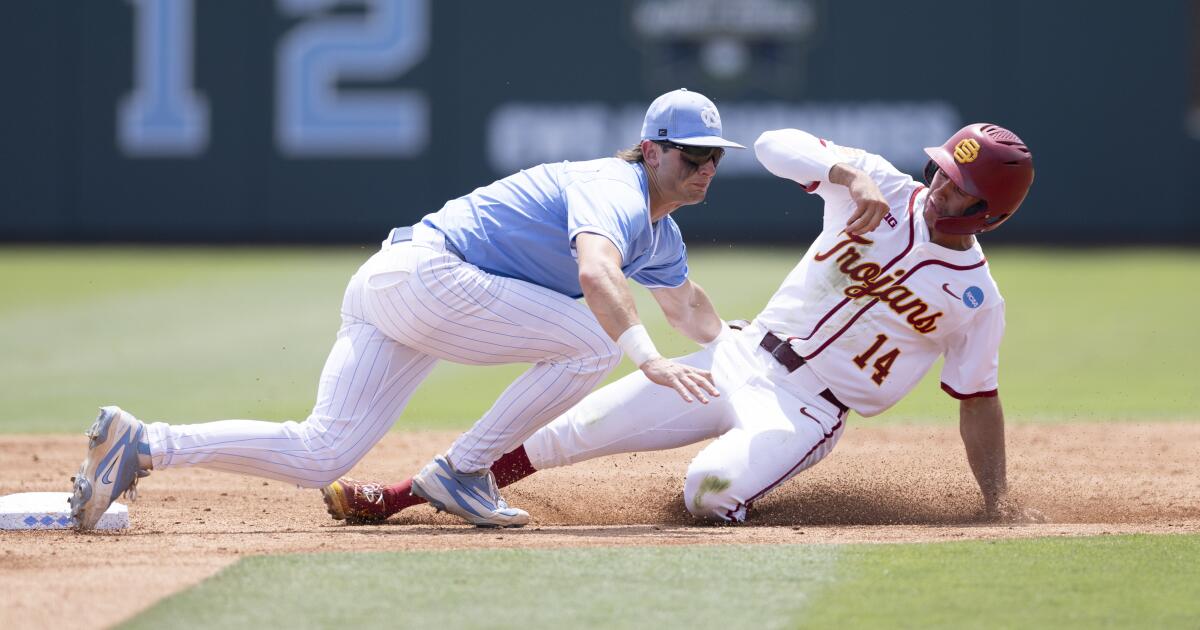
North Carolina’s Jason DeCaro shuts out USC baseball to force decisive Game 3

