Southeast
Fox News Voter Analysis: How Trump regained the White House

After a bitterly contested presidential campaign full of unprecedented twists and turns, voters returned Donald Trump to the White House after four years out of power. In an election where voters across the country wanted change, they chose Trump’s outsider appeal over Kamala Harris’ promise to “turn the page” on the Trump era.
Trump’s victory was powered by his strength on the economy and immigration – two of voters’ top concerns. He was seen as a stronger leader than Harris in a time of turmoil, and voters remembered his presidency more fondly than their evaluations of the current administration. Trump ran up the score with his base while narrowing traditional Democratic advantages among Black, Hispanic, and young voters.
Harris came close in her bid to become the first woman elected to the presidency but was unable to make enough gains in the ideological middle of the electorate to offset defections among groups that traditionally vote Democratic.
CHECK OUT THE LATEST FOX NEWS POWER RANKINGS IN THE 2024 ELECTION
Preliminary data from the Fox News Voter Analysis, a survey of more than 110,000 voters nationwide, highlights the campaign’s key dynamics.
Republican presidential nominee former President Donald Trump arrives at an election night watch party at the Palm Beach Convention Center on Nov. 6, 2024, in West Palm Beach, Florida. (Evan Vucci/AP)
Voters headed to the polls believing the country was on the wrong track (70%, up from 60% who felt that way four years ago) and seeking something different: most wanted a change in how the country is run, with roughly a quarter seeking complete and total upheaval.
Those seeking complete change in the country’s affairs voted for the former president by a wide margin.
Voters’ frustrations with Joe Biden’s administration were a drag on Harris’ candidacy, as nearly 6 in 10 disapproved of the job Biden has done.
Voters had rosier recollections of Trump’s time in office, with half approving of the job he did as president. Four years ago, 47% approved of the job Trump had done.
This desire for change was coupled with split views on the role of government. Slightly more than half felt the government should be doing more to solve the country’s problems, a modest decline from 2020 (57%). Some 45% felt the government was doing too many things better left to the private sector.
Profile of the Vote
The nation’s deep divides – by gender, education, and area of residence – were on vivid display. Men backed Trump by 10 points, while women went for Harris by 8 points. The 18-point gender gap was a touch wider than 2020 (17 points).
In 2020, Trump won men by 5 points and Biden won women by 12.
This divide was readily apparent in views of societal gains for women. Some 4 in 10 Trump supporters (43%) were concerned that society’s focus on gains for women had come at the expense of men; just 14% of Harris felt that way. Overall, 29% were concerned.
Voters without a college degree went for Trump by 12 points; college-educated voters went for Harris by 15 points. Harris’ showing among college-educated voters was 1 point worse than Biden’s 2020 showing among college-educated voters, while Trump bettered his 2020 numbers among noncollege voters by 4 points.
Voters headed to the polls believing the country was on the wrong track (70%, up from 60% who felt that way four years ago) and seeking something different: most wanted a change in how the country is run, with roughly a quarter seeking complete and total upheaval. (Fox News)
Trump had a particular advantage among White voters without a degree (+29 points), thanks in large part to his 38-point edge among noncollege White men.
Harris won college-educated Whites by 8 points and college-educated White women by 16 points – both in the ballpark of Biden’s 2020 margins (+7 points and +21 points, respectively).
Overall, White voters backed Trump by 12 points, exactly the same as his 12-point advantage in 2020.
Trump ran up the score in rural areas (+26 points, up from a 22-point edge in 2020), while Harris ran slightly behind Biden’s 2020 numbers in urban areas (+28 points, compared to Biden +33).
Suburban voters backed Harris by 6 points, less than Biden’s 10-point margin four years ago. Suburban women, a major source of strength for Biden (+19 points), went heavily for Harris (+16 points) – but she lost ground among suburban men (Trump +5 points, compared to +1 for Biden).
While the election was, in part, about the deep divides in American society, Trump’s success in attracting traditional Democratic constituencies was also a defining feature. He improved on his 2020 numbers among Hispanics (41%, +6 points), Black voters (15%, +7 points from 2020), and young voters (46%, +10 points).
FOX NEWS PROJECTS DONALD TRUMP DEFEATS KAMALA HARRIS TO BECOME 47TH PRESIDENT OF THE UNITED STATES
These rightward shifts were particularly notable among Hispanic men (+8 points), Black men (+12 points from 2020), and men under 30 (+14 points).
Seniors, who backed Trump by 3 points in 2020, were once again in the former president’s column.
Trump won Catholics by 9 points and Protestants by 22 points, while Harris held the edge among Jewish voters (+34 points), Muslims (+32 points), and the religiously unaffiliated (+40 points).
White Catholics favored Trump by 20 points, while White evangelical Christians broke for Trump by a massive 59-point margin.
Voters similarly divided along lines of religious attendance: Trump won those who regularly attend services (of any denomination) by 22 points; Harris won those who infrequently or never attend by 13 points.
The vice president won union households (+12 points, down from Biden’s 14-point edge in 2020). As he did in 2020, Trump had an advantage among military households (+13 points) and gun owner households (+26 points).
Overall, Trump’s strongest support came from White evangelicals, rural voters, Whites without a college degree, conservatives, and men.
Overall, Trump’s strongest support came from White evangelicals, rural voters, Whites without a college degree, conservatives and men. (Fox News)
Harris’ best groups included college-educated women, Black voters, liberals, and urban voters.
That each candidate successfully appealed to their base is hardly surprising in a hyper-partisan political environment. Most Democrats (95%) backed Harris; slightly fewer Republicans (92%) backed Trump.
Nearly three-quarters of Republicans (73%) considered themselves part of the MAGA movement. And while the Harris campaign touted endorsements from prominent Republicans, she was unable to convince enough non-MAGA Republicans to cross the aisle.
Just 7% of voters self-identified as true independents, meaning they do not lean toward one party or another. Harris had a 7-point advantage with this pivotal swing group, a decline from Biden’s 15-point edge in 2020.
Harris was able to appeal to political moderates (+17 points), though once again to a lesser degree than Biden (+26 points in 2020).
Most voters (89%) were locked into their choice of candidate for months, while the small number of late deciders split evenly.
Views of the Candidates
In a time of domestic discord and international conflict, Trump was able to project significant strength of character. A majority saw him as a strong leader; fewer felt that way about Harris.
Voters also believed Trump would capably handle a crisis (54-48%) and had the right policy ideas (52%-47%).
Harris had advantages on personal character (53% vs 43% for Trump), honesty (47%-41%), and having the mental capacity to serve as president (57%-52%). Equal numbers thought each would look out for people like them (48%-48%).
But in an election where voters wanted change, slightly more thought Trump would bring positive change (51%-48%).
Trump’s voters were largely motivated by support for the former president (79%) rather than a vote against Harris (21%). Two-thirds of the vice president’s supporters (66%) described their vote as for her; 34% as against Trump.
On balance, voters had slightly more favorable views of Harris (48% favorable, 50% unfavorable) as a person than Trump (47% favorable, 51% unfavorable). The same was true at the vice-presidential level: views of Tim Walz (43% favorable, 42% unfavorable) were marginally better than opinions of JD Vance (43% favorable, 45% unfavorable). Robert F. Kennedy Jr., who ended his third-party presidential bid and endorsed Trump in August, was just a touch less popular than the two running mates (42% favorable, 43% unfavorable).
Harris’ best groups included college-educated women, Black voters, liberals and urban voters. (Fox News)
Although he won, Trump was unable to fully rehabilitate his image during his time out of office: four years ago, his favorable rating was under water by 7 points (46% favorable vs. 53% unfavorable).
The spotlight was less kind to Biden, whose sharply negative favorability rating (40% favorable, 58% unfavorable) slipped significantly from four years ago (50% favorable, 48% unfavorable).
Views of the candidates were shaped over the course of a condensed campaign marked by a string of earthshaking events: the criminal cases against Donald Trump, two assassination attempts against the former president, Biden withdrawing from the race after the first debate, and Harris attempting to be the first woman elected to the presidency.
Relatively few voters (13%) said the possibility of electing the first woman president was the most important factor to their vote. Harris won these voters by a wide margin – but a third backed Trump to deny Harris the chance to be the first female commander-in-chief.
The image of a bloodied and defiant Trump after the shooting in Butler, Pennsylvania, clearly galvanized his supporters, as 16% said the attempts were the most important factor to their vote, and they overwhelmingly backed Trump.
Voters had a net-positive view of the Secret Service (52% approve, 46% disapprove), though 62% of Trump voters disapproved of the job the organization is doing.
Opinions of the Supreme Court (50% approve, 49% disapprove) were evenly divided, while two-thirds disapproved of Congress (31% approve, 68% disapprove).
Views on the Issues
As voters headed to the polls, they said the economy was far and away the top issue facing the country, followed distantly by immigration and abortion.
Four in 10 voters (40%) said inflation was the single most important factor to their vote, and they backed Trump by almost two-to-one.
Harris countered Trump’s advantages on inflation and immigration by winning the 26% who focused primarily on abortion by 41 points and the 50% who prioritized the future of American democracy by 27 points.
Nearly one-third (31%) said freedom of speech was most important to their vote, and they went somewhat more narrowly for Trump (+8 points).
As voters headed to the polls, they said the economy was far and away the top issue facing the country, followed distantly by immigration and abortion. (Fox News)
Voters had a negative view of the economy: nearly two-thirds rated it as not good (40%) or downright poor (24%). Four years ago, in the depths of a coronavirus-induced recession, only 14% said economic conditions were poor.
In a sign of inflation’s economic toll, nearly three times as many voters said they were falling behind financially as said they were getting ahead. In 2020, 13% said they were getting ahead and 18% were falling behind, with the majority (69%) holding steady.
Those who said they were getting ahead went for Harris by 42 points and those holding steady backed her by a narrower 6-point spread, while those falling behind went for Trump by 29 points.
Nearly all voters were concerned about being able to afford food (91%, including 67% very concerned), and most were worried about paying for health care (84%, 54% very concerned), housing (79%, 51% very), and gas (79%, 48% very).
Voters preferred Trump to Harris by 9 points on handling the economy and by 5 points on taxes.
Despite preferring Trump on the economy, voters split on his signature economic policy, increasing tariffs on goods imported to the United States.
Trump’s advantage on immigration was larger than his edge on the economy, as voters preferred him on the issue by 15 points.
Over the course of the campaign, Trump promised “the largest domestic deportation operation in American history” – and succeeded in changing voters’ minds on the issue. Four years ago, 70% believed undocumented immigrants should be offered the chance to apply for legal status, while 29% felt they should be deported. Voters’ views this year were markedly different.
Relatedly, two-thirds favored limiting the number of immigrants allowed to apply for asylum – a policy adopted by both the Trump and Biden administrations, but more closely associated with Trump.
Voters also thought Trump would do a better job handling crime than Harris by 9 points.
Harris’ advantages on climate change (voters preferred her to Trump by 18 points) and abortion (Harris +18 points) outpaced Trump’s edge on immigration and crime.
All told, nearly two-thirds (63%) said abortion should be legal in all or most cases, up from the 59% who felt that way four years ago, before the repeal of Roe v. Wade.
The balance was closer, however, when voters considered a ban after 15 weeks: 46% in favor, 53% opposed.
In a sign of inflation’s economic toll, nearly three times as many voters said they were falling behind financially as said they were getting ahead. In 2020, 13% said they were getting ahead and 18% were falling behind, with the majority (69%) holding steady. (Fox News)
A slim majority opposed banning gender-affirming medical treatments for minors who identify as transgender. The Trump campaign spent millions of advertising dollars highlighting Harris’ past support of gender-affirming care for the incarcerated.
Even if they did not agree with her on transgender health care, voters saw Harris as better able to handle health care more broadly (by 8 points) and largely envisioned a more active government role. Majorities felt the government should be more involved in lowering the price of prescription medication (75%), eliminating medical debt (58%), and ensuring individuals have health insurance coverage (58%).
Slightly fewer, 50%, said the government should be more involved in ensuring children are vaccinated against common preventable diseases, but just 22% wanted the government less involved in vaccinations.
A week before the election, Harris used a speech at the Ellipse in Washington – the site of the Jan. 6, 2021, Trump rally that preceded the violent events at the Capitol – to cast Trump as a threat to American democracy.
A 55% majority was concerned Trump would move the country closer to authoritarian rule, while less than half (46%) felt Harris posed a similar threat.
Even so, majorities felt each candidate’s views were too extreme.
Voters split over how much responsibility Trump bore for the violence at the United States Capitol on Jan. 6, 2021.
Harris won those who felt Trump had a great deal of responsibility by 86 points, while Trump won those who felt he was not to blame at all by 91 points. The group in the middle – who felt he was somewhat responsible for the violence – went for Trump by 40 points.
In general, slightly more voters felt the way Republicans talk about politics leads to violence (56%) than felt the same about Democrats (50%).
Despite unsubstantiated allegations of fraud in the 2020 election results and Trump raising similar concerns about the 2024 contest, three-quarters of voters (75%) were confident votes would be counted accurately at the national level, and even more were confident in their state’s ability to properly count the vote.
While 31% lacked confidence that ineligible voters would be prohibited from voting, that was down from 35% who felt that way four years ago. Few (9%) worried that eligible voters would be prevented from casting ballots.
Overall, 89% felt both candidates were obligated to accept the results of the election once all the votes were counted and the inevitable legal challenges were resolved. The vast majority of Harris voters (95%) and Trump voters (82%) felt there was an obligation to accept the results.
Trump countered Harris’ closing argument by suggesting Harris was too weak and untested to respond effectively in a crisis. Three-quarters thought Harris had been tested, and these voters felt she had delivered negative results by a 5-point margin. Most voters felt Trump had been tested, and slightly more felt he had delivered positive results than negative ones.
The ongoing violence in the Middle East served to reinforce Trump’s argument about leadership in a crisis, as voters believed he would do a better job handling the situation.
Voters favored continuing aid to Israel to fight Hamas and Hezbollah by 9 points, while favoring continued aid to Ukraine in its fight against Russian aggression by 11 points.
There was a marked shift in voters’ views of America’s role in the world. Just 20% wanted the country to take a more active role in solving the world’s problems, down from 37% who felt that way four years ago. Roughly equal numbers said the current approach was about right (38%) or preferred a less active role (40%).
States
Georgia – Trump
Georgia swung back to the Republican column after Biden eked out a win by the slimmest of margins in 2020. With the margins so narrow, the smallest shifts from 2020 would have been enough to flip the state to Trump. Instead, he got substantial movement among constituencies Democrats were counting on to keep the state blue.
Harris won women by 5 points, down from Biden’s 10-point advantage in 2020. She won voters under age 30 by 9 points, down from +19 for Biden. There was a similar shift among Black voters, who form the backbone of Democratic support in the Peach State: from Biden +86 points to Harris +71 points.
The shift among Black men was particularly consequential, as they went for Harris by just 51 points after breaking for Biden by 76 points four years ago.
Harris was counting on a strong performance in the suburbs to offset Trump’s strength (+31 points) with rural voters, but here again she came up well short of Biden’s mark: winning by just 3 points, a far cry from Biden’s 12-point win.
Trump was dominant with White voters without a college degree (78%) and White evangelical Christians (82%).
Trump appealed to voters across the state on economic grounds and found a ready audience, as huge numbers said they were concerned about paying for necessities like food (93%), health care (87%), gas (84%), and housing (83%).
Georgia voters trusted Trump over Harris on the economy by 8 points.
Voters preferred Harris by a wider margin (19 points) on abortion. Harris highlighted the case of Amber Thurman, the Georgia mother who died waiting for care after complications from an abortion pill, as an example of the harms of abortion bans.
Trump, on the other hand, shone a spotlight on Laken Riley, a nursing student allegedly killed by an illegal immigrant while jogging in February. His message on immigration proved compelling, as voters favored him on the issue by 17 points.
Overall, 54% would prefer illegal immigrants be deported, a substantial increase from the 32% who felt that way in 2020. Less than half (44%) said undocumented immigrants should be given the chance to apply for legal status.
Georgia was a focal point for controversy after the 2020 election, but 8 in 10 voters were confident this year’s votes would be counted accurately.
North Carolina – Trump
Trump triumphed once again in North Carolina, as Republicans have now won 10 of the last 11 presidential elections in the state. Barack Obama’s narrow win in 2008 was the only Democratic victory since Jimmy Carter’s presidency.
Trump posted similar results to 2020 among White voters without a college degree (74%, vs 69% four years ago), rural voters (63%, up 3 points from 2020), and White evangelical Christians (87%, up 1 point from 2020).
That alone might have been a winning formula – but shifts among Black voters and voters under age 30 pushed Trump over the top.
Overall, young voters backed Harris by just 8 points after going for Biden by 16 points four years ago. The shift was entirely powered by young men, who backed the former president by 16 points. Women under 30 went for Harris by 25 points.
The story was similar among Black voters: Black women were nearly universal in their support for Harris (93%), while 19% of Black men backed Trump, up from 6% in 2020.
Overall, 88% of Black voters picked Harris, down substantially from Biden’s 94%.
Harris won political moderates, a group that voted for Biden by 26 points, by just 16 points. She had hoped to run up the margins in the suburbs, but Trump more than held his own with 44% of the vote, up from 43% in 2020.
Just 12% of North Carolina voters said they were getting ahead financially, while almost three times as many (31%) said they were falling behind – and these voters broke heavily for Trump.
Some 42% cited the economy as the top issue facing the country. Harris kept the race close by nearly battling Trump to a draw on who could better handle the economy. Overall, voters trusted him over her by 5 points.
Still, the 41% of voters who said inflation was the most important factor to their vote broke for Trump by 31 points, 65%-34%.
In the governor’s race, Republican Mark Robinson faced allegations of discriminatory remarks and inappropriate online behavior. The scandals did not help Republicans retake the governorship, which Democrats have now won in 8 of the last 9 elections.
A majority (56%) held unfavorable opinions of Robinson, while more than half (52%) viewed Democrat Josh Stein favorably.
Trump endorsed Robinson, but a majority of voters said the endorsement did not affect their view of the former president.
Pennsylvania
In 2020, Biden declared victory after Pennsylvania was finally called for him nearly four days after the election. This time it is back in Trump’s column, though only barely – a continuation of the state’s see-saw between the parties after Trump’s less-than-one-point victory in 2016, and Biden’s similarly narrow margin four years later.
Trump pulled it off a bit more comfortably, with big wins among some of his mainstay groups: rural voters (63%), White voters without a college degree (62%) and men (55%).
Those margins, combined with improvements among some traditionally Democratic groups, were enough to flip the state red once again.
As he did elsewhere across the country, Trump made notable gains among young voters and Black voters in Pennsylvania, driven almost entirely by improvements among men. He won 23% of Black men, a 17-point bump for him from 2020.
Trump won 23% of Black men, up 17 points from 2020. (Fox News)
He won men under age 30 outright after losing them by 13 points four years ago.
Trump won men under age 30 outright after losing them substantially four years ago. (Fox News)
He also won 47% of the suburban vote, compared to 44% in 2020. His improvement in the suburbs was fueled by suburban men, a group he won outright after getting 47% of their vote in 2020.
Trump won 47% of the suburban vote, fueled by suburban men, a group he won outright after getting 47% of their vote in 2020. (Fox News)
Harris ran strong among women, college-educated voters and suburban women. She campaigned in the state with Republican Liz Cheney in an attempt to reach anti-Trump and moderate Republicans, but managed to pull in only 7% of Republican voters overall – less than the 9% Biden received in 2020. She got 59% among moderates – enough to keep the election close but not enough to put her over the finish line.
Harris got 59% among moderates – not enough for her to carry the state overall. (Fox News)
The economy ranked as the top concern for Pennsylvania voters, and more trusted Trump on the issue than Harris by 8 points. Just over 4 in 10 said inflation was the most important factor to their vote – those voters went for Trump by 37 points. And, only 11% said they were getting ahead financially, compared to the 32% who said they were falling behind. Twice as many of those voters went for Trump as chose Harris.
Trump’s support for fracking, an important industry in the state (and an issue on which Harris shifted positions), also had an impact: 63% of Pennsylvania voters wanted to see more of it in the state, and they broke for Trump by 37 points.
Immigration is another issue where Trump’s message appeared to sway voters. Nearly half (45%) said they would prefer to see illegal immigrants deported rather than given a chance for legal status, up from 31% who felt that way in 2020. Some 27% said immigration was key to their vote, and voters gave Trump a double-digit advantage on the issue.
A majority of voters (53%) held a favorable view of Gov. Josh Shapiro, more than viewed Harris (47%) or Trump (48% favorably). Whether Shapiro, who was under consideration for Harris’ vice president, could have helped her carry the state if he would have been on the ticket is one of the major unanswered questions of this election.
Wisconsin
In 2016, Trump was the first Republican to win Wisconsin’s presidential vote since Ronald Reagan in 1984, and he did so by the narrowest of margins (less than 1 percentage point). He lost by a similarly miniscule margin in 2020 but managed flip the script this time around.
Across the country, Trump’s winning formula involved holding on to his base and making significant inroads with young men, Black men and Hispanics. Wisconsin was somewhat different: It was a remarkably close race driven by small shifts in support rather than big swings among traditional Democratic constituencies.
Trump did well among his base of conservatives (89%, +1 point from 2020), White evangelicals (75%, -3 points), rural voters (58%, +1 point) and those without a college degree (55%, +2).
He got 48% among men under age 30, up just a touch from his 45% mark four years ago. He lost ground among non-White men (37%, compared to 42% in 2020).
But, the smallest improvements loom large when the statewide margins are so slim – and even more so when those improvements are among very large groups. Trump gained 2 points among men and 1 point among Whites, and that made all the difference.
Trump gained 2 points among men compared to 2020. (Fox News)
He was also able to keep it close in the suburbs, which Harris needed to offset his strength in rural areas. Biden won the suburbs by 4 points in 2020; the margin was 5 points this year.
Biden won the suburbs by 4 points in 2020; Harris’ margin was 5 points this year. (Fox News)
Trump also managed to increase his vote share among moderates (41%, compared to 34% in 2020) by just enough.
Trump upped his vote share among moderates by just enough. (Fox News)
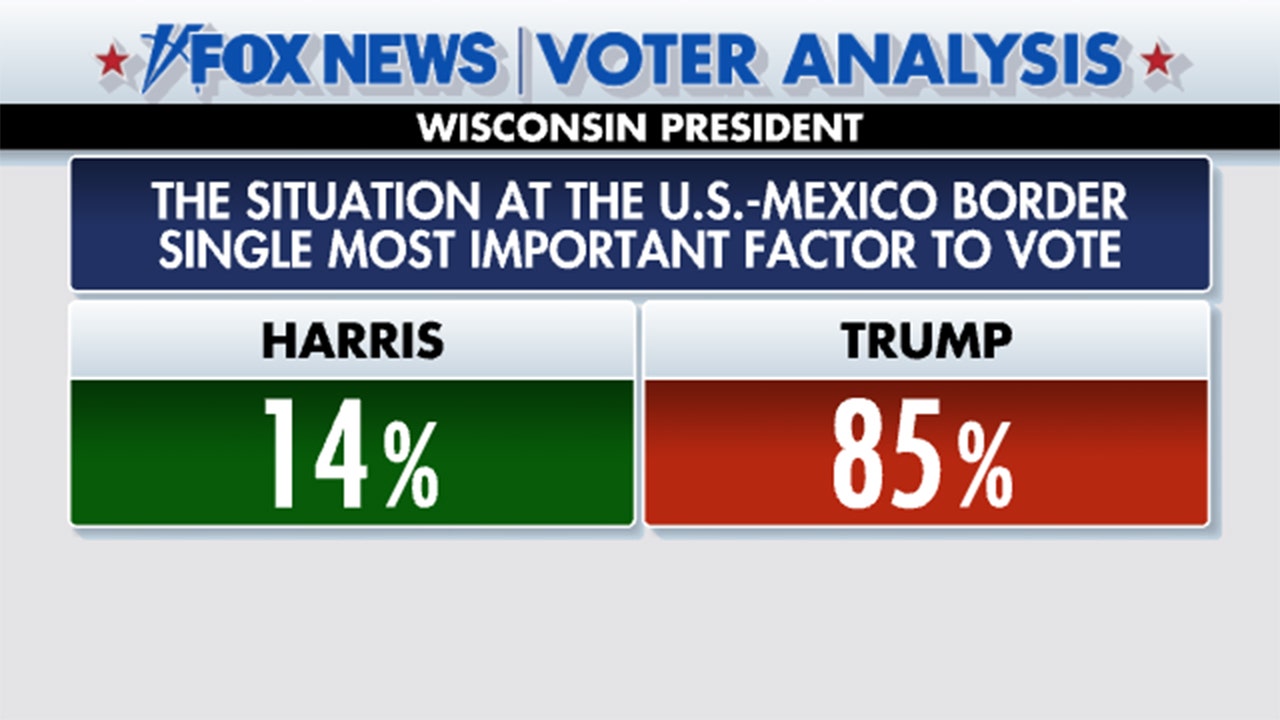
Issues on the minds of suburban voters also played to Trump’s advantage. Immigration was the second-most important issue to Wisconsin voters, and he carried those who said immigration was the most important factor to their vote by 71 points.
Immigration was the second-most important issue to Wisconsin voters, and he carried those who said immigration was the most important factor to their vote by a huge margin. (Fox News)
He was also seen as better equipped to handle the issue: 55%, compared to 34% for Harris.
Trump also won the law-and-order vote: 37% said they were very concerned about crime in their own communities, voters thought Trump was better on crime than Harris by 14 points, and those highly concerned about crime went for the former president by 30 points.
Transgender issues, including gender surgeries for inmates and transgender people participating in women’s sports, also became an issue during the campaign. Over half of Wisconsin voters (55%) said they thought support for transgender rights has gone too far.
Abortion rights were a major emphasis of Harris’ campaign, and she led Trump by a wide margin among voters who said it was their number-one issue (+48 points) and those who believed abortion should be legal (46%). Harris was also seen as better able to handle abortion policy by 23 points.
Overall, Harris did well with women (53%), particularly with college-educated women (65%).
In the end, it came down to the economy: it was the top issue for voters overall (40%), 31% said they were falling behind financially, and 64% felt the national economy was in bad shape. Nearly 4 in 10 said inflation was the most important factor to their vote, and they went for Trump by 39 points.
In the Senate race, the Badger State’s tendency toward ticket-splitting helped pull incumbent Democrat Tammy Baldwin over the finish line. In her 2018 race, about 10 percent of voters who backed the Republican candidate for governor also voted for Baldwin. The effect was much more muted this time around – only 4% of Trump voters backed her for the Senate – but it was just enough to tip a tight race her way.
Michigan
Michigan is back in Trump’s column after Biden carried the state by less than three percentage points in 2020.
Trump did so by garnering large margins among men (55%), rural voters (59%) and White voters without a college degree (61% points). But, like he did in many of the swing states, he also managed to make inroads among some traditionally Democratic groups, which helped swing the state back his way.
He won 11% of Black voters, up from 6% in 2020. He was particularly successful in appealing to Black men.
Voters under age 30 split evenly, as Trump improved on his 2020 performance among young men (+13 points) and young women (+14 points).
He also managed to boost his share of the suburban vote. He didn’t carry the suburbs – Harris did by 4 points – but he did better among these voters by 3 points compared to 2020, which helped him pull off the win. He won 62% of the Catholic vote, an improvement from the 55% support he got among this quintessential Rust Belt group four years ago.
Harris did well among Black women, urban voters, suburban women and college-educated voters. She also ran strong among those for whom abortion was a major issue, including those who said abortion should be legal (+36 points) and who said the issue was the most important factor to their vote (+51 points).
But, the economy was the top issue for Michigan voters, and voters felt Trump would handle it better by a 10-point margin.
The situation in the Middle East was also a major issue for Michigan voters; the state has a large Muslim population. Overall, the 11% who said the Middle East was the most important factor to their vote went for Trump by 25 points.
Trump also did well among those who preferred expanding domestic production of oil and gas rather than alternative energy sources. Before the election, some Michigan autoworkers raised concerns about Harris’ electric vehicle policy, saying it was costing jobs in the state.
In the end, it may have been impossible for the incumbent party to pull off a win when so many voters felt the country was on the wrong track – including some 70% of Michiganders. Those voters backed Trump by 38 points. Biden did not do Harris any favors, as only 41% of Michigan voters approved of the job he has done.
In the Senate race to replace 24-year incumbent Debbie Stabenow, Rep. Elissa Slotkin, a fellow Democrat, pulled off a narrow win against Republican Mike Rogers. Voters did not quite warm up to Rogers: 44% viewed him favorably, compared to 47% favorable for Slotkin.
Methodology
The Fox News Voter Analysis is a survey of more than 110,000 voters and 18,000 nonvoters nationwide. It includes more than 4,000 interviews with voters in Arizona; 4,000 in Georgia; 3,700 in Michigan; 3,600 in Nevada; 3,600 in North Carolina; 4,000 in Pennsylvania; and 3,900 in Wisconsin. The survey was conducted from Oct. 28 through Nov. 5. Full methodological details are available here.
Get the latest updates from the 2024 campaign trail, exclusive interviews and more at our Fox News Digital election hub.
Read the full article from Here

Southeast
Virginia prosecutor’s record on violent offenders scrutinized after illegal immigrant charged in mom’s murder
NEWYou can now listen to Fox News articles!
A prosecutor in Virginia is facing criticism after a Fairfax County Police Department officer warned the county’s commonwealth attorney about a criminal illegal immigrant who has racked up over 30 arrests before allegedly killing a mother.
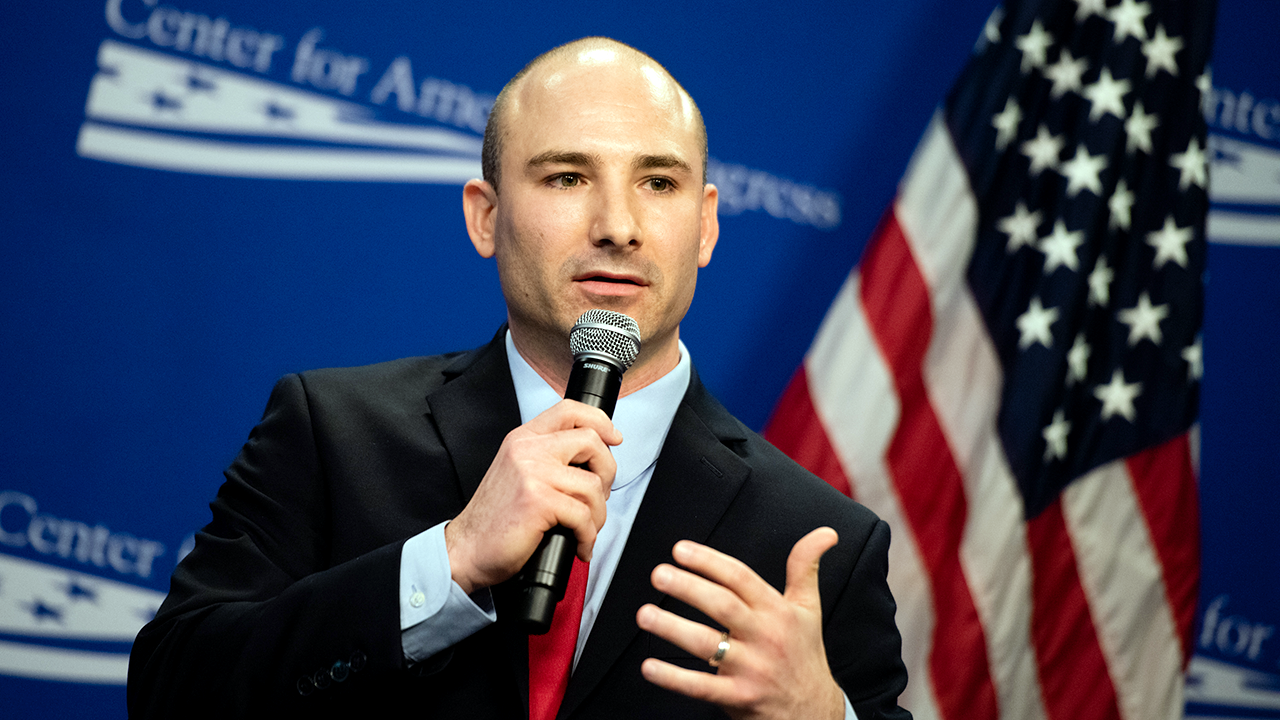
Abdul Jalloh, 32, was charged with second-degree murder after he allegedly stabbed a mother to death while at a bus stop in Fairfax County, Virginia, on Feb. 23. Fairfax County Commonwealth Attorney Steve Descano’s office, however, was warned several times about how dangerous Jalloh is, and dismissed many of his previous criminal charges.
Jalloh’s case is far from the only controversial actions by Descano’s office, which even includes a plea deal with a murder suspect that allows him the chance at freedom.
POLICE WARNED PROSECUTORS 3 TIMES ABOUT VIOLENT ILLEGAL IMMIGRANT BEFORE HE ALLEGEDLY KILLED VIRGINIA MOTHER
Here’s a list of controversial cases handled by Descano’s office:
Abdul Jalloh
Abdul Jalloh, 32, is accused of killing Stephanie Minter, 41, at a Virginia bus stop. (Fox 5 DC)
Jalloh, 32, was charged with second-degree murder after he allegedly stabbed a mother to death while at a bus stop in Fairfax County, Virginia, on Feb. 23. The victim, 41-year-old Stephanie Minter, was found dead with multiple stab wounds to her upper body, according to the Department of Homeland Security. Jalloh has a violent rapsheet dating back to 2014 and includes over 30 arrests with several charges dismissed by Descano’s office.
Jalloh was arrested the next day while he was allegedly trying to steal from a liquor store when an employee called 911. Officials said Jalloh came to the U.S. illegally in 2012 from Sierra Leone under the Obama administration.
United States Immigration and Customs Enforcement lodged a detainer on Jalloh in 2020, and he was later issued a final order of removal allowing him to be deported to any country other than Sierra Leone. Despite that order, he was not deported.
A police major for the Fairfax County Police Department even warned Fairfax County Commonwealth’s Attorney Steve Descano about Jalloh on at least three separate occasions, according to emails obtained by WJLA.
In one email to Fairfax County Chief Deputy Commonwealth’s Attorney Jenna Sands, the police major said Jalloh “is one of the repeat (and violent) offenders” that they had discussed before.
TRAVIS COUNTY DA FACES RENEWED ‘SOFT ON CRIME’ CRITICISM AFTER CAREER CRIMINAL CHARGED WITH MURDER
Fairfax County Commonwealth’s Attorney Steve Descano speaking at an event. (Sarah Voisin/Getty Images)
“I wanted to get your background on why he is out so soon and ask if his prior suspended sentence (of I believe 5 years) was pursued by your office? Unfortunately, based on MTV Station’s numerous dealings with him, it is not a question of if, but rather when he will maliciously wound (or worse) again. My role of keeping the public safe, prompts me to follow up on his status,” the major wrote.
A Fairfax County Commonwealth’s Attorney’s Office spokesperson told Fox News Digital that the office “was aware of Jalloh’s criminal history and shared police concerns about potential future dangerousness. That is why our Chief Deputy Commonwealth’s Attorney personally handled these cases.”
The spokesperson added that prosecutors “will often explore many different pathways to successful prosecution, but, at the end of the day, our decisions are constrained by what testimony is available and what is legally permissible and practicable in Fairfax courts.”
Joshua Danehower
In 2022, Joshua Danehower was arrested for the murder of Gret Glyer. (Fairfax County Sheriff’s Office)
In 2022, Danehower was charged with Gret Glyer’s murder. According to WUSA 9, Glyer, who owned the donation platform DonorSee, was shot 10 times as he slept next to his wife on June 24, 2022.
Prosecutors alleged Danehower killed Glyer because of an obsession with his wife. The suspect allegedly became fixated with her after a church function, and according to her family, the two had gone on a date about a decade ago.
Danehower was given a plea deal by Descano’s office, which found him not guilty by reason of insanity in February.
DHS RIPS DEM-RUN COUNTY AFTER ILLEGAL IMMIGRANT MURDERER RELEASED: ‘BLOOD ON THEIR HANDS’
Virginia law requires Danehower to be sent to a psychiatric hospital, where his status will be evaluated on an annual basis for the next five years, then every two years afterward. If he’s deemed no longer a threat to himself or others, he’d have an opportunity to be released from the psychiatric hospital.
Heather Glyer, the victim’s wife, said while on the witness stand, “I was robbed of my life partner.”
“My kids were robbed of their father,” she added.
Wilmer Osmany Ramos-Giron
Wilmer Osmany Ramos-Giron pleaded guilty to lesser charges. (DHS)
In January 2025, according to a report by former Virginia Attorney General Jason Miyares, Ramos-Giron, an illegal immigrant from Guatemala, choked his ex-wife during an argument and pulled out a knife.
He was charged with felony abduction by force, felony strangulation, and misdemeanor assault and battery against a family member after the incident, but Descano’s office allowed him to plead to lesser charges of misdemeanor battery and brandishing a bladed weapon.
In a statement released by Fairfax Commonwealth’s Attorney Deputy Chief of Staff and Public Information Officer Laura Birnbaum, according to the report, the plea agreement “achieved the outcomes that the victim wanted.”
SEND US A TIP HERE
However, when the victim spoke with 7News, she refuted Birnbaum’s statement, saying she didn’t agree to the plea deal.
“He’s dangerous,” she said, fearing another violent incident would happen.
“If I die, who is going to take care of them?” the victim asked, referring to her children.
Ronnie Reel
Ronnie Reel accepted a plea deal by Fairfax county prosecutors. (Fairfax County Sheriff’s Office)
In July 2021, Reel was arrested on charges of sexual penetration, forcible sodomy and aggravated sexual battery against a minor, according to the Fairfax County Times.
During Reel’s trial on Sept. 13, 2022, Chief Judge of the Fairfax County Circuit Court Penney Azcarate ruled that the Fairfax County Commonwealth Attorney’s office had missed an evidentiary deadline, meaning confessions, including a call from Reel to a defendant’s mother where he allegedly confessed, as well as other evidence and witnesses couldn’t be used in court.
According to the outlet, that meant the case would rely on the victim’s testimony entirely.
As a result, Reel was offered a plea deal and pleaded guilty to misdemeanor assault and battery and was sentenced to one year in prison, but was released on time served. He also wasn’t required to register as a sex offender, according to FOX 5.
CLICK HERE TO DOWNLOAD THE FOX NEWS APP
The mother, who asked to be identified as Amber, told FOX 5 the case has had a big impact on her son.
“I was really upset. This is my child, this is my baby,” she said while crying. “And he got no justice. So he continues to see me cry and everything. He held his own, he stayed strong. He’s always trying to be strong for mom.”
“He was confessing every little detail that he did, and it was making me sick to my stomach,” she added. “It was horrible. He literally confessed to me why he did it.”
Fox News Digital’s Alexandra Koch contributed to this report.
Read the full article from Here
NEWYou can now listen to Fox News articles!
Immigration enforcement is a core federal power. Under Article I of the Constitution, Congress has the duty to write our federal immigration laws. Under Article II, the President has the duty to enforce them. States cannot meddle and certainly not obstruct. Unfortunately, many Democrat states, especially Virginia, are on a deadly collision course with the federal government.
American voters gave President Trump and the Republican-led Congress a broad electoral mandate to reverse the disaster the Biden-Harris border policy caused in every state in America by mass importing as many as 20 million illegal aliens, including the worst of the worst around the world.
Activist judges and other Democrat politicians and election deniers have done everything they can fathom to thwart Trump’s constitutional duty to expel these dangerous illegal aliens.
TRUMP URGES DHS, ICE TO PUBLICIZE ARRESTS, SAYS CRACKDOWN IS ‘SAVING MANY INNOCENT LIVES’
The latest example is Virginia, which is passing a series of unconstitutional laws that would dangerously and illegally obstruct ICE. These proposals include criminal penalties, meaning that state law enforcement would attempt to arrest and jail ICE agents for simply doing their jobs.
This effort is seditious, insurrectionist, extremely dangerous and blatantly unconstitutional. For the sake of the Republic, the Justice Department must immediately and aggressively quell this Virginia seditious conspiracy.
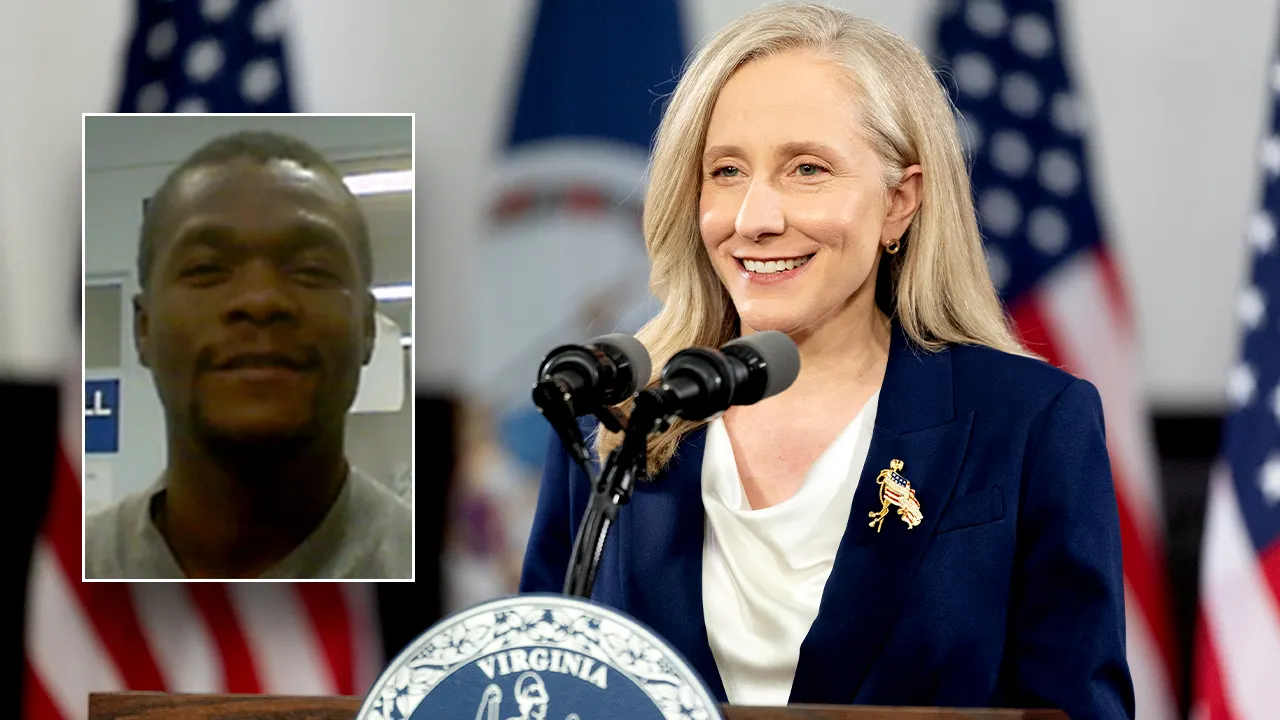
Virginia Gov. Abigail Davis Spanberger laughs aloud during a ceremony in a Virginia court in Richmond. (Mike Kropf-Pool/Getty Images)
Fairfax County District Attorney Steve Descano is the Soros puppet Democrat prosecutor in the DC suburb, an uber-wealthy Democrat enclave that is an albatross around Virginia’s neck. Abdul Jalloh is an illegal alien who invaded our country in 2012. Jalloh settled in Virginia and began wreaking havoc on the good citizens there, racking up a whopping 30 arrests. These included one for rape and four charges for stabbing Americans.
Yet, thanks to the willful ineptitude of Fairfax County’s Democrat regime, Jalloh only had one felony conviction. He violated his probation, spent three months in jail and went free because of a deal between his lawyer and Descano’s office. Sanctuary jurisdictions like Fairfax County do not notify ICE when detaining or releasing illegals like Jalloh, who had a final order of removal from 2020.
Police in Fairfax repeatedly warned Descano’s office via email that Jalloh’s release would endanger the public, but the pleas fell on deaf ears. Earlier this week, Jalloh allegedly stabbed to death 41-year-old innocent mother Stephanie Minter at a bus stop.
Virginia Gov. Abigail Spanberger ran as a moderate Democrat. But after her inauguration this year, she immediately showed her true leftist colors. She issued an order prohibiting cooperation between state officials and ICE.
Several anti-ICE bills await Spanberger’s signature: (1) a prohibition against ICE arrests at courthouses (where these alleged dangerous criminal illegals visit daily); (2) a prohibition against ICE arrests within 40 feet of polling places (where illegals violate federal criminal laws by voting); and (3) criminal penalties for ICE agents who wear masks (because they don’t want to get doxxed and killed).
Fairfax County Commonwealth’s Attorney Steve Descano (Sarah Voisin/Getty Images)
If Spanberger signs these unconstitutional state laws, the Trump Justice Department should immediately sue and seek to enjoin them in court. A Virginia federal judge should issue an injunction, following the lead of the U.S. Court of Appeals for the 9th Circuit, which fully stayed California’s unconstitutional prohibition against ICE agents’ use of masks.
But civil enforcement is not enough. Virginia Democrat officials plotting to arrest ICE agents for doing their jobs (seditious conspiracy under 18 U.S.C. § 2384) — and especially those who cause the arrests (insurrection under 18 U.S.C. § 2383, assault, kidnapping, harboring, conspiracy, and more) — must go to federal prison for their serious federal felonies. If anyone gets killed in a deadly standoff between these new Virginia confederates and ICE, these Virginia Democrat officials must face felony murder charges.
VIRGINIA LAWMAKERS UNLEASH ON VCU NURSE FIRED OVER ‘HEALTHCARE TERRORISM’ ENCOURAGING HARMING ICE AGENTS
Former President Biden and his missing-in-action border czar Kamala Harris allowed millions of illegal immigrants, including the most violent and dangerous criminals in the world, to pour across our borders. Trump is doing everything in his power to fulfill his broad electoral mandate and undo the damage by arresting and deporting these illegals.
Virginia’s proposed laws do not merely prohibit communication between state officials and ICE; rather, they criminalize federal law enforcement actions that are plainly within the scope of federal immigration enforcement power.
Abdul Jalloh has racked up over 30 arrests since entering the U.S., according to officials. (DHS)
States do not have to help ICE by, for instance, providing law enforcement resources to assist in ICE apprehensions of illegals. But states certainly cannot subvert or obstruct these federal efforts. This is especially true of Virginia’s attempt to arrest ICE agents in the line of duty, which could justify their use of deadly force.
CLICK HERE TO DOWNLOAD THE FOX NEWS APP
Virginia’s attempt to subvert and obstruct federal law must fail. We fought the Civil War because the Confederacy, headquartered in Virginia, sought to nullify federal law with respect to slavery. Today’s Virginia Democrats are reverting to their confederate roots.
Just as the federal government did during the Civil War and for a century after when segregationist states continued their efforts to nullify federal law, the federal government now must stand strong against Virginia’s sedition and insurrection. The Supremacy Clause of the Constitution makes plain that federal law is supreme in areas where the federal government has authority.
If Virginia gets away with effectively nullifying federal immigration enforcement, other states can nullify any other federal law that it finds distasteful. Let’s hope Abigail Spanberger comes to her senses and vetoes this insanity. If she does not, the federal government must use all tools at its disposal, including the Insurrection Act of 1807 and other federal criminal statutes, to preserve federal law.
Virginia state officials must go to federal prison for engaging in seditious conspiracy, insurrections and other very serious federal felonies. Anything less would threaten the existence of the Republic.
CLICK FOR MORE FROM MIKE DAVIS
Read the full article from Here
Southeast
South Carolina pastor describes evacuating members from Middle East after war broke out during Israel trip

NEWYou can now listen to Fox News articles!
SUMMERVILLE, S.C. – Dozens of members of a South Carolina church are finally back in the United States after Operation Epic Fury left them stranded in Israel for nearly a week after their flight was supposed to depart.
Forty members of Calvary Chapel Summerville landed in Israel on Feb. 20 for eight days of exploration in the Holy Land.
The group was set to fly home on Feb. 28 and had arrived at the airport three hours before their scheduled departure when the U.S. and Israel launched airstrikes on Iran. The attack prompted the closure of Israel’s airspace and the group had to evacuate the airport.
“It felt like the weight of the world on my shoulders and I just prayed and prayed and prayed and asked God to give me wisdom,” said Vic Carroll, pastor at Calvary Chapel Summerville in South Carolina.
TRAVELERS STRANDED IN DUBAI PAYING HUGE SUMS TO FLEE ON PRIVATE CHARTER FLIGHTS AMID OPERATION EPIC FURY
Members of Calvary Chapel Summerville visit Al-Khazneh in Petra. (Melanie Carroll)
Carroll said the group had to shelter-in-place in Israel, going in and out of bomb shelters for several days. He then had to face the decision of the group staying or taking a bus to Jordan to have a shot at getting a flight back to the United States.
“We ultimately, you know, made the decision between what was bad and what was worse. I thought the worst would be to stay,” the pastor said.
“We were instructed that if a siren goes off while we were on the road, the bus would pull over, we would all need to get on the ground, lay on the ground face-down for at least 10 minutes until the threat was gone, and then be on our way,” he continued.
STATE DEPARTMENT USES PATRIOTS TEAM PLANE TO EVACUATE AMERICANS FROM MIDDLE EAST
The members of Calvary Chapel Summerville sightseeing in the Holy Land. (Melanie Carroll)
Fortunately, that did not happen and the group made it to the airport in Jordan to hop on a flight out of the Middle East Thursday morning.
Before the flight, Carroll said it was frightening, but their faith was greater than their fear.
“We’re just having to trust that we’re making the right decision, and this is our only option to get home, so we [were] just trusting in God,” he said.
AMERICAN STUCK IN MIDDLE EAST ESCAPES IN RACE TO REACH CRITICALLY ILL HUSBAND IN CALIFORNIA
The group returned to the U.S. on Thursday night, landing at JFK in New York.
Melanie Carroll, the pastor’s wife, texted, “We are so thankful!!!!! It’s surreal!!”
Melanie and Vic Carroll while visiting The Holy Land. (Kailey Schuyler)
The unexpected extension of the trip caused the price tag to increase significantly. Melanie created a GoFundMe, writing, “The path to get us home between lodging, flights and transfers will be upwards of $2500 per person.”
The group was able to raise their goal of $100,000 in less than three days.
Melanie said the group is continuing to pray for everyone trying to get out of the Middle East.
Nearly 24,000 Americans have returned to the U.S. after fleeing the Middle East since Operation Epic Fury began last week, according to the State Department.
Read the full article from Here
-

 Los Angeles, Ca1 hour ago
Woman, man found shot to death in Pomona, suspect leads officers on erratic chase
-

 Detroit, MI1 hour ago
Today in History: June 20, race-related rioting erupts in Detroit
-

 San Francisco, CA2 hours ago
San Francisco hotels see steady World Cup business, but fall short of Super Bowl surge
-

 Dallas, TX2 hours ago
Dallas International Piano Competition brings finalists June 23
-

 Miami, FL2 hours ago
Where to watch San Francisco Giants vs Miami Marlins: TV channel, start time, streaming for June 20
-

 Boston, MA2 hours ago
Duck parades, outdoor drinking, and Gronk in a kilt. Here’s how Friday’s World Cup festivities unfolded. – The Boston Globe
-

 Denver, CO2 hours ago
Rockies ride Kyle Freeland’s gem, Braxton Fulford’s double to 4-3 win over Pirates
-

 Seattle, WA2 hours ago
Suarez’s no-hit try ends on Naylor double in seventh, but Boston still tops Seattle

