West Virginia
West Virginia is still overlooked, Neal Brown says. But he also sees opportunity


MORGANTOWN, W.Va. — Neal Brown leans forward in his chair, which might as well be a soapbox.
“I’ll tell you, this is a unique area for food because there is a ton of Italian influence here,” Brown says.
In the early 1900s, tens of thousands of Italians immigrated to West Virginia to work in the state’s rapidly growing steel and coal industries, bringing that home cooking with them.
“So there are some great, old-school Italian American restaurants down in Clarksburg and Fairmont just south of here,” Brown says. “But people don’t realize that. It gets overlooked.”
He sits back, hands interlocked behind his head. The history lesson is done, but Brown’s not. Because the head coach of West Virginia just so happens to feel the same way about his football team.
“I just think our best players are being undervalued,” Brown says. “The amount of production we have coming back and what we’ve added, it’s significantly better than where people have us in preseason.”
Coming off an unexpected 9-4 record in 2023 and entering his sixth season there, West Virginia was picked seventh in the Big 12 preseason poll and landed just outside the initial AP Top 25 rankings. Brown says folks are once again sleeping on the Mountaineers, a mentality that dates to more than a year ago, when he sat down in front of a Big 12 media days contingent that voted WVU dead last in the preseason poll.
“I can guarantee you that we’re not going to finish last,” Brown said last summer. “We’re looking forward to proving everybody wrong.”
Scoreboard. WVU tied for third in the Big 12 standings and remained in the conference-title race until the final weeks, ending the year with a bucket of mayonnaise dumped over Brown’s head after routing North Carolina in the Duke’s Mayo Bowl. Brown went from a scorching-hot seat to vindicated, earning a one-year contract extension through 2027. It gave the 44-year-old an opportunity to bet on himself yet again.
A bowl win earned Neal Brown a mayonnaise shower. (Grant Halverson / Getty Images)
Brown signed the extension in March. And a voluntary pay cut.
“You can talk about selflessness and being a good teammate all you want to, but you also have to show those things,” he says. “You should have win-wins. I think it was good business for both sides. I like it here.”
As part of the extension, Brown essentially forwent $400,000 in salary increases over the next three years of his contract, electing to reinvest that money in his staff. All eight of WVU’s returning assistant coaches received raises, including coordinators Chad Scott (offense) and Jordan Lesley (defense), as did numerous support staffers.
Brown’s $4 million salary in 2024 ranks in the middle among conference head coaches. Between the pay cut and an additional bump from the university, more than $700,000 was added to the staff salary pool for the upcoming season, with additional flexibility for the future.
“I tried to talk him out of the pay-cut piece, to be honest. I was worried that people wouldn’t believe he did it voluntarily,” WVU athletic director Wren Baker says. “It’s highly unusual for a coach to do that, but I think he wanted to invest in those around him.”
There was no posturing. Brown’s reputation as a pragmatic and analytical thinker precedes him, a badge from his days as an innovative Air Raid disciple and offensive coordinator at Texas Tech and Kentucky, followed by a successful head coaching stint at Troy. He knows that if WVU can continue the momentum of last season and can be in the mix for a Big 12 title and the expanded College Football Playoff, West Virginia will reverse that pay cut and then some. He has reason to be confident in that outlook. Aided by the recent growth of the Country Roads Trust NIL collective, which has helped recruit and retain talent, Brown has the deepest and most experienced roster of his tenure — starting with quarterback Garrett Greene.
“If you put up Garrett’s numbers in terms of key stats and win-loss record, he’s going to be near the top of our league,” Brown says. “But he’s not getting talked about that way.”
The fifth-year senior threw for 2,406 yards and 16 touchdowns in his first year as a full-time starter in 2023, finishing sixth in the Big 12 in QB rating (142.2), fifth in yards per attempt (8.7) and with only four interceptions, the fewest among qualified passers. But his dual-threat capabilities set him apart, leading all Big 12 quarterbacks with 772 rushing yards and another 13 touchdowns.
It gave WVU a triple dipper in the backfield alongside running backs CJ Donaldson Jr. (798 yds, 11 TDs) and Jahiem White (842 yds, 4 TDs), combining for the best rushing attack in the conference and fourth-best in FBS at 229 yards per game. All three are back in 2024 behind an offensive line with three full-time returning starters, led by preseason All-America left tackle Wyatt Milum — another overlooked player who Brown believes will be a first-round NFL Draft pick next spring.
“He hasn’t given up a sack in two years and he didn’t even make the all-conference team last year,” Brown says.
The offense wasn’t pure ground and pound. WVU had 34 plays of 30-plus yards last season, tied for fifth in the Big 12. The biggest issue was efficiency. West Virginia scored touchdowns on 60.3 percent of red zone trips in 2023 (eighth in the Big 12), and Greene completed only 53 percent of his throws, lowest among the league’s qualified passers.
“He’s better than that,” Brown says. “We’ve worked hard to change his fundamentals.”
An older and replenished group of receivers should help. Hudson Clement, Preston Fox, Traylon Ray and tight end Kole Taylor are back, and WVU added a pair of power-conference transfers in Jaden Bray (Oklahoma State) and Justin Robinson (Mississippi State).
Up front defensively, Brown expects linemen Sean Martin and Tyrin Bradley Jr. to take leaps and Ty French (Gardner-Webb) and T.J. Jackson (Troy) to bolster the rotation. The questions are in the secondary, where all-conference safety Aubrey Burks and transfer corner Garnett Hollis Jr. (Northwestern) will lead a revamped group.
“This is the most talent we’ve had in the secondary, but they have to be able to mesh together,” Brown says.
The 2024 schedule doesn’t do the Mountaineers many favors, with nonconference games against Penn State and Pitt and a grueling five-game stretch to open league play: Kansas, at Oklahoma State, Iowa State, Kansas State, at Arizona. But in a new-look, 16-team Big 12 that expects plenty of parity, West Virginia has as much of a path to the top as anyone — a journey two years in the making.
🗓️ 2024 West Virginia Football Schedule#HailWV pic.twitter.com/1oBhlJwlAT
— West Virginia Football (@WVUfootball) January 30, 2024
Coming off a disappointing 5-7 2022 campaign and with Texas and Oklahoma on their way out the door, Brown hit the reset button on his team’s identity, homing in on discipline, effort and taking care of the football over raw talent, and turning those intangibles into tangibles. WVU saw marked improvement in penalties and turnover margin in 2023 after ranking last in the Big 12 in both the year before.
In a suddenly wide-open conference, with a first-round Playoff bye at stake, that attention to detail can reverberate.
“The talent disparity from team one to 16 in our league is not this drastic gap like there is in other leagues,” Brown says. “So many games come down to the fourth quarter. Your margins are small, so we have to be really good situationally.”
The make-your-own-luck mindset is particularly crucial at West Virginia, where geographical and financial challenges are baked in. It’s one of the reasons Baker opted for patience when he was hired in November 2022, just as the Mountaineers wrapped up a second straight losing season and public perception of Brown was cratering. Baker assessed a head coach who still had the respect and support of his staff and the locker room, as well as being someone who understood the proud tradition of a place that has always done a little more with a little less.

Wren Baker, left, chose patience regarding Neal Brown after becoming West Virginia’s AD. (Ben Queen / USA Today)
“The longer you’re in a job, the better you recognize what works,” Brown says. “We’ve done a better job of understanding our location and the type of personalities and players that can be successful here. I think it’s carried over.”
Baker, like many athletic directors, has plenty of big-picture items crowding his desk. There is the widening financial and competitive gap between the top of the Big Ten and SEC and schools like West Virginia, whose $106 million athletics budget in fiscal year 2023 was in the bottom half of the Big 12. There are the strains of a conference that now stretches 900 miles south and 2,000 miles west of Morgantown. There is the pending House v. NCAA settlement that stands to reorient college sports, including the burden of an additional $20-plus million in annual revenue sharing that Baker is determined WVU will fully participate in.
All of it can make the future seem murky at best. But the intriguing subplot of a league without Texas and Oklahoma is a relatively level financial playing field for the new Big 12. Conference title runs and Playoff bids are now much more attainable for a Mountaineers program that hasn’t won a league championship since joining the Big 12 in 2012.
And it’s not lost on Baker that the little things have put Brown and WVU in position to seize those opportunities — in 2024 and beyond.
“West Virginia is very much a fit job. Not just anyone can come in here and win, particularly in football,” Baker says. “Coach Brown and his staff have done a good job of focusing on what they can control. Eventually, I believe the scoreboard metric catches up to that.”
(Top photo: Ben Queen / USA Today)



West Virginia
New law allows employers to provide benefits for independent contractors in West Virginia

CHARLESTON, W.Va. (WCHS) — Gov. Patrick Morrisey signed House Bill 4009 Wednesday, authorizing portable benefit accounts in West Virginia.
The Voluntary Portable Benefits Plan Act gives businesses the option to provide benefits for independent contractors without reclassifying those workers as employees.
The measure permits companies to offer insurance and retirement while keeping workers as an independent contractor.
Contributions may be made using funds of the employer or withholding a percentage of payment from employees.
Lawmakers estimate more than 90,000 independent contractors are in West Virginia.
West Virginia
Belle residents learn about, discuss proposed Clean-Seas plastic repurposing plant – WV MetroNews

BELLE, W.Va. — A plastic repurposing plant was the topic of a multi-hour town hall meeting in eastern Kanawha County hosted by the West Virginia Department of Environmental Protection.
Over 50 residents in the town of Belle attended a public comment hearing Tuesday evening to learn more about a proposed plastic-conversion facility planned for the area. The plant is planned at the former 84 Lumber property along Dupont Ave.
Clean-Seas West Virginia is the company seeking an air quality permit from the DEP. The Clean-Seas company website said it converts plastic through a process called pyrolysis, breaking down plastic at the covalent bond level, and repurposes it into new plastics, fuels, and industrial chemicals.
Tuesday’s hearing featured DEP and its Division of Air Quality personnel outlining their role in the process, in addition to taking questions from Belle residents. The hearing is mandated in the permit process in a 30-day public comment period. Public comments about the permit will be accepted until July 27 at 5 p.m.
DEP officials emphasized that they can’t control which businesses come to the area, but rather they determine whether Clean-Seas is compliant with DEP and air quality rules and regulations.
Concerns included a myriad of topics. Residents voiced concerns as to how emissions would affect children, how much oversight the Clean-Seas company would have from the DEP, and the overall safety of the proposed plant itself.
Joe Kessler with the Division of Air Quality was one of the officials who took questions during the meeting. One of the concerns he addressed was compliance from the company and how much monitoring would take place from air quality division. He said because their staff can be stretched thin, they can’t constantly monitor every single facility across the state. Instead, he said companies fill out compliance forms — and crews make inspections as necessary.
“Whether we like it or not, we don’t have enough staff to have somebody all the time at every facility across the state,” Kessler said. “That’s obvious. So, we have to build in monitoring for the company to do, and that they have to certify it. There’s a form they certify it with.”
“If we catch them lying, and there are ways to do that, if we feel they’re lying, we can prosecute them criminally, then we can shut the plant down, so there’s a weight behind that,” Kessler continued. “No company is going to want to be issued a violation for lying on their certified record.”
Kessler said it’s not a foolproof system, but rather the reality of having a limited staff.
Morgan King, climate and energy manager with the community organization West Virginia Citizen Action Group, addressed the DEP personnel and said she’s heard a widespread desire to block Clean-Seas from coming to Belle. She said West Virginia Citizen Action is against the plant’s arrival, citing safety concerns.
“The operation poses potential health risks to the people in the upper Kanawha River Valley, especially for those most vulnerable,” King said. “Our students, local schools, and community members who live nearby, and visit the library, the clinic, and the shopping complex.”
Community organizer and Belle resident Eric Caruthers said his entire family would be affected by the Clean-Seas plant. He said his nephew attends Riverside High School, and his sister teaches at Midland Trail Elementary; both schools within a mile from the Clean-Seas property. Caruthers said his parents also live nearby.
Caruthers asked the Division of Air Quality to deny the Clean-Seas’ request for an air permit.
“As a resident, my concern is not based on rhetoric. It is based on proximity and process reality,” Caruthers said. “Heating 50 to 200 tons of plastic daily releases volatile organic compounds, hazardous air pollutants, and fine particle matter.”
Caruthers said giving the permit to Clean-Seas would be taking an “unacceptable risk” of harming the Belle community’s health and well-being. He said air permitting relies upon honest self-monitoring and accurate emissions reporting on the part of plants.
“Clean-Seas has repeatedly mischaracterized this operation to the public as a zero emission, green process, when independent data shows that this plastic oil is primarily destined to be burned as industrial fuel,” Caruthers said. “They have already broken community trust through shifted timelines and misleading narratives. These behaviors have caused us to lose all confidence in Clean-Seas as an organization of integrity.”
The pyrolysis process remains “unproven,” Caruthers said, and the Belle community should not be a “testing ground for industrial experimentation.”
Another concerned resident, Martha “Marty” Gibson, said she has health challenges that could be impacted by Clean-Seas.
“I’m asthmatic,” Gibson said. “(When) I see somebody burning a fire, I don’t step out of my house. That makes me a prisoner in my house. and I shouldn’t have to do that. I’m not going to stand still and have a company come in here who only wants to make money, doesn’t care about the people of this state, and let them make me a prisoner in my house as well.”
Clean-Seas has brought equipment to the property already, which is within their rights before receiving a permit, Kessler said. They just can’t “hook up” anything unless that permit is secured.
Learn more about DEP permitting processes here.


Here’s the latest on cycloporiasis in NYC: cases, symptoms
Both the state and city health department are investigating an increase of cyclosporiasis cases in the region. Here’s the latest.
The Centers for Disease Control and Prevention and states are investigating a surge of cyclosporiasis cases across the country.
Cyclosporiasis, or the disease caused by the parasite Cyclospora cayetanensis, has been confirmed in 1,645 cases as of July 13 and is under investigation in more than 5,100 additional cases, according to data from the Centers for Disease Control and Prevention.
CDC officials said a cluster of cases in four states − Michigan, Ohio, West Virginia and Kentucky − are likely linked.
Data from state health departments suggests the total number of cases could be higher that what’s been publicly reported. In Michigan, officials are tracking more than 2,600 infections as of July 13, according to the state’s Health and Human Services department.
The parasitic infection can cause explosive diarrhea, cramping, nausea and other gastrointestinal symptoms. Officials are probing whether a food or produce item is the source of a surge in cases of cyclosporiasis.
CDC officials said symptoms can appear two days to two weeks after someone is infected with the parasite. The organization also issued a health alert to doctors, other medical providers and public health officials about the outbreak.
This story is developing and will be updated.
-
 Business3 minutes ago
Paramount shareholder lawsuit accuses Ellisons of corruption
-
 Entertainment9 minutes ago
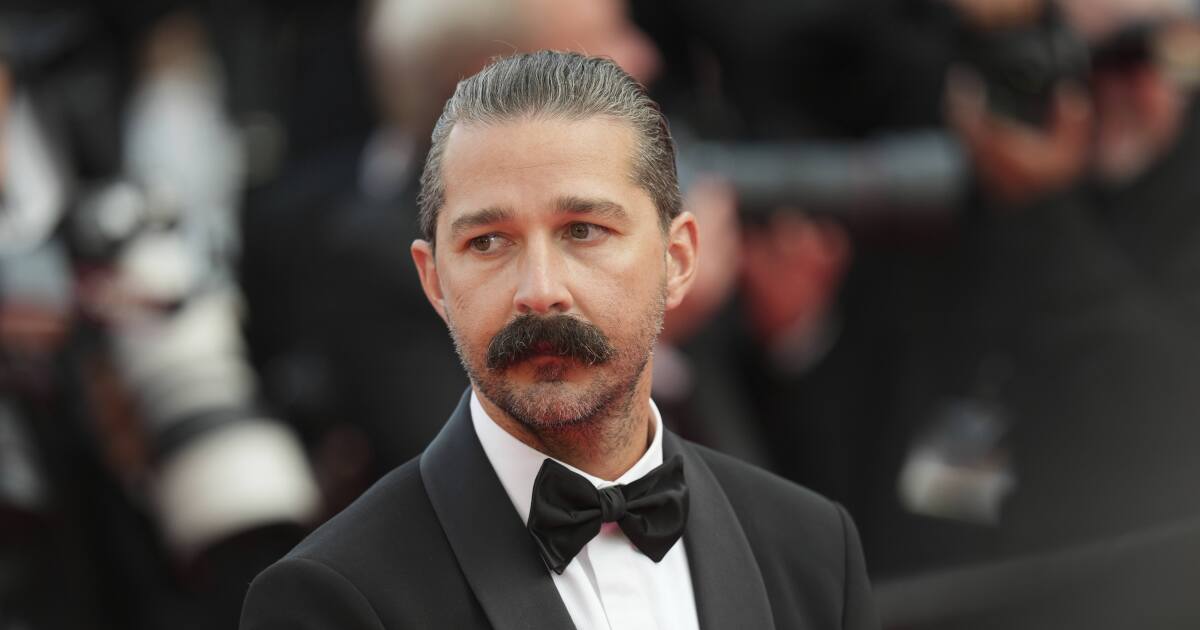
‘You’re scaring my people.’ Shia LaBeouf’s alleged stalker arrested after posting viral video
-
 Politics21 minutes ago
Californians back Becerra and reject AI data centers by big margins, poll finds
-
 Science27 minutes ago
How to eat safely amid outbreak of diarrhea-causing cyclosporiasis
-
 Sports33 minutes ago
Magical Lionel Messi leads Argentina past England for trip back to World Cup final
-

 World45 minutes ago
Toronto engulfed by wildfire smoke as US cities threatened
-
 News1 hour ago
Argentina is back in the World Cup final after a thrilling semifinal win over England
-

 Los Angeles, Ca3 hours ago
Remains of murder victim identified as missing Southern California millionaire

