West Virginia
This week in West Virginia history: April 12 to 18


The following events happened on these dates in West Virginia history, according to the e-WV: The West Virginia Encyclopedia, a project of the West Virginia Humanities Council.
April 12, 1865: The 36th Virginia Infantry, known as the Logan Wildcats, disbanded. The Confederate company was created at Logan Courthouse on June 3, 1861, and consisted of about 85 men. The company saw its first action in the Battle of Scary Creek in Putnam County.
April 12, 1885: Photographer George James Kossuth was born. After opening his Wheeling studio in 1909, he achieved broad fame for his photos of the city and insightful portraits of world celebrities, including Richard Strauss, Jascha Heifetz, Leopold Stokowski, Clarence Darrow and Richard Nixon.
April 12, 1912: The grand Willard Hotel in Grafton officially opened with an elaborate banquet attended by Baltimore & Ohio (B&O) Railroad officials and state and local dignitaries.
April 13, 1873: Lawyer, diplomat and 1924 Democratic candidate for president John William Davis was born in Clarksburg. Davis argued 141 cases before the U.S. Supreme Court. His last case was one of the most controversial, when he argued in 1952 to continue racial segregation in South Carolina.
April 13, 1951: Sculptor Bill Hopen was born. The Sutton artist’s works appear in government buildings, museums, churches and hospitals around West Virginia, across the nation and abroad.
April 14, 1774: Surveyors met at the mouth of the Kanawha River to establish military bounty claims in Kentucky. They became involved in several skirmishes with Indians in the region. This was the start of Dunmore’s War, the name given to the conflict in the Ohio Valley in the spring of 1774.
April 14, 1945: Twenty people were killed when a commercial airplane on its way to Morgantown flew off course and crashed into the side of Cheat Mountain.

April 14, 1982: Twelve 135-foot-tall smokestacks were detonated at the former Libbey-Owens-Ford plant in Charleston. The factory, built in 1916, was the world’s largest sheet glass manufacturer in the 1920s. It shut down in 1980.
April 15, 1872: Peter Godwin Van Winkle died in Parkersburg. Van Winkle was a member of the Governor’s Council of the Reorganized Government of Virginia, 1861-63, under Gov. Francis Pierpont. On August 4, 1863, Van Winkle was elected as one of West Virginia’s first two U.S. senators.
April 16, 1829: Jacob Beeson Jackson was born in Parkersburg. In 1881, he became West Virginia’s sixth governor.
April 16, 1894: Leonard Riggleman was born in a Randolph County cabin. As president of Morris Harvey College (now University of Charleston), he moved the school to Charleston in 1935 and led the college to accreditation in 1958.

April 16, 1923: Arch Moore was born in Moundsville. He was the first governor in 100 years to serve a second term, and he returned later for a third. He also was the second former governor to serve federal prison time.
April 17, 1827: Outdoorsman William “Squirrelly Bill” Carpenter was born on the Elk River near the mouth of Laurel Creek, Braxton County. Carpenter guided prominent West Virginians, including Gov. MacCorkle, through the wonders of the Elk Valley.
April 17, 1861: Delegates to a special convention in Richmond voted for Virginia to secede from the Union, subject to approval by a public referendum. This decision also set in motion the process that would lead to the creation of West Virginia.
April 17, 1871: West Virginians approved the Flick Amendment, restoring voting rights to former Confederates. Although the amendment also applied to formerly enslaved people, they had already been granted suffrage under the Fifteenth Amendment to the U.S. Constitution.

April 17, 1924: A fire destroyed much of downtown Franklin, the Pendleton County seat.
April 17, 1972: Actress Jennifer Garner was born in Houston, Texas. Growing up in Charleston, she appeared in theater and ballet productions before becoming a television and film star.
April 18, 1756: The largest battle fought in Virginia during the French and Indian War occurred at Fort Edwards in Hampshire County.
April 18, 1861: At the start of the Civil War, retreating U.S. troops set fire to the national armory and arsenal at Harpers Ferry to prevent them from falling into Confederate hands. Virginia militia extinguished the flames, salvaged much of the weapon-making equipment and sent it south before ultimately destroying the site in June 1861.

April 18, 1912: The Paint Creek-Cabin Creek Strike of 1912-13 began in Kanawha County when coal operators rejected union workers’ demands for higher wages. The ensuing strike became one of the most dramatic and violent episodes in the early 20th-century labor struggles in southern West Virginia, collectively known as the Mine Wars.
e-WV: The West Virginia Encyclopedia is a project of the West Virginia Humanities Council. For more information, contact the West Virginia Humanities Council, 1310 Kanawha Blvd. E., Charleston, WV 25301; (304) 346-8500; or visit e-WV.

West Virginia
Repair work on busiest bridge in West Virginia to happen in phases to “minimize disruptions”

CHARLESTON, W.Va. — Traffic in the Capital City will soon have to adjust as the busiest bridge in West Virginia draws closer to undergoing a rehabilitation project.
The West Virginia Division of Highways recently awarded a $74.5 million contract for the rehabilitation of the Eugene A. Carter Bridge to Triton Construction. The bridge, also known as the Fort Hill Bridge, is located in the Capital City and carries Interstate-64 over the Kanawha River.
Around 100,000 vehicles travel across the bridge each day.
Gov. Patrick Morrisey joined state and local officials Thursday at Magic Island to officially announce the contract awarding. DOH officials have told MetroNews that crews will build two median crossovers this August, with the majority of that construction taking place at night and on weekends to minimize its impact on traffic. Official repair work is expected to begin in early 2027, with an anticipated conclusion next December.
DOH officials said everything should be “back to normal” by Spring 2028 under the current timeline.
Del. J.B. Akers, R-Kanawha, was on hand for the news conference. He emphasized that motorists will have to be flexible with their routes.
“We’ll have a little bit of an inconvenience while that’s going on,” Akers said. “This is going to be a huge project that impacts traffic from all over the East Coast, really.”
Issues have popped up at the Carter Bridge in recent years. The state DOH made emergency repairs to fix potholes that had popped up last summer, causing traffic delays. Triton Construction also repaired concrete, installed a waterproof membrane, and added a 2-inch layer of asphalt last October.
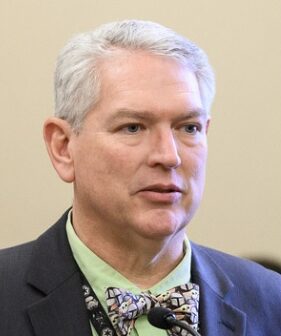
Minimizing the impact on motorists during this project has been a top priority, according to state Transportation Secretary Todd Rumbaugh.
“Our team at the Department of Transportation has worked tirelessly to phase this construction, so we minimize the disruptions on your daily commute and your businesses,” Rumbaugh said.
DOH officials said crews will work on one side of the bridge first, then crews will shift traffic and begin work on the other side. Motorists can stay up to date on the project by visiting the Division of Highways website to see the anticipated construction schedule.
Akers commended Morrisey and Rumbaugh for taking action now.
“For doing the hard thing, on a project like this, which is a maintenance and repair project,” Akers said. “They’re not kicking the can down the road for some other administration to deal with. They’re dealing with a major issue, right now, and this will be a generational project for this bridge. It’s going to prevent us from having to deal with this in the future.”
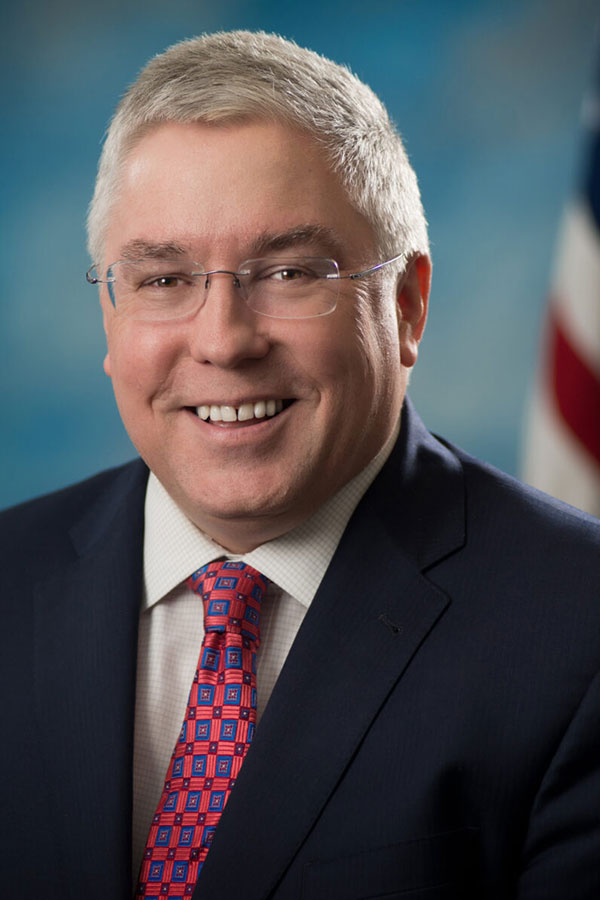
The governor mentioned the state had previously been given poor grades by national surveys on bridge safety. He said his administration is committed to improving bridges all across the state, starting with the heavily trafficked bridge in Charleston.
“This is a signal that we take bridge repair work very seriously,” Morrisey said. “When we inherit being an ‘F’ in bridges, I do not want that to be the case. We need safe bridges for our people, and I’m going to keep working every day to make sure that happens.”
Morrisey said in his year and a half as governor, the administration has been focused on “getting back to the fundamentals.”
“Site-selection and remediation, speed to build; cutting red tape faster, that’s what’s why I’m so excited about our one-stop shop permitting. (That’s) going to make things go even faster, and responsibly.”
Those efforts have been paying off, Morrisey said.
“When you have that kind of economic growth, that level of construction, it’s particularly important to make sure that your infrastructure is strong,” Morrisey said. “That’s really why we’re here today.”
Rumbaugh said the investment signals a commitment to the future of the Mountain State and its travelers.
“This rehab project represents a once-in-a-generation investment in our economic corridor,” Rumbaugh said. “It’s about much more than concrete, structural steels, and orange barrels. It’s about safety, reliability, and planning for the next 50 years.”
West Virginia
Concerned West Virginians speak out against proposed Monongalia County power plant – WV MetroNews

CHARLESTON, W.Va. — Concerned citizens, coal miners, and political candidates made a unified stand against a proposed gas-fired power plant in Monongalia County.
32 people spoke during the state Public Service Commission public comment session Wednesday night in Charleston. Every single one opposed the plant.
The PSC is reviewing a proposal from Mon Power and Potomac Edison for a combined cycle gas plant at the Fort Martin Power Station in Maidsville. There would be three solar arrays as part of the investment as well, one each in Tucker, Preston, and Hancock counties.
The plant would generate 1,200 megawatts of electricity and construction would cost around $2.48 billion. The solar arrays warrant an estimated $182 million cost for installation.
To foot the bill on the investment, Mon Power has proposed an initial surcharge to customers of .9 percent or $1.18 per month.
One speaker, Britta Aguirre, said she had to choose a few months ago between paying her phone or electric bill. She said this struggle is not unique to herself in West Virginia; many residents have lived that experience.
She wondered what’s going to happen going forward as bills continue to rise.
“Can you really call yourself free when you’re working full time, three jobs, and you still can’t pay your electric bills?” Aguirre asked. “Come on. When you have to choose between groceries and your medicines, when your power bills go up and we don’t consent, and y’all (the PSC) still don’t listen. That’s not freedom. That’s survival.”
Nine coal miners, who are also members of the United Mines Workers of America (UMWA), addressed PSC Chairwoman Charlotte Lane during the meeting. They expressed concern over what would become of the coal industry with this investment.
Former UMWA Research Director and coal miner Michael Buckner said there have been mixed messages from Mon Power/First Energy when discussing the Fort Martin property. Buckner said while there have been claims that they won’t replace the existing coal-fired plants, there have been statements suggesting to the contrary.
“The CEO of First Energy, Brian Tierney, was quoted in the press last month saying, “I could see us adding between one and four combined cycles of about 1,000 megawatts each that could ultimately replace Fort Martin and Harrison,”” Buckner said.
Buckner said the coal industry is a critical piece of West Virginia economy, not just providing jobs in the mines. He said there’s a ripple effect with each coal mining job, as he said every single one creates five additional jobs in the community.
Mike Knight, a fourth-generation coal miner and local union president at the Ohio County Mine, said if the PSC approves the Mon Power request, the coal industry will be devastated in the Fort Martin area.
“The new gas plant will replace the coal-fired power plant at Fort Martin, wiping out high-paying coal jobs and pushing more coal companies towards bankruptcy,” Knight said. “When those companies collapse, so do the retirement benefits earned through decades of hard work, and dangerous work.”
Raleigh County native Courtney Vandall said her grandfather and great-grandfather were coal miners. She said her great-grandfather was killed in the mines. Vandall blasted the proposed plant, saying it’s the latest example of West Virginians getting exploited for national gain.
“This isn’t for West Virginians,” Vandall said. “That’s nonsense to pretend like that this is for West Virginians. This is for the companies. This is for the corporation. This is for a CEO that makes over $13 million, and I bet he’s never had to worry about how he’s going to pay his power bill.”
Longtime West Virginia House of Delegates member Barbara Evans-Fleischauer spoke at the meeting. Her main point was that there’s no demand in the Mountain State for this type of investment.
“West Virginia residential consumers did not ask for or demand AI (artificial intelligence),” Evans-Fleischauer said. “We resent being forced into becoming cash cows for giant multinational corporations for something we may not ever want or need.”
Paige Reiring, the Mountain Party’s 79th District candidate for the West Virginia House of Delegates, said this investment is not about helping West Virginians at all. She said it’s all about fueling data centers. For people in the state who already struggle to pay their bills, Reiring said this will continue to be devastating.
“Now we are being asked to bear even more financial burden for a project that will continue to pollute our state, poison our bodies, and leave us on the hook for every cost,” Reiring said. “You can’t enhance the economy unless people actually have money to spend.”
Energy Efficient West Virginia Legal and Policy Director Emmett Pepper attended the meeting. He discussed the proposal on MetroNews “Midday” on Tuesday and said the power plant seems to be for two data centers.
“If those companies want to build their own power plant, they’re free to, and actually, First Energy, the parent company, would be free to build a power plant for those two companies if they wish, but it wouldn’t have to be paid for by a ratepayer,” Pepper said. “But that’s not what they’re asking for. They’re asking for guarantees, money starting to flow immediately, even if it’s never used.”
Another speaker, Michael Attfield, said there’s no guarantee that the power plant will remain successful going forward. He said increased costs to electric bills are tough to take when they’re based on projections.
“The power plant proposal depends on assumptions about future electricity demand, future fuel prices, future construction costs, future market conditions, and what resources will be available years from now,” Attfield said. “If those assumptions are wrong, customers will still have big electricity bills to pay.”
Jim Kotcon, chairman of the citizen advisory group Morgantown Municipal Green Team, sounded the alarm on environmental impacts of the plant. He said it would be a mistake to continue down this path.
“The bottom line is that climate change is real. Mon Power knows that climate change is real,” Kotcon said. “If Mon Power executives and their shareholders had to share the risk for a fossil fuel plant, they would make better decisions.”
The PSC has scheduled evidentiary hearings on the matter to begin Thursday morning. The hearings start at 9:30 a.m. in downtown Charleston and will continue into Friday.
West Virginia
New law allows employers to provide benefits for independent contractors in West Virginia

CHARLESTON, W.Va. (WCHS) — Gov. Patrick Morrisey signed House Bill 4009 Wednesday, authorizing portable benefit accounts in West Virginia.
The Voluntary Portable Benefits Plan Act gives businesses the option to provide benefits for independent contractors without reclassifying those workers as employees.
The measure permits companies to offer insurance and retirement while keeping workers as an independent contractor.
Contributions may be made using funds of the employer or withholding a percentage of payment from employees.
Lawmakers estimate more than 90,000 independent contractors are in West Virginia.
-
 News8 minutes ago
Flood sirens blare in South Central Texas as rivers reach perilous heights
-

 Los Angeles, Ca2 hours ago
Arrest made in deadly shooting at 4th of July gathering in Compton; search for 2nd suspect continues
-

 Detroit, MI2 hours ago
Detroit crime hits decades-low as Michigan governor candidates debate how to keep progress going
-

 San Francisco, CA2 hours ago
Operator of boat that capsized near Alcatraz mourns brother as search continues
-

 Dallas, TX2 hours ago
Mavericks vs Thunder Game Preview and Injury Update
-

 Miami, FL3 hours ago
Miami Dolphins Fans Vs. The Media
-

 Boston, MA3 hours ago
Man who allegedly shot at Boston Police officers arrested after foot chase in Dorchester
-

 Denver, CO3 hours ago
Swan, dragon and duck boats are back pedaling around City Park

