West Virginia
Farmington Mine Disaster still echoes across West Virginia coal country


FARMINGTON, W.Va. — Before dawn on November 20, 1968, a thunderous explosion ripped through Consolidation Coal Company’s No. 9 mine outside this Marion County town, sending smoke, flames, and debris high into the cold West Virginia sky.
Within hours, the tragedy would become known simply as the Farmington Mine Disaster—a shorthand for one of the deadliest coal-mining accidents in modern U.S. history and a turning point in the fight for mine safety.
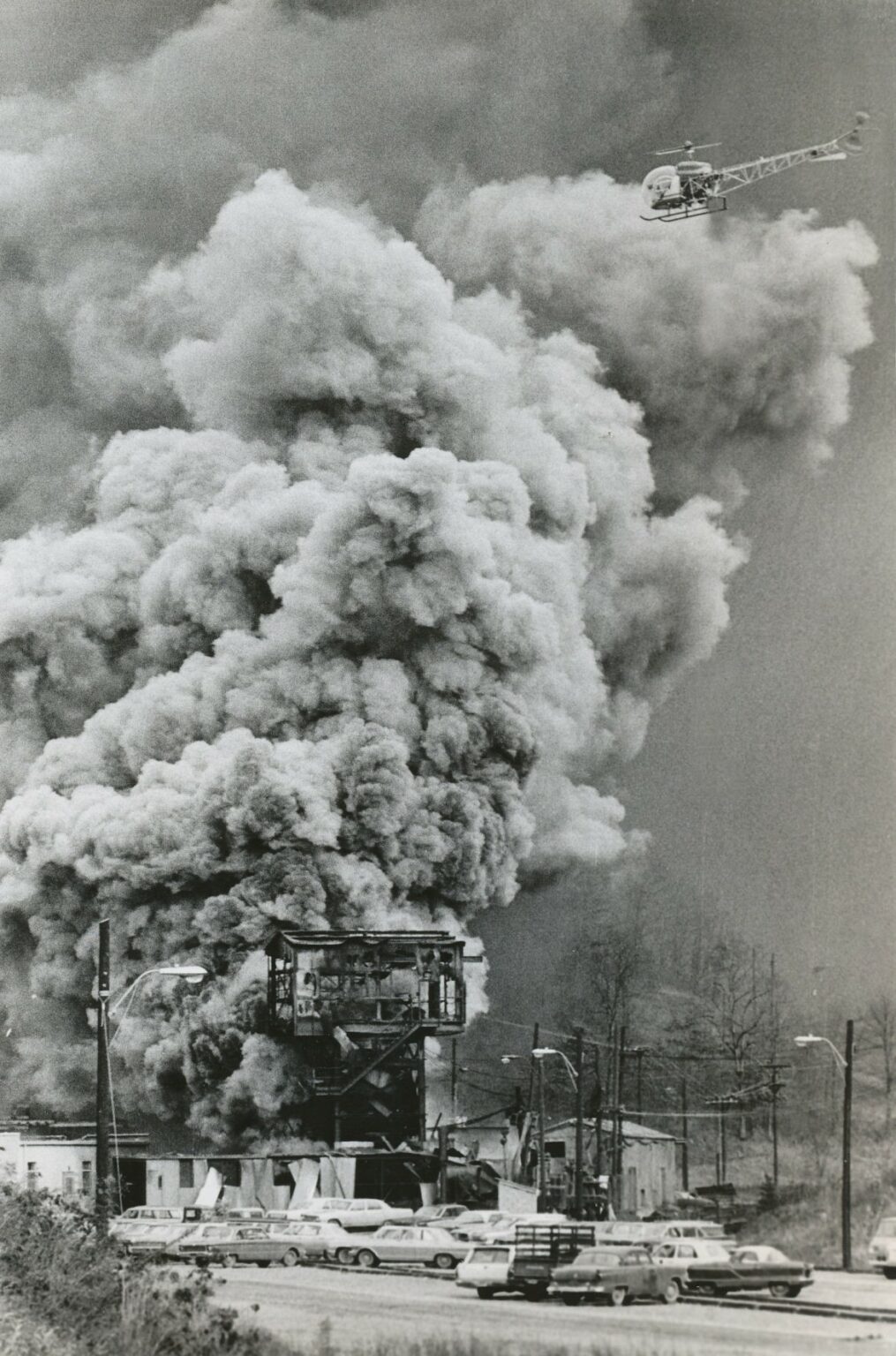
At about 5:30 a.m., with 99 men working underground, an explosion shook the sprawling Consol No. 9 mine, which tunneled for miles through the Pittsburgh coal seam north of Farmington and Mannington.
Twenty-one miners fought their way to the surface through smoke-filled tunnels and improvised escape routes. Seventy-eight others never made it out.
In the chaotic days that followed, the world watched as rescuers battled fire, poisonous gases, and repeated blast fears in a desperate effort to reach the trapped men. The story, carried live on television, drew national attention to the dangers in coalfields and helped spur the passage of the landmark Federal Coal Mine Health and Safety Act of 1969.
A blast felt miles away
The Farmington Mine Disaster unfolded on a damp, cold Wednesday morning. Residents as far as Fairmont, roughly 12 miles away, reported feeling the shock.
At the mine portal, witnesses described a column of black smoke and red-orange flames shooting into the air. Rock, timbers, and equipment were hurled from the shaft.
Area miners, awakened by the sound they dreaded most, rushed toward the site. Families from Farmington, Mannington, and nearby communities quickly gathered near the tipple, straining for news.
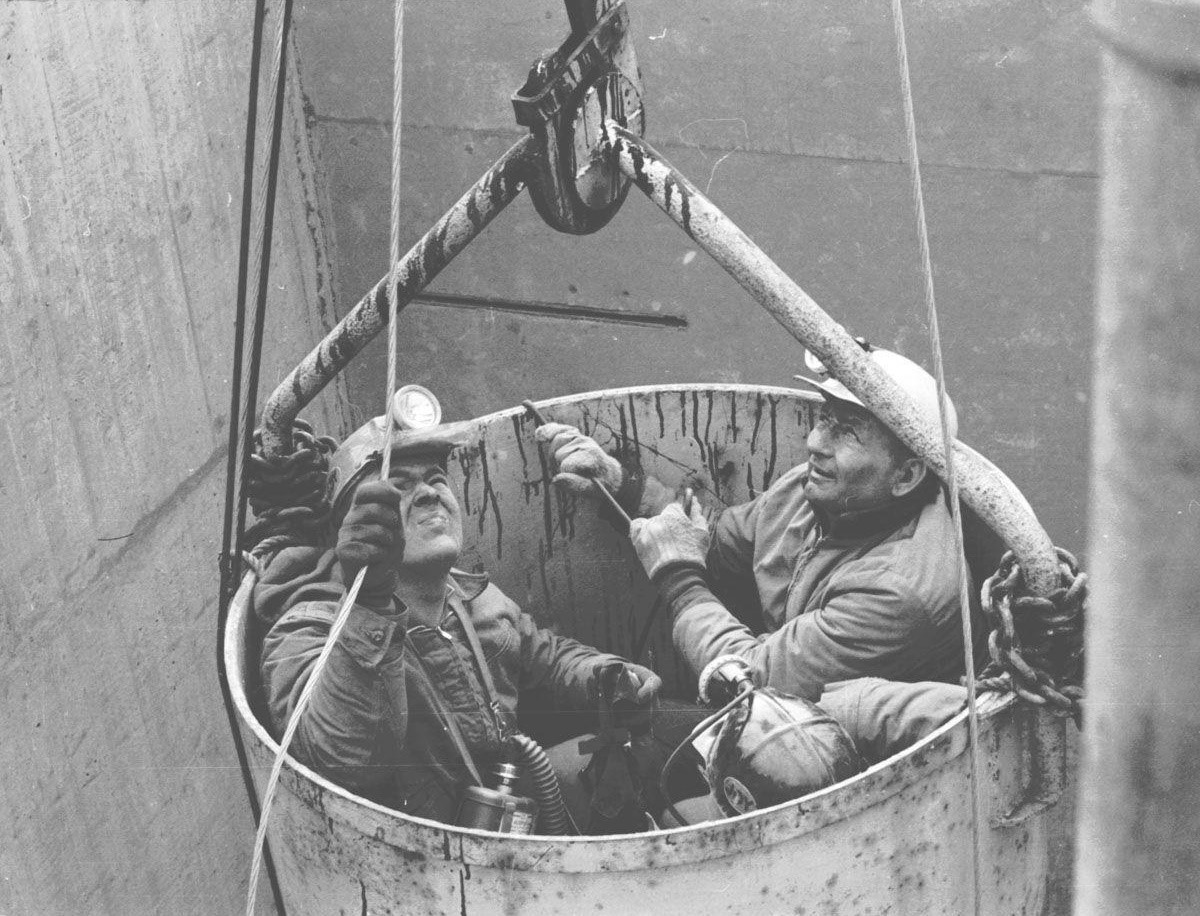
According to the U.S. Mine Rescue Association, only 21 men emerged alive, some stumbling out under their own power, while others were hoisted from a construction shaft in a crane bucket pressed into service as a makeshift rescue hoist.
But as the hours wore on, hopes dimmed. Fires raged deep underground. Air readings from boreholes showed an atmosphere incapable of sustaining life. After multiple subsequent explosions, officials made a grim decision: on November 30, just ten days after the first blast, they sealed the mine with concrete, entombing 78 miners inside.
Nineteen of those men have never been recovered; the No. 9 mine remains their final resting place.
Long danger, long memories
Consol No. 9, known earlier as Jamison No. 9, had a history of trouble. According to historian Jeffery B. Cook, deadly explosions had occurred there in 1901 and again in 1954, when 16 miners were killed.
“But this was far worse,” he wrote in an article regarding the explosion in the West Virginia Encyclopedia.
By 1968, the mine was among the largest in the country, with its tunnels spanning a footprint roughly ten miles long and six miles wide beneath the hills of the Fairmont Coal Field of northern West Virginia.
Miners had long complained about methane gas and coal dust, the explosive combination that had led to many coal-mine disasters. In later accounts, survivors recalled worrying about ventilation and dust levels even before the explosion.
Years after the Farmington Mine Disaster, investigations and reports raised disturbing questions about the conditions underground and the effectiveness of safety systems. A key focus was a ventilation fan at the Mod’s Run (or Mods Run) shaft, designed to pull methane out of the mine.
In material later cited by journalists and authors, a federal investigator’s memo and subsequent sworn testimony indicated that a safety alarm on one of the mine’s ventilation fans had been deliberately disabled before the blast.
According to summaries of Bonnie Stewart’s book No. 9: The 1968 Farmington Mine Disaster, the disabled alarm meant that when the fan failed on the morning of November 20, no automatic warning sounded and power to the mine was not cut—a failure that, in Stewart’s words, amounted to “a death sentence for most of the crew.”
The official federal investigation, completed in 1990 by the U.S. Mine Safety and Health Administration (MSHA), concluded that mine ventilation was “inadequate overall” and potentially “non-existent in some areas,” but did not formally assign a cause.
‘The first mine disaster of the television age’
Unlike earlier tragedies, the Farmington Mine Disaster played out in living rooms across America. Reporters and network television crews dug in at the mine entrance, broadcasting images of the burning shaft, rescue attempts, and anguished families.
According to the late Davitt MacAteer, assistant U.S. Secretary of Labor for Mine Safety and Health, coverage swept the nation as never before.
“The media dug in at Farmington, the first major mine disaster of the television age, relaying follow-up explosions and suspenseful rescue attempts to the nation’s living rooms in play-by-play detail,” McAteer wrote.
For many outside the coalfields, it was the first time they had seen, in real time, the human cost of supplying the nation’s energy needs. For mining families, it confirmed what they already knew: coal was being won at a terrible price.
In Washington, the explosion proved impossible to ignore. Within a month, the U.S. Department of the Interior convened a national mine-safety conference, where Interior Secretary Stewart Udall cited Farmington in a blistering speech about the industry’s “disgraceful” safety record.
Udall’s remarks signaled a shift. For decades, coal-safety rules had been weakly enforced. Inspections were infrequent. Companies faced little consequence for repeated violations.
Farmington changed the politics.
From Farmington to the 1969 Coal Mine Health and Safety Act
The disaster became a catalyst for sweeping reform. In 1969, Congress passed the Federal Coal Mine Health and Safety Act, the toughest coal-mining law in U.S. history at that time.
The act dramatically expanded federal authority in underground mines. The law:
- Required federal inspections of all coal mines—twice annually for surface mines, 4 times annually for underground mines
- Authorized mine inspectors to shut down mines when life-threatening hazards were found
- Created strong, enforceable safety protections
- Set fines for all violations and criminal penalties for willful violations
- Added health protections, including for black lung diseases
- Established federal benefits for victims of black lung disease
Crucially, the law gave federal inspectors the power to shut down mines that posed “imminent danger” to miners — a power that safety advocates had sought for years.
The Farmington Mine Disaster was frequently cited by lawmakers and regulators as the emotional force behind the act. The administration’s historical summary notes that the Farmington explosion was a “flashpoint for reform” after years of high fatalities and public pressure.
The 1969 act also laid the groundwork for the later creation of the Mine Safety and Health Administration in 1977, shifting mine-safety enforcement from the Interior Department to the Department of Labor.
Families’ long quest for answers
For the families of the men lost at Consol No. 9, the tragedy did not end when the mine was sealed.
In September 1969, less than a year after the blast, the company and federal officials reopened the mine in an effort to recover bodies and gather evidence. Over nearly a decade of painstaking work, crews recovered the remains of 59 miners; 19 others were never found.
Decades later, newly surfaced documents and testimony about the disabled fan alarm fueled lawsuits by some families, who argued that critical information about what led to the explosion had been concealed for years. Courts ultimately dismissed those cases on statute-of-limitations grounds, but the litigation kept public attention on lingering questions about responsibility and accountability.
In interviews, family members have often said they pursued the cases not solely for compensation, but to ensure that the mistakes at No. 9 were fully understood and never repeated.
A lasting memorial and a warning
Today, the Farmington Mine Disaster is remembered each November at a memorial along US-250 near Mannington, built above the site of the old No. 9 mine. A large carved stone bears the names of all 78 miners who lost their lives. Families, union members, and public officials gather to read the roll, lay wreaths, and call for continued vigilance on mine safety.
Cook notes that the Farmington explosion, following earlier fatal accidents at the same mine, “led to major changes in mine safety,” reshaping laws and attitudes far beyond Marion County. “The legal and political consequences were profound,” he wrote.
Yet for coal miners and their families, the story is not only about regulations and reforms. It is also about the 99 men who went below ground before dawn, the 21 who clawed their way back to the surface, and the 78 who never came home.
Their legacy is written not just in law books, but in every ventilation plan reviewed, every methane monitor checked, and every decision to halt work when conditions turn dangerous.
More than half a century after the Farmington Mine Disaster, the images of smoke pouring from No. 9 still serve as a stark warning: when safety systems fail or are ignored, the cost can be counted in human lives.
For more information on visiting the Farmington Mine Disaster Memorial, contact the Marion County Convention and Visitors Bureau.
Sign up to receive a FREE copy of West Virginia Explorer Magazine in your email weekly. Sign me up!


MOUNDSVILLE, W.Va. — The Moundsville Police Department is investigating a pharmacy break-in that led to the theft of a large amount of narcotics.
Police said the burglary happened in the early morning hours of June 30. Investigators said the suspects broke a window, went behind the pharmacy counter and stole the narcotics.
Authorities believe the suspects are from outside the area.
Police said the suspects used a stolen Infiniti Q50. The vehicle was later recovered by Ohio authorities near Cambridge.

The investigation is ongoing and involves law enforcement agencies in multiple states.
Anyone with information is asked to contact the Moundsville Police Department at 304-845-1611.

The United States Supreme Court issued its long-awaited opinion in West Virginia v. B.P.J. and Little v. Hecox on Tuesday, ruling that states may exclude transgender athletes from competing on women’s and girls’ sports teams.
The justices were unanimous in their analysis that the laws do not violate civil rights laws. However, the court was split on whether West Virginia’s law stood up to constitutional muster.
The ruling concludes this chapter in the ongoing cultural debate. The Save Women’s Sports Act was overwhelmingly approved by the legislature and signed by then-Gov. Jim Justice in 2021, and was almost immediately challenged in court. The legal battle trudged on for the next five years on its way to becoming a landmark U.S. Supreme Court decision.
Tuesday’s ruling settled the legal debate, but the court of public opinion weighed in on the issues long before the justice issued their legal opinions. According to Pew Research, 66 percent of U.S. adults support laws requiring athletes to compete on teams that match their biological sex. A Gallup poll found similar results, with 69 percent of adults supporting such laws.
West Virginia is not alone in passing a law to protect women’s and girls’ sports. Twenty-six other states have recognized the basic fact that there are differences between males and females and have chosen to pass legislation acknowledging those distinctions in athletic competition.
Lawmakers, who campaigned on protecting women’s and girls’ sports, can now tell constituents that they have fulfilled their campaign promise. The Save Women’s Sports Act is now the law of the land in West Virginia.
“I would say that for the foreseeable future, we have a very certain future for women’s sports. And here in West Virginia, we know what the rules are, we know what the law is, we know that it’s constitutional,” said West Virginia Attorney General J.B. McCuskey on Talkline.
Tuesday’s ruling also presents an opportunity for legislators to move on from the issue. Discussions surrounding the topic during the legislative session have been known to grind momentum to a halt, and Republicans running for office over the last five years have made it a centerpiece of their campaigns.
The issue is now settled, at least for now.
As J.B McCuskey cautioned,
“In the world of constitutional litigation, Dave, there’s never an end to any chapter.”

CHARLESTON, W.Va (WCHS) — As the conversation around two large transmission lines being built through parts West Virginia continues, the biggest question remaining is, will ratepayers be impacted?
The Valley North project is on the table and it would span from Putnam County to Frederick County, Maryland, totaling to 260 miles. Two new substations would also be built, one in Hardy County and the other in Frederick County Maryland.
According to the project website, these lines would strengthen the grid to deliver more reliable and affordable electricity to homes, hospitals, schools and businesses.
Energy Efficent West Virginia policy director, Emmett Pepper said, building these lines will not strengthen the power that we get at home.
“We have some of the least reliable electricity in the country here in West Virginia. That’s not because of the large transmission lines that we see their tower above us. It’s because of the local distribution lines, the ones that come close to our homes. While there can be some small amount of benefit potentially from the big transmission lines going in, it is the local lines that are the problem and that is not being addressed by this,” he said.
Lawmakers we spoke with earlier this month said between both transmission line projects, West Virginia could have to front the bill for anywhere between $440 million to $900 million.
“This is going to be more cost for rate payers and will not fix our problems here. There are other places in the region that have issues with transmission, but that’s not our issue,” Pepper said.
He said he’d like to see state leaders take action to ensure these costs don’t fall back on ratepayers.
“I think we need to have a rate payers’ bill of rights that would actually protect people and have a plan for how we’re going to deal with this so that it has less of an impact on rate payers,” he said.
Multiple open houses are scheduled for this project in West Virginia:
-Berkeley County, WV: July 7, 2026 | 4:00 – 7:30 p.m. Holiday Inn Martinsburg Foxcroft Ballroom
– Hampshire County, WV: July 8, 2026 | 4:00 – 7:30 p.m Bottling Works Event Center
– Tucker County, WV:July 8, 2026 | 4:00 – 7:30 p.m.Tucker County High School
– Hardy County, WV: July 9, 2026 | 4:00 – 7:30 p.m. Misty Mountain Event Barn
– Barbour County, WV: July 15, 2026 | 4:00 – 7:30 p.m. Philippi Middle School
– Lewis County, WV: July 16, 2026 | 4:00 – 7:30 p.m. Robert L. Bland Middle School
– Upshur County, WV: July 16, 2026 | 4:00 – 7:30 p.m. The Event Center at Brushy Fork
– Harrison County, WV: July 21, 2026 | 4:00 – 7:30 p.m. South Harrison High School
– Preston County, WV: July 21, 2026 | 4:00 – 7:30 p.m. Craig Civic Center
– Calhoun County, WV: July 22, 2026 | 4:00 – 7:30 p.m. Calhoun County Middle-High School
– Gilmer County, WV: July 22, 2026 | 4:00 – 7:30 p.m. Glenville State University Waco Center
– Braxton County, WV: July 23, 2026 | 4:00 – 7:30 p.m. Days Inn Flatwood Conference Center
– Grant County, WV: July 23, 2026 | 4:00 – 7:30 p.m. Landes Arts Center
– Kanawha County, WV: July 28, 2026 | 4:00 – 7:30 p.m. Sissonville Middle School
– Roane County, WV: July 28, 2026 | 4:00 – 7:30 p.m. Spencer Armory
– Jackson County, WV: July 29, 2026 | 4:00 – 7:30 p.m. Greene Center
– Putnam County, WV: July 29, 2026 | 4:00 – 7:30 p.m. Poca High School
-

 San Francisco, CA5 minutes ago
Discovery Bay driver arrested for San Francisco fatal vehicle collision | Contra Costa Herald
-

 Dallas, TX12 minutes ago
Erling Haaland’s Dallas Western wear purchase goes viral
-

 Miami, FL15 minutes ago
Miami’s FIFA Fan Fest draws thousands to Bayfront Park to watch Team USA win World Cup match against Bosnia
-

 Boston, MA20 minutes ago
2026 Yukon Denali Ultimate gets pricey, but tops the charts
-

 Denver, CO27 minutes ago
Nuggets Sign Marvin Bagley to 1-Year Deal: What It Means
-

 Seattle, WA30 minutes ago
FOURTH OF JULY 2026: Here’s where Seattle Parks will leave the lights on longer
-
 San Diego, CA35 minutes ago
USA fans pack San Diego bar to cheer on USMNT’s dominant World Cup knockout win
-
 Milwaukee, WI42 minutes ago
Hundreds rally on Milwaukee’s South Side against ICE arrests and in solidarity with immigrants

