West Virginia
$465 million problem is whether West Virginia made spending on education enough of a priority – WV MetroNews


West Virginia has a $465 million question with the federal government based not on any allegations of misspending — but instead over whether school systems fell short on an obligation to maintain financial support for education at levels in line with overall spending.
A revelation of the hundreds of millions of dollars at issue has introduced uncertainty into the legislative budgeting process, with a special session already being planned for May when the situation could be more clear.
Meanwhile, officials are working to resolve concerns of federal authorities, potentially by demonstrating an emphasis on better pay for educators and greater investment in school facilities.
“The issue is, did the state of West Virginia raise its educational spending in proportion to its overall spending,” said Brian Abraham, chief of staff for the Justice administration, on MetroNews’ “Talkline.”
West Virginia may be able to work out the matter, again, with the federal government. But what’s on the line is significant.
Guidance released in April, 2021, specifies that if a state fails to meet requirements, then federal officials could seek recovery of funds, commonly described as a “clawback.”
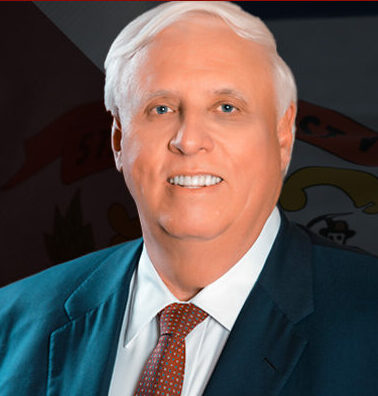
Citing ongoing negotiations with the U.S. Department of Administration, Gov. Jim Justice in a Saturday afternoon statement said “Let me be very clear on this issue: there is no $465 million ‘clawback’ on the table.”
‘Maintenance of effort’
West Virginia, like other states, drew down millions of dollars in covid relief from the federal government. One of those sources was the Elementary and Secondary School Emergency Relief fund.
That fund has a requirement known as maintenance of effort, a standard introduced on April 21, 2021 requiring the state to keep the same proportional level of funding for schools as it had before the pandemic. That was measured in comparison to the state’s spending in other areas.
Abraham said that standard was a challenge for West Virginia because of its formulas in state law for education funding. For example, under West Virginia’s school funding system, the state funds a certain number of teachers and other educational positions for each school district based on the district’s student enrollment.
“So there’s not really ways you can direct money into educational spending except for things like pay raises, school building authority, et cetera,” Abraham said.
The governor’s Saturday press release put it differently:
“They penalize West Virginia for its economic success and investing in roads, infrastructure, and bringing good-paying jobs to West Virginians, despite our increased investment in our schools,” Governor Justice stated.
Waivers
West Virginia’s submissions to the U.S. Department of Education show pre-pandemic spending on K-12 education of $2.007 billion in 2017, $2.023 billion in 2018 and $2.095 billion in 2019.
The post-pandemic spending dipped to $2.009 billion in 2022 before going up to $2.062 billion in 2023.
That occurred as West Virginia’s state budgets, more generally, were growing — from $4.82 billion overall spending in 2017 to $5.3 billion in 2022 before dropping back to $5.07 billion in 2023.
The Saturday statement from the Justice administration contended, “This issue started several years ago, under a prior State Superintendent who failed to adequately address the issue and failed to tell the State Board of Education.”
The statement describes broader efforts to get a handle on the matter, starting with Michele Blatt being named state superintendent of schools on July 1, 2023. Prior to that, Blatt had been deputy superintendent.
“When Superintendent Blatt was appointed, she brought the issue to my attention, and my Chief of Staff and others have been working directly with the federal DOE to negotiate a solution,” Justice stated.
But West Virginia officials had been working on the situation well before that, according to documents bearing the governor’s signature.
On June 21, 2022, West Virginia recognized its jam and asked for a federal waiver. That request contended “West Virginia has continued to make consistent investments in K-12 and higher education based on the state’s codified school funding laws, which are incompatible with the parameters” of the maintenance of effort standard.
An attachment with more detail about the state’s reasons, signed by Governor Justice, described declining enrollment in the school system. But the document made a case that West Virginia had increased its per-pupil spending.
West Virginia’s submission calculated that K-12 per pupil spending was $8,010 in 2022 and $8,219 in 2023. That compared to an average of $7,570 spending per pupil in the three years prior to the pandemic.
And the document maintained that comparisons of education spending to overall spending got out of whack because of new, increased spending in the state healthcare system, prompted by the covid-19 pandemic.
On June 12, 2023 — about a year after West Virginia made its waiver request — the federal Office of Elementary and Secondary Education approved it. The federal authorities noted that West Virginia had underperformed the maintenance of effort standards for fiscal 2022 by $23.7 million.
The federal authorities observed that “West Virginia demonstrated a commitment to State support for elementary and secondary education in future fiscal years by increasing State aid for elementary and secondary education in the State FY 2024 budget.” That included pay raises for educators and increased funding for school construction and maintenance.
So the federal authorities gave West Virginia a pass for its fiscal 2022 spending — but that correspondence included a note that it was premature at the time to make a determination on West Virginia’s request for a waiver on 2023 maintenance of effort requirements.
That 2023 spending is the issue that broke into the wild this week.
Documents on file with the federal Office of Elementary and Secondary Education and signed by Governor Justice this past Feb. 21 show West Virginia making its case to receive a waiver for that fiscal 2023 spending requirement.
The request made a case that “when looking at total education spending, the state continues to increase its total spending on education despite the declining enrollment trends.
“So not only did the state maintain it’s funding formula on a per-pupil-basis, it continued to increase funding to education over and above the state required formula as can be seen with the increasing education funding trend compared to the decreasing enrollment trend.”
The waiver requests were publicly available on the federal education website, but flew under the radar until last week when lawmakers started discussing specific allocations in the state budget. Some allocations that would have been routine were being held in abeyance until the multi-million dollar federal problem could become clearer.

“We’ve been told by the federal Department of Education that we are $465 million in a clawback situation,” House Finance Chairman Vernon Criss told delegates and the other onlookers in the House Finance room.
He continued, “I’m calling this act one. We hope to be back in May with a special session, with the governor’s permission, to know first of all that we’ll have that taken care of” before moving toward a lot of spending decisions that would normally be routine.
‘Spend money on education’
Internally, the Department of Revenue had been collecting information “for months,” Abraham said, gathering financial information from various state agencies to submit to the federal education authorities. Abraham expressed confidence the matter can be resolved.
“We were kind of taken aback when it came out in the Finance hearing as if we’re in some kind of crisis mode,” he said. “There’s not a likelihood the department would ask us to pay back the money to Washington. Rather, what they’re asking us to do is spend money on education in West Virginia to match our overall spending.”
That could be accomplished, Abraham said, by increased spending on educator salaries and improvements to school maintenance and construction.
The governor proposed and the House of Delegates has passed a bill representing average 5 percent pay raises for educators. A fiscal note estimates that’s a $77.5 million outlay. The House Finance Committee last week advanced a $150 million supplemental appropriation for School Building Authority projects all around the state.

Senate Finance Chairman Eric Tarr, R-Putnam, has expressed skepticism about whether the state can afford the ongoing cost of the pay raises. The Senate’s budget, passed last week, does not include the raises. “It gives me heartburn to go into a perpetual spend in that base, not knowing exactly where we stand with fiscal impact,” Tarr said last week on “Talkline.”
Governor Justice, in the Saturday statement, said it’s important to move ahead with the pay raises and increased support for school construction and maintenance.
““Again, I’m confident that we will reach a positive resolution quickly, and I call on the Legislature to act swiftly on my proposed budget, including the historic pay raise for educators and the unprecedented funding for our School Building Authority,” Justice stated.
“This isn’t just about meeting federal expectations; it’s about our ongoing commitment to improving education for all West Virginians.”
Impact on students
The U.S. Department of Education guidelines say decisions on waivers “will be rooted in the consideration of the impact on students.” The purpose of the federal funds, the guidelines indicate, “is to expand resources for K-12 and postsecondary schools and students, not to replace existing state commitments.”
Among the questions the Department of Education asks are: Has total state funding for education increased from the prior fiscal year? Has per pupil funding increased from the prior year?
The progressive-leaning West Virginia Center on Budget & Policy had this advice: “To Comply with the Feds, West Virginia Must Pass a Strong Budget.”

“Rather than facing clawbacks to federal money, the legislature should pass a budget that increases funding for and adequately supports our public education and health care systems—not only to be in compliance with federal requirements but also because it’s the right thing to do for our people and our economy,” wrote Kelly Allen, executive director of the center.

Joshua Weishart, a West Virginia lawyer with expertise in education rights, said the real misstep by the state has been to not maintain appropriate investment in the education system overall.
“The story here is that the state flagrantly and unconstitutionally disinvested in public education even when it had an excess in federal funding to make those investments,’ Weishart said.
“The state chose instead to be excused from federal law because of declining enrollment, deliberately oblivious to the reality that, though perhaps fewer in number, our students have greater, unprecedented educational needs, which the unprecedented cash from the feds was supposed to meet.”
Governor Justice, in his statement issued Saturday, agreed that it would be better for West Virginia to spend more on education than to suffer the consequences of a clawback.
“It’s my strong belief that we should spend this money on investments in education at home,” Justice said, “rather than letting the federal government take money from our county schools and colleges and universities.”



Baseball and the 4th of July. It goes together so well, and perhaps one day, we will see a pair of West Virginia Mountaineers sporting the red, white, and blue for Team USA in the Olympics (set to return in 2028) or the World Baseball Classic.
I know most everyone’s attention in West Virginia over the last two or so months has been consumed by the Mountaineers’ magical run to the College World Series, so you may not realize how much of a tear former Mountaineer star JJ Wetherholt has been on in the big leagues.
We’ll catch you up to speed.
In the first 81 games of his career, Wetherholt has hit 12 home runs, recorded 35 RBI, and has slashed .260/.357/.398. On top of being one of the best-hitting second basemen in the entire game, he is a perfect 9/9 on stolen base attempts and has been elite with the glove, committing just two errors on the season, giving him a fielding percentage of .994.
One of the best moments of Wetherholt’s red-hot start was this leadoff home run against Paul Skenes, last year’s Cy Young award winner.
JJ Wetherholt hits a leadoff shot off Paul Skenes! pic.twitter.com/7KzVkutArL
— Talkin’ Baseball (@TalkinBaseball_) April 30, 2026
Hitting a bomb off one of the most talented pitchers in the game certainly raised some eyebrows, but I’m not sure even that tops what he did in just his second game, shooting a ball through the right side of the infield, collecting his first-ever walk-off hit in the majors.
JJ WETHERHOLT WALKS IT OFF! pic.twitter.com/5Adski5dMn
— MLB (@MLB) March 28, 2026
For you baseball junkies out there, Wetherholt currently has a WAR (wins above replacement) of 3.8. Only nine others in the entire MLB — pitcher or position player — have a higher rating. Those players are P Christopher Sanchez (PHI), P/DH Shohei Ohtani (LAD), OF Pete Crow-Armstrong (CHC), SS Bobby Witt Jr. (KC), IF Kevin McGonigle (DET), P Chase Burns (CIN), P Jacob Misirowski (MIL), OF Andy Pages (LAD), and SS Otto Lopez (MIA).
The next big league star
I think if you polled 100 scouts at the next level, you would get pretty close to a consensus that West Virginia catcher/second baseman is going to be a really good player in the big leagues for a really long time. The hit tool is off the charts, as we all know, but the glove is just as impressive. He finished the season with an overall fielding percentage of .987, helping him earn All-American honors at two different positions, which is incredibly rare. I won’t go as far as saying it’s the baseball version of what Travis Hunter did at Colorado playing wide receiver and corner, but it’s pretty darn close.
As a sophomore, Kelly flirted with a .400 batting average for much of the season before ending the year with a .382 mark. He belted 19 home runs and drove in 63 runs. The scary thing for opposing pitchers is that he still has a ton of room to get bigger and stronger, which will only improve his power numbers and slugging percentage.
With another strong year in 2027, Kelly could be one of the handful of names considered to be the No. 1 overall pick in next summer’s draft.
 Add us as a preferred source on Google
Follow
West Virginia
Iconic country music band Alabama takes stage for West Virginia’s America 250 celebration

CHARLESTON, W.Va. (WCHS) — Thousands descended upon the West Virginia Capitol on Friday night to hear one of the most iconic country music bands of all time.
Alabama took to the Boulevard Stage shortly before 8 p.m. and gave fans a show lasting approximately 90 minutes, despite the grueling heat that has been factor throughout America250 celebrations and the Charleston Sternwheel Regatta.
Performing songs such as “Song of the South,” “Can’t Keep a Good Man Down” and the classic “Dixieland Delight,” the two-time Grammy Award-winning band even gave West Virginians a treat by playing John Denver’s “Take Me Home, Country Roads,” which the band said was at the request of Gov. Patrick Morrisey.
The band opened up a weekend full of performances at the Capitol. The West Virginia Symphony Orchestra will take the stage on Saturday, while the Marshall Tucker Band will perform on Sunday.
The performances are just a piece of what is going on at the Capitol, as vendors and family-friendly activities are offered all weekend. In the evenings, fireworks, light shows and drone shows will light up the night in celebration of America’s 250th.
BE THE FIRST TO COMMENT
Additionally, a 230-foot Ferris wheel is free for visitors to ride throughout the weekend.
-

 Politics5 minutes ago
Expert who fled Cuba warns of ‘vicious cycle’ that will lead to ‘communists in double digits’ in Congress
-

 Health12 minutes ago
July 4 heat delays America 250 celebration as State Fair guests share love of USA
-

 Sports15 minutes ago
Toronto Maple Leafs top pick Gavin McKenna reveals that he’s changing his jersey number
-

 Technology20 minutes ago
China’s robot-run hotel opens to public in 2027
-
 Business27 minutes ago
China-backed AI tool behind fake Brad Pitt fight making Hollywood inroads
-
 Entertainment30 minutes ago
Don Was produced the Rolling Stones, Bob Dylan and Ozzy. At 73, he found his voice in Detroit — and the Dead
-
 Politics42 minutes ago
Commentary: Happy Birthday, America! You’ve weathered another rough year
-
 Sports50 minutes ago
Dodgers’ Eliezer Alfonzo praying his sister and stepmother will be found in Venezuela

