Washington, D.C
12 Things You Probably Didn’t Know About the Washington Monument


If you’ve ever watched a movie about an alien invasion, specifically Earth vs. the Flying Saucers (1956), Mars Attacks! (1998) or any movie in the Marvel Universe that contains close encounters of the third kind, you’ve seen the Washington Monument. An iconic American historical landmark located in Washington DC’s National Mall, the monument is a stone obelisk stretching 555 feet into the sky. It was built to commemorate founding father George Washington and remains the world’s tallest predominately stone structure—and an essential tourist locale for US history fans.
Whether you’re a local or a first-time visitor to The District, there’s plenty of hidden or lesser-known trivia about this historically significant monument. Mike Litterst, chief of communications for the National Mall and Memorial Parks, helped us find the facts that only those in the know…know.
1. It was the tallest building in the world at the time of its completion
Although the Washington Monument is tall, it’s far from the tallest in the world. (That title is currently held by the 2,717-feet-tall Burj Khalifa in Dubai.) However, Litterst points out, modern tourists look up at it and think Wow, that’s pretty tall if we stretch our imaginations to when it was completed in 1888. This was the tallest structure in the world at that time. (The Eiffel tower would blow the monument out of the water for the tallest building shortly thereafter.)
2. It has a color shift about a third of the way up.
Visitors to the monument can see a slight shift in color about a third of the way up the obelisk. And, no, it’s not from the high water line of a recent flood. (Litterst said most of the staff at the monument has a favorite not-factually-based reason for the change in hue.) The truth is there was a pause in the construction of the monument from 1854 to 1877 due to funding challenges. (The cost of the original design, adjusted for modern inflation, would’ve been around $30,000,000 in 2024.) Thus, the Army Corps of Engineers who took over the project had to seek out stone from a different quarry and the coloration of the obelisk was changed.
3. The Army Corps of Engineers had to dramatically fix the monument’s thickness.
The aforementioned first third of the obelisk was constructed by the Washington National Monument Society. They took it upon themselves to make this monument happen, spurred on by their patriotic fanfare for George Washington, according to the National Park Service’s website. They got an original design from Robert Mills, an American cartographer and architect from South Carolina, and set to work.
When they hit a funding roadblock, the Army Corps of Engineers took over. This was also a very different level of building professionalism from the Army Corps of Engineers, said Litterst. There’s a big difference between engineers from the U.S. government and a “bunch of guys getting together.”
Thus, when it was eventually taken over by the engineers, a few errors had to be corrected. The walls were way too thick. At the base of the statue you’ll still find that the walls are around 15 feet thick. It was determined, according to Litterst, that if the entire monument was built with the walls that same thickness, it would collapse in on itself due to the sheer weight.
The thickness of the walls dramatically changes farther up the statue. The top section of the monument’s walls are just 18 inches thick. The foundation was also completely inadequate for the expected height of the structure and had to be fixed over the course of a few years. The angle also had to be corrected as the bottom third of the structure was sitting a few degrees off of perpendicular with the dirt below.
4. This is a far cry from the original design.
The original design the Washington National Monument Society sought to build is far different from the classic Egyptian-style obelisk we see standing today. The original design, according to Litterst, called for not only a colonnade-looking building encircling the bottom of a 600-foot column, but also a statue of Washington himself standing in a chariot and holding the reins of six horses. Inside the colonnade would be statues of 30 prominent Revolutionary War heroes as well as statues of the signers of the Declaration of Independence.
Architect Henry Robinson Searle from Rochester, New York had objections to the original design, according to a book entitled Washington Monument Monograph which was originally published by Gibson Bros. printers in 1847 and made public (and available via internet) by the Library of Congress.
“First, would the foundation sustain the weight of the required height, and especially with the increased localized pressure in a storm of wind; second, the mere obelisk appeared only as an enlarged plagiarism, in no way illustrating the memory of Washington personally, or those connected with him, or the history of this growing country; third, there is nothing whatever aesthetic about it, and nothing that would impress the visitor, whether native or foreign, with the grandeur of the work of Washington and his coadjutors in founding this nation.”
Boom, roasted.
5. Elevator rides of yore were much much slower.
The elevator to the top of the Washington Monument today takes about 70 seconds. It’s the same as going up to the top floor of a 50-story building. This is also the fifth elevator this structure has had installed since its construction. The original steam-powered elevator took a whopping 10 to 12 minutes to get to the top.
6. It’s capped with aluminum (which used to be a lot more impressive).
Litters revealed that the monument is capped with 100 ounces of pure aluminum. Today, that doesn’t seem so incredible given our grocery-store access to rolls of the element. If we once again put ourselves in the shoes of Americans at the time when the metal was put onto the monument, around 1884, aluminum ore had just begun being processed and was, ounce for ounce, just as valuable as silver. Imagine that the monument was capped in pure silver or gold and that’s a comparable example for its value at the time the monument was being built, Litterst points out.
7. It’s held together by gravity.
There is a piece of glory that this monument has held on to despite its loss of the world’s tallest building title. The structure has no internal scaffolding. It has no metal internal structure holding it up, in fact it’s only held together by gravity and force of friction between the stones. Therefore, the structure gets to keep the title of the tallest freestanding stone structure.
8. It’s undergone several restorations.
Since it’s a free-standing structure, the monument is incredibly difficult to maintain. Each time maintenance needs to be done on the marble all 555 feet of the thing needs to be covered by scaffolding. That said, it was restored once in the 1930s, as a part of a WPA (Work Progress Administration) project. Again in the 1960s around the National Park Service’s 50th anniversary. It was called mission 66. Between 1998 and 2001 it was scaffolded as a part of a program called Save America’s Treasures. And finally, most recently, between 2011 and 2014 it needed maintenance following the 2011 Virginia Earthquake. Each time the structure is scaffolded, according to Litterst, it takes 35 miles of piping which is then made into a temporary structure around the monument.
9. Somehow the pope is involved.
On the day it opened to the public, there were stones from all 50 states and about a dozen countries inside the structure. There was even a piece of marble from the Acropolis in Athens, according to Litterst. Even Pope Pius IX sent in a stone. Today you can see 194 different commemorative stones ranging from important historical figures to run-of-the-mill George Washington admirers.
10. It was, in part, constructed in 20-foot segments.
As we’ve covered, the monument doesn’t currently have any scaffolding supporting the stone structure. During its construction, it was a different story. After the bottom third, the U.S. Army Corps of Engineers began constructing the monument in 20-foot segments. During the construction of these stone segments there was internal scaffolding for builders to use. They would build 20 feet up, then move up the iron scaffolding, then build another 20 feet. A steam-powered elevator was used to lift up to six tones of stone up the moveable iron frame. The process of building up these stone segments was comparable to the modern experience of building legos (on an entirely different scale) according to Litterst.
11. The cornerstone ceremony was a star-studded event.
In 1848, when construction began on the monument, there was a ceremony. 20,000 people came to watch, including some household names. President James K. Polk was there. A handful of future presidents – specifically Buchanan, Lincoln, and Johnson – were in attendance. Eliza Hamilton, Alexander Hamilton’s window and distinct character in the modern musical with their shared last name. Really, a who’s who of the 1848 political scene.
12. The cap was placed purposefully.
During the final stretch of the monument’s construction, there was the precarious business of attaching the pyramid-shaped topper. About 470 feet in the air, builders began tapering in the structure, according to the National Parks Service website. On December 6, 1884, the 3,300-pound capstone was placed atop the structure. It was brought out one of the windows, hoisted to the scaffolding at the top of the monument, and set in place. Lt. Col. Thomas Lincoln Casey, who led the Army Corps of Engineers’s work on the structure, then placed that 8.9-inch aluminum tip on the very top of the capstone.
Gwen Egan is a Thrillist contributor.



WASHINGTON – Metro riders are seeing changes Thursday morning as WMATA adjusts its shuttle bus system following concerns about long lines and confusion tied to the Red Line summer shutdown.
Express shuttles to North Bethesda will now only pick up on Wisconsin Avenue near the Trader Joe’s. Local shuttles serving Bethesda, Medical Center and Grosvenor have been moved to the Friendship Heights Metro station, while some regular Metrobus routes are picking up on Western Avenue.
Red Line Shuttle Service Updates
• Local shuttle boarding will be relocated to Bus Bay K – the current C83/D96 bus stop on Wisconsin Ave.
• C83 and D96 buses will be relocated to the bus shelter on Western Ave near Wisconsin Ave.
• Express shuttle boarding will remain in the 5300 block of Wisconsin Ave NW.
What we know:
FOX 5’s Melanie Alnwick says Red Line riders say the shutdown has added time to their commute, though many are trying to stay positive. The shuttles connect North Bethesda and Friendship Heights through September 6, when Purple Line construction is expected to wrap up.
Metro Red Line summer shutdown leads to long shuttle lines
Metro Red Line Summer Shutdown: Changes to shuttle bus service after concerns
The workaround relies on dedicated shuttle bus lanes along northbound and southbound Wisconsin Avenue/355 and up to Rockville Pike. But truck drivers, delivery drivers and passenger vehicles have been stopping or parking in those lanes, forcing shuttles to go around and slowing traffic.
Metro and Montgomery County police have increased enforcement to keep the lanes clear. Metro Transit Police say they asked more than 60 drivers to move out of the bus lanes in the first days of the shutdown.
Metro is also adding about 100 parking spaces at Friendship Heights in the former Lord & Taylor garage. Some Montgomery County riders are opting for the MARC train downtown instead.
Metro’s Red Line shutdown is now in full effect: Here’s what you need to know
Metro Red Line Summer Shutdown: Changes to shuttle bus service after concerns
The Source: Information in this article comes from WMATA and previous FOX 5 reporting.

Washington D.C. police are searching for a vandal who was caught on surveillance video slashing the tires of multiple vehicles in a Georgetown alley on Tuesday afternoon. The suspect, who fled the scene on a red bicycle, targeted a Chevy Suburban and a Ford Escape on the 1700 block of 35th Street Northwest.
Washington, D.C
Reflecting Pool being drained – again – as Trump administration tries once more to fix DC landmark – WTOP News

Crews began draining the Lincoln Memorial Reflecting Pool on Sunday, according to Interior Secretary Doug Burgum, for the second time in three months.
(CNN) — Crews began draining the Lincoln Memorial Reflecting Pool on Sunday, according to Interior Secretary Doug Burgum, for the second time in three months.
In an interview released Tuesday with Katie Miller, a conservative podcaster and wife of President Trump’s deputy chief of staff Stephen Miller, Burgum said they started draining the pool as planned after the July Fourth fireworks show, noting some of the fireworks debris was still in the water.
Asked about the schedule for this round of renovations, he gave no specifics beyond a broad overview.
“Drain the water. Clean up the fireworks stuff. Repair the vandalism that was done. Fill it back up again,” Burgum said.
As of Tuesday evening, there was still water in the pool, and it was unclear if it will be drained further. Burgum indicated over the weekend that it may only need to be partially drained.
The move comes after weeks of problems – algae blooms, green-hued water, a chipping bottom and allegations of vandalism – have plagued the iconic landmark, making its woes the subject of a national fixation.
Members of the Trump administration, including President Donald Trump, have said vandals caused damage to the Reflecting Pool by gashing the lining, though they have not provided evidence to support that claim. In late June, the president said the pool would be drained after the July Fourth holiday to fix it.
The administration will use the same contractor, Virginia-based Atlantic Industrial Coatings, for this next round of repairs. Previously, the company landed a no-bid contract worth more than $14 million for their part of the work – sealing the pool and painting the bottom “American Flag- blue.”
Asked about the timeline for his part of the repairs, Eddie Gross, owner of Atlantic Industrial Coatings told CNN that “nothing has been set yet.” He declined to answer questions about his contract and the cost of additional repairs.
The Department of Interior did not respond to questions about the timeline for this round of repairs.
Burgum, in an interview on CNN’s “State of the Union” Sunday, suggested the repairs could happen with the pool only being partially drained. He sought to portray the costs as minor.
“It’s going to be a small number because the majority of the work was related to the labor and the materials for the liner,” Burgum said.
“We’ll use the same company, because they did a fantastic job,” he said.
Burgum also said the government could “absolutely” prove the damage was caused by vandals, and that there are photographs supporting the claim. But he dodged a question about whether those photographs show anyone damaging the pool.
The secretary also denied that Trump having his motorcade drive through the pool mid-renovation in May did any damage to the site.
“No, I was with him when we came that night … We were driving in a Cadillac Escalade. It is one of the presidential fleet of cars,” Burgum said, adding that the vehicle Trump took on the ride was “substantially lighter” than the armored presidential limousine known as “The Beast.”
“The whole base level of this industrial rubber layer was not yet completed, and so there was no damage that night whatsoever,” he said. “That was one of the questions we asked before we even brought the presidential motorcade there, but not a chance.”
The other contractor involved in the project, Greenwater Services, previously told CNN that when the pool is drained it will not affect their system, which is up and running.
Chas Antinone, the president of Greenwater Services, told CNN the company can shut down and then restart the so-called ozone nanobubbler, as necessary.
Companies involved in the renovation have found themselves at the center of national news as Reflecting Pool issues continued.
The-CNN-Wire
™ & © 2026 Cable News Network, Inc., a Warner Bros. Discovery Company. All rights reserved.
-
 Business5 minutes ago
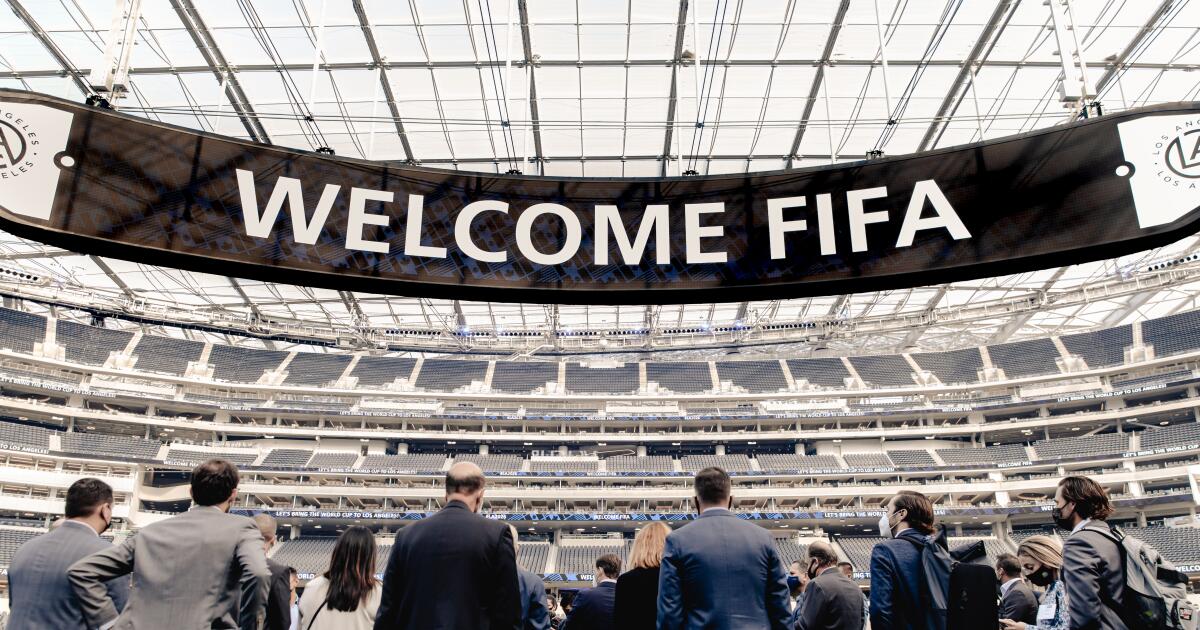
California soccer fans sue StubHub after it fails to deliver expensive World Cup tickets
-
 Entertainment8 minutes ago
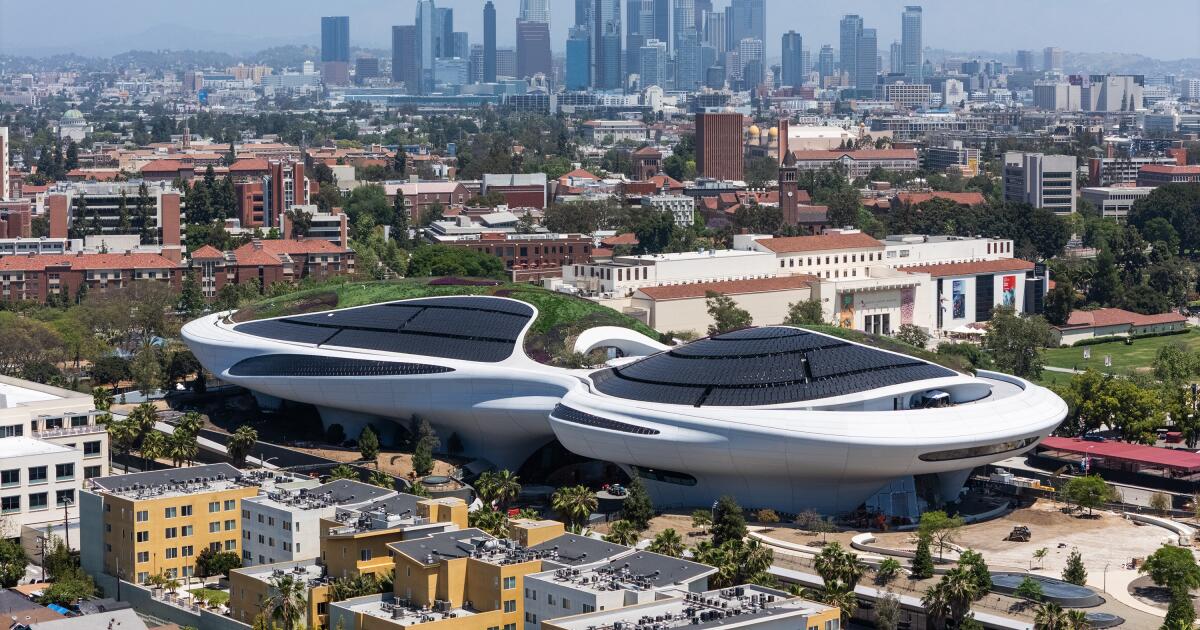
Lucas Museum to give free annual passes to South L.A. neighbors, host community preview day
-
 Lifestyle13 minutes ago
Meow Wolf taps famed L.A. animation house for its new Los Angeles venue
-
Politics20 minutes ago
Column: Trump decries ‘communism’ while his government takes ownership of companies
-
 Science23 minutes ago
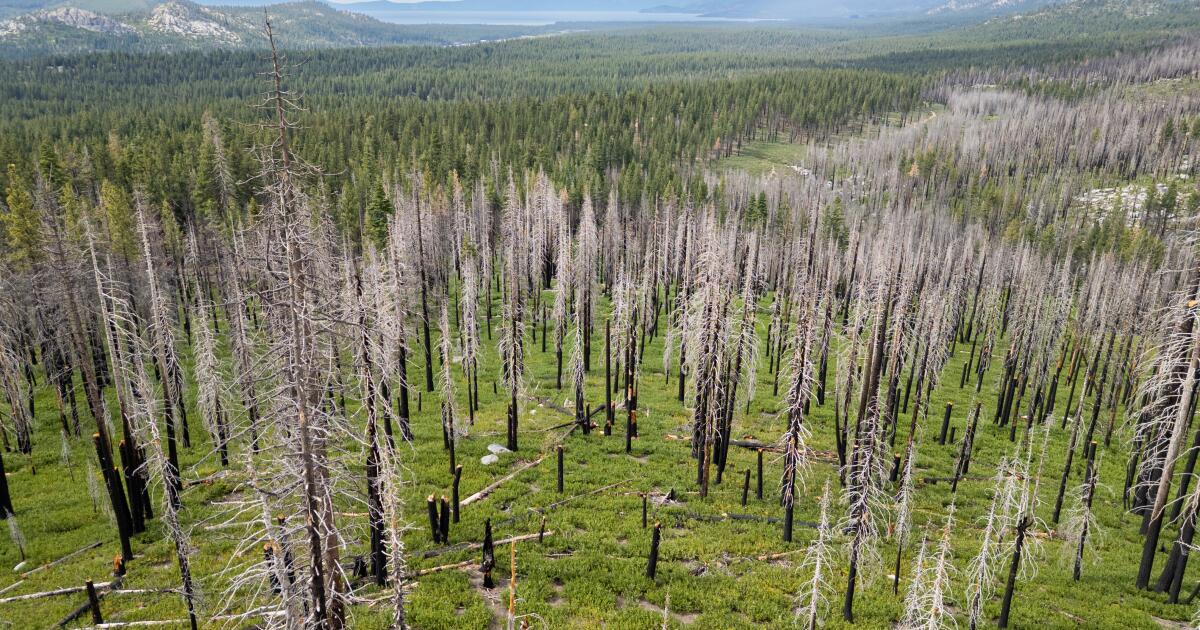
‘I’d rather my house burn down than get cancer’: Herbicide use upends California’s fight to save forests
-
 Sports28 minutes ago
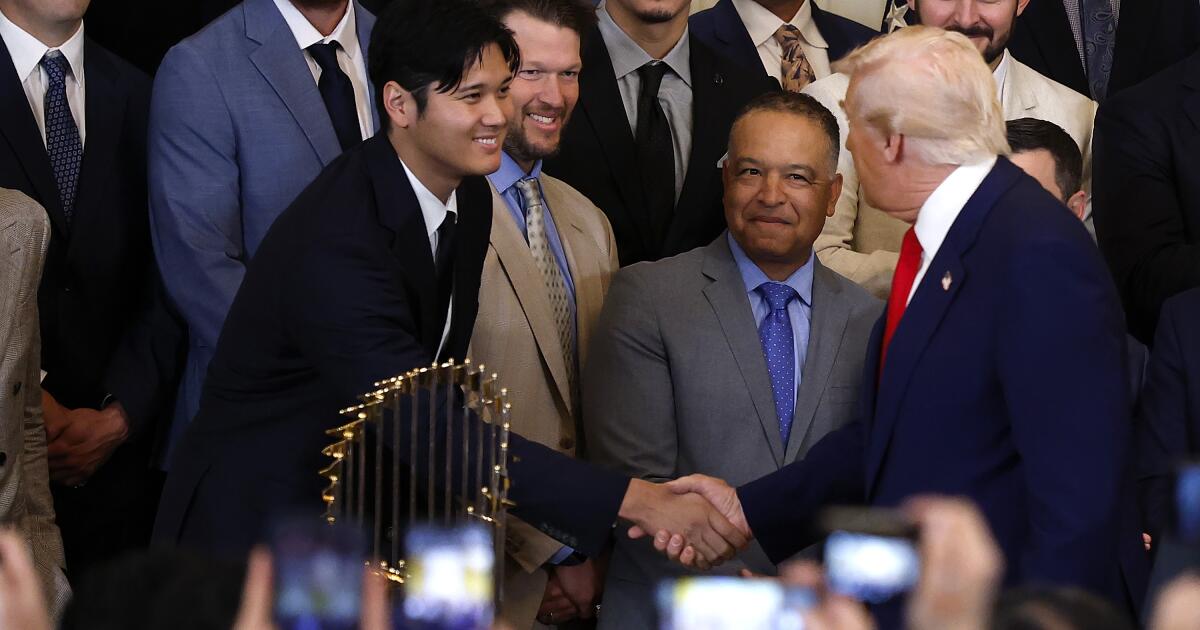
Dodgers scheduled to visit White House in late July to celebrate 2025 World Series win
-

 World38 minutes ago
Former US Olympian pleads not guilty in DC reflecting pool vandalism case
-
 News1 hour ago
Former Olympian pleads not guilty in reflecting pool vandalism charges


