Virginia
Virginia Tech yields solid results from Spring Game


BLACKSBURG, Va. – “I love that we know more about our team, more about more guys and what we’re going to get.”
Those were the words of Virginia Tech head coach Brent Pry following the programs annual Spring Game Saturday where the Maroon team defeated the Orange team 21-14. It was an outing that gave the coaching staff and Hokie nation a glimpse into what’s to come in the fall of 2024.
At the quarterback position, Kyron Drones played for much of the second half, connecting on 6-of-10 of his passes for 122 yards and 2 touchdowns. He also carried the ball twice for 8 yards.
As for some local flare from the game, Radford High School grad PJ Prioleau had a coming out party of sorts. He led the Maroon team in rushing with 62 yards on 6 carries and a 31-yard touchdown run. Prioleau was also productive on the receiving end as well. Two catches for 29 yards and 1 touchdown.
Former Bassett High School standout quarterback Ja’Ricous Hairston is entering his second season with the Hokies program. He’s been working hard at the tight end position since arriving in Blacksburg. He found himself on the receiving end of a 3-yard touchdown catch in the first half.
Defensively, Keyshawn Burgos was a force to be reckoned with. He ended the afternoon with three sacks, three tackles for loss, one pass break up and one fumble recovery. The Maroon team tallied 6 sacks total. The Orange team had 7 sacks.
“They had good springs and it’s just a matter of getting this next group ready to play and we’re making strides there,” Pry said.
Copyright 2024 by WSLS 10 – All rights reserved.



The Virginia Cavaliers will continue dancing in the 2026 NCAA Tournament!
Despite a scare against No. 14 Wright State for much of the game on Friday afternoon, the No. 3 Virginia Cavaliers pulled away late 82-73 with help from Jacari White, who went 10/12 from the floor and 26 points.
With that, the Round of 32 is up next for Virginia as they’ll play either No. 6 Tennessee vs. No. 11 Miami (Ohio) on Sunday. While you wait, tickets for Sunday’s NCAA Tournament second round game are available now, which you can find below:
Shop Virginia basketball tickets
Shop Virginia March Madness tickets
Virginia March Madness next opponent
Virginia earned a No. 3 seed in the Midwest regional, where they knocked out No. 14 Wright State in its opening game. They’ll play the winner of No. 6 Tennessee vs. No. 11 Miami (Ohio) on Sunday. Tickets to Virginia’s Round of 32 game start at $125.
Virginia March Madness basketball tickets
Limited Virginia NCAA Tournament tickets are still available for the Round of 32. Get your Virginia March Madness tickets today as the Cavaliers continue their quest to cut down the nets.
Shop Virginia basketball tickets
Virginia March Madness schedule
After defeating No. 14 Wright State, No. 3 Virginia advances to the Round of 32, where they will play the No. 6 Tennessee vs. No. 11 Miami (Ohio) winner on Sunday. The time of the game is to be determined. Tickets to Virginia’s Round of 32 game start at $125.
More March Madness: Everything fans need to know about the 2026 NCAA Tournament
Virginia March Madness game locations
Virginia will play its Round of 32 game in Philadelphia against either Tennessee or Miami (Ohio).
Limited tickets for Sunday’s NCAA Tournament action in Philadelphia are available. Shop your Virginia NCAA Tournament tickets now.
Shop Virginia basketball tickets
When is March Madness 2026?
The First Four tipped off the 2026 March Madness tournament on Tuesday, March 17. The two rounds run between Thursday, March 19 and Sunday, March 22. The tournament concludes with the Final Four on Saturday, April 4 and the National Championship game on Monday, April 6.

Women’s Basketball
March 19, 2026
Virginia vs. Arizona State – First Four NCAA tournament extended highlights
March 19, 2026
Watch the highlights from No. 10 Virginia and No. 10 Arizona State’s matchup in the First Four of the 2026 women’s NCAA tournament.
Virginia
States demand refunds on ‘illegal’ Trump tariffs as Maryland and Virginia join $166B push – WTOP News

Maryland and Virginia are part of a growing, multistate push to force Congress to refund more than $166 billion in tariffs, after the Supreme Court ruled the Trump policy illegal.
Virginia Attorney General Jay Jones on push for tariff refunds
Maryland and Virginia are part of a growing, multistate push to force Congress to refund more than $166 billion in tariffs, after the Supreme Court ruled the Trump policy illegal.
Attorneys general in more than a dozen states, including Maryland and Virginia, are arguing the money to pay for President Donald Trump’s tariffs came straight out of consumers’ pockets.
In a letter to lawmakers, Democratic attorneys general say more than $166 billion was collected from over 330,000 businesses and individuals, and they want that money returned automatically, with interest, without requiring claims or court action.
Virginia Attorney General Jay Jones said the tariffs ultimately hit consumers hardest.
“We want the money that was borne by consumers … back in their pockets,” Jones told WTOP. He pointed to estimates showing the average Virginian paid about $1,700 more last year because of tariffs.
“That’s groceries, rent, diapers — real money for real people,” he said.
Jones said key sectors in Virginia, including agriculture, forestry and the Port of Virginia, were also hit, with container traffic declining as tariffs took hold.
The coalition is calling on Congress to create a uniform refund process and ensure businesses pass reimbursements along to consumers.
Jones said affordability concerns cut across party lines.
“People are having a hard time making ends meet,” he said. “That money belongs to them, and we’re using every tool we have to try to get it back.”
Back in February, the Supreme Court struck down Trump’s far-reaching global tariffs, handing him a stinging loss that sparked a furious attack on the court he helped shape.
Trump said he was “absolutely ashamed” of some justices who ruled 6-3 against him, calling them “disloyal to our Constitution” and “lapdogs.” At one point he even raised the specter of foreign influence without citing any evidence.
WTOP’s Nick Iannelli and The Associated Press contributed to this report.
Get breaking news and daily headlines delivered to your email inbox by signing up here.
© 2026 WTOP. All Rights Reserved. This website is not intended for users located within the European Economic Area.

MTS releases new commute cost calculator tool amid rising gas prices

Only 30% of Milwaukee police supervisors live in the city. A new contract has an incentive

CIO 100 Leadership Live Atlanta: AI spending enters a reckoning phase

Clergy allowed to visit Minneapolis ICE holding facility in latest ruling

Indianapolis police officer charged with illegal deer harvesting

Florida High School Football Rankings: Top 25 teams – Oct. 21

How old is Bo Nix? What to know about Oregon quarterback ahead of 2024 NFL Draft

Cleary's 21 help Le Moyne down Central Connecticut State 69-64 in OT

99th annual Pony Swim held in Virginia

Indiana Members Credit Union announced as new anchor tenant at Bottleworks District

Pritzker pushes prosecutions of Trump officials as part of Dem ‘Project 2029’ agenda

Iran’s Khamenei says enemy ‘defeated’ in written Nowruz message

Gold Trump coin moves forward after Treasury invokes rare authority

Meet the longtime biz partner of Ilhan Omar’s husband as questions swirl over her skyrocketing net worth

‘Nobody can blackmail us’: Leaders excoriate Orbán’s veto
-

 Detroit, MI2 days ago
Drummer Brian Pastoria, longtime Detroit music advocate, dies at 68
-

 Oklahoma6 days ago
Family rallies around Oklahoma father after head-on crash
-

 Nebraska1 week ago
Wildfire forces immediate evacuation order for Farnam residents
-

 Georgia5 days ago
How ICE plans for a detention warehouse pushed a Georgia town to fight back | CNN Politics
-

 Massachusetts1 week ago
Massachusetts community colleges to launch apprenticeship degree programs – The Boston Globe
-

 Alaska6 days ago
Police looking for man considered ‘armed and dangerous’
-

 Colorado1 week ago
‘It’s Not a Penalty’: Bednar Rips Officials For MacKinnon Ejection | Colorado Hockey Now
-
 Southwest1 week ago
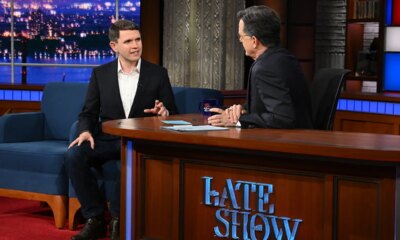
Talarico reportedly knew Colbert interview wouldn’t air on TV before he left to film it