Virginia
Virginia Beach collective bargaining task force recommends what issues employees can negotiate


VIRGINIA BEACH — The City Council has not yet considered whether to allow collective bargaining by city employees, but a task force has completed its report on what those negotiations could entail.
The Virginia Beach City Council has been approached by multiple employee associations expressing interest in organizing collective bargaining agreements since 2021. However, the city has not yet received certification from a majority of public employees in a unit requesting collective bargaining, which would require a formal vote on the matter.
Earlier in 2023, at the urging of Mayor Bobby Dyer, the City Council decided to create a task force to make recommendations on the scope of the bargaining and the number of units. The 11-member task force in Virginia Beach was comprised of leaders of city workforce unions, two former police and fire chiefs and former City Council member Jim Wood.
It began to meet in September and concluded its work Nov. 17. A copy of the report, dated Dec. 6, was recently provided by the city to The Virginian-Pilot.
The report does not include any cost estimates for the city if collective bargaining was approved, but it’s specific about the issues that employees would be able to negotiate under a collective bargaining agreement.
The recommendations include bargaining power over wages, salaries and other forms of monetary compensation as well as health insurance premiums, among others. In terms of working conditions, the task force made several recommendations including to allow bargaining for tools, equipment and vehicles.
Subjects prohibited from collective bargaining are also outlined in the report and mostly reference matters controlled by federal and state law or the city code.
As for the number of bargaining units, the task force recommended no more than five with the following makeup: fire/EMS; police; service, labor and trades; administrative and technical; and professional.
“We‘re thankful that City Council took that step to inquire and get that information,” said Max Gonano, task force chair, who is also a Virginia Beach firefighter and president of the Virginia Beach Professional Fire and EMS union. “A lot of work went into it by the various members.”
City staff and representatives from the Virginia Labor and Employment Relations Association, of which the city is a member, met with the taskforce to provide information.
Collective bargaining is the process in which working people, through their unions, negotiate contracts with their employers to determine their terms of employment, including pay, benefits, hours, leave, job health and safety policies, ways to balance work and family, and more, according to the American Federation of Labor and Congress of Industrial Organizations.
Virginia was one of a few states with a blanket ban on collective bargaining for public sector employees until 2020, when the Democrat-controlled General Assembly enacted a new law, effective 2021, punting the final say to localities.
To engage in the process, cities must approve a law or resolution. It can’t restrict the governing body’s authority to establish a budget or appropriate funds. Strikes by public employees remain prohibited.
The Norfolk City Council recently denied collective bargaining for its city employees, and instead created “employee committees” to meet with the city manager. But the Portsmouth City Council last month gave city employees the greenlight to pursue collective bargain, making it the first Hampton Roads city to take that step.
It’s unclear if the Virginia Beach City Council will discuss the report any time soon. No date has been set, according to a city spokesperson.
“We’re patiently awaiting our opportunity to present to council,” Gonano said.
Stacy Parker, 757-222-5125, stacy.parker@pilotonline.com




Virginia
West Virginia Lottery results: See winning numbers for Powerball, Lotto America on March 28, 2026
The results are in for the West Virginia Lottery’s draw games on Saturday, March 28, 2026.
Here’s a look at winning numbers for each game on March 28.
Winning Powerball numbers from March 28 drawing
11-42-43-59-61, Powerball: 25, Power Play: 4
Check Powerball payouts and previous drawings here.
Winning Lotto America numbers from March 28 drawing
15-29-30-32-35, Star Ball: 09, ASB: 05
Check Lotto America payouts and previous drawings here.
Winning Daily 3 numbers from March 28 drawing
0-7-1
Check Daily 3 payouts and previous drawings here.
Winning Daily 4 numbers from March 28 drawing
2-7-3-5
Check Daily 4 payouts and previous drawings here.
Feeling lucky? Explore the latest lottery news & results
When are the West Virginia Lottery drawings held?
- Powerball: 11 p.m. ET on Monday, Wednesday and Saturday.
- Mega Millions: 10:59 p.m. ET Tuesday and Friday.
- Lotto America: 10:15 p.m. ET on Monday, Wednesday and Saturday.
- Daily 3, 4: 6:59 p.m. ET Monday through Saturday.
- Cash 25: 6:59 p.m. ET Monday, Tuesday, Thursday, and Friday.
This results page was generated automatically using information from TinBu and a template written and reviewed by a USA Today editor. You can send feedback using this form.
Virginia
WRIC ABC 8News wins awards at AP Broadcasters awards for continuous coverage, special program

RICHMOND, Va. (WRIC) — At Virginia’s Associated Press (AP) Broadcasters awards on Saturday, 8News received seven awards, including three first-place awards. Our team was recognized for our coverage on the Waverly Two and special programs during Black History Month.
On Saturday, March 28, 8News attended the 2026 Virginia AP Broadcasters Award, which recognizes broadcast news operations in Virginia and West Virginia.
News anchor Deanna Allbrittin and Digital Producer Ryan Nadeau were honored for their continuous coverage of the Waverly Two, two men who were found not guilty but were still sentenced to life in prison.
We were also awarded first place in the Best Special Stream category for “Riverfront Rhythm” and Excellence in Diversity, Equity and Inclusion for “What is Black?“, a special program during Black History Month from 8New’s Lindsey West.
Additionally, MaryCatherine Price received second place for Best Daily Stream for her podcast, “The Rundown.” It is a podcast that gives viewers an inside look into the newsroom.
Our Taking Action team was also a finalist for Best Multi-Platform Story for our continuous coverage of “Homeowner Horrors” throughout Central Virginia. We were also a finalist for Best News Promo on the “Richmond Tax Delinquency.”
Lastly, our very own Nolan Knight earned second place for Best Sports Anchor for his groundbreaking coverage on local sports in Virginia. He was also recognized at the 2025 AP Broadcast Awards for his coverage of Virginia sports.


Players to watch in the 2026 Women’s NCAA March Madness Tournament
USAT’s Sam Cardona-Norberg and Meghan Hall give a few of their favorite players they will be keeping an eye on in the women’s March Madness tournament.
Sports Seriously
The NCAA Women’s Tournament Sweet 16 round continues Saturday, March 28, with a matchup between No. 3-seed TCU and No. 10-seed Virginia at Golden 1 Center in Sacramento, California.
The game tips off at 4:30 p.m. PT (7:30 p.m. ET, ABC).
No. 3 TCU is fresh from a nail-biting victory against No. 6-seed Washington in a final score, 62-59, during the Women’s NCAA Tournament Round of 32 on March 22.
The Horned Frogs were led behind a near triple-double from senior guard Olivia Miles who posted 18 points, 10 rebounds and eight assists. Clara Silva chipped in with 16 points and eight rebounds for TCU. Taylor Bigby added 15.
No. 10 Virginia is still riding momentum from their second round upset, a win against No. 2-seed Iowa, 83-75, on March 23.
The Cavaliers were paced by junior guard Kymora Johnson, who posted a game-high 28 points. Johnson and senior guard Paris Clark provided the bulk of scoring for Virginia. Clark could hardly miss as she added 20, herself. She shot 70% from the field, including 3-of-4 from three.
No. 10 Virginia will take on No. 3 TCU in the Sweet 16 round of the NCAA women’s basketball tournament on Saturday, March 28. Here’s how to watch the Women’s March Madness action.
What time is the TCU vs. Virginia women’s Sweet 16 game?
- Date: Saturday, March 28
- Time: 7:30 p.m. ET (4:30 p.m. PT)
- Location: Golden 1 Center, Sacramento, California
The No. 3-seed TCU Horned Frogs will play the No. 10-seed Virginia Cavaliers in the NCAA Women’s Sweet 16 round at 7:30 p.m. ET (4:30 p.m. PT) Saturday, March 28, at Golden 1 Center in Sacramento, California.
No. 10 Virginia vs. No. 3 TCU: TV, streaming

Cases of ‘white plague’ rising in US as doctors warn of ‘rebound effect’

F1 star Max Verstappen suggests he’s considering retirement at age 28

FBI email hack shows why you must lock down your tech
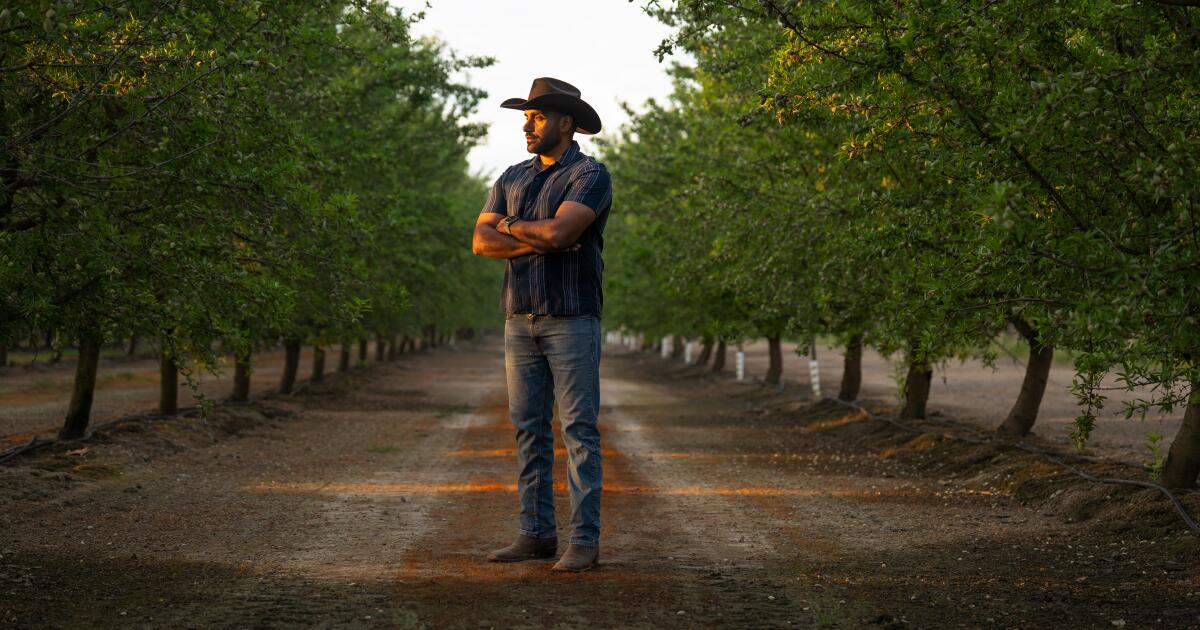
California farmers were already struggling. Then came the Iran war

Peter Alexander is leaving NBC News to join MS NOW as an anchor

Florida High School Football Rankings: Top 25 teams – Oct. 21

How old is Bo Nix? What to know about Oregon quarterback ahead of 2024 NFL Draft

Cleary's 21 help Le Moyne down Central Connecticut State 69-64 in OT

99th annual Pony Swim held in Virginia

Indiana Members Credit Union announced as new anchor tenant at Bottleworks District

Republican US lawmaker demands Congress vote on any Iran troop deployment

So you went to a No Kings protest. Now what?

JD Vance says he was ‘obsessed’ with UFOs, believes aliens are actually ‘demons’
The EU's recipe for trade deals : easy on beef, tough on wine

Photos: ‘No Kings’ protests across the country
-

 Sports1 week ago
IOC addresses execution of 19-year-old Iranian wrestler Saleh Mohammadi
-

 New Mexico7 days ago
Clovis shooting leaves one dead, four injured
-

 Miami, FL3 days ago
Jannik Sinner’s Girlfriend Laila Hasanovic Stuns in Ab-Revealing Post Amid Miami Open
-

 Tennessee6 days ago
Tennessee Police Investigating Alleged Assault Involving ‘Reacher’ Star Alan Ritchson
-

 Minneapolis, MN3 days ago
Boy who shielded classmate during school shooting receives Medal of Honor
-

 Technology1 week ago
YouTube job scam text: How to spot it fast
-

 Politics1 week ago
Schumer gambit fails as DHS shutdown hits 36 days and airport lines grow
-

 Science1 week ago
Record Heat Meets a Major Snow Drought Across the West