Virginia
US Open Finalist Clem Camacho Flips Commitment From Texas to Virginia Tech
Fitter and Faster Swim Camps is the proud sponsor of SwimSwam’s College Recruiting Channel and all commitment news. For many, swimming in college is a lifelong dream that is pursued with dedication and determination. Fitter and Faster is proud to honor these athletes and those who supported them on their journey.
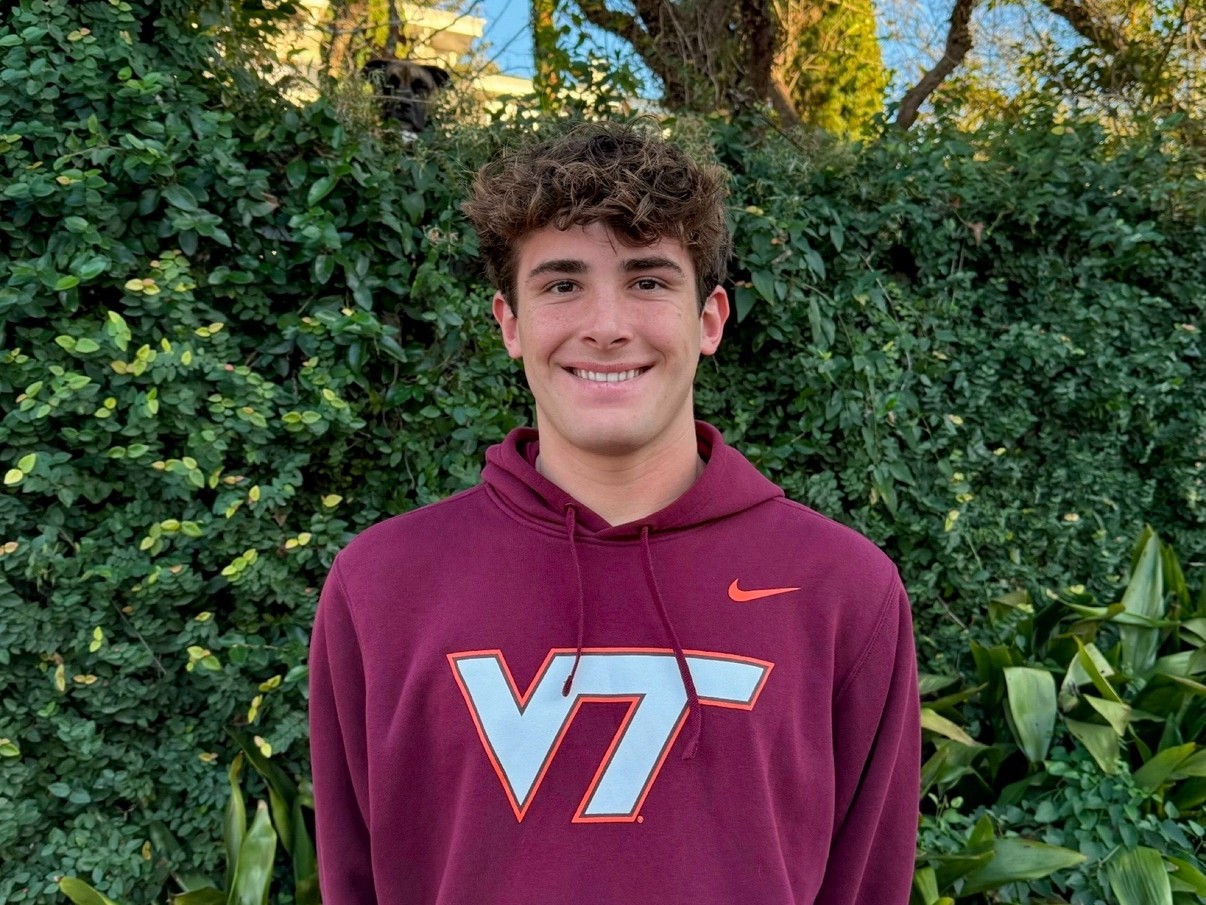
Clem Camacho from Wilmington, North Carolina, has flipped his commitment from Texas to Virginia Tech. He will arrive with the Hokies this fall for the upcoming 2025-2026 season.
“I am very excited to announce my commitment to continue my academic and swimming career at Virginia Tech! I would like to thank my family, coaches, and friends for all of their support getting me to this point. I would like to give a special thank you to Coach Albert and Coach Sergio for giving me this incredible opportunity. I can’t wait to be a part of such a great program. Go Hokies!!”
Camacho originally committed to Texas back in November 2023 and was a “Best of the Rest” (BOTR) ranked recruit at the time. Camacho competes for NSEA Swim out of Wilmington after spending time with TAC Titans in Raleigh from 2021-2024.
In December 2024, Camacho swam at US Open and achieved numerous personal best times. He finaled in two events, placing 12th in the 200 IM in a lifetime best 1:48.06 as well as 21st in the 100 fly in a 48.81. He swam a personal best 48.47 in prelims. He also swam to a lifetime best in the 100 back swimming a 49.26 and time trialed the 50 free with a best time of a 20.68.
Swimming for Eugene Ashley High School, he swam to a North Carolina state title in the 200 free with a 1:37.57. He also was 2nd in the 100 fly in a 47.78.
Camacho’s best SCY times:
- 400 IM – 3:50.86
- 200 IM – 1:47.66
- 200 free – 1:37.57
- 100 fly – 47.78
- 200 fly – 1:48.23
- 100 back – 49.26
- 200 back – 1:48.87
- 100 breast – 56.28
- 200 breast – 2:03.43
The Virginia Tech men finished 6th out of 15 teams at the 2025 ACC Championships. The team was led by Carles Coll Marti who won the 200 breast and 200 IM. Coll Marti just finished his fifth year with the Hokies.
Based on his best times, Camacho is just off what it took to make it back at ACCs. His versatility gives him plenty of options on event choice as it took a 1:44.70 200 IM, 3:47.80 400 IM, 1:34.41 200 free, 46.21 100 fly, and 46.71 100 back to earn a second swim.
Camacho will arrive this fall as a member of the class of 2029 along with Andy Roose, Jack Mainville, Javier Nunez, Tristan Dorville, Benedek Toth, Lucas Huming, and Connor Johnson.
If you have a commitment to report, please send an email with a photo (landscape, or horizontal, looks best) and a quote to [email protected].
About the Fitter and Faster Swim Tour
Fitter & Faster Swim Camps feature the most innovative teaching platforms for competitive swimmers of all levels. Camps are produced year-round throughout the USA and Canada. All camps are led by elite swimmers and coaches. Visit fitterandfaster.com to find or request a swim camp near you.

FFT SOCIAL
Instagram – @fitterandfasterswimtour
Facebook – @fitterandfastertour
Twitter – @fitterandfaster
FFT is a SwimSwam partner.
Virginia
Key Things To Watch For Tomorrow Night As Virginia Hosts NC State
Virginia has won eight consecutive games and finds itself near the top of the ACC conference. They even were bumped up three spots in the latest AP Poll rankings to No.11 in the country. Virginia has been getting it down with a solid starting five and a bench that comes in and produces at a high level, and brings the energy and effort every night. It has made the difference for the team and has them playing at a high level. Sitting at 24-3, the Cavaliers have everything in front of them. They will face a familiar opponent on Tuesday night when they face off against NC State. Let’s take a look at some key things to watch for on Tuesday night in Charlottesville.
Round Two
The Cavaliers are looking to finish the task for the second time this season when they meet NC State. Head coach Ryan Odom knows he will see a different team compared to the one they saw at the beginning of the year on January 3rd. Here is what he said: the key difference was.
“Their lineups are a little bit different. They’re very secure with their lineup now and who they’re playing. Um and the guys are in their roles now and know exactly what they need to do for them to be successful. I think we’re at a similar point, and so it’s going to be interesting to see it play out,” said Odom.
With it being the second matchup, the Hoos will likely get the best attempt from NC State as they look to add a Quad 1 win to their resume and continue to fight for positioning in the ACC and potentially make the NCAA tournament. It won’t be easy, even with this game being played at home. Coach Odom knows the Wolfpack will have a different sense of urgency.
“They’ve been really good regardless of the court that they’ve played on. So whether it’s been at home, they’ve had some great wins or on the road, they’ve had some awesome victories as well. Just really tough environments. They’re going to be ready to play. There’s no question about it. and they have a history with us from the last game, and so they’re going to be motivated, you know, to do really well here in JPJ, and so we’ve got to be up for the fight,” said Odom.
It surely will be a fight, but Virginia has proven they can handle any challenge and have played some of their best ball in high-pressure situations. They hope to do the same on Tuesday night.
More Virginia Basketball News:
•Preview and Final Score Prediction For No. 15 Virginia vs Florida State
•How to Watch No. 15 Virginia vs Florida State: Tipoff Time and TV Channel
•How Valuable Has Ugonna Onyenso Been To The Success Of The Virginia Cavaliers?
•Why Duke’s Loss to North Carolina Was Huge for Virginia and Their Quest To Be ACC’s Top Team
•Virginia Ranked No.15 In The Latest AP Basketball Poll Rankings
Virginia
Average gasoline prices in Virginia have risen in the last week, GasBuddy says
(WSET) — Average gasoline prices in Virginia have risen 0.9 cents per gallon in the last week, averaging $2.83/g on Monday, according to GasBuddy’s survey of 4,081 stations in Virginia.
Prices in Virginia are 2.4 cents per gallon lower than a month ago and stand 14.1 cents per gallon lower than a year ago. The national average price of diesel has increased 6.2 cents compared to a week ago and stands at $3.686 per gallon, GasBuddy said.
SEE ALSO: Valentine’s Day collision kills father, daughter, shattering Lynchburg family
According to GasBuddy price reports, the cheapest station in Virginia was priced at $2.37/g on Sunday, while the most expensive was $3.79/g, a difference of $1.42/g. The lowest price in the state on Sunday was $2.37/g while the highest was $3.79/g, a difference of $1.42/g.
The national average price of gasoline has risen 1.2 cents per gallon in the last week, averaging $2.88/g on Monday. The national average is up 2.8 cents per gallon from a month ago and stands 19.5 cents per gallon lower than a year ago, according to GasBuddy data compiled from more than 11 million weekly price reports covering over 150,000 gas stations across the country.
Virginia
From coal mines to hard times: A West Virginia county braces for new public assistance cuts
For some, these are the boom times: 40(k)’s are surging, the stock market has hit an all-time high.
But drive just 350 miles from the nation’s capitol and the conversation isn’t about how to get rich but how to survive.
McDowell County, West Virginia, was once the nation’s largest coal producer. It is now one of the poorest places in the country: where the food stamp program started and later the opioid crisis took hold.
Today, one in three households there depends on those food stamps and now the program that has fed families for decades is facing the largest cuts in history.
We went to McDowell County last month and learned that this is an all too familiar pattern. Government help comes and goes. Promises are made and broken. And the people are left behind.
McDowell County sits deep in the southern coal fields of West Virginia — stretching more than 500 square miles across the Appalachian Mountains.
There’s just one traffic light and more churches than we could count.
It’s a place where clean drinking water is hard to come by. A turn of the tap can look like this:
Pastor Brad Davis: I think, if you would ask, probably, nine out of 10 individuals here, they would tell you that they feel very much forgotten.

Cecilia Vega: By who?
Pastor Brad Davis: Everybody, the government, every institution that you can think of.
Pastor Brad Davis grew up in the Coalfields, just over the county line, and now leads congregations at five United Methodist churches in McDowell. He spends his days listening to those who trust God, each other and not much else.
Pastor Brad Davis: I’ve heard directly people say, “Well, why don’t people just move?” And my response to that is: Why should we? Why should we have to move? This is home.
Betty Stepp has lived in the town of Anawalt for all of her 76 years — long enough to remember when there was still a school, a theater and a doctor.
Cecilia Vega: If you run out of milk you gotta drive how far?
Betty Stepp: 45 minutes.
Cecilia Vega: 45 minutes.
Betty Stepp: Two mountains.
That’s if you can afford a car – many here can’t. Yet, the only business left in town: Tom and Donald’s mechanic shop.
Cecilia Vega: The famous Donald.
Betty Stepp: Donald and Tom are beloved by all the widows in this area.
A retired teacher’s aide, Betty and her husband live on a fixed income. These days, everything feels expensive.
Betty Stepp: If I go to the grocery store, I can’t get out of there in less than $200. And that is– that’s a week. Sometimes it’s– $300. Groceries are really high.
Cecilia Vega: What have you had to cut back on in these times?
Betty Stepp: Beef for sure I cut back on– chicken– vegetables.
She’s not alone – across the country families are feeling the squeeze. Food prices are almost 20% higher today than in 2022.
Cecilia Vega: I’ve heard a lot of folks from this community say, “If we don’t help each other, no one’s going to help us–“
Linda McKinney: No one’s going come and save us. We save each other.
Linda McKinney runs the county’s largest food bank, entirely on donations and volunteers.
Since the government shutdown this past fall – when Americans around the country lost SNAP benefits or food stamps for weeks– Linda says more new faces have been coming in.
Linda McKinney: Lately, we have a lotta young mothers– that come. And they’ll say, “I never thought I’d have to come.” and the children is what breaks my heart. They didn’t ask to be brought into this situation. And they suffer daily.
Every weekend, more than 100 children receive backpacks filled with food so they have something to eat when they are not in school.
Linda McKinney: The thing that we’re finding, we have parents that say, “Well, my kid didn’t get– a snap bag,” and then you find out the child on Friday is eatin’ that food on the bus. They’re hungry.
Cecilia Vega: They’re so hungry, the food that’s supposed to last them through the weekend, they’re eating on the bus.
Linda McKinney: Yeah. They’re eating on the bus
It’s a tale of two economies. At the White House, you’ll hear about job growth and victory over inflation.
But in McDowell, the median household income is about $30,000. Affordability isn’t a buzzword here. It’s the difference between buying groceries or paying for heat.
In the 1940s, McDowell County was rich in coal jobs. These mines powered America – helping to build railroads and cities. At its peak, nearly 100,000 people lived here, earning some of the nation’s highest hourly wages.
But as machines moved in, mining jobs dwindled and the local economy collapsed. In 1960, John F. Kennedy campaigned for president here
The poverty he witnessed led him to launch the modern food stamp program. McDowell County residents were the first recipients.
Today, in McDowell there are fewer than a thousand coal jobs left and only 17,000 people remain.
Tabitha Collins: We lack so much. We lack jobs. Just in the county alone, there is not enough jobs for everyone.
26-year-old Tabitha Collins was a stay-at-home mom until her fiancé was hit by a car on the job last year and left disabled.
She works at a local nonprofit – Big Creek People in Action – and is the sole income earner for her family of six. Along with caring for their toddler, she’s also helping to raise her fiancé’s three younger siblings.
Tabitha Collins: It’s up to you to raise these kids in a decent manner, you know and try to– teach them about the drug– epidemic and– how it can affect others. Because that’s a lot of what we struggle with.
In a county ravaged by opioids, it’s a common story: the epidemic claimed a generation of parents, leaving family members like Tabitha raising more children on less. Even with food stamps, she often comes up short.
Tabitha Collins: We still struggle food-wise. I still have to take a lot out of my payday which therefore doesn’t go towards bills. And in the wintertime, our power is very high.
Cecilia Vega: You’re living paycheck to paycheck.
Tabitha Collins: Yes.
Cecilia Vega: And when you say the electrical bills were high, how high are we talking?
Tabitha Collins: In the month of December, my electrical bill was $480.
Cecilia Vega: You got a shut-off notice.
Tabitha Collins: We sure did. I mean, it– it was scary. I was tryin’ to figure out– which bill is more important, you know? And it comes down to that.
That choice is about to become more difficult. SNAP and Medicaid benefits are facing the biggest federal funding cuts in history – more than a trillion dollars over the next decade – as a result of President Trump’s sweeping domestic policy bill passed last year. It will be up to states to pick up more of the costs, and recipients will face stricter work requirements.
Tens of thousands of West Virginians will likely lose benefits.
Tabitha Collins: We rely on the benefits– very much. And it’s not because we’re takin’ advantage of the government. It’s because we actually need these things.
Cecilia Vega: I wonder if you think that that’s what the perception is that some people have
Tabitha Collins: I do. But I– I don’t believe that. I mean, we are– a lot of us are working citizens. And we’re still barely making it by.
Outsiders are often quick to assume this is Trump country. But politics here defy easy labels. For decades, McDowell voted blue – backing Barack Obama in 2008 and Bernie Sanders in the 2016 presidential primary. In the last three elections, President Trump won the county, which had the lowest voter participation in the state.
Pastor Brad Davis: I– I think we as a community, collectively, are so desperate to see some sort of change, that when someone comes along, and says, “I’m going to make coal great again,” we desperately cling to that with a death grip and I think that goes a long way in explaining why the political climate here has shifted the way it has.
Earlier this month coal executives and miners handed President Trump a trophy declaring him the, quote, “undisputed champion of beautiful clean coal,” after his latest executive order aimed at boosting the coal industry.
In McDowell, whether from the White House or the state house, they’ve heard it all before.
Cecilia Vega: What are the promises that have been made and not kept?
Pastor Brad Davis: Economic– resurgence, renaissance of the coal industry, the elimination of poverty, fixing our water systems.
Cecilia Vega: Big promises.
Pastor Brad Davis: Big promises and nothing ever changes.
Nowhere is the failure of government more clear than in the county’s water supply, which at times is not clear at all. Few trust that it’s safe enough to drink and angry residents have documented the black and brown that oozes from aging pipes and contamination left behind from the coal industry.
West Virginia’s governor recently set aside $8.3 million in federal funds to upgrade sewage and water lines in McDowell – a drop in the bucket compared to what county and state officials say is still needed.
When Pastor Brad isn’t in church, he’s often pleading with politicians to do more.
Cecilia Vega: –you see this as a public health crisis.
Pastor Brad Davis: Ab– absolutely. There are people in parts of this county who haven’t taken a hot shower in six years or longer because the fumes from the water makes them physically ill.
Reports of skin rashes and burns are not uncommon. Many families spend upwards of $150 a month for bottled water – on top of their water bills.
It’s a luxury not everyone can afford, so they fill up here at this old mine shaft shooting water from the side of a mountain.
Cecilia Vega: I think it’s going to be hard for a lot of folks to get their mind around that you’ve got American citizens getting a ride to a spring on the side of the road to bring a jug to fill up because that’s their only access to water.
Pastor Brad Davis: And it should be hard for people to wrap their minds around because this shouldn’t be the case. This shouldn’t be the case, anywhere in the world, let alone in the wealthiest nation in the world.
To ease the burden, Betty Stepp and other retirees — the youngest of whom is 70 — go door to door delivering heavy cases of water to neighbors.
Betty Stepp: I think our government needs to hear us. We’ve worked our whole life here. Why won’t they help us?
Cecilia Vega: Does it matter who’s in charge?
Betty Stepp: It doesn’t matter if it’s Republicans or Democrats. It doesn’t matter.
In McDowell County, people face two choices – stay and scrape by or scrape together enough money to leave. Tabitha Collins is staying.
Cecilia Vega: You’re 26-years-old. And you’re raising four kids. That’s a lotta responsibility.
Tabitha Collins: It’s a lot. I don’t know how I get through it. But I do. I just wanna live the dream like anyone else does, you know, have a family, have a home and not stress about the hardships– that we have around here.
Cecilia Vega: Parishioners have told you that they feel like they’re tired of living in what feels like a third-world country.
Pastor Brad Davis: I– and that’s a direct quote.
Cecilia Vega: What do you say to someone who says that to you?
Pastor Brad Davis: “Amen. Amen,” ’cause I’m tired of it, too. It’s gone on long enough.
Produced by Ayesha Siddiqi. Associate producer, Kit Ramgopal. Broadcast associate, Julia C. Doyle. Edited by April Wilson.
-
Montana4 days ago2026 MHSA Montana Wrestling State Championship Brackets And Results – FloWrestling
-
Science1 week agoWhat a Speech Reveals About Trump’s Plans for Nuclear Weapons
-
Oklahoma6 days agoWildfires rage in Oklahoma as thousands urged to evacuate a small city
-
Technology3 days agoYouTube TV billing scam emails are hitting inboxes
-
Technology1 week agoThe DJI Romo robovac had security so poor, this man remotely accessed thousands of them
-
Science1 week agoNotoriously hazardous South L.A. oil wells finally plugged after decades of community pressure
-
Education1 week agoVideo: Secret New York City Passage Linked to Underground Railroad
-
Politics1 week agoHere’s how the DHS shutdown could impact the lives of everyday Americans