The Baltimore Banner thanks its sponsors. Become one.
Virginia
Not so fast. Proposal to relocate Wizards, Capitals to northern Virginia hits roadblock in legislature

:format(url)/cloudfront-us-east-1.images.arcpublishing.com/baltimorebanner/22ZMQT7HMFCSTLGV7QJHVBOVGA.jpg?ssl=1 "Not so fast. Proposal to relocate Wizards, Capitals to northern Virginia hits roadblock in legislature")
RICHMOND, Va. â A proposal to lure the the NBAâs Washington Wizards and NHLâs Washington Capitals to Alexandria, Virginia took another big hit Thursday, when top Virginia lawmakers confirmed the budget they will take up later this week would not include language enabling the deal.
The news does not necessarily mean the end of the road for Gov. Glenn Youngkinâs ambitions of landing Virginia its first major pro sports teams in nearly 50 years through a $2 billion development district featuring a new arena. But it complicates the path forward for a top Youngkin priority that requires legislative approval.
In a news conference at the foot of the Capitol steps, the Republican governor said he believed the Democratic-led General Assembly was poised to make âa colossal mistakeâ and argued that lawmakers should reconsider and restore the project language to the budget before sending it to his desk.
âThey have a chance to stand up and do whatâs right. They have a chance to assess this one-of-a-kind, first-of-its-kind economic development opportunity on the merits of the opportunity,â he said.
State Sen. L. Louise Lucas of Portsmouth, a senior Democrat who used her perch as chair of the Senate Finance and Appropriations Committee to keep the deal out of the pending budget legislation, stood on the Capitol portico as Youngkin spoke, looking down and sometimes smiling.
The dealâs leading opponent and a sharp critic of the governor, Lucas told reporters she remains firmly opposed to the proposal, in large part because of its reliance on bonds backed by the state and city governments.
Both Lucas and Democratic Del. Luke Torian, who chairs the House Appropriations Committee and led negotiations for his chamber, confirmed that the arena-related provisions were removed from the budget legislation, which lawmakers are expected to take up Saturday.
The legislation had been in the hands of a conference committee â a small, bipartisan group of legislators thatâs been meeting behind closed doors to find compromise â after the two chambers passed competing budget bills earlier this session.
The budget was the last vehicle remaining this session for legislation to pave the way for the deal. Two other standalone bills were defeated after Lucas refused to grant them a committee hearing.
Youngkin and other backers have a few ways to try to keep the project alive. If lawmakers send the governor a budget without the arena language, he could pursue an amendment to restore it. Or he could call a special session, starting over with a new bill.
Legislators could also reject the budget and send it back to the conference committee, though Senate Majority Leader Scott Surovell said in an interview thatâs not likely to happen.
Surovell, who said he did not anticipate budget negotiators would be open to more last-minute talks before Saturday, also criticized Youngkin for what he called an unwillingness to consider some top Democratic top priorities.
âThis is a process that requires compromise, and so far the governor has made very little indication that heâs willing to compromise,â said Surovell, who has been more open to the deal than Lucas.
Youngkin rolled out the proposal with great fanfare in December when he and Ted Leonsis, an entrepreneur and the ultrawealthy CEO of Monumental Sports and Entertainment, the Capitalsâ and Wizardsâ parent company, announced that they had reached an understanding.
The Wizards, previously known as the Bullets, played in Baltimore from 1963 to 1973, when the franchise moved to the then-new Capital Centre in Landover, Maryland. They were joined there the following year by the expansion Capitals. In 1997, both franchises left suburban Maryland for a new downtown venue in Washington, now called Capital One Arena.
The competition within the DMV for the Capitals and Wizards comes as the District of Columbia also tries to lure the NFLâs Washington Commanders, who now play in Landover, back to the city. The U.S. House of Representatives last month passed a bill that would allow the District to redevelop the site of the teamâs former home, RFK Stadium, into a mixed-use project that possibly includes a new stadium. Marylandâs congressional delegation opposed the measure amid Gov. Wes Mooreâs efforts to keep the Commanders in Maryland, The Washington Post reported.
The Virginia deal calls for the creation of a $2 billion development, partly financed by public money, in the Potomac Yard section of Alexandria that would include an arena, practice facility and corporate headquarters for Monumental, plus a separate performing arts venue, all just miles from Washingtonâs Capital One Arena, where the teams currently play.
The company said in a statement that it is disappointed but remains âhopeful that the merits of the proposal will eventually get a fair hearing so this important project can advance for our fans, players, employees and the residents of Virginia.â
In Washington, Council Chair Phil Mendelson welcomed the news and expressed hope that the teams would remain in the city, which has made a $500 million offer to renovate Capital One.
âThe Arena and Monumental Sports have been partners with the District for almost 30 years, and a great asset to downtown,â Mendelson said in a statement. âAs a deal in Virginia remains uncertain, the Council continues to be ready to welcome Monumental Sportsâ change of mind.â
Under the Youngkin-negotiated terms, Monumental and the city of Alexandria would contribute some funds up front, but about $1.5 billion would be financed through bonds issued by a governmental entity that lawmakers would set up.
The bonds were to be repaid through a mix of revenues from the project, including naming rights, parking fees and taxes on tickets, concessions and athletes competing at the arena. Proponents say that would more than cover the debt, creating new revenues for the city and state in the projectâs first year. But about a third of the financing would be backed by the âmoral obligationâ of the city and state governments, meaning taxpayers could be on the hook if the project revenues donât come through as expected.
Youngkin, a private equity executive before he ran for public office, emphasized that the state would not be putting in upfront cash and that revenues that âotherwise will not be hereâ would help finance the deal. And he warned that the Senateâs handling of the deal could threaten Virginiaâs business-friendly reputation.
Lucas dismissed that concern and said she had serious worries about âputting taxpayersâ money behind the project of a billionaire.â
She acknowledged that blocking the arena could hurt the chances of securing Youngkinâs support for top Democratic legislative priorities like a measure establishing marijuana retail sales. But she thought the trade-off was worth it.
âI just stood firm on what I believe in my heart to be in the best interest of the Commonwealth. And that was just to say no to the Glenn Dome,â she said using a nickname sheâs given the proposed arena.
Torian, who had carried one of the standalone arena bills, said he was âperhaps a little disappointedâ the arena language didnât survive, but he emphasized other provisions that did, including pay raises for teachers and other public employees and increased spending on certain government services.
Also out of the budget are Youngkinâs proposed tax cuts, he said.
Associated Press writer Denise Lavoie contributed to this report.



Powerball, Mega Millions jackpots: What to know in case you win
Here’s what to know in case you win the Powerball or Mega Millions jackpot.
Just the FAQs, USA TODAY
The Virginia Lottery offers multiple draw games for those aiming to win big.
Here’s a look at June 2, 2026, results for each game:
Mega Millions
Mega Millions drawings take place every week on Tuesday and Friday at 11 p.m.
15-26-43-48-60, Mega Ball: 12
Check Mega Millions payouts and previous drawings here.
Pick 3
DAY drawing at 1:59 p.m. NIGHT drawing at 11 p.m. each day.
Night: 4-5-7, FB: 9
Day: 8-7-6, FB: 5
Check Pick 3 payouts and previous drawings here.
Pick 4
DAY drawing at 1:59 p.m. NIGHT drawing at 11 p.m. each day.
Night: 7-0-6-5, FB: 8
Day: 1-1-9-0, FB: 1
Check Pick 4 payouts and previous drawings here.
Pick 5
DAY drawing at 1:59 p.m. NIGHT drawing at 11 p.m. each day.
Night: 2-9-1-0-4, FB: 0
Day: 5-9-4-1-7, FB: 0
Check Pick 5 payouts and previous drawings here.
Cash Pop
Drawing times: Coffee Break 9 a.m.; Lunch Break 12 p.m.; Rush Hour 5 p.m.; Prime Time 9 p.m.; After Hours 11:59 p.m.
Coffee Break: 10
After Hours: 14
Prime Time: 04
Rush Hour: 13
Lunch Break: 06
Check Cash Pop payouts and previous drawings here.
Millionaire for Life
Drawing everyday at 11:15 p.m.
16-33-41-50-52, Bonus: 01
Check Millionaire for Life payouts and previous drawings here.
Feeling lucky? Explore the latest lottery news & results
This results page was generated automatically using information from TinBu and a template written and reviewed by a Center for Community Journalism (CCJ) editor. You can send feedback using this form.
Virginia
First boat to Bermuda wins — Virginia man prepares for 753-mile voyage from Annapolis – WTOP News

Kevin Sherwood’s boat is one of 21 in this year’s Annapolis to Bermuda Oceans Race, or A2B, which dates back to 1979.
This page contains a video which is being blocked by your ad blocker.
In order to view the video you must disable your ad blocker.
DC-area man hopes to race from Annapolis to Bermuda by boat
The boat that Kevin Sherwood of Springfield, Virginia, bought is still in dry dock as he makes final repairs and preparations ahead of the whole reason he bought the “Bay Retriever” in the first place.
If all goes as planned, he’ll get it in the water Wednesday, and starting at noon on Friday, he’ll be heading south down the Chesapeake Bay on a 753-mile voyage to Bermuda.
Sherwood’s boat is one of 21 in this year’s Annapolis to Bermuda Oceans Race, or A2B, which dates back to 1979. He’ll be joined by a crew of four others in a race he said is among the most challenging on the East Coast.
“I bought this boat in 2022 specifically for the Bermuda race,” Sherwood said. “Since I bought this, everything we’ve done has been prepping for it.
“Plenty of sailors never leave the Chesapeake. It’s very different when we’re dealing with ocean waves, ocean weather, all kinds of different conditions. So, the boat really needs to be set up for it.”
The bay, being both relatively shallow and surrounded by land, can make for ideal sailing; if something still goes wrong, help isn’t far away.
Heading out in the blue waters of the Atlantic Ocean to an island more than 600 miles off the coast can present more difficult circumstances. Yet, if you go on the race’s website, you’ll see a long list of people hoping to get picked up by a boat to help take part.
“We’re out of rescue range for a portion of the trip. They’ll ask a passing freighter to come help you if you have a problem,” Sherwood said. “We are on our own out there.”
Some boats will have full galleys available to help cook meals for the crew. But Sherwood’s vessel, being smaller, has been stocking up on food and water from the grocery store.
He and the crew will take turns sailing and resting in the cabin down below. A “leak loss” — imagine a hammock, more or less — will catch anyone if the boat leans one way while they’re sleeping, lest they fall to the floor.
Of course, that assumes they’ll have strong winds and waves. Sherwood, who has done this race twice before, said that’s not always the case.
“My first Bermuda race, we had plenty of nothing going on,” he said. For two days, the winds were so calm Sherwood’s team was “barely making two knots.”
Two years ago, he saw more clouds than stars and sun, and waves were running 12-15 feet high.
“The last couple of races we haven’t seen many sunsets because of clouds, fog, rain, that sort of thing,” Sherwood said. “But when you are out there all alone and just the stars, it’s incredibly detached. There’s really nowhere left in the country to get this isolated.”
Of course, having access to Starlink means there is some connection out on the water — though, if you’re on duty, you’re too focused to care. If you’re not, you’re probably resting.
“There’s definitely parts I’m going to hate,” he said. “There’s parts I’m going to be asking myself, ‘Why am I doing this? Why am I here?’ But it’s just such an awesome team sport. When I go off watch, I’m trusting the other guys to keep sailing, keep racing, to keep us safe, to keep the boat moving fast. We get to detach from the world.”
(WTOP/John Domen)
WTOP/John Domen
(WTOP/John Domen)
WTOP/John Domen
For how long is anyone’s guess. Weather and winds will determine the time it takes to get there.
“If conditions are amazing, we’ll get in on Tuesday,” he said. “If conditions are great, Wednesday. If they’re average, Thursday, and if they’re terrible, Friday.”
Those following from home can track Sherwood and everyone else in the race online. Whenever he arrives, he said workers on the docks will have a “Dark n’ Stormy” — one of Bermuda’s national drinks — waiting for them.
He’ll also be hoping to be handed a trophy he can sail back with, but that’s not the most important thing right now.
“There’s a point of pride just for completing this; 753 miles of ocean sailing is a big deal,” he said.
“So, yeah, I mean, I want to do well, but my first goal is just to make it back here safely in two and a half weeks. My next goal is to make it to Bermuda safely. Then my third goal is to finish well and get a podium finish again.”
Get breaking news and daily headlines delivered to your email inbox by signing up here.
© 2026 WTOP. All Rights Reserved. This website is not intended for users located within the European Economic Area.
Powerball, Mega Millions jackpots: What to know in case you win
Here’s what to know in case you win the Powerball or Mega Millions jackpot.
Just the FAQs, USA TODAY
The Virginia Lottery offers multiple draw games for those aiming to win big.
Here’s a look at June 1, 2026, results for each game:
Powerball
Powerball drawings are held Monday, Wednesday and Saturday at 11 p.m.
02-42-47-57-58, Powerball: 14, Power Play: 3
Check Powerball payouts and previous drawings here.
Wednesday, June 03, 2026
Pick 3
DAY drawing at 1:59 p.m. NIGHT drawing at 11 p.m. each day.
Night: 7-5-1, FB: 5
Day: 2-4-2, FB: 4
Check Pick 3 payouts and previous drawings here.
Pick 4
DAY drawing at 1:59 p.m. NIGHT drawing at 11 p.m. each day.
Night: 2-9-0-9, FB: 2
Day: 2-5-5-3, FB: 1
Check Pick 4 payouts and previous drawings here.
Pick 5
DAY drawing at 1:59 p.m. NIGHT drawing at 11 p.m. each day.
Night: 4-8-0-8-1, FB: 1
Day: 0-8-5-4-2, FB: 0
Check Pick 5 payouts and previous drawings here.
Cash Pop
Drawing times: Coffee Break 9 a.m.; Lunch Break 12 p.m.; Rush Hour 5 p.m.; Prime Time 9 p.m.; After Hours 11:59 p.m.
Coffee Break: 13
After Hours: 11
Prime Time: 01
Rush Hour: 04
Lunch Break: 02
Check Cash Pop payouts and previous drawings here.
Cash 5
Drawing every day at 11 p.m.
01-04-30-35-39
Check Cash 5 payouts and previous drawings here.
Millionaire for Life
Drawing everyday at 11:15 p.m.
12-15-21-43-50, Bonus: 02
Check Millionaire for Life payouts and previous drawings here.
Feeling lucky? Explore the latest lottery news & results
This results page was generated automatically using information from TinBu and a template written and reviewed by a Center for Community Journalism (CCJ) editor. You can send feedback using this form.
-

 Technology57 seconds ago
Could your Samsung phone replace your passport?
-
 Business6 minutes ago
Rent-hike ban to protect fire victims ends despite gouging concerns
-
 Entertainment13 minutes ago
Two of music’s most powerful executives maxed out donations to Spencer Pratt
-
 Lifestyle16 minutes ago
Vintage-obsessed millennial parents are driving L.A.’s booming kids’ clothing resale market
-
 Politics21 minutes ago
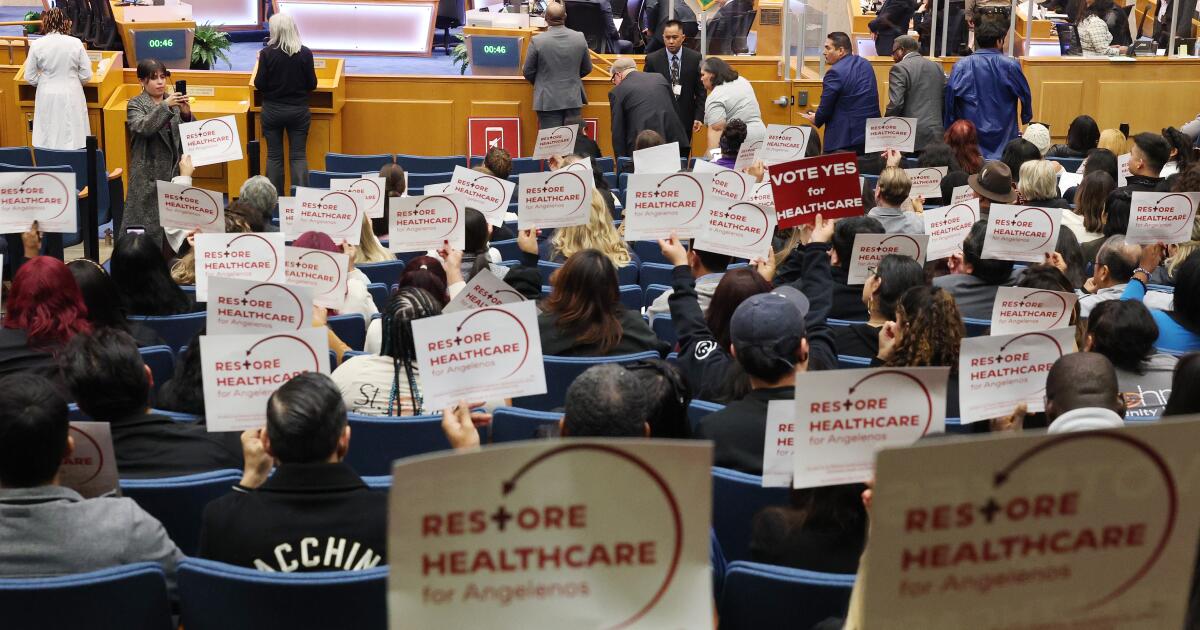
Early returns indicate L.A. County voters have doubts about healthcare sales tax measure
-
 Sports31 minutes ago
Nelly Korda, Michelle Wie West and more: Who to watch at U.S. Women’s Open
-

 World43 minutes ago
EU launches major tech push to break US and China dependence
-
 News1 hour ago
California’s primary for governor is undecided as candidates vie to be in the top two

