Texas
Tribe, activists ask Oregon Treasury to divest $350 million in proposed Texas gas terminal – Oregon Capital Chronicle


Members of the Carrizo/Comecrudo Tribe of Texas and activists from a financial watchdog group arrived in Portland this week to ask the Oregon State Treasury to divest from a controversial gas terminal proposed along the Gulf of Mexico.
For more than eight years, tribal members and environmental and social justice activists from Brownsville, Texas, have fought the proposed Rio Grande Liquified Natural Gas terminal at the Port of Brownsville, arguing that it’s a risk to the climate, to public health and to the fishing and tourism industries that people along the Gulf Coast depend on.
They arrived ahead of a Wednesday meeting of the Oregon Investment Council, which includes State Treasurer Tobias Read. Read and the other five members of the council decide where to invest money from Oregon’s Public Employees Retirement System, or PERS. The Carrizo/Comecrudo tribal leaders and activists plan to speak at the meeting and submit written comments from activists who have been fighting the proposed terminal since 2015.
Oregon became involved last year, when the treasury department invested $350 million of the state’s public employees pension in Global Infrastructure Partners’ Fund V. Global Infrastructure Partners is a New York City-based private equity fund. Through its Fund V, the firm has invested $3.5 billion in the Rio Grande Liquified Natural Gas Terminal, according to the nonprofit financial watchdog group Private Equity Stakeholder Project.
The Rio Grande terminal, if built, would receive fracked gas from West Texas oil fields via a proposed pipeline called the Rio Bravo pipeline. Both would be owned by Houston-based NextDecade Corporation. The Rio Bravo pipeline, if built, would go through the Carrizo/Comecrudo tribe’s ancestral land.
At the terminal, the fracked gas would be cooled to a liquified state and exported via tanker ships as liquified natural gas for global markets. Natural gas is almost entirely methane gas, which is among the most potent climate-warming greenhouse gases that trap heat in the atmosphere.
Global Infrastructure Partners’ media representative did not respond to questions from the Capital Chronicle by Tuesday evening. Read, who is also preparing to present a “net-zero” plan for Oregon’s pension system on Feb. 6, will meet with activists and tribal members on Wednesday following the investment council meeting.
He declined to talk with the Capital Chronicle Tuesday, but treasury spokesperson Eric Engelson said in an email that, in general, the state treasury is unaware of individual investments in a private equity fund. Engelson said private equity managers provide disclosure documents that outline general aspects of investments.
Emissions
The Rio Grande terminal is one of two liquified natural gas export terminals proposed at the Port of Brownsville. Construction on both was slated to begin by 2023, but both are instead still seeking financing. Two banks have already backed out of their investments in the terminals.
The Rio Grande project could result in 163 million metric tons of carbon dioxide emissions per year, according to the Sierra Club, as much as the emissions of 44 coal plants, or more than 35 million cars.
Rebekah Hinojosa, Gulf Coast campaign representative for the nonprofit Sierra Club and a member of the South Texas Environmental Justice Network, a coalition of nonprofit environmental groups working to shut down the terminal, has been fighting the Rio Grande Terminal since she read about it in 2015. She lives in Brownsville and grew up in the Rio Grande Valley.
“We’re protesting every company, bank or pension fund that is involved,” Hinojosa said. “We are calling on them to immediately withdraw, because our community does not want to be sacrificed for gas projects.”
Joining members of the Carrizo/Comecrudo tribe at Wednesday’s Oregon Investment Council meeting are representatives from the Private Equity Stakeholder Project.
Nichole Heil, a campaign coordinator with the group said at the very least, they are asking the investment council to bring their concerns to Global Infrastructure Partners. Company representatives have not responded to activists, including repeated requests to meet, Heil said.
The group and coalition recently submitted comments to the Washington State Investment Board requesting it divest its $400 million investment in Global Infrastructure Partners’ Fund V.
At least three cities along Texas’ Gulf Coast have passed resolutions opposing the gas terminal and one, the city of Port Isabel, filed a lawsuit against the Federal Energy Regulatory Agency alleging officials did not conduct a sufficient environmental review.
Hinojosa said it feels as if gas projects are being forced on residents by the gas industry, and by state and federal governments.
“Every company, every private equity firm that’s involved, every regulatory agency, they’re all equally to blame,” she said. “And that’s why we’re urging Global Infrastructure Partners and the Oregon Investment Council to divest immediately. They should not be complicit with this project; with the destruction of our community. They can help us stop this project by withdrawing their investment immediately.”
GET THE MORNING HEADLINES DELIVERED TO YOUR INBOX


AUSTIN – Texas Attorney General Ken Paxton said Wednesday he has secured a settlement of bankruptcy claims against genetic testing company 23andMe stemming from a 2023 data breach that exposed personal information, including some genetic ancestry data, of 6.9 million customers worldwide.
Paxton’s office said the settlement includes $150 million for a multistate coalition of 42 states. But because of limited funds in 23andMe’s bankruptcy estate and competing claims, the states’ recovery will be $18 million paid immediately, with Texas receiving $1,266,860.
23andMe disclosed in October 2023 that attackers had accessed accounts affecting 6.9 million consumers. Some of the information was later posted for sale on the dark web, according to Paxton’s office, which said the company learned of the breach months after the data became publicly available. The office said 23andMe initially denied a breach and later blamed consumers’ account settings and password practices.
Paxton joined a multistate investigation that concluded 23andMe used unreasonable security practices and failed to implement adequate safeguards against hacking, the office said.
23andMe filed for bankruptcy protection in March 2025. Paxton’s office said the settlement incorporates privacy and cybersecurity requirements, including enhanced security standards, comprehensive risk assessments and creation of an independent advisory board, along with enforcement of state privacy laws and continued consumer data deletion rights.
“Companies that collect and profit from Texans’ most personal information have a legal duty to protect it,” Paxton said in a statement.
The company also agreed to a $46.75 million class-action settlement in the bankruptcy case for affected U.S. consumers who submitted claims by Feb. 17, 2026, Paxton’s office said.
Copyright 2026 by KPRC Click2Houston – All rights reserved.


The Texas Longhorns entered the 2025 season with more expectations than any team has had to deal with in recent memory.
Many among the media were ready to crown the team and quarterback Arch Manning before they even played one game. Of course, those unrealistic expectations were never met, even though the team finished with a 10-3 record and a Citrus Bowl win over the Michigan Wolverines.
2026 is heading in the same direction for the Longhorns. Many believe head coach Steve Sarkisian has the most talented team in the country. But in order to fix the issues from this past season, the Longhorns needed to fix one issue that has cost them in the past.
Changing The Narrative
One of the biggest issues the Longhorns had last season was the play of the offensive line. It was apparent in the first game of the season against the Ohio State Buckeyes that Manning didn’t have the pocket time needed to make big plays.
This offseason, Coach Sarkisian went out and found two massive transfer portal additions that should completely change the narrative on this offensive line.
It starts with potential starting right tackle Melvin Siani. Siani has spent time with the Temple Owls and last season with the Wake Forest Demon Deacons.
The Longhorns are set at left tackle with Trevor Goosby, who could play himself into being a top 10 pick in the 2027 NFL Draft. If the team can get competent play from Siani, the offense will be able to open up the playbook, and the world may finally see Manning at his college peak.
The Longhorns also went out and found a potential fix at left guard for the 2026 season. Western Kentucky Hilltoppers transfer Laurence Seymore could be another strong patch for the holes in the offensive line.
After spending the first two seasons of his college career with the Miami Hurricanes, Seymore made stops with the Akron Zips and the Hilltoppers.
Of course, the one concern with Seymore is wondering if he can compete at the SEC level coming from the C-USA.
This season for the Longhorns starts and stops with the play of Manning. Coach Sarkisian and the rest of this coaching staff understood that protecting their quarterback was the most important goal when building the 2026 roster.
The Longhorns are going to be leaning on veteran talent to protect their quarterback, and it may very well be the best decision they made this offseason.
Sign up to our free newsletter and follow us on Facebook, X and Instagram for the latest news.
 Add us as a preferred source on Google
Follow
-

 Louisiana6 minutes ago
New Louisiana waterway cleanup initiative aims to start in September
-

 Maine12 minutes ago
“I’m Ashamed of My Country”: Biddeford, Maine Locals Grieve Neighbor Killed by ICE
-

 Maryland18 minutes ago
Maryland Fall Home & Garden + Craft Show returning in October
-

 Michigan24 minutes ago
University of Michigan’s David C. Miller chosen to succeed Jeff Balser as Vanderbilt Health’s President and CEO and Dean of Vanderbilt University School of Medicine
-

 Massachusetts30 minutes ago
Massachusetts Broadband Institute distributes devices to underserved communities
-

 Minnesota36 minutes ago
Smoke from wildfires in Minnesota and Canada exposes millions to dangerous air quality
-

 Mississippi42 minutes ago
How permanent daylight saving time would impact Mississippi
-
 Missouri48 minutes ago
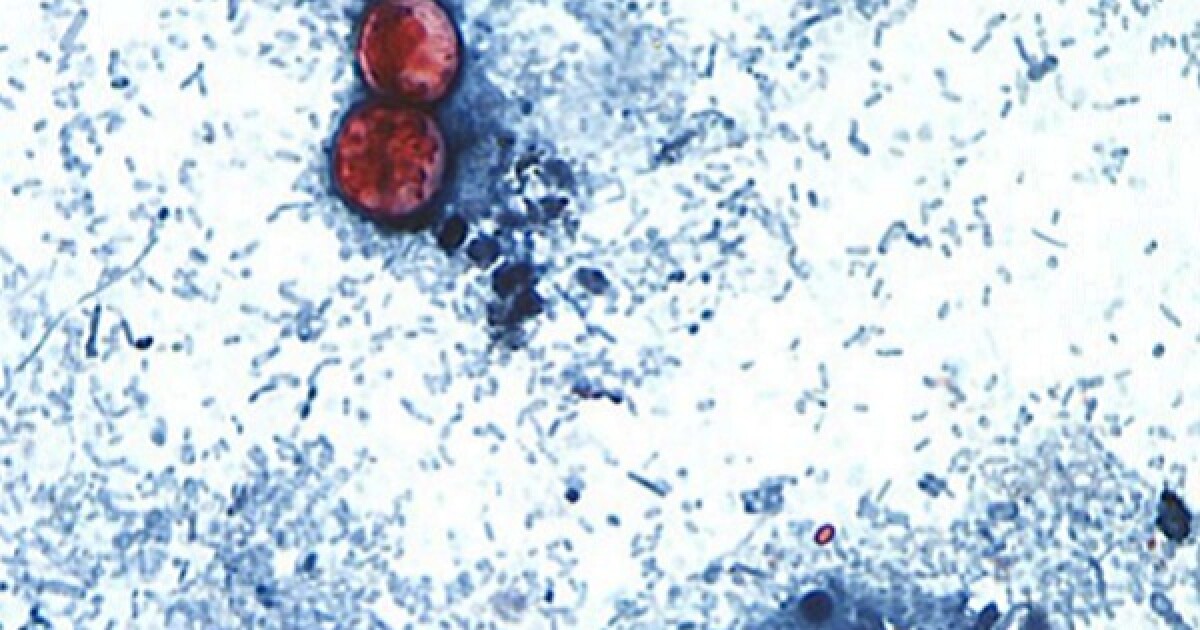
Missouri reports 43 cases of parasitic infection that’s sickened thousands nationwide

