Texas
Progressive Texas organizers hail shock win as far-right Republicans left reeling


Chris Tackett started tracking extremism in Texas politics about a decade ago, whenever his schedule as a Little League coach and school board member would allow. At the time, he lived in Granbury, 40 minutes west of Fort Worth. He’d noticed that a local member of the state legislature, Mike Lang, had become a vocal advocate for using public money for private schools – despite the fact that Lang campaigned as a supporter of public education.
With a little research, Tackett found that Lang had received hundreds of thousands of dollars in campaign donations from the Wilks brothers and Tim Dunn, billionaire megadonors whose deep pockets and Christian nationalist views have consumed the Texas GOP. Tackett published his findings on social media, and soon enough, people started asking him to create pie charts of their representatives’ campaign funds. These charts evolved into the organisation See It. Name It. Fight It.
“There’s so many people out there that are so busy with their daily lives, they’re walking past and not even seeing some of these bad things going on,” he says. “So that’s the first step: you have to see this thing.”
Tackett and his wife Mendi, the organisation’s sole members, now live in Fort Worth, where they’re part of a scrappy community of progressives and anti-extremist organizers who are building momentum amid their town’s deeply embedded Christian nationalism. Tarrant county, in which Fort Worth is the largest city, provided a chilling preview of Texas’s gerrymandering efforts, and the county is widely regarded as a hotbed for far-right actors. But most recently, the county was the site of a Democratic victory that sent the Texas Republican party reeling.
Taylor Rehmet, a Democrat and local union leader, won a runoff for a state Senate seat that’s been held by Republicans since 1992. What’s more, he bested Republican Leigh Wambsganss despite having one-tenth as much money. Much of Wambsganss’s funding came from Dunn and the Wilks brothers.
Republicans blamed low turnout for Rehmet’s victory, while pundits opined that the Trump administration’s unpopularity was to blame. But people in Fort Worth say local organizing was central to the upset – and it will be key to any future victories in Texas, too.
Alexander Montalvo, a longtime grassroots organizer in Tarrant county, points to several examples where local advocates have successfully rallied for causes they believe. There was the pushback against a proposal to split a local school district. Then there were the school board elections last May, where every candidate endorsed by the Christian nationalist cellphone carrier Patriot Mobile lost their election. Patriot Mobile – where Wambsganss works as an executive – had previously racked up several wins across Tarrant county, effectively taking over multiple boards.
Now, after those May losses and Rehmet’s win, the company’s political influence is in doubt.
“There is something very local here in Tarrant county that is happening and that has been happening,” he says. “There is a collective groundswell that’s been building.”
Tackett says he’s in close contact with organizers like Montalvo and other Tarrant County residents who meet up for what’s called the “817 Gather”: a monthly meeting of people activated by the extremism that’s run rampant in their area.
“It’s a bunch of folks that are Black, brown, white, mostly progressive, but we’ve got a few folks that play into that former Republican space, as well,” he says. “It’s not about Republican versus Democrat. It’s really all about what we stand for, because we can agree that public education is foundational to the success of our democracy. We can agree that a person should have rights over their own body, and it should be easier to vote, not harder to vote.”
People have found their roles within this community, and in one way or another, their efforts always lead back to voting. Montalvo and fellow organizer EJ Carrion, one of the hosts of the local podcast the 817 Pod, frequently inspire large crowds for local city council and county commissioner meetings. The Tacketts publish social media videos spotlighting their concerned neighbors – often as they speak at those local meetings – and putting local extremists on display.
Before Rehmet’s victory, their organisation shared a video of Wambsganss appearing on the podcast of former Trump consigliere Steve Bannon. After the election, the Tacketts published a video breaking down how local Republicans reacted to the Rehmet victory at a meeting held the day after Rehmet’s win.
In the video, a candidate for Texas agriculture commissioner claimed Texas was at risk of falling under Sharia law. Others framed politics as a spiritual battle that will determine whether the US remains a Christian nation. That meeting was hosted by For Liberty & Justice, a local political organisation affiliated with a Fort Worth church called Mercy Culture which is seeking actively encourage conservative Christians to run for office and break down barriers between church and state in the US.
When it comes to Christian nationalism in Tarrant County, multiple people interviewed for this story say no institution looms larger than Mercy Culture.
“Mercy Culture is not just a church,” says Wesley Kirk, a lifelong Fort Worthian and one of the hosts of the 817 Pod. “It’s a political machine. They are organizing people. They are endorsing candidates.”
Chanin Scanlon, a former Fort Worth resident who recently moved to San Antonio, puts it bluntly.
“This is Christian nationalism,” she says. “It’s not subtle. They are very clear about what they want. They want to take over institutions.”
The Tacketts have used their popular social media presence to chronicle Mercy Culture’s rising influence. But Chris Tackett is also still making pie charts. After the Rehmet victory, he dove deep into the data to see if the narrative about low turnout was true. Turnout was down across the board, he found, which undermined the local GOP’s narrative that Republicans who stayed home were the ones to blame.
Using a voter score analysis, Tackett also found that 57% of runoff voters fell into one of two groups: true independents, or “Democratic-leaning voters who regularly vote in Republican primaries because, in ‘deep-red’ Texas, the GOP primary is the only election that matters in most cycles.” (Fifty-seven percent is the total percentage of the electorate that Rehmet won.)
“What we saw wasn’t massive Republican crossover,” he wrote. “It was Democrats – many of whom have been forced to play in GOP primaries for years – finally getting a meaningful choice and showing up.”
Brandon Rottinghaus, a political science professor, agrees with the idea that Democrats had a strong candidate to back in the runoff.
“I think they figured out the secret sauce to candidate recruitment,” he says of the Democratic party. “Being an authentic person goes a long way for voters these days.”
Montalvo, meanwhile, finds himself motivated by Tackett’s pie chart.
“There’s actually a big enough and a diverse enough base amongst Democratic voters in Tarrant county that if we actually invest in those communities, we have the votes to be able to win,” he says.


AUSTIN – Texas Attorney General Ken Paxton said Wednesday he has secured a settlement of bankruptcy claims against genetic testing company 23andMe stemming from a 2023 data breach that exposed personal information, including some genetic ancestry data, of 6.9 million customers worldwide.
Paxton’s office said the settlement includes $150 million for a multistate coalition of 42 states. But because of limited funds in 23andMe’s bankruptcy estate and competing claims, the states’ recovery will be $18 million paid immediately, with Texas receiving $1,266,860.
23andMe disclosed in October 2023 that attackers had accessed accounts affecting 6.9 million consumers. Some of the information was later posted for sale on the dark web, according to Paxton’s office, which said the company learned of the breach months after the data became publicly available. The office said 23andMe initially denied a breach and later blamed consumers’ account settings and password practices.
Paxton joined a multistate investigation that concluded 23andMe used unreasonable security practices and failed to implement adequate safeguards against hacking, the office said.
23andMe filed for bankruptcy protection in March 2025. Paxton’s office said the settlement incorporates privacy and cybersecurity requirements, including enhanced security standards, comprehensive risk assessments and creation of an independent advisory board, along with enforcement of state privacy laws and continued consumer data deletion rights.
“Companies that collect and profit from Texans’ most personal information have a legal duty to protect it,” Paxton said in a statement.
The company also agreed to a $46.75 million class-action settlement in the bankruptcy case for affected U.S. consumers who submitted claims by Feb. 17, 2026, Paxton’s office said.
Copyright 2026 by KPRC Click2Houston – All rights reserved.


The Texas Longhorns entered the 2025 season with more expectations than any team has had to deal with in recent memory.
Many among the media were ready to crown the team and quarterback Arch Manning before they even played one game. Of course, those unrealistic expectations were never met, even though the team finished with a 10-3 record and a Citrus Bowl win over the Michigan Wolverines.
2026 is heading in the same direction for the Longhorns. Many believe head coach Steve Sarkisian has the most talented team in the country. But in order to fix the issues from this past season, the Longhorns needed to fix one issue that has cost them in the past.
Changing The Narrative
One of the biggest issues the Longhorns had last season was the play of the offensive line. It was apparent in the first game of the season against the Ohio State Buckeyes that Manning didn’t have the pocket time needed to make big plays.
This offseason, Coach Sarkisian went out and found two massive transfer portal additions that should completely change the narrative on this offensive line.
It starts with potential starting right tackle Melvin Siani. Siani has spent time with the Temple Owls and last season with the Wake Forest Demon Deacons.
The Longhorns are set at left tackle with Trevor Goosby, who could play himself into being a top 10 pick in the 2027 NFL Draft. If the team can get competent play from Siani, the offense will be able to open up the playbook, and the world may finally see Manning at his college peak.
The Longhorns also went out and found a potential fix at left guard for the 2026 season. Western Kentucky Hilltoppers transfer Laurence Seymore could be another strong patch for the holes in the offensive line.
After spending the first two seasons of his college career with the Miami Hurricanes, Seymore made stops with the Akron Zips and the Hilltoppers.
Of course, the one concern with Seymore is wondering if he can compete at the SEC level coming from the C-USA.
This season for the Longhorns starts and stops with the play of Manning. Coach Sarkisian and the rest of this coaching staff understood that protecting their quarterback was the most important goal when building the 2026 roster.
The Longhorns are going to be leaning on veteran talent to protect their quarterback, and it may very well be the best decision they made this offseason.
Sign up to our free newsletter and follow us on Facebook, X and Instagram for the latest news.
 Add us as a preferred source on Google
Follow
-

 Politics19 seconds ago
Lindsey Graham’s final act reverberates in Senate as sister is urged to “keep pedaling”
-

 Health6 minutes ago
Is lettuce still safe to eat amid Taco Bell illness probe? Doctors answer
-

 Sports12 minutes ago
Marcello Hernández roasts Jake Paul, Tiger Woods and Bill Belichick in ESPYS monologue
-

 Technology18 minutes ago
You paid for it. So why is your device showing ads?
-
 Business24 minutes ago
Paramount shareholder lawsuit accuses Ellisons of corruption
-
 Entertainment30 minutes ago
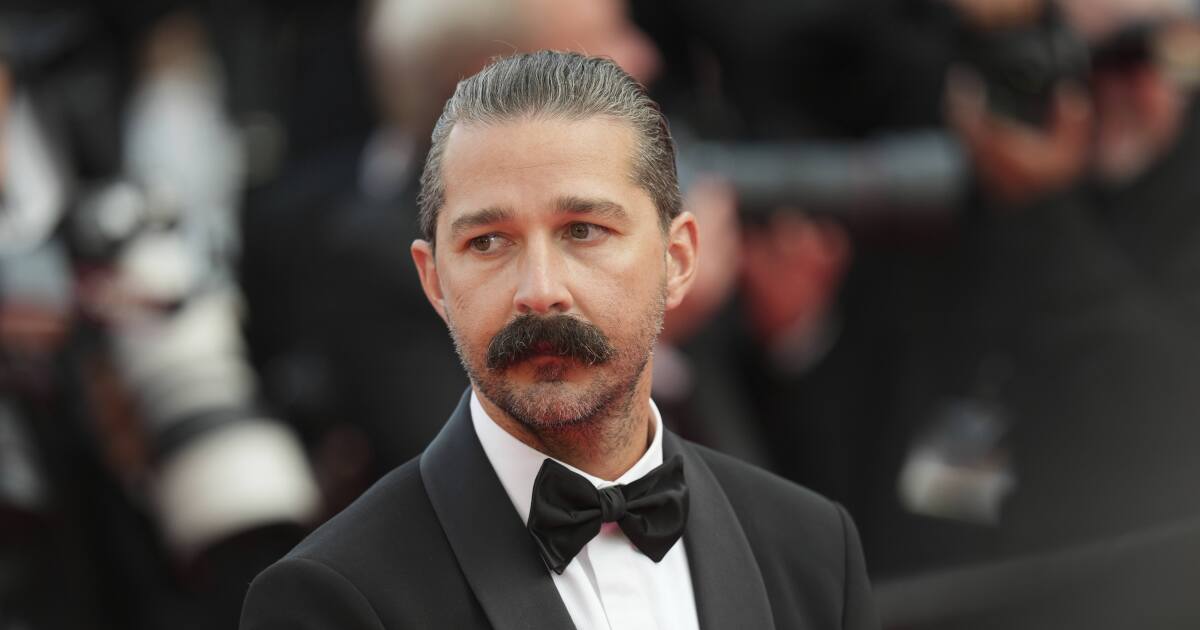
‘You’re scaring my people.’ Shia LaBeouf’s alleged stalker arrested after posting viral video
-
 Politics42 minutes ago
Californians back Becerra and reject AI data centers by big margins, poll finds
-
 Science48 minutes ago
How to eat safely amid outbreak of diarrhea-causing cyclosporiasis

