Texas
Facing a tight race, Ted Cruz goes quiet on abortion

:focal(357x37:2815x1630)/static.texastribune.org/media/files/c32e7035169538d98bed6ac76e773351/Ted%20Cruz%20REUTERS%20TT%2002.jpg?ssl=1 "Facing a tight race, Ted Cruz goes quiet on abortion")
Sign up for the We the Texans newsletter to receive twice-monthly updates on our year-long initiative dedicated to boosting civic engagement and chronicling how democracy is experienced in Texas.
U.S. Sen. Ted Cruz has been a loud anti-abortion crusader throughout his political career.
But as reproductive rights loom over the election season as a key issue for voters, Cruz is uncharacteristically quiet.
The Texas Republican, running for a third term in the Senate, is locked in a tight race against U.S. Sen. Colin Allred, D-Dallas, who has made restoring access to abortion and blaming Cruz for the toppling of Roe v. Wade central to his campaign.
This past week, Allred’s campaign, boosted by an influx of cash from Senate Democrats, began airing an ad on TV and streaming platforms across the state that blasted Cruz for his anti-abortion record.
Texas has banned almost all abortions — including in cases of rape and incest — since Roe was overturned. Since then, Cruz has been more careful about how he engages on the topic. He has repeatedly called abortion a state issue, while offering more vocal support for in vitro fertilization.
Cruz, through a spokesperson, declined a request for an interview. The Texas Tribune reached out to his campaign eight times over six weeks to ask about his positions, posing nine initial questions via email and several follow ups on topics ranging from his past support for a national abortion ban to how he squares his belief in fetal personhood with his support for IVF — a process which routinely involves the disposal of fertilized embryos.
Cruz’s campaign did not respond directly to questions, instead providing links to previous statements he had made on the topic in other interviews. Those statements did not address several specific questions.
While Democrats have not won statewide in Texas in 30 years, the issue could pose a risk for Cruz, who squeaked to victory in 2018 against Beto O’Rourke by less than three percentage points. Though polling shows Texans prioritizing issues like border security and the economy over abortion, more Texans believe that the state’s abortion laws are too strict, and Democrats are banking on the issue boosting turnout nationwide in a presidential election year.
The most important Texas news,
sent weekday mornings.
Abortion ban
When the U.S. Supreme Court reversed Roe v. Wade in 2022, Cruz celebrated the decision as “nothing short of a massive victory for life” that would not outlaw abortion across the country, but leaves “abortion policy up to the states and returns power to the American people.”
“This is a momentous day, and yet the fight for life doesn’t end with the Dobbs decision,” he said in a statement after the ruling. “It simply begins a new chapter. I’ve been proud to stand for life in the U.S. Senate, and I will continue to do so as we navigate the path ahead.”
Republicans have faced scrutiny in recent months about their past efforts to pass a federal abortion ban, with Democrats warning that former President Donald Trump would press for further restrictions.
In 2021, before Roe was overturned, Cruz cosponsored a 20-week federal abortion ban, which included exceptions for rape, incest and to save the life of the mother. He cosponsored a similar ban at least six times over his Senate career. He did not sign onto a 15-week ban when it was introduced in September 2022. In 2023, he co-introduced a bill that would allow states to exclude medical providers that perform abortions from state Medicaid funding. None of those measures advanced through Congress.
Cruz did not respond directly to a question about whether he still supports a federal ban. But in a past interview his campaign provided to the Tribune, he said that abortion policy is up to each state.
“Questions of what the rules of abortion are will be made by state officials in Austin, the state legislature, the governor. And the situation we have right now, every state makes different rules,” Cruz said in an August interview with WFAA.
Trump, during the vice presidential debate on Oct. 1, said on social media for the first time that he would veto a national abortion ban, after backing a series of shifting positions over the course of his third campaign for the White House.
Abortion exemptions
Cruz declined to directly answer whether he thought Texas should add carveouts for rape and incest and if he thought the state’s exception to save the life of the mother was working.
In the WFAA interview, he pointed to legislation he has supported with those exceptions, while reiterating that the decision would be made at the state level.
But during his 2016 presidential run, Cruz said at a town hall in Wisconsin that he did not support an exemption for rape.
“When it comes to rape, rape is a horrific crime against the humanity of a person, and needs to be punished and punished severely,” Cruz said. “But at the same time, as horrible as that crime is, I don’t believe it’s the child’s fault.”
Texas law allows abortions only in instances where the life of the mother is at risk. Critics, including Allred, say that exemption is unclear and has resulted in women — such as Kate Cox, who was denied an emergency abortion by the Texas Supreme Court after finding out her pregnancy was no longer viable — being unable to access necessary medical care.
When asked if he thought the law needed clarifying or changing, Cruz’s campaign pointed to an interview he sat for on CNN. When asked during that interview if he agreed with the court’s ruling in Cox’s case, he said the Texas Supreme Court “was right” to direct the Texas Medical Board to “set the rules.”
“I think there’s a very good argument that she fell under that exception,” he said. “But what the Texas Supreme Court said in its opinion is it asked the Texas Medical Board go in and set clear rules.”
The Texas Medical Board adopted guidance in June for how doctors should interpret the state’s new abortion laws, but declined to provide a list of cases in which an abortion should be permitted.
IVF
This year, Cruz has become increasingly vocal about his support for IVF, which he calls a “miracle.”
In February, a ruling by the Alabama Supreme Court sparked a nationwide panic about the future of access to IVF. That decision said that frozen embryos should be considered people, and that anyone who disposed of them could be liable for wrongful death. The Alabama Legislature subsequently passed a law to protect fertility treatments.
In May, Cruz introduced a bill with U.S. Sen. Katie Britt, R-Alabama, that he said would protect IVF on the federal level by excluding any state that bans the treatment from federal Medicaid dollars.
“It simply does what needs to be done: safeguarding the right of couples to grow their family if they choose to use IVF, because this should not be a political issue,” Cruz said on the Senate floor in September describing his bill.
The bill, which Democrats blocked, would not create a statutory right to access fertility treatments. Critics panned it as lip service and “incentivizing far-right, anti-choice policymakers in deep red states to defund health care for low-income Americans” without barring them from also outlawing IVF.
Cruz voted against Democratic legislation that would create a federal right to access fertility care, saying the bill infringes on religious freedoms — though the measure does not require medical professionals who may oppose IVF to provide any treatments.
Cruz also did not respond to a question asking if he supported an idea Trump floated to make IVF free for all Americans. Trump did not explain how that proposal would be implemented.
Allred said he would support the Democratic IVF bill, which was backed by two Senate Republicans, and he cosponsored a related measure in the House to federally protect fertility treatments.
Cruz did not respond to questions about whether he believes an embryo created through IVF constitutes a person.
In 2015, during his presidential campaign, Cruz signed a pledge to back a personhood amendment to the U.S. Constitution that would “guarantee a constitutional right to life for every innocent human being, from earliest biological beginning until natural death.”
He embraced personhood measures in February 2016, before ducking questions about the topic a couple of months later.
Cruz has argued that his support for IVF is not inconsistent with a belief in fetal personhood by pointing to states that have adopted both personhood amendments and IVF protections.
“There are three states — Alabama, Georgia and Missouri — all of which have adopted personhood amendments, and all of which protect IVF,” he said on the Senate floor in June. “The Democrats maintain that IVF is in jeopardy, and yet the facts are precisely to the contrary.”
After the Alabama Supreme Court’s decision, IVF providers paused treatments across the state. Most resumed services once the Alabama Legislature passed protections for fertility treatments. But that law did not address the question of personhood, and simply provides immunity to IVF providers and patients.
Filibuster
At the same time, Cruz has characterized Allred as an extremist on abortion and accused him of supporting “abortion literally up until the moment of birth.”
Allred’s campaign rejected that claim as a scare tactic, providing a statement he made to the Fort Worth Star-Telegram in response to Cruz’s allegations.
“I find it offensive that Ted Cruz would knowingly misstate not only my position but what has been the standard in this country for the last 50 years,” he said, saying a return to Roe would allow states to restrict abortions after viability while also leaving the decision of whether to have an abortion to patients and their doctors.
Meanwhile, Allred has tried to pin the end of Roe and subsequent state abortion bans on Cruz’s support for anti-abortion state lawmakers and his position on the U.S. Senate Judiciary Committee, which advanced three conservative U.S. Supreme Court justices.
“He is singularly responsible for what’s happening in our state,” Allred said.
Allred has been a consistent abortion rights advocate throughout his tenure in Congress.
After he was elected to the U.S. House in 2018, Allred cosponsored and voted in favor of the Women’s Health Protection Act, which would create a federal protection for abortion access. The bill passed the House in 2021 and 2022 but died in the Senate. Allred has also spoken out against local efforts to ban the use of roads and highways to obtain an abortion out of state.
“We have to restore freedom to Texas women and Texas families,” he said. “And the way we do that is going to be at the federal level.”
If elected to the Senate, Allred said he would support changing the filibuster to enable passage of a federal abortion protection law. The Senate requires 60 votes to move forward on any legislation — a threshold meant to protect the minority party’s power and foster bipartisanship, but which has stymied Democrats’ efforts to pass abortion and voting rights legislation over Republican resistance.
Vice President Kamala Harris, the Democratic presidential nominee, recently reiterated her support for carving out an exception to the filibuster for abortion legislation — though institutionalists warn that lowering the threshold to a simple majority would be a slippery slope that could lead to less durable reforms and sap the minority’s leverage when the other party comes into power.
Still, Allred argued that the Senate now exists in an “ahistorical period in which the filibuster is being abused,” and that the chamber ought to return to a rule that required any senator blocking a bill to speak on the Senate floor for the duration of their filibuster.
Voting FAQ: 2024 Elections
-
When is the next election? What dates do I need to know?
-
What’s on the ballot for the general election?
-
How do I make sure I’m registered to vote?
-
How do I register to vote if I haven’t?
-
What can I do if I have questions about voting?
- Read more




Texas
Texas Rangers investigating City of Trinidad after water issues, controversial arrests, firings

Trinidad officials mum on Texas Rangers’ investigation
The Texas Rangers are investigating the City of Trinidad following controversial arrests and public water issues, but city officials still have yet to comment to FOX 4 about the investigation. FOX 4’s David Sentendrey has more.
TRINIDAD, Texas – After controversial arrests, alleged retaliatory firings and a litany of water issues, the Texas Rangers are investigating the City of Trinidad.
What we know:
The Texas Rangers confirmed to FOX 4 they have begun an investigation into the City of Trinidad.
“We can confirm the Texas Rangers are investigating. As this is an active investigation, we have no further information to provide,” the Texas Rangers said to FOX 4 in a statement.
Dig deeper:
The law enforcement agency’s investigation comes as multiple lawsuits have been filed against the city over retaliatory firings and controversial arrests related to the city’s water quality issues.
This week, former Trinidad City Administrator and Secretary Lindsey Patterson filed a lawsuit against the city, claiming she had “no record of discipline” when she was terminated in Feb. 2026.
Patterson’s suit claims she was fired after reporting to the Trinidad Police Department that “public funds belonging to the city were being held by private individuals.”
Former Trinidad City Administrator Lindsey Patterson
Trinidad’s current City Administrator, Cynthia Dosier, has been listed as a defendant in several of the lawsuits. She has not returned FOX 4’s request for comment since our first report.
On Friday, FOX 4’s David Sentendrey attempted to speak to Dosier at her office in Trinidad. Dosier had no comment when asked about the Texas Rangers’ investigation.
“It’s way bigger than just water”
What they’re saying:
Trinidad Mayor Dennis Haws previously called for an investigation by the Texas Rangers into the city’s now-public issues. He tells Sentendrey he’s glad that’s finally happening.
“I wanted people here to know that there is going to be transparency at the end of this,” Haws said.
“We need to know that our office is in order and I think the best way to do that is with a third party having eyes on it and finding out what really is going on here.”
Trinidad Mayor Dennis Haws
The investigation wouldn’t have come without Henderson County resident Jennifer Combs’ arrest for a Facebook post concerning the city’s water quality.
“To tell the story to someone they would think you were crazy. You know what I mean?”
She says she’s glad the Texas Rangers are investigating, but that the root of the issue remains: the city’s water issues.
“I’m just ready for all of it to calm down and what’s going to happen is gonna happen, and the rest needs to be done so we can get back to the real issues of fixing the water. People deserve clean water.”
Trinidad Water Saga
Timeline:
The saga in Trinidad, which claims less than 800 residents, began in May following Combs’ arrest over the city’s water issues.
Combs’ post stated that people had been hospitalized after drinking the city’s water. FOX 4 has not verified that anyone in Trinidad was hospitalized from drinking the city’s water.
A Henderson County grand jury declined to indict Combs, who has since filed a federal lawsuit against the City of Trinidad and Gregory which alleges she was arrested in “an act of deliberate political retaliation.”
Since our initial report, FOX 4 has continued to receive images of dirty and discolored water from the residents of Trinidad.
Trinidad officials have admitted the city has struggled to keep its water clean. Combs said the water “looks like the Trinity River.”
The Texas Commission on Environmental Quality (TCEQ) confirmed to FOX 4 it received a complaint regarding the water quality in Trinidad, and that an investigation is ongoing.
Woman arrested after Facebook post over water concerns
A woman in Henderson County was arrested earlier this month after she made a Facebook post about concerning water issues in the small town of Trinidad. FOX 4’s David Sentendrey sat down with the woman to hear her side of the story.
One day after FOX 4’s initial report on Combs, citizen journalist Winston Noles protested outside Trinidad City Hall with a sign with expletives targeting “bad cops.”
Noles was arrested and charged with misdemeanor disorderly conduct for the sign. The Trinidad Municipal Judge, Shellena Bivens, later dismissed the charge.
On Wednesday, May 27, Alex Estrada and Colby Reyes, two former Trinidad employees, filed a lawsuit against the city claiming the city administrator fired them without cause.
Reyes, the former Trinidad Water Clerk, says in the lawsuit that she was fired because she “refused to lie” on behalf of Gregory and City Administrator Dosier.
Reyes’ lawsuit claims Gregory publicly fabricated a story that Reyes was frightened by Noles in order to arrest him, in which Reyes says she put in writing she was “never offended” by Noles.
A law firm representing Estrada and Reyes and Consumer Wellness Center Labs are organizing free independent water testing for people on Trinidad’s water supply as the TCEQ investigation continues.
At a May 28 Trinidad City Council meeting, Judge Bivens was fired as the city’s municipal judge. The issue of water quality in Trinidad was never addressed.
Gregory, who made his first public comments since FOX 4 initially reported on the story, said he had “nothing to hide” in relation to Combs and Noles’ arrests.
Trinidad Mayor Dennis Haws suggested to Sentendrey that the Texas Rangers should investigate the city and its police department after the recent arrests and water issues have come to light.
Bivens is considering legal action against Trinidad, with her attorney saying her firing was unjust. “I’m a good judge. I’m a damn good judge,” Bivens told Sentendrey.
In June, a family in Trinidad alleged that after showering with the city’s water, their teenage daughter suffered a chemical burn.
An attorney for the family provided a preliminary water test strip result that showed “dangerous” free chlorine levels in the Logan family’s water. It remains unclear if Trinidad’s recent water treatment led to the Logans’ daughter’s rash.
A planned meeting for Thursday, June 4 to give an update on the city’s attempts to fix their water quality issues was canceled. Mayor Haws said he did not receive a reason for the cancellation, though a small protest took place outside the planned meeting.
Gregory resigned from his position as Trinidad Police Chief following the multiple controversies. His final day with the department was June 19.
Gregory has declined interview requests from FOX 4, citing pending lawsuits.
Following news of Gregory’s resignation, the Trinidad judge who approved the arrest warrant for Combs wrote a scathing letter against him and his police department.
McKee’s letter questions “the accuracy, completeness, and reliability of information presented” to him by two Trinidad police officers in relation to Combs’ arrest warrant.
What’s next:
Interim Trinidad Police Chief Cameron Beckham told Sentendrey over the phone he has a meeting with the Texas Rangers in the next few weeks and plans to fully cooperate with their investigation.
The Source: Information in this story comes from the Texas Rangers, the City of Trinidad and previous FOX 4 reporting.

An investigation is underway after the Lewisville Police Department said a fetus was found deceased along the Lewisville Lake shoreline Friday morning.
Police said a resident called them to report the discovery around 8 a.m. near Lake Park Road. Officers then began searching for evidence alongside investigators from the Tarrant County Medical Examiner’s Office. The scene has since been cleared.
The department said the fetus appeared to have been between five and six months of gestation and appeared to have been intentionally discarded along the shoreline. The medical examiner’s office is now working to determine identity and other characteristics.
Anyone with further information is asked to contact Detective Craig Holleman by emailing cholleman@cityoflewisville.com or by calling 972-219-3620. Anonymous tips can also be shared with the Denton County Crime Stoppers online or by calling 1-800-388-TIPS.

-

 Detroit, MI3 minutes ago
Metro Detroit weather forecast, July 10, 2026 — 11 p.m. Update
-

 San Francisco, CA13 minutes ago
Classical music series helps reconnect downtown San Francisco community
-

 Dallas, TX18 minutes ago
Dallas police officers, paramedics recall saving woman stuck in a ravine for days;
-

 Boston, MA28 minutes ago
Red Sox win 7th straight game just hours after landing in New York
-
 Denver, CO33 minutes ago
One tree at a time: Denver nonprofit works to close shade gap as heat dome threatens neighborhoods
-

 Seattle, WA40 minutes ago
VIDEO: West Seattle Summer Fest 2026 day 1, evening report
-

 San Diego, CA43 minutes ago
The World’s Number One Wellness Retreat is Right in Our Backyard
-
 Milwaukee, WI48 minutes ago
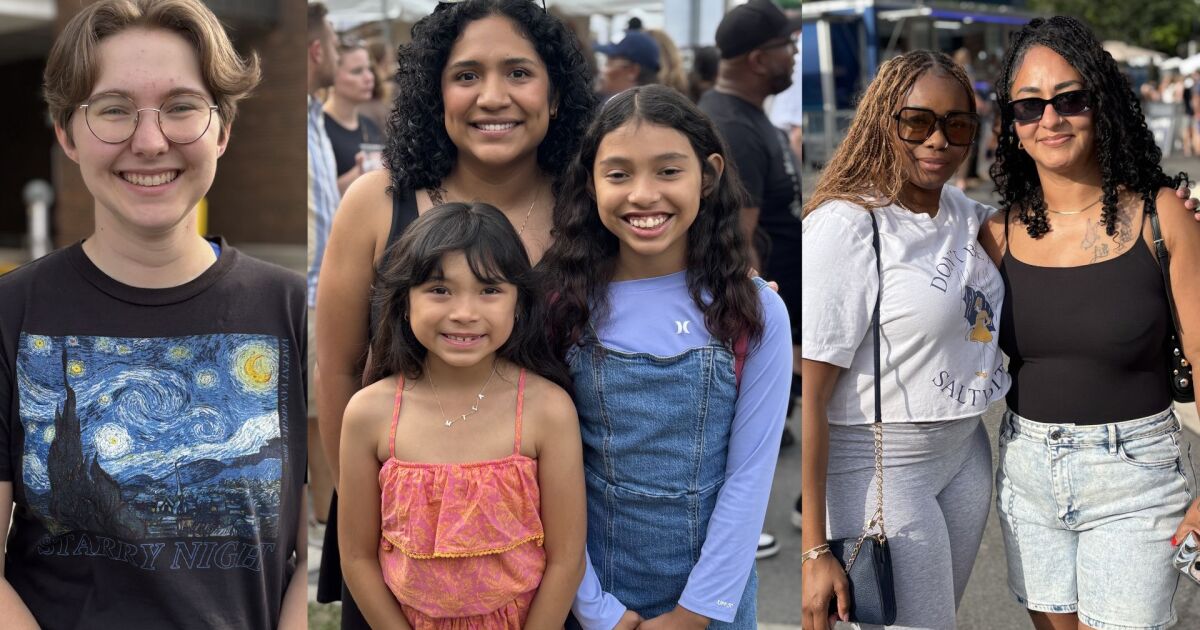
Festivalgoers say Milwaukee’s summer events fill a gap in downtown entertainment

