Texas
DOJ ends investigation into Muslim-centered EPIC City project in North Texas


The U.S. Department of Justice has officially closed its investigation into EPIC City, a proposed Muslim-centered community in North Texas.
The project is affiliated with the East Plano Islamic Center (EPIC), one of the largest mosques in the region.
The DOJ’s decision comes after U.S. Sen. John Cornyn raised concerns about potential religious discrimination tied to the development.
Attorney calls probe political
Dan Cogdell, a criminal defense attorney representing both EPIC and the EPIC City organizers, called the investigation politically motivated.
“Several politicians have tried to pervert these so-called investigations for their political benefit,” Cogdell said. “Ultimately, I think it will backfire.”
He added that the DOJ’s decision to drop the case is a win for the project and reaffirmed that the development will move forward.
EPIC City still under state review
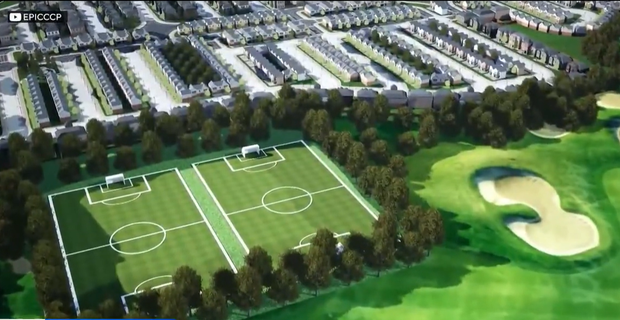
EPIC City is planned for 400 acres in Josephine, pending approval from Collin County Commissioners.
The developers, Community Capital Partners, say the community will be open to people of all faiths. However, the project still faces at least three ongoing investigations from state agencies, including the Texas Attorney General’s Office and the Texas Workforce Commission.
“Never in 42 years of practicing criminal defense have I seen the number and absurdity of the accusations lodged here,” Cogdell said. “We will comply fully and completely.”
New law targets religious developments
Last week, Gov. Greg Abbott signed House Bill 4211, which his office says is designed to prevent developments like EPIC City from creating “no-go zones” by restricting land sales or rentals based on religious affiliation.
Despite the bill’s implications, Dan Cogdell, attorney for EPIC City, said the development supports the legislation.
“Anyone is welcome to buy and live there,” Cogdell said. “This is nothing more than a political opportunity for Abbott and others to claim they defeated an evil that never existed.”
CBS News Texas reached out to Rep. Candy Noble, the bill’s author, for comment but has not yet received a response.
In a statement, Andrew Mahaleris, press secretary for Gov. Abbott, said:
“Governor Abbott was proud to sign HB 4211 into law last week to ensure developments like EPIC City are unable to create ‘no-go zones’ by selling or renting land only to individuals who subscribe to a developer’s religious preference. Texas will continue to defend our communities from any threats posed by EPIC City or other entities seeking to create a discriminatory or illegal compound, and we will continue to monitor this proposed development for compliance with all Texas laws.”
Project delayed but still moving forward
EPIC City organizers say they are still in the planning phase and have not yet submitted a permit application to the county. However, they admit the ongoing state investigations have delayed progress by several months.
“Community Capital Partners is committed to building an inclusive community that follows the guidelines of the Fair Housing Act and we are glad the DOJ found that to be true in their investigation,” Cogdell said.



In an incident that was horrific beyond words, late last month, a stunned family watched in horror as a car plowed into the Katy, Texas home of a 76-year-old mother and grandmother, killing her. The driver has been charged with manslaughter.
In the aftermath of the crash, it emerged that the car in question was a Tesla, and that the driver was making use of full self-driving mode (FSD) around the time the crash occurred. The victim’s family has named Tesla and the driver as defendants in a lawsuit. But per Electrek, Tesla was able to view crash data very quickly after the incident, and the head of AI at the company, Ashok Elluswamy, said the driver “manually overrode self-driving by pressing the accelerator all the way to 100% of the accel pedal in this residential area.”
In the days after the crash, Tesla fans took issue with coverage that characterized the car as in FSD when the crash occurred. CEO Elon Musk seemed to agree, replying to a post, “Yes, this makes no sense. FSD drives slowly through neighborhood streets and this was a high speed crash!”
But Musk seems to be assuming bad faith, as if coverage implied FSD had suddenly shifted into, perhaps, some kind of previously unannounced homicidal maniac mode and attacked a house. If anyone was saying this is what happened, they should apologize. It’s clearly not what happened.
And on Wednesday, the National Transportation Safety Board (NTSB) largely confirmed Tesla’s version of events. Their report reads, in part:
“Electronic data recovered from the vehicle indicated that before the crash, the driver manually overrode FSD (Supervised) by pressing the accelerator pedal to 100%, and the vehicle’s speed was greater than 70 mph when the crash occurred.”
But cooler heads had noted weeks earlier that, like with good old fashioned cruise control, accelerating doesn’t boot you from FSD. The car takes the input, and stays in FSD. The question isn’t one of mechanics and technology, but one of philosophy: if FSD is meant to be “driving” when someone jams on the accelerator in a residential area, FSD may not be the “driver” in one important sense, but the car was still in FSD mode.
Because as much as Tesla would probably like FSD to be a total non-factor in the incident, that may not be the case either.
ABC News noted that, according to court documents, the driver claimed he “passed out” with the car in FSD on the highway, and that’s the last thing he remembers before the crash. He says he wasn’t sick, and medical records show no seizures, cardiac episodes, drugs, or alcohol.
A local Fox affiliate says records show the car was making deliveries for DoorDash while in FSD in the “hours and minutes leading up to the crash.” While in a neighborhood, it apparently signaled it was going to turn left onto one street, but instead the pedal went to the metal. This took the Tesla onto the victim’s cul-de-sac instead, and put it on its fateful collision course with her house.
To make matters weirder, other court records now show, per Electrek, that the driver had Googled the terms, “Tesla fsd not aggressive enough 2026,” “FSD is not aggressive enough for city driving,” and “Tesla fsd too timid.” That’s the kind of thing you Google when you’re looking for a Reddit post from someone sharing your consumer gripe.
In any case, the odds aren’t good that the driver wanted this to happen, nor that Tesla programmed its cars with evil intent. But FSD was being used around the time of this unusual fatal incident, and the public deserves to know more. Fortunately, a lot more will come out as the lawsuit progresses.

AUSTIN – Texas Attorney General Ken Paxton said Wednesday he has secured a settlement of bankruptcy claims against genetic testing company 23andMe stemming from a 2023 data breach that exposed personal information, including some genetic ancestry data, of 6.9 million customers worldwide.
Paxton’s office said the settlement includes $150 million for a multistate coalition of 42 states. But because of limited funds in 23andMe’s bankruptcy estate and competing claims, the states’ recovery will be $18 million paid immediately, with Texas receiving $1,266,860.
23andMe disclosed in October 2023 that attackers had accessed accounts affecting 6.9 million consumers. Some of the information was later posted for sale on the dark web, according to Paxton’s office, which said the company learned of the breach months after the data became publicly available. The office said 23andMe initially denied a breach and later blamed consumers’ account settings and password practices.
Paxton joined a multistate investigation that concluded 23andMe used unreasonable security practices and failed to implement adequate safeguards against hacking, the office said.
23andMe filed for bankruptcy protection in March 2025. Paxton’s office said the settlement incorporates privacy and cybersecurity requirements, including enhanced security standards, comprehensive risk assessments and creation of an independent advisory board, along with enforcement of state privacy laws and continued consumer data deletion rights.
“Companies that collect and profit from Texans’ most personal information have a legal duty to protect it,” Paxton said in a statement.
The company also agreed to a $46.75 million class-action settlement in the bankruptcy case for affected U.S. consumers who submitted claims by Feb. 17, 2026, Paxton’s office said.
Copyright 2026 by KPRC Click2Houston – All rights reserved.

-
Lifestyle15 minutes ago
Apache chef Nephi Craig says cooking Native food saved his life
-

 Technology27 minutes ago
Google is better at playing the AI regulations game
-

 World33 minutes ago
Iran calls on Houthis to prepare to cut off Red Sea gateway — can the terror group do it?
-

 Politics39 minutes ago
Todd Blanche roasts Adam Schiff in heated hearing: ‘You’re a lawyer, you know the rules’
-

 Health45 minutes ago
Game-changing cholesterol pill wins FDA approval after cutting LDL nearly 60%
-

 Sports51 minutes ago
2026 AL, NL MVP Odds: Ohtani Favored; Alvarez Holding Off Challengers
-

 Technology57 minutes ago
Tesla helped save a driver. Is your car ready?
-
 Business1 hour ago
SpaceX stock erases all its gains and slides below IPO price in intraday trading


