Tennessee
Tennessee gets its ‘heart and soul’ back with Zakai Zeigler on the floor


KNOXVILLE, Tenn. (WVLT) – Nearly a year ago, Tennessee’s Zakai Zeigler’s season would come to a screeching halt. The sophomore point guard injured his ACL in the opening minutes of the Vols’ February game against Arkansas.
Previous Coverage: Zakai Zeigler tore ACL during Arkansas game, Tennessee Athletics says
Head Coach Rick Barnes described Zeigler’s challenge of being away from the game, “He cares a lot. He desperately wants to play. It’s killing him.”
Zeigler shortly thereafter began his road to recovery.
“Once they told me I can start the process, Coach G and Chad, they put so much time and effort into me. And they had to push me because I was a little nervous,” said Zeigler.
As he rehabbed the injury, the guard and coaching staff did what they could to keep his skills sharp.
“Once I was able to just stand up on my own, me, Coach G, and Coach Barnes actually were here with me too. And they just helped me to work on shooting like I used to. It felt a little bit weird to shoot like that because I was shooting from the basket for so long. But since that, honestly feel like I’m able to shoot the ball quicker from farther and shoot the ball even better than I ever have,” said Zeigler.
As the start of the 2023-24 season approached, Zeigler became more restless, waiting for the green light for his return.
“He would tell you he’s 100%, even if he were 75%, and he would play his heart out,” said Barnes.
But the team stayed extremely cautious, waiting for the right time to clear the New York native.
“We were probably in this facility six or seven hours a day just trying to do something as simple as lifting my leg. But it was baby steps, and I had to take the small wins as big wins,” said Zeigler.
In their exhibition game against Lenoi-Rhyne, the guard took on a different role.
“We got ready to start and [Zeigler] came up to me and I said, ‘Here, sit down. Sit with me tonight’,” said Barnes. “Let’s talk, we’ll talk through the game. I said to him, ‘Right now, do you think Jahmai knows he can advance the ball?’ He said, ‘I don’t know.’ I said ‘I’m saying he thinks those guys aren’t open. Are they open?’ He says they’re open. So, we call a timeout. And I said to Jahmai, ‘Why don’t you advance the ball?’ He said those guys weren’t open. I said, ‘Z were they open?’ He said they’re open.”
It was a game that allowed Zeigler to see the game from a whole new perspective, one he’d use to tear through defenses.
“It was definitely something that I worked on, for sure. That came from just watching film and just watching the game from the sidelines. Because there’s a lot of stuff you don’t see on the court versus off the court and watching a lot of film, I feel like it opened the flow for me a lot,” said Zeigler.
So, how does the now-junior compare his play today to this time last year?
“I feel like last year I was on a pretty good roll. I had things going, me and the guys were connecting. But this year, I feel like I’m doing kind of the same thing but just a little bit better pace and understanding,” said Zeigler.
Zeigler returned to the Summitt Floor for his first regular season game against Tennessee Tech. He’d register just 12 minutes of play, but his limited minutes on the court had a far greater impact.
“Josiah[-Jordan James] said ‘Coach, we have to give the guy the game ball because he said he’s the heart and soul team.’ And he is,” said Barnes.
As he worked back to full strength, it was the small wins that gave him the most joy.
“Yeah, so much joy. It gives me joy that I could give joy to other people. My teammates are happy to see me out there, all of Vol Nation is happy to see me out there, my family,” said Zeigler.
Once Zeigler knocked off the dust, he put together his best season on Rocky Top. Against the Aggies, the 5-foot-9 guard put up career-highs in assists and rebounds.
“It’s just invaluable of what he does. What can you say about a guy on the court getting nine rebounds like that but yet is distributing the ball the way he did,” said Barnes.
His intangibles, the difference-makers in games gives him an uncanny ability to anchor defenders, and when that happens, he always exposes the weak side.
“Yeah, well, just knowing that guys guard [Dalton Knecht], and all DK needs is that much space to get a shot off. So if I can get him that much space and get the defenders to commit to me a little bit and just give him the ball right in his pocket, I know it’s going up and I know it’s going in,” said Zeigler.
Beyond the magic he creates on offense, his defense is even better. It has an impact that’s earned him the SEC Defensive Player of the Year.
“He’s a pesky defender, and he’s great and energizes his team,” said Associate Head Coach Justin Gainey.
“We’ve been a top-five defense the last three years, and he’s had a lot to do with it. You know, his initial point of defense really sets the tone for our guys in this program,” said Gainey.
The SEC Player of the Year is more than confident in his point guard, “He is the best point guard in the nation. So him just going out there and playing his game every single night and helps us just to get open and play our games.”
The production Zeigler has given this team in his junior campaign is something they’ll rely on during the SEC Men’s Basketball Tournament.
Copyright 2024 WVLT. All rights reserved.



The Tennessee Lottery offers several draw games for those aiming to win big.
Here’s a look at July 11, 2026, results for each game:
Winning Powerball numbers from July 11 drawing
08-10-14-45-59, Powerball: 05, Power Play: 2
Check Powerball payouts and previous drawings here.
Winning Lotto America numbers from July 11 drawing
15-17-29-44-46, Star Ball: 04, ASB: 02
Check Lotto America payouts and previous drawings here.
Winning Cash 3 numbers from July 11 drawing
Morning: 3-0-3, Wild: 0
Midday: 4-9-4, Wild: 9
Evening: 2-5-2, Wild: 7
Check Cash 3 payouts and previous drawings here.
Winning Cash 4 numbers from July 11 drawing
Morning: 2-8-8-0, Wild: 5
Midday: 9-7-5-5, Wild: 5
Evening: 7-9-7-0, Wild: 2
Check Cash 4 payouts and previous drawings here.
Winning Daily Tennessee Jackpot numbers from July 11 drawing
01-11-13-14-17
Check Daily Tennessee Jackpot payouts and previous drawings here.
Winning Powerball Double Play numbers from July 11 drawing
05-07-17-26-28, Powerball: 05
Check Powerball Double Play payouts and previous drawings here.
Winning Millionaire for Life numbers from July 11 drawing
04-13-14-30-39, Bonus: 04
Check Millionaire for Life payouts and previous drawings here.
Feeling lucky? Explore the latest lottery news & results
Are you a winner? Here’s how to claim your lottery prize
All Tennessee Lottery retailers will redeem prizes up to $599.
For prizes over $599, winners can submit winning tickets through the mail or in person at Tennessee Lottery offices. By mail, send a winner claim form, winning lottery ticket, a copy of a government-issued ID and proof of social security number to P.O. Box 290636, Nashville, TN 37229. Prize claims less than $600 do not require a claim form. Please include contact information on prizes claimed by mail in the event we need to contact you.
To submit in person, sign the back of your ticket, fill out a winner claim form and deliver the form, along with the ticket and government-issued ID and proof of social security number to any of these locations:
Nashville Headquarters & Claim Center: 26 Century Blvd., Nashville, TN 37214, 615-254-4946 in the (615) and (629) area, 901-466-4946 in the (901) area, 865-512-4946 in the (865) area, 423-939-7529 in the (423) area or 1-877-786-7529 (all other areas in Tennessee). Outside Tennessee, dial 615-254-4946. Hours: 9 a.m. to 4 p.m. Monday through Friday. This office can cash prizes of any amount.
Knoxville District Office: Cedar Springs Shopping Center, 9298 Kingston Pike, Knoxville, TN 37922, (865) 251-1900. Hours: 9 a.m. to 4 p.m. Monday through Friday. This office can cash prizes up to $199,999.
Chattanooga District Office: 2020 Gunbarrel Rd., Suite 106, Chattanooga, TN 37421, (423) 308-3610. Hours: 9 a.m. to 4 p.m. Monday through Friday. This office can cash prizes up to $199,999.
Memphis District Office: Chiles Plaza, 7424 U.S. Highway 64, Suite 104, Memphis, TN 38133, (901) 322-8520. Hours: 9 a.m. to 4 p.m. Monday through Friday. This office can cash prizes up to $199,999.
Check previous winning numbers and payouts at https://tnlottery.com/.
When are the Tennessee Lottery drawings held?
- Powerball: 9:59 p.m. CT Monday, Wednesday, and Saturday.
- Mega Millions: 10:00 p.m. CT Tuesday and Friday.
- Cash 3, 4: Daily at 9:28 a.m. (Morning) and 12:28 p.m. CT (Midday), except for Sunday. Evening game daily, seven days a week, at 6:28 p.m. CT.
- Daily Tennessee Jackpot: 9:00 p.m. CT daily.
- Tennessee Cash: 10:34 p.m. CT Monday, Wednesday, and Friday.
- Powerball Double Play: 10:30 p.m. CT Monday, Wednesday and Saturday.
- Millionaire for Life: 10:15 p.m. CT daily.
This results page was generated automatically using information from TinBu and a template written and reviewed by a Tennessean editor. You can send feedback using this form.
Tennessee
Former Tennessee Football Position Coach Beats Out Vols For Commitment of Elite Recruit | Rocky Top Insider

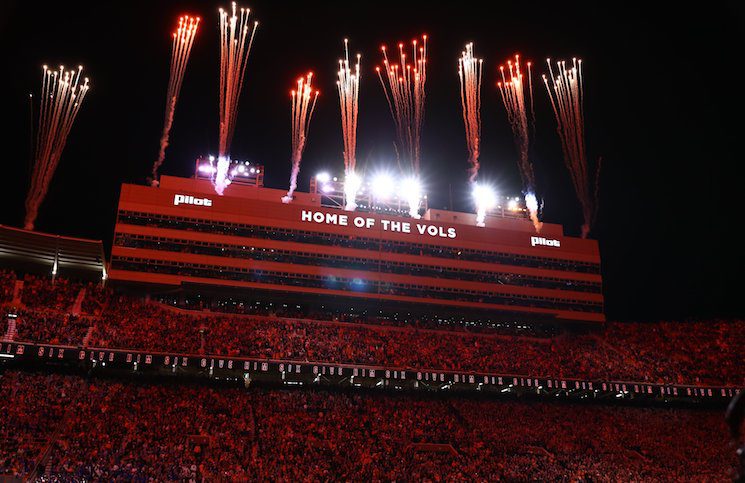
Tennessee football made the final cut for one of the top linebackers in the class of 2027, Roman Igwebuike, but couldn’t seal the deal. Instead, he’s taking his talents to Notre Dame as he announced his commitment to the Irish on Saturday evening.
It was a former Josh Heupel Era UT position coach who led the charge for Igwebuike, as well. Brian Jean-Mary, the Vols’ linebackers coach from 2021-23, now leads the linebacker room at Notre Dame and was the primary recruiter for Igwebuike.
Jean-Mary left Tennessee for a position at Michigan as defensive run game coordinator/linebackers coach. However, with the coaching change in Ann Arbor this offseason, he landed on his feet and joined the Irish’s staff as Marcus Freeman’s run game coordinator/linebackers coach.
More From RTI: Nike Reportedly Not Willing to Help Ohio State’s Recruitment of David Gabriel Georges
Igwebuike is one of the top linebackers in the class of 2027. On 247 Composite, he ranks as the No. 123 player in the country, No. 9 linebacker and No. 8 player from the state of Illinois. He is from Chicago, where he plays for Mount Carmel.
“Well-rounded linebacker that has a chance to be a linchpin in the middle for a College Football Playoff hopeful after a productive prep career outside of Chicago,” 247 director of scouting Andrew Ivins wrote. “Looks the part with a muscular 6-foot-3, 225-pound frame. Sees it well from the shelf as he reads his keys and flows to the football. Navigates busy intersections at a higher level and can slip underneath blocks. Comfortable dropping into space and is rather effective as a spy…”
Igwebuike’s primary recruiter at Tennessee was linebackers coach William Inge. He has made trips to Knoxville to see the Vols, including the Orange and White Game this past April, but never announced an official visit to UT.
Tennessee currently holds 16 commitments in the 2027 class, which ranks 43rd in the country on 247. This features two linebackers, both legacies, in four-star Kenneth Simon II and three-star JP Peace.

Tennessee freshman forward Chris Washington Jr met with the local media earlier this week in his first press conference after committing and signing with the Vols back in the spring.
Washington discussed why he chose Tennessee, what position he has mostly been working at this summer and much more. Here’s everything Washington said.
More From RTI: What Director of Sports Performance Garrett Medenwald Said About Tennessee Basketball Offseason
On what led to him de-committing from Alabama, eventually committing to Tennessee
“Honestly, I just felt like that for me and my family, that was just the best decision for me. And I found my right school, I feel like.”
On his first impressions of the team
“Like I said, me and the guys, we came a long way just from this first month, you know, getting help from DeWayne, and the team, it’s just been a blessing.”
On what the first month has been like for him personally
“Honestly, just getting better day by day. Coach Barnes, he’s coaching me hard. So honestly, just stacking days, just getting better day by day.”
On what Rick Barnes is harping on with him right now
“My defense. The whole country know I can score the ball, so just me, just working on my rotations, being right in the gaps. Defense.”
On what position he is working at.
“Right now, they got me playing four.”
On if they sold development based on his film or Tennessee’s track record
“I mean, honestly, just the track record of like guys he did put in the league, you know what I’m saying? I want to be pro, so like I said, I came to Tennessee, I felt like they’re gonna get me there, he’s gonna get me there.”
On who have been the verbal leaders on the team
“My boy DeWayne and my boy Kenbell (Duncan Campball), them two. They’ve been kind of really helping me.”
On how Tennessee sophomore forward DeWayne Brown has helped the newcomers understand what it’s like to play for the Vols
“I be in practice sometimes, I’ll get lost and he’ll kind of just help me a little bit. I mean, honestly, him just guiding us when we mess up.”
On his relationship with the rest of his freshman class: Manny Green, Ralph Scott and Marquis Clark; if he knew about them on the AAU circuit
“It’s been a great relationship. I didn’t play those guys on the circuit, so for us to be all on the same team, it’s a good thing.”
On playing AAU basketball in Knoxville; if that helped his decision
“It’s great, you know? It’s just amazing, honestly. I’m just glad to be here.”
On how he is liking the new Adidas uniforms
“I’m loving it. We’re in Adidas gear. I’m liking it, I’m loving it.”
On his strengths on offense
“I’d say getting to the rim, getting to my spots, and my (ability) to catch and shoot.”
On where his spots are
“Really just getting to the mid-range, getting down hill.”
On watching last year’s Vols get drafted
“Coach Barnes, him getting those guys there, I know my time’s gonna come.”
On his freshman class
“Oh, we got the best class, I feel like, honestly. We got a good class.”
Why he feels Tennessee has the best freshman class
“Shoot, we all can score, honestly. (Barnes) recruited a lot of scores this year. Even our freshman class, we can all get a bucket.”
-

 Los Angeles, Ca4 minutes ago
Rosemead High School student identified as teen stabbed to death in El Monte
-

 Detroit, MI26 minutes ago
Three dead in Metro Detroit mall shootings in eight days: What we know
-
San Francisco, CA34 minutes ago
I’m a writer who left LA for an AI startup in San Francisco. It was like stepping into a whole new world.
-

 Dallas, TX41 minutes ago
Dallas weather: Widespread thunderstorms bring flash flood risks and brief heat relief
-

 Miami, FL44 minutes ago
Why I’m Not Worried About Giannis in Miami
-

 Boston, MA49 minutes ago
Gallery: Tall ships display their splendor at Sail Boston
-

 Seattle, WA54 minutes ago
Seattle Weather: Cooler Sunday to close out weekend
-

 Denver, CO56 minutes ago
Colorado Court of Appeals reverses sanction against Denver DA for pattern of discovery violations


