Tennessee
Restoring voting rights after a felony is rare in Tennessee. The process has gotten harder. – Stateline

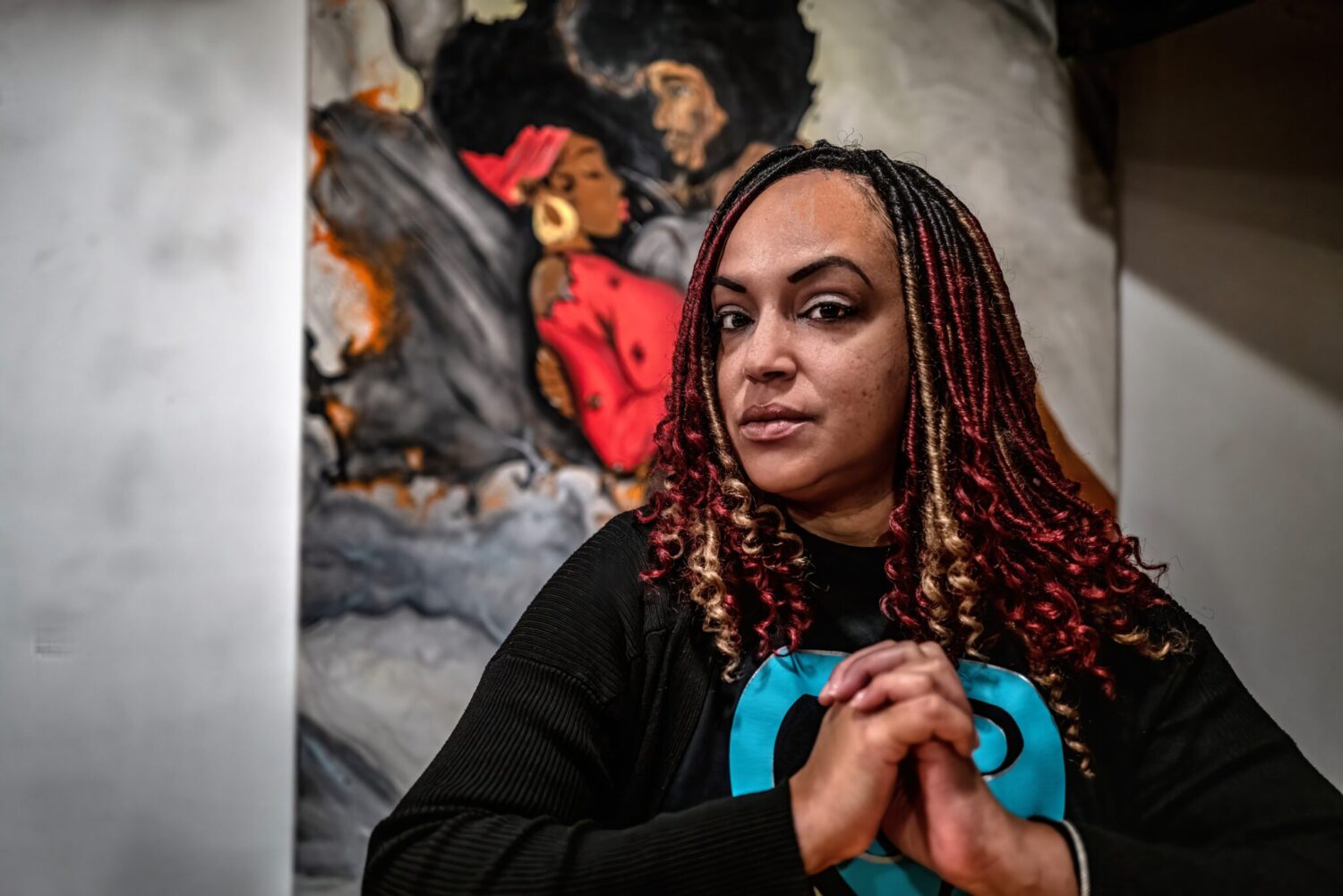
This story originally appeared in the Tennessee Lookout.
Janiqua Thompson was in her early 20s when she began stealing from the hotel she worked for. Her motivation was to catch up on bills to support her mother and three younger brothers, but her felony conviction only added more financial strain. She spent a day in jail and three years on probation, faced $20,000 in restitution fees and lost her voting rights.
“I made a decision that impacted my family way worse than I thought it would,” Thompson, now 28, said. “I let a temporary circumstance control my future.”
With her probation behind her and a 3-year-old daughter to raise, Thompson wants to regain her voting rights. She wants a say in the leaders shaping her country and community and to feel like a full citizen again. But now, along with the more than 470,000 Tennesseans with felony convictions excluded from the polls, she faces a voting rights restoration process made more difficult in recent months.
“I would love to have a voice,” Thompson said. “I just want to be able to change things for my kid.”
In at least 35 states, those with felony convictions can vote again after their full sentence is complete, and several states have eased the path to voting rights restoration in recent years. But in Tennessee, where financial and logistical hurdles already prevent many from regaining their rights, the process has become harder. In July, Tennessee officials issued new guidance mandating that instead of choosing between two paths of restoration, those with felony convictions would need to complete both.
Nearly 10% of the voting population in Tennessee is excluded from the polls because of felony convictions, a rate second only to Mississippi and one that especially affects people of color. One in 5 Black Tennessee residents is unable to vote because of a felony conviction, the highest rate in the nation.
“We have already had, before this new rule, the most complex voter restoration laws of any state,” said Dawn Harrington, founder of Free Hearts in Nashville, which supports families navigating incarceration. “This is a huge obstacle that has been put in front of us.”
The Tennessee Secretary of State’s office reported that nearly 3,350 Tennesseans regained their voting rights since 2018, which is less than 1% of those disenfranchised with a felony conviction who have completed their sentences.
The new guidance has further slowed the pace of restoration but has also spurred a new sense of urgency around the issue. Free Hearts and other reentry support groups have begun collaborating across the state to educate more attorneys on the process and to push harder for action from lawmakers and Republican Gov. Bill Lee.
“This is a big moment for shining the light on a process that has long been broken,” Blair Bowie, a director at Washington, D.C.-based Campaign Legal Center, said. “This new guidance really exposes just how big of a problem Tennessee has with felony disenfranchisement.”
‘There is no process in place’
For decades, Tennesseans with felony convictions could regain voting rights by receiving a pardon or by restoring their citizenship rights in court. In 2006, lawmakers added another alternative: complete a certificate verifying all legal debts were paid and child support was up to date. Tennessee Elections Coordinator Mark Goins cited a June Tennessee Supreme Court decision in recently declaring that the two existing paths are both required.
Tennessee Supreme Court rules in felony voting rights case
The 2006 option had become the preferred path for Tennesseans seeking to restore their voting rights. The citizenship restoration process, now step one, can take several months and typically requires help from an attorney. Lawyers often gather dozens of pages of documentation to present to the judge, including letters of recommendation and certificates from programs completed during incarceration. Prosecutors can again testify against an individual, and approval is up to a judge’s discretion, which can be intimidating for many who were previously convicted. A court appearance also means new court fees. In Memphis and in Nashville, the amount is about $160.
“Some folks, they just don’t want to have to relitigate anything about their case again. They don’t want to have to stand in judgment again,” said Keeda Haynes, a Free Hearts legal adviser in Nashville. “It can be very triggering for folks.” She added, “People are not going to have the money for the filing fees and people are not going to have the money to pay a lawyer.”
Few online resources are available on how to file a petition for citizenship restoration. Staff at the Davidson County Circuit Court Clerk’s office said petition forms were not yet available but they could be drawn up. In more rural Coffee and Benton counties, circuit court staff did not have information on how to proceed with the citizenship restoration petition.
When Shelby County Office of Re-Entry Director DeAndre Brown sought to help his Memphis clients with voting rights ahead of the recent city elections, he found few officials could advise him on the citizenship petition process. He created a court filing form that Thompson and others used to file for a court date and a Memphis nonprofit agreed to pay the court fees.
“We reached out to the clerk’s office and the (district attorney’s) office and no one was really sure on what to do,” Brown said. “Really, there is no process in place, no standard that people can just look to. Everyone has questions and since they have questions, no one really wants to do it the wrong way. So, people just didn’t do it.”
The cost of voting rights
If Thompson gains a judge’s approval for citizenship, she will then have to complete the second part of the voter restoration process by certifying her legal debts have been paid. While she said she feels confident going before a judge again, she is less certain on how she will cover the more than $1,000 in court debt and any restitution or probation fees still owed. She said she made payments during her probation by waiting tables and turning to family and friends for support. The amount owed could not be confirmed through multiple calls to probation authorities.
“I just basically worked as much as I could,” Thompson said “It was really hell. I’m still getting my life together, even now.”
Tennessee is one of about 10 states that tie voting rights to legal financial obligations and it is the only state that requires child support payments are up to date, according to 2022 research by the Sentencing Project. For some individuals, the debt owed is insurmountable and can be as high as six figures, Harrington said. Many formerly incarcerated individuals, because of their convictions, struggle to find work and to cover the cost of basic needs like housing, food and transportation, making legal costs especially challenging to resolve.
Beyond the requirements, the process itself poses hurdles to individuals and is the subject of a federal lawsuit filed against Tennessee. In the 2022 complaint, plaintiffs described the process as “a wild-goose chase” and demanded new safeguards to ensure a uniform and responsive system.
Tennessee Attorney General moves to shut down suit by NAACP over restoration of voting rights
For each felony conviction, individuals must gain signatures from a parole or probation officer, and sometimes a county court clerk, whose willingness and training varies by county. If restoration is denied, there is no appeals process. For those with out-of-state convictions, completing the restoration documents can mean road trips, plane flights or multiple days off work. Several convictions, including murder and rape, are permanently disqualified.
“It’s so inaccessible and opaque and error ridden,” said Bowie, who is representing the plaintiffs in the 2022 federal lawsuit. “The process is just a huge mess.”
Law students who had begun helping Tennessee clients pursue the 2006 certificate process prior to the new guidance, have begun also compiling lengthy citizenship petitions for those who still want to move forward and more legal groups are joining these efforts, said Joy Radice, director of University of Tennessee’s Legal Clinic in Knoxville. A pro bono attorney who might have helped 10 clients at clinics now is likely to focus on just one.
“We have definitely had to be strategic about slowly helping a smaller number of clients because of this change,” Radice said. “From our clients’ perspective, it’s extremely discouraging.”
Since July, Tennessee Secretary of State Tre Hargett’s office has recorded 40 denials for voting rights restoration and one approval. About 35 Tennesseans have gained voting rights by expunging their convictions, a process available to some felonies after certain time periods. Hargett’s office declined to comment on the new voting rights guidance because of the ongoing litigation.
Still, Radice is heartened by the response she has seen from legal leaders and activists since July. The Tennessee Supreme Court’s Access to Justice Commission is launching a pilot project on civil rights restoration in January and has begun training law students and attorneys for the project. Free Hearts continues a letter writing campaign on the issue and brought together advocates from across the state in September to determine next steps.
“It feels like there is more energy, and my hope is that that will lead to attention that will lead to legislative change,” Radice said.
‘We need the governor to act’
Harrington is looking directly to Lee for action. Iowa Gov. Kim Reynolds, also a Republican, issued an executive order in 2020 restoring voting rights for those with felony convictions who completed their sentences, with the exception of homicide offenses. Harrington discussed the concept with members of Lee’s and Reynolds’ staff in March and said Lee’s officials seemed receptive to the concept. That was before the Secretary of State’s office made the voting process more challenging.
“We need the governor to act,” Harrington said.
Lee, who has long pushed for criminal justice reform and reentry support, said in October he is not considering an executive order, but he encouraged Tennessee lawmakers to discuss potential changes to voting rights laws.
“At least have the conversation, make sure that the General Assembly is engaged in that,” Lee said. “It’s much more appropriate to use the process of legislation to do that.”
For voting rights advocates, reversing the new guidance from Goins legislatively is imperative, but it is just the minimum of fixes needed in Tennessee. “A bill that just goes back to the system we had [before the new law] is not enough,” Bowie said.
Lawmakers on both sides of the aisle have sought changes to the restoration process for years. In 2019, two Republican lawmakers unsuccessfully pushed to reinstate voting rights for those who completed their sentences, regardless of their ability to pay civil or criminal fees, and to streamline the process of restoration. Similar legislation was introduced in 2021 and 2023 by Democrat lawmakers, including State Sen. Raumesh Akbari.
“Your financial situation should not impact your ability to vote and exercise your voice,” Akbari said. “We have talked about the power of redemption and the purpose of the justice system. Surely, someone should not have to be abridged to their right to vote for the rest of their lives.”
Some victims’ rights advocates disagree that the path to restoration should be eased. Verna Wyatt, co-founder of Tennessee Voices for Victims, supports those who have been able to restore their rights through the current process, but she also wants individuals with felony convictions to have to gain approval after a certain period of time following their conviction.
“People should be able to earn back their voting rights. I don’t think it should be something that is automatic.” Wyatt said, speaking for herself and not her organization. “They broke trust with the community and, many times, they broke trust in a very, very big way. That’s part of accountability and consequences.”
Republican House Speaker Cameron Sexton said he would need more details on potential legislation before determining his support. He disagreed with the term “disenfranchisement” to describe those who lost their vote because of a felony offense.
“They disenfranchised themselves by committing the crime,” Sexton said. “I don’t consider the state disenfranchising them when they are the ones who committed the crime.”
Although her probation sentence is behind her, Thompson says she still faces the ramifications of her crime whenever she applies for a job or a rental to live in. Voting rights is one more consequence she wants to move past.
“My mistake was done seven years ago,” Thompson said. “It’s really an ongoing battle. You start to wonder, when are they going to stop punishing us?”
Tennessee Lookout is part of States Newsroom, a national nonprofit news organization.



How Tennessee basketball made it back to third straight Elite Eight appearance
Tennessee basketball wanted to exploit Iowa State’s lack of depth in its 76-62 Men’s NCAA Tournament win
For the third straight season, Rick Barnes has Tennessee basketball in the Elite Eight. After Sunday, March 29’s game against No. 1 Michigan, he’s hoping to have taken the Vols where they’ve never been before.
Despite becoming a March Madness fixture, the Tennessee Vols have never, in their history, made the Final Four. Despite a pedigree of modest success, including 11 regular season SEC titles and and five conference tournament championships (most recently in 2022), Tennessee has not been able to cross the threshold to college basketball’s most coveted weekend.
The Barnes era marks the closest Tennessee has come, with consistency, even though its best shot arguably came before Barnes’ time. The Vols’ first Elite Eight trip was under Bruce Pearl in 2010, while Barnes was still roaming the Longhorns bench in Texas.
Barnes has taken Tennessee to the 2024, 2025, and 2026 Elite Eights. There’s an argument to be made 2026 is his most impressive run yet, as a No. 6 seed in the Midwest bracket.
The Vols went as a No. 2 seed in both 2024 and 2025, ultimately losing to the No. 1 seeds of their respective brackets in the Elite Eight. While it could be easy to think it will be more of the same Sunday against No. 1 Michigan, Tennessee has now taken down No. 3 Virginia and No. 2 Iowa State to get to this point. So perhaps one more upset is in store.
Has Tennessee basketball ever made a Final Four?
Tennessee has not made a Final Four in its history, making it one of five SEC schools to not get to the national semifinal round.
The others are Missouri, Mississippi, Texas A&M, and Vanderbilt. Alabama basketball made its first Final Four in 2024.
Tennessee basketball Elite Eight record
The Vols are 0-4 in the Elite Eight, with losses in 2010, 2024, 2025, and 2026.
Here’s a look at their full history in the fourth full round of the tournament.
- 2010: No. 5 Michigan State 70, No. 6 Tennessee 69
- 2024: No. 1 Purdue 72, No. 2 Tennessee 66
- 2025: No. 1 Houston 69, No. 2 Tennessee 50
- 2026: TBD, vs. No. 1 Michigan
Rick Barnes Elite Eight record
Barnes is not just defined by his career at Tennessee. He does have a Final Four appearance, winning his first Elite Eight game with Texas in 2003. Since then, though, he is 0-4 in the Elite Eight, with two losses at both Texas and Tennessee.

Tennessee football and coach Josh Heupel picked up a commitment from Brentwood Academy four-star wide receiver Kesean Bowman on March 28 while he was visiting the school.
Bowman narrowed his list to Tennessee, Vanderbilt, Ohio State, Alabama and Miami on March 2. All five schools were among his top 10 he acknowledged on Oct. 30. Texas, LSU, USC, Texas A&M and Oregon were among the schools left off his list.
The 6-foot, 174-pound Bowman is ranked as the No. 2 prospect in the state for the 2027 class. He is the No. 6 wide receiver nationally, according to 247Sports Composite. He has more than 35 other offers. He decommitted from Oregon last September, more than two months after committing to the Ducks.
Bowman was a Division II-AAA Mr. Football semifinalist, who caught 49 passes for 665 yards and 11 TDs, during BA’s 2025 state runner-up season. He also had a rushing TD and was named the DII-AAA West Region Offensive MVP. He was named to The Tennessean’s 2025 All Midstate Large Class football team and is a Middle Tennessee Sports Awards offensive football player of the year nominee.
Bowman helped BA finish 11-1 in 2025, losing to Baylor in the DII-AAA state championship game.
Tennessee and Heupel have also offered Brentwood Academy offensive tackle Rance Brown, a 6-6, 290-pound lineman who transferred from Southside (Alabama). The Vols are pursuing BA junior four-star linebacker Kenneth Simon II as well.
Tyler Palmateer covers high school sports for The Tennessean. Have a story idea for Tyler? Reach him at tpalmateer@tennessean.com and on the X platform, @tpalmateer83.
He also contributes to The Tennessean’s high school sports newsletter, The Bootleg. Subscribe to The Bootleg here.

The Tennessee Titans have made some improvements throughout the offseason and appear better positioned heading into the draft than they were in 2024, with added depth on both sides of the ball.
Yet, even with the added talent, they still have multiple needs they must continue to address to help both now and in the future, and another solid draft would go a long way in finding a sustainable path forward. Gilberto Manzano of Sports Illustrated looked at the roster and saw some of the same things as he broke down their remaining needs heading into the draft.
Tennessee Titans
Draft needs: RB, WR, edge, S
The running back duo of Tony Pollard and Tyjae Spears hasn’t been a productive one. Cam Ward desperately needs a game-changer at one of the skill positions. Newcomer wideout Wan’Dale Robinson doesn’t exactly fit that bill, but he’ll make life easier for the second-year quarterback.
With Robert Saleh now the head coach in Tennessee, it wouldn’t be a surprise if the Titans used the No. 4 pick on one of the top edge rushers.
There is no doubt that the Titans should add some playmakers in this draft class, and they shouldn’t bank on hitting a dynamic playmaker in the fourth round again. Tennessee could definitely use a premium pick on at least one or possibly two offensive weapons.
Tennessee also must invest in the interior of the offensive line to help Cam Ward and the offense. While it’s true that Pollard and Spears did not blow the doors off the running game, they were also hampered by subpar play along the offensive line for the past two seasons, after line guru Bill Callahan failed to transform the Titans’ line into a consistent unit. It wasn’t until after he and his son Brian Callahan left that the play-calling for the running game took off.

Thousands without power in Henderson neighborhood after mylar balloon causes outage

Pakistan hosts diplomatic discussions on ending war

Who is running for U.S. House, Senate in New Jersey? Here’s the list
![~!@[WATCHLIVE!TV]>> NOW New Mexico United vs Colorado Springs Switchbacks FC Match 𝐋𝐈𝐕𝐄 Free Streams ON Tv Channel](https://i2.wp.com/unicornriot.ninja/wp-content/uploads/2018/09/LiveChannel334x212v2.png?w=80&resize=80,80&ssl=1 "~!@[WATCHLIVE!TV]>> NOW New Mexico United vs Colorado Springs Switchbacks FC Match 𝐋𝐈𝐕𝐄 Free Streams ON Tv Channel")
~!@[WATCHLIVE!TV]>> NOW New Mexico United vs Colorado Springs Switchbacks FC Match 𝐋𝐈𝐕𝐄 Free Streams ON Tv Channel

Disputes grow between NC Bar, legislative committee tasked with reforming it

Florida High School Football Rankings: Top 25 teams – Oct. 21

How old is Bo Nix? What to know about Oregon quarterback ahead of 2024 NFL Draft

Cleary's 21 help Le Moyne down Central Connecticut State 69-64 in OT

99th annual Pony Swim held in Virginia

Indiana Members Credit Union announced as new anchor tenant at Bottleworks District

JD Vance says he was ‘obsessed’ with UFOs, believes aliens are actually ‘demons’
The EU's recipe for trade deals : easy on beef, tough on wine

Photos: ‘No Kings’ protests across the country

Jeffries declines to break with indicted Democrat after ethics panel’s guilty verdict

Hundreds of thousands march through London in stand against the far right
-

 Sports1 week ago
IOC addresses execution of 19-year-old Iranian wrestler Saleh Mohammadi
-

 New Mexico7 days ago
Clovis shooting leaves one dead, four injured
-

 Tennessee6 days ago
Tennessee Police Investigating Alleged Assault Involving ‘Reacher’ Star Alan Ritchson
-

 Technology7 days ago
YouTube job scam text: How to spot it fast
-

 Minneapolis, MN3 days ago
Boy who shielded classmate during school shooting receives Medal of Honor
-

 Science1 week ago
Record Heat Meets a Major Snow Drought Across the West
-

 Politics1 week ago
Schumer gambit fails as DHS shutdown hits 36 days and airport lines grow
-

 Texas1 week ago
How to buy Houston vs. Texas A&M 2026 March Madness tickets