Tennessee
New sightings of spotted lanternflies reported in Tennessee. What to do besides killing them


Spotted lanternflies invasion
Spotted lanternflies are taking over. Here’s what you can do when you spot the invasive red bugs.
The Tennessee Division of Natural Areas asks residents to report any sightings of an invasive insect species.
The spotted lanternfly, an invasive species native to China, India, Japan, South Korea, and Vietnam, has been seen in Tennessee this spring. The Tennessee Division of Natural Areas shared that it recently received another report of the spotted lanternfly from the Tennessee Division of Forestry. The first sighting of a spotted lanternfly in Tennessee was in Davidson County in 2023, with other sightings reported in Wilson County later.
Once established, this species is known to spread rapidly through new areas. The long-distance spread of the spotted lanternfly comes through people who move infested material or items containing egg masses. As of January 2025, Tennessee is reported to be one of 18 states ever to report insect sightings.
Here’s what to know about the spotted lanternfly in Tennessee.
What’s the problem with the spotted lanternfly?
The spotted lanternfly is an invasive plant hopper first detected in 2014. It is a sapsucking insect that feeds on water and nutrients in plants. The spotted lanternfly gathers in large numbers on host plants and flat surfaces.
Adult spotted lanternflies are prominent in late summer and early fall. They are about one inch long and half an inch wide with spotted and red wings. Spotted lanternflies gather in large numbers on plants, feeding on nutrients and water.
Why are spotted lanternflies bad?
It is a plant stressor, making it more susceptible to other insects and diseases. The spotted lanternfly also produces honeydew as it feeds. The honeydew can coat areas underneath infested plants, causing mold to grow.
The Tennessee Department of Agriculture says they can spread long distances when people and vehicles move infested material or items containing egg masses.
What attracts spotted lanternflies? The tree of heaven and more
The spotted lanternfly primarily favors the tree of heaven, an invasive tree species in the United States. The tree is prevalent across the state, according to a map tracking invasive species from the University of Georgia.
They can also attack grape vines and fruit trees. Spotted lanternflies will also infest maple, poplar, and walnut trees.
“This pest is known to attack more than 70 species of plants, including several important agricultural crops and a variety of other fruit and ornamental trees, shrubs, and vines,” the Tennessee Division of Natural Areas said. “This insect also feeds on maple, walnut, and poplar.”
Spotted lanternfly eggs hatch in the spring and early summer from April through October. Early instar nymphs are black with white spots; fourth instar nymphs are red with black and white spots.
Adult spotted lanternflies, usually seen between July and November, are about one inch long and one-half inch wide. The tan forewings have black spots, while their signature colorful hindwings have lower red and upper black patches, separated by a white section. The red hindwings are mostly hidden unless the wings are spread.
What to do if you find a spotted lanternfly?
According to the Tennessee Department of Agriculture, people who see the fly or an egg mass should take photos, fill out a pest identification form, destroy the insect or egg masses by stomping on them or dousing them with rubbing alcohol, and check vehicles, boats and campers to make sure there are no insects or eggs there.



The 2026 NFL Draft is less than a month away, which means it’s time to start paying extra close attention to the Tennessee Titans’ moves and visits.
In the weeks leading up to the NFL draft, teams are allowed to bring up to 30 prospects to their facilities for visits with coaches and executives, on top of the meetings coaches, scouts and executives can hold with prospects on college campuses after pro days.
Pre-draft meetings aren’t everything; seven of the nine players the Titans drafted in 2025 never took reported visits or meetings with the team prior to being picked. But touch points like these are interesting looks into the team’s thought process as far as which positions need to be evaluated and which players merit closer looks.
Based on player comments, social media posts and national reports, here is a running track of which players have visited or are expected to visit with the Titans, sorted by player rank in the consensus player rater.
Tennessee Titans NFL draft 2026 visits tracker: Which best draft prospects available are talking with the Titans?
Jeremiyah Love, RB, Notre Dame (No. 4 prospect)
Love visited the Titans’ facility shortly after the conclusion of his impressive showing at the NFL combine, according to posts he made on social media.
Rueben Bain Jr., DL/Edge, Miami (No. 7 prospect)
Bain told CBS Sports following his Miami pro day workout that he had a visit scheduled with the Titans. Bain also met with the Titans at the NFL combine.
Carnell Tate, WR, Ohio State (No. 9 prospect)
Tate told reporters after Ohio State’s pro day that the Titans are among the five teams he has scheduled visits with. Other teams picking in the top 10 who have Tate on their radar include the New York Giants, Cleveland Browns, New Orleans Saints and Kansas City Chiefs.
Mansoor Delane, CB, LSU (No. 10 prospect)
Per a report from Ryan Fowler, the Titans scheduled a visit with Delane, the consensus pick for the top cornerback in this draft class.
Makai Lemon, WR, Southern Cal (No. 14 prospect)
The reigning Biletnikoff Award winner as college football’s best wide receiver, Lemon has a visit scheduled with the Titans, per a report from NFL Network’s Ian Rapoport.
KC Concepcion, WR, Texas A&M (No. 32 prospect)
Concepcion, an impressive field stretcher out of Texas A&M, told reporters at his pro day that the Titans are one of six teams he has scheduled meetings with. Concepcion is considered a fringe first-round pick who might be gone or might be ripe for the picking when the Titans use their second-round pick at No. 35.
Caleb Banks, DL, Florida (No. 35 prospect)
Banks told reporters after Florida’s pro day that he had a visit scheduled with the Titans, along with visits to Kansas City, Baltimore, Detroit, Arizona, Denver, Atlanta and the Chargers.
Treydan Stukes, CB, Arizona (No. 65 prospect)
Stukes told Sports Illustrated that he took a meeting with the Titans, putting him on the radar as a potential third-round pick candidate.
Tristan Leigh, OT, Clemson (No. 271 prospect)
Leigh, a three-year starter at left tackle for Clemson, has visited with the Titans, per a report from Fowler.
Travis Burke, OT, Memphis (No. 354 prospect)
Burke is a bottom-of-the-draft offensive lineman prospect who visited with the Titans, per Sports Illustrated’s Justin Melo.
Nick Suss is the Titans beat writer for The Tennessean. Contact Nick at nsuss@gannett.com. Follow Nick on X @nicksuss. Subscribe to the Talkin’ Titans newsletter for updates sent directly to your inbox.

For a Vanderbilt vs Tennessee baseball rivalry already full of lore, the Commodores added a unique chapter with their weekend series at Hawkins Field.
Vanderbilt (17-12, 5-4 SEC) won all three games via walk-off: 3-2 win in 10 innings on March 27; 6-5 in 16 innings on March 28, and 16-15 on March 29. The final game ended with an “ultimate grand slam” by Tommy Goodin while down three in the bottom of the ninth inning to sweep the 21st-ranked Vols (18-10, 3-6).
The three games were all different, with the opener being a pitchers duel between Connor Fennell and Tennessee’s Brandon Arvidson and Tegan Kuhns. The second game was a marathon in which each team had one five-run inning. In the third game, pitchers on both sides were still feeling the effects of the previous game as Vanderbilt won a high-scoring shootout.
“Emotionally, that’s probably going be my biggest concern,” coach Tim Corbin said. ” . . . It’s a lot of baseball. But I think the strength is these kids are young. They’ve got a day to get back, kind of get their body back a little bit, to stay away from here. There’s a ripple effect that takes place from playing three games, emotionally draining and tough games.”
Here’s what we learned.
Vanderbilt’s offense comes through when it needs to
Vanderbilt this season has often struggled to get the big hit, constantly leaving runners stranded. This weekend, the Commodores were able to come through with timely hits. Brodie Johnston recorded eight hits in the series, including a home run, while Ryker Waite had two doubles and a home run among his four hits.
Different players came through in every big situation. In Game 1, Logan Johnstone had the walk-off single. In Game 2, Mike Mancini and Ryker Waite both hit home runs and Mack Whitcomb had the walk-off squeeze bunt. In Game 3, Johnston and Rustan Rigdon hit home runs, while Johnstone, Chris Maldonado and Whitcomb each had a pair of RBIs.
Vanderbilt hit for plenty of power, too, with four doubles and six home runs in the series. The Vols had three doubles and two homers.
“It was a wild series,” Corbin said. “Polarizing, no doubt, felt that way, too. I think that’s why it becomes very emotional, because you have periods of not moving the ball and periods of moving the ball. So always comes down to timely hits, doesn’t it?”
Vanderbilt finds bullpen contributors
With six pitchers injured, including Austin Nye, who is out for the season, Vanderbilt has struggled to get production out of its bullpen. While that group was up and down throughout the series, the Commodores got significant production out of a few arms they hadn’t in the past.
In Game 2, freshman Tyler Baird pitched five scoreless innings, walking two and striking out four. Going into the outing, he’d had an ERA of 6.89, with 12 walks in 15⅔ innings, and hadn’t lasted even an inning last week against Mississippi State. Replacing him, fellow freshman Nate Schlote threw three scoreless innings, with two walks and three strikeouts. In Game 3, Jakob Schulz threw 3⅔ scoreless innings, with one walk and two strikeouts.
“That’s really what it is, you’re pitching for the first few times in the conference, you get tentative,” Corbin said. “(Baird) was tentative against Mississippi State. But I also know that that bus ride was probably a long one for him, and (pitching coach Scott Brown) did a good job of grabbing him right away, like a little small car accident, getting him back in the driver’s seat again to drive, and he did. Made a good adjustment.”
Vanderbilt gets back on track
The Commodores were reeling entering the week. They’d lost five straight games, including getting swept at Mississippi State. There were questions of whether they would even make the postseason.
Now they are in a better spot. With new contributors in the bullpen and the offense stepping up, Vanderbilt can feel better heading to Texas A&M for a weekend series April 3-5.
“I think it’ll be very huge,” Goodin said. “I think this is a very big, big boost . . . This definitely could be a really good turning point for all of us. And, you know, really going in there and playing at the caliber that we play at, just like this, it’s awesome.”
Aria Gerson covers Vanderbilt athletics for The Tennessean. Contact her at agerson@gannett.com or on X @aria_gerson.

How Tennessee basketball made it back to third straight Elite Eight appearance
Tennessee basketball wanted to exploit Iowa State’s lack of depth in its 76-62 Men’s NCAA Tournament win
For the third straight season, Rick Barnes has Tennessee basketball in the Elite Eight. After Sunday, March 29’s game against No. 1 Michigan, he’s hoping to have taken the Vols where they’ve never been before.
Despite becoming a March Madness fixture, the Tennessee Vols have never, in their history, made the Final Four. Despite a pedigree of modest success, including 11 regular season SEC titles and and five conference tournament championships (most recently in 2022), Tennessee has not been able to cross the threshold to college basketball’s most coveted weekend.
The Barnes era marks the closest Tennessee has come, with consistency, even though its best shot arguably came before Barnes’ time. The Vols’ first Elite Eight trip was under Bruce Pearl in 2010, while Barnes was still roaming the Longhorns bench in Texas.
Barnes has taken Tennessee to the 2024, 2025, and 2026 Elite Eights. There’s an argument to be made 2026 is his most impressive run yet, as a No. 6 seed in the Midwest bracket.
The Vols went as a No. 2 seed in both 2024 and 2025, ultimately losing to the No. 1 seeds of their respective brackets in the Elite Eight. While it could be easy to think it will be more of the same Sunday against No. 1 Michigan, Tennessee has now taken down No. 3 Virginia and No. 2 Iowa State to get to this point. So perhaps one more upset is in store.
Has Tennessee basketball ever made a Final Four?
Tennessee has not made a Final Four in its history, making it one of five SEC schools to not get to the national semifinal round.
The others are Missouri, Mississippi, Texas A&M, and Vanderbilt. Alabama basketball made its first Final Four in 2024.
Tennessee basketball Elite Eight record
The Vols are 0-4 in the Elite Eight, with losses in 2010, 2024, 2025, and 2026.
Here’s a look at their full history in the fourth full round of the tournament.
- 2010: No. 5 Michigan State 70, No. 6 Tennessee 69
- 2024: No. 1 Purdue 72, No. 2 Tennessee 66
- 2025: No. 1 Houston 69, No. 2 Tennessee 50
- 2026: TBD, vs. No. 1 Michigan
Rick Barnes Elite Eight record
Barnes is not just defined by his career at Tennessee. He does have a Final Four appearance, winning his first Elite Eight game with Texas in 2003. Since then, though, he is 0-4 in the Elite Eight, with two losses at both Texas and Tennessee.

Joint Venture Acquires 243-Bed Student Housing Community Near University of Texas at Austin

Governor Ivey proclaims March 30 Doctors Day in Alabama

How Sanctioned Russian Arctic LNG Hardware Could Find a Second Life in Alaska’s ‘Polar LNG’ Project

Japanese grocery store opening 1st Arizona location. What to know

AP Decision Notes: What to expect in Arkansas’ primary runoff elections

Florida High School Football Rankings: Top 25 teams – Oct. 21

How old is Bo Nix? What to know about Oregon quarterback ahead of 2024 NFL Draft

Cleary's 21 help Le Moyne down Central Connecticut State 69-64 in OT

99th annual Pony Swim held in Virginia

Indiana Members Credit Union announced as new anchor tenant at Bottleworks District

Video: Iran to Allow More Oil Ships Through Strait of Hormuz, Trump Says

Dem senator warns deportation could let Virginia woman’s illegal immigrant killer ‘escape accountability’

Newsletter: G7 ministers to hold talks on war’s economic fallout
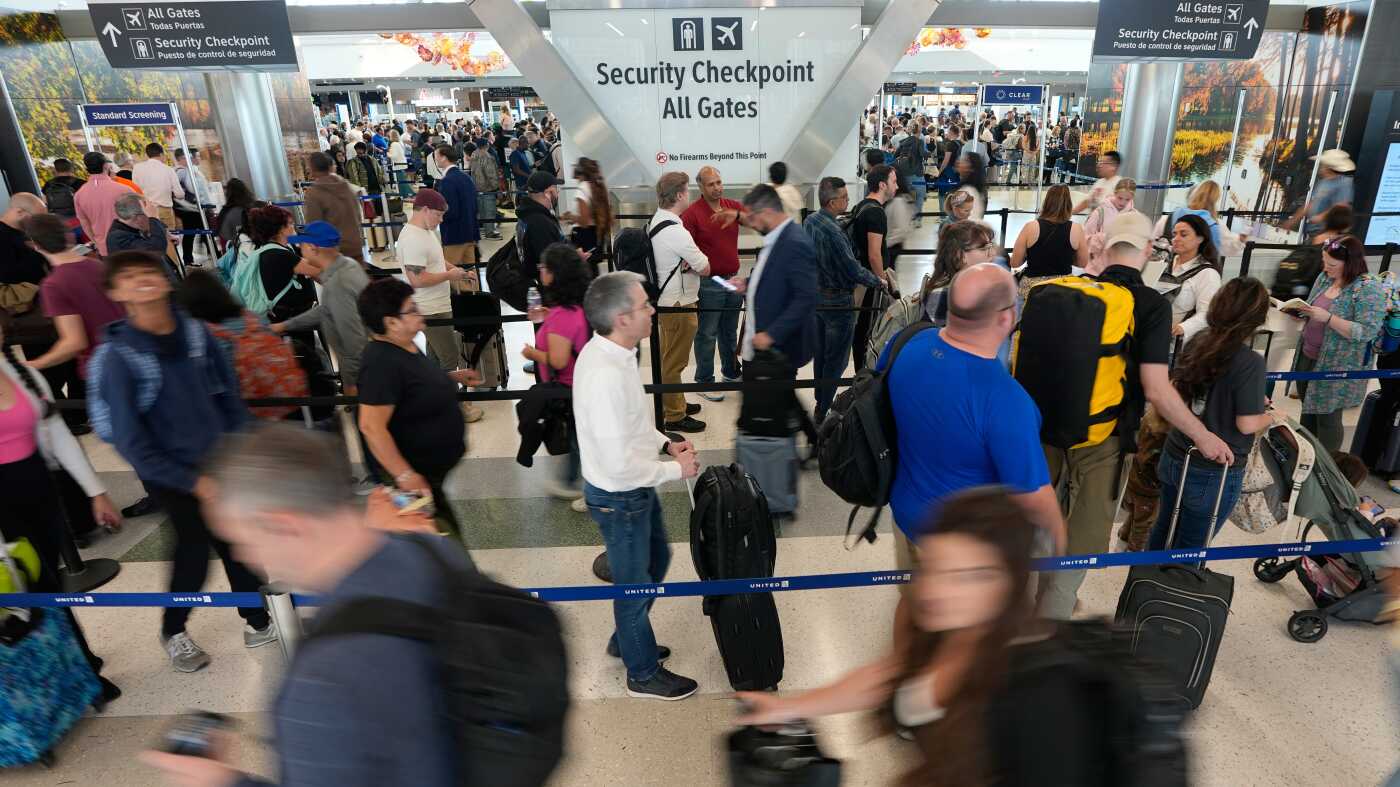
ICE officers could remain at airports after TSA workers are paid

Scathing report claims nation’s oldest labor union ‘betrayed’ MAGA members through ‘shocking’ spending
-

 Sports1 week ago
IOC addresses execution of 19-year-old Iranian wrestler Saleh Mohammadi
-

 Miami, FL4 days ago
Jannik Sinner’s Girlfriend Laila Hasanovic Stuns in Ab-Revealing Post Amid Miami Open
-

 New Mexico1 week ago
Clovis shooting leaves one dead, four injured
-

 Politics1 week ago
Schumer gambit fails as DHS shutdown hits 36 days and airport lines grow
-

 Tennessee7 days ago
Tennessee Police Investigating Alleged Assault Involving ‘Reacher’ Star Alan Ritchson
-

 Minneapolis, MN4 days ago
Boy who shielded classmate during school shooting receives Medal of Honor
-

 Science1 week ago
Record Heat Meets a Major Snow Drought Across the West
-

 Politics1 week ago
Trump gives Iran 48-hour ultimatum to reopen Strait of Hormuz or face strikes on power plants