South-Carolina
‘False Hope’: Prosecutors Blast South Carolina’s New Fentanyl Homicide Bill – FITSNews


A coalition of South Carolina solicitors is speaking out against a recently passed fentanyl homicide statute, warning it offers little real help in combating the deadly opioid crisis ravaging communities across the Palmetto State.
In a sharply worded statement released by the office of S.C. fourteenth circuit solicitor Duffie Stone – and signed by eleven other elected solicitors – the Palmetto State’s new “fentanyl-induced homicide” bill was blasted as ineffective, difficult to enforce and ultimately misleading for the victims’ families it was meant to empower.
“The recently passed fentanyl-induced homicide law … fails to provide prosecutors any real tools,” Stone wrote in the letter (.pdf). “It will be rarely used.”
In contrast to the “crucial first step” taken by lawmakers in 2023 with the passage of a fentanyl trafficking bill, the new legislation – S. 156 – “ensures the status quo,” prosecutors claimed.
“Under no circumstances will it be the game-changer some are touting it to be,” Stone wrote. “Unfortunately, it will give grieving parents false hope of holding drug pushers responsible for their kills.”
***
Passed by both chambers of the General Assembly – and currently awaiting the signature of governor Henry McMaster (a former attorney general and U.S. attorney) – the bill creates a new felony homicide offense for those who “knowingly provide” fentanyl that leads to someone’s death.
“Though the statute has other problems, the use of the word ‘knowingly’ will make it nearly impossible to prove,” Stone asserted in the letter.
According to him and his fellow prosecutors, criminals who claim they believed they were selling heroin or OxyContin “will be a standard defense.” Also, Stone and the solicitors referenced the glut of counterfeit pills pressed to mimic legitimate pharmaceuticals.
“Pills pressed with fake logos and false identifiers will provide an instant defense,” they wrote.
Instead of what they describe as an empty gesture, the solicitors are asking the S.C. General Assembly to pass legislation they believe would have real impact: a state-level Racketeer Influenced and Corrupt Organizations (RICO) law along with a comprehensive anti-gang statute.
“To stop the infiltration of fentanyl, we must stop the organizations that are distributing it,” Stone said. “There are manufacturers, wholesalers, and distributors getting this substance into our communities. We can stop them with a state RICO and gang law.”
***
RELATED | SOUTH CAROLINA SEES ‘FENTANYL SURGE’
***
South Carolina remains one of the few states without its own RICO statute — a powerful prosecutorial tool that allows authorities to indict entire criminal enterprises, rather than taking down one defendant at a time.
“Without this tool, we must piecemeal prosecutions,” Stone said, “charging and prosecuting individuals for individual acts without being able to show the jury their over-arching criminal scheme.”
A gang enforcement bill – S. 76 – is currently pending before the legislature. Prosecutors say its passage could mark a turning point in the fight against organized drug distribution in South Carolina.
“Unlike the current fentanyl homicide law, its passage would be a game changer,” Stone wrote.
The letter was signed by solicitors from 11 of South Carolina’s sixteen circuits — including several from districts that have seen devastating impacts from fentanyl trafficking in recent years. Among its signatories: David Pascoe (first circuit); Bill Weeks (second circuit); Mike Burch (fourth circuit); Byron Gipson (fifth circuit); Randy Newman (sixth circuit); Barry Barnett (seventh circuit); David Stumbo (eighth circuit); Scarlett Wilson (ninth circuit); Rick Hubbard (eleventh circuit); Jimmy Richardson (fifteenth circuit); and Kevin Brackett (sixteenth circuit).
The solicitors’ statement reflected growing frustration within the prosecutorial community regarding its struggles to keep up with the scale and complexity of the fentanyl crisis. Overdose deaths in South Carolina — many linked to counterfeit pills and illicit drug trafficking networks — have surged in recent years, prompting calls for stronger enforcement tools at the state level.
Whether the S.C. General Assembly will advance the kind of legislation prosecutors say is necessary — such as a state RICO statute or gang enforcement bill — remains to be seen. But with fentanyl continuing to devastate communities across the Palmetto State, lawmakers face mounting pressure to move beyond symbolic gestures and deliver laws with real impact.
***
THE LETTER…
(S.C. Fourteenth Judicial Circuit)
***
ABOUT THE AUTHOR …
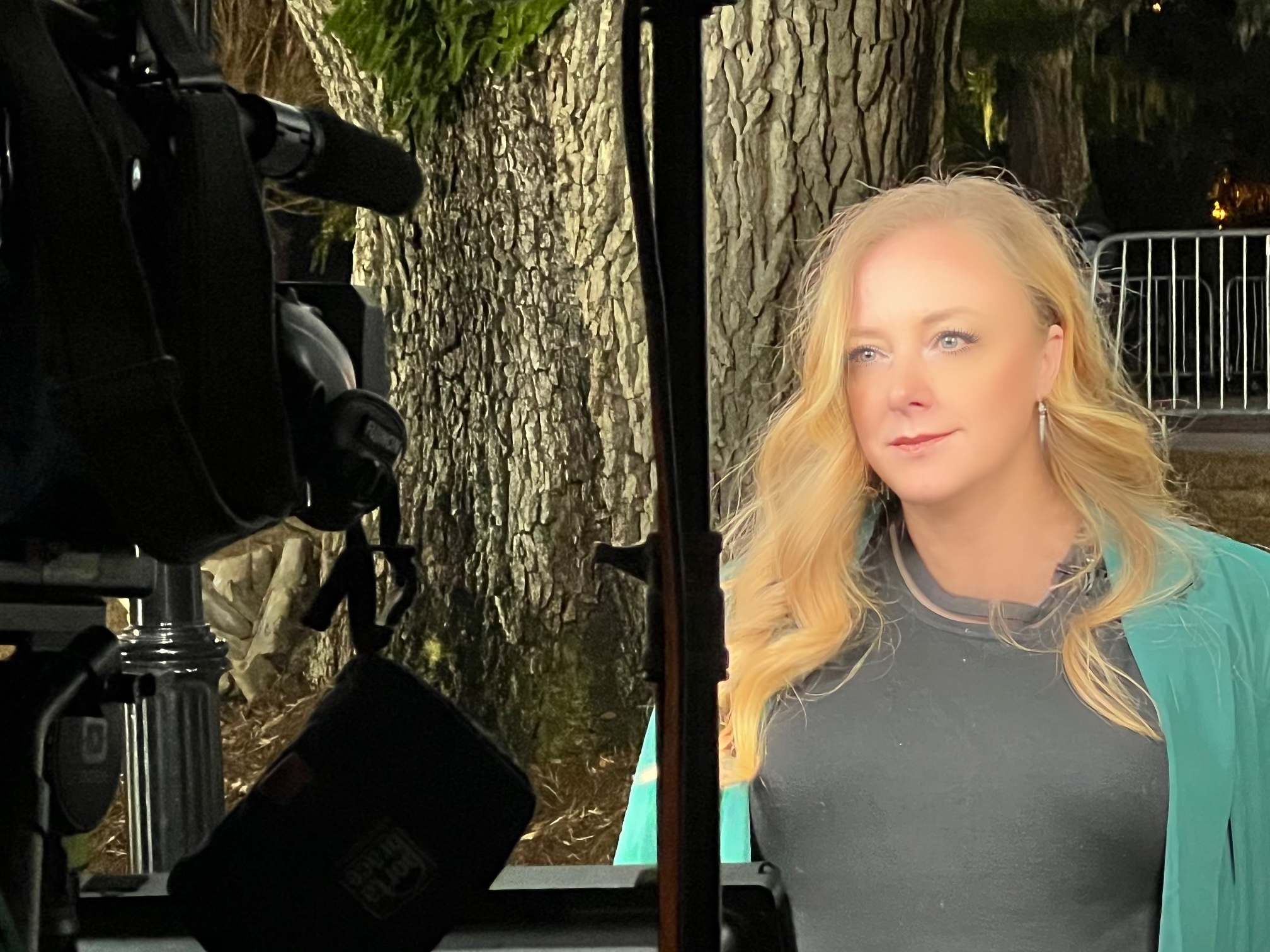
Jenn Wood is FITSNews’ incomparable research director. She’s also the producer of the FITSFiles and Cheer Incorporated podcasts and leading expert on all things Murdaugh/ South Carolina justice. A former private investigator with a criminal justice degree, evildoers beware, Jenn Wood is far from your average journalist! A deep dive researcher with a passion for truth and a heart for victims, this mom of two is pretty much a superhero in FITSNews country. Did we mention she’s married to a rocket scientist? (Lucky guy!) Got a story idea or a tip for Jenn? Email her at jenn@fitsnews.com.
***
WANNA SOUND OFF?
Got something you’d like to say in response to one of our articles? Or an issue you’d like to address proactively? We have an open microphone policy! Submit your letter to the editor (or guest column) via email HERE. Got a tip for a story? CLICK HERE. Got a technical question or a glitch to report? CLICK HERE.



The Lions may be looking for a safety within the first two rounds due to injuries to Kerby Joseph and Brian Branch. That’s where Jalon Kilgore may come in. He has some minor injuries, but appears to be a relatively low-risk prospect for a team that needs to add health to that room.
Here is the excerpt of my medical report on Jalon Kilgore:
Jalon Kilgore, S (21) – South Carolina
Projected round 2-3.
Concern level 2/10
While his availability has been excellent, Kilgore has a history of hamstring strains in 2025 and 2023. If his 2024 injury is found to be also a hamstring, then happenstance becomes a disturbing trend.
With fast-twitch athletes, hamstrings are going to be very common, and generally don’t present any long-term issues. The difficult trick will be to determine if a certain player is more prone to hamstrings.
What helps Kilgore a lot is his young age.
For more Lions coverage, follow us on X, @TheLionsWire, and give our Facebook page a like. Follow Jimmy on X, @JimmyLiaoMD

HORRY COUNTY, S.C. (WPDE) — One person was critically injured in a motorcycle crash in the Longs area on Thursday afternoon, according to Horry County Fire Rescue (HCFR).
Just before 2:00 p.m., crews responded to the area of Old Highway 31 near Hidden River Road.
MORE: 1 critically injured in vehicle rollover near International Dr.
One person was transported to the hospital as a result of the motorcycle crash, HCFR said.
Officials ask that drivers avoid the area as lanes of traffic are currently blocked.
The incident is under investigation by the South Carolina Highway Patrol with assistance from the Horry County Police Department.


Dawn Staley & Gamecocks on ‘rusty’ start in huge win over Southern U
Dawn Staley and Joyce Edwards on their ‘rusty’ start in their first game in two weeks that turned into a massive 69-point win NCAA tournament.
Sports Pulse
COLUMBIA, SC ― With the clock winding down and pressures of the Women’s NCAA Tournament rising, South Carolina senior guard Raven Johnson isn’t playing just to win. She plays in honor of a voice she can no longer hear – but that she still carries with her every time she steps onto the court.
That motivation was on full display Monday night, as the No. 1-seeded Gamecocks took down No. 9 USC to advance to the Sweet 16. Johnson earned her 1,000th career point ― what would prove to be her last point at Colonial Life Arena ― on a steal and fast-break layup that brought a roar from the crowd. The Gamecocks will face No. 4 Oklahoma Saturday in Sacramento, with another Elite Eight appearance on the line.
For Johnson, the moment symbolized something deeper – a career shaped by the memory of her late grandfather. Johnson’s family watched as she achieved the milestone, her mother, grandmother and twin brother. It was a full circle moment for a player whose journey took root in her grandparents’ home.
Her grandparents helped raise her and her twin brother, Richard Johnson. The family lived together and she often calls her grandmother “mother” and her grandfather “papa,” reflecting the impact they had on her upbringing.
“My grandparents did a really good job,” Johnson said. “We wouldn’t be playing sports if it wasn’t for them.”
The Boones introduced the twins to basketball through their church and spent countless hours training them, often pushing them past their limits. A sergeant first class in the Army Reserves, he supervised soldiers in his unit and brought that same discipline to his grandchildren on the court, being demanding, structured and determined.
“I remember being outside and he was training us and I thought it was so hard. I wanted to give up,” Johnson said. “I used to cry, and he would be like ‘You’re not going to cry in my face, and you’re not going to give up.’ It was little things like that that made me tough.”
The standard of grit, accountability and composure, is something Johnson carries today.
“She’s just a winner and she’s a great point guard,” said South Carolina senior guard Ta’Niya Latson, who also played with Johnson at Westlake High School in Atlanta. “When she’s confident, we’re confident. When she’s poised, we’re poised. It’s hard to have that type of personality and leadership on the court, but she carries it well.”
Rodrick Boone was diagnosed with stomach cancer in December 2012 and died in April 2013 while Johnson was at a tournament in New Orleans. She was 10 years old.
“I remember I shut down,” Johnson said. “My mind went blank. I was like ‘What?’ I thought he was untouchable.”
Months after her grandfather’s death, something shifted in her mindset.
“I think that’s my why,” Johnson said. “I keep going today because he is my why.”
As a child, Johnson didn’t even like basketball. She preferred T-ball and cheerleading and thought basketball wasn’t for girls, until she saw Notre Dame’s Skylar Diggins and began to see herself differently.
“She was so pretty to me and I remember asking ‘Can I be girly and hoop?’” Johnson said.
She was the only girl on her recreational team, earning the nickname “Killer” for her defensive intensity alongside her brother, nicknamed “Thriller” for his offensive ability. The boys tested Johnson by playing physical and trying to push her out of the sport.
“I used to be cooking them out there a little bit, and I think they didn’t like that,” Johnson said.
She said the boys trying to make it hard on her actually made her tougher both physically and mentally.
Her grandmother, Connie Boone, said her grandfather would be proud of what Johnson has become.
“He might be crying but he would be happy about it,” her grandmother said. “You start them young, but you never know what the outcome is going to be.”
Johnson imagines the conversations she’d be having with her papa if he was still here.
“He would still be on my butt riding me, he’ll tell me maybe I need to fix something,” Johnson said. “He’ll be happy and I think he’ll be like ‘All right let’s get back to the drawing board. Let’s get ready for the next opponent.’”
She knows her papa is always watching, and she talks to him a lot at night.
“I just want to tell him that I’m going to keep pushing through even when it gets tough,” Johnson said. “He’s always telling me to push through because nobody cares. Nobody cares if you’re at your lowest, nobody cares.”
On Monday, fans chanted “Raven, Raven, Raven” as she walked off the court for the final time at Colonial Life Arena, Johnson’s moment was bigger than the scoreboard.
It was about diligence, progress and a promise kept.
With another game ahead and the possibility of a deeper tournament run, she isn’t finished. She continues to push and play for the voice that gave her a reason to begin.
Alyssia Hamilton is a student in the University of Georgia’s Carmical Sports Media Institute.

Cooler temps Friday with some afternoon sun, warmer weekend | March 27, 2026

CMU acquires Chatham’s Eastside location, will lease back part of property

Trump to sign emergency order to pay TSA agents as Augusta airport preps for golf week

50 years of DC Metro: A look back in photos

WKYC Channel 3

Florida High School Football Rankings: Top 25 teams – Oct. 21

How old is Bo Nix? What to know about Oregon quarterback ahead of 2024 NFL Draft

Cleary's 21 help Le Moyne down Central Connecticut State 69-64 in OT

99th annual Pony Swim held in Virginia

Indiana Members Credit Union announced as new anchor tenant at Bottleworks District

Video: Will ICE Change Under Its New Leader?

DHS shutdown breakthrough comes at cost for Republicans as funding fights nears end

Rubio joins crucial G7 talks as Iran war set to dominate second day

A surprise resignation could open the door for an independent to win a Montana Senate seat

Video: Savannah Guthrie Says She Believes Her Mother Was Taken for Ransom
-

 Detroit, MI1 week ago
Drummer Brian Pastoria, longtime Detroit music advocate, dies at 68
-

 Science1 week ago
How a Melting Glacier in Antarctica Could Affect Tens of Millions Around the Globe
-
 Science1 week ago
I had to man up and get a mammogram
-

 Movie Reviews1 week ago
‘Youth’ Twitter review: Ken Karunaas impresses audiences; Suraj Venjaramoodu adds charm; music wins praise | – The Times of India
-

 Sports6 days ago
IOC addresses execution of 19-year-old Iranian wrestler Saleh Mohammadi
-

 New Mexico5 days ago
Clovis shooting leaves one dead, four injured
-
 Business1 week ago
Disney’s new CEO says his focus is on storytelling and creativity
-

 Texas1 week ago
How to buy Houston vs. Texas A&M 2026 March Madness tickets