Austin, TX
Austin’s Star Is Still Shining Bright: Venture Funding To City’s Startups Hits All-Time High


At the height of the pandemic and the global shift to remote work, tech founders and investors alike flocked to Austin, Texas, drawn to a more business-friendly environment, relatively lower housing costs, and the city’s hip reputation.
Venture firms that set up shop in the Texas capital city included Bedrock Capital, Breyer Capital, and 8VC 1, among others. Elon Musk famously moved Tesla’s headquarters to Austin in 2021, while also purchasing a house and establishing a residence there.
But as more employees returned to in-office work, Austin slowly seemed to fall out of favor with the tech community, some of whom said it had been overhyped as a startup hub.
There were reports of tech workers who had moved to the city during the pandemic and claimed to regret it, saying they were going back to places like the Bay Area. Musk relocated Tesla’s engineering headquarters back to California in 2023.
Funding tops pandemic peak
Undeterred by the “tourists,” the startup and venture community in Austin kept plugging away. And those efforts are reflected in a surge in funding to startups headquartered there last year, with 2025 posting an all-time high for Austin venture investment, Crunchbase data shows.
Investment into Austin-based startups spiked 64.8% to $7.19 billion in 2025 as more investors poured money into companies based in the region, according to Crunchbase data. That’s compared with the $4.37 billion raised by Austin-area startups in 2024 and tops even the $6.1 billion raised in 2021, at the height of the venture funding frenzy.
Notably, deal counts actually decreased from 312 in 2024 to 272 year over year, signaling an increase in later-stage deals. Indeed, the data corroborates that with $4 billion of the total raised in 2025 classified as late-stage rounds.
Last year’s totals were also more than double — 130% higher — than the $3.1 billion raised in 2023. That money was raised across 403 deals, signaling much smaller round sizes at the time and a more mature market.
A tech scene decades in the making
Morgan Flager, managing partner of Silverton Partners, doesn’t believe that the Austin funding performance in 2025 was anomalous.
Rather, he calls it “the payoff from decades of compounding.”
“Talent density in venture categories such as software, fintech, health tech, defense and robotics has reached a critical mass, driven by waves of Bay Area relocations, both full HQ moves and satellite offices, that brought technical, product and operational talent into the market,” Flager said.
That talent eventually left to build new companies, he said, and the cycle repeated.
“On the capital side, the stack has matured across all stages, from pre-seed through growth, with local firms that have now cycled through multiple funds and understand the market deeply,” Flager said. “Layer in a business-friendly regulatory environment, a relatively lower cost of living, as well as a lower effective tax rate, and Austin becomes an attractive place to start and scale a company.”
Former Austin Mayor Steve Adler saw so much potential in the city’s startup scene that he began a career in venture investing after his tenure ended in early 2023. (He now works for New York-based Commonweal Ventures).
Part of the city’s success as a startup hub stems from its reputation as a haven for mavericks and risk-takers, Adler has said.
“Most cities in the world, you try something, you fail; it’s hard to have access to the capital the second time,” he told Zillow co-founder Spencer Rascoff in a podcast interview in 2022. “In Austin, the civic folk heroes are the people that tried something and it didn’t quite work out and they worked on it until it did.”
Pat Matthews, founder of Active Capital, a solo GP venture firm based in nearby San Antonio, said that it feels like Texas and the Austin metro area specifically are becoming more attractive to manufacturing- and engineering-heavy businesses.
“Some of that may be thanks to Tesla, and some of it may simply reflect the physical advantages of the state,” he told Crunchbase News. “Either way, this [surge in financing] feels less like hype returning and more like capital concentrating around a narrower set of serious, technically differentiated companies.”
Deal sizes grow
That diversity among funded startups is reflected in last year’s investment totals for Austin, which were boosted by several large, late-stage deals across a broad range of industries.
The largest was a $1 billion Series C round for energy provider Base Power in October. New York-based Addition led that financing, which valued the 2-year-old company at $4 billion.
Looking back, February in particular was a busy month for venture funding. That month alone saw the second-, third- and fourth-largest rounds in Austin for the year. They included:
- A February Series C round in which autonomous surface vessels maker Saronic raised $600 million at a $4 billion valuation. Elad Gil led the round for the defense tech startup.
- Also in February, NinjaOne, which provides endpoint management, security and monitoring, raised $500 million in Series C extensions at a $5 billion valuation — more than doubling its value from just 12 months prior. The funding came in separate tranches led by Iconiq Growth and Google’s CapitalG, with participation from other investors.
- Robotics company Apptronik in February raised $415 million in Series A financing led by B Capital and accelerator Capital Factory. (A $520 million extension to that Series A was raised in February 2026, taking the total round to over $935 million.)
The findings correspond with Flager’s observations.
“A good chunk of the capital raised in Austin was driven by several large deals. Similar to what we saw across the U.S. in 2025, venture funding in Austin was more concentrated than it has been in the past,” he told Crunchbase News. “Roughly 38% of the capital deployed went to the top five venture financings in Austin. I believe the top 10 deals nationally accounted for more than 40% of the capital raised last year. We’ll see if this trend continues into 2026 and beyond. The start of the year suggests it will.”
Krishna Srinivasan, founding partner of Live Oak Ventures, agrees, noting that from a dollars perspective, the surge in financings was driven by a handful of outsized capital-intensive deals in newer categories such as defense and deep tech.
“These companies require a combination of technology, land for manufacturing facilities, and talent for manufacturing tasks. Austin has unique skillsets for that,” he said. “It has a density of three things: talent in deep tech with The University of Texas, and many others moving to Texas in light of favorable business conditions with expertise in these industries; expansive land around Central Texas that is inexpensive, especially compared to California; and lower cost manufacturing-related labor especially given the surge in manufacturing jobs such as at Tesla in recent times.”
Burgeoning industries
Once upon a time, Austin was better known as home to software and CPG companies. And while those types of companies certainly still exist, a number of other industries are growing increasingly robust, as the local investors have pointed out.
As with many top tech markets, Flager said Austin has long been strong for application and infrastructure software, which is currently being challenged by AI. In his view, that talent has migrated to building “quality” vertical agentic software and AI-native businesses.
“We are seeing these companies grow quickly and build scale, while using less capital — which is exciting,” he added. “The domain experts who built and scaled application software companies here over the last two decades are spinning out to build the next generation of native AI businesses.”
The market overall is also broadening in interesting ways. Defense and autonomy have emerged as breakout categories, with Austin becoming one of the stronger markets in the country for dual-use and autonomous systems companies, noted Flager.
“The combination of software and hardware skills now in Texas, along with a business-friendly regulatory environment, has allowed Austin to take a leadership position in these important and developing markets,” he said. “Energy tech is also a natural fit given Texas’ grid scale and the surging power demands of AI infrastructure.”
Finally, robotics and advanced manufacturing are also gaining momentum, driven by deep engineering talent and the ability to scale manufacturing near Austin cost-effectively, allowing engineers, executives and other factory employees to coexist and collaborate in close proximity.
Srinivasan noted that his firm is seeing strong activity in vertical AI companies, or companies that serve vertical markets with AI that is tuned on specialized proprietary vertical data, often targeting the services and labor expenditures by their customers.
“These companies deliver ‘Services as Software’ with close to software gross margins and pricing models that are based more on usage and outcomes as opposed to the traditional seat-based models,” he said.
Srinivasan also expects the city to continue to see large funding deals in defense and deep tech, given the combination of local strengths and robust global demand for such products.
Continued momentum
Investors and companies continue to be drawn to Austin. In late December, San Francisco-based venture firm Craft Ventures signed a lease in the city. One of the firm’s founders, David Sacks, also announced that he had personally moved to Austin. The firm’s other founder, Bill Lee, had lived and worked in the city since 2022.
In late March of this year, Musk announced plans to build two semiconductor factories totaling 100 million square feet in Austin to supply advanced chips for SpaceX and Tesla. The venture, known as Terafab, aims to manufacture 1 trillion watts of computing power per year, he said. Media outlets valued the initiative at nearly $25 billion.
Also this week, Barcelona-based AI health tech startup Biorce announced it will open an office and hire in Austin.
CEO Pedro Coelho told Crunchbase News that with the company’s New York office already established, the next step was not just expansion, “but choosing the right place to build.”
“And we chose Austin for one reason above all: talent,” he said. “As an AI health tech company, our success depends on attracting exceptional people across engineering, data and life sciences. Austin has rapidly become one of the most competitive talent markets. The city is one of the fastest-growing in the United States. This brings together deep tech expertise, entrepreneurial energy and a growing concentration of healthcare innovation. Ideal for our goal of building an R&D hub. “
Coelho also points out that Biorce has witnessed a “trend” of people moving from the Bay Area to Austin, noting that “the quality of life has gained notoriety.”
“But for us, this isn’t about following a trend,” he added. “It’s about building where the best people are — and where they want to be.”
Related Crunchbase query:
Related reading:
Stay up to date with recent funding rounds, acquisitions, and more with the
Crunchbase Daily.



Join several Austin labor unions and community members to honor Lorenzo Salgado Araujo’s life and the countless immigrants who have been impacted by ICE.
The community vigil will take place at the Wildflower Church on Saturday, July 11th starting at 6 PM. All are welcome to bring flowers and candles as we honor the loss of life and grieve the separation of families.
Community Vigil Details
🗓️ July 11, 2026 | 6:00 – 8:00 PM
🗺️ 1314 E Oltorf St, Austin, TX 78704
🚗 Public transit and rideshare encouraged! Limited parking available and overflow parking may be available at Travis High School.
Please consider donating to the family’s GoFundMe if you are able: https://bit.ly/atx4lorenzo

AUSTIN (KXAN) — A report released by the think tank Texas 2036 claims that ten state laws implemented between 2019 and 2025 led to “one of the nation’s most comprehensive strategies for connecting education to careers.”
The report is titled “The Next Generation of the Texas Miracle.” It can be read below.
Mary Lynn Pruneda, Texas 2036’s director of education and workforce policy, said in an announcement accompanying the report that the reforms have been steps in the right direction.
“Texas has a bright economic future ahead of it, but we have to make sure that Texas students are equipped to share in this prosperity,” she said. “Texas needs to double down on improving and investing in high-quality career pathways so that all Texas students can take part in the Texas Miracle. Thankfully, due to the Legislature’s great work over the past four sessions, we are on our way to that critical goal.”
The report gives several data points, such as a 532% increase in high schoolers earning “post-secondary credentials” since 2018, or that community colleges awarded 140,000 “credentials of value” in 2024.
It paints a rosy picture of the future Texas economy, but doesn’t source its data or explain how it reached these conclusions. It’s apparent that the think tank wants further laws related to Texas’ workforce and education.
“Texas 2036 is actively engaged in that process, pushing for data modernization and interoperability reforms that would allow the state to track whether credentials are meeting real employer needs in communities across the state,” said the think tank in its announcement.
Grace Atkins, policy advisor of postsecondary education for Texas 2036, called the think tank’s report “encouraging.”
“The early results are encouraging: more students are earning credentials that can help them move into good jobs, and that is real progress,” she said. “For students and families, these pathways can be the difference between getting by and getting ahead. The next step is making sure more Texans can earn credentials that lead to strong wages, real career options and greater economic mobility.”

AUSTIN, Texas — After Senator Charles Perry vowed to introduce another bill to ban THC in Texas next legislative session, an Austin cannabis shop owner is urging lawmakers to find a middle ground.
Estella Castro owns Austinite Cannabis Co., a family-owned shop that makes and sells cannabis and hemp products.
Austinite Cannabis Co. (Photo: CBS Austin/Audrey Wong)
Her business has faced a potential THC ban before. During the 2025 legislative session, Senate Bill 3 attempted to enact a broad ban on all cannabinoids except CBD and CBG.
Castro says she was most worried for her customers. “It was a big initial hit of like, what are we gonna do? How are we gonna pivot? How are we gonna keep the doors open for everybody to keep their jobs?” she said.
RELATED | Texas state senator plans to introduce new THC ban bill in upcoming session
That bill passed, but was later vetoed by Governor Greg Abbott. Similar legislation failed to pass during the subsequent special session.
However, the possibility of a total ban bill being introduced and passed next session could spell trouble for Austinite Cannabis.
During a hearing Tuesday, July 7, Senator Charles Perry vowed to present such a bill next session as public officials, medical experts, and others discussed THC’s medical uses, effects on minors, and regulation.
Castro says over half of the store’s revenue comes from products that contain THC.
“I would say it’s about a 60/40 split: 60% THC and 40 CBD… So feel like it is a huge number that affects my store in so many ways,” she said.
ALSO | Texas French Bread reopens dining room four years after fire
She feels that a total ban on THC would negatively affect multiple parties.
“Banning it is just hurting the consumer,” she said. “Making the consumer go and find a street dealer… killing any dispensaries… it’s gonna hurt your small business owner.”
If another THC ban bill is written, it will be introduced during the next legislative session, which begins in January 2027.
In the meantime, Castro’s two stores will continue to operate as normal. She hopes lawmakers will think twice about instituting a complete ban on THC.
“I feel like we’re better than that, you know, we’re Texas,” she said. “We need to find some middle ground where it’s not a complete ban, and we can still be able to come together.”
-

 World6 minutes ago
Does more World Cup history beckon for Norway? England stand in their way
-
 News33 minutes ago
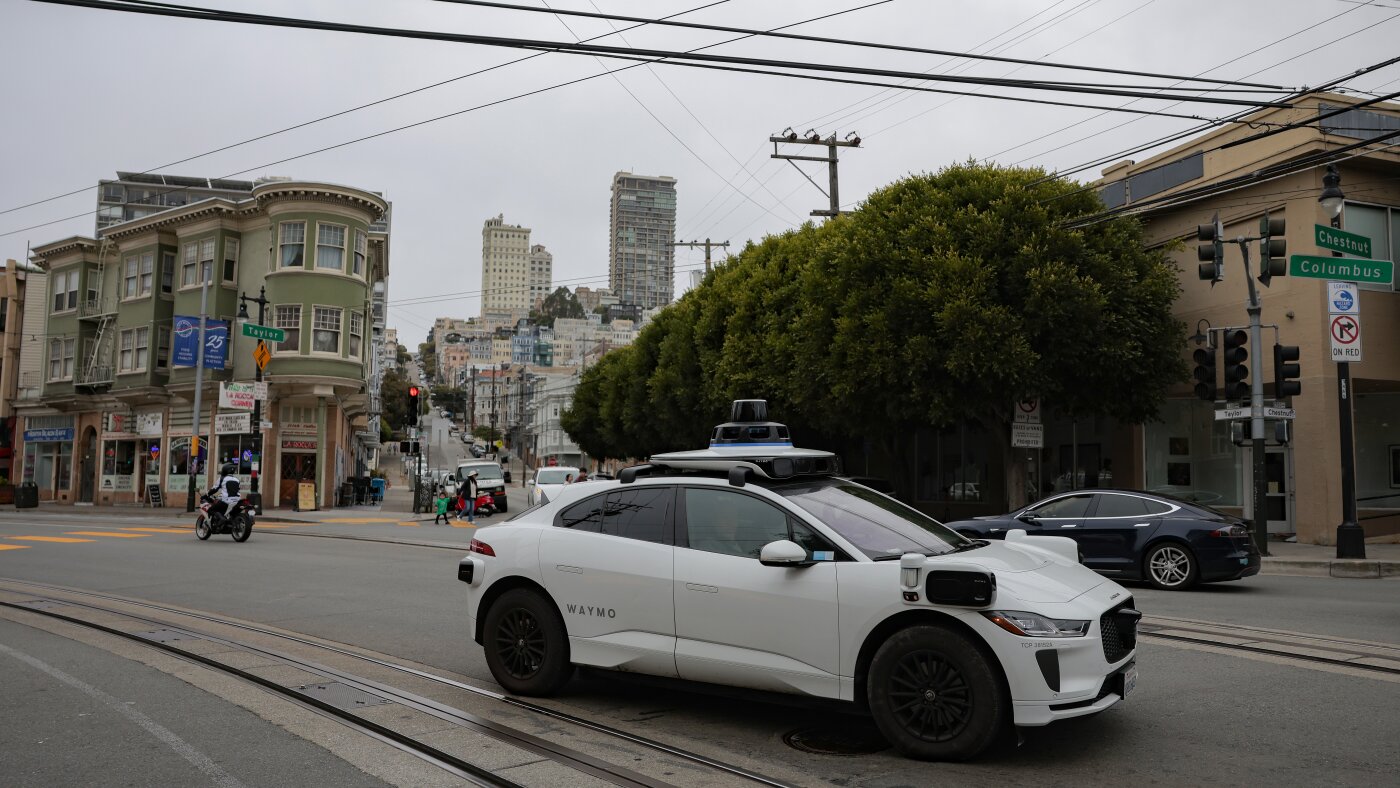
Waymo called the cops on teen riders, raising privacy concerns
-

 Los Angeles, Ca2 hours ago
O.C. police prep for beach, theme park ‘takeovers’ promoted on social media
-

 Detroit, MI2 hours ago
Detroit city leaders to DHS: Stop ICE pursuits which endanger the community
-

 San Francisco, CA2 hours ago
SF Supervisor Jackie Fielder hosts listening session after medical leave
-

 Dallas, TX3 hours ago
The Stewpot artists find healing, purpose and income through art in Dallas
-

 Miami, FL3 hours ago
Can Jason Marshall push for a starting spot – The Splash Zone 7/10/26
-

 Boston, MA3 hours ago
Police investigating shooting in Downtown Crossing – Boston News, Weather, Sports | WHDH 7News

