Oklahoma
Oklahoma’s transition to managed Medicaid brings new benefits, challenges for providers, patients


Amanda Paul was inspired to become a speech-language pathologist because of her daughter, who experienced language and learning problems as a child. Now, Paul runs her own clinic in downtown Chickasha, where she serves mostly Medicaid families.
She uses shelves filled with toys to connect with kids with autism, Down syndrome and sensory issues, and she teaches them how to communicate. She does all of this while handling the day-to-day operations of her rural, independent practice.
“I do it all. I’m the secretary, the speech path, the janitor. It’s all me,” Paul said.
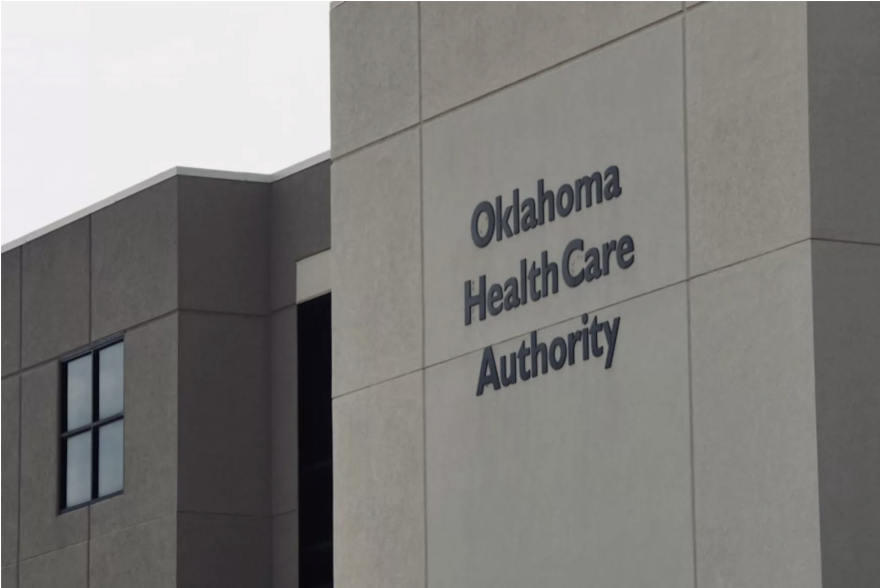
Paul said her job has become much harder in the past few months as the state transitions to managed Medicaid, or SoonerSelect. In a 10-month turnaround, the Oklahoma Health Care Authority (OHCA) went from paying providers to paying private companies to coordinate Medicaid care.
The state contracted with the medical plans Humana Healthy Horizons, Aetna Better Health and Oklahoma Complete Health, which also runs Oklahoma’s Children Specialty Program. They went live April 1.
A month into the new system, Paul said she only received about 5% of the claims she sent out. She’s had to cancel client visits and spend late nights figuring out why she wasn’t getting paid.
“My blood pressure is normally under control. Last week, it was 191 over 101 because of the stress,” Paul said.
Jillian Taylor
/
StateImpact Oklahoma
But she kept seeing patients. That was the case for multiple providers in mental health and occupational therapy, who told StateImpact they waited weeks to receive only small portions of their payments. They all continued seeing patients for free until they mostly resolved their issues with the plans. Paul said she’s still working on that. Even now, only one plan has given her some checks from May, while the other two have provided about half of them from April.
As of May 13, 616,224 Oklahomans on Medicaid are now seeing their medical care coordinated by private insurance companies instead of OHCA. Proponents say the change incentivizes preventative care and its rollout has been going well. But it has caused problems for some Oklahomans on Medicaid and the smaller providers, like Paul, who are serving them.
What is managed care and how did Oklahoma get it?
OHCA began its transition to SoonerSelect in 2022 after Gov. Kevin Stitt signed Senate Bill 1337 — authored by Sen. Greg McCortney (R-Ada) and Rep. Marcus McEntire (R-Duncan) — and Senate Bill 1396 — authored by McCortney and Rep. Kevin Wallace (R-Wellston).
SB 1337 required OHCA to enter capitated contracts with entities to deliver Medicaid services. It left out the state’s aged, blind and disabled populations, meaning they will still be served under the OHCA-led Medicaid program, SoonerCare.
SB 1396 added to an already existing Supplemental Hospital Offset Payment Program, which taxes hospitals and uses collected fees to attract more federal money. That total is redistributed to participating hospitals. The bill brought an opportunity to invest additional funding into hospitals, and they received an accelerated payment of $252.4 million in April.
Since those bills were signed, OHCA has been working to make providers and members aware of the transition through things like newsletters, social media posts, town halls and provider meetings.
SoonerSelect health plan enrollment began Feb. 1 and ended March 10, and if members didn’t actively choose a plan, OHCA enrolled them in one on their behalf. OHCA’s Public Information Officer Emily Long said at the end of open enrollment, about 20% of Oklahomans had actively chosen a plan.
Oklahoma’s Medicaid Director Traylor Rains said to help the agency maintain its oversight role, OHCA created a 20-person operation division that specifically focuses on SoonerSelect. They also brought on some consultants to help them meet the needs of managed care.
Long said the transition to SoonerSelect allows Oklahoma to achieve goals like improving health outcomes, customer satisfaction and investing in preventative primary care. Each of the plans offers a list of unique benefits, including monetary incentives for attending well-child and primary care visits, making care managers available to members and waiving copays for certain services.
Problems for providers
Rains said the state’s contract requires the insurance companies to pay 90% of all clean claims in 14 calendar days.
“That claim coming into the managed care plan has to have the right provider information on it … and match all the editing criteria,” Rains said.
The operation team receives reports from companies that it will use to verify if plans meet that target. If they don’t, they could face monetary penalties.
The Oklahoma Health Care Authority found challenges early in the transition, including errors in processing claims and issues with direct deposits and call centers. They sought to address those through multi-week office hours with the plans and provider-specific town halls. Plans also offer advance or interim payments to providers experiencing cash flow issues.
StateImpact reached out to Oklahoma’s three medical-managed care plans about the transition. Humana Healthy Horizons interviewed with StateImpact. Aetna Better Health and Oklahoma Complete Health sent statements. Those are included at the end of the article.
Humana Healthy Horizons in Oklahoma CEO Joseph Fairbanks said 99.9% of the plan’s clean claims are being paid out in 14 days, and their average for claims processing is within six days of receipt.
Some of the issues Paul said she struggled with included getting her claims for one plan through the online provider portal, Availity. She also found out later that she had been billing incorrectly for another plan. Those issues took a lot of late nights to solve, and she said she’s still stressing week to week as she waits for more payments to come in. She’s had to consider closing down at points.
Fairbanks said although overall feedback has been positive from providers, certain ones, like Paul, are more likely to have issues.
“By their nature, because they’re either individually run provider clinics or they have a smaller staff, they don’t have as many resources as some of the larger providers did to prepare. So we have to help them substantially more than we do some of the larger providers,” Fairbanks said.
The Oklahoma State Medical Association President Dr. Edgar Boyd said it can be challenging for providers to have to choose between paying their bills and serving their patients. It’s a choice, he said, they don’t want to have to make as the transition continues.
“I don’t want to see patients cut off from access to care, just because their provider can’t afford to float the loan any longer,” Boyd said.
Problems for patients
Boyd, a practicing otolaryngologist in Muskogee, said despite communications from OHCA, he worried his Medicaid patients weren’t prepared.
“I would see patients in my office in early March and ask them if they had selected their new insurance company for their child,” Boyd said. “‘Oh no, we have SoonerCare Medicaid.’ I go ‘Well it’s changing come April 1st.’ ‘Oh, we didn’t know anything about that.’”
Stillwater resident Donna Waldrop said she tried to prepare as much as she could before the transition. Waldrop receives Medicaid as a live-in caregiver for her best friend, and she chose Humana Healthy Horizons because most of her doctors were taking it. But she said she had to change some of her specialists because they didn’t take Humana.
Specialists like her rheumatologist. She said they canceled her appointment the day before in May despite a 90-day continuity of care period required by the Oklahoma Health Care Authority. This means that Oklahomans should be able to see their regular providers through June even if they’re contracted with a different insurance than what they chose.
That meant she had to push back getting surgery for a torn ligament in her hip because she needed the specialist’s approval.
“I am just beside myself because I had all these things planned out, specialists I was supposed to go see in May to try to get my hip done by the summer. Because I am a caregiver. I have to plan this out very carefully. … I probably will have to live with this for at least another year,” Waldrop said.
Waldrop said she will also lose her psychiatrist because the company they work under will no longer take Medicaid after the continuity of care period. A company spokesperson from Lifestance, an online behavioral health company, told StateImpact why in an email:
“We work hard with each insurer to ensure sustainable levels of investment in mental health care. Unfortunately, the significant regulatory burden associated with accepting SoonerCare, combined with reimbursement levels that do not cover the cost of care, made it impossible for us to continue to contract with SoonerCare at the moment. We remain committed to continuing to engage with the state to identify a sustainable path forward for mental health care.”
Waldrop said as of late May, she changed her plan to Oklahoma Complete Health, allowing her to get a delayed appointment in July with her rheumatologist. She said she’s worried about further delaying surgery for both herself and her friend.
“It is eventually going to cause me to not be able to work if it gets worse. … This is the kind of injury that needs surgery to fix. If not, you live with it, and you become more disabled. If this is not fixed, I will need a hip replacement. I’m 45,” Waldrop said.
Positive potential
Although some providers and people say this transition has been difficult, others disagree. Stigler Health and Wellness Center CEO Teresa Huggins said they felt prepared for the transition and supported by the plans.
She looks forward to seeing the impacts this model could have on preventative care through some of its added benefits. Her goal is to use this transition to strengthen the center’s care model.
“We hope that those outcomes will be better quality indicators, better health outcomes for them, and then that would result obviously in less cost to the state,” Huggins said.
Oklahoma’s Medicaid Director Traylor Rains said overall, the Health Care Authority feels this transition has gone as well as the agency could have expected on a short turnaround. Long said Oklahoma has improved from where it was at the beginning of April when the rollout of SoonerSelect launched.
“We are continuing to work with our partners at the plans and providers to resolve any other issues that come up because it’s very important for us for our providers to feel that they are supported and that we can help them in any way that we can,” Long said.
But as the transition continues, providers like Amanda Paul and patients like Donna Waldrop are dealing with the growing pains.
Statements from contracted entities
Aetna Better Health:
Aetna Better Health of Oklahoma is deeply committed to improving health outcomes for SoonerSelect members. We recognize that the state’s transition to managed care is significant and are working closely with our members and the state to ensure coverage is continued and enhanced for all SoonerSelect members both in the short and long term.
-Aetna Executive Director of Communications Alex Kepnes
Oklahoma Complete Health:
Oklahoma Complete Health is excited about the opportunity to deliver innovative solutions to address the drivers of health, remove barriers to care and deliver better health outcomes for Oklahomans.
We believe primary care is the foundation of comprehensive health care. It is imperative that we educate our members about the importance of choosing and working closely with their primary care providers.
To assure continuity of care for members, Oklahoma Complete Health is honoring all OHCA prior authorizations.
If a provider holds a current authorization issued by OHCA, no further prior authorizations requests need to be submitted unless notified by Oklahoma Complete Health.
-Oklahoma Complete Health Chief Medical Officer Dr. Lynn Mitchell
Additional Resources:
- Oklahomans have until the end of June to change their plans. They can call 800-987-7767, option 5 to talk with choice counselors.
- OHCA SoonerSelect Contact: SoonerSelect@okhca.org
- Provider resources are available on OHCA’s website
- Member resources are available on OHCA’s website
StateImpact Oklahoma is a partnership of Oklahoma’s public radio stations which relies on contributions from readers and listeners to fulfill its mission of public service to Oklahoma and beyond. Donate online.


In this week’s Your Vote Counts, Oklahoma’s Own Scott Mitchell leads Jason Dunnington and Sen. Paul Rosino in a discussion about new Oklahoma laws, including those addressing data centers. Other topics include inflation and the ongoing impact of the war in Iran.

Looking for the perfect spot to celebrate Independence Day in Oklahoma this year? From massive fireworks displays over Grand Lake to food truck festivals and live music across the OKC metro, communities are pulling out all the stops to celebrate the Declaration of Independence. Grab your lawn chairs, round up the family, and get ready for an unforgettable week of summer fun. Here is your ultimate guide to the best Fourth of July events happening right in your backyard!
Key takeaways
- The bigger picture: Oklahoma communities are going all out for Independence Day in 2026, with celebrations spanning from Norman’s four-day Fourth Fest to major fireworks displays in Edmond, Tulsa, and on Grand Lake — giving families across the state plenty of options close to home.
- More details: Highlights include Liberty Fest in Edmond, one of the largest fireworks displays in the metro area, the Duck Creek Fireworks on Grand Lake featuring a War Bird flyover tribute synchronized to patriotic music, and Tribute to Liberty in Midwest City, which combines live music, a laser show, and fireworks in honor of the Declaration of Independence’s 250th anniversary.
- Why this matters: This year’s celebrations carry extra weight as part of America’s semiquincentennial, with several events — including Tribute to Liberty and the Duck Creek Fireworks — built around honoring both the nation’s founding and the service members who’ve defended it.
- Date: 9:45 p.m. July 1-4
- Location: Reaves Park; 2501 S Jenkins Ave., Norman
This year’s Fourth Fest is bigger than ever before, spanning four days. The city has added additional programming across multiple parks. Before the fireworks, enjoy a wide range of attractions including bouncy houses, local vendors, food trucks, pony rides, and a petting zoo. The fireworks show begins at 9:45 p.m. on July 4.
- Date: 8:30 p.m. July 3
- Location: Scissortail Park, 300 SW 7th St., Oklahoma City
OKCPHIL’s Red, White, and Boom concert is a high-energy celebration that brings the community together for an unforgettable summer evening of music. The Oklahoma City Philharmonic performs a vibrant program of American classics, fan favorites, and patriotic anthems.
- Date: 6-10 p.m. July 3
- Location: Boomer Lake Park; 2310 E Lakeview Road, Stillwater
This Independence Day celebration will include area vendors, food trucks, hometown hospitality, and a fireworks show. Free parking will be available at Stillwater High School’s Pioneer Stadium.
- Date: July 3-4
- Location: Yukon City Park & Chisholm Trail Park, 2200 S Holly Ave., Yukon
Bring the whole family to Freedom Fest in Yukon! Experience a lineup of live outdoor concerts, peruse the food trucks on site, and enjoy the activities for kids.
- Date: 2-10 p.m. July 4
- Location: Buck Thomas Park, 1903 NE 12th St., Moore
Enjoy one of the largest fireworks shows in the state with food trucks, vendors, and activities throughout the day. Admission is free. Fireworks will begin around 9:45 p.m.
- Date: 7-10 p.m. July 4
- Location: Joe B. Barnes Regional Park, 8700 E Reno Ave., Midwest City
Bring your chairs and join Midwest City in its celebration of the 250th anniversary of the Declaration of Independence. Enjoy food trucks, games, The Wise Guys performing live on stage, a huge fireworks display, and a laser show.
- Date: 9:30 p.m. July 4
- Location: University of Central Oklahoma; 100 N University Drive, Edmond
Liberty Fest’s grand finale is one of the largest fireworks displays in the metro area. Bring your entire family to witness the spectacular show. Parking is available in lots on campus.
- Date: July 4
- Location: Grand Lake O’ the Cherokees, 32888 S 4507 Road, No. 8123, Afton
Duck Creek Fireworks is the longest-running tradition on Grand Lake. Keep an eye out for the highly anticipated War Bird flyover, a tribute to the men and women serving overseas. The fireworks, beginning at sunset, will be synchronized to patriotic music.
- Date: July 4
- Location: River West Festival Park, 2100 S Jackson Ave., Tulsa
Celebrate America’s independence at Tulsa’s annual FreedomFest celebration. This celebration includes all-ages entertainment and a variety of activities and tasty concessions. FreedomFest features one of the largest free fireworks displays in Oklahoma.


Odds of winning the Powerball and Mega Millions are NOT in your favor
Odds of hitting the jackpot in Mega Millions or Powerball are around 1-in-292 million. Here are things that you’re more likely to land than big bucks.
The Oklahoma Lottery offers several draw games for those aiming to win big.
Here’s a look at June 27, 2026, results for each game:
Winning Powerball numbers from June 27 drawing
03-16-28-30-59, Powerball: 11, Power Play: 2
Check Powerball payouts and previous drawings here.
Winning Lotto America numbers from June 27 drawing
03-08-18-22-39, Star Ball: 06, ASB: 02
Check Lotto America payouts and previous drawings here.
Winning Pick 3 numbers from June 27 drawing
3-6-9
Check Pick 3 payouts and previous drawings here.
Winning Cash 5 numbers from June 27 drawing
15-17-20-25-26
Check Cash 5 payouts and previous drawings here.
Winning Powerball Double Play numbers from June 27 drawing
02-26-34-43-45, Powerball: 15
Check Powerball Double Play payouts and previous drawings here.
Winning Millionaire for Life numbers from June 27 drawing
26-32-38-51-52, Bonus: 05
Check Millionaire for Life payouts and previous drawings here.
Feeling lucky? Explore the latest lottery news & results
Are you a winner? Here’s how to claim your lottery prize
- Sign Your Ticket: Please make sure to sign and complete the back of your ticket
- You have 180 days from the draw date to claim your prize.
- Prizes up to $600: Can be claimed at any Oklahoma Lottery retailer or at the Oklahoma Lottery Winner Center, located at 300 N. Broadway in downtown Oklahoma City. Hours of operation are Monday – Friday 7:30 am – 4:00 pm.
- Prizes from $601 to $49,999: These can be claimed at the Oklahoma Lottery Winner Center or by mail. Payments can be issued as a check or direct deposit (ACH). Claiming in person requires a photo of the front and back of the winning ticket, a valid ID, official proof of Social Security number and a completed claim form.
- Prizes of $50,000 or more: These can be claimed in person at the Oklahoma Lottery Winner Center or by mail. Payment options include check or ACH. Bring a photo of the front and back of the winning ticket, proof of Social Security number, a completed claim form, and valid ID.
Mail-in Claims: Mail the original signed ticket and a completed claim form to the Oklahoma Lottery, P.O. Box 548810, Oklahoma City, OK 73154. For direct deposit, include a voided check or bank letter with your account details. Non-winning tickets are not accepted, and Oklahoma Lottery assumes no responsibility for lost or stolen mail.
For additional details, refer to the official Oklahoma Lottery claim page.
When are the Oklahoma Lottery drawings held?
- Powerball: 9:59 p.m. CT Monday, Wednesday and Saturday.
- MEGA Millions: 10 p.m. CT Tuesday and Friday.
- Lucky for Life: 9:38 p.m. CT daily
- Lotto America: 9:15 p.m. CT Monday, Wednesday and Saturday.
- Pick 3: 9:10 p.m. CT daily.
- Cash 5: 9:10 p.m. CT daily.
- Powerball Double Play: 9:59 p.m. CT Monday, Wednesday and Saturday.
- Millionaire for Life: 10:15 p.m. CT daily.
This results page was generated automatically using information from TinBu and a template written and reviewed by an Oklahoma editor. You can send feedback using this form.
-

 Seattle, WA3 minutes ago
Seattle Mariners acquire INF Buddy Kennedy from San Francisco
-

 San Diego, CA10 minutes ago
Feds Will Finally Help Oceanside 73 Years After Admitting Fault for Its Disappearing Beaches
-

 Milwaukee, WI13 minutes ago
Brewers open 4-game series with the Reds
-

 Atlanta, GA18 minutes ago
Atlanta Braves Manager Makes Honest Statement After Giants Game
-

 Minneapolis, MN25 minutes ago
MN weather: Extreme Heat Warning issued for Minnesota Monday
-

 Indianapolis, IN28 minutes ago
Where to find cooling stations in central Indiana
-

 Pittsburg, PA33 minutes ago
Pittsburgh horror film history honored with new award
-

 Augusta, GA40 minutes ago
Augusta Fire Department holds hurricane season preparedness event

