Oklahoma
Bye to the Big 12 and hello SEC: It's party time for Texas and Oklahoma


AUSTIN, Texas (AP) — Bye-bye Big 12, hello SEC. Texas and Oklahoma are finally making their long-awaited conference switch.
But first, it’s time to party with Bevo (the longhorn) and Pitbull (the human).
The three-years-in-the-making switch to the Southeastern Conference for two programs that were co-founders of the Big 12 in 1996 officially happens Monday.
And for their move to a league where “It Just Means More,” Texas and Oklahoma have scheduled big campus celebrations Sunday and Monday with carnivals, live music and fireworks. Oklahoma’s even stretches to events statewide.
The SEC Network planned live programming from both campuses over the two days, and Longhorns and Sooners fans had their first chance to buy SEC-branded school merchandise.
“This is a day we have been building toward for years,” Texas athletic director Chris Del Conte said.
It’s a moment college sports in general has been building toward in the era of major realignment. The Texas and Oklahoma break from the Big 12 helped trigger myriad conference shifts with more on the way. By the first kickoff of the 2024 season, 11 so-called Power 4 programs will be in new conferences.
The Big Ten will grow to 18 teams with USC, UCLA, Oregon and Washington poached from the Pac-12. The beleaguered West Coast league also lost Arizona, Colorado, Utah and Arizona State to the Big 12, and California and Stanford to the Atlantic Coast Conference. SMU leaps from the American Athletic Conference to the ACC on Monday as well.
As for Oklahoma and Texas, they originally planned to join the SEC in 2025, but ultimately reached a financial deal with the Big 12 for an early exit. And they leave with a whole lot of hardware.
Between them, the Sooners (14) and Longhorns (four) won 18 Big 12 football titles in 25 years, with Texas winning the crown last season for the first time since 2009.
In its final year in the league, Texas won 15 league regular season or tournament championships across all sports, and national titles in volleyball and rowing. Oklahoma capped its final season with its dominant softball program winning its fourth consecutive national title in May. The Sooners beat Texas in the final.
“Texas brings more tradition, more talent, more passion and more fight,” to the SEC, the school said on its athletics website.
All that winning will be much more difficult to duplicate in the SEC. Oklahoma opens its first SEC football schedule at home against Tennessee on Sept. 21. The Longhorns debut at Mississippi State on Sept. 28.
Since the start of the College Football Playoff in 2014, SEC schools have won the championship six times.
Texas (2005) and Oklahoma (2000) were the only two schools to win national titles in football while in the Big 12.
Some traditional rivalries will be stitched back together, and some torn apart.
The Texas-Texas A&M rivalry is reborn. It had been on hiatus since A&M left the Big 12 for the SEC in 2012. Oklahoma’s Bedlam rivalry with Oklahoma State is ruptured.
Texas spiced things up with Texas A&M last week when it poached Aggies baseball coach Jim Schlossnagle to Austin. At his introductory news conference, Schlossnagle warned Longhorns fans that the SEC is the “major leagues” of college baseball. The league has won the past five national championships.
Texas and Oklahoma planned for thousands of fans to join their celebrations.
Texas set up a central campus carnival. Fans will get autograph sessions with team coaches, and a chance to pose with the Bevo longhorn mascot for photos in the afternoon.
Sunday night includes a scheduled concert by “Mr. Worldwide” pop star Pitbull on a stage underneath the campus’ iconic clock tower.
Oklahoma’s celebration started Sunday night with a “Race to the SEC” 5k race through the heart of campus, with midnight sales of SEC merchandise and fireworks.
Monday morning, former Sooners coach Barry Switzer will co-host a celebration breakfast in Tulsa and Oklahoma will host a campus party at the football stadium with live music and entertainment.
“We couldn’t be more excited to join the SEC. Our teams are poised for success and look forward to the competition with many of America’s most outstanding universities,” Oklahoma athletic director Joe Castiglione said.
___
AP college sports: https://apnews.com/hub/college-sports



Published July 14, 2026
TVSHKA HOMMA, Okla. – The Choctaw Nation hosted a new and exciting Boom in the Valley Friday, July 3 with more than 400 colorful drones lighting up the Tvshka Homma sky. Almost a dozen food trucks, three Choctaw artists’ booths, activities that included cultural games such as a stickball toss and rabbit sticks, as well as karaoke, dunk tank, face painting, and more were set up on the Historic Choctaw Nation Capitol Grounds. All ages from across the region attended the free, public celebration of America’s 250th anniversary.
Photo

Photo by Choctaw Nation

Sen. Paul Rosino, R, Senate Health & Human Services Chairman, is renewing an effort to create a single Oklahoma agency focused exclusively on children after similar legislation failed to advance last year.
Senate Bill 1570 passed the Senate but never received a hearing in the House. Sen. Rosino, who is behind the proposal, says growing concerns about child welfare and the well-being of Oklahoma children prompted her to bring the idea back.
A “holistic approach” to children’s services
The proposal would combine several child-focused programs and agencies under one umbrella, including child welfare, foster care, behavioral health services, the Office of Juvenile Affairs and other youth-related programs.
The goal, he said, is to create a more coordinated system that addresses the full range of children’s needs.
“We need to have a sole agency that really concentrates on kids,” said Sen. Rosino. “By having a holistic approach, everything in one agency would be helpful to children.”
Concerns about child welfare
Sen. Rosino says Oklahoma must do more to protect abused and neglected children, noting that intervention doesn’t always mean removing a child from a home.
In some situations, he said, families simply need education, support or services. However, safety concerns can require children to be placed elsewhere.
He also pointed to growing behavioral health challenges facing Oklahoma adolescents as another reason for restructuring services.
DHS already handling broad responsibilities
The proposal is not intended as criticism of the Oklahoma Department of Human Services, he said.
DHS currently oversees a wide range of programs, including aging services, childcare, family support and services for people with intellectual and developmental disabilities.
“DHS is a behemoth,” said Sen. Rosino. “Those people work very hard over there.”
Still, the senator believes child welfare is an area where Oklahoma can improve by creating a dedicated agency focused solely on children.
Not a quick fix
The senator acknowledged the proposal is not a “silver bullet” and would take time to implement.
He said he worked with stakeholders, including foster care advocates, and revised the legislation multiple times based on feedback.
According to the proposal, most existing funding would move with the programs into the new agency, limiting the need for significant new spending outside of administrative costs.
Building support for a long-term change
Sen. Rosino described the effort as a multi-year project requiring lawmakers to understand why a structural change is needed.
While disappointed the bill stalled in the House last year, he said she believes support is growing.
“It’s going to take some time to change hearts and minds,” said Sen. Rosino. “I’m hoping this year we can make some headway there.”
Key Takeaway
Supporters say a standalone children’s agency would give Oklahoma a more focused approach to child welfare, foster care and youth behavioral health, while opponents and lawmakers continue to weigh the costs and logistics of a major government reorganization.
Oklahoma
OKFB pleased with newly proposed settlement in long-running State of Oklahoma poultry case | Oklahoma Farm Bureau

Oklahoma Farm Bureau President Stacy Simunek released the following statement after the State of Oklahoma and 11 Arkansas-based poultry announced Monday, July 13, that a nearly $44 million settlement had been reached in the decades-long lawsuit regarding the application of chicken litter in the Illinois River Watershed.
Oklahoma Farm Bureau members are pleased with the proposed settlement reached between the State of Oklahoma and 11 poultry companies operating in Oklahoma’s Illinois River Watershed over the state’s long-running lawsuit that was based on outdated science and production methods.
The original lawsuit, filed in 2005, created uncertainty for family farmers and ranchers for more than two decades, and this agreement provides a way for Oklahoma farm and ranch families to continue their important work to feed Americans without being unnecessarily burdened.
We appreciate Attorney General Drummond working with the poultry industry to reach a proposed solution that allows the poultry companies and our family farmers to continue to produce the food products we all rely upon while ensuring our shared natural resources are safeguarded for generations to come.
Our state’s farmers and ranchers, including poultry producers in the Illinois River Watershed, are committed to implementing voluntary environmental stewardship practices each and every day to ensure their land is productive and our rural communities are protected.
-
 Entertainment5 minutes ago
‘Hail Satan? Not me.’ Charley Crockett fires satanic duo Twin Temple, so Jack White hires them
-
 Lifestyle11 minutes ago
It’s time for the night trip to the beach — the grunion are running
-
 Politics17 minutes ago
After lawsuit, ICE pauses construction of Bay Area detention facility
-
 Science23 minutes ago
Anger grows in Boyle Heights as warehouse fire leaves stench, flies and vermin in its wake
-
 Sports29 minutes ago
Spain delivers surprise rout of France, clinches berth into World Cup final
-

 World41 minutes ago
US says latest Iran strike wave over, IRGC claims damage to US Naval HQ
-
 News1 hour ago
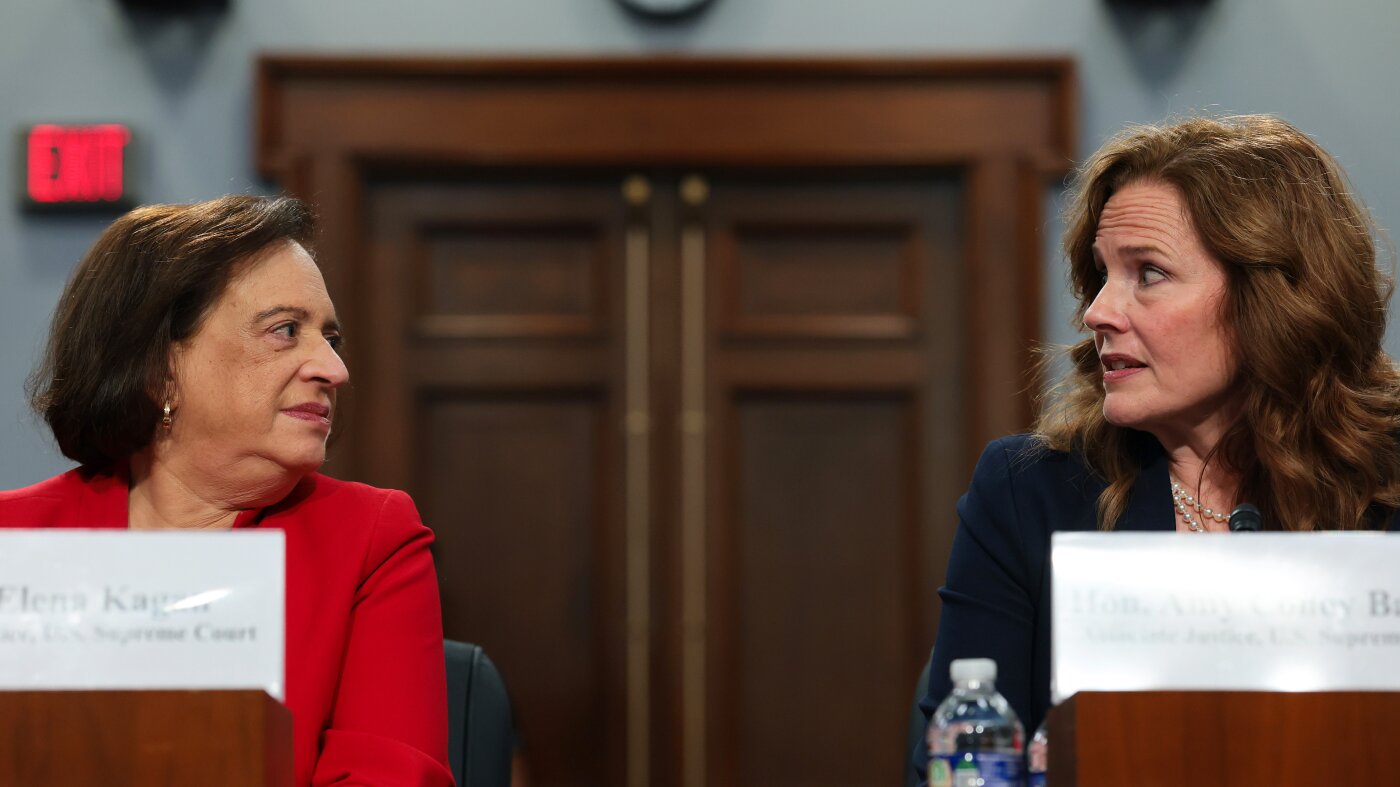
Supreme Court Justices give chilling accounts of threats to their safety
-

 Los Angeles, Ca3 hours ago
Stabbing at Chino Hills liquor store ends in attempted murder arrest

