North Carolina
‘Very competitive’: Inside the Kamala Harris campaign’s plan to flip NC, defy history


Kamala Harris’ new presidential campaign views North Carolina not just as a potential bonus prize on the electoral map this fall, but the possible linchpin in her path to victory against her Republican rival, former President Donald Trump.
Democrats started spending money early on in a state they insisted they could win in the presidential contest. Now senior campaign advisers tell McClatchy that Harris’ replacement of President Joe Biden as the presumptive Democratic nominee has not only scrambled the race, but the map as well, raising the odds that Americans will be waiting Election Night on the results from North Carolina and Arizona — not just Pennsylvania and Wisconsin — to learn who has won the White House.
A senior campaign official said that North Carolina Gov. Roy Cooper’s decision on Monday night, publicly withdrawing himself from consideration to join the ticket as Harris’ vice president, had no impact on the calculus driving their strategy in the state.
That strategy, officials said, has been fueled instead by internal data focused on the kinds of new voters moving into the state, modeling the electorate and their propensity to vote, and examining special election and off-year election results — data that holds regardless of Cooper’s choice and that campaign officials believe is far more predictive than head-to-head polling conducted months in advance.

And all of that data is telling Harris’ advisers that North Carolina’s fast-changing electorate will make for a “very competitive” race in November, the official added.
“I don’t really view it as a Blue Wall path, or a Southern path, or a Western path. I don’t think that’s how people should think about this. There are seven or-so states, all of which have been extremely close cycle after cycle,” Dan Kanninen, battleground state director for the Harris campaign, said in an interview.
“They’ve been effectively toss-ups,” Kanninen added. “So I think all seven of those are gonna be close. The difference is, we have built an infrastructure designed to win a close race. The Trump campaign has not.”
DATA DRIVING CONFIDENCE
The Biden campaign — now transformed into the Harris campaign — has made frequent stops in North Carolina. Harris will make her eighth visit of the year and her first as a presidential candidate to the state next week, and will bring her yet-to-be-announced running mate to Raleigh with her.
On paper, Harris faces an uphill battle in a state that has gone for a Democratic candidate for president only twice in the last 50 years: for Jimmy Carter in 1976, and Barack Obama in 2008.
Since the last presidential election, North Carolina Republicans have grown their registration numbers by 156,000, while Democrats have shed 126,000 registrants, according to the North Carolina State Board of Elections – numbers that on their face appear to challenge Harris in her quest to exceed Biden’s 2020 performance, when he lost the state to Trump by 1.3% of the vote, or 74,000 votes, his narrowest loss that year.
That is just the continuation of a long trend that began in 2016, when Democrats held a voter advantage of nearly 645,000 over Republicans, said Matt Mercer, communications director for the North Carolina Republican Party.
“If you want to talk about the impact that Donald Trump has had in North Carolina,” Mercer said, “it’s Democrats shedding half a million voters to either Republicans or unaffiliated voters. That is a stark repudiation of a party that essentially controlled North Carolina for a century.”
But the Harris campaign told McClatchy and N&O their data indicates voter trends across the state are working in their favor, with 57% of newly registered voters in North Carolina since 2020 being millennial age or younger, 34% identifying as Black, Hispanic, Asian American or Pacific Islander, and 38.7% being registered as unaffiliated with either party — three cohorts that are increasingly breaking for Harris in their polling.
Campaign leadership is drilling down at the county level on which districts saw Nikki Haley — Trump’s strongest and most moderate challenger in the Republican primary — overperform her statewide total, with 25% or more of the GOP vote, including in New Hanover, typically seen as a state bellwether, and Union, an historically conservative area.
Even still, Kanninen said registration numbers don’t necessarily predict “the electorate that will show up in the fall,” noting the campaign is planning an aggressive push to maximize the state’s one-stop voting system, where residents can turn up at a polling site both to register and vote at the same time.
“What I will tell you is that the on-the-ground enthusiasm that we see in North Carolina has been incredibly strong — maybe historic — in the past week, and we’ve had a campaign that’s been built to capitalize that, in a way the Trump campaign has simply been absent,” Kanninen said. He pointed to a gathering to train volunteers in Greenville days after Harris entered the race that drew nearly 100 people — a relatively sizable crowd in a small city that surprised the campaign.
While both Hillary Clinton, the 2016 Democratic nominee, and Biden both ultimately invested in North Carolina, neither did so until much later in the election cycle, Kanninen noted, placing those campaigns further behind in building the infrastructure he said would be needed to win. The Biden-Harris campaign has been investing in the state since February.
Building out early has allowed the campaign to reach out to a key voting bloc — rural Black voters — earlier than they would have otherwise, and also begin their effort to “cut the margins” of Trump’s support among moderate Republicans and “middle partisans” in rural counties, Kanninen said.
“We put into place infrastructure early — leadership teams on the ground in February and March, building robust teams throughout the spring, now to the point of having 150 staff in North Carolina that will get much, much bigger before the end of the summer,” Kanninen said. “We’re at scale, and building to a greater scale, so that when people start paying much closer attention after the convention and beyond, we’ll have the people, the resources, the volunteers to capitalize on that and drive it, which really matters in a close race.”
ROBINSON ‘MADE POSSIBLE’ BY TRUMP
Confident that the data supports a potential victory, Harris’ campaign has settled on a clear strategy in the state: tying Trump to the Republican candidate for governor, Lt. Gov. Mark Robinson.
North Carolinians have a long history of “ticket-splitting,” choosing candidates of different parties down ballot. But Kanninen argued that Robinson was a creature of Trump’s making, indelibly tied to the former president.
“I don’t think it’s a one-off that Mark Robinson exists in a vacuum from Donald Trump. I think he is made possible by Donald Trump,” Kanninen said.
“Donald Trump endorsed him, and vice versa. He spoke at the convention,” Kanninen added. “And I think there’s no escaping the fact that the sort of politics you see from Robinson looks, feels and sounds just like Donald Trump. And I think that will be on the ballot.”
The Harris campaign believes that Robinson’s record — calling LGBTQ+ Americans “filth,” stating he would not compromise on abortion restrictions and quoting Hitler on social media — will prove toxic to moderate Republicans, Republican women and independents, recreating the coalition that challenged Trump and supported Haley in the GOP primary.
“Those voters are really turned off by that sort of toxic MAGA rhetoric, and Mark Robinson is a direct throughline to Donald Trump. They see that as a sort of MAGA ticket, so to speak,” Kanninen said. “I think that is a winning playbook for people who are new to the state, but do not ascribe to those kinds of politics.”
Mercer said the state Republican Party is prepared for the attacks. “It’s a campaign, right? Both sides do their best to work to define their opponent,” he said.
But the Trump campaign does appear to be taking threats to its hold on North Carolina seriously, taking out a television ad buy in the state starting Thursday.
“I think you’re always looking at solidifying your position,” Mercer said of the ad buy, “and, despite having a strong position, you don’t want to get complacent, either. So it’s treating it with the appropriate levels of concern.”
Neither side is expressing exuberant confidence. Kanninen, for his part, acknowledged the race for the state would come down to the wire.
“There’s some political gravity that I think is true in a place like North Carolina, or in some of the other core battlegrounds,” he added. “They’ve been really close races, they’re destined to be really close races.”
McClatchyDC reporter David Catanese contributed reporting.



North Carolina
March Madness 2026: How to watch the North Carolina vs. Maryland game in the second round of the women’s NCAA basketball tournament

March Madness continues today with the second round of the women’s NCAA tournament. Up next: No. 4 North Carolina vs. No. 5 Maryland. The game tips off at 12 p.m. ET today, airing on ESPN. For a complete breakdown of key dates and how to watch every March Madness game, we’ve got you covered. Here’s a look at how to watch the entire tournament from today’s second round to the Championship Final.
How to watch North Carolina vs. Maryland at the women’s March Madness tournament:
Date: Sunday, March 22, 2026
Advertisement
Time: 12 p.m. ET
TV channel: ESPN
Streaming: ESPN Unlimited, Fubo, DirecTV and more
North Carolina vs. Maryland game time:
The North Carolina vs. Maryland second-round basketball game is on Sunday, March 22. Tipoff is at 12 p.m. ET.
Where to watch the North Carolina vs. Maryland game:
The North Carolina vs. Maryland March Madness game will air on ESPN.
Where to stream March Madness games without cable:
Every game of the 2026 women’s March Madness Tournament will stream on ESPN Unlimited. You’ll also be able to access every game on live TV services like Sling, Fubo, and DirecTV.
ESPN’s streaming platform offers thousands of exclusive live events, original studio shows and acclaimed series that air across ESPN’s suite of seven linear channels, as well as exclusive content on ESPN+, ABC on ESPN, SEC+, ACCNX and more. The new tier costs $29.99/month or $299.99/year.
ESPN Select allows subscribers to access exclusive content only available on the app, and an extensive archive of on-demand content (including the entire 30 For 30 library, select ESPN Films, game replays and more). Whether you purchase a standalone plan, add-on or Disney bundle plan, the service provides access to thousands of sports events for $12.99/month or $129.99/year.
Sling TV’s Day Pass gives consumers the freedom to watch what they want, when they want, without committing to a monthly streaming subscription. Sign up for a single day ($4.99), a weekend ($9.99), or a full week ($14.99) and watch every channel available through Sling Orange, which includes ESPN and ESPN2, and over 30 more channels. No strings attached.
Want to catch a specific sporting event like the women’s March Madness tournament that’s spread across additional channels that Sling Orange doesn’t typically carry? You can customize your channel lineup with a Sports Extra add-on to get additional coverage of ESPNU and more for just a dollar more.
2026 NCAA women’s basketball tournament game schedule
All times Eastern.
Advertisement
Second round:
Sunday, March 22
No. 4 North Carolina vs. No. 5 Maryland: 12 p.m. (ESPN)
No. 2 Michigan vs. No. 7 NC State: 1 p.m. (ESPN)
No. 4 Minnesota vs. No. 5 Ole Miss: 2 p.m. (ESPN)
No. 2 LSU vs. No. 7 Texas Tech: 3 p.m. (ABC)
No. 3 Duke vs. No. 6 Baylor: 4 p.m. (ESPN)
No. 1 Texas vs. No. 8 Oregon: 6 p.m. (ESPN)
No. 5 Michigan State vs. No. 4 Oklahoma: 8 p.m. (ESPN)
No. 3 TCU vs. No. 6 Washington: 10 p.m. (ESPN)
2026 NCAA women’s basketball tournament schedule:
The schedule and locations for the women’s tournament:
-
Selection Sunday: 8 p.m. ET Sunday, March 15 on ESPN
-
Second round: March 22-23
-
Sweet 16: March 27-28 in Fort Worth, TX and Sacramento, CA
-
Elite Eight: March 29-30 in Fort Worth, TX and Sacramento, CA
-
Final Four: Friday, April 3, Mortgage Matchup Center in Phoenix, AZ
-
NCAA championship game: Sunday, April 5, Mortgage Matchup Center in Phoenix, AZ

North Carolina is picking up the pieces after a heartbreaking March Madness loss to VCU. The Tar Heels blew a 19-point lead, allowing the sixth-largest comeback in NCAA tournament history, including the largest the first round has ever seen.
They’ve now bowed out of the tournament’s Round of 64 in back-to-back years, and questions are swirling about the job security of head coach Hubert Davis.
Advertisement
Those won’t be answered until early next week, according to ESPN’s Pete Thamel.
“The future of Hubert Davis at North Carolina right now is squarely in flux in the wake of these back-to-back, first-round NCAA tournament exits,” Thamel reported on Saturday. “The sides are expected to talk in the upcoming days, and no decision on Davis’ future is expected until early next week.
“Do not expect Davis to be fired outright. Any kind of departure would be synchronized, likely between he and the school. Hubert Davis is a legend at North Carolina and will be treated with that type of respect.”
Thamel added: “The options here are simple: Keep Davis with significant changes to the staff and program or orchestrate some type of wholesale change to the coaching staff and bring in a whole new regime.”
In other words, even if Davis stays, staff changes are expected.
Outgoing UNC athletic director Bubba Cunningham, who will be replaced by Steve Newmark when Cunningham steps down from his role this summer, reportedly told Field of 68’s Jeff Goodman that he and other administrators are in the process of evaluating the men’s basketball program.
“Every year at the end of the season, it’s important to evaluate all facets of the program and look for ways to improve,” Cunningham said, per Goodman. “The Chancellor, Steve and I are doing that together now and will continue to have discussions over the coming days.”
UNC has historically hired within Tar Heels family
Davis has led the UNC program since April 2021, when he took over for Hall of Fame coach Roy Williams, who guided the Tar Heels to three national championships and five Final Fours over an 18-season tenure.
Advertisement
Draft your Yahoo Fantasy Baseball team for the 2026 MLB Season
In hiring Davis as Williams’ replacement, the school stayed within the Carolina basketball family. Davis played under program legend Dean Smith, another Hall of Fame coach, at UNC from 1988-92 and worked under Williams as an assistant coach from 2012-21.
Davis took the baton and ran with it initially, especially down the stretch of his first season at the helm. The Tar Heels took down rival Duke twice: first in the regular-season finale, spoiling the final home game for retiring Duke head coach Mike Krzyzewski, and then again in the Final Four.
Although UNC fell to Kansas in the national title game, its journey back to that stage inspired confidence in Davis.
Advertisement
Tournament struggles under Davis
Since, however, the Tar Heels have won just two NCAA tournament games, and both of those victories came in 2024, when they were a No. 1 seed after winning the ACC regular-season crown. That year, they lost in the Sweet 16 to Alabama.
Following UNC’s national runner-up finish in 2022, it began the 2022-23 season as the No. 1 team in the AP preseason poll but went on to miss out on the NCAA tournament entirely.
This season, the Tar Heels beat Duke in the first of the teams’ two meetings. But their leading scorer and rebounder, top NBA Draft prospect Caleb Wilson, eventually suffered two injuries, the second of which was a thumb injury that the freshman forward picked up in practice and that required season-ending surgery.
Advertisement
UNC missed Wilson sorely when VCU was mounting its first-round comeback on Thursday. And now Davis’ future, as Thamel reported, is “squarely in flux.”
North Carolina
North Carolina vs. Western Illinois – First round NCAA tournament extended highlights

Women’s Basketball
March 20, 2026
North Carolina vs. Western Illinois – First round NCAA tournament extended highlights
March 20, 2026
Watch the highlights from No. 4 North Carolina and No. 13 Western Illinois’ matchup in the first round of the 2026 women’s NCAA tournament.

Suspect on the run after armed robbery at Christiana Mall in Newark: Police

From the Archives: Hospital has 70-year history in Southwest Florida

Texas A&M drops series vs. Georgia after 8-2 Game 2 loss

Kokua Line: Will smaller airports close in Hawaii? | Honolulu Star-Advertiser

LIVE UPDATES: No. 11 VCU vs. No. 3 Illinois in NCAA tournament. Follow along here.

Florida High School Football Rankings: Top 25 teams – Oct. 21

How old is Bo Nix? What to know about Oregon quarterback ahead of 2024 NFL Draft

Cleary's 21 help Le Moyne down Central Connecticut State 69-64 in OT

99th annual Pony Swim held in Virginia

Indiana Members Credit Union announced as new anchor tenant at Bottleworks District

Video: Former F.B.I. Director Robert Mueller Dies at 81

Trump gives Iran 48-hour ultimatum to reopen Strait of Hormuz or face strikes on power plants

Macron pushes tougher EU digital action ahead of key votes
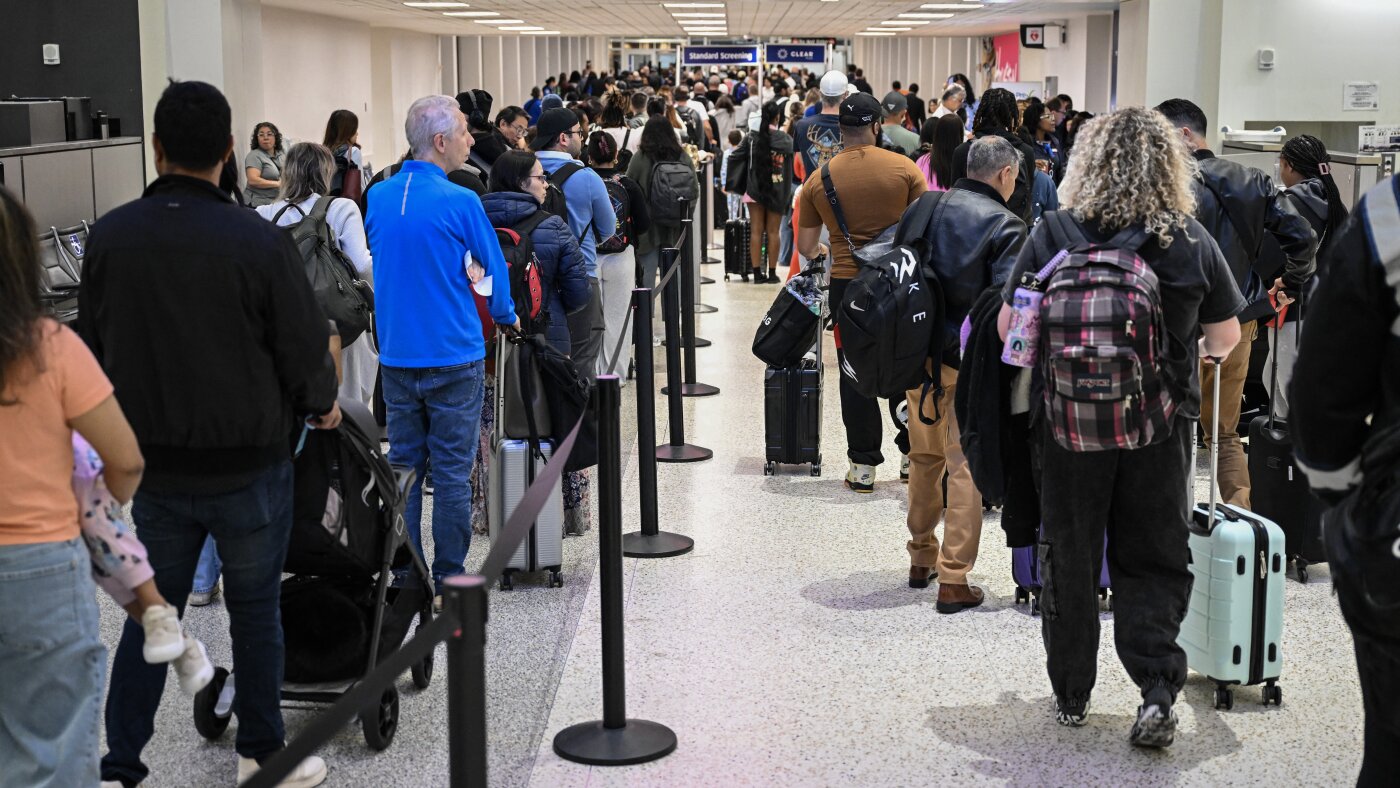
Airport security lines are long. Here’s what to know if you’re flying

Schumer gambit fails as DHS shutdown hits 36 days and airport lines grow
-

 Detroit, MI3 days ago
Drummer Brian Pastoria, longtime Detroit music advocate, dies at 68
-

 Oklahoma1 week ago
Family rallies around Oklahoma father after head-on crash
-

 Nebraska1 week ago
Wildfire forces immediate evacuation order for Farnam residents
-

 Georgia6 days ago
How ICE plans for a detention warehouse pushed a Georgia town to fight back | CNN Politics
-

 Alaska1 week ago
Police looking for man considered ‘armed and dangerous’
-
 Science1 week ago
Federal EPA moves to roll back recent limits on ethylene oxide, a carcinogen
-
 Science1 week ago
H5N1 bird flu spreads to sea otters and sea lions along San Mateo coast, wildlife experts say
-

 Movie Reviews3 days ago
‘Youth’ Twitter review: Ken Karunaas impresses audiences; Suraj Venjaramoodu adds charm; music wins praise | – The Times of India