North Carolina
Trump campaign forced to pay North Carolina city $82k in advance for rally


Former President Donald Trump’s campaign was forced to pay more than $82,000 in advance for this week’s rally in Asheville, North Carolina.
Trump is set to take the stage at Asheville’s Thomas Wolfe Auditorium on Wednesday after paying $82,247.60 to the city for a “last-minute” rally, according to Blue Ridge Public Radio (BPR). The campaign, struggling to effectively blunt the momentum of Vice President Kamala Harris, reportedly first contacted the city about the rally on August 8.
City of Asheville spokesperson Kim Miller told BPR that $22,500 of the amount paid is a two-day rental fee for the auditorium, while “the remainder of the funds go to cover additional costs such as house support, production staff, production equipment rental, and exterior items like queue stanchions and port-a-loos.”
While the campaign paid in advance due to Asheville’s policy for short-notice bookings, Trump has a long history of failing to pay cities for billed rally fees, leaving the White House in January 2021 with at least $850,000 in unpaid rally debt. Most of the bills are still unpaid, including more than $500,000 owed to the city of El Paso, Texas.
Joe Raedle
Newsweek reached out for comment to the Trump campaign via email on Tuesday.
The Trump campaign booked the smaller of two venues at the same complex in downtown Asheville for Wednesday’s rally. The Thomas Wolfe Auditorium has a capacity of just 2,431 people, while a larger arena next door that is not hosting Trump has a capacity of 7,200.
Trump has long been fixated on the size of his rally crowds, boasting about attendance numbers—which were artificially inflated—on more than on occasion. Well-attended rallies for Harris and her running mate Tim Walz have seemingly prompted the former president to become particularly sensitive about the issue recently.
During a news conference at Mar-a-Lago last week, Trump falsely claimed to have held a rally with 100,000 spectators, while also complaining about the press going “crazy” for reporting on high attendance figures at Harris rallies.
In a recent Truth Social post, the former president also pushed a false conspiracy theory that claims images of a Harris rally used artificial intelligence to generate large crowds that “didn’t exist,” pointing to an event last week in Michigan that drew an estimated 15,000 Harris supporters.
Trump campaigning in North Carolina is likely part of an effort to secure victory in a state that has voted solidly Republican in presidential elections since the 1980s, with the lone exception being former President Barack Obama winning the state by a tiny margin in 2008.
But President Joe Biden lost to Trump in North Carolina by less than 100,000 votes in 2020 and a poll released this week shows that Harris is now tied with the former president in The Tar Heel State.



MYRTLE BEACH, S.C. (WPDE) — The Myrtle Beach Police Department announced Monday the arrest of a man wanted in North Carolina.
Officers arrested Leko Jones, 46, who was wanted by authorities in Burlington, North Carolina, according to the Myrtle Beach Police Department.
Jones is charged with attempted first-degree murder and assault by strangulation.
The arrest resulted from a coordinated effort between the Myrtle Beach Police Department’s Patrol Division and Investigations Division, working alongside the South Carolina Law Enforcement Division and the North Carolina State Bureau of Investigation.
Investigators said they safely located Jones and took him into custody.

A section of E. 4th Street in Washington will close next week for sewer line replacement work.
According to the city, E. 4th Street from Hudnell Street to Aycock Street will be closed to local traffic on Tuesday, July 14, and Wednesday, July 15, from 7:00 a.m. to 6:00 p.m.

PINE KNOLL SHORES, Carteret County — A longtime Pine Knoll Shores public servant is preparing to begin a new chapter after nearly two decades with the town.
Ryan Thompson announced he will leave his full-time role with the Town of Pine Knoll Shores on August 12 after 18 years of service.
Thompson said he first came to Pine Knoll Shores in 2008 and has served the town in several roles, including police officer, chief of police, assistant town manager and most recently interim town manager.
In a message shared by the Pine Knoll Shores Police Department, Thompson said serving the community has been the greatest honor of his professional career.
Town of Pine Knoll Shores announces Ryan Thompson to depart after 18 years
He reflected on working alongside first responders through several hurricanes and coastal emergencies over the years, including Irene, Arthur, Matthew, Florence, Dorian, Isaias, Ophelia and Debby.
Thompson also highlighted the community’s response after Hurricane Helene devastated parts of western North Carolina in 2024. He said Pine Knoll Shores helped raise nearly $20,000 to support people impacted by the storm.
Thompson said Pine Knoll Shores has also been a special place for his family. His son served as a part-time firefighter with the Pine Knoll Shores Fire Department, and his wife served as the town’s tax collector.
Although he is leaving his full-time role, Thompson said he is not saying goodbye to the town.
He will begin serving as a public safety risk management consultant with the North Carolina League of Municipalities. He said the new role will allow him to work with cities and towns across the state to help support public safety and local governments.
Thompson also said he will remain with the Pine Knoll Shores Police Department as a part-time police officer.
He said he will also continue helping the town during its transition as Pine Knoll Shores begins the search for its next police chief and works through the town manager transition.
Captain Eric Tellefsen will become interim chief of police after Thompson’s departure.
Thompson said he is confident in the department’s leadership team and thanked the Pine Knoll Shores community for its trust, support and friendship over the past 18 years.
-
 Science4 minutes ago
Anger grows in Boyle Heights as warehouse fire leaves stench, flies and vermin in its wake
-
 Sports10 minutes ago
Spain delivers surprise rout of France, clinches berth into World Cup final
-

 World22 minutes ago
US says latest Iran strike wave over, IRGC claims damage to US Naval HQ
-
 News52 minutes ago
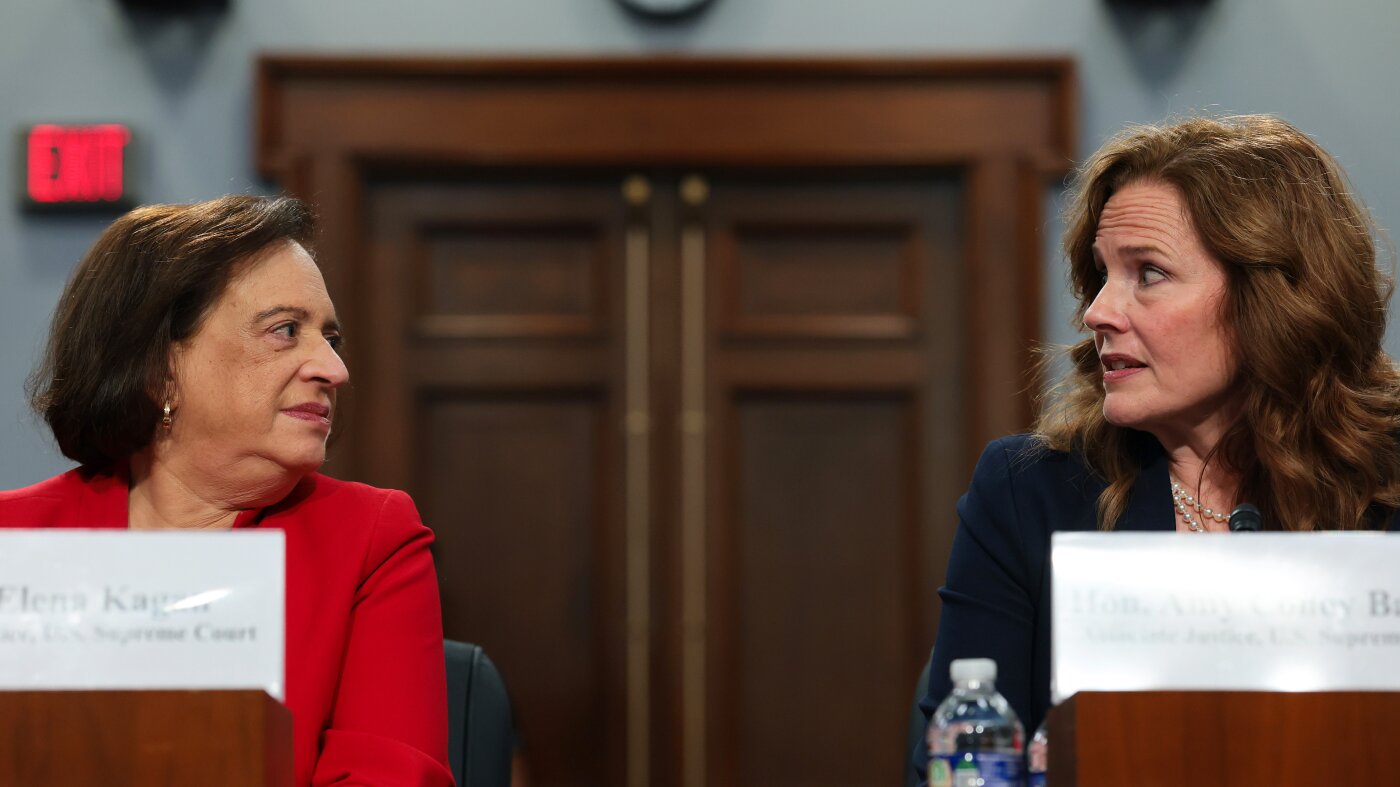
Supreme Court Justices give chilling accounts of threats to their safety
-

 Los Angeles, Ca2 hours ago
Stabbing at Chino Hills liquor store ends in attempted murder arrest
-

 Detroit, MI3 hours ago
A small group of citizens rally for mental health coverage in Detroit
-

 San Francisco, CA3 hours ago
1 dead, 2 missing after boat capsizes near Alcatraz in San Francisco Bay
-

 Dallas, TX3 hours ago
Death penalty off the table for man accused of beheading Dallas motel manager, prosecutors say

