Mississippi
Mississippi Choctaw dictionary project helps tribe preserve language


The United States government removed Jason Lewis’ ancestors from Choctaw tribal land twice. The family had left Mississippi more than 200 years ago, when the federal government forced most of the Choctaw Nation to relocate to Oklahoma after pressuring tribal leaders to sign the Treaty of Dancing Rabbit Creek in a clearing in Mashulaville on Sept. 27, 1830.
Chief Pushamataha had spent years in negotiations with the government for compensation for the theft of Choctaw land. But when the chief died suddenly in 1824 during a lobbying trip to Washington, the government’s consistent pressure won. The tribe lost nearly all of its land and 90% of the state’s Choctaw population was forced to march west on the Trail of Tears, enduring food shortages, disease and death.
The government moved Lewis’ family again from their home in Oklahoma to California in the 1940s as a result of the federal relocation program.
Lewis’ father was the first in the family born in California.
“I was born in Los Angeles, (but) I’ve always known that I’m Choctaw,” Lewis told the Mississippi Free Press on Nov. 3. “My dad, you know, always kept that part of my identity present, but his father was the last person in our family to speak the language. It wasn’t passed on to my dad.”
Lewis became interested in learning the language. At 21, he listened to recorded lessons in the language but still found it challenging to grasp it. In 2009, he decided to move to Mississippi.
“I knew that (this is) the only place where (the language) actually exists, spoken every day,” Lewis said. “I can go to the grocery store near here. I can go to a church. I can go to the government office, and somebody is going to be speaking the language there. That’s only possible in Mississippi. So that’s why I moved here, to start learning the language.”
Lewis now works in cultural content development with the Mississippi Band of Choctaw Indians’ Choctaw Tribal Language Program’s Department of Chahta Immi.
“Now I’m helping keep it alive for future generations, and it’s pretty cool,” Lewis said.
Mississippi’s only federally recognized Indigenous tribe unveiled a new online language resource in early September. The Choctaw Dictionary Project “is a digital resource designed to support language learners of all levels and encourage more daily use of the Choctaw language, both in the workplace and at home.” The dictionary includes more than 5,000 words, but it goes beyond mere word lists and definitions. It also includes both recorded and translated stories and histories.
‘Over 200 years, a lot can happen’
Driving through the dense pine trees in the eastern region of the Magnolia State, or in the flat plains of the Mississippi Delta region, motorists encounter many signs they recognize are not common English. The state has many towns and counties whose names are derived from the Choctaw language, like Tupelo, Oktibbeha, Tougaloo and far more.
Many similar words can also be found in southeastern Oklahoma, where the Choctaw Nation of Oklahoma resides today after relocating there on the Trail of Tears with those remaining behind forming the Mississippi Band of Choctaw Indians. Printed language materials that exist today are now considered “old Choctaw” or Oklahoma dialect because the Choctaw ancestors who were forced to march on the Trail of Tears to Oklahoma brought the language of the time to the old Indian Territory.
Jason Lewis said that before this project, no one had documented the language of the descendants of the Mississippi Choctaw who resisted removal in the 1830s. During the removal, missionaries who were trying to record the language followed tribal members to Oklahoma. There, they published two or three dictionaries between 1850 and 1915, he said. However, that language varied from the traditional language spoken in the Magnolia State.
“The Oklahoma Choctaw have had a writing system since 1815. But basically, the Mississippi Choctaw (language) did not get written down, and it has evolved since 1830,” Lewis told the Mississippi Free Press on Nov. 3. “You know, over 200 years, a lot can happen. A lot can change. It’s very difficult for speakers today in Mississippi to find the words that they say represented in the dictionaries of the past.”
Since 2019, the Tribal Language Program’s Department has been working to collect stories, develop a consistent set of symbols to represent sounds, and define a system for spelling the various tenses and meanings of similar words.
Choctaw Tribal Language Program Director DeLaura Saunders said preserving the language is important with the youngest members of the tribe not using or hearing the language daily.
“So part of our mission is to make sure that we provide language resources, provide this online dictionary, and provide story books or language recordings so that they (will) be able to hear and pronounce the sounds of the chapter language,” she said.
‘The voice of the ancestors’
Mobile-Washington County Band of Choctaw Indians and American Indian Movement Alabama Treasurer Melissa Weaver said she is excited to see another resource that would help with the tribe’s project of establishing a school for Indigenous children of Alabama. She said it would include cultural exhibitions and lessons for those wanting to learn the languages of the tribes that lived in the southeastern region, including Choctaw.
“I’m excited that it will be available to our Choctaw students attending AIM School for Indigenous Children next fall,” Weaver said in a Sept. 24 statement.
“Our Chahta Annopa (Choctaw Language) is a living tradition of who we are as a tribe, and with it, the voices of our ancestors,” Weaver continued. “Speaking Chahta is not just about communicating or conversing; it is a way of honoring our homelands and carrying forward the resilient Chahta legacy.”
The National Endowment for the Humanities awarded the MBCI a grant in 2020. The grant was a significant boost to the project. However, as the department was nearing completion of the dictionary, the Trump administration terminated the $17,000.
“We were unable to archive the interviews and transcriptions because that funding was canceled,” Jason Lewis said on Nov. 5. “Nor were we able to pay for the final website launch, which was supposed to include a voice search function, trained to recognize Choctaw. So, we are still seeking funds to archive the project outputs and pay for the completion of the website.”
He told the Mississippi Free Press that the tribe is working to raise $10,000 to apply as a cash match to a $20,000 grant from the Mississippi Humanities Council’s America 250 Mississippi Grants program, due on Feb. 1, 2026. Lewis said the Choctaw Tribal Language Program can accept donations at P.O. Box 6010, Choctaw, MS, 39350.
The tribe plans to continue to add words, interviews and stories to the resource as funding allows. The department is continuing to transcribe interview recordings, stories and add accumulated words.
MBCI Tribal Chief Cyrus Ben highlighted the depth and importance of the Tribal Language Department’s work in recording the language.
“Our language is not just a means of communication; it is the living spirit of our identity, our stories, our traditions, and our connection to the land and ancestors,” he said in a Sept. 8 statement. “Preserving the tribal language is vital to preserving who we are as a people.”
___
By TORSHETA JACKSON and ROGER D. AMOS/Mississippi Free Press Mississippi Free Press. This story was originally published by the Mississippi Free Press and distributed through a partnership with The Associated Press.
If you purchase a product or register for an account through a link on our site, we may receive compensation. By using this site, you consent to our User Agreement and agree that your clicks, interactions, and personal information may be collected, recorded, and/or stored by us and social media and other third-party partners in accordance with our Privacy Policy.



GPS data from the Mississippi Department of Marine Resources, obtained by CBS News, tracks the movements of the boat that carried Nolan Wells to Horn Island on July 4. Wells was found dead after going missing following an outing on the island.
The vessel left a dock at approximately 9:56 a.m. that morning and arrived at Horn Island at 11:14 a.m. CBS News has previously reported that Wells was not on the boat when it departed the island.
According to the GPS data, the boat left Horn Island at 4:31 p.m. and returned to its original departure dock. It then traveled into Fort Bayou around 5:52 p.m. before returning to the dock at 6:06 p.m.
Later that evening, the boat went to the Fort Bayou boat launch at 7:19 p.m., according to the MSDMR report. From there, it traveled over land — presumably towed by a vehicle — to the Biloxi, Mississippi, residence of the boat’s owners.
The MSDMR report indicates that the boat’s owner, his mother and one other individual who was reportedly with Wells on the day of the incident have cooperated with the investigation.
The department’s report ends on July 5, following notification that the Jackson County Sheriff’s Office would take over as the lead investigative agency.
Wells, 18, was last seen on July 4 on Horn Island, where he had taken a boat trip with friends to celebrate the holiday, officials said. Wells traveled to the island with his friends but did not return to the mainland with them that afternoon, Jackson County Sheriff John Ledbetter has said.
He was last seen on the island at 3 p.m., according to attorney Ben Crump’s office. His mother reported him missing later that night and a search began.
His body was discovered July 6 off the coast of the island, which is about 10 miles south of the Mississippi mainland, following a search that involved the U.S. Coast Guard, the Mississippi Department of Marine Resources and the National Park Service.
Dental records confirmed the body was Wells, Jackson County coroner Bruce Lynd told CBS News. An autopsy took place on July 7, Lynd said, but the results were not immediately made public. Wells’ body was flown to Washington, D.C., for an independent autopsy, according to Crump.
Wells’ parents have said they don’t believe their son would’ve stayed behind on the island by choice when his friends left by boat.
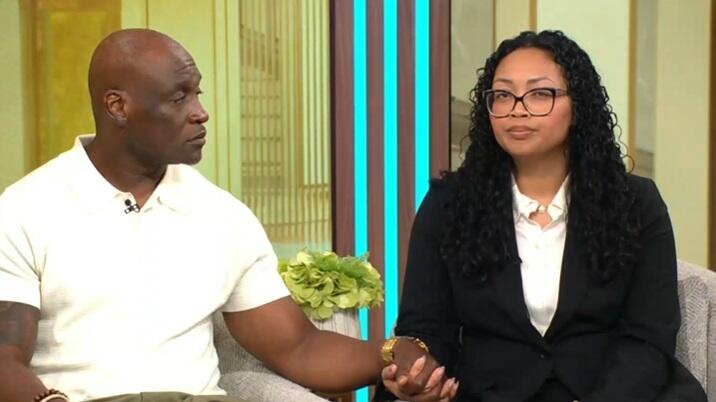
“No, he wouldn’t. Nolan always stays with the group,” Elmore Wonsley, Nolan’s father, told “CBS Mornings” last week. “If you be with me, you come back with me. So that I don’t understand, and with me being a parent, if I was in that situation, I would have told them, ‘You’re going to get back on this boat with me because I don’t want to answer to your parents if something happens to you.’”
When directly asked if he believed Nolan was left behind on the island, his father responded, “Yes. I don’t believe he decided to stay on the island by himself. It just doesn’t — that’s not his character.”
Wells went to Ocean Springs High School and was a rising sophomore on Southwest Mississippi Community College’s football team. Crump said Wells was a good swimmer.


Permanent daylight saving time in New Jersey
House approves permanent DST: NJ gets later sunsets year-round but darker winter mornings; sunrise could be ~8:25 a.m.
Are Americans finally done changing the clocks twice a year? Congress moved a step closer to ending the ritual after the U.S. House passed legislation that would make daylight saving time permanent.
It hasn’t been approved by the Senate yet, but it did pass the House with broad support (308-117). If it passes the Senate, it could be signed by President Donald Trump or become law without his signature, unless he vetoes it.
Trump has previously backed ending twice-a-year time changes.
“I am going to work very hard to see The Sunshine Protection Act signed into Law. It’s time that people can stop worrying about the ‘Clock,’” he wrote in a May Truth Social post.
A few versions of the Sunshine Protection Act were introduced in Congress. Rep. Vern Buchanan, R-Florida, introduced the one that’s gaining ground last year.
Here’s what to know about daylight saving time and the move to change it.
What is daylight saving time and why do we use it?
Daylight saving time is the practice of setting clocks forward an hour from March until November in an effort to gain more sunlight during the summer months.
According to the Library of Congress, it was first enacted in 1918 as a fuel cost-saving measure during World War I.
Daylight saving time became federal law under the Uniform Time Act of 1966. Under the law, some states can opt to exempt themselves from daylight saving time.
Would Mississippi keep daylight saving time year-round?
In 2021, the Mississippi Legislature passed a law saying the state plans to stick with daylight saving time year-round. But that only takes effect if Congress changes the federal law to let states adopt it all the time. A bill updating the effective date died in committee in the 2026 session.
Nineteen states, including Mississippi, are ready to make daylight saving time permanent if Congress changes the law to make the twice-a-year time shift optional, according to the National Conference of State Legislatures (NCSL).
How later sunrises would affect Mississippi
Sunrise and sunset times in summer would look the same.
But the period from November to March would be different. The amount of daylight would be the same, just shifted an hour later than usual.
Mississippi could expect the latest winter sunrises around 7:59 a.m. in mid-January. The earliest sunsets would shift from about 4:46 p.m. in early December to 5:46 p.m., according to timeanddate.com.
Why permanent daylight saving time failed before
Yes. Congress did drop Daylight Saving Time before.
The move failed in 1974 after parents worried about kids going to school before dawn, risking more vehicle crashes.
Some parts of the country, like Michigan or Indiana, don’t see sunrise until after 9 a.m. with the permanent daylight saving time.
When clocks fall back in 2026
Clocks will “fall back” from 2 a.m. to 1 a.m. on Sunday, Nov. 1, 2026, unless Congress changes the law.
Daylight saving time ends on the first Sunday in November each year, under current law. That’s when we get back that missing hour of sleep from the spring time change.
Does Mississippi change clocks twice a year?
Yes. Mississippi, which is in the Central time zone, observes daylight saving time.
What time is it in Mississippi?
Visit timeanddate.com to see the current time in Jackson.
Which states don’t observe daylight saving time?
Most of the U.S. participates in daylight saving time except for Hawaii and most of Arizona. The Navajo Nation in the northeast corner of the state does participate.
Bonnie Bolden is the Deep South Connect reporter for Mississippi with USA TODAY Network. Email her at bbolden@usatodayco.com.
Melina Khan is a national trending reporter for USA TODAY. Keep up with her on X @melinakh and Instagram @bymelinakhan.
Mississippi
Mississippi teen accused of killing elderly couple had worked for them before shooting: family

A teenager in Mississippi knew the elderly couple he’s accused of killing before sparking a standoff with law enforcement, according to new testimony in court.
Cordarius Hobbs, 17, is charged with killing 74-year-old Billy Blair and his 71-year-old wife Virginia Carol Blair during a home break-in on June 3 in Mendenhall, Mississippi.
Family members of Hobbs testified during the Thursday preliminary hearing that he knew the couple.
Family members testified that Hobbs did work for the Blairs for things like cleaning around the house before the alleged shooting, according to WAPT.
Billy Newsome, Hobbs’ grandfather, said he believes his grandson was called to work on the day of the alleged shooting but believes he’s innocent.
“My grandson used to work for the man, why you gone rob a man that you work for,” Newsome said. “Why you gone stay there that long and you know the police out there, and then you gone wait until everybody gets there to run, it just ain’t adding up, something just ain’t right here.”
On June 3, three contractors installing a generator at the Blairs’ home discovered Carol Blair’s car door open with several guns on the seats around 10 a.m., prompting them to call the Simpson County Sheriff’s Department for a welfare check at 11:30 a.m, according to a Mississippi Bureau of Investigation investigator.
By noon, the investigator said that officers arrived and were met with shots fired at them, starting a nearly two-hour-long standoff.
Hobbs was captured after trying to run away from officers, the official said, adding that the teen was unarmed when he was caught.
Carol Blair was found in a bedroom curled in the fetal position and had three gunshots to the back of her head. Bill Blair was found lying on his back in the kitchen with three gunshot wounds to his face.
The state investigator said three firearms were found inside the home as well as 280 shell casings, all owned by Bill Blair.
Hobbs’ defense attorney, Zachary Vaugh, argued that there’s a lack of direct forensic evidence connecting the teenager to the shooting.
“There was nothing to say he’s a principal, he’s the one that pulled the trigger on these things,” Vaugh said. “One of the things alone was, one of the victims was shot twice on one side of the head and once on the other. I think that’s pretty compelling that somebody else may have been in there. There’s a lot of things that are possible, just a tremendous amount of things.”
“When you have an officer say there’s no one that can identify him at the time of the shooting, I just don’t see how that adds up,” he said.
Hobbs is charged with two counts of capital murder and one count of burglary, in addition to 10 other charges. He was denied bond.
In a statement on Facebook, the couple’s family previously said, “We are crushed in spirit, bruised, and brokenhearted, but we are not alone.”
Jason Busby, who was friends with the couple, remembered them as being extremely selfless when speaking with WLBT.
“The man would’ve given you the shirt off his back, his wife is the same, and they’re just great people. It’s just a tragedy,” Busby said. “Everybody around here is still in shock. They were just good people.”
-

 Politics8 minutes ago
Inside Trump’s Swift Construction of a White House Helipad
-

 Science20 minutes ago
The Wildfire Researchers Who Burn Houses Down on Purpose
-
Lifestyle44 minutes ago
Apache chef Nephi Craig says cooking Native food saved his life
-

 Technology56 minutes ago
Google is better at playing the AI regulations game
-

 World1 hour ago
Iran calls on Houthis to prepare to cut off Red Sea gateway — can the terror group do it?
-

 Politics1 hour ago
Todd Blanche roasts Adam Schiff in heated hearing: ‘You’re a lawyer, you know the rules’
-

 Health1 hour ago
Game-changing cholesterol pill wins FDA approval after cutting LDL nearly 60%
-

 Sports1 hour ago
2026 AL, NL MVP Odds: Ohtani Favored; Alvarez Holding Off Challengers

